3 ways to avoid letting Tucker Boner, Dick Hertz and Heywood Jablome turn your story into a prank

The world of news features is fraught with danger when you couple unsuspecting reporters with people who enjoy trolling them. A journalism colleague and friend alerted me to this potentially suspect source in a New York Times story about Zillow Surfing:

As my friend noted, “I couldn’t help but think the reporter got duped,” before referencing this classic “source” in a New York Post story:

If you need the joke spelled out, I’ll answer the question for you: “No, I would not like to blow you…”

The Post story is coming up on two decades old, but the folks there are apparently not giving up the ship when it comes to Heywood’s bona fides (sorry… couldn’t resist) as this story is STILL AVAILABLE.

Is it possible that these guys were both real people with just unfortunate names? Sure. I mean, one of the best pitching coaches in baseball history (at least in my mind) had probably the world’s worst name if he wanted people to take him seriously: Dick Pole.

Of all the greatest “add another layer” moments was the year in which Pole played for the Portland Beavers. Although you should know by now I’m not creative enough to make this stuff up, here’s proof:

We could spend hours going through a list of names people have used to punk reporters. The Seymour Buttz and Mike Rotch’s of the world are well known, thanks in large part to “The Simpsons” and Bart’s penchant for pranking the local bar.

There are plenty of cases where “regular” people have names that go beyond common spellings or those we have seen hundreds of times before. We once had a music guy who kept calling us to promote the promising bands he represented. His first name was Spackle. I have no idea how or why…

Even more, there are cases where people share famous names with people who have entered the public spotlight in an unfortunate fashion. (In my time at the State Journal, I worked with a “Susan Smith” right around the time another “Susan Smith” was in the news for all the wrong reasons. Our “Susan” actually wrote a column about these unfortunate pairings…) And, of course, it’s probably no great shakes for these regular folks, either, who have to deal with this on a daily basis:

However, as a journalist, you can’t cut people out of your stories or avoid them just because “that name sounds weird.” With that in mind, here are a few tips for keeping yourself out of trouble in these situations:

Trust but verify: In most cases, you’re getting people to tell you their names and spell them, so you’re in pretty good shape for making sure you got the name itself right.

If the name seems like it might be a “trolling moment,” you can’t automatically assume this person is messing with you. (“So that’s Dick P-O-L-E… wait a minute!”) It would be in poor form to demand ID from that person, but you can get around that concern in a few other ways.

Make use of the other publicly available databases, such as those for court records. Maybe “Yankton Weiner” was sued, filed suit, got a speeding ticket or got a divorce from the former Mrs. Weiner, which would help you figure this out.

Do a search through multiple other websites connected with the topic at hand to see if that person was cited as a source. A quick run through your own news site and a few others in the area would be helpful as well. If you keep coming up empty, telephone directory searches are also helpful.

Also, the internet has a burgeoning public records industry where various companies swear they can find out anything about anybody. If you search for a name, chances are, you’ll get at least something in the free version of the company’s site. Worst case, pay the $20 or whatever if you’re desperate to use the source but afraid of looking like an idiot.

Box the source in: One of the easiest ways to prevent a source from snowing  you is to pin that source down with specific questions about themselves. A person might quickly give you “I. P. Frehleigh” as a name, but would likely be less adept telling you what the I and P stand for. The more questions you ask, the more hemmed in that source will be.

If the source works in some professional field, ask for a business card with the idea that you might want to reach out to them later. If they balk, that’s a pretty good indication that something might not be above board. If they offer a phone number instead, use that number to reach out to them from another phone and see how they answer. Or use a reverse-directory app to get their name from that number.

Throw some basic chatter at the person to get some other information such as, “So how long have you lived around here?” or “Where did you say your office was?” If the answers are quick and easy, the person is likely on the level. If they feel forced, be wary. Either way, write the answers down so you can check them against other information. Also, don’t be afraid to go back and ask a basic question a second time to see if they have it the same way twice: “I’m sorry, but HOW did you spell ‘Frehleigh’ again?”

Ask that source to give you some contact information for their colleagues or other folks who might be just as helpful. This will help limit the number of lies that you can hear. At the end of the day, paranoia will be your best friend, so ask as many questions about the person as you need to

Cut it: There’s no rule that says you have to use a source just because you got the source to talk. Granted, some sources are crucial to a story, but if you review what Mr. Jablome and what Mr. Boner told the reporters here, you can see nothing vital or unique. This is a case of a reporter just deciding, “Well, I got the source, so I’m using him,” a concept in journalism known as notebook emptying.

At the end of the day, I’d rather be one source short than to add to the legend of “Elle Phunt,” “Dee Z. Knutz” or “Barry McCockiner.”


The Junk Drawer: A laugh before dying, Election 2020 edition

Honey? I can’t find our Western-style democracy… Yes, I’m looking in the junk drawer…

Welcome to this edition of the junk drawer. As we have outlined in previous junk drawer posts, this is a random collection of stuff that is important but didn’t fit anywhere else, much like that drawer in the kitchen of most of our homes.

It’s election day, I’m practically brain dead this morning and I think we all could use a laugh, so here’s my best effort:


Don’t tell Baker Mayfield’s wife!

Nothing like a typo to turn a rhetorical question that sounds like something the late sports announcer Mel Allen would say into something that sounds like the QB for the Browns is looking for some side action:

Speaking of “That’s not what we meant…”


Are we not doing “phrasing” anymore? Well, Obama is:

Maybe the greatest line I have seen in any election story in the 1,253,312 years of this election cycle came from this story, which covered an exchange between an excited Democrat and Barack Obama:

In Miami Springs, Fla., where Barack Obama visited last week, an eager volunteer cried out “you were my first!” and the former president thanked her, before gently suggesting a rephrasing.


Speaking of things that might need a tweak or two…


I’m “confused” and “concerned” about what this use of quotes means:

Partial quotes are often used to showcase important vernacular that needs to be captured in an exact way for something to have value:

President Donald Trump said a “herd mentality” would lead to the end of the COVID-19 pandemic.

Judge Leonard Franklin refused to abide by a prosecutor’s suggestion to go easy on convicted molester Carl Joseph, saying a life sentence was fair for a “kid-diddling pedo-freak.”

After his star running back took police on a four-state high-speed chase that ended in a shoot out, Cowpokes head coach James McFeely said the incident was “unfortunate” and “ill-timed.”

They can also be used when something is suspect:

The “fair-trade clause” in the contract actually allowed for additional exploitation of workers in developing countries, the ambassador stated.

After leaving the mechanic, James found that his “fixed” car still had no brakes.

So, explain this usage to me, fans of Hobby Lobby:

I’m uncertain as to why “one” would need to be in quotes here. Is it an allegation of only “one” item or is this some sort of requirement that they purchase the cassette single for this tune from “A Chorus Line?”

It’s not as creepy as if I saw a menu that noted something like Breaded “Chicken” Nuggets or “Beef” Stew, but it’s still kind of creepy.

Speaking of disturbing promotions…


Do we get it in place of, or along with, the snack bags?

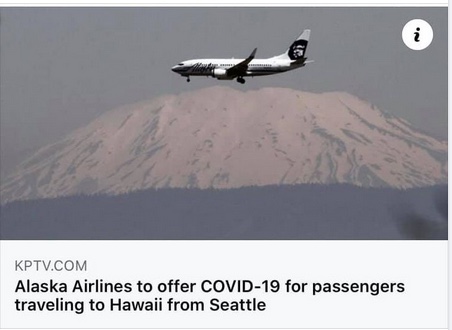
It’s likely you’d get COVID-19 anyway on those cigar tubes of recycled air and beer farts, but it’s nice when they promise it to you right up front.


But, if you do get the free COVID, don’t expect Sunshine Bear to come bail you out…

Headline breaks are among the most frequent complaints of journalists, as that one tweak between lines can make a huge difference in what something means. Here’s a simple headline that compares the treatment President Trump got after contracting COVID-19 and that of regular folks:

Most Patients’ COVID -19 Care Bears Little Resemblance to Trump’s

Makes sense until the headline breaks ruin your day:

In case you aren’t a child of the 1980s, these are the “Care Bears,” apparently using their special powers to cure our president:

care bears | Trending Gifs


And finally, here’s a good way to undercut your own argument:

If the world hasn’t ended by then, see you Wednesday.

Vince (a.k.a. The Doctor of Paper)

The Avocado Pig and the value of oddity in journalism

In both books, we talk about the FOCII elements of interest: Fame, Oddity, Conflict, Impact and Immediacy. As far as the elements go, we tend to pay a lot of attention to certain ones, and less to others. Conflict, fame and immediacy tend to be at the front of the list, with impact almost being a requirement, based on audience-centricity.

Oddity, is well… the odd element out.

In the past two months, however, I’ve come to appreciate and value the importance of things that are out of the ordinary, thanks in large part to what we have come to call the Avocado Pig.

To make a long story longer than it needs to be, when we moved to the farm, we found out that we didn’t have trash service and that we’d have to haul our own mess to the dump. Amy didn’t want her car to be a filth magnet and I wasn’t about to put rotting crud in the back of our Highlander, so we set about looking for a beater pickup truck to do the deed.

After months of searching in advance of the move, I found one truck that tickled my fancy: A 1975 Ford F-150 super cab. It had everything I wanted: It had a large bed, so I could move a lot of stuff if I needed to. It had a cap on it so the bed wouldn’t fill with snow. It had a “back seat” (and yes, that deserves to be in quotes, given what that actually entails) so I could fit extra stuff or extra kids in there if I got called at the last minute to do after-school pick up. And, it was an older Ford, so I knew how to fix most problems on it, based on my Mustang adventures.

The thing came out of North Dakota, a state that apparently doesn’t use salt on its roads during the winter, so it had almost no rot or rust on it. The guy selling it was doing it as a favor for a friend, so it was reasonably priced and he was happy to tune it up at his automotive business before I bought it. It also didn’t hurt that it was the least amount of money I had spent on vehicle ever.

With all of this going for it, why did it sit on this guy’s car lot for multiple months, you might ask. Well, it screams “1970s” louder than a polyester plaid leisure suit with a John Holmes porn mustache, wearing stack boots:

It’s not only painted 1970s avocado green on the outside, but on the inside panels as well. The dash, the seats and the glove box are all avocado green. The flooring is the same color, done in beautiful shag carpeting to boot. It’s got an AM only radio, making it almost impossible to find anything other than talk radio or polka for in-cab entertainment. It also has a CB radio.

(If you don’t know what that is, ask your parents. Chances are, they will spend the next 20 minutes telling you about some sort of trucker story and explaining why they used something like “Foxy LaRue” as their CB handle.)
This thing is the vehicular equivalent of the uncle who shows up at your wedding in the same ruffled tux he wore to his wedding 30 years ago and proceeds to hit on every bridesmaid in the wedding party.

I didn’t care. It started, ran and hauled stuff. I was able to fix several problems on it for about 10% of what it would cost to hire someone. Also, and it becomes clear if you’ve ever seen how I dress, I could give a crap less about being fashionable or trendy.

As is the tradition in our house, we sought a name for this vehicle, eventually settling on “The Avocado Pig.” Why?  First, it’s avocado green, so that was a given. Second, it’s a fuel pig, in that it has a 390 engine and two gas tanks that need constant refilling, due to its gas-guzzling nature.

It was the kind of vehicle only I could love, or at least that’s what I thought. Turns out, people have some sort of weird fixation with this truck.

It started about a day after I bought it and drove it to my parents’ house in Milwaukee. I was putting stuff into it while it was sitting on the street when I noticed a police cruiser pass. It pulled a U turn and sidled up next to the truck and I thought, “Oh crap…”

“Is that your truck?” one officer asked.

“Yes, sir.”

“What year?”

“1975.”

“That is the coolest thing I’ve ever seen. I told my partner we had to swing around to take another look.”

“Thank you…?”

He left and I was just happy I hadn’t violated Milwaukee’s arcane parking laws somehow.

About a week later, we moved into the farm house and I had it parked out back. A truck pulled into our driveway and someone was banging on the back door. I was elsewhere in the house, so Amy answered the door and was faced with someone who had known the previous owner. We figured this would happen, as the guy lived here for 54 years, but the reason these people stopped had nothing to do with the guy.

“They wanted to know if you were selling the truck,” Amy said with a tone that mixed exasperation and bewilderment. “What the hell is wrong with these people?”

Apparently, if they suffered from some sort of avocado fetish, they weren’t alone. Over the next two weeks, I couldn’t go to the grocery store, the dump or a hardware store without at least one person asking about the truck, including at least one offer to buy it on the spot.

On the way home from work one day, I was at a stoplight, when someone coming through the intersection on my left pulled over on the median. He got out of his vehicle and pointed at me before doing the “Wayne’s World” thing of “We’re not worthy.” He then got back in his brand new truck and drove off.

Later that week, another guy in a truck that Amy said looked like a pimped out UFO showed up while I was at work and asked if he could buy the truck.

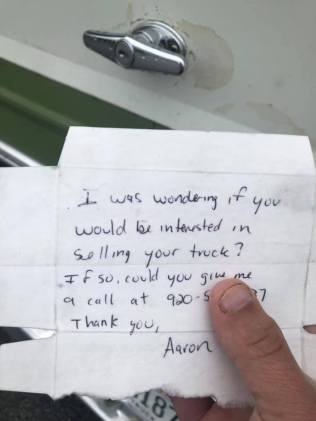
At a certain point, this feels like either I’m making this up or that we’re in the theater of the absurd, but I can assure you I’m not good enough at fiction to pull this off as some sort of metaphor. Even more, I had the truck at work a week or two ago and came out to find this note, written on the back of a “WalPhed” box, stuck under my windshield wiper:

I completely understand why people ogle other people’s vehicles. I’ve practically gotten whiplash looking at vintage vehicles and screaming sports cars on the road. But of all the vehicles I’ve owned or driven… the Avocado Pig? Really? The Firebird, the classic Mustang, the Buick Grand National… sure. I also had a 1966 F250 camper edition for truck fans, but nobody seemed to have this level of fascination with it. I’ve been behind the wheel of a vintage Corvette, a Cadillac sedan and even an Escalade or two. Never even got half of a conversation or a cash offer.

What was it about this 45-year-old eyesore that got people into such a lather?

Amy nailed it. “When was the last time you saw something like this on the road? People love weird shit.”

And if we’re measuring weird, the Avocado Pig has it in spades.

So, after that extensive build up that was, as promised, longer than it needed to be, what does this mean to you?

If you want to draw attention to your work, you need to find things that make it unique in a truly distinctive way.

ADVERTISING: Bad advertising tries to get people to pay attention to it through hype, calling things the “fastest” or the “cleanest” or the “richest” or the “cheapest” or whatever “-est” you can manage to stick in there. The intent is to highlight oddity, but all it does is bore people.

Instead of “-est”ing me to death, look for exactly WHAT makes some something faster or better or stronger or whatever in regard to that product. The oddity of this product or good or service is likely right in front of you. Find the characteristic in the product that is special and then tie it directly to the benefit the users can get out of it.

NO: “Filak’s wet wipes are the strongest protection you can get against the coronavirus!”

YES: “Filak’s wet wipes are the only wipes on the market with Plutoxin-7, which means they kill the coronavirus as soon as it lands on any surface that was cleaned within the past 24 hours.”


PUBLIC RELATIONS: When you are planning an event or attempting to garner media coverage of something, focus on what makes this situation different from the other 912 things you’ve sent me a press release about in the past month. At a certain point, much like we do with “-est” advertising, we’re going to tune you out the minute we see your letterhead or email address.

The key thing in public relations that tends to get missed in this regard is that PR professionals know what their clients are doing and have a sense of why those actions matter. Because they tend to internalize this, it’s like reporters who become too attuned to “inside baseball” on their beats. In short, the practitioners KNOW the value, so they can’t believe that the reporters can’t see it, too.

What helps is taking that extra step and outlining the “this matters because” step for the reporters. Don’t assume they see the unique element of what you’re doing or the key value in what it is that you’re pitching. Instead, take them by the hand and show it to them by saying, “Look how neat this is!”

NO: Comedian and world traveler Bill Jones will speak at Central College on Friday as part of the school’s “Never Give Up” motivational program.

YES: “Bill Jones, the only man to ever eat an entire elephant in 24 hours, will deliver his “One Bite At A Time” comedy routine at Central College on Friday as part of the school’s motivational program.


NEWS: News folks have no problem looking for weird things. It’s why we’ve had “News of the Weird” as a syndicated column for years and why local radio shows play their “Small Town Crime Wave” stuff to the delight of morning-show listeners. That is usually where we find oddity to start and stop.

In short, if it involves a man from Florida, requires a firefighter to note “please don’t use a blowtorch to kill spiders,” or includes the phrase “priest’s three-way with dominatrices,” we’re pretty much clear it’s going to go viral. (If all three of those topics converged, I’m pretty sure we’d break the internet for good…)

However, oddity isn’t just about those items. It’s about focusing on firsts, lasts and onlies, so don’t be afraid to start asking questions like, “When was the last time X occurred?” This sense of wonder can turn an interesting story about a sports triumph into a bigger piece involving certain rarities. It can push you to look for things like what was the longest we had to wait to figure out who was president? Or when was the last time a bishop had to burn an altar that had been desecrated?  Or what was the fastest amount of time it took for someone to drive the cross-country “Cannonball Run?” (That last one is a heck of a story.)

Or even, “How many 1975 Ford F-150 Supercab trucks came in avocado green?”


The Junk Drawer: Keep Your Hands Satanized and Off Your Weenus Edition

JunkDrawer

I know I had some soy sauce in here somewhere…

Welcome to this edition of the junk drawer. As we have outlined in previous junk drawer posts, this is a random collection of stuff that is important but didn’t fit anywhere else, much like that drawer in the kitchen of most of our homes.

With signing students up for classes and monitoring midterms, it’s been a bit chaotic, but there’s always time for a post:

From the “Maybe Wait Until After Work” department:

As we detailed here at the start of the pandemic, Zoom meetings can be disastrous, something journalist Jeffrey Toobin found out earlier this week when he was caught masturbating during a break in the action:

During a pause in the call for breakout discussions, Mr. Toobin switched to a second call that was the video-call equivalent of phone sex, according to the two people familiar with the call, who spoke on the condition of anonymity.

Asked Monday afternoon about reports that he had exposed himself, Mr. Toobin said in a statement: “I made an embarrassingly stupid mistake, believing I was off-camera. I apologize to my wife, family, friends and co-workers.”

“I thought I had muted the Zoom video,” he added. “I thought no one on the Zoom call could see me.”

I’m not going to tell anyone how to live, but if you’re bored during a video chat, maybe, y’know, play cribbage on the other screen? Also, I’m sure the instructions for future breaks in Zoom calls at the New Yorker will no longer be: “We’re breaking for 10 minutes, folks. Do whatever you need to do and then come on back.”

Speaking of returning to the scene of the crime…


Toobin: I got caught on a sex call at work. This is the worst thing ever.
New Orleans: Hold my beer.

In journalism we look for oddity in things to kind of “spice up” our day-in, day-out coverage. Sometimes, we don’t have to look that hard for it:

A kinky sex romp between a New Orleans priest and two dominatrices on a church altar has led New Orleans Archbishop Gregory Aymond to set fire to the altar where the “deplorable” act took place, The New Orleans Advocate reports.

The headline on the follow-up story is one of those you only get to write once in a lifetime, if ever:

Attorney for dominatrices says group sex with priest was legal

Speaking of things that might be legal but you really don’t want think about anyway…


Way to really target your audience:

I explained to my blogging class that you rarely, if ever, get comments or feedback from readers of your blog. Today, I got this email from a “reader” who “liked” my blog and had a few thoughts for me:

First, that opening line and that closing line don’t give me a lot of confidence in your ability to write something for this blog.

Second, and more importantly, please tell me what kind of vibe I’m putting out there that makes you think, “Hey, this guy’s blog is where ALL the people are coming to learn about increasing female libido and ‘wife-taking’ tips!” I need to fix that before I get arrested and/or every small religious school that adopted my textbooks decides to use them as kindling for a bonfire.

Speaking of things that clearly missed the mark…


Viva L’Otters and people who spell right:

Found this through a friend on Facebook and I’d gladly credit the original source (and interview them for the blog about it).

And speaking of terrifying times and fear…


From the “It’s Too Bad That New Orleans Altar Isn’t Available For This Kind of Thing” Department:

Make sure to keep satanizing and stay safe out there.

See you tomorrow.

Vince

A.K.A. The Doctor of Paper


Throwback Thursday: The five conversations journalism professors have in hell.

For me, this week has been like falling down a never-ending flight of stairs: It’s painful, random and you want it to stop. At a certain point, it’s like, “Either get me to the bottom or just knock me unconscious so I don’t have to deal with this…”

My students have been disappearing like crazy, thanks in large part to testing positive for COVID-19 or being around someone who has. Yesterday alone, I answered five emails for one of my 13-student classes, explaining how online-only instruction works because the sender was going to have to sit this one out until the test came back. My kid’s cheer team had three kids test positive, so we had to get her tested and isolate her. Her dance coach tested positive. At least three high schools around us have gone online only. Every time I turn around, something else has blown up or thrown up and I have no idea what’s coming next.

And when we thought it couldn’t get worse, yesterday, my kid’s rabbit died. So there I am, digging a hole under an aspen tree near the back of our property to give Clover a proper send off.

I’m sure I’m not the only one who could use a little humor, so I dug this post up for the sake of a laugh. I hope it helps:

—

The five conversations journalism professors have in hell.

Growing up as a Catholic kid, who spent way more time near nuns than is now recommended by the FDA, I found the concept of hell horrifying. Conceptually speaking, it was a place of fire, brimstone and evil where you went after you had sinned without repenting, angered God through evil acts or accidentally ate a Slim Jim on a Friday during Lent.

Later in life, I asked a priest who was a little more “new school” about the faith for his views on eternal damnation. He told me it was probably more of never-ending sorrow and sadness than the torture outlined by those who grew up before the Vatican II era. It was a a longing and pain for better things and regret over what we should have been. In other words, hell is more individualized and accounts for what we did and who we were.

If hell hits somewhere in that “sweet spot” between those points, I’m sure I know exactly what I’ll be getting myself into if I’m not a decent human being. Since I’ve invested most of my life in teaching and journalism, I know that hell will involve reliving certain conversations I’ve had with students over the past 20 years that continue to sap my will to go on.

So without further ado, I bring you the five conversations journalism professors have in hell and how you can help us avoid them while we’re still alive:


CONVERSATION 1: SO WE NEEDED THE BOOK?

Look, I get it. Textbooks are expensive. In fact, the entire premise of this blog is that textbooks cost too much, change too often and usually have the lifespan of a mayfly. That said, we assign them for a reason: They actually contain stuff you’ll need to know. This is particularly true for books like the AP style guide. Here was an actual conversation I had with a student half way through the semester:

Student: How much are these books?
Me: What do you mean?
Student: This AP book, how much does it cost?
Me: About $20-25. Why?
Student: It must not have been listed on the criteria for the class. I think I’ll go buy it though.

OK, let’s pretend that I hadn’t mentioned it about 10,002 times already and that I didn’t include it as a required book in the syllabus and that I didn’t mention this as a MUST HAVE for the class (as in, “If you are broke, don’t buy the textbook, but buy the AP book.) AND that it wasn’t stocked at the book store.

Every other student in that class had the book. What, they were clairvoyant and just figured I wanted them to have it?

Making things weirder, a student in the very next section of that class, sitting in that very same seat asked the EXACT SAME QUESTION about the AP book, swearing he had no idea that this thing would be important. I think I need to call in some sort of holistic medicine person to burn sage on that chair or something…

Still, this pales in comparison to the year I told the students in WEEK 12 that they should bring their AP style guides to class, only to have one student reach into his backpack and whip his out. “GOT IT!” he said, proudly displaying the book he was supposed to have read by that point in time.

It was still shrink wrapped.

HOW TO PREVENT THIS: Buy the books and read them. If you are REALLY broke (as in, stacking pennies for Ramen broke) and you CAN’T afford them, talk to the professor and see what is absolutely essential and what you might be able to dodge. However, do this somewhere before the midterm.

CONVERSATION 2: I LOOKED EVERYWHERE!

The constant yelling of old people (read: me) about “damned kids these days” come from the fact that we often wonder how hard students really tried before giving up all hope and saying, “Just give me the answer.”

Damned Kids

Case in point, here was a conversation I had about a midterm question in which students were asked to rewrite a lead on one of four stories. Each story included a specific time peg, so I told students to use the day specified in the story (e.g. The game happened Saturday, so use “Saturday” as your “when” element.) when they wrote their lead. About an hour into the test, here was the conversation:

Student: I know you said that there is a time element we need to use with each of these stories, but I honestly can’t find one in this story I’m using.
Me: OK, pull it up and let me see. (he does)
Student: I looked through this whole thing and there’s no time element.
Me: Really?
Him: Yes, I can’t find it anywhere.
Me: Read the first sentence out loud for me.
(Silence)
Him: Oh.

Yep. Right there in the lead was that elusive time element he sought. I suppose I was lucky the student didn’t have trouble finding his pants before showing up in class…

HOW TO PREVENT THIS: Don’t give up so easily on figuring things out. There is something to be said for figuring stuff out on your own. Print it out or magnify the text or whatever you need that will help you consume the content. Also, if you really CAN’T find the content, when you ask, do so in a way that doesn’t immediately insinuate your professor is an idiot who failed to include the content.

Trust me, this is a great fear of many instructors and there are days we can’t remember what we ate for lunch, so screwing up a test is always a possibility. We then panic when you are “so sure” that whatever it is you’re looking for isn’t actually there. Finding out that, no, it actually is present and, no, we don’t have early onset dementia, is both a relief and a moment of “What the hell is wrong with kids these days?”


CONVERSATION 3: I KNOW YOU SAID X, BUT…

Rules are put in place to assure fairness, standardize procedures and give everyone guidance on how to proceed with a test, an assignment or a project. If you want to curdle a professor’s soul, explain to him or her that, yes, you understand rules exist for all those reasons, but the rules really only apply to other people.

Student: I know you said we can’t interview relatives for this assignment, but I was wondering if I could interview my mom.
Me: OK, what does your mom have to do with (the story topic)?
Her: Well, she’s a parent of a college student…
Me: But that’s really not what the story is about and even if it was, there are like 14,000 students on this campus, many of whom have parents. Does she have some special insights that none of the others would have had?
Her: Um… I don’t understand what the problem is. Why can’t I just interview my mom?
Me: Again, she has nothing to do with the story and I need you to get out of your comfort zone and interview people that you don’t know. It’s a skill you’re going to need as a reporter.
Her: So that’s a no?
Me: Yes. That’s a no.

HOW TO PREVENT THIS: Start by assuming that the rules, however arcane, have a reason behind them. Envision that “Karate Kid” moment where Daniel realizes that he hasn’t just been an indentured servant, but rather has been learning karate:

Also, realize that we WILL give people special dispensation for certain things, but it has to be germane to what we’re doing and provide a rare glimpse into something no one else could provide. If you’re doing a story on what it’s like to be an NFL referee and your uncle is an NFL referee, we might think, “That would actually work.” However, if you’re doing a story on how bad parking is on campus and you want to interview your best friend because he owns a car, think twice before asking on that one.

Nothing sounds worse to a professor than a student essentially saying, “Look, I know you told me what to do here, but you have to understand that rules don’t really apply to me because I want to do it my way and obviously that’ll be better for me, so can you just rubber stamp my demands? Thanks!”

CONVERSATION 4: HEY, DID I MISS ANYTHING?

Professors have a ton of stuff to do and most of them feel like they’re not doing it well enough to make anyone happy. The ability to focus well enough to deliver a two-hour lecture on something you will need to know to succeed in the class is the Educational Dream of the Millennium.

When you blow it off, fail to take notes or get way too into a SnapChat battle with your roommates during lecture, it can be irritating to us. When you then ask us to “fill you in” on what you “missed,” We tend to have this reaction:

Actual email:

I was just wondering what exactly the group interview project is again and what needs to be turned into you by Friday! I don’t quite remember everything you said at the end of class yesterday so if you could remind me that would be great.

At least that guy showed up, unlike the student who blew off class, skipped an assignment she knew about and then sent this:

Sorry, I was not able to attend class today. What did I miss? When is the interview paper due?

Perhaps my favorite one was years ago when I had a student tell me she spent six hours in the ER with a kidney infection and that she was way too sick to attend my 3 p.m. class. I explained I understood and that these kinds of things happen.

Later that night, my wife and I were at the local journalism bar and guess who walked in? Yep. The student.

She saw me, got a freaked-out look on her face and practically dove into the party room next to the entrance.

The conversation that followed the next class period was epic:

Her: Hi, I was wondering if I missed anything in class…
Me: Well, it’s been said that the appearance of impropriety is worse than impropriety itself, which is what I thought about when I saw you walk into the Heidelberg the other night, four hours after skipping my class.
Her: Oh! I can explain that!
Me: I’d love to hear it.
Her: Well, it was my friend’s birthday and I was feeling much better at that point so I just stopped by for a drink.
Me: With a kidney infection?
Her: Oh, yeah! I have my doctor’s note for you. Let me get that!
Me: (feeling aneurysm building in my brain, fueled by her complete lack of self-awareness) Um… That’s OK… Let’s just start class.

HOW TO PREVENT THIS: Go to class. If you don’t go to class, get notes from somebody before asking us to rebuild a lecture for you. If you went to class and forgot to write something down, ask a classmate. If you are going to class, writing stuff down and still failing to remember major things, seek help immediately.

CONVERSATION 5:

Me: Hello? Anyone out there?
Voice: Welcome to hell. I am Lucifer, the fallen one, evil incarnate, the lord of the underworld. Do you know who you sinned against to land you here?
Me: Do you mean, “Do I know against WHOM I sinned to land here?”
Voice: Oh great. Another journalism professor. Y’all are down the hall, third door on the left.


May the Odds Be Ever In Your Favor: Coronapocalypse University Edition

We start school today and that always feels weird, given that most of my colleagues have already got a couple weeks under their belts by this point in time. I usually feel like the guy in “Spinal Tap” who can’t get out of the pod, watching the rest of you deal with what’s going on while I’m stuck in limbo:

That said, this year, I feel like the last miner into the shaft, looking around me and seeing an awful lot of dead canaries, and thinking, “Hmm… maybe they’ll decide I shouldn’t go in there….”

Thanks to the coronavirus outbreak, pretty much everything we’ve watched this year has involved numbers, percentages, odds and more. With that in mind, here are some odds and numbers to consider as we continue our college/university journey through Coronapocalypse 2020:

87 – Percentage increase of students who request a completely online version of your 8 a.m. class when compared to your noon class.

4 – The over/under mark for number of weeks you are doing in-person classes before a COVID spike moves you completely online. (Take the under.)

5:1 – Odds of the student who asked for online accommodations for “health-related concerns” ends up on a YouTube video licking a doorknob at a frat party.

2:1 – Odds that despite your school’s edict that only essential personnel are on campus, and that nobody come to campus who isn’t needed, and the proclamation that “We are all in this together,” Parking Services will ticket you for being 6 inches over the line in a semi-empty parking lot.

10:1 – Odds that your university will create a mandatory two-hour weekly meeting of some kind that is supposed to help you deal with all of the extra work and anxiety you are feeling right now.

1,001:1 – Odds that group will make things better for you.

9:2 – Odds the carrots you left in your office before everything shut down in March have developed language skills by now.

8 – Number of professors who will be fired for accidentally uploading a sex tape instead of a lecture file because they never bother to label any of their video files and they stick them all in a file folder marked “Stuff” on their hard drive.

1,020 – Percentage increase in successful Title IX complaints, thanks to Zoom lectures providing video evidence of what everyone at your school has been complaining about for years.

247 – Dollars you will spend out of your own pocket to record your lectures and post them after your university has stated it will “provide any and all equipment you deem necessary for online learning, free of charge.

11 – Percentage of student put on quarantine trying to tunnel out of their dorm room like Andy Dufresne in the “Shawshank Redemption.”

0.03 – Percentage of students who are old enough to understand that reference.

3:2 – Odds at least one student forgets a mask each class period.

47 – Percentage of faculty members looking for “that adapter thingy that came with my recorder” before every live lecture.

0.47 – Percentage of faculty members who will find it.

87,351,842:1 – Odds your school makes national news this year for anything other than a coronavirus outbreak or a student getting stuck in a Taco Bell drive thru window after being shorted a chalupa.

754 – Number of times your university president or chancellor uses the word “unprecedented” in every email or speech this year.

Even Money – Odds the student who skipped every lecture, swore they saw them all online and “worked really hard” in this class, will fail with a score almost too low to compute.

8:1 – Odds you will be able to identify at least half of your students after the mask mandate is repealed.

7:1 – Odds you are able to identify at least half of your students in any given semester.

12 – Percentage of professors who will ask, “Instead of using (fully supported video software program the university has used for years successfully), why can’t we use (glitchy video program only six people know about on Earth, but they read about in The Chronicle of Higher Education and think will somehow be better)?”

5:2 – Odds the professor on a video lecture isn’t wearing pants.

83 – Percentage of professors who want to do live streaming lectures because “they’re more authentic,” that will be interrupted at least four times by pets, kids, the mailman or a door-to-door Bible salesperson.

96 – Percentage of students who say they watch every video lecture entirely.

0.96 – Percentage of students who actually watch every video lecture entirely.

92,249:1 – Odds your school stays open all year without a single problem.

100 – Percent of school administrators who will “express surprise and disappointment” that they were unable to keep their schools open all year, even after watching dozens of other schools crash and burn all around them.

Have a great semester, everybody!

The Junk Drawer: The End of “What Summer Vacation?” Edition

As we noted in several earlier posts, the Junk Drawer is usually full of stuff that didn’t fit anywhere else but you still need. Since we start school after Labor Day, this will be the last post on the weekly summer schedule, with daily(ish) posts beginning shortly after that. Given the summer that was, it seems appropriate that we’re looking at a mess of really weird stuff that is random at best.

Consider some of these moments:

YEAH, THAT’S SMOOTH…: Like many other universities, UWO is in a fiscal pickle these days, thanks to the COVID-19 outbreak and other fun variables. To bring the budget back from the brink, the U decided to cut faculty salaries, although that’s not how they decided to put it in the email we got last week:

Smoothing

First, way to bury the lead. “Furlough… mumble, mumble… Smoothing… mumble, mumble… Reduced by… WHAT THE HELL!?!?!” Second, if you’re going into PR, realize that euphemisms don’t make things better. When rolling out a plan to force people to take days off that they don’t want to take (or will likely end up doing work on anyway), referring to jobbing them equally across the rest of the semester is anything but “smooth.”

Just be honest: “You’re taking a kick in the groin of about X percent each month to the end of the year.”

See? Much smoother.


PIVOT THIS: During my battle with smoothness, I found that one of the hivemind folks started the list of words and phrases that we really need to kill with fire. If you find yourself using these in any of your media writing efforts, consider taking an inflection point in these uncertain times and pivot away from them:

  • Inflection point
  • Grow (as in enrollment)
  • Uncertain times
  • Unprecedented
  • Pivot
  • For the foreseeable future
  • Remain flexible
  • De-Densify
  • Continue to be nimble
  • New normal
  • Synergy
  • Do the needful
  • Out of an abundance of caution
  • Circle back

Feel free to add your own candidates in the comment section.

SINE OF THE THYMES: I’m occasionally baffled by signage I see here and there, like this one from a local flea market:

IMG_4569

As God as my witness, I’m not entirely sure what’s going on here. That said, a few things stuck out:

  • The author (and I use that term loosely) either started with the “A-C-C” version of accepted and went, “Nah, that can’t be right” or did the “E-X-C” version only to realize the other one was right, tried to change it, realized they couldn’t and then thought, “Hell, nobody will know the difference around here.”
  • The apostrophe in “Offer’s” looks to be done with a different marker, meaning this person thought, “Wait, I gotta fix that or someone will think I’m stupid.”
  • I think we should add “reasonal” to the list of words above.


STIP JOYNTE: Our new home had some godawful wallpaper in the dining room, so we needed to get rid of it. In purchasing some items to help me do so, I came across this spelling gem:

IMG_4578

If I can find that “wallpaper stipper,” I’ll definitely be using this sponge…


WHEN LIFE GIVES YOU CLUSTERS….: As pretty much anyone with a brain or the ability to observe human behavior expected, once college students came back to campus for the start of the fall semester, COVID-19 spikes followed almost immediately. At UNC, the school saw multiple coronavirus clusters (maybe another word to add to that list above) appearing, as students didn’t engage in perfect social distancing, mask wearing and personal sanitizing. The student newspaper, the Daily Tar Heel, captured the mood on campus with a perfect headline and editorial:

ClusterfuckHeadline

I couldn’t have said it better myself, mainly because my publisher wouldn’t let me…


YOU BE ILLINOIS-ING: Some abbreviations lead to problems in headlines and decks, like this one for coronavirus-based travel restrictions between Wisconsin and Illinois:

IMG_4555

I think keeping Ill. residents home might be a good idea, but not as good as watching out for a Mass. murderer.


JUST A BIT OUTSIDE: This sign caught my attention because of the color and such, but the font choice put that first line in jeopardy of being  a terrible typo, much like the “Thompson’s Pen is A Sword” headline.

IMG_4566

If you’re going with this campaign, use a simple headline break or rewrite this. The last thing you need is people asking what an “Anals Superhero” does.


BILINGUAL BIAS: We often talk about reaching your audience where they are. For example, a number of really great student news outlets with heavy Spanish-speaking readership include Spanish versions of their work within the paper. When I saw this sign, I was torn in how to feel about Fazoli’s use of Spanish:

IMG_4549

You can make the argument that bilingual outreach is always a good thing, but why is it that the times and days in which the place is open for business is only written in English, while the alert to potential armed robbers is written in both English and Spanish? In short, if you speak Spanish, we don’t expect you to eat at our establishment, but we’d like to wave you off since you’re probably planning to rob the joint.

Eeesh.

And finally….


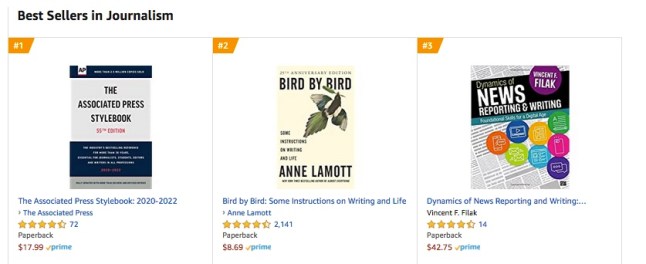
THANK YOU: I was looking for a wall-mounted aluminum-can crusher on Amazon last week, as to keep the number of empty Diet Coke cans from consuming my office, when I did the ego thing and typed in my own name in the search box. When it pulled up the reporting book, I was stunned at what I saw:

Top3

I know that there are 1,001 caveats here, in that this rating happened in only one hour of time, that it happened during textbook buying season, that it’s not representative of larger samples and more. (I know it also feels really self-important to “Google yourself” like this…)

That said, if you had told the 18-year-old version of me as I headed off to college so many years ago that at one point in life, that I would write a book that other people would read, I’d have been doubtful. If you told me the book would be in the top three best sellers in any category for the largest bookstore on the planet at any point in time, it would have been beyond my ability to comprehend. In many ways, it still is.

I don’t think I can adequately explain how big of a thrill it is for me to know that folks out there are using my books and reading the stuff on this blog as part of what they do in teaching this important craft. It’s one of the few times I’m truly at a loss for words, so I’ll just say, “Thank you. And please tell me what else I can do to help.”

See you in September.

Vince (a.k.a. The Doctor of Paper)

The Kindergarten Survival Guide

IMG_2219

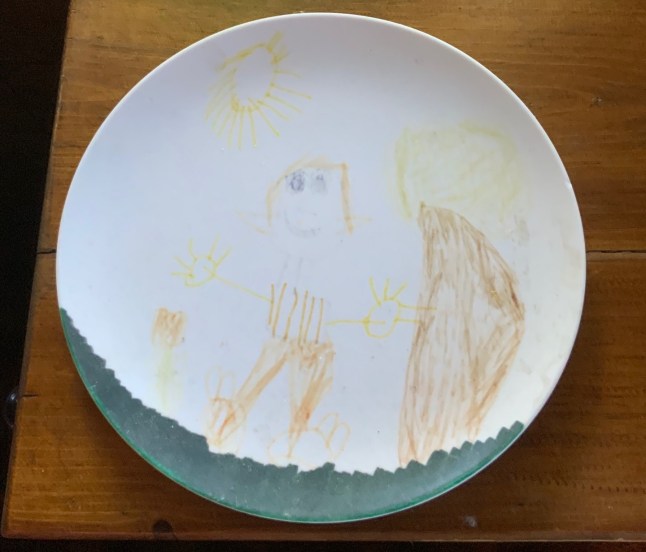
I did this about 40 years ago. My mother still has it on display in the kitchen. Unfortunately, it’s probably still the best thing I’ve ever drawn, which is why I’m grateful that SAGE employs actual artists for my books.

Today is my birthday and it dawned on me that I’ve now spent more than half my life teaching college students. (Really, I have. The math checks out and everything).

One of the many benefits of spending this much time Peter Pan-ing my way through life is that I get to see a lot of my former students grow into adulthood, family life and parenthood. Seeing the updates of graduations, jobs, weddings and children is one of the best things this job offers as a continually renewing benefit.

Two of my former students, who have been immensely helpful to my book-writing and blog-pimping careers, got married a number of years ago, became parents and raised one heck of an amazing kid. As he completed his pre-school career, his mom asked if anyone on Facebook had any advice for him regarding kindergarten.

In an attempt to be helpful, and maybe amuse his parents, I sent the following “Kindergarten Survival Guide” to this young man and I figured I’d share it here as well. Enjoy:

1) Make sure the teacher knows your name for all the good reasons (good napper, drinks milk well, doesn’t fight) as opposed to all the bad reasons (makes noise, does not work and play well with others)

2) Always be nice to the kid who doesn’t seem to have any friends. If you pick on that kid or be mean to him/her, it will haunt you for the rest of your life.

3) Put time and effort into ANY major project that your teacher tells you is “going home for your parents to keep.”

My mother STILL displays the drawing I did for her that was turned into a plastic plate, and had I known that, I would have put more time into coloring it and I wouldn’t have drawn the tree so big.

(It STILL pisses me off that I forgot to color in that guy’s shoe…)

4) There’s nothing wrong with doing your own thing. Just because the bossy girl says, “We are ALL playing kitchen and I’M the chef” doesn’t make it so. Feel free to wander away and read or play with cars or something. You are under no obligation to feed into her delusions of grandeur.

5) Nobody likes a tattletale. Don’t run to the teacher for every minor grievance. Save your tattling for when it counts. Like when a kid accuses you of setting fire to the reading nook or when the milk money goes missing.

6) Kindergarten is not a competition over whose family is more dysfunctional. Feel free not to share everything that goes on at home.

7) You have the coolest mom and dad in the world. You know it, the teacher knows it and your parents know it.

8) Nobody really sleeps during nap time. Except the teacher. Let her snore. She’ll wake up eventually.

9) The kid who says he saw a leprechaun on St. Patrick’s Day is LYING TO YOU ALL. MAYBE he saw his dad drunk on green beer, but that doesn’t count. Don’t feel bad you didn’t see one. (OK, maybe that’s my own personal scar coming through, but still…)

10) Enjoy every minute of it. You are a great kid and don’t let anyone ever tell you any different.

Corona Lite: A few strange and humorous media moments of the COVID crisis

Amid the doom and gloom associated with the coronavirus outbreak and its subsequent impacts, there have been some moments of levity, oddity and general head shaking emerge from the darkness.

Here are some of those moments:

THE PERILS OF WORKING FROM HOME, BROADCAST EDITION:

As many of us have found, it’s not easy working from home. Between slowed internet and a full house, finding ways to stay on task and get work done is tough. It can be even tougher for broadcasters, as they not only have to look professional, but they’re constantly live, regardless of what’s going on around them. A reporter from WKBN in Youngstown, Ohio, learned this the hard way, as his cat became part of a report on local businesses adapting to shelter-in-place protocols:

CatButt

As you can see in John Oliver’s weekly segment on “Last Week Tonight,” the cat spends the entire live shot making sure its butt is ready for its close up.

However, the winner for lack of situational awareness in broadcast news has to go to Melinda Meza of KCRA in California. During a segment on how to cut your own bangs that was shot in her bathroom, Meza captured a full frontal nude shot of her own husband in the mirror:


MezaShowerShot

The shot, blurred here for decency sake, almost broke the internet. To be fair, I didn’t know how many broadcast double entendres there were, until I saw the “best boy,” “key grip,” and “main package” jokes that flooded Twitter. If you don’t believe this actually aired, here’s a live clip in all its glory. Don’t say I didn’t warn you beforehand.


FIRST PURCHASE: COPY EDITORS

With print revenues taking an even heavier beating during the coronavirus outbreak, the corporations that own newspapers are slashing staff, even as the need for more writing, photography and editing surges. Nothing could be more instructive of this need than the plea for help that ran in the Green Bay Press-Gazette the other day:

NameHere

As Name Here clearly states, knowledge is essential to democracy. Careful editing is probably a close second…


I HOPE THEY HAD ACCESS TO AN APPROPRIATE TOILET PAPER SUPPLY:

Certain typos keep me up at night while I’m writing a book. The “public/pubic” one is always a bit harrowing, but after seeing this headline from Tennessee, I’m definitely removing the word “shift” from my vocabulary:

LegoShift

That’s got to be one impressive Number Two that Baby Yoda took to make that many visors. The Force is clearly strong with this one. As is his daily supply of soluble fiber…


IF IT’S NOT PURE IRONY, IT’S REALLY, REALLY CLOSE:

The debate over opening the country without a vaccine for the coronavirus has reached peak rage mode on social media. John W. McDaniel of Marion, Ohio, was among those who thought it was stupid to keep everything closed:

McDanielObit

A month later, he made the news:

An Ohio man who dismissed the coronavirus pandemic as a “political ploy” and ripped his state’s lockdown as “bulls–t,” has died of COVID-19, according to reports.

John W. McDaniel, 60, passed away last Wednesday in Columbus — exactly a month after reportedly firing off a series of angry messages about the contagion.

“Does anybody have the guts to say this COVID-19 is a political ploy? Asking for a friend. Prove me wrong,” he wrote on March 13, according to the Sun.


JACK IS DEAD. LONG LIVE JACK:

In reporting a story on Jack Allard, a 26-year-old two-time All-America lacrosse player, anchor Bill Ritter somberly intoned that Allard had succumbed to the illness and died. He then rolled the video in which New Jersey Gov. Phil Murphy proclaims Allard has survived and was released from the hospital. As Murphy made this proclamation, the video showed Allard walking out of the hospital to applause from a small gathering of people.

Ritter did the best he could to salvage that, noting “I feel horrible. Jack is very much alive. Jack, we love you.”

This is why I never would have made it in TV news, as my reaction probably would have been, “Oh… Well, Shit!”


AND FINALLY… MY DEEPEST REGRET

We had a department meeting earlier in the month, as it was clear things were not going back to normal any time soon. Several of our classes had to be canceled for the fall term, due to low enrollment. We had heard rumors of furloughs on our campus, which came to fruition this week. Other schools also dealt with similar cuts, freezes and layoffs.

We realized we’d be down one-fourth of our faculty for at least a year, due to retirements. Questions regarding the need to move maybe our entire program online for the fall or longer bounced around before my boss asked those of us gathered via Collaborate Ultra this question: What are you most worried about right now?

After a long pause, I broke the silence:

“Well, I really wish I hadn’t left that bag of baby carrots in my mini-fridge in the office. Those things are going to develop language skills before I get back there.”


The Junk Drawer: “Wiry Women” and “pole workers” edition

JunkDrawer

I swear that there used to be hand sanitizer in this thing…

Welcome to this edition of the junk drawer. As we have outlined in previous junk drawer posts, this is a random collection of stuff that is important but didn’t fit anywhere else, much like that drawer in the kitchen of most of our homes. Hope you find value in it:


A “Wiry” Winner
A few months ago, we talked about gender bias in writing when Judge Jill Karofsky, a candidate for Wisconsin’s Supreme Court, was described in a profile as “a wiry marathon runner who has completed two Iron Man competitions” and was also a state doubles champion in 1982.

Just as a follow up to this story, she ended up winning the election, despite the fact it was the source of about 812 lawsuits and intervening attempts to move it around due to the COVID situation.

Speaking of the elections…


Editing matters, politics edition.

Given how hotly contested things were out here, we had a lot of local writers banging away on their “hot takes” on the topic. We also had national attention on us. One of the frequent mistakes I saw was involving an unfortunate homophone.

This is an example of “people working the polls.”

Pollworkers

This is an example of “people working the poles.”
PoleworkersPlural

Know the difference before a friend asks you to be a worker of one of these things. Coincidentally, one of our good friends was a “poll worker” who was sent a kit to help run her polling place. It contained a bottle of vodka, with the word “hand sanitizer” written on a label that had been pasted over the vodka brand. Apparently, that was the best they could do to deal with the coronavirus out here…

Speaking of the coronavirus situation…


Editing matters, coronavirus edition:

A former student of mine sent this to me. It was posted on the door of her apartment complex. Her note? “I’m glad you taught me to read things carefully.”

CovidNoticeFAIL


Speaking of “that’s not quite what I meant…”

A student turned in her writing assignment on the coronavirus with the following quote:

“We were nervous in the sense that we were very cautious and did not want to touch anything or expose ourselves to others unnecessarily,” she said.

I know what she meant, but I really needed a laugh at that point, especially in terms of the “expose ourselves to other unnecessarily” element.

And, finally, speaking of needing a laugh…


Are we just not doing “phrasing” anymore?

I told this story for years and it bordered on the apocryphal, because it seemed too ridiculous to believe.

We got a call over the scanner of an armed robbery at the Olde Un Theater, our local porn store. Jeff Barnes was one of the best reporters I ever had in terms of jumping all over a story and he was on it. (He convinced the local county fire protection folks to give him a volunteer pager so he could be out to the scene faster than other reporters. He also once covered a forest fire and the tires on his truck almost melted when the path of the fire switched.)

As he was running out the door, I half-teasing yelled, “Don’t forget. If you want a byline story on this, you need two sources…” I knew full well he’d get the cops and that was it, given that a) we rarely got a second source on breaking news like this and b) who the hell was he going to interview at a porn store?

Sure enough, Jeff came back with a story that had two sources. He manged to find a guy who admitted he was in the porn palace, was willing to give his name and gave us a line about the guy yelling at him that he needed to hit the floor or the guy was “going to blow your (expletive) head off.”

Jeff then asked the cop about this and got the cops to repeat for him a sanitized version of the “blow their heads off” line, which we then used in the story and the headline.

After a while, nobody really believed that story, except me and my buddy Steve, who was on the copy desk that night. However, I mentioned it on Facebook about a year or so ago, someone found Jeff Barnes and Barnes confirmed it. Better yet, he found the clip in his old portfolio and sent it to me.

Take that, doubters:

OldeUnTheater


The best use of the First Amendment ever

Frank LoMonte, one of our favorite legal eagles and frequent contributor to the “Dynamics” franchise, came up with the best extra credit assignment for his media law class during this pandemic:

Here’s what I told them. You’re going to learn to recite the 45 words of the First Amendment, by heart. If you do it right, it takes about 20 seconds. Just the right length for a respectable hand-wash. Film yourself doing it while washing your hands, and you get 10 extra-credit points. Make me laugh and it’s 15.

If this kid doesn’t earn the full 15 points, something is really wrong: