“Focus on things that are important:” A message to my students during the coronavirus outbreak.

My chair had the great idea of doing a video in which we all recorded a short message for our students, for whom Monday will be the first day of online-only classes. Here is what I hope to be a calming and yet amusing message to anyone who knows me:

For those of you still in the middle of a class build, feel free to check out the Corona Hotline for Instructors page and grab any lessons, exercises or helpful tips you find there. If you want to share anything, feel free to contact me through the site and I’ll get you hooked up.

Be safe and be well.

Vince (a.k.a. The Doctor of Paper)

The Junk Drawer: Cursed Cars, Tiny Children and a Memorial Urinal

Welcome to this edition of the junk drawer. As we have outlined in previous junk drawer posts, this is a random collection of stuff that is important but didn’t fit anywhere else, much like that drawer in the kitchen of most of our homes. Hope you find value in it:

HOW TINY ARE THESE KIDS?

BBGunCase


SYMPATHY FOR THE WEATHER REPORTER: I think at one point my career at the State Journal, I had written something like 400 bylined stories, and I think one-third of them were weather stories.

The weather matters to people. If the readers are Democrats or Republicans, men or women, Packer fans or other people, they are all affected by what happens outside. It is usually the job of the lowest person on the reportorial totem pole to scrape together a quote from whoever answers the phone at the National Weather Service, a county dispatcher who is way overworked and probably a tow-truck driver to build one of these things.

When I was driving home from Milwaukee on Sunday night, we had near white-out conditions, with a ton of state patrol officers and tow trucks trying to get people out of ditches. We also had plows flying in every direction and at least as many idiots in 1997 Honda Civics trying to pass them on the right-hand side of the freeway at 75 mph. When I finally got home, I found to my delight that the Milwaukee Journal-Sentinel did not disappoint, nailing down a weather story like the ones I used to write for the sheer glee of seeing my name in the paper.

Please click here to read Jordyn Noennig’s look at the weather and give the piece a “like” or a positive comment. (Hey, we weather reporters have to stick together…)

Speaking of things from the past that still work today…

DOES THIS ADD SOMETHING TO THE SUM OF HUMAN KNOWLEDGE?: This quote popped up in one of my social media feeds for some reason and reminded me of the man who taught it to me: George Kennedy. George was the managing editor at the Columbia Missourian when I worked there and he was a longstanding faculty member at Mizzou. He used to ask us this whenever we were working on a story or a graphic or whatever else we were doing.

I borrow it from time to time, as needed, when a student is working on a “process piece” that isn’t processing much or an “explainer” that hasn’t explained anything. I also fall back on it because of a moment at the Missourian  involving, you got it, a weather story. We were heavily into graphics and it was a lousy weather day, so the graphics desk pitched a “helpful hints box” about driving in bad weather.

Given that we’d run these almost every week, it seemed to be redundant to me. Couple that with my “Wisconsin Chops” when it came to driving in snow, I asked if the box “was going to tell us anything that 75 other boxes we’ve already run and common sense would tell you about how not to drive like an asshole?”

After that, I bogarted the “sum of human knowledge” line. It seemed more dignified.

Speaking of somewhat undignified…

WHY YOU NEED A 12-YEAR-OLD BOY ON YOUR WRITING STAFF, PART 23,352,123: I don’t know who developed this car, but I’m buying one if I can find it:

SubaruFUCKS

Yep, it’s a real thing:

A new edition of the Subaru Forester on display at the 2020 Singapore Motorshow came with a rather eye-catching nickname: The Forester Ultimate Customized Kit Special edition. Or as people online were quick to note, the Subaru FUCKS edition:

<SNIP>

Subaru told Business Insider that the car was from an “independent distributor” rather than the carmaker. However, Top Gear Philippines noted that the vehicle was inside the Subaru booth, sharing space with new models such as Viziv Adrenaline Concept and an updated Impreza.

It was unclear from this article what level of “market penetration” Subaru expected from this…

Speaking of marketing things…

WHAT COULD I GET FOR, SAY, $20? It always seems pretty awkward to me when we have to say that our favorite teams are playing at the Smoothie King Center, Tropicana Field or the KFC Yum! Center.

(To be fair, it used to be worse: the Astros used to play at “Enron Field.” Also, my beloved Cleveland Cavaliers named their new home after then-owner Gordon Gund, calling it the “Gund Arena,” which sounds like something your doctor diagnoses you with before giving you a shot of penicillin… Rocket Mortgage Field House is actually somehow an improvement.)

Well, my state’s university system is going one step further, offering rich people the chance to burnish their legacy with some additional naming rights:

Cash-strapped University of Wisconsin campuses have a new source of revenue to pursue: businesses seeking to put their names on academic buildings, colleges and schools.

The UW Board of Regents unanimously approved policy changes Friday opening the door for UW System campuses to sell naming rights to businesses, nonprofit organizations, foundations and other outside organizations. Previous policies restricted naming rights to individuals.

When UW-Oshkosh was constructing Sage Hall, the nicest academic building in which I’ve ever had an office, it had a lot of naming opportunities. We didn’t sell the building’s name, but classrooms, labs and even the courtyard got named after people and organizations.

I asked if anyone thought I could get “The Vincent F. Filak Memorial Urinal” set up in the men’s room near the office. A little plaque near the flusher handle, maybe my likeness painted in porcelain, urinal cakes shaped like my head…Hey, why not? If we’re going to sell out, let’s go for it.

My chair at the time told me that would be a “non-starter” with the building committee.

Oh, well. Dare to dream.

Until next time,

Vince (a.k.a. The Doctor of Paper)


THROWBACK THURSDAY: ‘Tis the season to kill these 17 holiday cliches that will land you on the naughty list and get you coal in your stocking

With students, faculty and staff desperately hanging on for a Thanksgiving break, I thought a small bit of humor might be the tonic we all need right now. Here’s a throwback post that looks at how cliches have found their way into our writing and why we need to kill them. Enjoy!


‘Tis the season to kill these 17 holiday cliches that will land you on the naughty list and get you coal in your stocking


The holiday season brings a lot of things to a lot of people, including family, gifts, joy and faith. Unfortunately for journalists, it also brings a ton of horrible, well-worn phrases that sap your readers’ will to live.

I tapped into the hivemind of jaded journos who were nice enough to come up with their least favorite holiday cliches. Avoid these like you avoid the kid in class with a cough, runny nose and pink-eye:

Turkey Day: The event is called Thanksgiving, so give thanks for journalists who don’t use this cliche. In fact, it took almost 300 years for turkey to become a staple of this event, so you might as well call it “Venison Thursday,” if you’re trying to be accurate.

T-Day: Regardless of if you are “turkey perplexed” or not, you’re compounding the problem with the above cliche with simple laziness. That, and you’re really going to create some panic among distracted news viewers in the military.

‘tis the season: According to a few recent stories, ’tis the season for car break-ins, holiday entertaining,  to propose marriage, to get bugs in your kitchen and to enjoy those Equal Employment Opportunity Commission year-end reports!

The White Stuff: Unless you are in a “Weird Al” cover band or running cocaine out of Colombia, you can skip this one.

A white Christmas: The only people who ever enjoyed a white Christmas were bookies, Bing Crosby’s agent and weather forecasters who appear to be on some of “the white stuff.”

Ho-ho-ho: It’s ho-ho-horrible how many pointless uses of this phrase turn up on a simple news search on Google. None of these things are helped by the inclusion of this guttural noise.

On the naughty list: The toys “on the naughty list” in this story “all have some type of hazard that could send a child to the hospital. The majority pose a choking hazard but parents should be aware of strangulation, burns, eye injuries, and more.” Including a cliche diminishes the seriousness of this a bit. Also, don’t use this with crime stories around the holidays: The first person to find a story that says Senate candidate Roy Moore, Harvey Weinstein, Louis C.K. or Kevin Spacey landed “on the naughty list,” please send it to me immediately for evisceration.

Charlie Brown tree: Spoken of as something to avoid. You mean you want to avoid having a tree that demonstrated looks aren’t everything and that tries to capture the true deeper meaning of Christmas? Yep. Can’t have that stuff.

“Christmas starts earlier every year…” : Easter, maybe. Christmas, no. It’s the same time every year. Check your calendar and stop this.

War on Christmas: Be a conscientious objector in this cliched battle, please.

“… found coal in their stockings”: Apply the logic of “on the naughty list” here and you get the right idea. The story on the Air Force getting coal for Christmas after tweeting that Santa wasn’t real could have done without the cliche. Then again, maybe we’d all be better off if the Air Force was right, given the picture included with the story.

Making a list, checking it twice: A all-knowing fat man has a list of people who are naughty and nice and will dole out rewards and punishments accordingly. Sounds cute when it’s Santa, but less so when an editorial is using this to talk about Steve Bannon. Let’s be careful out there…

Grinch: There is probably an inverse relationship between the number of people who try to use this cliche and those who actually get it right. Let’s let John Oliver explain:

Jingle all the way: Nothing warms the heart like an in-depth financial analysis of a multi-national retailer like a random reference to Jingle Bells.

Dashing through the snow: This product pitch isn’t improved by the cliche, but it might help you survive hearing the use of it over and over and over…

It’s beginning to look a lot like…: Well, it apparently looks a lot like Christmas for small businesses, at Honolulu’s city hall, through a $1.5 million investment in lights at a Canadian park, and at a mall in Virginia. It’s also looking a lot like 2006 in the NFC. Oh, and it’s beginning to look a lot like Watergate as well. Get ready with that naughty list and coal, I guess…

The true meaning of…: Nothing says, “I understand and want to engage with my readers” like lecturing them on “the true meaning” of something, whether that is Christmas or a VAD.

Wishing you all the best in this season of cliche…

Vince (The Doctor of Paper)

South Dakota tells the world it’s on meth (or how to make a fool of your state for less than $500,000)

MethLogo

Sometimes, the jokes just write themselves…

South Dakota wanted to take on its burgeoning methamphetamine problem head on, so it invested heavily both in an attempt to treat addicts and a marketing campaign to let people know the state was serious about addressing the crisis.

Well, at least one of these things might work:

South Dakota is on meth — at least, that’s the message behind a new anti-drug ad campaign so widely mocked that one marketing expert could only laugh before calling it “a colossal blunder.”

The “Meth. We’re On It.” awareness initiative was unveiled Monday by South Dakota Gov. Kristi L. Noem (R) to address the state’s methamphetamine crisis. In a news release, officials underscored the importance of combating drug use in a state where twice as many 12- to 17-year-olds reported using meth compared with the national average.

According to news reports, Broadhead Co. out of Minneapolis was responsible for the meth campaign, which cost about $449,000

 The state’s contract with Broadhead, effective until May 31, 2020, states that the contract shouldn’t exceed $1.4 million.

In its proposal, Broadhead says the tagline “I’m on Meth” will create “a movement for all South Dakotans to take an active role in keeping their state a great place to live.”

Right… Because when someone walks up to you and says “I’m on Meth,” the first thing you’re thinking is, “Wow! I want to live near that guy!”

Broadhead has several other campaigns on its website that have kind of that “edgy” feel to them, with many of them related to agriculture:

CattleFirst

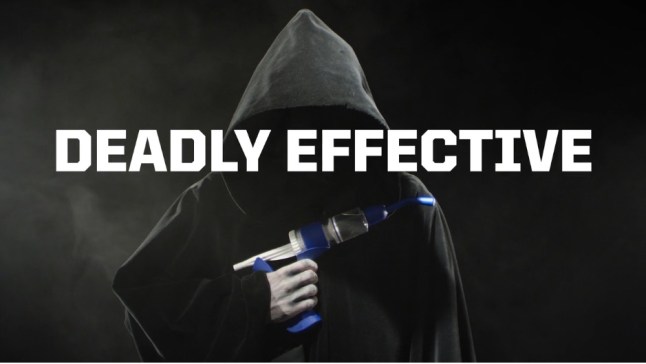
Given their motto of breaking through with non-status quo ideas, I was left wondering if “Cow Lives Matter” was taken… Then there was this:

DeadlyEffective

I don’t even want to know what that thing is used for, but I now have much more sympathy for cows than I did before I saw this…


I kept imagining this conversation going on at Broadhead when it came to the “meth” campaign:

Rep 1: Hey, remember our #porkplease campaign? I bet we can’t look any dumber with an awkward approach than that!

Rep 2: Hold my beer…

In any case, here are two “teachable moments” to take away from this fiasco:

PARANOIA IS YOUR FRIEND: As we have said time and time again here, paranoia is your best friend when launching any kind of public endeavor. It’s the reason I reread the word “public” every time I write it, just to avoid something like this:

PublicSchoolBillboard

It’s why magazine names should really be considered when you start designing things:

pic-dump-303-7

Even if you think, “There’s no way this could be a problem…” just think again:

PenisMag

Or why you need you still need to “consider the fold” when you design pages:

Headweiner

You want to always ask yourself, “How could this thing go wrong?” The first person who said, “Meth? I’m on it!” should have had six people around him/her saying, “Uh… PHRASING!”


OBSERVE FILAK’S FIRST RULE OF HOLES: The rule is simple: When you find yourself in a hole, stop digging. Instead, Gov. Kristi Noem “doubled down” on the meth slogan in media statements after Twitter basically had a good laugh at her state’s expense.

South Dakota Gov. Kristi Noem (R) is defending the state’s launch of an anti-drug campaign with the slogan “Meth, we’re on it.”

The tagline drew a mix of criticism and ridicule across Twitter on Monday, but Noem cited the backlash as proof that efforts to raise awareness around South Dakota’s methamphetamine crisis was, in fact, working.

“Meth is IN SD. Twitter can make a joke of it, but when it comes down to it – Meth is a serious problem in SD. We are here to Get. It. OUT,” Noem tweeted Monday night.

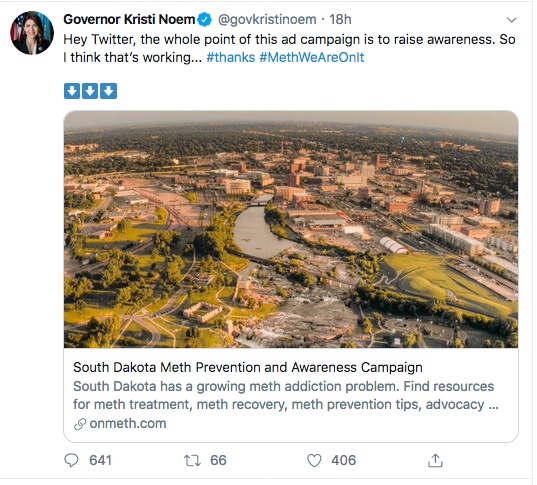
She also decided that it was a good thing everyone was now asking if the entire state was on meth:

NoemTweet

OK, look, I get that everyone is paying attention to you now, and there’s nothing you can do about it (and you just blew through about half-a-million dollars to turn your state into a laughing stock). And we can argue that “There’s no such thing as bad publicity,” until the end of time.

However, saying we told everyone “we’re on meth” was a good idea because it “drew attention” is like saying former Toronto Mayor Rob Ford helped people understand the severity of the city’s crack epidemic:


Or trying to combat child sex abuse with the slogan: “Kids, We Feel You.”

Once you realize you’re going to do more harm than good when you continue to insist this really isn’t as bad as people are making it out to be, stop digging.


The Junk Drawer: Leads that break the rules, Cocaine for Kids and more…

As we noted in an earlier post, the Junk Drawer is usually full of stuff that didn’t fit anywhere else but you still need, so let’s enjoy a few of the more awkward moments sent in by the hivemind and other friends out there:

A DATE LEAD THAT WORKS:

One of the rules I’ve emphasized to writers about leads is to not start them with a time element, like, “On Monday, the Board of Regents raised tuition 35 percent…” The point I try to make is that if the most important thing you want to tell me in the most important sentence of your story is WHEN something happened, you probably don’t have much of a story to tell.

Here’s a clear exception to that rule in a piece the NY Times ran about a mass exodus at Deadspin:

On Monday, the journalists at the freewheeling website Deadspin were instructed by its owners to stick to sports. On Tuesday, the site’s interim editor in chief, Barry Petchesky, was fired for refusing to obey that order. On Wednesday many longtime staff members quit in protest, hurling Deadspin into chaos.

It’s a multi-sentence lead in which every sentence starts with a time element. Here are a few reasons why it works:

  • The writer establishes a pattern of cadence, relying on the repetition of the time element to keep the attention of the readers.
  • The rapid-fire series of events that occurred in a 72-hour period lends itself to pressing the issue of time in the lead.
  • The writer doesn’t overdo it. The old “rule of threes” applies well here, in that things that occur in threes tend to keep our attention and are “mentally pleasant” for audience members. Had this gone on for a few more sentences, the technique would have failed.

As we have noted about all the rules of the game: Once you know them well enough, and you earn the fungus on your shower shoes, you can break them if you do so for the right reason. Go ahead and try something different, but if it doesn’t work, feel free to go back to an inverted pyramid style lead.


HOW MANY KILOS FOR A QUARTERBACK?

A friend sent me this headline, noting the word choice and the bad head break:

College Blow

For those of you tea-totalers out there, “blow” is an oft-used euphemism for cocaine. Even given the liberal reputation of the West Coasters, I don’t think this is what they meant.

You need to watch those word choices for headlines. In this case, it was a web head, so there was no good reason not to write out a deeper and clearer headline. In print, occasionally, the space allocated to the headline gets you into trouble:

ShotMortgage

I’ve worried about my mortgage from time to time, but I’m not sure I’d take a bullet in exchange for saving some cash. It sounds like how the rich people work in “The Purge” or something.

I HAVE A QUESTION…

Rental Shirt

How long do I get to rent this shirt for $3? How many bedrooms does it have?

PUNCTUATION MATTERS:

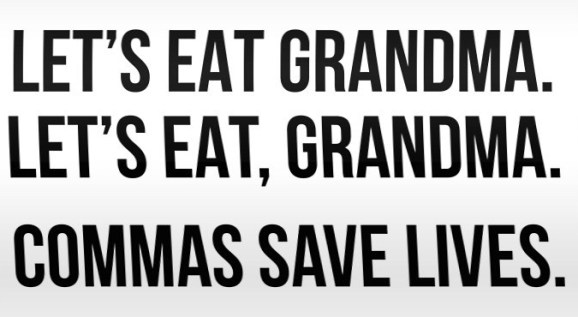
We already know that commas save lives…

CommasSaveLives

And we know that they can keep you away from promiscuous buccaneers…

BiteMe.png


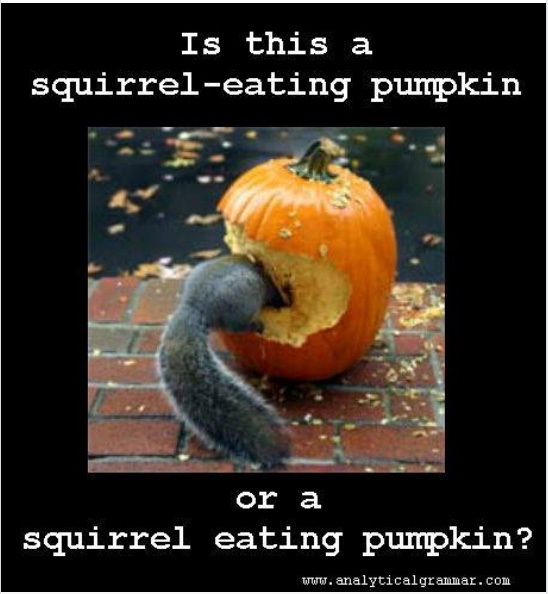
But a friend sent me a conundrum of hyphenation necessary to distinguish zombie-apocalypse gourds from vegan tree-rodents:

SquirrelPumpkin

I’m really hoping it’s the former. I can see the movie posters already…

That’s all for now!

Vince

(a.k.a. The Doctor of Paper)


Today’s Motivational Poster For Absent Students

In a desperate attempt to keep from getting any more, “Hey, I’m going to be missing class today… Am I going to miss anything important? Could you send me the notes?” emails, I’ve plied my limited artistic abilities for this motivational poster. Feel free to steal, share and/or frame it if you think it will help you or a colleague:

Bunnies

Back Monday with what I hope will be fuller classes.

Vince
(a.k.a. The Doctor of Paper)

Translating “The Dance” between professors and students over final grades

As the term winds to a close, students and professors engage in what I refer to as “The Dance” over grades. It’s a tactical, nuanced discussion that involves trying to beg without it looking like begging, trying to answer an email without promising anything and basically engaging in nuclear-treaty-level diplomacy. If we were all trapped in a “Liar, Liar” world, it would essentially look like this:

Student: Pass me and stop being a jerk, you asshat.

Professor: Oh, now you care about this class, you little twerp? Go to hell and take a left.

However, since we have to “Eddie Haskell” it on both ends, here are the legendary begging statements I’ve gotten from students over the years or variations on those themes provided by the hivemind. I’ve added a few “internal thoughts” your professors have had over the years when it comes to responding to these pleas. Enjoy:

“Could you just add XX small points to my final grade?”

First, all points are created equal. Second, that figure has ranged from 1 to about 100, depending on the level of desperation. Third, when you kept doing the same stupid thing over and over again because instead of reading my comments, you just looked at the grade and thought, “Screw you, dude” you might not need those “small points.”


“I’m graduating this term…”

Not if you need to pass this class, you’re not.


“Is there anything I can do?”

Can you invent a time machine, go back in history and tell the earlier version of yourself to turn stuff in on time, not skip every third class and generally give a better overall performance than a disinterested Jay Cutler on a trick play? If not, no.

OR

Prayer can help, although I’m not certain how strong God’s will is to help you out here.

OR

Sign up for the next semester I teach this class and give a crap a little sooner in the term.


“Is there extra credit?”

Sure, because when the syllabus said, “There will be NO EXTRA CREDIT in this class, so plan accordingly,” I clearly included a loophole for people who didn’t care about anything until the very moment they realized they were screwed.


“Could I rewrite (half of the assignments) for additional credit?”

Sure, because nothing says, “I’m ready to do a good job,” like not doing a good job on anything all term and then expecting to make all of that up in 72 hours before grades are due with no real interest in learning anything other than how many points you need to slide by.


“Could you bump me up just this little bit?”

Sure, because I’m sure that won’t tick off the six other people in your class who sweated bullets to get a passing grade through hard work on that assignment you blew off to go to Cabo and party on the beach.


“Could you possibly round me up?”

I could. Now ask me if I will. Welcome to the grammar lesson you skipped.


“I had some issues this semester…”

Yeah. No kidding.


“Your class is very important to me…”

Um… I believe a lot of things people tell me to make me feel better about myself. This isn’t one of them.


“I don’t understand why you downgraded me…”

You mean the page and a half of comments I included in the body of your paper didn’t clue you in that this random series of unattributed content, fragmented sentence, shifted verb tenses, incorrect word choices and cripplingly bad structure didn’t help? This wasn’t a news story. It was a disaster movie filmed out of sequence.


“This isn’t fair that I should have to take your course over again.”

It isn’t fair I had to grade this pile of sheep dung you referred to as “completed assignments,” but we all have our crosses to bear, I suppose…


“I need (A/B/C grade) to (pass/maintain my scholarship/keep my ego afloat)…”

This is not Burger King. You don’t get it your way.

The Junk Drawer: Welcome to the land of Sex Tourneys and Trained Whales

As we noted in an earlier post, the Junk Drawer is usually full of stuff that didn’t fit anywhere else but you still need, so let’s enjoy a few of the more awkward moments sent in by the hivemind and other friends out there:

I’M GOING TO AUBURN!

AuburnSEX

Either they meant the SEC (Southeastern Conference) Tournament, or they’re going to start a hell of a recruiting war with Alabama. I’m pretty sure the University of Southern California Trojans and the University of South Carolina Gamecocks plan to take part in next year’s tournament.

IN OTHER ODD FETISH NEWS…

DeadPorn

Either this is a horribly misplaced modifier or this husband is a porn channel vigilante. “One man stands for the murder of porn channels… Joe Don Baker stars in, ‘The Porninator.'”

Speaking of modifier problems…


ARE WE JUST NOT DOING PHRASING ANYMORE?

A friend passed this along from a grading session:

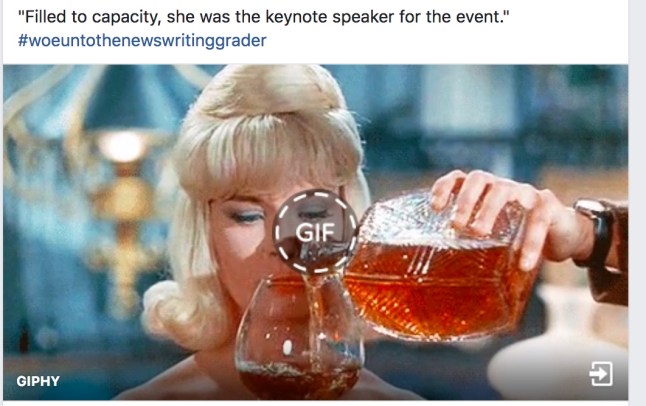
Filledtocapacity

To be fair, I’m sure I’ve done some of my best work while filled to capacity… Another friend followed up with this gem:

My favorite example to illustrate the point is “Ugly or not, the team will take the victory.”

Speaking of ugly…

YOU MIGHT WANT TO FIRE YOUR MARKETING DEPARTMENT:

I get that people want some sort of cute, kitschy vibe for their group, but this is what can happen when you don’t really think this through:

Succs

(A special note of thanks to the person who used the very last erg of her battery to send this to me. I don’t think my phone is capable of getting that low without giving me a “Really? You don’t know what a charger looks like?” look.)

Speaking of things in “Ouchtown”…

I DO NOT THINK THAT WORD MEANS WHAT YOU THINK IT MEANS

A friend ran across this in a court story:

“His arrangement will be Tuesday in circuit court.”

It will likely include several roses, some peonies and 8-to-10 for breaking and entering…

Speaking criminal intent…

WHY IS THE TRUTH ALWAYS STRANGER THAN FICTION?

Whale

Question: How do Russians train whales to harass specific ships? The bigger question: How do you become an “expert” in whales that have been trained by Russians to harass ships?

Until next time,

Vince (a.k.a. The Doctor of Paper)

Inflatable rats and car horns aren’t free speech. Flipping the bird? Totally protected…

Courts often must parse what does and does not count as protected speech, and apparently, a giant inflatable rat doesn’t fit the bill, according to a court ruling last week:

A Wisconsin town’s sign ordinance did not violate a local union’s free speech rights, even though the ordinance prohibited the union from displaying its 12-foot inflatable rat, Scabby the Rat, to symbolize its protest against a local business.

The union erected Scabby the Rat to protest a local car dealership in the Town of Grand Chute, alleging the dealership was paying nonstandard, lower wages to masons on a construction project. The union placed Scabby the Rat in a right-of-way on a major thoroughfare near the dealership, drawing attention to protesting picketers nearby.

In other cases, courts have ruled in favor of some “different” forms of speech, such as holding protest signs, yelling slogans or even singing.

A Wisconsin appeals court ruled on Thursday morning that a state requirement for singers in the state Capitol to obtain a permit was unconstitutional.

The ruling by Judge JoAnne Kloppenburg of the 4th District Court of Appeals appears to be the last word on the matter, which became a hot-button issue during the summer of 2013 when Capitol Police arrested hundreds of protesters for singing in the Capitol rotunda without a permit.

However, my favorite parsing of what is and isn’t free speech involves a probation and parole official from Wisconsin who was disgruntled with then-Gov. Scott Walker.

Between 5:30 p.m. and 5:45 p.m. each day, someone in a black Honda would drive past Walker’s house in Wauwatosa, blow his horn like crazy, give the finger through his sunroof and shout, “Recall Walker.”

He was ticketed for using his horn, a charge he fought to no avail:

Milwaukee County Circuit Judge Mary Kuhnmuench found that there was no precedent for horn-honking being constitutionally protected political speech. Brodhead, who represented himself, was fined $166.20.

That said, he was still able to continue his protest without the use of a horn, and he did so.

During the workweek, he leaves his downtown office around 5 p.m., drives by the governor’s residence near the corner of N. 68th St. and W. Blue Mound Road, offers a one-finger salute and bellows his support of the Walker recall effort.

Only now he doesn’t blow his horn.

So, you can call someone a rat, but you can’t display a giant rat. Conversely, you can flip the bird at someone to honk them off, but don’t honk at them while you do it.

Who says the law isn’t fun?

“You don’t have the talent to win on talent alone:” 5 quotes from Herb Brooks and how they apply to your life as an up-and-coming journalist

In an odd twist of calendar calisthenics, Feb. 22 fell on a Friday and Feb. 24 fell on a Sunday, the same as they did 39 years ago when a team of relative unknown hockey players took the ice for the United States at the Lake Placid Olympics. The average age of the team members was 21 and the team was coached by the last man cut from the only U.S. team to ever win a gold medal in hockey to that point in history.

A guide to the Olympics put out by its own committee that year picked the U.S team to finish sixth or seventh. Instead, it toppled the greatest team in the world in a “Miracle on Ice” on Friday and finished off Finland on Sunday by scoring three goals in the final 20 minutes to secure the gold.

Woven among the various stories, legends and myths surrounding that team and its journey are a few of what the team called “Brooks-isms.” These often-caustic sayings from coach Herb Brooks kept the players motivated and often shaking their heads, wondering what the hell it was their coach was trying to say.

Brooks.jpg

A much younger version of me and my friend Allison with the great Herb Brooks.

In honor of what Sports Illustrated dubbed the greatest sports moment of the 20th century, consider these five quotes from Herb Brooks and how they apply to your life as an up-and-coming journalist:


“You don’t have enough talent to win on talent alone.”

Brooks use to yell this at his players when they decided to coast against inferior opponents instead of really taking the game to them. In one infamous incident in Norway, his team loafed its way to a 3-3 tie against a really weak Norwegian squad. After the game, Brooks refused to let his team leave the ice and instead forced them to conduct skating drills until the guy running the arena shut off the lights.

Then, Brooks had them continue skating in the dark.

His point was a good one in that if you rely solely on your talent, you will often fail because talent only gets you so far in life. If you think you’re “too good” to cover a speech or a news conference, it’s at that precise moment that you will screw something up and end up in a whole lot of trouble. You need to treat each time you ply your trade like it is the most important thing you will do and make absolutely sure you give it everything you have. Failing to do that means you’re setting yourself up to fail.

“And maybe I’m a little smarter now than I was before for all the stupid things I’ve done.”

I found the other day this among the various quotes attributed to Brooks and I never realized he said something like this. However, I’ve told students something similar for years: “I’ve learned more from the things I’ve done wrong than anything I ever did right.”

I noticed that my students these days tend to fear mistakes and stress over failure to the point that they miss the point. As I have written more than a few times, you will screw up here. You are not on the side of a lunch box. That said, you have to know WHAT you did wrong, WHY it went wrong and HOW to make sure you don’t screw up that way again.

If you end up in a situation where an assignment goes to crap or you failed a test or something else goes horribly, horribly wrong, worry less about the grade and worry more about the WHY behind the grade. There are always professors out there who want to torture the heck out of students just because, but those are few and far between. If you go to the professor with the idea of, “I need to understand what went wrong so I can get better at this,” you will improve your future work and you probably will gain some serious respect.

“I’m not looking for the best players. I’m looking for the right ones.”

This is a bit of a cheat, as it was a line from the movie “Miracle,” but Brooks said similar things throughout his career in a variety of ways. He talked about looking at talent second and people first, as well as finding players by looking at who they are more and what they can do less.

Brooks understood something that is important for you to know: It’s not about your pedigree, your fancy internships, the degree from the “Lord Almighty School of Journalism and Deification” or anything else that has that shiny patina of “Look how important I am” that matters.

What matters is the way in which you will work to succeed, how hard you will push yourself to make yourself a valuable commodity, how badly you want something and to what degree you will sacrifice part of yourself for the greater good.

The “right” players are always going to beat the “best” players, as his team proved during that 1980 Olympic run.


“Risk something or forever sit with your dreams.”

People always tell you that life is short. It’s not true. Life is long, especially if you don’t decide to live it. When most of you are getting out of school, you’ll be sitting in that early-20s area of life. The average life expectancy of people in the U.S. is about 78 years, and that’s accounting for the fact that we’ve seen a decline in it over the past couple years.  This means you have more life on the “coming up next” part of your life than the “I’m done with this” part of your life.

You have time. Take a shot at something.

Risk is scary and in some cases it’s not worth it, but you need to at least consider what it is that would make you happy and try it out. Eventually, you will have more responsibilities, more things weighing you down and more reasons not to do something. Take a calculated risk on a career path. Try a job that’s going to give you a chance at something unique. Do something that you said you always wanted to do.

If you don’t, the regrets will eat you alive.


“Play your game.”

With 10 minutes to go in the semi-final game against the Soviet Union, Mike Eruzione scored to give the U.S. a 4-3 lead. Goalie Jim Craig said once that it was “like banging a bee’s nest. All we’re gonna do is piss them off.”

The Soviet team had the ability to score five goals in three minute. Ken Dryden, who added commentary for the game, said in later years that in situations like this you dared to hope that you could win and then the Soviets would just crush your hope and leave you for dead.

Brooks knew this and he knew his team might panic and this whole thing could fall apart. He just kept telling his team, “Play your game.” Cameras during the end of that game caught him repeating that phrase like it was a mantra and it apparently worked. The team kept playing the way it knew how to play and it gave the Soviets fits.

The key here for you is pretty simple: Play your game. In a lot of cases, students make the mistake of chasing someone else’s dream or trying to prove themselves to be better based on other people’s standards. That’s crap. Play your own game and stick to what you do best and what make you happy and you’ll be fine.


Final note: My favorite Brooks-ism is one that probably shouldn’t be repeated, but I will anyway. After his team knocked off the U.S.S.R., all it had to do was beat Finland to win the gold medal. Eruzione recalled that the team was excited to go out and play until Brooks walked into the locker room:

He looked at the team and said, ‘If you lose this game, you’ll take it with you to your (expletive) grave. He turned around to walk out, stopped, look back and said, ‘Your (EXPLETIVE) grave.

Something else to keep in mind, I s’pose…

Your parents’ generation sucked at this, too: 4 helpful thoughts on finding your way through life

Scott Cunning, an associate professor of economics at Baylor University, recently laid out his life path and his feelings regarding jumping into grad school right after college as part of a Twitter thread.  He makes a number of points that are good, including the idea that grad school shouldn’t be about inertia or self-doubt, but rather when you know what you want (and that you want grad school). He talks about job choices and the benefits to getting one as well here, and I highly recommend giving the whole thing a read.

The nexus of his thesis is something students should keep in mind: You won’t know what you want to do until you end up running into it. That can make for some pretty high levels of anxiety for students and parents, as well as some really awkward family gatherings where random relatives feel it is their duty in life to say, “So you STILL don’t know what you’re doing yet?” instead of “Nice to see you. Pass the potatoes.”

In hopes of helping you defend your psyche from the chaotic panic and shutting down the naysayers who keep blaming your generation’s downfall on “FaceSpace and those iText things,” here are four things to keep in mind:


Everyone in college is lost and that’s just fine: At the beginning of each semester, I ask the students in each of my classes what they want to do with themselves once they get out of school. Some of them have a vague notion, half of an idea or a general sense, and that is about the BEST it gets. Only once in all my time teaching did I ever really have a kid tell me something straight-up honest and it was last semester:

Me: So what do you want to do with your IWM (Interactive Web Management) degree?
Him: Make a ton of money.
Me: How will that work?
Him: I don’t know. I’m gonna figure that out when I graduate.

For the rest of the people in my class, it’s like this: “I want to graduate, get a job, not move into my parents’ basement and not have to answer stupid questions like this one from every relative who runs a business selling wiener dogs out of a mobile home and somehow thinks they’re better than me.” Spoiler alert: That’s the American dream of this generation.

Cunning is right, though, in that you won’t know what you want to do until you do it, which is why they force you to take a boatload of general education requirements in college: They figure you don’t know what you want, so they give you a taste of a bunch of stuff.

Instead of taking those classes with only the edict of “Please, God, not another 8 a.m. on Fridays,” look at classes that might interest you and see where they take you. That’s how you bump into things you might like to do for the rest of your life and find some direction. In the mean time, it’s not a problem to not know.


Being good at something doesn’t mean you should do it: The longest-running argument in my life is between my mom and me about what I should have done right out of college. She still believes that I would have made a great speechwriter for politicians, based on my various skill sets. I liked to write and had the ability to turn a phrase fairly easily. I did well in public speaking courses and extracurricular activities, such as debate and forensics. I worked well under pressure and could logically process information quickly. It seemed like a perfect fit for me.

Here’s the counterargument I had for mom: I hate politics.

I spent a lot of time with political figures during college, ranging from student government folks on up through the city and county leaders and found I disliked the majority of them and their attitudes. I never understood the wrangling and the gamesmanship they used to carve up their little portion of the world just a little bit finer. I also hated the arrogance and ego associated with the jobs. Why on Earth would I want to write things for people like this so they could snow under a whole bunch of voters in hopes of furthering their own petty agendas?

The point is, Mom and I were both right in some way. She was right that I had the talent and skill set to do this as a job, and I was right that I’d rather gargle with raw sewage than subject myself to that career path. Thus, the maxim outlined above.

You might have a talent, a skill or some general proclivities that push you into a realm of study or onto a career path, but keep in mind that just because you can do something, it doesn’t necessarily follow that you should. If you don’t like something, don’t put yourself in a position where you dedicate your life to it.

In this regard, Dad had the better take on this topic: Find something you like doing and you’ll never work a day in your life.


You are not a fraud, even though you will feel like one: During my doctoral program, we had a class in which every faculty member in the school could come in and discuss his or her research or offer us advice. Of all the advice I got at that point, a couple stuck with me, including this one from Dr. Stephanie Craft:

A few years into your career, you are going to look around and panic because you think that you are a fraud. You will worry that you aren’t good enough or smart enough or whatever and you figure that it’s only a matter of time before everyone else figures this out, too. You then start counting the days until the entire illusion you’ve built will shatter and you won’t know what to do.

Don’t worry. It’s not true. You are not a fraud. You will be able to push past this.

A few years ago, I read about this concept called “imposter syndrome” that essentially captures this whole notion perfectly. It happens to a lot of people and it’s not something you can necessarily dodge in advance of its arrival. When it hit me, it didn’t matter how much work I had done, how well I had done at that work or what everyone else thought about how awesome I was. All that mattered was that I figured I’d eventually get caught short and revealed as something between a carnival huckster and a guy selling snake oil out of the back of a covered wagon.

The one thing that made the difference was remembering what Dr. Craft told me and realizing her prescience on this fraud fear arriving also made it likely that she was right that I could beat it.


Your parents’ generation sucked at this, too: If your parents tell you that they knew everything when they were your age or that they had a job or that they knew their destiny, I’ve got two words for you: “Reality Bites.” This movie came out 25 years ago, or roughly around the time many of your parents were finishing up their college careers and looking around for whatever that next stage of life would provide. This movie really captured the post-collegiate zeitgeist better than almost anything else at the time, and it provides you with the perfect time capsule to look at what your parents dealt with.

You have Lelaina, Winona Ryder’s character, who was working as a young assistant producer for a cheesy morning show where the host (John Mahoney) treated her like crap.  When she got fired for perhaps the best on-air prank possible, she tried to find a job in her field, only to realize that she couldn’t get hired anywhere. Her father thought her generation had no work ethic. She craps all over her friend Vickie for offering her a job at The Gap, and falls into the bell jar of trying to find meaning in life via a “psychic partner” phone line. It only gets weirder from there (although the final love connection she makes is really too Hollywood for its own good).

If you strip away that last part, you realize that this generation didn’t know anything either, and I say that as PART OF IT. Sure, she fell in love at the end, which is pretty much what the film industry was selling at that point, but she didn’t have a job, was dead broke, had to use her father’s gas card to pay bills and there was no sense she was figuring it out. (And yes, that’s why reality really does bite.) Still, that generation eventually dug in, figured something out and managed to build a life that produced you.

Whatever they tell you about their origin story, view it through the prism of “Reality Bites” and you’ll probably be closer to reality.