(Depending on your view, the senior goodbye columns that tend to populate student newspapers this time of year are fine or an abomination against the basic tenets of journalism. Or, in some cases, both.)
One of the best resources online for student media stuff, student journalism and generally keeping up with anything related to journalism at the college level is Barbara Allen’s College Journalism Newsletter.
(Thanks to some recent sponsorship, she’s taken down the paywall, but as a continuing paying customer, I have to say, I get far more out of her wisdom than I pay for.)
I always have a complicated reaction when I read them, but this semester, something finally became clear.
The curmudgeon in me: “What value do these columns have to the community or audiences?” The momma bear: “What’s the harm in these hardworking students finally just having a few column inches of fun?”
What finally struck me this year has been hiding in plain sight all along: These columns provide incredible insights into precisely why students value student media.
<SNIP>
My call to action for you this week, whether you’re running a student newsroom or lecturing to classrooms or running an entire journalism department: What about your student media program is revealed when you read between the lines of these student farewell columns? And how can you synthesize that information for future recruitment, talking points, mentoring and classroom lessons?
I’ll get to that last paragraph in a subsequent post, but today I wanted to commiserate a bit with Allen over her “maybe yes/maybe no” vibe when it comes to these kinds of things.
I also want to offer your students a chance to kick my ass all over the place.
Personally, I have no problem with these “goodbye” columns. The students who write them work for little to no money, work way too many hours not to be in violation of some sort of forced servitude law, get constantly beaten up in the world of public opinion for minor errors and generally have a decent portion of the soul eroded through this “extra-curricular activity.” If they want a chunk of newspaper space or a spot on the website to say their peace, I’m a big fan.
However, I’ll challenge the group of students building theirs right now to do them better than the seniors have in the past. If they do, I’ll feature their pieces on the blog. I’ll also gladly submit to any reasonable request they have of me (public decency and libel laws still apply. Oh, and I’m not writing your senior thesis for you…)
Here are the three points of this challenge:
STOP BEING SO PREDICTABLE: If there’s one thing that drives me nuts about these things is that they are so generic, I could write them in my sleep. It took all of about 20 minutes to create this “Madlibs” version of the typical senior goodbye column:
If you really learned so much at the paper over the course of your college career, consider demonstrating it by doing something engaging and special. At the very least, make your piece somehow different from the other six “goodbye” pieces that are running right next to yours in the paper.
Prove you’re better than the script of a B-movie horror flick and do something that doesn’t have the words “generic” and “cliche” written all over it.
ESCAPE FROM PERSONAL PRONOUN HELL: It isn’t easy to write a piece about yourself without being self-referential. That said, as much as this piece is for you, it’s also for other people, so try to find a way to cut back on the uses of “I” and “me” and “my” in here.
On a lark, I pulled the first three paragraphs of the last three of these “send off” pieces available on various student media outlets. Self-referential pronouns (I, me, my etc.) accounted for about 12-14% of all words used there.
It’s not always easy to cut back on these, and there’s no shame in being personally reflective in a piece like this. However, when you sound like Donald Trump writing his autobiography while on a meth bender, you really need to reconsider your approach to all this.
MAKE YOUR MEMORIES MEMORABLE (IN A GOOD WAY): As we mentioned in a previous post, a set of “goodbye columns” can be memorable for all the wrong reasons. What we’re talking about here is leaving behind something wonderfully memorable.
As someone who writes a ton of copy for various platforms, I’ll be the first to admit that not every day is filled with brilliance and not every missive should win a Pulitzer. Some pieces are good, others are like the “get me over fastball” that just has to be in the strike zone somewhere and at least a few are wince-worthy duds. It’s the normal curve of writing a lot.
However, you only get one shot at this. It’s your staff goodbye, your senior “bon voyage,” your one golden moment in the sun. Make it something epic and special in a way that the rest of us can feel it, too.
One of the best things that can be said of a well-reported and deftly written obituary is that people who read it learn about someone in whose death they wished they’d gotten to know in life. That is the thing the piece you are writing right now should provide for your readers.
Sure, the people who know you best will get a lot out of the stories you tell and the memories you share, but people who DON’T know you should find themselves enamored with your tales and desperate to connect with this newsroom you describe.
Give this thing one good swing and make it count. I can’t wait to see it.
Although this isn’t a great look for a guy accused of drinking to excess, the author of the Atlantic article on Kash Patel stated that this is among the least worrisome moments of his time as FBI director.
The F.B.I. director, Kash Patel, sued The Atlantic on Monday, accusing it of defamation over an article that claimed his excessive drinking and unexplained absences were putting his job in jeopardy.
The article, under the headline “The FBI Director Is MIA,” was published on Friday and detailed Mr. Patel’s behavior in his role leading the Federal Bureau of Investigation, citing more than two dozen anonymous sources. The author, Sarah Fitzpatrick, wrote that Mr. Patel’s conduct had “often alarmed officials at the F.B.I. and the Department of Justice.” The article said he “has also earned a reputation for acting impulsively during high-stakes investigations.”
Mr. Patel denied the claims in a statement to The Atlantic, which the article included.
THE BACKGROUND:Sarah Fitzpatrick’s article focuses on a string of incidents in which a long list of unnamed sources note that Patel was exhibiting all the textbook signs of an entitled frat boy. These allegations included:
He was drunk and missing a lot of work because of it.
He was drunk at his favorite local bar while hanging out with co-workers.
He frequently jetted off to Las Vegas, where he got plastered at another favorite hangout.
People had to rework his schedule to avoid early morning meetings because Patel was sleeping off the action from the night before.
He was too messed up to do his job when people tried to reach him, or they just couldn’t reach him at all.
He bragged about things that weren’t true, including misinforming the public about the capture of the Brown University shooter.
The White House issued a statement with a blanket denial of these allegations and Patel himself was quoted as saying, “Print it, all false, I’ll see you in court—bring your checkbook.”
A federal judge in Texas has tossed a defamation suit brought by FBI Director Kash Patel against former FBI assistant director-turned-MSNBC contributor Frank Figliuzzi.
Patel had sued Figliuzzi over comments he made on “Morning Joe” about the FBI director’s evening activities.
“Yeah, well, reportedly, he’s been visible at nightclubs far more than he has been on the seventh floor of the Hoover building,” Figliuzzi said on the show last year.
<SNIP>
U.S. District Judge George Hanks Jr. (wrote) “Figliuzzi’s statement, when taken in context, cannot have been perceived by a person of ordinary intelligence as stating actual facts about Patel.”
“A person of reasonable intelligence and learning would not have taken his statement literally: that Dir. Patel has actually spent more hours physically in a nightclub than he has spent physically in his office building,” the judge added.
I’m glad about the verdict, but given what we’re seeing these days in terms of “reasonable intelligence and learning” out there, I’m worried where that bar will be set in the future.
WHY YOU SHOULD CARE AS A JOURNALISM STUDENT: This article and Patel’s suit provide a pretty interesting look at how defamation (or libel) tends to work or not work, as well as an opportunity to look into building stories like this. Here are some key issues:
UNNAMED SOURCES: This whole story is built on the backs of sources that Fitzpatrick did not name in the article. That is ALWAYS a huge risk in journalism for a variety of reasons. Source credibility comes into question, issues of people having axes to grind show up, sources who eventually get IDed might backtrack and leave you holding the bag… The list is pretty long and the dangers are pretty strong.
The things that make this a little more stable than many of the other stories that show up with an unnamed source along with a wing and a prayer are:
A) The volume of sources. Fitzpatrick is stacking people like cord wood in this thing, noting as many as a dozen people have corroborated the things she’s putting into her piece. If that is accurate, and I have no substantive reason to doubt it, that means this story has some stronger legs to stand on than most.
B) I go back to a conversation I had with my friend Allison, who covered the Chicagoland Catholic church molestation scandals of the early 2000s. I used to ask her how she knew for sure that the priests in her stories were serial pedophiles. The information she gathered came from the accusers, usually years or decades later, and was almost impossible to back up with documents or other “official source” content that I had gotten used to using in my own work.
Her answer was simple: She did a ton of digging, verified in every way she could and then she published the content and waited. In almost every case, if she published one or two accusations, she immediately heard from at least three or four other people who told her the same things had happened to them.
“My response is that I stand by every single word of this report,” she said. “We were very diligent. We were very careful. It went through multiple levels of editing, review, care.
“And I think one of the things that has been most gratifying, after – immediately after the story published was, I have been inundated by additional sourcing going up to the highest levels of the government, thanking us for doing the work, providing additional corroborating information.”
The only way Fitzpatrick was going to get this story was by providing anonymity to her sources, so she took a risk. That said, it wasn’t a foolish risk, which is something to keep in mind when someone says, “Hey, I have a story for you, but you can’t use my name…”
A HIGH BAR TO CLEAR: As a public figure, Patel has to demonstrate that the Atlantic engaged in actual malice, as opposed to mere negligence, and that’s a pretty tough thing to do. As the folks at Poynter point out:
Can Patel actually be successful in his suit? Sure, anything is possible, but it’s unlikely.
During an appearance on CNN, Brian Stelter, CNN’s media reporter, said, “Actual malice is the very high legal standard that public figures have to prove in order to win a defamation suit. They have to prove that The Atlantic knew these claims were false or had a reckless disregard for the truth.”
This kind of goes back to the first point in a way: When you only have one anonymous/unnamed source, there’s a huge risk you are buying the Brooklyn Bridge and you should know better. When you have a dozen or more people telling you the exact same thing, it’s going to be hard to prove a vast conspiracy among those folks and the reporter, with them all knowingly trying to frame you for something.
It also merits pointing out that what makes for a public figure or not isn’t always easy, so it’s important to think about the stories you’re writing that might cast aspersions. Patel is obviously public, but if you’re writing a similar “too drunk to work” story about the school librarian or a local business owner, if things go south, this might be a concern.
GETTING SLAPP-ED AROUND: We have discussed the concept of Strategic Lawsuits Against Public Participation, or SLAPP, suits here before. The John Oliver/Bob Murray Suit was one of my favorite versions of SLAPP suits, primarily because not only was it so blatantly obviously meant to silence criticism, but also because it allowed me to use the name “Mr. Nutterbutter” in my textbooks.
This brings to bear an unfortunate point: Just because you’re right, it doesn’t mean some yahoo won’t sue you to make your life miserable. What’s important to know before you go after a story is to what degree your media outlet will support you, to what degree you can accurately defend your work and to what degree you think the juice is worth the squeeze. Then, you can decide how to move forward.
In Patel’s case, it was obvious he would be coming after the Atlantic, and it was obvious the Atlantic had a big enough war chest to fight back. That said, these kinds of suits can create a chilling effect on quality journalists who want to do important work. It’s not supposed to happen in a society in which the First Amendment provides us with some of the best support in the world, but we do have to deal with the reality of our surroundings.
A veteran political reporter, (Dan) Bice could conjure a politician’s personal phone number in seconds and never feared knocking on the door of someone he was trying to reach.
Bice, who worked for the Milwaukee Journal Sentinel for 33 years, died from complications of esophageal cancer on April 21, his birthday.
He had just turned 62.
THE BACKSTORY: I know my mother absolutely loved reading Dan Bice’s stuff and I found his relentless digging to be the kind of reporting every newspaper desperately needed. His most recent iteration of his investigative impulses ran as a column titled, “No Quarter,” which I always took to mean that he didn’t play favorites when it came to his desire to dig. Republican, Democrat, Whig, Federalist, whatever… If you did some shady stuff and he found out, he was coming for you.
I still use him as an example of how a great journalist gets inside information and how the PR machines of various organizations and departments feared him. In one case, he was banned from attending certain police press conferences, as the chief feared Bice would ask about allegations of an affair the man later admitted to having.
I also was really grateful that he was willing to help out almost anyone who had questions or concerns about journalism, including me. One of my earliest posts looked at his battle with then-Sheriff David Clarke. Bice asked Clarke about a $226,000 taxpayer-funded bill related to Clarke’s request for security around his home. Clark responded in true Clarke fashion, noting Bice and “the horse he rode in on” should go do something to themselves that is anatomically impossible.
After the post had gotten around and Bice even “liked” it on Facebook, I took a shot and emailed him some questions about his experiences with these kinds of situations. He was recovering from pneumonia, but still was willing to email me some thoughts that I could share with up-and-coming journalism students.
Here is that post, and it’s just as relevant and helpful today as it was almost 10 years ago.
Bice had posted about his cancer situation a while back and it was one of those, “Man, I hope he beats it, not just for him, but for all of us” kind of deals.
Given what we are seeing these days that passes for journalism, as well as the way in which just screaming at each other seems to pay better, I doubt we’ll see many more people as dedicated and driven as Dan Bice.
A reporter and a source getting way too close for ethical comfort. Also, for all the times people have told me that sources and journalists NEVER hook up like this, I keep seeing a lot of sources and journalists hooking up like this…
THE LEAD: Here we go again….
Longtime NFL reporter Dianna Russini has resigned from her role as a senior insider with The Athletic, according to the Associated Press. Her departure comes amid an investigation by The Athletic into Russini’s conduct and her relationship with Patriots coach Mike Vrabel. In photos published by Page Six last week, the two were seen spending time together at the Ambiente resort in Sedona, Ariz. ahead of the NFL’s annual owners meetings in Phoenix last month.
In her resignation announcement, Russini made the case that this was a set of cherry-picked images that took a totally innocent vacation involving multiple people and turned it into a tryst of some sort. Rather than actually showcase that, she said she refused to dignify the story and resigned instead:
“Moreover, this media frenzy is hurtling forward without regard for the review process The Athletic is trying to complete,” she continued. “It continues to escalate, fueled by repeated leaks, and I have no interest in submitting to a public inquiry that has already caused far more damage than I am willing to accept. Rather than allowing this to continue, I have decided to step aside now—before my current contract expires on June 30. I do so not because I accept the narrative that has been constructed around this episode, but because I refuse to lend it further oxygen or to let it define me or my career.”
That statement has the same effect as trying to put out a fire with gasoline. As a journalist, she has GOT to know that if ANY of her sources made a similar statement, she’d crawl so far up their rear end, they could taste her hairspray.
If there’s one common thread among these situations, it almost always mentions three things:
Who was or wasn’t engaged/married in whatever entanglement is going on
Any age gap between the male and female participants (This time its about seven years, which isn’t bad when you’re 50 and 43, or at least it’s not this. In most situations like this, we get an ancient guy and a woman 20-50 years younger)
A loud and immediate statement of support for the journalist that ages like milk in the sun.
(This case has yet to be fully explored, so it’s unclear if this is more of a “Kathy Scruggs” situation of unfounded sexual accusations or a full-on “Nuzzi-gate” situation that will be used in an emergency when syrup of ipecac is not available. The Athletic says it will continue its investigation to find out what happened, which it had to do regardless of Russini’s employment status if it wanted to have any credibility in journalism.)
What’s ridiculous is that in trying to pull a single “Throwback Thursday” post together, I found myself with almost too many examples of how gender, media, ethics and entanglements led to bad outcomes. Thus, here are some links to previous posts that might have some value to consider:
My reporting class today took a look at obituary writing, and I knew I wanted them to write something about the experience. Rather than having them write either a mock obit on a fake person or (perhaps more awkwardly) writing their own obituary, I asked them to simply tell me what they learned that they felt would be most important to remember when they eventually had to write an obituary.
Here were some of the more interesting ones:
“You have to be able to balance fact-based reporting with some of the aspects of a feature. Being accurate to the public record while being respectful of the memories that are being shared by the deceased’s loved ones can be tricky to do, but it is essential to writing a proper obituary.”
“Being overly flowery with word choice is not going to improve a poorly researched story.”
“It’s not just about having the facts right and accurately describing someone’s life. It’s also about getting the right vibes and the human elements of why that person matters and the impact they had.”
“I learned that when writing you want to focus on the life of the individual more than the death. This is important because you are not writing obituaries like a true crime story, but rather as a way for people to potentially connect to the fact that they knew this person, and also as a way for people close to the deceased individual to grieve in a manner that allows them joy.”
“I think it is important to understand and recognize when writing obituaries because it serves as a reminder to the journalist each time they are tasked with writing one, and don’t forget their human side when honing into their journalist side.”
With that in mind, here’s a throwback post that talks about the bigger issues in writing obits that we covered in the class today. Hope it helps.
Obituary Writing: Telling truths, not tales, in a reverent recounting of a life
In a discussion among student media advisers, one person noted that obituaries are probably the second-hardest things journalists have to do frequently. (The hardest? Interviewing family members about dead kids.) When a person dies, media outlets often serve as both town criers and official record keepers. They tell us who this person was, what made him or her important and what kind of life this person led. This is a difficult proposition, especially given that people have many facets and the public face of an individual isn’t always how those who knew the person best see him or her. Couple these concerns with the shock and grief the person’s loved ones and friends have experienced in the wake of the death and this has all the makings of a rough journalistic experience.
You will likely find yourself writing an obituary at some point in time if you go into a news-related field. Some of my favorite stories have been obituaries, including one I did on a professor who was stricken by polio shortly after he was married in the 1950s. I interviewed his wife, who was so generous with her recollections that I was really upset when we had to cut the hell out of the piece to make it fit the space we had for it. Still, she loved it and sent me a card thanking me for my time.
Some of my most painful stories have also been obituaries. The one that comes to mind is one I wrote about a 4-year-old boy who died of complications from AIDS. His mother, his father and one of his siblings also had AIDS at a time in which the illness brought you an almost immediate death sentence and status as a societal pariah. I spoke to the mother on the phone multiple times that night, including once around my deadline when she called me sobbing. Word about the 4-year-old’s death had become public knowledge and thus she was told that her older son, who did not have AIDS, would not be allowed to return to his daycare school. Other things, including some really bad choices by my editor, made for a truly horrific overall situation in which the woman called me up after the piece I co-wrote ran and told me what a miserable human being I was. She told me the boy’s father was so distraught by what we published that he would not leave the house to mourn his own son and that she held me responsible for that. Like I said, these things can be painful.
No matter the situation, there are some things you need to keep in mind when you are writing obituaries:
Don’t dodge the tough stuff: Your job as a journalist is to provide an objective, fair and balanced recounting of a person’s life. The Times’ editor makes a good point in noting that the paper’s job is to recount the person’s life, not to pay tribute or to serve as a eulogist. This means that you have to tell the story, however pleasant or unpleasant that might be. One of my favorite moments of honesty came from hockey legend Gordie Howe who was recalling the tight-fisted, cheap-as-heck former owner of the Detroit Red Wings:
“I was a pallbearer for Jack,” says Howe. “We were all in the limousine, on the way to the cemetery, and everyone was saying something nice, toasting him. Then finally one of the pallbearers said, `I played for him, and he was a miserable sonofabitch. Now he’s … a dead, miserable sonofabitch.’”
It’s not your fault if the person got arrested for something or treated people poorly. If these things are in the public record and they are a large part of how someone was known, you can’t just dodge them because you feel weird. Check out the Times’ obituary on Richard Nixon and you’ll notice that Watergate makes the headline and the lead. As much as that was likely unpleasant for the people who were closest to Nixon, it was a central point of his life and needed to be discussed. In short, don’t smooth off the rough edges because you are worried about how other people might feel. Tell the truth and let the chips fall where they may.
Avoid euphemisms: This goes back to the first point about being a journalist. You don’t want to soften the language or use euphemisms. People don’t “pass on” or “expire.” NFL quarterbacks pass and magazine subscriptions expire. People die. Also, unless you can prove it, don’t tell your readers that the person is “among the angels” or “resting in the arms of Jesus.” (Both of these euphemisms ended up in obituaries I edited at one point or another. They obviously didn’t make it to publication.) Say what you know for sure: The person died.
Double down on accuracy efforts: People who are reading obituaries about loved ones and friends are already on edge, so the last thing you want to do is tick them off by screwing up an obituary. I don’t know if this was just a matter of newspaper lore or if it was a real thing, but I was told more than once at a paper where I worked that there were only two things that would get us to “stop the presses:” 1) we printed the wrong lottery numbers and 2) we screwed up an obituary.
True or not, the point was clear to me: Don’t screw up an obituary.
Go back through your piece before you put it out for public consumption and check proper nouns for spelling and accuracy. Do the math yourself when it comes to the age (date of birth subtracted from date of death) and review each fact you possess to make sure you are sure about each one. If you need to make an extra call or something to verify information, do it. It’s better to be slightly annoying than wrong.
Accuracy cuts both ways: As much as you need to be accurate for the sake of the family, you also need to be accurate for the sake of the public record. This means verifying key information in the obituary before publishing it. The person who died might told family and friends about winning a medal during World War II or graduating at the top of her class at Harvard Law School. These could be accurate pieces of information or they could be tall tales meant to impress people. Before you publish things that could be factually inaccurate, you need to be sure you feel confident in your sourcing.
Common sense dictates that you shouldn’t be shaking the family down for evidence on certain things (“OK, you say she liked to knit. Now, how do we KNOW she REALLY liked knitting? Do you have some sort of support for that?”) but you should try to verify fact-based elements with as many people as possible or check the information against publicly available information. Don’t get snowed by legends and myths. Publish only what you know for sure.
Don’t take things personally: Calling family, friends and colleagues of someone who just died can be really awkward and difficult for you as a reporter. Interviews with these people can be hard on them as well as hard on you. I found that when I did obituaries, I got one of three responses from people that I contacted:
The source told me, “I’m sorry, but I really just can’t talk about this right now.” At that point, I apologized for intruding upon the person’s grief and left that person alone.
The source is a fount of information and wanted to tell me EVERYTHING about the dead person. I found that for some of them, it was cathartic to share and eulogize and commemorate. It was like I was a new person in their circle of grief and they wanted to make sure I knew exactly why the person who died was someone worth knowing.
The source was like a wounded animal and I made the mistake of sticking my hand where it didn’t belong. I have been called a vulture, a scumbag and other words I’ve been asked to avoid posting on this blog. One person even told me, “Your mother didn’t raise you right” because I had the audacity to make this phone call. I apologized profusely and once I hung up, I needed a couple minutes to shake it off. I knew it wasn’t my fault but it wasn’t easy either.
Your goal in an obituary is always to be respectful and decent while still retaining your journalistic sensibilities. It’s a fine line to walk, but if you do an obituary well, you will tell an interesting story about someone who had an impact on the world in some way. I like to think a story about this person who died should be good enough to make people wish they’d known that person while he or she was alive.
(I acknowledge that this phrase is trademarked to Ricky Bobby Inc.)
Since the beginning of competitive media, immediacy has been a core value for all practitioners. As much as it was about “leaking” information to a source to get your position out ahead of competitors or finding the “scoop” to make you and your outlet look great, bigger things are actually at stake in terms of credibility.
Anchoring bias is a psychological theory that states people will always compare all subsequent information they received to the first piece of information they see. In simplest terms, the first piece of information “anchors” one’s opinion of a topic to a point of view or a sense of reality, with everything else simply relating to that concept.
For example, Dad and I were doing a card show this weekend, where we sell sports stuff and generally enjoy just hanging out together. Like most weekends, people come to the table and offer to sell us some of their old cards or memorabilia. The problem we usually have is that the people have “done some research” (read: I checked eBay for the highest priced version of whatever it is I have) and then ask us to buy their stuff.
I can explain until I’m blue in the face that the price on eBay is an “asking” not a “someone paid this amount” price or that the 1951 Mickey Mantle online is in perfect condition while the one they have looks like it was run over by a lawn mower, but it never seems to matter. They are stuck on that price, which rarely leads to a fruitful negotiation. They then try the same thing with a dozen other dealers and are continually disappointed with the outcome.
Anchor bias has a strong hold on people’s minds, which is why being the first voice people hear is crucial in several fields. Let’s take a quick walk through them:
PUBLIC RELATIONS: Messaging is always crucial in public relations, and it’s usually vital to get that message out first. For starters, if news reporter are trying to tell a story and nobody is talking, they’ll listen to those folks who are. That gets you a foot in the door that waiting around won’t.
In crisis communication, good practitioners have adopted the 15-20-60-90 rule, which states that within 15 minutes of a crisis, the organization needs to acknowledge the situation and begin communicating. The faster you get out there, the more your voice will be considered the anchor.
KEY DANGER POINT:When you wait too long and someone else gets to set the agenda and establish the anchor position, you will end up not only playing from behind, but also look like you’re lying. If you are reacting to someone else’s statements, you’re caught in a crouch and you might not be able to convince people what really happened.
Here’s a great scene from the movie “School Ties,” in which one of the students at a prestigious boarding school has cheated, but the students are told they must determine who it was:
In stepping up to say that he saw David cheat, Dillon established the anchor point. After that, it becomes a debate. Had it gone the other way, the arguments that followed would have been much different. If you care to know how it all ends, you can watch it here.
Get out front so you can tell people your side of things while they’re still open to new ideas instead of being anchored to whatever they heard from someone more willing to step up and say their peace.
NEWS FOLKS: Being first has been the gold standard for news people since the concept of a scoop began. I can honestly tell you from experience, being first felt great (only when I was right, however, so accuracy remains a bellwether for what we do here.
Research has found that when people find a source of information that fulfills their informational needs, they’ll keep going back to that source as they build a habit of content consumption. If you can get to something important first, you can demonstrate your value to the readers and viewers. You can also outdo the competition by becoming their “go-to” source of information.
This is why you need to establish sources in the field that will trust you and seek you out as a vessel of content. If you can prove to enough people in enough places that what you do is good, fair and helpful, you’ll become that person who gets the text, email or phone call with the latest information. If you prove the opposite, you’ll be out in the cold.
KEY DANGER POINT (Part I): Being first is great, but even anchors can get pulled up when faced with a torrent of opposing forces. People are likely to believe you as the anchor, but you have to be RIGHT above all else. Otherwise, you might win the battle and lose the war, having them trust you until they literally can’t anymore on this one story and then deciding they need to find a better source going forward.
I’ve told people for years that I’d rather be slower and right than fast and wrong. Fast and right is obviously what we’re shooting for here, but in the end, if you don’t have the goods, don’t make a move.
KEY DANGER POINT (Part II): Keep an eye on how you approach your stories based on what information you got first or which source you interviewed first. If the anchor bias works for the audience in terms of the first piece of information being considered gospel, you are likely to find the same thing happening in your reporting.
For example, let’s say that a developer wants to build a set of apartments for lower-middle-class people in your town. A local environmental agency is opposed to it because the folks there say it will damage a fragile ecosystem in a nearby lake and will also contribute traffic and garbage to the area. A local politician is in favor of it because it will bring much needed homes to his district, along with a strong tax base to help keep the city coffers filled. A local activist is opposing the building, saying the politician and the builder are cutting backroom deals to make money for themselves, while screwing over renters and taxpayers.
When you reach out to contact these people, how much will you be relying on what the first person to respond has to say to you? If the activist gets back to you, will the story shift to one of public corruption? If the developer responds first, will it be about housing for people who usually get priced out of the market? What about the other two?
I can honestly say that there have been times when I contacted a couple sources for comment on a story and I trusted the person who got back to me last the least. In some cases, it even shifted my questions: “I just heard from Alderperson Smith that this is nothing but a financial scam meant to benefit you. What do you have to say in response?” (read: I think you’re a weasel, but I’ll let you try to weasel out of it if you think you can…)
Coming to a story with an open mind is always a good thing, but it can’t just stop at that starting point. It needs to continue throughout the reporting and writing process to give everyone a fair shake.
People love the police blotter, because it includes tiny nuggets of drama, intrigue and joy. For instance, in Gillette, Wyoming, cars get “cheesed,” meaning people will cover them with slices of American cheese. Who doesn’t love reading about a good cheesing?
But along with the weird and wacky things that show up in a police blotter are numerous inaccuracies that follow people for life.
“There’s a lot of problems with blotters in general,” Secrest told me. “An initial charge can change really easily. They can up the charge, they can lower it, they can dismiss it entirely. Things can get challenged pretty quickly. Also, people can be acquitted.”
COP TALK 101: For those uninitiated in crime news, the blotter is a list of all the incidents law enforcement officials within a department deal with in a day. It usually lists a mix of things, including the time of the incident, the name of the person involved, the place where the incident occurred, the date of birth of the person involved and any criminal charges associated with the situation.
The blotter only represents what the law enforcement officials are doing at the front end of a situation, not the resolution of the case or any changes made later that day (or week or month).
So, for example, let’s say I’m driving to the aluminum recycling place to turn in some beer cans when I hit an icy patch on the road and skid into the ditch. The cop sees beer cans all over my car, notices that I totaled my vehicle and wants to check me for drunk driving. However, I’m too woozy and messed up from the crash to do field sobriety and the ambulance takes me to the hospital, where instead of a breath test, they do a blood draw.
The officer might list Operating While Intoxicated as an expected charge, pending the results of the blood test. So, it goes into the the blotter as an OWI. However, it turns out I’m as sober as a judge, so the charges eventually get dismissed.
If all the paper is doing is publishing the blotter info and not really following up, that can lead to several problems, like one noted in Poynter’s story on the Wyoming situation:
Although the staff received some pushback when they announced the change, “now that it’s gone it doesn’t seem to be missed,” Secrest said. “Also, this week we had a man call us and tell us that his booking sheet incorrectly designated his charge as a felony and our publishing of that, prior to this policy, caused him to lose his job. We will be able to correct that once he provides the court document confirming the charge. But that was published about 10 days before this policy took place. It felt like a good reminder of why we did this.”
A CHECK OF THE INTEREST ELEMENTS: One of the things we always talk about is balancing people’s right to know something versus people’s right to be left alone. A key way we do this is looking at the FOCII elements (Fame, Oddity, Conflict, Immediacy and Impact) to figure out if we should be doing something or not.
The blanket publication of the blotter tends not to showcase any of these elements other than Immediacy, but as we note in the book, Immediacy always has to be tempered against accuracy. In short, fast and wrong is worse than slow and right.
That said, the Oddity element often shows up in the blotter, which means checking it for information still merits value. The Fame element can also come into play, as people who are well known often end up on the wrong side of the law.
Here are two examples I remember from working with the crime beat:
At UW Oshkosh, the Advance-Titan used to run blotter items under the heading of “Busted!” In looking at the revelations put forth by the Wyoming paper regarding accuracy, that probably wasn’t the best of titles.
In one case, Busted! featured a brief bit of news in which two students were caught having sex in the middle of the day behind the giant UW-OSHKOSH sign on the main drag of campus. When the officer began to write the students up for this tryst, the guy begged the cop not to do this, because he said he knew it would end up in Busted! and thus his girlfriend would find out about his “extra-curricular activities.”
At another place and time, we had a blotter item that really tickled our irony meter. A local radio personality who went by the moniker “The Altar Boy” got busted for OWI. He apparently also gave the cops a bit of a rough time in arguing with them over the bust, noting he was someone of great import.
The folks in Wyoming noted that in cases like these, obviously, the information would be covered, but done so in a more complete way. Meanwhile, minor incidents involving regular folks would not make the paper.
DISCUSSION TIME: Does your media outlet have a blotter section of some kind and how popular is it? What kinds of things do you think are fair game and what feels like a bridge too far? Also, how would you feel if the minor indiscretion you committed in college suddenly became something anyone could find on the first page of a Google search? A lot of student newsrooms have struggled with balancing this, so it’d make for an interesting classroom discussion.
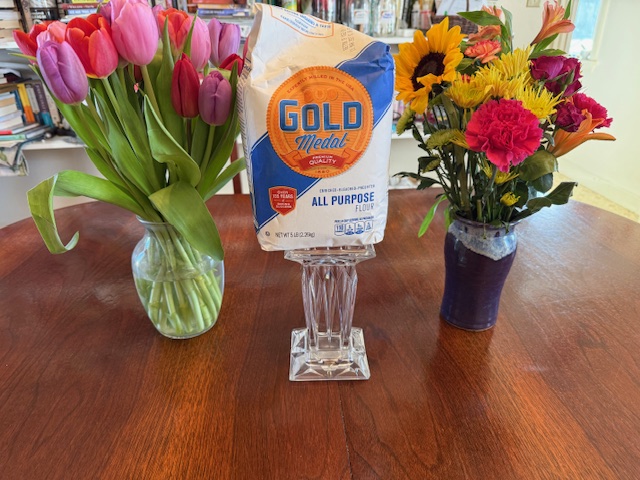
When it comes to quotes, consider the difference between how you buy flowers and how you buy flour. Also, imagine them sitting in a nice vase…
In media writing courses, we talk about quotes being the spice that zips up the story or the sparkly diamond that draws the attention of the reader. However, not all quotes actually do this, because simply slapping quotation marks around a pedestrian set of words doesn’t get the job done.
PR practitioners tend to write press releases that have at least one block quote in them, with some releases being nothing but one giant “statement from X Person” quote. News writers tend to build the bodies of their stories with at least a few paraphrase-quote pairings that are meant to give readers varying views of a topic and a wide array of people a chance to speak. In a lot of cases, those quotes are either relatively pointless or they offer little in the way of quality.
How is it that so many people are proud, happy and thrilled to be there in EVERY PRESS RELEASE, ALL OF THE TIME, even when the writer can craft the quote for the person being quoted? How is it that reporters who get to interview sources also manage to come back with such “meh” quotes from sources who really SHOULD be so proud, happy and thrilled that they can’t shut up about their subject?
Here are the reasons why:
People are afraid to do anything different, lest they offend someone:The phrase, “It is better to remain silent at the risk of being thought a fool, than to talk and remove all doubt of it,” is usually where most people want to be when the chips are down.
To that end, it’s a lot easier to do a bland, mediocre quote than to state something important with your name attached to it. Interview subjects with experience tend to lapse into cliches to avoid really upsetting people, while the press release quotes also tend to play to the middle of boring to avoid controversy.
Writers aren’t as creative as they need to be:One of the things that differentiates PR from news is the concept of quoting sources. If there’s one area where I’ve seen people have the MOST difficulty in making the shift, it’s here.
News requires you to go out, find someone and get something out of their mouth in a word-for-word format. PR in many cases allows for practitioners to write up something on behalf of the client and then just get a “sign off” on it.
Even though you CAN do this, it doesn’t always follow that you SHOULD, primarily for the reason we’re noting here: You don’t know enough about your source, the topic or the non-data stuff to really come up with that whiz-bang quote that will make the difference here.
The same thing can be true of news writers, who don’t put enough time into their research to ask questions that probe or engage the source. If you ask a generic question, you tend to get a generic answer.
Writers aren’t pushing for quality: I can’t tell you how many times I was told to “get a quote” for a story. It was basically like this scene from “The Paper” where Michael Keaton just wants “something:”
I say this as a fellow sinner who often was on the hook for getting a quote, any quote I could from any source, just so that we could say we quoted someone. However, it seems like “get a quote” is a general resting pulse for how we do business.
With those things in mind, here are a few ideas on how to get better stuff:
Don’t shop for flour. Shop for flowers:In the middle of pierogi season at our house, Amy often sends me out for supplies, the most common of which was flour. The direction was simple: “Go to the store and get a bag of flour.” I dutifully comply by driving to the closest place I could and grabbing a five or 10 pound bag off the shelf that resembled the bag she had just emptied.
When I got sent into the field as a journalist, I often felt that was how I was supposed to get quotes. It was like “Go to the store and get a bag of flour.” OK, if that’s all I’m doing, all I care about is going there, picking something off the shelf and coming home.
That’s part of the problem with quotes: You don’t just want something off the shelf.
Instead of shopping for flour, think about shopping for flowers for someone you love. Think about what it is that makes that bouquet special, beautiful and different for them. Think about how you want the reaction to be when they see it. Think about doing more than grabbing whatever is convenient.
Research better beforehand to ask better questions: As we’ve said here repeatedly, the key to everything good we do in journalism is in the preparation. The more work we do at the front end of the process, the better things will be at the back end of the process.
One of the reasons PR quotes are so “meh” is that practitioners don’t dig into the topic or the organization to find things that make it special. When all we have to work off of is a baseline understanding of the concept, which usually comes from a buzzword-laden mission statement, we’re operating in Generic-ville.
The benefit of doing the research before crafting that quote is to make it feel genuine and informed. In adding special touches based on detailed information you found, you not only have a better chance of making your source sound good, but you also have a much better chance of drawing a reporter’s attention.
In the case of reporters and practitioners who rely on interviewing, the research ahead of time can help you shape more pointed and engaging questions that will elicit stronger responses. When you ask that, “So what can you tell me about X?” question, the source will lapse into their “greatest hits album” answer, with all the generic info and cliches. If you can ask something that shows you’ve invested time and energy in the question, you’re likely to get that source to be more engaged.
Change the source’s perspective: Most of the time, the sources we interview either play to us as media practitioners or play to a perceived audience of peers. Those quotes tend to be more jargon laden or otherwise disengaged, and they usually don’t do much for an actual audience that will eventually read their quotes.
Put the source in a different state of mind, based on your full understanding of who you see as the readership. Try asking a question like, “So how would you explain this to a worker on the assembly line?” or “What would you say to a parent in the school district about X?” or even “Could you explain this to me like you are talking to a child?”
In shifting the perspective of the source in terms of understanding the audience, you can get them to shuffle the deck a bit and deal you a better hand. I’m a particular fan of the “child” quote when I’m talking to a source who is clearly exceptionally well-versed on their subject, to the point of assuming everyone else knows as much as they do.
I also like the idea of thinking about who else might be a source in my story to shape the questions. For example, if I’m talking to a product seller, I like to ask them to shift focus to being a product consumer. If they’re a superintendent, I like to get them to shift to think like a parent, a teacher, a custodian or a kid.
In getting them to move, they tend to get out of the rut where cliches live and give me something different.
When it comes to fact checking and BS detecting, I often tell students about a story I wrote involving the Mifflin Street Block Party about 30 years ago. The party got way out of hand late at night, with students setting bonfires in the middle of the street and even burning a car. When firefighters arrived to extinguish the blazes, the party participants repelled them with bottles, rocks, cans and anything else they could throw.
With the fire truck damaged and the firefighters outnumbered, the police eventually went in with riot gear and battled for control of the scene, as the party folks chanted, “F— THE PIGS!” at the top of their lungs.
The next day, I’m talking to the public information officer from Madison PD and I ask if, since it was the first time they donned riot gear since the Vietnam War, if they called out a 10-33, Riot In Progress.
“Don’t you dare call this a riot,” he told me.
I then explained I’d seen what had happened and the carnage that was left behind, so if it’s not a riot, what was it?
“It was a large, prolonged disturbance,” he told me before hanging up.
We are apparently entering another period of Jedi Mind Trick 101, in which people in power are telling the media, “Don’t call this a war. It’s not a war.” Therefore, I thought it might be a good time to pull this post the fact-checking exercise along with it out for another run.
Journalism 101: Facts matter, so don’t feel bad about forcing people to get them right
Trump nearly backed out of an August interview with a group of Black journalists after learning they planned to fact-check his claims. The following month, he and his allies repeatedly complained about the fact-checking that occurred during his debate with Vice President Kamala Harris, berating journalists and news executives in the middle of the televised debate.
And this month, Trump declined to sit down for an interview with CBS’s “60 Minutes” because he objected to the show’s practice of fact-checking, according to the show.
<SNIP>
The moves are the latest example of Trump’s long-held resistance to being called to account for his falsehoods, which have formed the bedrock of his political message for years. Just in recent weeks, for example, Trump has seized on fabricated tales of migrants eating pets and Venezuelan gangs overtaking cities in pushing his anti-immigration message as he seeks a second term in office.
THE BACKGROUND: The joke I always go back to is the familiar one of, “How can you tell when a politician is lying? Their lips are moving.” The idea that politicians fabricate situations is not a new one. Nixon’s “I am not a crook,” Clinton’s “I did not have sexual relations…” and Mark Sanford’s “hiking on the Appalachian trail” are some of the more infamous ones, as they intended to cover over embarrassing personal failings and limit political fall out.
Even more, politicians invent people they saw, they met and they heard, all in the service of some anecdote about salt-of-the-earth farmers getting the shaft, military leaders praising their brilliance or other similar moments of self-aggrandizing puffery. And of course there is the myth-making that surrounds some politicians, like George Washington’s cherry tree or Reagan’s trickle-down economics…
As far as this election is going, Tim Walz was fact-checked on his claims about his service, his presence in China during the Tiananmen Square protests and his family’s use of IVF services, each of which resulted in some disparities. Kamala Harris is also ringing up a few “false” ratings from Politifact on some of her claims regarding illegal drugs and her own previous political efforts.
Still, most of this is piddly stuff compared to what Trump does on a daily basis, both in terms of frequency and intensity. If Walz’s “carried weapons of war” statement is a leak in the truth boat, Trump is continually bashing the Titanic into the iceberg and flooding every compartment.
WHY DO WE CARE AS JOURNALISTS: Despite what the former president of the United States things, facts have a definition: things that are known or proved to be true. The job of a journalist is to get the facts and report them, so that people can make informed decisions on important things in their lives. If you strip away everything else from journalism, that’s the beating heart at its core.
Telling journalists you will only talk to them if they promise not to fact check you is like telling me, “You can come to our party, but only if you promise to not be a bald, middle-aged white guy.” It’s what I am, so that’s going to be a bit hard to square that circle.
People rely on facts to have a shared understanding of reality, so that society can function. It’s why when we bring a shirt to the check out kid and that shirt is priced $19.99 plus tax, we understand it’s probably going to cost about $21 or $22, give or take your part of the country. If the kid says, “That price is fake news. You owe me $150 and can’t leave until you do,” that breaks the whole “shared understanding of reality” thing.
For years, journalists have been telling people, “You’re entitled to your own opinion, but not your own facts.” Somewhere along the way (I blame the internet), it actually became, “Pick your own facts and then be outraged when someone disagrees with you.”
EXERCISE TIME: Pick out a TikTok on any hot topic that’s going on today (politics, Diddy trial etc.) and write down whatever statements these people are declaring to be facts. Then, go fact check them against
One of the hardest things to get my students to do is to work in the inverted pyramid. I don’t think I’m alone in this, given a) most of the stories they’ve read over the years are chronological instead of driven by descending order of importance and b) most of them tend to write expansive term papers for other classes, in which the focus is predetermined and being lengthy is rewarded.
To get them better focused, I often leverage the concept of self-interest: “Instead of thinking about what you, the writer, wants to tell me, the reader, consider thinking about what you would want to know most if you were reading this and then write it in a way that would best meet those needs.”
Sometimes, like this week, we have to go even more basic than that, which brings me to this week’s throwback post about our fire brief exercise. It’s amazing how quickly their viewpoint shifts when I have them thinking about their home being on fire instead of writing about a fire that happened elsewhere. I hope this will help you help your students find focus as well.
The Self-Interest Gap: Learning how to care less about what you want to write and more about what the audience wants to know
Self-interest is perhaps the one commonality humans share these days and it can be summed up in a simple question: “What’s in it for me?”
When you are on the “receiver” end of the process, it’s something we understand very easily. We know almost instinctively what is of value to us and what we care about right away. That said, when we put on the “sender” hat, we tend to focus more on what we want to tell people, forgetting that those people have their own set of interests we should be focused on.
Case in point, I asked the students to write a brief based on a press release about a fire. Here are the opening lines of a few of those briefs:
Firefighters responded to an engulfed single-story house shortly after 6 p.m. Sunday…
Boone County Firefighters responded to a call of a Sturgeon house fire…
Sunday evening, Boone County Firefighters responded to a call at 6pm on an electrical house fire…
A structure fire occurred at 520 S. Ogden in Sturgeon on the evening of Sunday…
Boone County Firefighters responded to a home engulfed in black smoke…
What we learn essentially in these things is either:
Firefighters responded to a fire.
A fire occurred somewhere.
If you were on the “receiver” end of the information, how much of this stuff would you care about? Of course the firefighters responded to the fire. That’s what they do. Also, fires occur everywhere from giant farm fields to the burn barrel in my yard. However, as a “sender” we tend to ignore that until we are forced to switch perspectives.
In thinking about this issue, I posed a question to the students meant to tap into that idea of self-interest: “Let’s say you get home after class and your roommate says, ‘Hey, your mom was trying to reach you. There was a fire at your house…’ What would be the first thing you would want to know?
Answers came quickly and easily:
Is everyone OK?
How bad was the fire?
What happened out there?
In this case, a good response might be:
“The fire destroyed the house, but nobody got hurt.”
That’s the core of a good lead, with a strong focus on what matters most (big ticket item) and what people cared about most (answer to the first two sentences). When it’s your mom or your house, you have specific interests that a good source of information will attend to. If you can take that perspective and play on the audience’s self-interest, you can have a much sharper focus when it comes to telling the story directly and clearly.
I hope the computer-based journalism helpers Chris Quinn is putting his faith in work better than the Cleveland Plain Dealer website. I tried to buy a subscription to view his diatribe about journalism schools and AI, only to have a spinning wheel of death show up for about a day or so…
By removing writing from reporters’ workloads, we’ve effectively freed up an extra workday for them each week. They’re spending it on the street — doing in-person interviews, meeting sources for coffee. That’s where real stories emerge, and they’re returning with more ideas than we can handle.
<SNIP>
Journalism programs are decades behind. Many graduating students have unrealistic expectations. They imagine themselves as long-form magazine storytellers, chasing a romanticized version of journalism that largely never existed.
That’s what they’re taught.
DISSECTION TIME, PART I: Let’s look at both Quinn’s arguments as well as take some time to disprove them, starting with his view of students and journalism programs:
The Strawman Student:Quinn’s piece begins with an exemplar of how students suck these days, especially because we teach them poorly at every journalism school in the country:
A college student withdrew from consideration for a reporting role in our newsroom this week because of how we use artificial intelligence.
It reminded me again how college journalism programs are failing to prepare students for the workforce.
I don’t have a reason to doubt Quinn that this kid exists, but I also have no reason to trust him. I’d like to see the withdrawal letter/email/voicemail the kid sent and I’d probably also like to talk to the kid.
See, Chris, sometimes people tell you stuff that isn’t true, like “I really wish I could make it to your party” or “The break up isn’t about you, it’s about me” or “It happens to a lot of guys and it’s not a big deal.”
Maybe this kid didn’t want to work for someone who saw their role in the newsroom as feeding grist into a mill for a robot overlord. Maybe they actually enjoyed writing, so giving up the part of the job they like wasn’t worth it to them. Maybe, and I say this as a huge fan of the sports teams, they didn’t want to move to Cleveland.
Could be a lot of things, but blaming it solely on your AI policy helps you nicely set up your argument that journalism schools suck.
The Incorrect Overgeneralizations:The bigger problem here is the leap from this one kid not liking something to all journalism programs failing all of the kids out there all of the time. Even if we pretend that this one alleged kid was so allegedly horrified at the Plain Dealer’s amazing-as-hell AI set up that they had to pull out immediately, it doesn’t follow that all kids in all schools are taught to hate AI. This is called negative social stereotyping.
Even if that feels like a bit of hyperbole, let’s at least agree that not every kid who comes out of a program is the exact same in terms of quality, maturity and expectations.
Also, I think we can agree that not every journalism program is created equal, so while the kids at University A might be using smudge pots to ward off the evil spirits used to power AI, kids at University B might be getting some good data journalism help, transcription services and other goodies, courtesy of AI.
Then again, maybe we can’t agree, given this generalization:
Like many students we’ve spoken with in the past year, this one had been told repeatedly by professors that AI is bad. We heard the same thing at the National Association of Black Journalists convention in Cleveland in August. Student after student said it.
Chris, did you bother to dig a bit deeper on this, because there are a few nuances that merit consideration. First, who were these professors? Were they in journalism or were they in departments where they’ve gotten used to grading 500-word essays that AI can now crank out in 18 seconds, thus putting the fear of God into these people?
I’m also curious, given your disdain for journalism programs, where did the amazing Hannah Drown and Molly Walsh garner their educational pedigree that mixed the poli sci, business and non-profit knowledge you desperately want kids to have?
Oh… Yeah…
Given their background, I’m wondering how Hannah and Molly feel about this proud declaration you made:
Fortunately for those of us who know exactly what skills we need in applicants, AI has altered the landscape so dramatically that we don’t need journalism school grads.
We don’t need any damned JOURNALISM GRADUATES… Except, of course, the two we hired to do this work that we’re so proud of…
The Erroneous View of J-Schools: I’d like to know how many journalism programs Quinn visited in the past five years. A five-year span would cover the time frame where artificial intelligence would have become relevant enough for schools to start embracing a relatively stable set of AI tools.
I’d put the over/under at about three schools, and I’d advise people to take the under.
There are likely colleges that are shunning AI, but clearly many more are embracing specific aspects of these tools.
Stanford, UCLA, Atlantic International University, Florida and Columbia are just a few of the other schools that have Journalism-based AI courses on the books, and those are just the ones I found on through a cursory search. That’s not even counting all the programs (ours here included) that have infused AI into the current courses we have, so we can demonstrate the value of the tools while we teach caution as well.
(NOTE: If your school or your class does some AI stuff, feel free to pipe up in the comments section. I bet we could really make a run at the record for most comments on the blog.)
What we have here is a collection of facts, supported by links to additional information. I’d like to think that’s a bit stronger case than Chris Quinn’s “Old Man Yells at Cloud” approach to generalizing about what’s wrong with journalism schools today.
The “Road Less Traveled” Advice:Quinn’s ignorant view on J-school is problematically compounded by his educational suggestions for kids who want to enter his glorious newsroom:
If you’re a student considering journalism, I’d skip that degree. Study political science. Learn technology. Understand how government, businesses and nonprofits work. Take communications law and ethics as electives. Skip much of the rest.
Got it. Just like you did back in the day! Right, Chris? Oh… Wait…
I don’t know if he’s going to be on College of Media and Communication Dean David Boardman’s Christmas card list this year, but I’d love to see Boardman’s reaction to this column…
Aside from the “do as I say, not as I did” thing, if I wanted to tank a kid’s future, I’d pretty much tell that kid to do exactly what Quinn is saying here.
Technology changes so rapidly that whatever the kid learned in freshman year would likely be obsolete by graduation. You can learn tools, but it’s important to know the broader ways in which they should be applied to further your skills and connect with your audience. For example, in my day, we didn’t major in Quark XPress. We majored in design, used the tool in conjunction with our broader understanding of the field and then adapted to technology changes.
In addition, there’s a reason the phrase “Why try? Go Poli Sci” is still heard in the halls of many academic institutions. It’s also much more likely to be in the “paper law” as opposed to the “trial law” end of the spectrum. I’m not saying a certificate, minor or even double major in this is field is bad, particularly if you want to take your media skills into the political realm. However, you’re not making it to a newsroom solely on a steady diet of Politics and Genocide or Western European Politics courses.
I’d also like to know where Quinn thinks students are getting their interviewing skills, their social media experience or their general reporting knowledge in this newly formed major he’s promoting here.
Being forced to meet people takes effort, particularly based on how today’s generation of students has grown up in a digital-first, post-pandemic, borderline-anthropophobic world. Research suggests that nearly 45 percent of Gen Z men have never asked someone out on a date in person, so if Quinn is assuming this fresh crop of potential folks can do this without some reporting courses (still a thing) or other forced socialization, I’ve got some unfortunate news for him.
DISSECTION TIME, PART II: With that out of the way, let’s pick apart Quinn’s views on artificial intelligence and the glorious way in which it has drastically improved his newsroom:
AI! It’s FANTASTIC! (Usually): Quinn has gone all-in on AI, which is always dangerous when it comes to a new technology. Actually, it’s usually dangerous in any situation, given that most new ideas suffer a lot of growing pains before they eventually become valuable, but so much less so than what was expected.
Still, he’s a fan:
Artificial intelligence is not bad for newsrooms. It’s the future of them. It already allows us to be faster, more thorough and more comprehensible. It frees time for what matters most: gathering facts and developing stories to serve you.
Anyone entering this field should be immersing themselves in AI.
I’ll buy faster, but I’m not entirely sold on the other descriptors here, given what we’ve seen AI mess up already. Dare I say Quinn is “chasing a romanticized version” of this technological marvel.
Words, Words, Words…:Quinn seems to take an almost perverse level of pride in how much content his staff members can grab and how none of them has to do any actual writing any more:
By removing writing from reporters’ workloads, we’ve effectively freed up an extra workday for them each week. They’re spending it on the street — doing in-person interviews, meeting sources for coffee. That’s where real stories emerge, and they’re returning with more ideas than we can handle.
I get that it’s important to do deeper reporting, spend more time with sources and connect with the communities journalists cover. However, the question becomes, “How much of all that good will and strong effort is wasted if you just toss everything in an AI blender and then watch the content move along like you’re “Laverne and Shirley” at the Shotz Brewery?”
Plus, and maybe Quinn doesn’t give a damn, but I’ve found that when I invest a lot in the reporting, I tend to care about the story I want to tell. That usually leads to some stronger, more engaging pieces based on well-crafted writing.
Being a writer isn’t a negative, particularly if you want to write for the benefit of an audience that is interested in what you have to say. I think I’m qualified to say that, given everything I sit down to write has me thinking, “Who would want to read this and what would they want to know?”
I’m not sure if AI has gotten to that point yet, but I know good writers have.
Quantity over Quality:I forget what movie it was in, but there was a scene in which prisoners were told, “We’ve got good news and bad news. The bad news is that all we have for your dinner tonight is horse manure.” When someone asks, “So what’s the good news?” the official replied, “There’s plenty of it.”
Which brings us back to the Plain Dealer’s Bin of AI Content…
A quick look at the list of stories Hannah Drown put together recently provides some sense of the quantity. Each day she appears to be on the job, a handful or more stories with her byline show up. She’s got coverage of events at the Lorain County Junior Vocational School, a UAW strike in the area, a pop-up shop at the Lorain Community College, a school lockout in Elyria and more. The volume is there.
The quality, however, leaves something to be desired.
These are mostly stories that could have easily come from a press release rewrite, featuring a “Hey, come check out this new thing” approach. These lack depth and nuance, not to mention any level of critical thought. The stories have overly long sentences, generally lack flow and are as dry as a popcorn fart.
For all the bragging Quinn does about reporters getting a chance to sit with sources, meet for coffee and chat these people up, most of the content comes straight from documents, not people. A look through more than a dozen of these pieces revealed virtually no direct quotes or specific references to interviews with these salt-of-the-earth individuals.
For example, a story about a school teacher who donated bone marrow to a complete stranger half a world away would seem to be exactly the kind of piece that would engage readers through amazing storytelling. Instead, we get this lead:
LORAIN, Ohio — Valentine’s Day usually arrives with candy hearts and roses, but this year, one of the clearest acts of love connected to the holiday came without flowers at all.
We get no direct information from the teacher about the experience, nothing from the folks at the National Marrow Donor Program talking about the value of the program and nothing from people who have had their lives saved through some of these selfless acts.
The story has zero quotes in it and reads like a “how-to manual” for getting on the bone marrow registry and donating it to someone. Boring doesn’t begin to cover it.
I’m not entirely sure I can blame Drown for this, as it is her job to just shovel content into the front end of the pipeline. It’s also not stated to what degree AI did any work on this (or any other) piece in her clip file, which I’d consider a bit of an ethical concern.
What I can say is that if my name were on these things, I’d want the writing to be a lot better than it is. As we’ve noted before, AI essentially creates an average of EVERYTHING it takes in, regardless of quality, and this definitely feels like “C” writing.
What goes unsaid in Quinn’s magnum opus is that people now have an abundance of media outlets at their disposal that provide vast sums of content. Journalists have to grab people by the eyeballs and hang onto them in a way that distinguishes their work from the noise.
This is where quality writing and keen storytelling come into play and where the generic “held a meeting” leads that AI can churn out will fail.
(FINAL NOTE: I’m sure Quinn would be horrified at the amount of time I spent writing this piece, given his “crank ‘er out” philosophy. I’m fine with it, though, because I believe dedication to one’s craft matters a lot, even if the point is just to tell someone they’re full of crap.)