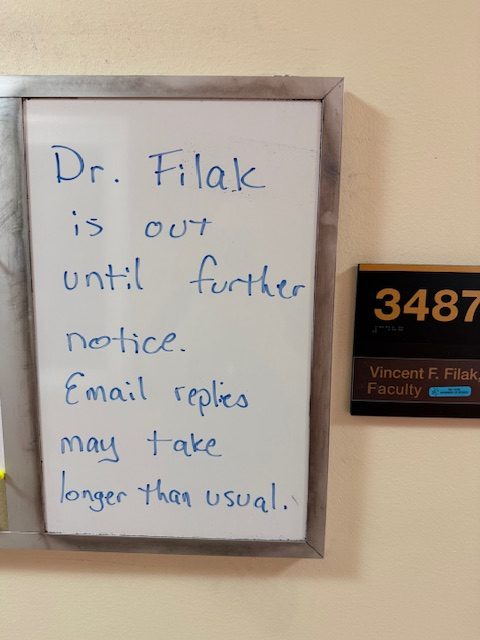
A Sarcastic List of Serious Writing Rules We Need as Media Writers

(It’s important that you get key information in a timely fashion, for obvious reasons, so enjoy the list.)


One of the best things I get to do as a former media adviser and college professor is judge media contests. Between the pros, the college ranks and the high school pubs, I find myself deluged in content on a regular basis. It’s a ton of fun to see what’s going on all over the place, what makes for news in various corners of the country and how certain things are relatively universal across all levels of media writing.

I have to say, and I really believe this, the hardest part of the job is picking and then ranking the winners. It doesn’t matter if it’s just one winner or a top ten, it always seems like there just aren’t enough awards to go around. A lot of good folks are doing some good work all the time.

That said, I also run into a relatively large swath of copy that has me shaking my head a bit. Regardless of experience level, the size of the publication or the purpose of the piece, writers can be uncannily consistent in some really godawful ways.

With that in mind, I’ve built a running list of rules based on the bad, the awkward and the generally problematic writing I’ve been seeing lately. My hope is that it helps break a few bad habits, so folks can make next year’s judging even harder:

If you only have one source, it’s not a story. It’s a soliloquy.

Adding a dozen adverbs to an event story doesn’t transform it into a feature piece.

If you have to tell me, “When asked about XYZ…” in a story, you need to have another place in the story where you tell me, “In a spontaneous outburst of information somehow relevant to this story…”

The key to making a story better isn’t just making it longer.

If a kid from the 1980s could follow your concluding line with, “And that’s one to grow on!” pick a new closing.

Apparently, nobody is a typical professor, a typical administrator, a typical minister, a typical politician or a typical sophomore, so skip telling the reader that in your profiles and just explain who this person is.

Instead of thinking about what you want to write, think about what you would want to know if someone else were writing the story. Then, structure your story accordingly.

Unless you can prove you checked in with every human being on Earth, avoid generalizations like “nobody,” “no one,” “everybody” and “everyone.”

Put extra effort into your opening, whether it is a news lead or a feature opening. If you don’t grab the readers in the first 10 seconds, it won’t matter how awesome the rest of your story is, because they won’t see it.

An expansive vocabulary isn’t meant for you to show off. It’s meant for you to use the exact right words to better inform your readers in a way they can understand.

What you write won’t be perfect on the first pass. If you think so, save a copy for later and try to disprove your assumption with subsequent efforts.

Don’t try to tell me and sell me in your writing. Show me through facts, sources and descriptions and let me come to my own conclusions. You’re a journalist, not a MLM owner.

If you have to explain four things to me before I can understand a fifth thing, that fifth thing better be able to cure cancer.

If you wouldn’t read it, don’t write it.

Just because a source uses a term, it doesn’t mean you should

(I wonder how many transponsters were excessed in this latest round of rightsizing…)

The job of reporters is to take information from sources, distill it into something that makes sense to an audience and convey it effectively. The opening to this story went 1-for-3 with two strikeouts:

I’m going to skip past the empty lead, the two-sentences-that-should-be-one structure and the lack of anything resembling news (if everyone is doing it and it’s not a secret, rarely is it news). I’m wondering what it means to be “excessed.” (A word so stupid, every time I type it, I get the squiggly red line under it.)

Using a partial quote, particularly to showcase an odd turn of phrase, can be valuable. (The mayor calls his opponent a “rump-runt” or a coach calls a compound fracture of a fibula a “teeny tiny break.”) It can also be valuable in calling out the use of a stupid term (“excessed” would likely fit), so the reporter can shed more light on the term in a clear and complete way later.

That didn’t happen here, despite continued use of “excessed,” in quotes and paraphrase. (If I took “excessed” in the “Read this Article Drinking Game,” I’d be hammered after about six paragraphs.

This term is like a number of euphemisms that do nothing to inform readers but instead try to soften the blow of something really bad. A few years back, corporate-speak had journalists using the term “rightsize” or “rightsizing” as a way to explain how a company was cutting jobs and laying off employees. The shift away from “downsize” (which sounds sad because it includes the word “down” in there) was meant to make the actions seem more reasonable.

When faced with something like this, here are a few helpful tips:

AVOID IF POSSIBLE: Just because someone uses a term in their world, it doesn’t follow the rest of us should in ours. It’s the same reason we shouldn’t say someone was “transported to a nearby medical facility” when they are taken to a hospital or say an officer “performed a de-escalation through kinetic application” when a cop smacks someone to get them to stop doing something. Parroting a source because we are a) lazy or b) uninformed is not doing the job. Telling people what happened is.

USE ONCE, DEFINE QUICKLY, MOVE ON: If you have to use a term that is likely unfamiliar to your readers, don’t rely on it constantly. Say it once early in the piece and make sure you define it then and there in a way your readers will understand. Then, use a more common term that relates to the concept throughout the piece, like “the bill” or “the group” or “the process.” That will explain what’s going on without numbing your readers through the repetitive use of something like “excessed.”

ASK THE SOURCE TO TRANSLATE: Sources will likely want to use their preferred terms because a) they are comfortable with those terms and b) those terms are likely advantageous to their position on an issue. “We rightsized the operation to improve productivity” sounds a lot better than “We fired a bunch of people to improve our profits.” Same deal when a law-enforcement agency “neutralized a threat” or “depopulated an area.” Those phrases sound a lot better than, “We shot a guy to death” or “We killed everyone in a two-block radius.”

Have the source put that into English for you and don’t let them use euphemisms to define other euphemisms. If reporters are going to be held to a “what happened?” standard of clarity and simplicity, we need to hold the sources to that standard as well. If they can’t define it for you in a relatively meaningful way, ask them to go through the process associated with that term and clarify it for you. (“So, these people were excessed… What’s the first step in that process? … Do people who get “excessed” lose their right to the job they had? … Can you show me in a contract the explanation and application of this term? …)

Don’t let the sources Jedi mind trick you into thinking that something is normal simply because they use a made-up term repeatedly. If necessary, ask them to explain it to you like you are a child. When they can’t or won’t, that says volumes more than what the term itself is trying to convey.

(And for the love of God, don’t write a lead like this one, no matter what else is going on. The first two or three sentences really should have been “excessed.”)

“Can You Libel a Disaster?” (And several other questions that came to mind after The Atlantic gave Ruth Shalit Barrett $1 Million)

Ruth Shalit Barrett received more than $1 million after suing The Atlantic for defamation, based on its approach to retracting this story. For that kind of money, they must have said this is a photo of Barrett drowning a couple dozen kids in a pool laced with electrical lines. 

THE LEAD: When in doubt, sue somebody, because it apparently works:

The Atlantic quietly agreed to pay more than $1 million early this summer to settle a lawsuit by the writer Ruth Shalit Barrett, who had accused the magazine of defamation after it took the rare step of retracting an article she had written and replacing it with an editor’s note, according to a person with knowledge of the settlement.

Ms. Barrett, who wrote an article about youth sports in wealthy areas as a freelancer for The Atlantic in 2020, sued the publication and one of its editors in January 2022. She said the outlet had smeared her reputation and asked for $1 million in damages.


DOCTOR OF PAPER FLASHBACK: I was working on another post over the weekend when I noticed a post I wrote several years ago about Barrett’s article and subsequent lawsuit was getting heavy traffic for no apparent reason. A quick Google search of her name helped me figure it out.

At the time, I figured there was NO WAY this thing was going anywhere. The strength of my prediction powers is also why I suck at Fantasy Football.


THE DETAILS: Barrett wrote a story about niche sports that rich parents were pushing their kids to enter, in hopes of gaining an edge when the kids applied to Ivy League schools. The story had a number of problems, including an anonymous source that wasn’t that anonymous, the creation of a kid out of thin air, the exaggeration of an injury to a kid during a fencing match and more.

Eric Wemple of the Washington Post dug into this story and started finding more and more things that didn’t make sense, something the editors of The Atlantic also began to notice. At some point, they decided, “Screw it, we can’t save the patient” and retracted the story with a lengthy editor’s note about the story and Barrett’s history in media.

As a result, Barrett filed the suit, arguing that the note defamed her in several ways. She asked for it to be rewritten and that she be given the story’s publishing rights. The two sides went to arbitration, leading to some edits to the note and a lot of cash.


A FEW QUESTIONS: In reading this over and over again, I found myself asking several rhetorical questions, one of which was, “Can I sue Sage for no good reason with the hopes that they give me a squillion dollars to go away for a while?”  While the answer to that one marinates in your mind, here are a couple others:

CAN YOU LIBEL A DISASTER? I’m not calling Barrett a disaster for obvious reasons, not the least of which is I don’t have a million bucks I want to throw away. I’m more or less wondering how we started with a story so bad that it required a full retraction and ended with a pay day of this nature.

The publication stated it was aware of her history of not quite exhibiting the best level of judgment in regard to journalistic integrity. Wemple dug a bit deeper into her life and found more than a few clinkers along the way, including problems with the story on these weird sports. The fact checkers were lied to in at least two cases, with one source being encouraged to lie. (The original note said “at least one” while the new note says “one,” a distinction without merit from a language position. Also, who told you it was “only” one? The person you initially found was involved in all the lying and encouraging others to lie, so… um…)

Courts have ruled on a number of occasions that certain people and situations are “libel-proof,” in that nothing further can be done to harm their reputation. In addition, courts have stated that libel doesn’t apply if only “incremental harm” can be demonstrated. In the former, the courts basically say that someone or something is so bad, any statement that might be libelous toward any other person or group won’t qualify as libel. In the latter, it’s like a person in prison for 10 counts of murder sues you for reporting that they have a dozen unpaid parking tickets.

In looping back to this situation, I fail to see how the changes to the note or the statements regarding Barrett improved the situation to the point of avoiding libel. The distinctions in here feel to me like the quote in “Great Balls of Fire!” when someone yells at Jerry Lee Lewis that  he married his 12 year old cousin, Myra, to which she retorts, “Second cousin, twice removed!” Oh. Well.

The question of how bad was the defamation in relation to what was already out there has me pondering what level of reputation she recouped as a result of the suit. In short, do people who thought poorly of her now think better of her after this? Or did people who thought better of her before the retraction think worse of her AFTER that retraction?

Or did the big check just make things better?


WHEN DID GP GO MIA? I seem to remember a time, not so long ago, when people did things on “GP” or “general principle.” In other words, it was standing up for the right side of something or holding someone to account for something, even if it would be easier to just throw in the towel.

Case in point, my parents told me when I first got my license that if I got a speeding ticket, I’d lose my right to drive for a protracted period of time. No muss, no fuss, no BS. Just put the keys on the table. Sure enough, when I was 17, I was ticketed for speeding along a stretch of road that was a notorious speed trap. I walked into the house, put the ticket on the table, dropped the keys on top of it and that was that for a while.

What my parents DIDN’T foresee was that I was involved in about 912 activities that required me to be at various locations at night and on weekends. It would have been far easier for them to just give me back the keys and let me drive myself. However, Mom and Dad dug in and ended up driving me to and from all those things until the predetermined punishment time had ended. It was inconvenient for them, but they decided the principle of the thing mattered. I learned a lot from that and have since avoided speeding tickets, although now that I’ve said that, I’m sure I’m getting nailed on the way home.

The larger point is: When did we stop fighting just because the fights were hard? We’ve recently had the “60 Minutes” lawsuit, the ABC lawsuit, and several other lawsuits that have the “Fourth Estate” folding like a cheap cardboard box in a rainstorm. It’s like, “It’s cheaper and easier to just pay people to go away.” Well, that’s like paying protection money to the mob, assuming it’s a one-time thing.

It’s not just the news business, but it seems like we fold up everywhere: A kid threatens us, we change a grade. A social media “influencer” pulls focus onto a post we made, we take it down and apologize. Don’t even get me started about what the kids are doing in the ice cream aisle at Walmart these days. What happened to standing on principle?

There are times where I go into a situation knowing full well I’m going to lose and there are other times, where the risks are pretty damned high that I will. Still, there’s something that says, “No. You aren’t folding. You’re gonna play this hand out, because you can’t live with yourself if you don’t.”

I feel this moment so deeply

I understand that money is a predominant factor in pretty much everything in the world today and I know that it’s easy to say what I would or wouldn’t do when it’s not my money to spend. That said, I think back to the people I admire the hell out of in this business, who would never have acquiesced as easily as it seems like so many people are so willing to do.

The “No Comment” Culture and its impact on society

Screenshot

THE LEAD: Ghosting someone may be awkwardly bad form in dating relationships, but it’s a significantly bigger problem when sources do it to journalists. Jim Malewitz of Wisconsin Watch provided some solid examples of why “no comment” can harm the very folks politicians and other public officials are meant to serve:

It’s hard to address homelessness — or any complex challenge — if we don’t even know where leaders stand.

Unfortunately, independent journalists are growing accustomed to being ignored. In a trend spanning multiple levels of government and political parties, public officials are increasingly avoiding answering inconvenient questions about matters of public concern. They’re sending generic statements instead of agreeing to interviews that are more likely to yield clarity. That’s if they respond at all.

<SNIP>

Such tactics are less harmful to journalists than they are to constituents. We ask questions on behalf of the public — not to satisfy our own curiosities. Ignoring us is ignoring the public.

THE “NO COMMENT” CULTURE: The popular quote (often attributed to everyone from Abraham Lincoln to Mark Twain) about keeping your mouth shut does have some merit: “It is better to remain silent and thought a fool than to speak and remove all doubt.” It’s also a lot more dangerous these to say anything that might be construed as… well… anything, thanks to the rage machine that is social media.

Off-the-cuff comments can lead to significant public shaming, as was the case when a press aide for the White House dismissed John McCain’s opposition to a nominee by saying, “It doesn’t matter. He’s dying anyway.” 

When people make public comments as part of longer interviews, it turns out that a lot of the public will, gosh, hold them to those comments. When he was a candidate for governor of Wisconsin, Scott Walker stated that he planned to create 250,000 new jobs in his first term. When people who can do math and understand money figured out this was impossible, Walker tried to back off by saying he was more generally talking about improving work opportunities and making Wisconsin a better place to be for employers. Still, that 250K number hung on him like a millstone.

Public relations practitioners, spokespeople and other “handlers” have done significant work to help people who actually need to say something offer blanket statements through press releases or social media accounts while not really answering any questions or opening them up to public scrutiny. All of this has created kind of a “no comment zone” even when people do offer comments.

DOCTOR OF PAPER FLASHBACK: Perhaps one of my favorite stories ever written here in Oshkosh was one a student of mine cobbled together using almost nothing but “no comment” comments. When a professor was escorted out of a classroom on the first day and then replaced by a long-term sub, students wondered why. Administrators and various other officials figured if they just pulled an “ostrich move” they could prevent the story from getting out. They were wrong.

PLEA TO PR PEOPLE: If you want the media to take your clients seriously, put some actual time into coming up with some sort of statement that doesn’t look like you downed four Monster Energy drinks and started typing buzzwords.

Think about what you can say (in short, what you know), what you can’t say (what you don’t know or are legally prohibited from saying) and what you want to say (things you can say that you prefer to have the public understand). Then, filter that through the concept of audience-centricity: What would the people this journalist is trying to serve want to know from us that we can tell them and that is (at least) mutually beneficial.

Make those statements less of the “we’re proud, happy and thrilled” variety, as people tend to think you’re hiding something. Make them more of a “here’s something of value that matters to you as best as we can tell it to you.”

PLEA TO NEWS PEOPLE: I’ve been out of the game for a while, but I seem to remember a time where we wrote stories based on talking to people with our mouths. I know that it’s easier to wait for everyone to “issue a statement” and then dig through some people’s social media posts for “reactions” and build something out of that.

The question I have, however, is: how does that actually help the audience?

In most cases those statements (see the PR thing above) are as boring as bug turds and as polished as a gem. They give you nothing other than to say you got a statement. (I’d also plead for journalists to not let political hacks pontificate as part of their quotes, taking shots across the aisle, but that’s another plea for another time.)

If these people aren’t talking to you, try listing off all of the stuff that literally tells the readers, “Smith’s statement did not answer X, Y and Z, or P, D and Q.” I understand shame is no longer a real concept these days, but let’s give it the college try.

PLEA TO OFFICIAL SOURCES: Don’t be wussies.

(Regular people who are thrust into the media realm through no fault of their own are exempt from this criticism, as they are inexperienced in working with the media and often dealing with something serious. Those folks deserve our respect and our patience.)

If you are in the public eye and serving the public trust, answering to the public you serve is part of the gig. Yes, using your own social media is part of that, but journalists are meant to serve as a conduit between you and the public that needs to know stuff.

How can we trust you to be operating in our best interest if you run and hide under the bed every time a media operative who is not predisposed to kissing your ass shows up to ask you to justify your actions? If you can’t handle the heat of an impertinent questions, how can we trust you to handle the budget, the school board, state law or federal actions? If you feel you aren’t good at working with the media, OK, but then go learn how to do it.

I’ll be much better for everyone involved if you participate in the process.


Eight Years a Blogger: Come for the knowledge, stay for the snark

It’s hard to believe this thing is still going after eight years, kind of in the same way its hard to believe that the almond-colored refrigerator with the faux-leather texture and Bakelite handle that your parents bought in 1983 refuses to die. I always figured Sage would have decided I was more trouble than I was worth by this point, or I would have run out of bits of wisdom, weirdly effective exercises and opportunities to mock god-awful mistakes in the media.

Oddly enough, that’s hasn’t happened. And speaking of exercises, if you still want to get in on Dr. Vinnie’s Bin of Exercises and AI Joy, feel free to hit the link here.

This semester is guaranteed to be a little off as far as the blog is concerned, in that I found out last week I will need to teach a fifth class this term. It’s the second of the five that I’ve never taught before in my nearly 30 years of college teaching and the third of the five that’s not in my area of expertise.

Why, you might ask… Well..


The relative insanity that this blog provides me might be my only salvation, so let’s get started with a few thoughts to brighten your day (and allow me to blow off developing a giant roster of PowerPoints and podcasts I will likely use only once in my lifetime):


STUIPD IS AS STUIPD DOES, TOO: In digging through a ton of examples I wanted to use for the upcoming classes I am prepping, I was stunned at the level of general incompetence when it came to making sure things were edited before they went out. I’m not talking about internet memes or mom-and-pop operations posting on an AOL-Dial-Up-Friendly website. I’m talking about actual organizations with money and staff support.

The number of missing words, misspellings and generally bad writing made it tough to find quality examples for the kids. I mean, I can’t exactly say, “Here’s a great press release, if you ignore the three misspelled words in the lead and the sentence structure that makes Tarzan look like Shakespeare.” Of all the blunders out there, I had to highlight this one:

If you are in the state, promoting the state and having a fair for the state, the least you can do is spell the name of the state properly in the headline…

Also, for the sake of irony, I found this job posting for an entry-level PR position with these two key bullet-points back to back. And I SWEAR I didn’t PhotoShop this:

I looked at it three times and thought, “Is this like one of those tests where they try to trick you? Like that one speed test where you are supposed to read the whole set of directions first, so that you figure out you only need to do the first thing on the list?

Or do they just really need proofreaders that badly?

Speaking of someone who needs a proofreader:

If you really need something that big to house that item, I feel sorry for your significant other…


DID THAT REALLY JUST HAPPEN? I’ve frequently noted that paranoia is my best friend, so much so, that I often find myself doing double-takes on things I swear I saw that turn out to not be as bad as I thought. It usually comes up when I see a sign for “angus” burgers or “first-hand jobs” or something where my mind drifts to the terrible error, even if there isn’t one.

That said, this Milwaukee Journal-Sentinel headline on my phone really should have freaked out a couple people somewhere at the newspaper:

For starters, that’s not Cavalier Johnson unless I have officially gone blind from computer monitor radiation. Here’s his official city photo:

I have no idea who the dude at the podium is, but Arnold Schwarzenegger and Danny DeVito made a more convincing set of Twins than the two people in the photos above.

Second, and this is really what caught me, that has got to be the worst headline break any human or computer could have made with this story. When I saw that “Johnson speaks with black talk,” I think my brain broke, before remembering Robert Townsend’s spoof of how white people do stupid stuff in Hollywood.

I understand that everything can’t be perfect in every publication, but I also know there are certain topics that need a little more attention and care, due to their sensitivity and the long history of insensitivity associated with them. This is one of those where someone fell asleep at the wheel.

Conversely, sometimes we can really go a bit far in clarifying things for our readers:

Thanks for the clarification, CNN. Otherwise, I might have been confused…

And finally…

I, (FILL IN NAME HERE), AM HAPPY TO HELP (FILL IN NAME HERE): As is the case every semester, I got a series of “could you please squeeze me into your full Writing for the Media class?” emails over the past couple weeks. The excuses are usually the same (I missed my registration day, I accidentally dropped it, I died while donating my heart to my cousin, but thanks to revolutionary bionics, I’m back now…) as are the ramifications they use to nudge me in their favor (I need this to graduate, I can’t move on with out the class, I’m planning to join a biker gang but they won’t take me without a bachelor’s…)

This one came oh so close to moving me…

Look, AI can be helpful in some cases, but your really gotta meet it halfway…

And off we go on another semester-long adventure. Let’s stay safe out there…

Vince (a.k.a. The Doctor of Paper)

“Education in Indiana is a mess right now:” Student media are getting beat up in the Hoosier State

THE LEAD: Indiana, home of some of the best student media outlets in the country, appears bound and determined to kill off that reputation in some of the dumbest ways possible.

Purdue University recently informed its independent student newspaper, The Purdue Exponent, that the university would no longer assist in distributing print copies of the paper. Purdue also informed the Exponent it no longer wants the Purdue name to be commercially associated with the paper and that Exponent staff can no longer purchase parking passes on campus.

<SNIP>

Indiana University’s student newspaper, the Indiana Daily Student, has reduced its print distribution from weekly to a few times a month while struggling to navigate a changing relationship with the school.

Last year, the IDS found out from a leaked document that it would be part of a financial merger that included IU student television and WIUX. As part of the new arrangement, the IDS’ weekly print distribution was reduced.

This year, the IDS applied for funding from mandatory student fees through the university’s standard review process. The student-run Committee for Fee Review unanimously approved the proposal, but Provost Rahul Shrivastav rejected it — apparently the first time a provost had overruled the student committee’s decision.


DOCTOR OF PAPER HOT TAKE: Student media is always on the cusp of being beaten to death, but this situation hurts a little more because a) There appear to be fewer guardrails to prevent this kind of stuff these days in student media (and media in general) and b) it’s happening in Indiana, which has a strong, proud history of awesome student media that was well protected from overreach.

The logic behind both maneuvers appears to be as flimsy as the reason to keep Indiana’s Blue Laws on the books. (When I lived there in the mid 2000s, I wasn’t able to buy beer for making brats on a Sunday. That’s a crime against humanity, if you’re from Wisconsin.)

In Purdue’s case, the argument is that a contract expired and it’s time to reconsider the relationship between the paper and the campus. This might make sense, if the contract hadn’t expired in 2014 and yet both sides have abided by the contract terms in the intervening 11 years. Also, a “reconsideration” should probably involve some discussion between the parties (missing here) and some explanation as to WHY they’re reconsidering it (missing here as well).

In Indiana’s case, it’s a rolling clustermess of stupidity that we covered last year in detail. What was initially pitched as a “convergence effort” seems to be morphing into something else. To make up for the cutting of the print edition, something the students resisted, but the admin demanded, the Indiana Daily Student applied for campus funds to make up the difference. The student group that needed to approve it did so, but apparently “the kids’ opinion” only counts when it does what the admin wants, so the provost red-flagged the operation. According to coverage of this, it was the only time this kind of overreach happened. 

The students have the support of amazing organizations like SPLC, FIRE, ACP and CMA. In addition, student media outlets tend to have deep, rich alumni networks of people who will step up and say, “Oh HELL NO!” when this kind of thing happens. That said, the overall environment in which the media finds itself these days seems to make it easier to beat up on the media and get them to acquiesce to outrageous demands. That’s a clear concern.

The second concern about this happening in Indiana is really more problematic to the student media community at large than it might seem at first glance. When a friend of mine tipped me to this situation, she noted, “Education in Indiana is a mess right now.”

To my way of looking at it, hearing that Indiana is falling this hard is like hearing the New York Yankees are going bankrupt and turning to a little league team for players. If that’s happening to a big dog, the rest of the litter is screwed.

Two days after I got to Ball State to become a media adviser,  Louis Ingelhart was sitting in my office, ready to explain to me the importance of free and unfettered student media in this state. Louie was the gray eminence of student media in the state and in the country at that point. Every major First Amendment award worth winning, he won as a champion of free press. After he retired, pretty much every student media award associated with the First Amendment was named after him. He had established a policy that the only hands that should be reaching out to student media were helping hands and hands full of cash. Other than that, it was hands off.

One day later, I found a letter with a post-it stuck in my mailbox: It was from Louie, telling me I should get involved with SPLC. I still have that letter nearly 25 years later.

The ink has faded over the years, but it remains one of my favorite possessions.

It wasn’t just Louie, though. My boss in the department stood up for us more times than I wished she had to, all without once thinking about it being easier to acquiesce to the dark overlords of suppression. When we got a new dean who asked, “If Vince isn’t down in the newsroom every night editing the kids’ stuff, what are we paying him for?” she set the guy straight and made sure he understood how life worked.

At Indiana, we had David Adams, who helped develop outstanding journalists in a professional environment, all while making sure nobody messed with the IDS (and other outlets). Dave and I sat on the Indiana Collegiate Press Association board for about five years, and that group had significant participation from all the big and small schools, the publics and the privates. Administrators learned that the kids all had “big friends” who were not going to let the university steal the kids’ lunch money. Department heads at Indiana State, IU, Ball State, Purdue and others were behind the kids’ rights.

Now it looks like the admins aren’t as afraid as they used to be. That’s not to say that the advisers, student media outlets and student media folks aren’t as tough as they used to be. Not at all. In fact, they’re probably tougher and stronger than we were because they HAVE TO BE. However, it sucks that they have to be that good at this. Even more, it’s disappointing that administrators don’t understand they’re killing the goose that laid the golden egg.

Getting a publication off the ground is ridiculously hard. Keeping it running is even harder. Making sure it stays consistently awesome for a protracted period of time? Yeah, I’ve got a better chance of growing a “Farrah Do” by tomorrow than having that occur on the regular. Watching these people starve and abuse these kinds of publications is like watching some idiot spinning donuts in a parking lot with a classic car. Why wreck something something so amazing?

And, not to put too fine of a point on it, but if Indiana is kicking around student media, given the state’s decent history on being a beacon for First Amendment freedom, it’s going to get worse for everyone else as well.

Goodnight, Cliff Behnke. There will never be another one like you.

I bogarted this photo of Cliff from the obit. I’d argue “fair use,” but I probably wouldn’t argue it with Cliff.


Cliff Behnke, the former managing editor of the Wisconsin State Journal and generational journalist, died Sunday in Madison at the age of 80.

The irony of this piece is that it’s impossible to explain Cliff without resorting to cliches, a writing failure the man himself disdained.

Cliff despised lazy writing and wasn’t above telling writers how much redundancies, passive voice and unneeded descriptors displeased him. However, if there is one thing anyone who worked under him knew he hated most, it was cliches, so much so that the concept led his obituary this week:


Spring never sprung under Cliff Behnke’s watch.

“White stuff” didn’t fall in winter, and no reporter ever dared refer to Thanksgiving as “Turkey Day.”

Behnke was a stickler for detail and standards during his four-decade career at the Wisconsin State Journal.

(I managed to pull off a minor miracle once in a weather story when I used the phrase “a white, wintery mix” and Cliff never said a word.)

The cliches really did tell the tale of Cliff, as everyone in Barry Adams’ fantastic obituary seemed to use one now that Cliff could no longer stop them.

He was an “old-school editor,” in that he prized big-picture accuracy, clarity and value while simultaneously picking at the details that would rob a piece of any of those things. He was “no nonsense” in that staffers knew him to be serious and direct, focused and fair as he kept the newsroom moving forward. He was a “newspaperman in the best sense,” spending far more time in his college newsroom than his classes and helping to shepherd the state’s official newspaper throughout the salad days of print journalism.

In reading Cliff’s obituary, one fact discombobulated me: His age. I was in my early 20s during the three years I spent working the night desk at the State Journal. That would have put Cliff in his early 50s back then, which is where I find myself now. I can’t square those numbers, given that I have neither the skills, the seriousness or the stature that Cliff had at this age, never mind how he terrified staffers in a way that is almost impossible to explain.

I feared Cliff, as did a number of the folks quoted in Adams’ piece, but not in the cliche way usually associated with “old school” editors. He never yelled at me, nor did he have a large physical presence that had me afraid of violence. He didn’t break out a string of colorful curse words when dressing me down.

(Cliff was always on the lookout for stray curses making it into the paper. I remember him calling out a sports story that contained a quote like, “We played a hell of a game.” Cliff’s restrictions on cussing in print would make a 1950s all-girls boarding school look like a biker bar. It took at least three phone calls for us to run a quote in one of my stories about a riot with the quote “F— the pigs!” in it. And, yes, that was WITH the dashes.)

Listening to Cliff’s assessment of my screw ups was like watching a ninja throwing razor blades at me. It was just slice, slice, slice until I fell into 1,000 pieces. It could be about something big or about something small, but I still remember (and refer to) a number of them.

In one case, it was a redundancy. I was writing a photo caption about a model train railroad show when I felt the presence of Cliff lurking behind me. He began simply enough:

“Can you imagine if there were 88 model railroad layouts that were EXACTLY the same?” he asked.

“Huh?” I replied, unsure as to if I was having an out-of-body experience because Cliff was talking to me.

“Do you think it would be possible for a group of people to build 88 IDENTICAL model railroad layouts?” he said in that calm, metered voice of his.

“Uh… No?”

“Right. So why are you telling me that there are 88 DIFFERENT model railroad layouts in this cutline? Of course they’re different. That’s redundant.”

He then disappeared almost as quickly as he showed up and I still haven’t forgotten that lesson.

I also never forgot the time I should have been fired for screwing up a brief, in which I reported that a guy was dead when he wasn’t.

It wasn’t bad enough that I screwed it up, but then the local radio stations did their “rip and read” journalism on the air, letting EVERYONE know the guy was dead when he wasn’t. Our competing paper also used to love to crib our stories and then claim they had an “unnamed source” that confirmed the info, so those folks also amplified the story. It turns out everyone was wrong because I was wrong.

The man’s wife was getting condolence calls from people who saw or heard the “news” and she freaked out that the news people knew about his death before she did. After a complete clustermess of a situation, I got called into Cliff’s office for what I assumed would be the end of my journalism career.

After slowly and calmly walking me through every stupid thing I had done and every way a reasonably competent biped could have avoided that stupidity, he told me that the woman wasn’t going to sue us, but she had several demands. Aside from a correction for the paper, I had to write a letter apologizing to the man’s children for screwing up and then I had to hand-deliver it to his wife and talk to her for as long as she wanted.

“You need to go to the hospital at 10 a.m.,” Cliff said. “You will not justify your mistake. You will not discuss your feelings. If anything comes out of your mouth other than, ‘Yes, ma’am,’ ‘No, ma’am’ or “I’m sorry, ma’am.’ You are gone. Do you have any questions?”

I was both young and stupid enough to have one: “Yeah. Why don’t you just fire me now instead?”

His response was perfectly Cliff: “I honestly don’t know, so get out of my office before I figure it out.”

What he taught me that day was responsibility for my actions, the importance of paranoia-level accuracy and that I needed to tough out this painful lesson if I was ever going to be much of anything in this world. As another editor explained to me when I said I should just quit, “How are you ever going to teach a student to do something tough if you won’t do it yourself?”

I didn’t work for Cliff as long as many other people did, nor did I spend much time in contact with him during my time at the paper. In reading some of the online tributes to him, he was both everything his obit said and so much more. He was generous with his time to Daily Cardinal kids, serving on the board and kindly mentoring staffers as they gained their legs in journalism. He was a giving person to friends and family who knew him less as a mythological editor and more as a human being.

What I can say is that there will never be another editor like Cliff, as the confluence of events that made him could not exist today. Nobody is going to spend four decades in journalism anymore, least of all in one state or at one publication. That means we won’t have someone like Cliff who can capture the culture and soul of the audience the media outlet serves. It also means no one will have a firm grasp on all the details that add clarity to local stories, such as if Devil’s Lake gets an apostrophe or where the East Side stops and Downtown starts. He was like Google in a shirt and tie.

Accuracy, the driving force behind Cliff’s work at the State Journal, now seems to be as antiquated as the term “newspaperman,” with people caring more about being first, getting views and making sure “their side” is winning. In the days of newspapers, mistakes were permanent and you couldn’t undo your failures. That fact helped Cliff drive the rest of us to obsess over being right. As much as I still obsess, I know that if someone finds a mistake in this thing, two quick clicks and it’s like the error never happened. As nice as it is to be able to erase public errors, it does make for some lazy journalism.

Above all else, I do wonder how this generation would take to Cliff’s brand of leadership, as to cause fear these days is hate crime and to criticize is a soul-crushing micro-aggression. I wonder how Cliff would work with people who have been known to bring a parent with them on a job interview. Not every 22-year-old who rolls off the college assembly line these days is the stereotype of an entitled snowflake, but I’ve seen a significant crop of emotional hemophiliacs who complain about everything from making deadlines to not getting enough praise for things they’re just supposed to do. The amazing thing about working for Cliff was that we knew he was reserved with his praise and generous with his critiques. That’s why his praise really meant something, unlike the vast sums of participation trophies that line the bookshelves of “kids these days.”

What I do know is that if anyone could have found a way to make all of this work well and get the best out of people in this current environment, it would have been Cliff. He just wouldn’t quit until he did.


Sieve! Sieve! Sieve! AG Pam Bondi green-lights the harassment of journalists as a result of Trump administration leaks

(Rare footage of Wisconsin Badger Hockey fans either taunting an opposing goalie for failing to make a save or mocking Pam Bondi for not running a tighter ship when it comes to stopping sources from leaking information to the media… )

THE LEAD: Attorney General Pam Bondi decided the best way to stop the sieve-like nature of the Trump administration’s leaking problem was to go after the journalists who received the information instead of the people leaking it.

To do that, she issued a memo late last month that made it easier for the government to subpoena reporters, their notes and other documents.

[T]he Bondi memo appears to have rescinded a specific provision protecting journalists from Justice Department subpoenas, court orders and search warrants based on the “receipt, possession, or publication” of classified information.

This change would make it easier for Justice Department attorneys to pursue journalists to identify confidential sources in reporting that involves leaks — like the Pentagon Papers or Watergate. And that could chill news reporting in the public interest.

THE MEMO: Bondi’s four-page explanation for her rollback of the protections put in place more than a decade ago under Merrick Garland offers both shot across the bow at journalists who receive and use leaked material as well as a general disdain for journalists generally:

Without question, it is a bedrock principle that a free and independent press is vital to the functioning of our democracy. The Department of Justice will defend that principle, despite the lack of independence of certain members of the legacy news media.

My takeaway is bloggers, as non-legacy news media, are safe to be completely dependent upon whomever they want for cash and prizes while taking leaked documents. So… Send your cryptocurrency bribes and emails about TrumpCoin to the email address linked on the blog’s About Us page…

Also, this feels more like an angry wedding party host giving a toast more than a serious memo at this point: “I’d like to say congratulations to Jill, the bride, my sister and my best friend. I will always be there for you, even though you slept with my prom date while I was throwing up in the bathroom at after prom. Still, love you, Jill! Jack, welcome to our family, and you might want to get a blood test…

And then there’s this…

This Justice Department will not tolerate unauthorized disclosures that undermine President Trump’s policies, victimize government agencies, and cause harm to the American people. “Where a Government employee improperly discloses sensitive information for the purposes of personal enrichment and undermining our foreign policy, national security, and Government effectiveness—all ultimately designed to sow chaos and distrust in Government—this conduct could properly be characterized as treasonous.”8 

A lot of suppositions there, not the least of which is that stuff “could” be treasonous or that all disclosures they want to attack are also definitely meant to undermine policies, victimize agencies and hurt people. By the way, the quote is from one of Trump’s executive orders, as are several other footnoted passages. Just one more reason to read the footnotes before assuming the content is valid.

The memo demonstrated why she probably should have hired one of those journalists she is now targeting to do some proofreading and copy editing:

The Attorney General must also approve efforts to question or arrest members of thew news media.

(Emphasis mine)


SO HOW FREAKED OUT SHOULD YOU BE? I wanted to run this past a couple of my “legal eagle” friends to basically get two questions answered before I posted about this:

  1. What is essentially going on here?
  2. How freaked out should journalism folks be about this and why?

Starting with the answer to number one, the legal folks explained that we do not have a nationwide press-shield law, nor an unfettered reporter’s privilege to legally keep the government at bay indefinitely. The case of Branzburg v. Hayes (1972) established that reporters can be compelled to break confidentiality agreements with sources if the government feels it is important that they do so.

As one of the legal folks noted, this isn’t just Trump being Trump about stuff he doesn’t like. Other administrations have also poked the media in a similar fashion when the situation benefited them:

“Many admins have used their federal investigative powers to harass journalists — Nixon famously, but definitely GW Bush and even Obama and certainly the Trump 1 admin. Merrick Garland as AG issued a memo saying his justice department wouldn’t do that, but that’s just guidance, it’s not binding. Congress had a chance to pass the PRESS Act in December provide more protection by law, but Trump told the GOP to kill it, and they did.”

As for number two, the answer basically comes down to, “Be as freaked out as you normally would be about dealing with leaks, because you never really had a lot of protection to begin with.” As one of those legal eagles put it:

“Congress has never passed a shield law, or Free Flow of Information Act, so our legal protection has always been in that weird middle space left by Powell’s concurring opinion in Branzburg.

“We still have a little bit of protection if there’s evidence the government is acting in bad faith or retaliation or harassment against journalists instead of having a bona fide need to get information they can’t get otherwise.

“I think this is more about undoing anything the Biden admin did than anything practically different. We all knew Trump and his admin would go after journalists — he’s been clear about that since before he was elected the first time.”

Essentially, the law itself hasn’t really changed, nor has anyone really stood up for journalists on the federal level (states have passed shield laws here and there, but that doesn’t apply when the fed comes calling). That said, it’s the enforcement that’s likely to be more of a concern.

“Trump and anyone serving in his administration see journalists who report things they don’t like as the enemy. They will target them for retaliation and force their newsrooms (if they work for one) to invest resources to fight in court. Bondi just gave the green light for that. Nixon would be proud.”

(SNIP)

“If anything, I think it’s aimed at trying to scare journalists from publishing leaks — or to scare leakers that journalists may not be able to protect them.”

“I’m not sure that’s gonna work, but it’s definitely the message Trump wants to send.”

DISCUSSION STARTER: What are your thoughts on the Bondi memo as well as the history of the government not solidifying a national media-protection act of some kind? Would that make you more or less worried about what to do if you received important information via a leak?


How AI “expert sources” have duped journalists and four tips on how to avoid being the next victim


Meet Elizabeth Hubbell, a 25-year-old skin-care expert who is willing to be a great source for your next story on anything makeup or skin-care related. She’s actually completely fabricated. Her picture came from an AI generation site and her name is a combination of my car (Betsy) and a baseball player whose card I had laying around (Carl Hubbell). Careful. It’s dangerous out there…

When it comes to doing interviews, I always tell students they need to do them in person.  In response, they often look at me like I’m asking them to use a teletype machine or some semaphore flags. It’s easier, faster and more convenient for both parties if they can do a text, a chat or an email interview, the students say.

I argue that the face-to-face interview allows for a deeper connection for profile and feature pieces. This approach also can prevent sources in news stories from weaseling out of answers they could otherwise work through via several drafts of an email. Plus, if I spend some time in the source’s environment, I can probably find a personal effect that could give us something to talk about, like a family photo, a kid’s drawing or a sports item. At the very least, it’ll help with scene setting.

Apparently, there’s another good reason for my approach these days: Your easy-to-access, extremely helpful, expert source might be AI:

Since the launch of ChatGPT in 2022, anyone can generate comment, on any subject, in an instant.

It is a technology that appears to have fuelled a rise in expert commentators who have appeared widely in national newspapers but who are either not real, not what they seem to be or at the very least have CVs which do not justify their wide exposure in major newsbrands.

The rise in dubious commentators has been fuelled by companies that charge the PR industry in order to share quotes via email with journalists who have submitted requests for comment.

Journalist Rob Waugh found that in a number of cases, digital outlets were mass-generating content from these supposed experts, giving everyone from news journalists to PR practitioners the exact the quote or information they needed on a wide array of topics. However, when challenged to engage more deeply regarding who they are or what they have done in life, the “sources” suddenly had difficulty:

She has been quoted in Fortune talking about “loud budgeting” and by Business.com talking about the best countries in which to obtain a business education (both sites are based in the US).

A profile on Academized describes her as a “biochemist and science educator”. The same byline picture also crops up on a publisher called Leaddev, for someone called Sara Sparrow. Rebecca Leigh has written for DrBicuspid.com about how to write a business plan for your dental practice where she is described as a writer for Management Essay and Lija Help (two online writing services).

When challenged via email to do something that would be difficult to do with AI image-generating software (send an image of herself with her hand in front of her face) or prove that she was an environment expert, Rebecca stopped communicating.

One AI source, “Barbara Santini,” was particularly prolific in the volume and array of topics she could cover for journalists. Waugh found this roster of publications that had included Santini quotes:

She has been quoted in The Guardian talking about the benefits of walking (paid content), in Newsweek talking about white lies, Marie Claire talking about the meaning of money, the Daily Mirror talking about the benefits of sleeping with your dog, in The Sun talking about sexual positions, Pop Sugar talking about astrology, and Mail Online talking about how often to change your pillow.

Santini was recently quoted in a BBC article examining the lifelike responses of AI to Rorschach tests used by some psychologists saying: “If an AI’s response resembles a human’s, it’s not because it sees the same thing but it’s because its training data mirrors our collective visual culture.”

Despite her ability to be all knowing and wise, Santini apparently couldn’t receive phone calls, a relatively easy giveaway that the “person” on the other end is AI. Waugh also found other examples of journalists who were getting taken for a ride by an AI source, including one case where the non-human pitched a sob story about breast cancer survival:

“Seeing my scarred chest in the mirror was a constant reminder of what I had lost,” Kimberly Shaw, 30, told me in an emotional email.

She had contacted me through Help a Reporter Out, a service used by journalists to find sources. I cover skincare and had been using the site to find people for a story about concealing acne scars with tattoos.

<SNIP>

Shaw’s experience may not have been relevant to my acne story, but it tapped into the same feelings of empowerment and control I wanted to explore. Thinking she could inspire a powerful new piece, I emailed her back.

But after days of back-and-forth conversations, something in Shaw’s emails began to feel a little off. After idly wondering to my boyfriend whether she could be a fake, he suggested that I run the emails through a text checker for artificial intelligence.

The result was unequivocal: Shaw’s emails had been machine-generated. I’d been interviewing an AI the entire time.

As a result of Waugh’s story, a number of these information clearinghouses have tried to cull their ranks of AI “experts” while the deceived publications have retooled or removed the stories with fake people in them. Although the founder of one of these “expert mills” blamed much of the situation on “lazy journalists,” he kind of gave up the game a bit when it came to explaining why these platforms don’t prevent the frauds from gaining access in the first place:

Darryl Willcox, who founded ResponseSource in 1997 and sold it in 2018, says that the simplicity and speed of platforms like ResponseSource is key to their appeal and that attempts to add authentication risk slowing down the system.

Willcox said: “The other factor which complicates things a little bit is that these platforms are quite an open system. Once a journalist makes a request they can be forwarded around organisations, and sometimes between them, and often PR agencies are acting for multiple parties, and they will be forwarded onto their many clients.”

In other words, “If we slowed down to make sure things were accurate, we wouldn’t be as appealing as we want to be.” Eeesh.

So what can you to to avoid quoting a fake person? The overarching theme is basically, “Don’t be a lazy journalist,” but here are a few more specific tips:

TRUST, BUT VERIFY: The old Russian proverb really comes into play here and for good reason. I often say that paranoia is my best friend and has kept me out of a ton of problems. To that larger point, not only did I click on every link I could find in Waugh’s story, I also Googled the hell out of Waugh himself. Why? I imagined that it would be the most epic “Punk’d” moment on Earth if the media world was flocking to this story about AI screwing with journalists, only to find out that Rob Waugh was also an AI fake. I found LinkedIn, X, Bluesky, media staff pages and at least a dozen photos. I wouldn’t bet the house on the fact he’s real, but I’d probably bet the lawn tractor.

This can be harder in situations like the one involving the cancer scammer, as regular people tend not to have as big of a social media presence or digital footprint. That said, even regular people under the age of retirement should have left a few breadcrumbs out there for you to find.

KICK THE TIRES: If you can’t find the person clearly through a digital search, feel free to play a little game of 20 Questions to see if you can get some things ironed out. Experts who have kicked the tires on a few bots can offer you specific ways to ask questions that will tend to ferret out fakers. The author in the cancer-scam story revealed that asking for specific photos based on prior conversations can be helpful as well.

I learned about this kind of thing in trying to defeat scams when it came to buying sports memorabilia. When unknown sellers offered either exactly what I wanted when I couldn’t find it anywhere else or provided me with a ridiculously low price for something I knew should cost more, the pros who had been around the block a few times suggested I ask the seller to “coin the image.”

What this meant was that I wanted the person to take a picture of the item with a coin (usually asking for either heads or tails, or maybe even a specific coin) so I could tell they had the item and weren’t messing with me. Turned out, that advice helped me dodge a bullet or two. As weird as it might seem, asking someone to take a picture with their left hand raised or holding a quarter with “heads” showing might help you avoid a problem.

MEET IN PERSON: Again, this is the most obvious one to suggest. If you meet a person, in person, it’s a pretty safe bet that you can consider them real. The rest of the stuff (Are they the expert they claim to be? Did they really do what they say they did? Do they actually have cancer?) remains a risk without substantial additional reporting, but at least you’ll know they exist.

If that can’t happen for legitimate reasons (the person lives too far away etc.), look for other ways to get some human connection with the source. That could be a Zoom/Teams/Whatever video chat or an actual phone call at an actual phone number. In the cases where the frauds proliferated, it was pretty clear that the only connection between the source and the journalist was through a keyboard. That’s especially dangerous when you don’t have a prior relationship with a source.

WHEN IN DOUBT, DO WITHOUT: At the end of the day, there is no journalistic rule that says you have to use a source, a quote or a “fact” just because you have it. If you don’t feel comfortable with how a source is providing you with information or you aren’t 100% sure this person is a person, it’s better to leave that source out of your story than it is to run the risk of getting bamboozled.

If you say, “Well, the whole story will fall apart without this one source and I can’t get anyone else to provide me with this information,” maybe that’s more revealing than anything else we’ve said here.


“It gave me a purpose and quite literally saved my life a few times.” Why Student Media Matters (A Throwback Post_

With Friday being the Daily Cardinal’s anniversary day (133 years and counting), I decided to dig up this look at student media and why it matters to so many people for so long.

These days, I check in on the Cardinal website from time to time, read articles of various student media outlets that their college media advisers share and often sit with a print copy of the Advance-Titan (the UWO student publication). I also find myself thinking about how student media are leading the way these days when it comes to important issues.

Tufts University’s student publication, The Tufts Daily, has been on top of the story about Rumeysa Öztürk, a graduate student detained on March 25 by Homeland Security as part of a “pro-Palestine” sweep in Boston. The Minnesota Daily on the U of M campus has covered similar issues, including a lawsuit a student filed as the result of ICE detention. The Daily Northwestern has looked into the denial of tenure for a professor who had spoken in favor of Palestine.

(And not to let my bias show, but the Daily Cardinal is nailing down significant stories about how the federal government’s cuts to the Fulbright program have bigger consequences in some lesser-known areas, the Wisconsin Supreme Court election and more.)

Without free and independent student journalism, we’re not going to see these kinds of stories getting covered as honestly and fervently. When friends say something like, “Hey, the chancellor is giving us a big new building for student media because we’re getting moved under the umbrella of UNIVERSITY COMMUNICATIONS AND OUTREACH!” I start to develop a twitch.

Sure, you can still write stories about the cool new clubs or the professor who won a major award, but you’re going to have a hard time running stories about sexual assault reports, football player misconduct or hazing attacks. That’s one of the many reasons why I still support my student media friends and causes to this day.

(SPOILER ALERT: The post below starts with a look at Doane University and a problem related to student media. The situation at Doane University got worked out and Doane Student Media kept on rolling.  You can see all the great work students there continue to do through this link.)

Enjoy this look why student media matters so much to so many people.


“It gave me a purpose and quite literally saved my life a few times.” Why Student Media Matters

The Board of Trustees at Doane University approved of President Jacque Carter’s suggested cuts and mergers during its Monday meeting, meaning that Doane Student Media is on a downward spiral to financial insolvency. Editor in chief Meaghan Stout has been covering the situation since the cuts were first announced, which is a lot like being asked to serve as a pall bearer for your own funeral.

According to former Doane student media adviser David Swartzlander, the cuts don’t go into effect until July 1, which gives Stout and others about nine months to raise unholy hell about them, something we’ve asked you all to do throughout the week.

If you’re thinking, “None of this makes any sense. She’s graduating in a month, so she’s done with this place. And why are you dedicating so much time and energy blathering on about student media cuts at a university the size of your high school? You don’t have a horse in this race….,” well, I get it.

From the outside, this looks pathologically stupid.

If you’ve ever spent any time in student media, this makes all the sense in the world.

I asked people I know who have gone in myriad directions after their educational careers came to a close if they ever worked in student media and, if so, why it mattered to them. One of the best journalists I’ve ever been lucky enough to work with, a wordsmith and a storyteller unlike any other, didn’t disappoint:

My high school had no paper. I started one, called “The Cardinal Chirps.” There was news, sports and jokes on four mimeographed pages. (Smelled great!) It may have lasted three issues. The jokes were filler and I learned that not everyone has the same sense of humor. Don’t print jokes. Working at that paper was a revelation. I could find something that didn’t make sense – a section of the lockers were inexplicably located in a dark room with one narrow door – and write about it. It wasn’t safe for those who had their lockers in there. The principal and school board took note and changed it. No had ever brought it to their attention. The learning was true: You can’t fix something if you don’t know it is broken.

I expected a few responses from a few other people, but not much.

I was stunned when I got dozens, like this one from a journalism professor with a background in news:

I graduated from a small rural high school that didn’t even have a school paper. My interest in news grew from my mom’s obsessive consumption of newspapers (we subscribed to two and sometimes three), news magazines (I think we got four), news talk radio (on constantly), morning/noon/evening local and national TV news, public affairs shows on PBS and all the Sunday morning news talk shows, and my own growing awareness that there were other places in the world far from Tonganoxie, Kansas, that I dreamed of seeing someday. It seemed wise to understand what was going on in them before going. And before going, I had to have money. I understood from my good friend that one could be paid actual money for fixing errors in news writing by being something called a copy editor. The University Daily Kansan and my professors with newsroom experience showed me how to be that.

Another higher-ed friend who works as a student media adviser had a similar life experience:

Working in college media was the step for me that solidified how I could attain my dream to work as a professional journalist. Before my college media experience, the concept was very abstract. Moving from dreaming to doing via my student newspaper made it real for me. I am forever grateful to those who gave me the opportunity and helped me see I could do it.

Folks who took the path out of news and into corporate communications, consulting and other similar fields found that student media benefited them as well:

I wanted to write books before I signed up for journalism class in high school on kind of a whim. In that class, I found that I had a knack for journalistic writing, most likely from reading the local paper and my dad’s influence as a TV journalist. Taking that class and continuing that path led me to attend J-School at MU and altered my career path. It also gave me an understanding of and appreciation for the importance of LOCAL journalism.

These responses made sense: Student media was like an internship and a training center for going on to do great and mighty things in the field itself. However, I also saw how the people who went into fields that had nothing to do with news or PR still found amazing value in student media:

I draw from my experience at the DN almost every day. I’ve worked for two law firms and a dental office since college. I’m comfortable asking questions, I’ve learned how to build relationships and I have a better understanding of how government works. The most important thing I have learned is that no matter how much effort you put toward your day, something could change and you need to be ready to shift your priorities and maybe undo all you’ve just done.
My boss at SAGE, who puts up with an awful lot from me, apparently found her muse through student media as well:
Basically shaped my entire college experience. Learned the basic responsibilities, ethical implications, and work ethic of a journalist. Being on the paper motivated me to write about things I was interested in, when I already had to write so much for school…Also I got to interview some really interesting people!
The one common thread, I saw overall, however, was that student media was more than a thing people did. It was who they were. The newsroom wasn’t like a classroom where they HAD to go. It was a place that gave them something special and they WANTED to be there:
It was my happy place. The place where I always knew what I was doing, and why. The place where everything just made sense. Why else would someone finish a shift, go home, get their books and go back to the newsroom to study. Because that’s where I was always focused.

And…

It was my home away from home. And it allowed me to experiment with what I wanted to do.
And…


Genuinely don’t know where to start. The friends, the experiences, now I’m working in media. Joined junior year of high school and haven’t looked back since. It gave me a purpose and quite literally saved my life a few times. I could go on and on.
And so many other people did as well, sharing stories of life-long friendships that developed thanks to pressure-packed deadlines, no sleep and a sense of belonging they never found before or since. At the risk of becoming hyperbolic, student media provides people with something that borders on magical, a familial bond forged in a way that never truly seems to break.


I understand why Meaghan Stout is fighting like hell, against all common sense, for her student media family, because 25 years ago, I was her.


I remember sitting in my journalism adviser’s office six weeks after our student newspaper closed under the weight of $137,700 in debt. My adviser was also my teaching assistant for Media Law, a course I was essentially flunking because I had poured all of my time into fixing the Daily Cardinal.


“You need to quit the paper,” she told me. “You’re going to fail.”


In retrospect, I think she meant the law class, but that’s not how I heard it.


I then listened as she told me how when she was in college, her student newspaper was moving from a weekly to a daily and how she was pressured to put the paper first and everything else second. Instead, she stuck with her classwork and got her degree. Besides, she explained, even if I managed to fix the problems, the paper was likely to shrivel up and die after I left, so what was the point?


In the abstract, she was right. Take care of yourself. Get the grades. Besides, there was another student newspaper on campus I could work for, so what made this Quixotic journey so important? I couldn’t explain it, but even if I could, I doubt she would have understood.


So, I let her finish, told her I’d think about it and then I went back down to the newsroom and kept working on fixing the paper. By the next semester, we’d pulled it back from the brink of collapse and started printing again.


It’s still running to this day.


For me, my student media experience wasn’t about the articles I wrote or the editorial positions I held or the arguments we had. (We often joked that we were a family in the newsroom, in that we drank a lot and hurt each other…)


It wasn’t that, without that paper, there’s no way I would have gotten this far in life, and I’d probably have had a heck of a career as a fairly decent auto mechanic. It also wasn’t the life experiences it gave me either, although without the paper my kid would likely have different godparents and I would have been deprived of the opportunity to return the favor.


I still can’t adequately explain what it is that makes student media matter so much, whether it’s the paper I worked for, the papers I advised or the papers I never ever knew of before a crisis threatened them.


What I can say is that I love reading the articles the students write, as I wonder how much blood, sweat and tears went into just getting that inverted-pyramid piece to hold together. I love seeing those 20-somethings I knew through my media conference presentations or newsroom visits doing great and mighty things as reporters, editors, copy editors and more. I love it even more when I see them finding joy in life outside of the field, moving into politics, social work or psychology.


I treasure the photos I see of engagements and weddings that bloomed from seeds planted on a production night. The houses they buy, the babies they have, the lives they develop… Somehow, it all comes back to that moment they found someone else who had the weird sense of humor that grew from spending too much time in a windowless bunker that smelled of old newsprint and burnt coffee.


In all my time at all these institutions of higher learning, I’ve yet to come across another student organization or activity that even came close to what student media does, both for the campus and for its practitioners. This is something people like Jacque Carter don’t understand, because to them, it’s a pain in the ass that costs money and points out things they don’t want pointed out.


To us, it’s life.


P.S. – I passed law with a C that semester. Even if I hadn’t, I wouldn’t have changed a thing.

It’s the first sentence of your story, not a clown car: Learn to make choices in your leads


The goal of good lead writing is to tell people two basic things:

  1. What happened?
  2. Why do I, as the reader, care about this?

While many leads fail to do one or both of these when they don’t include enough information, some leads do almost the same thing when they give the readers too much stuff all at once.

Here’s one about the death of a former NBA player who became an incredible businessman:

Junior Bridgeman, a former NBA sixth man who rose from modest means to forge one of the most successful post-playing business careers of any professional athlete, becoming a billionaire philanthropist and, recently, a minority owner of the Milwaukee Bucks team for which he once played, died Tuesday after suffering a medical emergency during an event in Louisville, Kentucky.

This 58-word monstrosity gives me way too much information and I find myself struggling to keep up with everything the writer is trying to say. The writer decides not to make any choices about what to keep in the lead and what to relegate to lower paragraphs, thus making this a difficult read.

Let’s take a look at how you can avoid this kind of problem when you have a lot of things happening and they might all seem lead-worthy.

First, let’s lay out all of the facts in the “One Piece at a Time” approach to this lead:

  • Junior Bridgeman died Tuesday.
  • He suffered a medical emergency while at an event in Louisville.
  • He was an NBA player.
  • He won the Sixth Man of the Year award.
  • He was born of modest means.
  • He had a successful post-player business empire.
  • He became a billionaire.
  • He was a philanthropist.
  • He was a minority owner of the Milwaukee Bucks. (meaning he wasn’t the main owner, for folks who are unfamiliar with concept)

That’s a heck of a lot of stuff, even when you consider that it doesn’t include at least one thing most obituary-style stories like this tend to have (age of the deceased). That means we need to make decisions.

Second, start off with the most direct Noun-Verb-Object kind of approach we can take here to what matters most:

Junior Bridgeman died after a medical emergency.

We have a good noun, a solid verb and a solid prepositional phrase with a crucial object of the preposition that tells us how he died (at least somewhat).


Third, start looking for ways that you can condense some of the statements above, removing redundant elements or reshaping them in a more direct way.

For example, we basically say he was rich three ways:

  • Successful business empire
  • Billionaire
  • Team owner

Maybe there’s a way to either eliminate one of those or to recraft the sentence to shrink up what is there to tighten the sentence:

Junior Bridgeman, a billionaire philanthropist and minority owner of the Milwaukee Bucks, died after a medical emergency.

We also say he was an NBA player in two ways:

  • Former Sixth Man of the Year
  • He played for the Bucks

We could rework that to both of those things into this as well with some tightening and structuring:

Junior Bridgeman, a former NBA Sixth Man of the Year  who became a billionaire philanthropist and minority owner of the Milwaukee Bucks after his playing days ended, died after a medical emergency.

I’m at 32 words here, so if I’m going to add anything else, I’m probably going to need to make some changes. Let’s see what we add and what we cut:

Junior Bridgeman, a former NBA Sixth Man of the Year  who became a billionaire philanthropist and minority owner of the Milwaukee Bucks after his playing days ended, died Tuesday in Louisville, Kentucky, after a medical emergency.

If we add the where and the when, we’re at 36. We could go one of two ways to make a cut here. We could remove the phrase “after his playing days ended” if we think it’s obvious that he didn’t become those things before or during his playing days. We could also cut the award and replace it with “player,” which would swap five words for one. We could do both if we wanted to find a way to weave his age in.

Junior Bridgeman, a former NBA player who later became a billionaire philanthropist and minority owner of the Milwaukee Bucks, died Tuesday at 71 after a medical emergency in Louisville, Kentucky.

This gets us to 30 words, adds in the age and allows for development later. We could swap out the age and put back the Sixth Man of the Year award, if we felt it was more valuable to the audience than his age. I’m also not a huge fan of three prepositional phrases in a row, as that starts to make this a little sing-songy. It’s a judgment call at this point. Either way, we basically have a congruent amount of information to the original lead in half the space.

The one thing to remember about lead writing is that there’s nothing wrong with pour out all the info you have into a sentence, but you then have to go back and make decisions. In most cases, the writing of the lead is in the editing, so make sure to give your lead those additional looks that can make the difference between one that’s tight and right and one that’s bloated and confusing.

EXERCISE TIME: Find a lead in a publication that you read that goes way over that 35-word limit. (The longer the better) and use this approach to get it under control. If you need to use other elements from the story to do so, feel free to dig into the body of the piece a little bit.

Then, see what other people think about your changes and be able to justify your actions as you go along.