Random Journalistic Thoughts After The Shooting Death of Alex Pretti

(The front page of the AP online story about the memorial to Alex Pretti, who was shot and killed in Minnesota on Saturday morning.)

One of the first things I tell student media practitioners whenever a major event hits is not to just be part of the noise. If you have something unique to say in a way that matters to your specific audience, do so. If not, you are just as likely to be subtracting from the sum of human knowledge as you are in adding to it.

The death of Alex Pretti on the frozen streets of Minnesota brings out in me so many more thoughts and emotions than I can honestly and fairly express right now, so I’m doing my best to follow the credo I outlined above. Please know it doesn’t mean I am not feeling what so many others have already said, written, shown or expressed.

What comes below are the bits and bites of my thoughts as a journalism professor, former media adviser and citizen of these United States that might be helpful to you in your classrooms and student newsrooms today as you discuss the killing and the coverage:


JOURNALISTS (OF ALL KIND) ARE MY HEROES: They say that journalism is the first draft of history, and the work these folks in Minnesota are doing is absolutely incredible, given the great personal risk people are apparently faced with at this point and time.

The television coverage has been both deep and restrained in terms of saying only what is known, but also not sugarcoating things. That this is so well done is doubly impressive given that it’s happening on a weekend.

When most media outlets hit the “weekend shift,” you end up with a lineup of a recent grad anchoring the desk, providing whatever the regular staff canned up on Friday along with a lite-brite on some Saturday Festival. Add that to an intern holding down the wire desk, some rando doing the weather and an overly excited 14-year-old doing sports, and it’s a recipe for disaster if something really big happens. The networks out there managed to “scramble the bombers” and get everyone doing big work in difficult circumstances and trying times.

In particular, KARE 11 has always been a top-flight news organization that demonstrated the ability to cover all of the things involving the Twin Cities and beyond, and this situation is no exception. Here’s the lineup of stories that KARE has covered since the shooting.

On the front lines has been Jana Shortal, an accomplished broadcast journalist with several decades on the job. She not only covered the scene, but then returned to the studio having been pepper-sprayed (or whatever the hell they’re using) while trying to comply with officers’ commands:

(SIDE NOTE: The woman in the middle is Lauren Leamanczyk, who is featured as one of the media pros in the “Dynamics of News Reporting and Writing” textbook. She’s also one of my former students, which is another mind-boggling part of this whole thing for me.)

I’m always a fan of student media and the folks at the Minnesota Daily also made sure these moments of history were captured to inform the present and remind the future of what has happened here. The photography, the stories, the videos and the relentless pursuit of information has been exceptionally impressive.

Above all else, the citizen journalists, who would likely count Pretti as one of their own, put their lives on the line to gather the videos that have showcased exactly what happened during this situations and others like it.

High-end media outlets like the Wall Street Journal have the capability to stitch together frames from a dozen or more videos to showcase exactly what happened here or in the shooting of Renee Good. However, they wouldn’t have those videos without the brave souls who availed themselves of their First Amendment rights at a time in which individual rights seem to be less and less inalienable.


DON’T BE AFRAID TO POKE A SOURCE: Just because a source is saying something, it doesn’t follow that they are making sense or answering a question. Far too often, we fall into the “get a quote” mode when it comes to doing our work, like we’re checking off a chore or picking up a dozen eggs at the grocery store. This is where the concept of active listening comes into play. If you are merely focused on getting the information from the source, and not really listening to that information in real time, you aren’t going to get what your audience needs.

Here is a perfect example of a journalist poking back at a source. Dana Bash had Border Patrol Commander-at-Large Gregory Bovino on air for a 20-minute interview, in which she was trying to get answers to a few basic questions regarding the shooting. Far too often, situations like this escalate like one of those stupid sports talking head shows, with two people screaming at each other. 

In this case, Bash was respectful and focused. She admitted missteps in her own language while still pushing Bovino to actually answer a question. Literally, any question:

She did make points that a) what Bovino was saying was not what she was seeing, b) she might not have been privy to the same type/volume of evidence Bovino had as a law-enforcement officer and c) she would be willing to accept Bovino’s statements if he could provide proof they were accurate.

This is the essence of journalism: Report, question, verify, disseminate.


CHECK YOUR SOURCES: In listening to the press conferences and press appearances of Bovino and U.S. Secretary of Homeland Security Kristi Noem, it is clear they have a common approach and shared vision of what happened in this shooting. That doesn’t mean they should be quoted with impunity. 

In the case of Bovino, his version of ICE and DHS situations has repeatedly been called into question by those who were present at certain events. In one case, a federal judge in a civil suit found that Bovino’s statements related to ICE actions in Chicago were “evasive” and “not credible,” adding Bovino was “outright lying” about his actions. In regard his comments regarding the Pretti situation, Bovino stated the presence of federal officers was related to a “violent, illegal alien” in the area, something that Minnesota’s Department of Corrections has strongly disputed.

Noem has frequently been accused of misrepresenting reality in terms of deportations and crime. The numbers related to how many people have been captured during her tenure, what crimes the have committed and how successful and welcomed ICE agents have been strongly contradicted through even some cursory reporting. Also, a civil court filing in this case includes testimony from two witnesses who dispute Bovino and Noem’s statements, including one deposition by the “woman in pink” who was literally feet away from Pretti during the shooting.

Saying a politician has lied is kind of a “Dog Bites Man” story, but in the case of both of these situations, it’s a bit more. If it’s any indication, Minnesota’s Department of Corrections felt these folks were so wrong so often, the DOC launched a website for the “combating of DHS misinformation.”

This is also a perfect point to remind everyone why “said” is my best friend. I don’t know what these two people think, believe or know about this situation, nor would I feel comfortable stating the things they have said as unattributed facts. However, putting out there that Noem or Bovino “said” certain things and letting my audience compare that to their own reality is exactly why I cherish attributions with “said” on them.


DEALING WITH LANGUAGE CHOICES: The way in which people are trying to frame this situation comes down a lot to the language choices we’re seeing out there. This is also why parroting a source (in non-quote format) is a bad idea.

Bovino referred to Pretti as the “suspect” in the situation, a term that implies someone sought for a crime and isn’t usually used to refer to someone shot multiple times on the ground by law enforcement officials. When Bash referred to Pretti as a “victim,” Bovino attempted to invert that term to apply to the border patrol officers, who he deemed “victims” of whatever he thought Pretti was doing.

Language coming out of the administration has included the term “illegal” and “alien” to refer to the individual the officers sought that day, which, again, paints a picture different from terms like “migrants” or “immigrants.”

Whatever terms you choose to use in situations like this, you’re going to be shaping how people look at a situation, so you want to both follow AP style when applicable and also make sure you are remaining neutral

Beyond that, you want to make sure your terms are correct. For example, I’ve read stories that refer to the federal law enforcement officers as “ICE” and “Border Patrol.” Officers in these groups are both housed under the U.S. Department of Homeland Security, but the terms that describe them are not interchangeable. A good primer on who does what and how they differ can be found here.

A number of opinion pieces, social media posts and so forth have referred to the shooting death of Pretti with a variety of terms, including “assassination,” “execution” and “murder.” Each of these terms is defined specifically, both in law and in journalistic style, so no matter how you feel about what happened, you need to take care in using these terms.

Here’s AP’s version of what’s what:

If we consider AP style our rule book, we need to follow the rules, even when we don’t like them.

Finally with language, there is something to be said about how people say things so that something can be factually accurate while also being deliberately misleading. Here’s an example of a statement from Noem’s press conference:

“An individual approached U.S. Border Patrol officers with a 9mm semi-automatic handgun.”

There are two facts in that sentence that are accurate, at least to a reasonable degree:

  • Pretti, the “individual,” approached a scene with U.S. Border Patrol officers at it.
  • Pretti was armed with a 9mm semi-automatic handgun.

However, putting them together in this way could lead a reasonable person to think that Pretti approached a group of officers with his gun present in a way that threatened the officers. Noem later used the term “brandished” the gun, although every attempt to get Bovino to provide proof of such a thing led to a dead end.

The point here is why we don’t a) take things people say at face value without proving them for ourselves and b) don’t extrapolate beyond what people tell us. I often tell students that if a police officer says something like “alcohol was believed to be a factor in the crash” or “the driver was operating while under the influence,” you don’t want to say the person was a “drunk driver” as those are two different things. The driver might not have been legally drunk or the driver might have been baked out of their mind on weed.


NOBODY KNOWS NOTHING: I keep going back to that saying because I remember how reporting on crimes and disasters was always a random lottery of “will I have to write a correction tomorrow?” moments. As much effort as journalists put into getting things right, nobody really has any idea of what we will find out as this continues to unfold. It also doesn’t help now that anyone with a phone and an internet connection can say anything they want with absolute certainty, regardless of its veracity, and we all get to hear it.

“Nobody knows nothing” has always been true, as new witnesses could emerge, more video could show up, interviews with the agents have yet to be completed and more. Hell, we’re still trying to figure out if Babe Ruth really called his shot in the World Series almost 100 years later, so I have no doubt that things are going to evolve here.

I also have no doubt that various groups involved in any situation have their own motives for releasing or withholding information from the public. To that end, a lot of what we learn will be based less on the totality of information, but rather the totality of AVAILABLE information.

This is why we need reporters, not stenographers, in the media today. Good journalists will always find a way to pry loose a fact, debunk a statement filled with “bovine excrement” or get a source to finally explain what’s what. When they do, we all tend to be better for it.

Want to be a better journalism professor this year? Learn how to weld

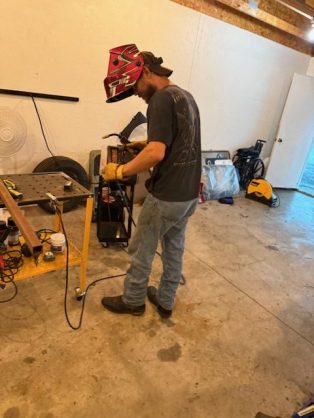
It’s not “stacked dimes” as they say in welding, but I was ridiculously proud of my first weld under Gene’s guidance. I need to figure out how to get this into my next textbook, somehow… 

If the headline seems a little click-baity for you, I totally get it, but hang with me for a bit here, and I promise this will make sense.

If welding isn’t your idea of a good time (or if you’re already a master welder on top of your professorial gig), the same thing can apply to any one of a number of skills that fit the following parameters:

It must be something you actually care about doing and doing well. For me, I not only wanted to learn to weld because I thought it was an amazing skill that seemed interesting, but I needed to learn how to do it to get my classic Mustang back into shape. Half the front end started rotting out somewhere in the past 15 years I’ve owned it and I can’t really afford to have someone go through it and rebuild it at about $175 an hour. Thus, I NEED this skill and I have to do it well.

It reminds me of my first stats class in my doctoral program: I’m in an undergrad pit class with a few master’s students thrown in for good measure. It’s at 8 a.m. and members of the men’s basketball team and one-third of the football team are there, barely paying attention. I’m writing things down like I’m getting a list of instructions on how to disarm a bomb I’m sitting on top of.

The difference was in value: They didn’t care about the topic and just needed a passing grade to survive. For me, I HAD TO HAVE this skill if I was ever going to get my Ph.D.  That’s the level of “care” I’m talking about here.


It must have an actual, tangible outcome that can be measured in terms of quality and accuracy. I spent the past 20 years or so learning how to refinish furniture. The tangible outcome was the beat up dresser or mangled table that I restored to something more useful and less ugly. The same thing is true of a task like knitting or sewing: You can have beautifully made clothes or things that look like your cat was playing with a ball of yarn or string.

Like most skills, practice can improve the outcome, which is something that can be measured either concretely (the outcome of a statistical analysis) or with an eyeballing of the item (the table looks nice, great or amazing). You need to pick something where tasks lead to outcomes and those outcomes can easily range from poor to perfect.


THE BACKSTORY ON ALL THIS: When I went to start the Mustang up this summer, I realized that the battery tray under the hood had rusted to the point where the battery was actually going to fall through a hole in the car. As I started trying to disassemble that part of the car, I realized this was all constructed with spot welds in the factory.

In short, I had to drill out all the welds, pry the metal pieces apart and then weld a new piece into place.

By the time I got into it, I realized there were a lot more pieces that needed to be replaced if this car was going to survive, so I couldn’t just get someone to come over and weld one piece for me. I needed to learn how to weld myself or else this was never getting done.

The tech out here offers great programs, but they tend to teach the classes when I’m at work. Furthermore, I’m told that most of that welding is meant for thick steel, like building car frames or working on giant pipes and stuff. I needed to learn how to do thin sheet metal welding.

The internet is always helpful, but it wasn’t enough in this case, so I put out a plea to folks around me via Facebook for a welding instructor. I offered to pay whatever they wanted for an afternoon or two, explaining I knew my way around tools, but had no welding experience.

This is Gene. He totally rules.

A nice guy named Gene agreed to help out. He was probably about 10-15 years younger than I was and he had learned welding by doing it with his dad. He picked up his certifications later, adding tools to his toolbox, but he retained that simple, “Watch, understand, now do” approach from his dad’s tutelage.

So, one rainy Saturday in August, Gene came over to my garage and helped me learn the basics of welding, which are pretty inconsequential for most of you here. That said, here are the things I picked up from that experience that I honestly think might be helpful for improving (or maintaining a high standard of) teaching:

Remember what it’s like to be afraid

When I decided I was going to make the leap into welding, I picked up what I thought was a decent used welder, some safety gear and a welding station. It then sat in the garage for more than two months as I read every book and watched every “expert” on YouTube to figure out what to do.

The truth of the matter was, I was scared.

The fear definitely came from at least one video titled something like “Five ways to kill yourself by making a mistake while welding.” However, it was deeper than that, in that I wanted to be good at it, the advice on how to get good was so varied and everything about this process seemed foreign to me.

When was the last time you were honestly afraid of being terrible at something important to you? How hard was it for you to attempt doing that thing? Also, if you were in a room full of other people that you automatically assumed were better at this thing than you are, how tense and awkward are you feeling?

Even when it was just Gene and me, I had trouble pulling the trigger on the welder. He never gave me any sense he’d make fun of me or tell me how bad I was at this, but I still didn’t want to be the guy who he talks about when he meets up with his buddies later and says, “If you think YOU wasted your day, lemme tell you about…”

As much as we say we can all remember being a student in class or being at the beginning of our journey as journalists, it’s a whole different thing to actually be AT that point. Furthermore, maybe we were better at journalism than these kids perceive themselves to be, so it’s gotta be even worse at that point.


There is a difference between a rule and a preference

Various areas of education have specific rules to them that are unbreakable, while other areas have malleable rules, strongly suggested approaches and nuanced levels of preference. As I have aged in this field, I’ve found that the more I lean toward teaching the latter, students tend to crave the former.

As a welding student, I could understand why: Rules provide certainty. Rules lead to specific outcomes. Rules are easier than nuance.

In short, rules rule.

In watching all of the welding videos, I went looking for rules. There were rules as to how to set up my welding helmet so I could see my arc, but not go blind. There were rules as to how big of a hole I should drill in sheet metal to make the appropriate plug weld. There were rules as to the type of wire to use, the settings on the welder, the way to prepare the metal for welding and more.

The problem? All of these rules that each welder told me ran contrary to what every other welder told me. All of which left me more confused and upset when I would try to replicate their work and end up with really miserable results.

Gene was great because he helped me see that a lot of what these guys were calling “rules” were just preferences based on how they had learned or what they felt was best. Even more, breaking any of those rules wouldn’t leave me blind and on fire with giant holes blown through the sides of my car.

The only rules that really mattered, he explained, came down to looking for specific things that happened and reacting accordingly. When the wire sticks to your weld, you’re too far away. When you blow a hole in the metal, you have your settings too high. Start dark on the helmet and move up until you can see but it doesn’t feel overwhelming.

I know that a lot of folks like to lay down a lot of rules with rubrics and scales and “do-this, not-that” requirements, and that can help in some cases. However, I also know that as a student, I started feeling trapped by the rules, especially those that didn’t really work out all that well.

My goal for this year has been to stick with only the rules that are absolute, don’t-break-them-or-else-level rules. The personal preferences, I’m going to explain and moderate with the idea of making sure they hang onto the big things and stop freaking out about everything else.


Explain “how” and “why” a lot

Expertise provides you with a sense of internal logic that allows you to accomplish tasks easily and seamlessly without a lot of thought going into them.

In furniture restoration, it can be picking what grit of sanding disks I use to remove layers of age and crud. In the pinball world, it’s tracking circuits through a diagram to determine which ones aren’t making contact. In journalism, it’s knowing which words to use, in which circumstances, to best tell the story that needs to be told.

The problem for most of us is that we’ve attained the level of expertise in our field, so much so, that we don’t always slow down to explain ourselves to the students. What is natural for the professor needs to be learned in a high-detail way for the student.

Almost from the beginning, Gene was preemptively offering me “how” and “why” answers about the settings on the machine, the pattern he used in “stacking dimes” on a particular weld and how best to move the puddle along. That not only made me feel more confident, but it also helped me feel comfortable asking additional “how” and “why” questions on things that still confused me.

Students, generally, don’t want to ask questions because they fear looking stupid, or because they assume if no one else is asking a question, nobody else must have that question. When those questions are about how something works or why we approach a concept in a certain way, it’s crucial to make sure they get answered one way or the other.

If you’re waiting for a student to ask a question, you’re likely waiting on the corner for a bus that had its route cancelled, so it’s really helpful to proactive in getting the “hows” and “whys” covered.


Encouragement makes all the difference

Contrary to all the click-bait ads I’d received on social media since mentioning an interest in welding, I knew I wasn’t going to be a master welder in one day. I also knew I had tried a few things before Gene agreed to teach me and they looked like absolute garbage to me.

What Gene did, which is something I have to constantly remind myself to do in a classroom, is provide encouraging feedback.

He looked at my earliest attempts and was able to tell me what was wrong with them, in terms of the settings on the machine and the speed of my welding. However, he also pointed out the things I should keep doing, as they were promising first efforts.

“You’re balancing it right,” he told me as he referenced the gun. “You’ve also got a good angle when you’re dragging.”

When I did my welds with him, he was quick to offer encouraging pointers. It wasn’t, “This part is good, this part is bad,” but rather  “Can you see how much cleaner this one is than your last one? That’s great!” He also helped me understand why my welder wouldn’t produce the immaculate welds I was seeing online.

“You’re using flux-core wire,” he told me. “Those guys aren’t showing you that. They’re using a gas set up, which is always going to have less spatter. You aren’t spattering any more than anyone else using flux.”

As a struggling student, all I wanted to know was that I didn’t suck and that I wasn’t a lost cause. When I applied that thought process to lead writing or inverted-pyramid briefs, I realized that even just a “Hey, good verb choice there!” could make a huge difference.

The thing I realized about Gene’s encouragement was that when he was ready to leave, I not only felt like I COULD do some welding on my own, but I WANTED to persist in the activity. I had an excitement about trying things to make them better and wanting to send him pictures of what I had done. It wasn’t about impressing Gene, but rather showing him what he had brought out of me and thanking him for it.

If I can do that for one or two kids this year, I’ll call it a win.

Have a great start to the semester!

Vince (a.k.a. the guy who loves to weld now)

My first four-side pipe weld. That sucker isn’t coming apart any time soon. Gene said it looked amazing, which makes it even better. 

Four Questions To Help Journalism Professors Rethink Finals

I’m sure it really feels like this when taking the exams in some courses, particularly when you forget that just because you didn’t show up for 21 class periods, it doesn’t mean we didn’t talk about anything that day… 

Whoever said this is the “most wonderful time of the year” clearly wasn’t a college student or professor. As the winter semester comes to a crashing conclusion, papers come flying in at the last minute, pleas for extensions clog email in-boxes and exam cheating operations make James Bond plots look simplistic by comparison.

If you could bottle the tension and stress in your average college at this point in the term, you could power every car Elon ever built for the rest of time.

Finals week always bothered me for a number of reasons, which I explained to a student last week:

“Essentially, each class you take is choosing the exact same time to have you complete one of the most difficult and comprehensive parts of the class, thus spreading you incredibly thin and almost guaranteeing you won’t be capable of putting forth your best effort. In addition, each of these parts carry with them an extremely high percentage of your grade, all at a time in which you have the least amount of time or motivation to complete them. Oh, and it’s highly likely you’re either sick or getting sick and you have everyone on earth asking you to tell them when they can expect to see you for the holidays.”

I get that comprehensive finals in a single time period is a tradition, but then again so was throwing a virgin into a volcano for a while. I also understand that these kinds of exams are crucial for certain fields, like nursing. The last thing you want is to be assigned a nurse who tells you, “Oh, yeah, I bombed the final on passing medication to patients, but it was only 10 percent of my grade and I made up for it with some extra discussion points. Now, which of these little blue thingies am I supposed to give you?”

That said, in journalism and other media-related fields, we aren’t in a life-or-death situation and I often wonder why we feel it necessary to back load courses with these monstrous projects, papers and exams. As a result, many years ago, I shifted a few things around when it came to finals in an attempt to address some of the flaws in the system I listed above.

Here are a few questions that led me to certain choices I made, especially in regard to my media writing and reporting courses. I don’t know if they’ll change anyone else’s mind but I’d like to think they’re worth pondering:


Should it be a paper, a project or a test? Ask 100 students what they prefer for a final assessment of their work and you’ll get a wide array of answers. Professors tend to break things down into final papers, final projects or final exams, each of which can be dialed in based on the type of class they are teaching and to what degree each method best assesses learning.

And of course there are those of us who do whatever requires us to do the least amount of grading while we’re grading 112,001 other things at that point in the semester.

There are a number of reasons to reconsider whatever it is we’re doing for this grand finale. Term papers used to be a bulwark against cheating on tests, but with AI, that’s no longer the case.

Exams used to give professors more control, but with the broad range of special accommodations available to students, it can feel more variable than ever.

Group projects always seem like a good idea, until the whole process feels like trying to herd cats and there always ends up being one kid who basically has to “LeBron” the whole thing to get it over the finish line.

Given all of this, it’s a pretty good idea to do a few pro/con lists on these options.


Does this need to be cumulative? In a lot of cases, tests do need to be a full recounting of the entire semester. However, not every class has that need, and to make a test cumulative actually draws attention away from whatever you were doing in the second half or final third of the course (depending on if you do midterm and final or five-week, 10-week, final exams).

In my media-writing classes, we don’t do cumulative exams, per se, in that if they ask for multiple choice questions, they don’t have to cover the entire pile of content we discussed. Obviously, there is some level of “culmination” going on, in that when they’re writing, it takes into account all the things we learned about writing. I can’t have a kid writing sentences without a verb in them because, “Well, we covered verbs in the first half of class and you said this wasn’t cumulative.”


How much should this be worth? When I was an undergrad many years ago, I took a class I absolutely loved on Greek mythology. The professor was engaging, the TAs were great and I still have the text packets in my house somewhere to this day.

What I didn’t love was the final, as it was somewhere in the range of 50-60 percent of the course grade and it was insane. The guy brought in 100 slides for a slide projector and each slide contained a piece of pottery, a sculpture or a mural that depicted some aspect of Greek myth. We had to write a short block of text for each one that identified and explained each myth.

About 100 slides, 120 minutes and several blue books later, I realized that I could itch my right elbow with my right hand, thanks to the massive writing cramps I had just experienced.

To this day, I still see almost no point in doing this to a group of students. A class that covered 16 weeks basically came down to a two-hour block of time for no real reason. Also, the professor had people scouting the place like Secret Service agents, seeking out potential cheaters because so much of the grade relied on this one element.

So there were three inherent problems associated with this approach:

  1. Students could either save or kill their grade with one “Hail Mary” throw to the heavens.
  2. The incentive to cheat was magnified because this thing was worth so much of the grade.
  3. Nothing I was asked to do in that exam proved anything, other than I could write with my hand in excruciating pain.

Once I became a professor, I identified another problem: Me.

For starters, I realized as much as the kids weren’t on their game, thanks to the deluge of work they were facing, neither was I. After digging through a massive mound of exams or papers or whatever, I found that after 85 kids did a specific stupid thing, I was really likely to take out my frustration on the 86th kid who did it as well.

I might have been sharp on the first couple dozen papers while spotting AP errors, but some tired eyes might let a few compound modifier issues slip later. Maybe a spelling issue slipped by on the first couple, but I figured it out later and thus there was an imbalance of fairness.

All of this led me to decide having a mega-final wasn’t really a great idea, so I started cutting back on the percentage of the course value any final project was worth. It made it easier on the kids, who could then dedicate more time to other finals that were significantly overvalued. It also made it easier on me, so that I didn’t feel like I was disarming a bomb with every point I was deducting or adding.


What’s the value in the exercise? I have found over the years that students will dislike a lot of things I do. It’s the nature of the beast, particularly when I’m teaching media writing to people who either a) hate writing and don’t want to do it or b) have always been told they are god-like in their writing, only to find out that they aren’t.

Still, in spite of all of the complaints, I’ve rarely gotten students saying what I had them do was unfair or pointless. I’d like to think the reason for that is because I make sure to tell them the point of what they’re doing as they’re doing it.

My reporting kids have called my midterm “The Midterm from Hell,” but they all seem to survive it and they learn something. In this case, they learn how to operate under tight deadline constraints, work around unforeseen problems and generally that journalism is never done, it’s just due. They aren’t thrilled, but they get it.

One of the PR classes I took over had a group project built into it and I thought about scrapping it due to issues of fairness. (Read: I was always the kid who had to “LeBron” the thing at the last minute because I wasn’t going to lose my grade because Beavis McGee decided he wanted to repeatedly clear a six-foot bong  this weekend instead of writing up his part of the project.)

However, in talking to the professor of the class, she explained that group-based work (particularly when forced to work with people you don’t agree with) in PR was crucial to being a functional member of an agency. So, I kept it and explained that to the kids. It seems to have worked, as there was less grumbling than I would have expected.

I tend to think that everything I do in class has a purpose, which is why I hold myself to the standard that I need to tell a student why something is valuable if they ask why they need to do it. If I can’t fully explain why I’m doing what I’m doing, I can’t expect buy in from the students at any level. At that point, it just feels like I’m a kid chasing ants around with a magnifying glass on a sunny day.

So, in the case of an exam, what’s the point? Do I want them memorizing things so they can recite them on the spot? If so, why is that important? Do I want them analyzing a social media post for errors. If so, what can they do with that later in their school or professional careers? Do I want them writing under deadline pressure? If so, how will this improve them as they prepare for life outside of school?

A final exam, paper or project needs to have that “This matters because…” explanation or the whole thing is likely doomed from the start.


I’d love to hear what your thoughts are on this or if you have a strategy for finals that goes a different way. Feel free to post in the comments below.

It’s time for some unpleasant honesty for journalism folks based on the Olivia Nuzzi/Ryan Lizza/RFK Jr. debacle

Believe it or not, this post is still up on Olivia Nuzzi’s X account… 

THE LEAD: As much as I wished this weren’t the case, we aren’t finished learning all the lurid details of the Olivia Nuzzi/Ryan Lizza/RFK Jr. debacle: 

Robert F. Kennedy Jr. wrote disgraced political reporter Olivia Nuzzi an outrageously raunchy “poem,” which was dramatically revealed by her ex-fiancé and reporter Ryan Lizza in the second part of his series exposing the secrets of his ethics-challenged ex.

“Yr open mouth awaiting my harvest,” Kennedy Jr., the current Secretary of Health and Human Services, wrote to Nuzzi in undated texts recounted by Lizza in a piece published on his Substack early Saturday.

The poem was included in Lizza’s second part of his series about the affair between his former fiancee and the current Health and Human Services secretary. The post titled “Part 2: She did it again” is available on Lizza’s Substack.

I’m not linking to it here for three specific reasons:

  1. The piece is behind a paywall and I can’t in good conscience promote this as journalism or something worth spending $10 on. I would rather set fire to a ten dollar bill than pay for whatever the hell is back there.
  2. The teaser paragraphs alone introduced enough “explicit content” that would have my editors at Sage literally having aneurysms.
  3. My mother reads this blog and I don’t know what would be worse if she clicked that link: Having her asking me what certain sexual terms Lizza uses mean or having her tell tell me she completely understood everything and didn’t need a translator.

    Either way, it’d feel like this:


THE BACKGROUND: Oh, hell, where to begin?

Nuzzi was booted from her job with New York magazine after her “inappropriate relationship” with RFK Jr. came to light. Nuzzi had written a glowing profile of the Kennedy offspring, while also finding herself infatuated with him to the point of having a long-distance-messaging-with-sexy-photos-but-we-pinky-swear-we-didn’t-bang relationship.

Lizza, Nuzzi’s fiance at the time, who has his own history of icky sex allegations, broke off the engagement and made some very public statements about Nuzzi and this situation.

Both mercifully dropped off the map until this month, when Nuzzi’s “American Canto” book hit the shelves, leading to a “little girl lost” style profile on her by the NY Times. In response to some of the stuff in the book, Lizza took to his Substack to publish a response titled, “Part 1: How I found out.”  In that post, he pulled a “Sixth Sense” twist at the end to reveal his whole “I can’t believe she’s cheating on me” build up wasn’t about RFK, but instead about former South Carolina Gov. Mark Sanford.

Meanwhile, Nuzzi is now working for Vanity Fair, and media folks are a-flutter discussing this situation.


DOCTOR OF PAPER HOT TAKE: It’s too easy to crap all over Nuzzi, Lizza and everyone else involved in this situation. Right now, this feels like staring at a multiple-vehicle car wreck on the interstate. Instead of taking the easy path, consider the following difficult advice:


BASIC ADVICE TO FELLOW EDUCATORS AND MEDIA PROS: We need to be honest with ourselves, the public and our students, even though it really sucks.

Whenever a situation like Nuzzi-gate (as we’re apparently calling it now) pops up, a common refrain that emerges is, “Female journalists don’t sleep with sources.” I know a number of professors, former journalists and current journalists who hate it when this kind of thing happens, because it reinforces thread-bare stereotypes about women and it debases the work quality female journalists have done.

Here’s the problem: Lousy examples exist in almost every field and they create misery for the rest of the folks in that field. I don’t like it any more than you do, but it’s the reality of our surroundings.

Trust me, every time some jagwad professor decides to treat his undergraduates like a sexual charcuterie board, I want to die inside a little. I hate that I find myself second-guessing every interaction I have with students for at least two weeks, wondering if they think I might be “one of those.”

That said, I can’t tell students, “Professors don’t sleep with students,” because despite the ever-present blank stares they give me in class, I know they aren’t completely unaware of reality. I’ve even overheard students I know talking among themselves about skeezy professors hitting on them or their friends.

I also can’t just say, “Well, I don’t do that…” because that’s just really creepy to make them think that I’m thinking that I have to tell them that and too damned specific to make anyone feel better about it. It’s usually why I just shake my head and say, “What the hell is wrong with people?”

In regard to journalism, I’ve met multiple former and current journalists who “engaged in inappropriate sexual relationships” with people they cover. In one case, a local reporter who also worked at a local university was accused of sleeping with someone she had profiled. A friend told me that his wife worked with her years earlier, so I asked what she recalled about the reporter. The response: “Tell Vince she was a whore who occasionally wrote stuff.”

Another friend who worked with this journalist in another newsroom told me the majority of the staff knew about multiple similar indiscretions, so they referred to her by a nickname that merged part of her last name with the word “rabbit.”

In another case, one guy confessed to me that as a student journalist he “accidentally” slept with a student athlete while he was a sports reporter and editor at the student newspaper. The following is my recollection of the conversation:

Him: “Um…” Blank stare. “This is not good, right?”

Me: “Well, I wouldn’t add it to my resume… I don’t get how you “accidentally” slept with her. Did you trip and fall on something?”

Him: “No, I mean I didn’t know she was on the team until just before we… you know…”

Me: “I’ve got so many questions, not the least of which would be, ‘How did her athletic affiliation come up at that exact moment?’ ‘How little did you know about her before you decided to sleep with her that this nugget of information didn’t come up?’ and ‘Did you maybe think about not doing this when you became aware of this situation?'”

It went downhill from there…

I don’t think I’m that special that I knew at least a handful of people who had violated this basic tenet of journalism, so I imagine more than a few other folks reading this have a “Hooo boy…. not good…” story of this nature.

We need to stop pretending that this kind of thing doesn’t happen and be more on point about what we want to say here:

  1. Most journalists do not sleep with sources period, let alone to gain special access for stories. A small number of journalists are bad actors, but to paint all journalists with a wide brush because of them is unfair to those who aren’t.
  2. None of us who don’t violate the rules are thrilled by the people who do, particularly when their actions reinforce negative stereotypes against people who have already had to work harder than they should to make it in the field.
  3. Those of us who take this job seriously are not going to pretend that those people don’t exist, but we are going to make damned sure you know we aren’t like them.

I’m sure there’s a better way to say this, but at least we’re being honest and letting people we aren’t thrilled by this, either.


BASIC ADVICE FOR STUDENT JOURNALISTS:  I can’t stress this enough, but for every situation like this, where it seems like the world turns out great by flouting the rules, there are dozens more that are just god-awful disasterbacles that never get a book deal.

Colby Hall of Media-ite made the case that Nuzzi, his DM buddy, really just learned how to play the game based on the way the system has shifted, so we can’t really hold it against her:

The glamorous photo shoots, the Lana Del Rey cosplay with the white Mustang convertible on PCH, the literary ambiguity about Kennedy’s identity in her book, the defiant framing that positions her as a victim bearing witness to power.

But here’s what I’ve come to understand: This isn’t tone-deaf. It’s the only move that makes economic sense in 2025.

Nuzzi has correctly read our current media ecosystem. There is no path back to institutional credibility for her—those institutions are dying anyway, and they were never going to reward rule-following in the first place. But there IS a path forward through celebrity, through controversy, through the monetization of scandal itself.

The Vanity Fair job. The book deal. The rehabilitation tour that’s a Klieg light away from what it really wants to be. She’s not trying to rebuild her reputation as a journalist—she’s building a different kind of brand entirely, one where being interesting matters more than being ethical, where attention is the only currency that still spends.

Please don’t buy into that line of thinking. She’s the “it” thing at the moment, but that fades pretty quickly and even if it doesn’t for her, it doesn’t follow it will work for you. If you don’t believe me, ask anyone who tried to become a millionaire starting an “Only Fans” account.

As much as it might seem like a great idea to be that rule-breaking, cool-as-hell rebel in the moment, these things don’t end well. As someone who has watched almost every VH1’s “Behind the Music” episode, I can pretty much guarantee short-term career thinking leads to some long-term misery. And unlike video games, you can’t just hit the reset button once things start going bad.

Follow the rules, behave better than the attention-seeking toddler at the grocery store and do the job to the best of your ability. You might not become famous, but that’s likely to be a good thing.


BASIC ADVICE TO PROFESSIONAL MEDIA OUTLETS: Watching Vanity Fair hire Nuzzi is like watching pro sports teams picking up troubled players who have talent, arguing that, in their system, the player will thrive. What they fail to realize is that even if the talent is in there somewhere, the human foibles are going to massively undercut it and you’re essentially just buying trouble.

With that in mind, I’m begging you. Stop buying trouble.

First, the juice is rarely ever worth the squeeze. Everyone is out there thinking they are buying the next Hunter S. Thompson. Instead, they’re buying the next Ruth S. Barrett. Hiring people like this has the same internal logic of cashing in your 401K and using it to buy lottery tickets to secure your retirement.

Second, you’ll make my job a lot easier as a professor because I won’t have explain to students that to get their dream job, they should work hard, play by the rules, and then pray they don’t lose out to someone who banged a source and now has 2.3 million followers on Instagram.

I’m having a hard enough time getting them avoid bias in their writing, abide by grammar rules and attribute the hell out of things, what with all the god-awful crap that’s passing journalism these days. I don’t want to have this conversation:

ME: You can’t write a profile story about your best friend. It’s not ethically sound.

STUDENT: So, why can (REPORTER X) sleep with a profile subject and land a job with a six-figure salary?

ME: Go read your AP style book.

Third, you need to understand the “Cockroach Theory of Terrible Behavior.” When you see one cockroach in a house, rest assured it’s not the only one around, like he’s on vacation or something. For every one you see, there are several more just waiting to show up.

I remember being at my college newspaper during an editor election, where one candidate was trying to justify some bad behavior, explaining, “Oh, that was an isolated incident.” Once we retired to debate his candidacy, the one guy piped up with, “I counted 10 or 11 ‘isolated incidents.’ How many does it take to make a trend?”

Vanity Fair is already playing defense on the hiring, as they were “take by surprise” at Lizza’s accusations about Nuzzi’s nuzzling with Sanford. The magazine is “looking at all the facts” in this situation as it decides how the hell it’s going to get out of this situation before another cockroach comes crawling out of the corner.

If you want to see the best of journalism, hire good quality people. Promote and showcase them as what’s worth doing in the field. Let us in the classroom highlight the good work done in the right circumstances.

None of this will stop another Nuzzi situation, but at least you can help us point to this as a cautionary tale and not a smooth career move.

Breaking (or Broken) News: The pros and cons of keeping track of what’s going on in small towns via social media during the decline of legacy media

While driving home from Milwaukee this weekend, I could see a haze of smoke in the distance that just kept getting bigger the closer I got to the house. I first spotted it about 20 miles south of where I exit I-41 and about 30 miles to the east of the farm.

Smoke like this isn’t rare out by us, as farmers and land owners will often burn brush piles the size of a Winnebago, but this seemed like it might be something more than an average Sunday burn after the Packers game.

When I pulled up to the intersection about three-tenths of a mile from my house, the road was blocked with barricades and squad cars. I managed to weasel my way past the blockade and pull into my drive way, all along wondering, “What in the hell is going on out here?”

A quick check on social media filled me in a bit:

On Facebook and Instagram (at least), a number of people were posting bits of information about what they saw or what they heard:

To be fair to local media, there was some basic coverage, both from the ABC affiliate out of Green Bay, and the area newspaper, the Waushara Argus:

Even after reading all of the posts I could get my hands on and scouring the local media for more than what the local EMS folks put out, I found myself thinking about the pros and cons of how we get information these days. According to a 2025 study by the Reuters Institute, 54% of Americans get their news from social media today, pushing it past all forms of traditional legacy media. The discussion of partisanship, limited focus and the waning of traditional media power on the national or global level are assessed in this thing, which is great for the big picture.

That said, most of the time, we are likely more concerned with what’s going on around us, which falls to a lot of local media outlets or people around you with internet access. With that in mind, here are a few ways in which that can be a good thing or a bad thing on the local level like what I was dealing with Sunday:

THE PROS:

TONS OF INFORMATION: To be fair to the local social media folks, I got far more, volumewise, out of their work than I ever would have received from TV, radio or a newspaper. The videos, the photos and even the mapping gave me a lot to consume:

I also heard from people who were actively being evacuated from their homes in real time:

These are just a few screen shots of the hundreds of messages that were being shared at this time. Granted, a lot of stuff was repetitive, but I could pick up little nuggets here and there with a careful read of these forums.


CONTINUAL COVERAGE: The local media did the quick check in, put out some information and moved on. The local folks were a lot more interested in keeping an eye on things. At one point, a news outlet noted that everything was under control, but the social media folks (and my own eyeballs) pushed back on that. It seemed as though the wind (which we get a lot of out in our area) had stoked some of the fire in a part of the marsh that wasn’t fully extinguished, and things kicked up again.

By relying on the info from the fire folks, neighborly chatter and nosy folks like me who were willing to ask a cop at a cross street a thing or two, we all kept up to date on how risky things were and what was really going on. Those bits of info were continuing to be posted and shared on social media, as were some updates on when Highway 21 reopened, if the fire had moved any farther south and if additional fire folks were being called to the scene.

When I was a reporter, I found that I did a lot of “hit-and-run” journalism, in that I saw the disaster, wrote about the disaster and moved on from the disaster in a relatively short period of time. That’s kind of the nature of trying to cover everything in a large geographic area. These folks were more concerned about a specific disaster in a specific area and they could dedicate more resources to keeping people up to date.


MINOR NEWS FOR MOST, MAJOR CONCERNS FOR SOME: Social media has the ability to help niche audiences in the ways that traditional media never could. In the case of this fire, that came to the forefront in a few key ways.

For starters, as a lot of people were being driven from their homes and farms, some folks had concerns related to what to do with their pets. A local business up the road from us posted on this topic to help people who were in need:

Other folks felt it important to recognize the people doing the work to keep their homes safe:

These and a lot of other somewhat tangential issues were addressed on the social media platforms that were providing coverage on the fire. From a news-outlet perspective, a lot of these would be somewhat minor concerns, as they don’t impact the entirety of the circulation area or media market. However, to the people who were in the middle of all of this, keeping animals safe and finding ways to help each other in a time of crisis was the No. 1 priority.

This is really where social media, with its niche-level connections, really shines.


CONS:

SAYS WHO? One of the things I’ve found myself scrawling on news stories a lot these days is, “Says who?” My students know that this means they failed to attribute important content that is not a “water is wet” kind of fact to a particular source.

In this case, I found that some issues really didn’t matter to me in terms of who was posting. The videos and photos were relatively similar, so I was pretty sure that they all weren’t the work of AI trying to blame some political policy for a wildfire. In addition, I could triangulate some issues, using multiple platforms to get a handle on the situation.

For example, I knew where Highway 21 was closed by me, I had a couple maps from social media that represented where the fire had spread and I used my map app to look for specific areas where traffic was either light, heavy or prohibited.

However, when I saw this post, I found myself really wondering about source credibility:

My concerns on resharing this on social media (with the guy’s name attached) or believing what he had to say were as follows:

  • He’s essentially stating on social media that he started this fire. I don’t know if what he did was criminal, in that it sounds like an accidental ignition, but there might be rules about using ATVs in that area or during certain time periods. In making this public, he could not only open himself up to some legal issues, but also let some potentially irate folks know who he is, thus leading to some possible online harassment or worse.
  • I have no way of knowing if he is telling the truth. In journalism, we tell you that, “If your mother says she loves you, go check it out.” I did some minor sleuthing on this guy’s social media and didn’t find any terrible red flags that he was a bot or a troll, but that’s conjecture, not facts. Given my experiences with people who liked to insert themselves into dramatic police events, I’m erring on the side of caution. (One day, I’m going to write a post about “Whacko Wayne,” but until, then you can feel free to trust me as much as you normally do…)
  • I have no way of knowing if this guy is who he says he is. This might be someone using this guy’s account to make a statement or it might be some troll deciding it would be hilarious to mess with people. As we found out during the Las Vegas shooting, some people are completely fine using a tragedy for “the likes.”

There are a dozen other things I am paranoid about here, as I am someone who was held to account for what appeared under my byline. In the case of social media, this kind of paranoia is unlikely to exist.

Which brings us to another big concern…


UNTRAINED, UNREADY AND UNAFRAID: The concept of the Dunning-Krueger Effect has become exceptionally popular in the past decade or so. The broader theoretical and sociological aspects of it are often beyond what most of us consider discussion-worthy, but the long and short of it is that people who have a little experience in an issue are irrationally overconfident in what they are doing:

It took me a lot of time and a lot of disasters to become good at covering things like this fire, and even now, I’m not entirely sure I have it nailed down perfectly. That said, the people on social media have access to the same kinds of broad-based communication tools as I would have back in the day, and are completely untrained as to what kinds of things they can/can’t or should/shouldn’t say for legal, professional or ethical reasons.

They’re also completely fine in sharing information without thinking twice about those things, because they were never trained in the way we train media students, who then become media professionals. For example, I don’t know if the guy who said he started the fire actually did it, nor do I know how much consideration he gave to “outing” himself. However, a media professional with experience in this area would have considered those things and had discussions with other professionals before putting that information into the public sphere.

Beyond this issue, I find a lot of accusations on social media that have me breaking out into hives, not because of the accused’s alleged actions, but because of the legal hell-scape that can befall the accuser if things aren’t dead-on accurate. I keep hearing Cliff Behnke’s voice in my head as I see this stuff and imagine what he’d do to me if I just kind of spit-balled things like these people seem to be doing in some cases.

If you don’t know what the risks are when you do something, you tend to be unafraid of those risks. That doesn’t mean those risks aren’t real and can’t hurt you. That’s why we train students to be aware and prepared for these things.

In the end, I’m sure I missed a few more negatives and positives, but the bigger issue is that this kind of approach to locally newsworthy events is likely to continue to slide more toward the social media end and away from the legacy media. I’m not sure what can be done to prepare folks for this or to help them stay out of trouble, but I’d love to hear your thoughts on this.

If you can make an easy decision and not feel torn about it, you really didn’t have an ethical dilemma (A Throwback Post)

Around this time of year, we tend to cover ethics in a few of my classes. Granted, we talk about the importance of ethics all year in various ways, but this is when we hunker down and say, “OK. Let’s really dig into this.”

One assignment I’d given for years involved a scenario in which you are a reporter at your college newspaper and you get leaked some documents about an arrest earlier in the year. The football team’s star running back was picked up for driving under the influence and a search of the car found illegal marijuana (I’ve been doing this for so long now, I have to qualify that this weed is illegal…).

You know the documents are legit, so you go through the process of calling sources. The player pleads with you, the coach threatens you and basically you have a story if you want one. The editor leaves it up to you.

The variety of answers of what they would do always amazes me. The one thing at least one student tries to do is “split the baby,” even though it’s stated this can’t be done: You either run it or you don’t in what is the last publication before winter break. They always seem to think there’s a way to finesse the situation so they don’t have to make a hard choice.

Others make a stand that says the people have the right to know, while even more sympathize with the athlete, seeing themselves as college students with potentially problematic pasts that run parallel to this kid. The one answer that always bothers me is the decision not to run it because “It might hurt our football program.” They essentially see themselves as part of the “football tribe” more than the “journalist tribe” in all of this.

Still, it’s fun watching them come to grips with various ways of seeing a situation when it’s more about “should or shouldn’t” than “can or can’t.” To that end, here’s a throwback post that outlines an ethics assignment that turned out even better than the one noted above, although I don’t know if you can replicate it.

Enjoy.


The Accidentally Awesome Ethics Assignment

Trying to make ethics real to students isn’t always easy. Fictional scenarios only go so far, as students can be unrealistically brave (“I’d tell my editor to kiss my grits and I’d quit!”) or fall into “Lebowski mode.”

In my freelance class, we talked about the various elements of ethics (honesty, integrity etc.) as well as some of the crucial aspects of what makes life a little different for freelancers (You only eat what you kill. You might have differing standards for different editors. etc.)

That said, I think I accidentally bumped into one of the more engaging assignments of the entire class. Here’s the story:

I have no attendance policy for the freelancing class, other than to say, “If you skip class, you’re losing out on whatever important thing we’re doing that day.” I figure, hell, they’re paying for the class through their tuition. If they want to treat my class like that Planet Fitness membership they haven’t cancelled over the past six years, despite never actually going to Planet Fitness, well, fine by me.

Only half of the students dragged themselves to the 8 a.m. class in the bitter cold on the day we had the ethics lecture. After we mulled the ethics of ethics and so forth, I asked them to consider the following:

“How would you feel ethically if I decided to just give you 100 percent on the third (final) story you have for this class because you showed up today?” In other words, I waive the assignment, you get the points. It’s like you showed up and you got a free cookie for doing so.

It was like pulling teeth to get them to discuss it at first. Some were happy to take it, others said, “Well, I’d feel a little guilty, but…” Eventually, they kind of settled in with the, “Gee, I don’t know but it sounds nice in theory” outcome.

So, I told them, “I’m going to leave the room. You have 15 minutes to come to a conclusion on if this should happen or not for real. If you don’t all agree, nothing happens. If you all agree on getting the freebie, it will happen. Go for it.”

As I sat in my office, I could hear the arguing, the overlapping voices and the frequent of yelling of “YEAH, BUT, WAIT…” After the 15 minutes, the appointed spokesperson of the group tossed open the door and yelled, “UNNNNGGHHH! FILAK! WE’RE READY!”

They explained that they were going to take the freebie and why they thought it was OK. Some justified it as they were always there and other people tended to skip a lot. (“One of the people not here just Snapchatted me a picture of themself in bed, so I don’t feel bad at all about this…” one student noted.)

Some said they figure life is a lot of luck of the draw, so they just got the lucky draw. Others said the benefit didn’t technically hurt anyone, as it wasn’t like the people who DIDN’T get the free pass had to do MORE than they would have otherwise.

I then said that they had really touched on all the areas except for one that seemed a little obvious. I asked a student if she had covered a vintage clothing event she was paid to do as a freelancer. When she said she did, I asked, “So, what if, after you published this piece, the person who organized the event came up to you and thanked you for such a nice story and gave you a $100 gift certificate to her vintage clothing store? Is that OK? I mean, you’re getting a benefit for something you would have done anyway, right?”

The student just stared at me. The young lady next to her said, “I think I want to change my vote.”

Then one kid asked me, “Is this real? I mean… some of us weren’t really sure that you meant it.”

“No,” I said. “This is real. You get the freebie.”

“My stomach kind of hurts,” another kid said. “This just feels weird now.”

I dismissed the class and they kept talking about it as they walked down the hall, some arguing while others trying to reassure themselves this was fine.

I hadn’t planned this at all, nor did I really think of how it would pan out, but here are a couple things this exercise ended up emphasizing:

REAL LIFE ETHICS ARE HARD: In life, there are a number of decisions I’ve made that I look back on and think, “What if I’d gone the other way?” Almost all of them are ones in which ethics are deeply ingrained.

I’ve never been a fan of debating ethics in a classroom setting because it feels like a false front to me. It’s the same reason I have trouble teaching crime reporting in a classroom: I could do a fake press conference about a fatal accident or have kids “role play” a terrible scenario, but in the end, it’s not real. While ethical debates give the students some things to consider, the impact isn’t there.

The thing that made this situation hard for them was that there were real consequences. They got something for free, which they likely felt they didn’t earn. It was an all-or-nothing situation, which I have found many students don’t like, as they prefer to hedge their bets as opposed to putting it all on 23 Red and spinning the wheel. It was something they really wanted, but they also felt guilty about their good fortune when compared to that of their missing colleagues. Which leads to point two…

GUILT IS A BITCH: One of my favorite discussions ever happened during the weekend I got married. My best man, Adam, came from a traditional Jewish family, while I and the rest of my kin were mostly in the Catholic realm. During the downtime before the wedding, Adam sidled up to me and said, “You’re on to something about Catholic guilt.”

Over the years, we’d had these great debates over whose faith had the bigger slice of the guilt pie. He argued that the stereotypical “Jewish mother” guilt was both real and unrelenting when it came from people within one’s family, while I argued that the less-direct Catholic guilt was like the smell generated from one of those plug-in oil things: It is everywhere and it just hangs there all around you.

In the end, we kind of came to the agreement that this was like arguing Hank Aaron vs. Willie Mays or Mickey Mantle vs. Joe DiMaggio: It all depends on how you slice the argument, but both are more than worthy of greatness.  Guilt, be it Catholic guilt, Jewish guilt or other similar guilt is really a pain.

The situation in class drove that home for me. These kids were literally getting stomach aches and headaches as they tried to wrap their brains around the idea of what was being offered and if they should take it. The emotion most of them came back to was one of guilt.

I’m not saying that’s good or bad, although guilt has led me to both good and mediocre decisions in life, but to have so many people from so many different backgrounds have their mental state coalesce around one emotion really says something.

THERE IS NO GOOD DECISION: One of the things I tell students a lot is that if you end up dealing with an ethical dilemma and you feel perfect at the end of your decision-making process, you really didn’t have an ethical dilemma. Dealing with these kinds of things in journalism is a lot like this scene from “Argo:”

There can be situations where you feel better or worse about the choices and the outcomes, but at the end of the day, you really don’t get to feel like everything is perfect. The key is to learn from each situation and make better bad decisions as you move forward.

Seven Simple Questions that Help Answer the Question: “Should I Go To Grad School?” (A throwback post)

As a lot of students around here are signing up for their final semester’s worth of classes, we’ve been hearing the “Should I consider grad school?” question a lot more often. In some cases, it’s about trying to extend the life of a college student, while in others, it’s based on fear of the unknown.

As I’ve said a million times before, if you want a good example of how to find yourself entering and exiting grad school, don’t look at me. That said, I have managed to pull together a number of good thoughts on the topic based on stuff that did or didn’t work out for me or others. Thus, the theme of today’s throwback post.

Hope these will help someone in your area.


How to answer the question “Should I go to Grad School?” when your journalism students ask it

The question in the headline has come up a lot recently, both on the Filak Furlough Tour and from my own students. The way some folks talk about grad school, it sounds like a way to delay life a bit more, or at least push back some of those student loans. For others, it’s an opportunity to become part of a cadre of lifelong learners, who will some day become the “sage of the stage” themselves at a fine institution of higher learning. Reality, as is usually the situation, will vary on a case by case basis.

As I have told my students repeatedly about so many things, you don’t want to look at me for an example when it comes to making a decision about grad school.

At the time, I had about a year’s experience under my belt as a part-time night desk reporter at the Wisconsin State Journal. When I asked if that position could become a full-time job, the answer was less than encouraging. Even more, every job that I wanted to apply for required about three years of newsroom experience.

The job market stunk and I had one actual offer from a newspaper in Kirksville, Missouri, which would have paid me less than I was making as a cashier and grease monkey back home at the Mobil station. Even worse, the paper was terrible, the publisher was chain-smoking during my interview and the job came with no insurance benefits.

At the time, if you kept up with school and didn’t stop being a full-time student, you could stay on your parents’ insurance until you were 25. Also, my boss at the State Journal offered to kind of weld two part-time positions together and give me nearly full-time hours, but not the benefits or a true salary. Add that with the potential to teach a college class, already knowing the area and figuring that I’d finish a master’s in two years, I went for it. It turned out fine in the end, but to explain the whole process requires several beers and a non-disclosure agreement.

Based on what I’ve seen others do over the years, here are some helpful questions you might want to consider if you’re thinking of grad school or to ask anyone who asks if they should consider this path:

ARE YOU CHANGING FIELDS? This is the easiest one to figure out. If you got your degree in journalism, but you took a class in computer coding, psychology or biomedical engineering and found your muse, grad school makes sense. The goal of any form of education that you are going to pay ridiculous money for is to teach you something of value that you can use somehow. Usually that means it helps you get a job. I wouldn’t hire a welder to do journalism or a journalist to do welding, so making sure you have field-specific education makes sense.

IS THERE A SPECIALTY YOU DIDN’T GET IN YOUR UNDERGRAD? In some cases, you find that you want to really dig into a specific area of a field. A “regular” journalism degree might include one class on graphic design or 3D rendering or something that really piques your interest and you only have a base-level understanding of that topic. Going to a different place for grad school where they specialize in that might make a lot of sense. I often make the case that students who go here and find that they really like design or graphic arts in media might do well to get a master’s in that area at Ball State, which has a TON of great profs and resources in this area.

IS THERE A FINANCIAL BENEFIT TO THE EXTRA DEGREE? The question of if a higher-level degree helps or hurts a candidate varies widely based on the field and the employer. However, if there is a clear-cut financial value to getting this upper-level degree, it makes sense to bite the bullet now and go for it.

Case in point, when my mom was teaching, salary bumps were determined in “steps” and “lanes.” If I recall correctly, each step was based on years of experience while the lanes were determined by level of education. Hopping into a higher-ed “lane” got you more money faster. Mom still had to take credits to keep up with something else related to her contract, but she never got a master’s, despite probably having more credits than I have now with a Ph.D. She mentioned more than once if she had just gone for it earlier in her career, the master’s would have really turbocharged her earning power.

If you know that’s the case, or if your company is paying for it in hopes of paying you more when you get it, go for the grad gusto.

DO YOU WANT TO TEACH COLLEGE AT SOME POINT? When I got my master’s it meant I could teach at a college or university in my area of expertise. Many of my family members were teachers and I thought I would like to be like them and help people learn, so the master’s was a smart call. That said, my boss in Missouri told me that the Ph.D. was basically the “union card” for getting a stable, tenure-worthy job, so if I wanted to do this for the rest of my life, I probably should bite the bullet and get the doctorate done.

Today, master’s degrees are fine for both adjunct teaching and a lot of universities have opened up teaching faculty roles that don’t require the full collection of alphabet soup after your name. That said, the master’s is the “you must be at least this tall to ride the ride” measurement, so if standing in front of a room trying to explain the difference between “farther” and “further” or why you spell the word “lead” L-E-D-E, grad school makes sense.

ARE YOU RUNNING TO SOMETHING OR AWAY FROM SOMETHING? This gets a bit deeper on the personal end, but it’s an important question to ask. I often ask this of the kids who come back to see me when they’re about 25 and they say something like, “I think I’m going to grad school” or “I think I should change jobs” or “Do you think the circus is hiring?” When a quarter-life crisis hits, a massive change in life seems like the best idea, which is why I ask them this question.

Change bothers me a lot, just because of who I am and how I feel about it. That said, I know some changes are better than others. I can also attest to the importance of understanding WHY you’re changing something, which comes down to the question above. If you are running toward something (pay raise, new educational opportunities) and the grad school question comes up, that is a good change. If you’re running away from something (I don’t want to be an adult, I’m scared of getting a job that I’ll hate) and the grad school question comes up, it’s probably not a great idea.

It never hurts to ask, “Why are you considering doing this?” and then try to figure out which way you’re running.

ARE YOU GAINING MOMENTUM OR BURNING YOURSELF TO A CRISP? When I was growing up, taking a break anywhere before the completion of all of your schooling was considered verboten. The thinking was, “If you don’t go straight from high school to college (or college to master’s or whatever), you’re never going to go back.” And for a lot of people I know, that turned out to be true.

That said, concepts like “a gap year” never really existed as a positive opportunity to plan and recharge. The “keep moving ahead” approach also conflated the idea of continual motion with positive outcomes.

I truly believe in momentum, and if you don’t, go watch this recap of the 1993 Bills/Oilers game. Thus, if you’re in the zone when it comes to studying, learning and knocking out homework, great. Keep rolling. I also believe in the concept of burnout, so if school to this point has turned you into a charcoal briquette, pouring more work on top of yourself for meager/no pay while adding to your student loan debt and living in what passes for student housing these days makes no sense.

WHAT IS THE FLIP SIDE OF THE GRAD SCHOOL COIN? Instead of saying “Should I go to grad school?” consider asking “What will I do if I DON’T go to grad school?” In other words, what’s the other side of the coin on this one.

I’m a big fan of pro-con lists in making big life decisions and I’m also a big fan of not getting myopic on a choice being either/or. It’s not “grad school or no grad school” but rather “grad school or (OTHER PLAN).” In approaching it this way, you can figure out what else might be out there and avoid thinking of grad school as the only lifeboat off the Titanic.

I’m sure there are many other good questions to ask, but these should comfortably get you out of the “deer in the headlights” mode and toward making a solid decision, or helping someone else make a solid decision.

It’s all fun and games until 2,900 pages of you participating in racist, anti-Semitic, homophobic chat get leaked (and a few suggestions on how to avoid this situation in the first place)

Screenshot of the Politico header on the story about racist chats. 

THE LEAD: While we here at the blog were dealing with the Indiana University situation involving censorship and free speech, another story involving way-too-freely speaking and stuff that probably someone should have censored came to light:

NEW YORK — Leaders of Young Republican groups throughout the country worried what would happen if their Telegram chat ever got leaked, but they kept typing anyway.

They referred to Black people as monkeys and “the watermelon people” and mused about putting their political opponents in gas chambers. They talked about raping their enemies and driving them to suicide and lauded Republicans who they believed support slavery.

William Hendrix, the Kansas Young Republicans’ vice chair, used the words “n–ga” and “n–guh,” variations of a racial slur, more than a dozen times in the chat. Bobby Walker, the vice chair of the New York State Young Republicans at the time, referred to rape as “epic.” Peter Giunta, who at the time was chair of the same organization, wrote in a message sent in June that “everyone that votes no is going to the gas chamber.”

THE BASICS: Politico got its hands on nearly, 3,000 pages of chat messages that span nearly nine months of discussions among Young Republican group members. These people apparently range in age between 18 and 40 years old. Reporting on this material states that these chats feature people saying so much terrible racist, anti-Semitic and violent stuff, it’s likely Quentin Tarantino will be optioning it as a script for his next movie.

The disgust at the chat has garnered bipartisan anger, with members of both major parties stating they disapprove of this kind of language, regardless of who said it. On the other hand, Vice President J.D. Vance said he refused to take part in the “pearl clutching” over the use of language like this.

He also had a somewhat different angle when it came to giving his kids some fatherly advice in a situation like this:

The father of three said he would caution his own children, “especially my boys, don’t put things on the internet, like, be careful with what you post. If you put something in a group chat, assume that some scumbag is going to leak it in an effort to try to cause you harm or cause your family harm.”

So, kids, always remember, keep your seething racism in private, personal conversations, lest some “scumbag” out there find it and make a big deal out of it.

KEY LESSONS BEYOND THE VANCE THEORY OF “DON’T BE RACIST IN PUBLIC:” Hopefully, for most of us in here, that first lesson is kind of like me telling you, “Don’t commit a ritual human sacrifice on the break room table at work:” Even if I didn’t say it directly, I hope that human decency and public decorum would have made this concept obvious to you.

Beyond that, here are some important things to take with you:

If the only thing keeping you from saying or writing something is, “I’m pretty sure I won’t get caught,” think a little harder before you do that thing:  I remember reading a number of psych studies that assessed to what degree people were or were not willing to do things they knew to be wrong, based on a variety of factors.

In some cases, the idea was to make people feel cheated out of something they deserved and then provide them with an opportunity to do something negative to the person they believe had wronged them or some other person at random. In other cases, it was about measuring the underlying guilt built in through various social systems including things like religion.

The one thing that ran through all of these studies was perception of being caught: “If you were completely sure you would never get caught, and thus have a consequence-free outcome for your actions, would you do X?” This variable always radically shifted the way in which people chose to act, leading a lot of the scholars to debate the natural human state of decency.

In the situation outlined above, these people didn’t stop and say, “Man, we really should not be saying stuff like this because it’s wrong.” They essentially said, “Man, if we get caught at this, we will have HELL to pay here!” And then they did it anyway, meaning they thought that as long as there continued to be no consequences, they were going to be fine.

A good way to prevent consequences you want to avoid is to not do the things that could lead to those consequences. If, for example, I wake up in the morning and think, “Gee, it’d be great to have my wife bludgeon me to death and bury me behind the chicken coop,” I’d probably try to have an affair with someone. Since I know that this action is wrong and I don’t want to die, I should avoid taking that action. If I instead think, “I know it’s wrong, but I’ll be extra sneaky,” I’m setting myself up to be fertilizer.

Ask yourself, “Would I say this to someone’s face?” before you put it in the public sphere: Things can jump up a notch on social media and through digital communication. Trust me, I know I’ve bitterly complained about myriad things online that I probably would not have done if I needed to do it in public. In most cases, they involved things like people being too slow in line at the grocery store, people texting while driving and the way in which the Cubs stole my team’s World Series in 2016. (Yes, I’m still bitter.)

Digital media is like the beer goggles of communication: it warps your sense of what is and isn’t acceptable and when you’re forced to confront your choices in the cold light of day, you usually aren’t all that thrilled about them.

This is one of the reasons when a student complains about something in an email, I tell them to come by the office and chat. Part of it is that there’s a lot of bravado on their end that probably isn’t going to hold up during a one-on-one conversation and another part of it is that I don’t want to start a digital land war over a B- or something. It’s a good way for both of us to have a cool-down period and to then deal with things like two regular people, as opposed to two methed-up coyotes.

There is no such thing as privacy anywhere anymore, so act accordingly: I tend to think that this should be common sense at this point, but then again, if it were “common” sense, everyone would have it.

We have cameras everywhere, recording everything. We have GPS and tracking on our digital devices that can let anyone who wants to know exactly where we are at any point in life. We put stuff out into the world through all forms of social media that can be shared millions of times over in the blink of an eye. The concept of living a quiet, private life is as unlikely as the Cleveland Browns making the Super Bowl this year (or at any point in my life time, I suppose…)

If I wanted be EXCEPTIONALLY GENEROUS in translating some of Vance’s statements into something less dismissive of this godawful situation, I’d say that it is important to realize that people need to be more aware of how they express themselves in general because it might not fully represent the best versions of themselves.

Being an idiotic poser by trying to out do the last stupid thing someone else said is rarely a good idea in any situation, which, yes, a lot of us learned somewhere along the way before the world could record everything we did and share it with the world. However, we don’t live in that world anymore, and thanks to the ability to share everything, we have all seen the consequences of being that kind of idiot.

With that in mind, you either need to be all in on what you say or you need to make sure you’re giving yourself a beat before you let random stuff you don’t honestly mean come flying out of your head and landing on a screen.

How to make things relevant for your readers when they no longer have shared, collective experiences

On this date in 1960, the Pittsburgh Pirates defeated the New York Yankees in Game 7 of the World Series on Bill Mazeroski’s ninth-inning walk-off home run.

To fully understand the gravity of the moment for many people living in that time, it’s instructive to listen to sports journalist Beano Cook’s assessment of the situation:

“If you grew up in Pittsburgh, the way I did, you remember where you were when heard F.D.R. died, when you heard about Pearl Harbor, when you heard the war ended and where you were when Mazeroski hit the homer.”

I’m sure not every human being on Earth had that kind of reaction to it, especially Yankees fans who considered World Series domination to be their birthright, but it does speak to the larger sense of how we once had a sense of shared moments in time.

During my life time, there have been a few of those “where were you” moments that stick in my head to this day. I remember being on the floor of my parents’ living room on that yellow shag carpeting in front of the old Admiral-brand TV we had when the Miracle on Ice occurred.

I remember being in the Doctoral Pit in Columbia, Missouri with several other former journos-turned-Ph.D.-students huddled around an old tube-style TV as we watched the towers collapse on Sept. 11, 2001. (I also remember having to go to a multi-variate statistics class, taught by an international grad student who had no idea what was going on. To this day, I still can’t figure out binomials.)

In today’s era of quick-hit social media, in which algorithms feed us more of what we want to see and isolate us from a wide array of viewpoints, I don’t know if shared cultural moments are possible for this generation, but the litmus test might be the shooting death of Charlie Kirk.

A recent analysis of what people thought about Kirk, his death and the person arrested on suspicion of shooting him found that social media created completely different worlds in which individuals learned about all of this. In addition, social media companies have removed a lot of the guardrails that were once considered crucial in eliminating factually incorrect content and tamping down rage.

As much as it seems like EVERYONE around me has an opinion on Kirk, his death and everything that’s wrong with the world today that led to it, I am still running into students who know nothing about any of this.

And I’m teaching in a media-based field where knowing what’s going on around you is kind of important.

Rather than going down the rabbit hole of whose values are better or what people don’t see thanks to self-feeding loops of social media destruction, I think it’s more important to realize that horse is out of the barn. What matters now is how we deal with it as journalists, give that most of our job is providing content to people in a way that’s relevant, useful and interesting to them.

Here are a few things to realize about the people out there consuming our content and how we need to serve it up differently for them:

NEVER ASSUME THEY KNOW ANYTHING: This seems a bit blunt and harsh, but we don’t all see the same news at 10 p.m. or read the same newspaper on the train ride into the city anymore. Just because people exist on X, Facebook, SnapChat, TikTok or Chorp, it doesn’t follow that they know anything we’re trying to talk about either.

Everything is individualized, so while my feed might be filled with calm, rational discussions about social policies in higher ed, the person right next to me might be learning that Bad Bunny’s Super Bowl appearance is part of a plot to explode the brains of ICE agents with a sound ray that will also turn undocumented migrants trans.

(We have the technology… You are just being kept in the dark about it. Read more about my inside information at the website http://www.areyoufrickinseriouslystupid.com)

What this essentially means is that we have to start from a position of less than zero to explain situations to our readers if we want them to get anything out of anything we are trying to tell them.

I used to tell students that 1-4 sentences of background was usually enough to catch people up on topics of interest. As much as that number might need to increase exponentially, it also needs to be counterbalanced against the minuscule attention span people have, so it’s going to be a fine line to walk.

This leads to the second point…

WRITE IT LIKE YOU’D WANT TO READ IT: The goal of most standard media writing is to get to the point immediately. The problem is that most people don’t write for others the way they want content sent to them in the realm of social media. That creates a massive disconnect we need to fix.

I did a study a few years back involving student journalists who were responsible for running social media for the media outlet. I asked them to rate a bunch of uses and gratifications they have for social media they received. In other words, what do you like that you get and how you get it from social media? I then asked them to outline the approach they took to sending social media to other people as a source from their media outlet.

The results? Almost zero overlap between what they considered “best practices” for social media they consume and the way they themselves provide it to other people. In most cases, they liked writing really long and involved stuff but they hated reading it. They also liked things to be quick and direct, but felt it necessary to avoid being that direct in their own work.

Studies of social media and its impact on the brain are mixed, but one discussion about the topic seemed to make the most sense to me. The writer basically said that social media exercises our brains in certain ways, so we not only get used to that, but the other aspects of our minds tend to atrophy a bit. The author compared it to “skipping leg day” at the gym but doubling up on core exercises: One part gets weaker while the others get stronger.

This kind of media consumption limits our ability to do the more strenuous mental work that non-social-media use requires. It also impacts our ability to create memories, so writing giant diatribes with six interweaving plot lines isn’t going to help the readers in any meaningful way. So, if we want to get across to the people, we need to build it in a way they’ll best understand it.


SELF-INTEREST IS OUR ONLY SALVATION:  If we have but one thing in common anymore, it is literally the interest we have in why something matters to us personally. If that’s all we have to go on, we’re going to need to saddle up that horse and ride it to death.

To be fair, some larger moments over the past 20 years only stick in my brain because I had a personal connection to them. The 2007 shooting at Virginia Tech mattered a great deal to me because I knew the media advisers at that papers and I had spoken to some student journalists from there at one point. I remember refreshing my email every 0.5 seconds, hoping for a response from a friend to tell me she was OK.

The Las Vegas shooting fell into a similar vein, in that my aunt and uncle were in Vegas at that point. I remember trying to teach a class and keeping an eye on text messages from my mom to tell me if my family members were safe.

And again, I’m PAID to be aware of larger issues that get a ton of media coverage, so if I’m falling down on this, I can’t imagine what it’s like to people who are learning nothing other than what TikTok feeds them.

At one place I worked, we used to require the students to finish the sentence “This matters because…” before they were allowed to start writing their stories. Bringing something like this back for all media writers, with a more direct version like “This matters to YOU, my reader, because…” might help us better focus our attention on the “how” and “why” elements of what we’re covering as we target the demographic, psychographic and geographic needs of our specific audience members.

We often have to remind students that they’re not writing for themselves, but rather the audience. Now, we might not only need to double down on that, but also make sure they have a full sense of who is out there and and a laser-like focus on making it relevant to them.

“Record everything, always, and apologize later, if need be.” (A throwback post)

Having a literal videographic memory would really, really come in handy sometimes… 


This post came to mind after an email exchange I had with an administrator last week. Not to get too into the weeds, but a crisis hit and I was being asked to do something in exchange for a benefit of my choosing.

During a meeting, I got the verbal “OK, that’s fine,” with a promise I’d get something in writing shortly after. After a month or so, I hadn’t gotten the documentation or the benefit, so I made some inquiries.

Although things aren’t entirely settled, what bugged me the most was a line that an administrator wrote to me in an email: “I found no record that we promised (SAID BENEFIT).” 

At that point, I was reminded of the phrase I often tell students: “Record everything, always, and apologize later, if need be. In God we trust. Everyone else gets recorded.”

I’m not sure yet if I’ll be wiring my office like Nixon’s White House, but while I ponder that, here’s today’s throwback post, which looks at the issue of recording people, with or without their knowledge.


‘Can you?’ vs. ‘Should you?’ A secret recording of a Wisconsin government phone call that inspired five random thoughts for journalism students

In trying to explain ethics to my intro writing students, I often fall back on the line that, “Ethics basically deal with things that aren’t illegal, but can get you in a lot of trouble, anyway.” Another way we separate law and ethics is the line between, “Can I do X?” vs. “Should I do X?”

This concept came into focus in a strange way last week, as Wisconsin continued to put the “fun” in “dysfunction” at the state government level:

MADISON – Republican legislative leaders lashed out Wednesday at Democratic Gov. Tony Evers after his staff secretly recorded a May 14 phone conversation over how to respond to the coronavirus pandemic the day after the state Supreme Court struck down the state’s stay-at-home order.

The recording and the reaction to it all but ensures a permanently broken relationship between Evers and Republicans who control the Legislature. The two sides have rarely gotten along since Evers was elected in 2018 and Wednesday’s episode was characterized by GOP leaders as unprecedented.

Republicans referred to the recording effort as “Nixonesque,” referring to former Republican President Richard Nixon’s desire to record everything involving him at the White House. I’m uncertain if this is irony, self-loathing behavior or something just randomly laughable, but I’m at a loss for words while watching a Republican use the name of a former two-term (almost) president as an insult. I guess I’m also pretty sure that the relationship between Evers and the Republicans was permanently shattered like Waterford Crystal thrown off the top of the Empire State Building waaaaaaay before this incident.

In any case, here are a few random thoughts for journalism students that don’t delve into the political grandstanding in this case that makes soccer “injuries” look honest by comparison:


THIS SHOULD HAVE BEEN PUBLIC ANYWAY: Bill Lueders, president of the Wisconsin Freedom of Information Council, made the best point about this situation. Why the hell was this a “private phone call” among three key governmental officials?

(Lueders) said recording a conversation without alerting the other parties isn’t illegal in this state, but is in bad form — and that the nature of the meeting should have pushed the three to talk publicly instead of privately.

“I wouldn’t do that as a journalist, to record someone without them knowing,” Lueders said. “On the other hand, I don’t know what would have been said in that meeting that needed to be kept private.”

Maybe if this is a public meeting, none of this becomes an issue in the first place. Sunlight is said to be the best disinfectant, and it would appear to be so in this case.


RECORD EVERYTHING, BUT BE HONEST: According to the numerous accounts I’ve read, Richard Nixon was paranoid as hell and believed people were always out to screw him over. If you have spent any time as a reporter in this day and age, I bet Tricky Dick starts making a little more sense in that regard.

I can’t tell you how many times I have written something I got from a source, quoted a source or provide information I got about a source, only to have the person who gave me that information tell me I was wrong. And I did most of my work before the era of people in power calling everything they don’t like “fake news.”

Thus, my advice to students? “Record everything.”

That said, recording is one of those key areas where law and ethics diverge. The majority of the states in the U.S. operate under one-party consent. This means that if you are on a phone call with another person, you may record it legally without letting that other person know. The others have some version of two-party consent, which means BOTH parties on the call must know and agree to the recording before it happens. (You can read more on your state’s rules and what happens if your recording across state lines etc. here.)

The law says, “Record them all. Let God sort them out.” Ethics, however, would dictate that secretly recording people kind of undermines trust, as Lueders pointed out. This is why I always tell the students to be up front about their recording. Tell the source, “I would like to record this interview. Is that a problem?” In most cases, sources will be fine with it.

Some folks will be reticent, so I tell the students to explain WHY they want to record the interview: “I want to make sure I don’t make a mistake,” or “I want to be sure the quotes are accurate,” or “I want to protect both of us.” However, the students want to explain it is fine, but at the end of the day, it’s about having a permanent record of what occurred so if the stuff hits the fan, and suddenly everyone is pulling a “Shaggy” on this situation, you have a complete record of what happened.


STILL, WATCH OUT FOR YOU FIRST: I totally get why the person recorded the conversation: The Evers administration and the Republicans out here who will rule the assembly in perpetuity, thanks to gerrymandering the likes of which we’ve never seen before, are constantly in a bombastic struggle to define “truth” for the public. I’ll read one story one day and think, “OK, they’re doing X” only to read the next day some recasting of the situation that makes me think it was a dream.

In the end, if you know someone’s going to try to screw you, get a permanent record of reality.

Honestly, I’ve recorded people without their knowledge. I don’t say this with a great deal of pride, but this is what happens when you run a crime beat in an area where people felt no compunction about calling you up to scream at you about coverage. After I almost got smoked once, I considered it an insurance policy.

The first time this happened, a person called the main desk at the newspaper, asking to talk to the person in charge of crime stuff. The staffer sent the person to me, and the caller spent at least five minutes screaming at me about a story we ran. It turns out her kid/brother/friend/whatever was “illegally arrested” (a phrase I still love to this day) and what we wrote needed to be retracted RIGHT NOW.

After mentioning places that I could put my head, which defied the laws of physics, and questioning the lineage of my parents, this woman was not happy with my decision not to acquiesce to her demands. She wanted to speak to my boss.

I gave her his number and he got a much different treatment: A lot of “sir” mentions and some polite questions and so forth. She mentioned how horrible I was and how I said horrible and unspeakable things to her. Of course, my boss brought me in to ask me about this. He bought my version of events, but I swore it would be the last “he said/she said” thing I dealt with at that paper.

I hooked up a tape recorder to the phone and kept it at the ready. When I got the next call transferred, questioning my approach to crime news, I recorded it. After my boss got the complaint about me, I offered to let him listen to the recording. Eventually, that became our routine:

Him: “I got a complaint that you were horrible to (SOMEONE) who was complaining about (WHATEVER I DID).”
Me: “Uh… No… Would you like to hear the recording of the call?”
Him: “Fair enough…”

Still, the most important moment of recording I can recall came when I was an adviser at Ball State University. The school was in the middle of a provost search when one of the three candidates pulled out. The remaining two candidates were relatively polarizing: The president clearly favored one and the faculty and staff favored the other.

Just to back up her notes, the reporter borrowed my recorder for the phone call with the president. She asked the obvious question if the president had planned to restart the search. I can still remember to this day hearing the reporter as, “Is that even an option in your mind?”

The answer was no. We have two qualified candidates and we’re moving forward.

That was the story we ran, and then all hell broke loose.

Faculty were outraged, figuring they were going to get screwed, so they started talking. The president, clearly not wanting this to be a mess, decided the best thing to do was throw the newspaper under the bus.

She issued a statement via email to faculty and staff that basically said, “Look, the kids at the newspaper try really hard, but they’re kids and they screw up stuff. I never said we wouldn’t restart this. In fact, that’s what I’m doing right now. So, relax and don’t worry about the mistakes of children.”

Her problem was, we had it recorded. She didn’t know.

To be fair, the student SHOULD have told her we were recording her, and that was a lesson we made clear in the post-game analysis with the reporter. Thus, we gave the president a chance to do the right thing. The editor-in-chief called her and told her that she made us look stupid and that we were asking for a retraction. We’d let it go if she fessed up. She immediately went back to her talking points about the reporter screwing up and how this happens with cub reporters and how she wasn’t mad, but she had to set the record straight.

At that point, he let the cat out of the bag. She paused, said some unprintable things and then asked, “Are you recording me now?”

I remember thinking, “No, but I wish we were…”

In the end, she held firm. We ran her email alongside a transcript of the phone call along with an editorial on the whole thing. She was displeased, but that was on her. If the primary complaint someone has about you recording them is that you’ll report exactly what they said and they don’t like what they said, I have very little sympathy for them.

This leads to the next point…


IT’S NOT OUR FAULT YOU’RE A DIPSTICK: The reason we know about this recording in the first place is because the Milwaukee Journal-Sentinel put in an open records request for everything associated with a coronavirus meeting between the two sides. Once they asked for everything, including recordings of the meeting, the recording came to light.

(Good side note: In open-records requests, ask for stuff that MIGHT exist, even if you don’t think it does. You might get lucky. In this request, the reporter apparently asked for any recordings of the meeting when requesting documents from Vos as well and got nothing because he didn’t record anything. The request sent to Evers yielded the tape. Short version: It never hurts to ask for stuff.)

Evers did the right thing in turning over the file, even though I’m sure he really didn’t want to. It had to be like that scene in “Silence of the Lambs” when the moth flies out of the basement and basically the killer knew he was screwed. The game was over at that point, and he basically had to brace for impact.

The recording was what I would have expected of divorced parents who were forced into a dinner with their kid at graduation: A lot of people talking past one another, some pointed jabs and the essential “How much longer must we endure this fool?” vibe. One thing that did pop up as a story was Assembly Speaker Robin Vos blaming immigrants for the coronavirus:

MADISON – Assembly Speaker Robin Vos blamed the culture of immigrant populations for a coronavirus outbreak in Racine County, according to a secret recording of his meeting last month with Gov. Tony Evers.

“I know the reason at least in my region is because of a large immigrant population where it’s just a difference in culture where people are living much closer and working much closer,” the Rochester Republican said of an outbreak in Racine County.

Of course, Vos didn’t like the story that pointed this out and tried to move the discussion back to how shameful Evers was for recording the call. He also tried to spin this to make it about how he had a deep concern for people of color who were disproportionately suffering the effects of the virus.

(Hang on… I’m dealing with the vertigo caused by that spin… OK… Phew…)

At the end of the day, neither group looks good and Vos has to deal with what would appear to every Latino group the MJS contacted as a dog-whistle, anti-immigrant blame-fest.

What’s important to remember, however, if you record something as a journalist and someone says something stupid, it’s not your fault.

This is one of the few cases where people aren’t blaming journalists, because the journalist didn’t make the recording. Vos comes the closest, in accusing the paper of not keeping its eye on the ball with the whole “Nixon-esque” recording. However, usually, in a story in which someone records something (telling the source or not) and it turns out the source says something horrible, the outrage is more over the recording or the choice to run the story than it is the horrible thing the person said.

It shouldn’t be, and you shouldn’t feel bad about it.

Your job is to report the facts, getting as close as you can to the purity of truth, in an attempt to inform your readers of something important. Rarely are those revelations something pretty and happy, so someone will be upset.

If a state rep or a city council member or a school board president says something offensive about race, gender, sexual-orientation, socio-economic status or some dude named Chad’s little brother, and you think your readers need to know about it, that’s called editorial discretion. Use it to guide you in your choices.

ALWAYS ASK, “IS THE JUICE WORTH THE SQUEEZE?”: In looking at ethical behavior, I sometimes find myself being a pragmatist more than I would like. Still, that’s because I know I have to live in the real world and not in an ivory tower, subsisting on creeds and mottoes. What I “can” do versus what I “should” do often comes down to a weighing of my options and examination of the ramifications.

(This situation is weird, in that the journalists didn’t make recording, so whatever they picked out of the open record was less on them than it was on the person making the comments and the staffer who recorded it.)

If I record a source, and the source knows the information is on the record, and the source knows I’m recording it, I pretty much have carte blanche to do as I see fit. That’s where editorial discretion comes in. What am I trying to do here?

If I run a story based on one part of an hour-long interview that makes a long-time and trusted source look bad, will I be cutting off my nose to spite my face? Probably. Some folks would say that ethics demand the unveiling of any ill that could showcase the true nature of public figures. Others would say that, short of watching that source kill a guy, you’re not ratting him out because sources like that are hard to find.

This is where I spend more time bean-counting than I might otherwise like. Is one flashy story worth not getting another story again from this source? Is my ability to tell people important things, thanks largely to this source, going to be undermined by me taking a shot across the bow at this guy? Am I protecting a person I shouldn’t be protecting, primarily because he makes me job easier?

This is why journalists who have ethics tend to drink like fish and chew Xanax like Tic-Tacs.

As a journalist, what you do is up to you (and to that extent, your publication/boss/editor/whomever runs the show), so you need to decide for yourself if the juice is worth the squeeze.

Consider the Source: Four Key Things to Keep In Mind When Deciding Whom to Interview

… but I’m gonna quote you anyway!

One of my favorite stories about source credibility came from Jim Bouton’s classic book, “Ball Four.”

Bouton is explaining a situation where a first baseman is coming in to catch a pop fly, yelling “I GOT IT!” repeatedly. Instead of getting out of the way, the pitcher comes flying in and runs the guy over, which lets the ball drop and the batter reach safely.

Bouton then yells to the irate first baseman from the dugout, “(The pitcher) had to consider the source!”

The point, obviously, is that the value of a message is almost directly in proportion to the quality of the source. This is something we need to keep in mind when picking out our subjects for interviews.

Here are four simple things to consider when deciding whom you should interview when you are picking sources for a story:

DOES THIS SOURCE ACTUALLY KNOW ANYTHING?: This might seem like the dumbest start to a post like this, but if the sources in “localization” and “reaction” stories are any indication, this bears consideration. These kinds of stories are among the least popular ones for reporters who absolutely hate having to interact with an increasingly ignorant general population.

It also doesn’t help that we tend to find ourselves asking these people to give us their innermost thoughts on everything from the deployment of U.S. troops on U.S. soil to the decreasing size and quality of funnel cakes at county fairs. The “just do this and get it over with” attitude can really take over.

This can get even worse as we get lazier and do the “Let’s see what the 14 loudest idiots on social media had to say about this topic” and just do screen shots of their Twitter posts before we call it a day.

That said, it’s important to push back on this instinct and really try to figure out if the source actually can add something to the sum of human knowledge. You don’t need to give them a 20-question exam to see if they have an expansive knowledge of presidential powers vis a vis the Posse Comitatus Act, but at the very least see if they ate a funnel cake before letting them complain about it.

KNOW WHY YOU ARE PICKING A SOURCE: Journalism is often learned by sharing among the collective knowledge within an organization. That can be good in some cases, as older reporters can help younger ones learn from the mistakes of yesteryear. In other cases, it’s bad because you find yourself with a narrowing perspective on how things should work.

This is often true when it comes to picking subjects to interview. When I didn’t know who would help me by providing important information and quotes, I’d often ask the folks around me, “Who’s a good source for this?” The names I got back became the sources and then they became part of my stories. The problem with this is that I never once thought about WHY this person was a good source.

Often the “best” sources were the ones most willing to talk, the easiest to reach or who generally “played ball” with the newspaper. These folks often liked seeing their names in the paper and they made it simple for us to get our job done. It was a symbiotic relationship, but maybe not a good one. In retrospect, I often wonder if I was just taking the path of least resistance and not helping my readers as much as I should have.

When picking a source, ask yourself why that source is a good pick. If someone suggests a source, ask that person why the source is good in that person’s mind. If the source meets your needs and avoids problematic concerns, you should be in good shape. If the answer is, “They always get back to us right away,” think a bit more about that choice.

AVOID “POTSHOT PAULIES” IN YOUR WORK:  You need to think about if the source is actually giving you anything other than a self-serving chunk of content that doesn’t really do much for you or your readers. Instead, they decide to take a potshot at a topic of their choosing and you let them get away with it.

I pulled this quote a long time ago during an election cycle and it seems to be emblematic of what I’ve seen in so many political stories:

So, in other words, the person didn’t really answer a question, didn’t give you any real information and you decided the best way to deal with that was to give them the opportunity to use you as a megaphone for their own point of view on a random topic of their choice?

I wish I could get away with that stuff in my job:

Filak refused to comment on the allegations he was selling grades for money, but instead leveled a criticism of his choosing.

“People are worried that the McRib won’t be available all year round,” he said. “This is disastrous for all people on planet Earth and this is where the focus of all humankind should be right now, dammit!” 

If the person isn’t giving you anything of value to your readers, don’t give them a chance to use you to do whatever they want.

ARE THEY ALL SIZZLE, NO STEAK?: We often talk about people who are “good quotes” with the idea that they’re verbose and they usually give us more than the boring cliches that seem to populate most content. We like the turns of phrases they made and the way in which they approach the content.

We had a chancellor one year who was just gifted at weaving prose together into a tapestry of verbiage that would make Aristotle and Shakespeare look like Beavis and Butthead in terms of communication. However, when we would actually look at what was said, we realized there was absolutely no information in the quotes themselves. They sounded great at the time and they had big, important-sounding words in them, but at the end of the day, it was just a whole lotta nothing.

Part of that is our fault for not actively listening and holding people to account for their words. Another part is that we keep going to the same people and expecting different results. If the quotes aren’t doing more than looking fancy and yet signifying nothing, consider another source.