Penn State University removes student newspapers and racks from campus, violating the First Amendment rights of far too many people

The Collegian’s coverage of Penn State violating the First Amendment.

THE LEAD: Penn State University likely violated the First Amendment when it removed all copies of The Collegian, the university’s student newspaper, as well as the display racks upon which was distributed. The university claims the ads violate some part of the school’s rules about advertising.

There were around 35 racks inside campus buildings, with three running a Kamala Harris advertisement and six running voter registration ads in poster space above the newspapers. All racks and newspapers have been removed and their location remains unknown, as noticed Thursday. According to correspondence between the Collegian’s General Manager and the university’s Chief Procurement Officer, racks will be returned by Friday morning without the advertisements.

In response to running these political ads, the Collegian received feedback from alumni and students and was notified of university concern Wednesday via an off-the-record conversation. The source said they heard the university was alleging the advertisements violated advertising rules.

THE BACKGROUND: Student newspapers have been taking a financial beating over the past several decades, as universities have cut or eliminated financial support for them and traditional print advertising has all but dried up.

National advertising companies have worked with student newspapers to provide distribution points inside and outside of campus buildings, with the idea that the companies can sell poster-style ads that go on the racks, thus reaching a college audience in a way that they otherwise couldn’t. In addition, during campaign seasons, political campaigns work with national advertising companies to buy large ads in student media outlets that support everything from specific candidates to the right to vote.

When it comes to advertising in student newspapers, the student staff has the right to accept any advertising it wants, so long as it’s not related to an illegal enterprise. (“C’mon down to Dr. Vinnie’s House of Meth and Waterboarding!”) It also has the right to refuse advertising for any reason. (It’s “Screw You Tuesday,” which means if you try to place an ad, we just say, “Screw you, dude.”)

THE ALLEGATIONS OF POLICY VIOLATIONS: The university got some grief over the ads running for one candidate (Harris) so it decided to try to kill a fly with a sledgehammer. Even worse, this is a sledgehammer that has a giant hole in it, as the university policies spokesperson Lisa Powers cites literally have nothing to do with what’s going on here:

AD27 Commercial Sales Activities at University Locations states “university organizations, within the limitations established by this policy and other university regulations, and with appropriate approval, may sell materials to support the purposes of their organization.”

AD02 Non-University Groups Using University Facilities states the university will “ensure optimum use of resources and develop and maintain good public relations with organized groups wishing to use these resources.”

The university maintains advertising policies such as AD92 Political Campaign Activities, which states the university is “committed to the principle of free expression, including the exchange of political viewpoints and ideas, for all members of its community.”

Yep, totally clear that they violated… Wait… OK, look, it’s not like they thought anyone would actually LOOK UP those rules and see what they SAID!

A LEGAL EAGLE WEIGHS IN: My initial thought was that this was an egregious violation of the paper’s rights, but believe it or not, I have been wrong about stuff before. So, instead of pretending to be a law expert, I reached out to one of my legal eagle friends for a quick take on what’s going on here.

His reaction was akin to mine:

It’s hard to imagine a policy like that standing up in court — a government body (state university) says political speech by students/employees is not allowed?

Although he noted that the discussion of these policies was a bit opaque in the article, he hit on a question I was curious about:

I’m curious why advertising was allowed before on racks and in the paper, especially if they allowed political ads?

Because if it’s always been allowed before, which I imagine it has been, this looks like censorship based on the content of the ads. Which sets off huge First Amendment red flags.

The problem with pulling THESE ads under the auspices of the “we don’t allow ads and stuff like this on campus” is that the university let this happen for some modicum of time before the Harris ads showed up. That makes it look like the ads only became a problem due to the content, which is a clear violation of free expression rights. Also, the papers that were removed ALWAYS have the potential to have ads in them, so the fact these were seized furthers that supposition.

Something tells me the Student Press Law Center and the Foundation for Individual Rights and Expression might have something to say about this…


DOCTOR OF PAPER HOT TAKE: This feels like another stupid, ham-handed administrative overreach because a couple people got noisy about speech they didn’t like. Too many administrators feel that they have the right to do whatever they want within their fiefdom when it comes to pesky little things like the student newspaper.

What they fail to realize is a) the First Amendment applies to ALL press content, not just “grown ups’ newspapers” or press content they like and b) student newspapers have a lot of “grown up friends” who cut their teeth in student media and will not stand idly by when the student newspaper folks’ rights are violated.

I’ve seen people get angry about these kinds of ads before for a number of reasons. When I got a bunch of outdoor newspaper boxes for the Advance-Titan here at UWO, the first ads were for a pro-choice group. People got upset that we ran those ads in public spaces, but there was really nothing they could do other than threaten us and kvetch. I’ve also seen university administrators get quite peeved when another university buys the ad space on these racks and tries to recruit kids to their programs.

My response is simple: You don’t like their ad? Buy one of your own and tell your story. Otherwise, suck it up and go away.

The cure for expression you don’t like is should always be more expression, not the curtailing of it. If the people on campus are all in a lather about seeing advertisements for Kamala Harris, they can either look the other way or buy their own ads for Donald Trump or RFK Jr. or whomever they choose. Buy every single page of the paper and put a big ad on each one that says “VOTE FOR TRUMP AND VANCE OR YOUR DOGS WILL BE EATEN” for all I care, and I’m sure the folks at The Collegian will be happy to print them, because that’s what student media outlets do.

A few non-journalism course suggestions to augment your journalism major or minor

One of the bigger questions I get asked during academic advising is, “What else should I take, other than my major classes?” For some folks, it’s about finding a second major, while for others, it’s about finding a good backup plan in case they decide to bail on this whole media thing.

For most, however, it’s the desire to get to the total number of credits required for their bachelor’s degree and graduate without losing their minds.

Most programs I’ve seen have a model that kind of looks like this:

  • One-third of your credits go to general education requirements, established by the university as “must have” knowledge. Or, as is the case in some universities, “We hired people who decided to feather their own nests, so they got on a committee and convinced everyone else that an Introduction to Underwater Interpretive Dance is a vital life skill.”
  • One-third of your credits go to your major, with some classes required (intro, capstone) and others as directed electives (pick one of the three courses listed here to satisfy this requirement)
  • One-third of your credits are kind of random, with some possible caveats. Here, for example, we require that a certain number of your total credits be upper-level (300 or higher), so while you can take anything you want, generally speaking, you need to make sure you’re not fattening up on intro-level stuff alone.

For our students, now that we’ve “streamlined” some of our extraneous requirements outside of our general education credits, this means they’ve got about 40 credits to grab so they can reach the 120 credit level we established. With that in mind, here are some courses I’ve suggested over the years to students looking to grab some outside courses that will have add tools to their journalism toolbox:

NON-VERBAL COMMUNICATION: If your school has one of these, grab it. Non-verbal communication teaches you how to read other people’s physical cues as well as how to use physical cues to engage other people.

This is great for understanding how a source is handling your questions during an interview. If a source is talking about a delicate topic, you can assess if you’re being delicate enough with that person or if you need to dial it back a notch. (Conversely, if your source is a public figure involved in some sort of weaselly behavior, you can see if you’re on the right track with your questions about said weaseldom.)

Using non-verbal cues is exceptionally helpful for broadcast journalists, because you can show agreement, express concern, display a sense of disbelieve and more while your source is speaking and not have your voice appear in the background sound. It’s usually pretty easy to spot novice broadcasters when you listen to their soundbites because you can hear them saying, “Uh-huh… Uh-huh… Uh-huh…” in the background.


SOCIAL PSYCHOLOGY: Huge fan of this as a general concept, as it allows you to understand how to better understand how humans behave in society and what it generally means. Psych was my outside area of my doctoral program and I gorged myself on courses on motivation, intergroup relations, interpersonal connectivity and more. These concepts helped me better understand newsroom dynamics, relate to people who thought differently from me and generally become a somewhat more empathetic journalist. They helped me read sources, but also helped me read my reporters and writers. The old line about how some people need a pat on the back and others need a kick in the rear? Social psych will help you figure out who is who and how best to proceed.


BASIC ACCOUNTING: One of the things journalists joke about is a general fear of math, which is well-earned in many ways. That said, if you can add and subtract and learn to really hang in there, you want to take some sort of business/accounting course. This will help you understand how budgets and finance work on the most rudimentary level and that is massively helpful for your journalism career. This is particularly true if you plan to cover education, government or a dozen other beats in which the people you cover have to spend money and keep track of it.


DEBATE: If this isn’t a class, maybe a club would be good. One of the biggest things debate teaches you is how to quickly analyze information, particularly in terms of arguments and suppositions. In doing so, you are then capable of countering the position the other person put forth and asking more pointed questions about it. One of the biggest failures I’ve seen over the years is in the area of interviewing, where we let sources just prattle on with total nonsense and we kind of nod along because we don’t know what else to do. Debate helps you break through the BS and dig into things quickly.


CREATIVE WRITING: I kind of go back and forth on this, particularly because there is a difference between the writing styles as well as the whole “you need to have facts” thing. That said, in terms of feature writing, the ability to describe something with depth and vibrancy without relying on “I saw X!” or “I heard Y!” is crucial. Creative writing can help you expand your vocabulary and ability to paint word pictures in the minds of your readers. Just make sure you keep a firm line between fact and fiction when you come back to the major.


SECONDARY SKILL SET COURSES: Journalists do not live by writing alone, so look for a secondary set of skills you can pick up that might be outside your major but will add tools to your toolbox. This could be a photography course in the art department, a design course in a graphic design major, a digital graphics course through an information systems and so on. Think less about what the department the course is in and more about what you can do with the skills you pick up.

Is Google a monopoly? Hang on, let me Google that…

THE LEAD: Google continues to find itself at the core of unflattering legal cases, including this one regarding its status as a monopoly:

One month after a judge declared Google’s search engine an illegal monopoly, the tech giant faces another antitrust lawsuit that threatens to break up the company, this time over its advertising technology.

The Justice Department and a coalition of states contend that Google built and maintains a monopoly over the technology that matches online publishers to advertisers. Dominance over the software on both the buy side and the sell side of the transaction enables Google to keep as much as 36 cents on the dollar when it brokers sales between publishers and advertisers, the government contends in court papers.

Previous lawsuits have found the internet giant of monopolizing the search-engine space by paying tech companies to make it the default search option on their products. In this case, the argument is that its efforts to maintain that monopoly have unfairly cost advertising customers more money than they would have to pay in a competitive environment.

CHUTZPAH MOMENT OF THE YEAR: Google is trying to swat the suit aside by claiming the revenue it receives for its ad programs is actually shrinking:

In recent years, Google Networks, the division of the Mountain View, California-based tech giant that includes such services as AdSense and Google Ad Manager that are at the heart of the case, actually have seen declining revenue, from $31.7 billion in 2021 to $31.3 billion in 2023, according to the company’s annual reports.

(Emphasis mine)

Well, hell’s bells… Somebody get me a crying towel.


THE BASICS: Monopolies are great things if you have one and lousy things if you’re the rest of the world. It’s been a while since we really had a lot of cases like this in court.

One of the more famous examples was the Rockefeller’s Standard Oil monopoly, where that company controlled about 95 percent of the oil business in the U.S. When a potential competitor would pop up, Rockefeller would drop the prices so low that it was impossible for the competitor to survive. After taking those losses, but killing off the competition, Standard Oil would put the prices back where it wanted and go on with life. It took about 30 years, but the company finally was broken up in 1911.

Despite my students’ estimation of my age, I wasn’t there for that monopoly, but I was around when the government decided to break up the Bell system in 1984. AT&T essentially controlled almost every aspect of the telephone system, including local, long-distance, telegraph service and equipment manufacturing. The breakup allowed for more competition, cheaper phone rates and even the advances that allowed for the internet to really become the thing we’ve all come to know and love.

WHY YOU SHOULD CARE: In going back to the AT&T situation, I remember when we had to buy or lease the actual phones in our home from authorized dealers. When a hotel closed down, my uncle knew a guy who knew a guy who managed to smuggle a ton of phones out of there and was selling them black-market style for much less than you could buy one from AT&T. It sounds absolutely ridiculous now, but that’s how it worked back then: AT&T owned the ball, the playing field and the entirety of the game, so you were stuck with what AT&T wants.

In the case of Google’s situation, the ad rates they set are based on almost nothing other than what they feel they should be set at, a figure that clearly favors them more than you or me. The only way to truly know if something is or isn’t priced properly is to compare it to other similar items in the field.

For example, when I go to a baseball card show and I want to buy the most recent bobblehead that the Brewers gave away for a game promotion, I can go to a dozen tables where people have them and compare the price. If everyone is sitting at about $25, I can decide which one I’ll buy or see if one is cheaper and make a deal for $20.

Yes this is real. It weighs like 3 pounds and I desperately want it…

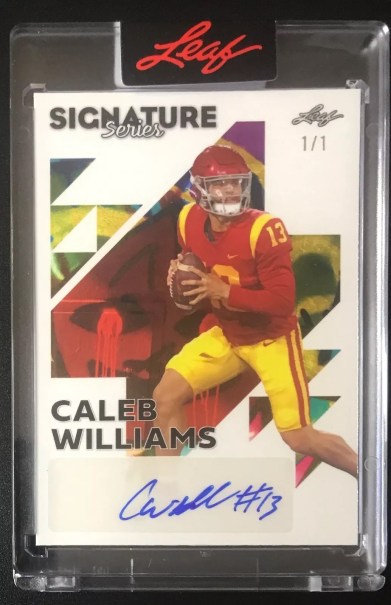
However, if I want to buy a one-of-one rookie card of Caleb Williams, I’m stuck paying whatever that seller wants to charge. There’s only one in existence and trying to figure out if it should be more or less than a one-of-one Brock Purdy or a one-of-one Justin Fields is just guess work. Even if I can argue that it should be more than Fields or less than Purdy, it doesn’t matter if the dealer won’t budge on the price.

In three years, he’ll be the finest back-up QB that Pittsburgh has on its roster, just like the last couple guys the Bears drafted as their QB savior…

The same thing applies to monopolies. If one rental company in your college town owns all the rental property, you’re essentially stuck paying whatever that company wants to charge for rent, regardless of how much the roof leaks or if you’re time-sharing the bathroom with a family of disgruntled raccoons.

You can make the argument that if Google is doing a great job of giving people what they want, nothing else really should matter and the government should leave them alone. That said, because Google is essentially killing off every possible competitor before those competing forces can show any value, we don’t KNOW if Google is the best. If competition is allowed to develop and Google still rules the roost, then we will know it earned our patronage through quality service.

However, as is the case with all monopolies, the one thing we know right now is that Google is the biggest and only option.

DISCUSSION STARTER: Do you feel that monopolies matter to you? Do you have any concerns about Google’s status and its ability to control a large portion of the digital search and ad world? Or do you just care that it works when you need it?

If A Former President Tells You An Undocumented Immigrant Ate Someone’s Dog, Go Check It Out (A throwback post)

Based on the concerns raised in Tuesday’s presidential debate, we felt it was important to let people know we’ve got an eye on our dog.

If you didn’t watch the presidential debate Tuesday, or you haven’t been withing 5 feet of any device that generates memes lately, the headline on this blog post might seem like a MadLibs game gone wrong, or the start of my slow slide into dementia.

That said, during an actual debate between two people who actually would like to run this country, one of them made the claim that undocumented immigrants in Springfield, Ohio are stealing people’s pets and eating them:

If you aren’t part of what I would most politely call the “tinfoil hat brigade,” you might have been as confused as I was when Trump started going down this rabbit hole. In looking around online now, apparently there have been a collection of randomly stupid social media posts, unsubstantiated allegations at public meetings and out-of-context photos from around Ohio that are trying to link the increase in the Haitian population there with a “pets-as-food” narrative.

I have to say that the most impressive moment of that debate, from a journalism perspective, was when David Muir responded to Trump’s claims by stating the network had reached out to the city manager of Springfield, Ohio to fact check this situation. Muir noted that the city manager found no credible evidence of any of this happening. That meant Muir and his colleagues did a couple things we should all aspire to do as journalists:

  1. Research the hell out of your topic before any big event: The fact that ABC was plugged in enough to all the random weirdness surrounding the “dude ate my dog” theory and other topics demonstrates they were researching well enough to know they needed to be ready for something like this. The economy, abortion rights, the border? Sure, those were slam-dunk topics they needed to know like the back of their hand. Pet eating in Ohio? That was special-level research.
  2. Go to a credible source for fact checking: If you watch the video, Muir notes ABC talked to the city manager, an official source who was acting in an official capacity, who told the network this was total BS. Trump then flails back with an argument I would expect to hear from a grade-schooler about “people on television” saying that someone “took my dog for food.” I’ll believe the guy whose job it is to take the “hey, my neighbor ate my dog” complaints over the “people on television” whoever they are…
  3. No matter how certain you are about something, go check it out:  In an earlier post on fact-checking, I explained that one of the best ways to look at your work is to assume everything about it is wrong. Then, you should go out and try to prove yourself right. What we usually do is assume we’re right unless something shows up that proves us wrong, which can lead to a much higher likelihood of us committing a fact error. No matter how stupid, outlandish or otherwise weird something is, if you’re going to include it or omit it from a story, you need to go check it out.

Today’s throwback post honors this concept with one of the most well-known maxims in journalism: If your mother says she loves you, go check it out.


If your mother says she loves you, go check it out (or why making sure you’re sure matters).

Iphonetext

The adage in journalism regarding verification is: “If your mother says she loves you, go check it out.” The idea is that you need to make sure things are right before you publish them. You also want to verify the source of the information before you get yourself into trouble.

This issue popped up again this week after former White House Communications Director Anthony Scaramucci had exchanged several emails with a person he thought to be former Chief of Staff Reince Prebus. It turns out, the messages came from a prankster, who baited Scaramucci into an “email battle:”

“At no stage have you acted in a way that’s even remotely classy, yet you believe that’s the standard by which everyone should behave towards you?” read the email to Scaramucci from a “mail.com” account.

Scaramucci, apparently unaware the email was a hoax, responded with indignation.

“You know what you did. We all do. Even today. But rest assured we were prepared. A Man would apologize,” Scaramucci wrote.

The prankster, now aware that he had deceived the beleaguered Scaramucci, went in for the kill.

“I can’t believe you are questioning my ethics! The so called ‘Mooch’, who can’t even manage his first week in the White House without leaving upset in his wake,” the fake Priebus wrote. “I have nothing to apologize for.”

Scaramucci shot back with a veiled threat to destroy Priebus Shakespearean-style.

“Read Shakespeare. Particularly Othello. You are right there. My family is fine by the way and will thrive. I know what you did. No more replies from me,” the actual Scaramucci.

“Othello” is a tragedy in which the main character is tricked into killing his wife Desdemona after his confidante convinces him that she has been unfaithful.

As the article points out, Scaramucci isn’t the first person to be suckered by a prank. Other members of the government had been similarly duped via email. In terms of prank calls, Wisconsin Gov. Scott Walker found himself once speaking with a person pretending to be billionaire David Koch, discussing ways to attack protesters and destroy liberals.   (The prankster told his side of the story on Politico.)

News journalists have also been caught short when it comes to making sure they’re sure about the sources and information they receive. In 2013, KTVU-TV in San Francisco had what it thought was a big scoop on the Asiana Flight 214 crash: The names of the captain and crew. However, the information turned out to be not only a hoax, but an intentionally racist set of names:

Three people were fired and a fourth resigned for health reasons in the wake of this error. In digging into this, it turned out that the NTSB found the source of the names to be a “summer intern” who thought this would be funny. In its own investigation, the station found that nobody asked the source at the NTSB for his name or title. The station issued an apology, as did the NTSB.

It’s easy to laugh at these incidents or to marvel at how dumb somebody was to buy into this stuff. However, we used to say around my house, “There, but by the grace of God, go I.” In other words, you could be next.

So here are three simple tips to help you avoid these problems:

  1. Verify, verify, verify: If something sounds too good to be true, it usually is. Look up information on various sites, ask a source for other people who can augment/confirm the information and make sure you feel confident in your content before you publish.
  2. If you aren’t sure, back away: It is always better to be late on something than it is to be wrong. It’s also better to let a random email or a text go without a response than to get sucked in and pay the price later. Some of these are easy, like when a Nigerian Prince promises you untold riches if you would just transfer your bank account number to him. Some are harder: When’s the last time you made sure it was your friend texting you about a “crazy night” and not his mom or dad doing some snooping? We just assume we know the actual source. That can be dangerous, so back off if you’re not sure.
  3. Kick it around the room: One of the best reasons why newsrooms, PR offices and ad agencies exist is to gather collective knowledge in one place. Sure, with technology now, it’s easy for everyone to work “off site” but keeping people in a single physical spot can make it easier to have someone look over your shoulder and see if something you just got “smells right.” Take advantage of other people around you and don’t go at it alone.

Just tell me what happened: The difference between writing for yourself and your audience

Packers announcer Ray Scott was known for his exceptional brevity in calling the game, telling you just what you needed to know and not making the call about him or his ego. We need more media folk like Ray Scott.


When it comes to perfect writing for media, I tend to love the Associated Press and its approach to sports. Here’s a look at a game I cared about:

KANSAS CITY, Mo. — — No. 9 hitter Brayan Rocchio drove in four runs and the Cleveland Guardians beat Kansas City 7-1 Tuesday night, extending the Royals’ losing streak to a season-high seven.

Kansas City was held to two runs or fewer for the fifth straight game and managed just four hits. The Royals’ losing streak is its longest since a 10-game skid from June 5-16 last year.

Since tying Cleveland for the AL Central lead on Aug. 27, the Royals (76-65) have dropped 5 1/2 games behind the Guardians (80-59), who have won five of six. Kansas City maintained a 4 1/2-game lead for the final AL wild card.

The lead is both simple and yet multi-faceted: I know who won (Guardians), when they won (Tuesday night), how they won (7-1), the crucial reason why the won (Brayan Rocchio drove in four runs) and the overall impact of the event (Royals lost seven in a row, which isn’t great if you’re making a run at the playoffs).

The second paragraph covers the losing streak and its historical sense of perspective. The third tells me what the impact on the playoffs is (Guardians up 5.5 games thanks to a winning streak; Royals still in the mix with a 4.5 lead for the last wildcard.)

Here’s a look at how MLB.com went after the same story:

KANSAS CITY — Tanner Bibee has proven time and time again he can pitch in the biggest moments — it’s why he’d be Cleveland’s ace for this postseason. Tuesday was no different.

The Royals loaded the bases with nobody out in the sixth trailing by two runs, but the Guardians stuck with the 25-year-old right hander to get out of the jam in this crucial AL Central matchup — and he did just that.

The lead drops me in the middle of a weird, unattributed moment. Who says he’s “proven time and time again” how great he is? He’s 11-6, which is fine, but we’re not talking Dennis McLain or Bob Gibson in 1968. We also get a weird em-dash thing, followed by an empty phrase used by poor writers: “X was no different.” (If it’s all the same, why are we writing about it? If it’s different, you don’t have to tell me that, as oddity is an interest element.)

The second paragraph again relies on weird punctuation and another empty phrase: “He did just that.”

Then there’s the third paragraph, which has the feeling of a sugared up 4-year-old telling me about his day:

Bibee kept Cleveland’s lead, allowing just one run to come home on a sac fly, to squash Kansas City’s best scoring chance of the game and lead the Guardians to a 7-1 win on Tuesday at Kauffman Stadium. Cleveland, now just a half-game behind Baltimore for the best record in the American League, moved to 4 1/2 games over Minnesota, which lost to the Rays on Tuesday, and 5 1/2 games over the Royals for first place in the division.

You get 80 words (38 and 42 word sentences) of everything you’d want to know in a pile. The second sentence has TEN prepositions, which makes it read like we’re singing this.

This isn’t to pick on anyone or say that one way of doing this is always right and the other is always wrong. In the comparative, you can see a few things that will improve your writing overall:

WRITE FOR THE AUDIENCE, NOT FOR YOURSELF: One of the things that most writers have difficulty with is considering the needs of the audience over their own interest in writing. Sometimes, it’s because we fall in love with the sound of our own voice, while in other cases, we forget that the audience doesn’t know what we know.

In the case of a ballgame, it’s pretty easy to blow off the score or the “where/when” stuff because you just experienced it. You know where you are, what time you were there and who won. That’s great for you, but your readers are still in the dark on the thing they most want to know. I know that when I go online to grab info about games, the first thing I’m thinking is, “I hope the Guardians won.” I’m definitely not thinking, “I wonder what gimmicky approach the writer is going to take this time.”

Think about it this way: If you didn’t know anything about the game, and you only had 20 seconds to live, what would you hope someone would tell you about it before you die.


NOUN-VERB-OBJECT IS YOUR HOLY TRINITY: As is the case with most overwritten sentences, we lack for a strong noun-verb-object core at its center. Each sentence should have a basic premise that starts with “Who did what to whom/what?” If we can nail that down, we end up in great shape. If not, we end up building our sentences on a foundation of sand rather than concrete.

Look at the lead of the first sentence and you see two sets of almost perfect NVO constructions:

  • Rocchio drove in runs
  • Guardians beat Kansas City

Now look at the lead of the second sentence and try to find that same NVO core. Go ahead… I’ll wait… (finishes laundry, grocery shopping, resurfacing the driveway…) Got it yet? OK… I’ll check back tomorrow.

If you can’t nail down the main assertion of a sentence in an NVO core, you probably have both structural and focal problems.


SHOW, DON’T TELL: In the case of the first chunk of text, I get a lot of clarity because the writer SHOWS me how things happened (Rocchio drove in four runs, Royals drop in the standings due to seven-game losing streak).

In the case of the second chunk of text, I get a lot more TELLING (vague telling at that) in terms of what’s going on with the pitcher. I have no idea how he got out of that bases-loaded jam or how many runs scored while the writer is waxing poetic in the second paragraph. I also have no idea what makes Bibee that “go-to guy.” Instead I get punch-phrases like “he did just that” and “Tuesday was no different.”

If you find yourself resorting to cliches, empty phrases or other “Boom Goes the Dynamite” moments, step away from the keyboard and let your adrenal gland relax a bit. Then, show me what’s going on without telling me.


How Jordan Love’s Injury Drove Packer Nation into a Frenzy of Misinformation and How You Can Avoid Perpetuating Viral Stupidity


THE LEAD: The Extra-Special, We-Want-You-to-Buy-Peacock-Streaming, I-Bet-Brazil-Is-Amazing Friday night game between the Green Bay Packers and Philadelphia Eagles got off to an ugly start, with terrible field conditions and ended even worse, with franchise quarterback Jordan Love writhing in pain on that lousy turf.

Love’s injury wasn’t as bad as some I’ve seen, but when you dump $220 million extra into a quarterback and he doesn’t make it for first full game, things aren’t great. Also, this situation had half the press booth doing deep dives to figure out what, exactly, Malik Willis had done in his career to this point.

What makes all of this worthy of a post today wasn’t the Friday event, but the subsequent spread of information I witnessed Saturday that became a perfect microcosm of why media literacy matters so much.

THE BACKSTORY: The first Saturday of each month, Dad and I are at the Oak Creek Salvation Army as part of the largest sports card and memorabilia show in Wisconsin. We set up a couple tables and sell our wares, which range from cheap packs of cards from the junk-wax era to old programs from the Packers glory days.

More than 700 people came through the door that day, with about 695 of them wondering about how bad Jordan Love’s injury was. Between selling stuff and looking for stuff to buy, I heard dozens of theories on what was going on with Love and his knee and what it meant to the Packers season. These included:

  • Torn ligaments, he’s out for the season.
  • It’s an ankle, not a knee. Should be able to tape it up.
  • They don’t think it’s that bad. Should be back next week with rest.
  • This could be career ending. I mean, did you SEE him limping off the field?
  • Packers KNOW what’s going on, but they aren’t saying anything until they know they can grab an extra QB.

SOURCE CHECK: Each time someone I was chatting with said one of these or the other dozen things they were saying with absolute certainty about Love’s injury, I asked a basic question:

Where did you get that?

The answers were a mishmash of things like, “I saw it on Twitter” (Sorry, Elon, nobody’s calling it X in casual conversation. I think we just call it X in the media so you won’t crash a rocket on our houses or buy our media outlets.) to “I know a guy who…” to “I saw it on my phone” to “I just heard those guys over there talking about it…” (That’s always reassuring.)

None of these people could point me to one specific source that had any kind of insight whatsoever as to the specific injury, the actual diagnosis and the expected time of recovery. Personally, I dropped a note to a former student of mine who was in Brazil covering the game and he never even got back to me with an answer. At his press conference after the event, coach Matt LaFleur straight up said he didn’t know and they expected to get an MRI when the team got back to Green Bay.

That didn’t stop everyone, and I mean everyone, from chiming in on social media about what they absolutely, positively, definitely knew had happened to Jordan Love.

Contrast those immediate “I know stuff” reactions with what the Milwaukee Journal-Sentinel put out Saturday:

GREEN BAY − Green Bay Packers quarterback Jordan Love injured the medial collateral ligament in his left knee and is expected to miss “a couple” of weeks, PackersNews has confirmed.

Earlier, ESPN’s Adam Schefter reported on X, formerly Twitter, that Love “is believed to have injured his MCL, pending further testing. It is not expected to be a season-ending injury, but he is expected to miss some time.”

Look at those two paragraphs, complete with actual sourcing. Now, you can think PackersNews is a lousy publication or that Adam Schefter is a shill for the NFL if you want, but at least you have two sources that are in the know cited in relation to this injury.

The rest of the piece continues that way, with references to sources like NFL Network’s Tom Pelissero, The Athletic’s Dianna Russini and PackersNews reporter Tom Silverstein. In each case THOSE people had sources that told them things. Again, you can like or dislike any of those sources, but at least we know who they are, as opposed to “My phone told me” or “The guy in front of me ordering a Sloppy Joe was saying…”

MEDIA-LITERACY MOMENT: One of the most important things to understand about today’s media is that literally ANYONE can participate through various channels that can spread information far and wide. This is great when it allows for a wide array of normally underrepresented voices to put forth information that matters to people. It’s also great when it can shine a light on reality that otherwise would have gone unseen, as was the case with the George Floyd incident.

That said, it can be a terrible thing when people who don’t know anything get information from other people who don’t know anything and keep perpetuating the stupidity of even less-informed people further up the food chain. In the race to be first or to just get a lot of attention, people without a true understanding of how the media SHOULD work use tools they don’t fully grasp to make a mess of reality.

One of the most important things you should do when you get information, even if it’s from a platform use a lot and even if it supports your viewpoint, is to figure out who initiated that content.

In short, always ask, “Where did you get that?” before believing (or sharing) information and you won’t get sucked into a rumor mill or some viral stupidity.

DISCUSSION STARTER: How much faith do you put in any of the information you receive through the various platforms you use? What makes you more or less likely to consider the information valid? Also, what level of certainty to you apply when it comes to information you receive to share it with other people along your social media networks?


I Guess I’ll Never Run Out of Current Examples of Mass Shootings (A Throwback Post)

I had another Throwback Thursday post on the launch pad, ready to go, when news about Apalachee High School in Georgia broke:

Four people were killed by gunfire at a high school in northern Georgia on Wednesday, the state’s bureau of investigation said, sending schools across the region into lockdown just over a month after the end of summer vacation.

President Biden called the shooting — the deadliest episode of school violence in Georgia history — “another horrific reminder of how gun violence continues to tear our communities apart.”

I remember once thinking about how certain events were touchstones for certain generations. There were things like the moon landing, the Kennedy assassination, the Miracle on Ice and more. I remember thinking the Columbine shooting would be one of those eternal events, as nothing like it could ever really happen again at that level.

Shows what I know…

As was the case when I was writing the original post below, I’m in the middle of two revisions to two textbooks and I’m constantly looking for fresh examples of things like a social media influencer running afoul of the FTC, a famous person doing something stupid and public relations efforts that were massively successful, with varying levels of results. That said, I’m never at a loss for something having to do with either defamation or a mass shooting.

The saddest thing is that I’ve actually already DONE one of these shooting posts on a Throwback Thursday. That was when 15-year-old Ethan Crumbley used a handgun to kill four and wound seven others at Michigan’s Oxford High School.

I can’t remember if I wove the Crumbley example into a textbook, as the timing might not have fit my deadlines, but I know that whatever emerges in Georgia will likely make the cut for at least one of these upcoming texts.

I am devastated and saddened beyond all belief, but unfortunately not surprised.

As was the case in 2017 when I originally wrote this:


The horrifying revisions of my textbooks: Chapter by chapter, shooting by shooting

The first draft of what would become the “Dynamics of News Reporting and Writing” featured a sample chapter written in 2008, discussing at length the Virginia Tech shooting. I was pitching a reporting book to another publisher when the rep for that company asked for two chapters that could help her sell the book to her acquisitions committee.

Kelly Furnas, then the adviser at the student newspaper at VT, had done a session at a student media conference about his newsroom’s efforts in the wake of the attack. I knew Kelly through friends and helped book him for that session. I also was able to talk to him after the session for this chapter, assuming that the magnitude of this event would never be equaled.

It turned out I was wrong about that, much to my continuing dismay.

The arguments of when is the right time to discuss broader issues are beginning to emerge in the wake of Monday’s attack in Las Vegas. So are the calls for all sorts of regulations, restrictions, restructuring and more. It is hard to see the carnage wrought upon the citizens of this country and remain dispassionate or above the fray when it comes to the continually evolving topic of attacks like this one.

As a reporter and then an editor and then an adviser, I always believed in the simplest of ideas when it came to covering something like this:

  • Show, don’t tell.
  • Provide facts and let them speak for themselves.
  • Don’t try to oversell it.
  • Just let the readers know what happened.

This blog isn’t a podium or a pulpit, nor will I use it to advance whatever agenda or whatever “side” some displeased readers would disparagingly note I must be on as a professor, a journalist or whatever other label was convenient.

That said, it struck me tonight as I thought about the morning post that the two books featured here, “Dynamics of Media Writing” and “Dynamics of News Reporting and Writing,” catalog the expansive nature of violent outbursts, here and abroad. Even more, they do so in a way that shows me something exceedingly painful: My continual endeavors to update these volumes in a meaningful way as they relate to these horrific events is an ongoing, losing effort.

After a few years of discussions, the book in which the Virginia Tech shooting story was included did not come to fruition. The proposal was scuttled when the publisher decided to “go another way,” corporate-speak for “we didn’t really think this was worth the time.”

About three years after that happened, I met a rep from SAGE while at a journalism convention. I was looking for a book to use in my writing across media class, while Matt was trying to convince me to write one instead. In writing the pitch, I built two chapters for him, one of which was on social media. I included a reference to the Aurora, Colorado shooting, in which a gunman shot up a theater during the midnight showing of the Batman film, “The Dark Knight Rises.” The point there was not to show the magnitude of the attack, but rather what can happen when people are inept at social media: The hashtag used (#aurora) to keep people abreast of the unfolding situation was co-opted by a fashion boutique to promote the Aurora dress.

After reviewing the pitch and the chapters, Matt came to the conclusion that I really had two books: one for general media writing and one for news reporting, so he signed me to both. This was 2014 and I had already written several chapters for each book. Almost by accident, I had layered in references to additional shootings.

In my initial discussion of the importance of geographic referents in the audience-centricity chapter, I tried to explain how a reference to a “Cudahy man” who had killed six people at a Sikh Temple in Wisconsin drove me to a fit of anxiety. My mother taught grade school and middle school in that town for 40-odd years at the time, so I feared some level of connection between Mom and a monster. (As it turned out, there was none as he had moved to the area more recently. In addition, the whole explanation was overly complicated, so I cut it during one of the draft chapters.)

In the reporting book, I referenced the Charlie Hebdo attack in my discussion of hashtags. In the media writing book, I included a reference to Sandy Hook in discussing magnitude. In a law chapter for one of them, I discussed the Boston Marathon Bombing and the “Bag Men” cover that essentially libeled two guys who just happened to be at event.

At one point, I added and cut references to the Northern Illinois shooting, in which a grad student killed five and injured 17. I knew the DeKalb area, as my grandfather had been a police chief there for years and I had interviewed for a job there about four years before the shooting. The adviser at that student paper was also a friend of mine at the time.

I remember thinking when I cut it that it was because it hadn’t been “big enough” for people to easily recall it. It galls me to think that five dead and 17 wounded could be prefaced by the modifier “only.” Unfortunately, it was accurate: Sunday’s attack in Las Vegas had fatalities ten times that one and injuries scores and scores beyond that attack.

Somehow, and I honestly don’t know how this happened, I was between edits or editions of both books when the Pulse nightclub shooting happened in 2016. I could find no reference to this in any draft chapters and it defies logic that the murder of 49 people somehow slipped past me or didn’t make the cut in one of these books.

However, in finalizing the Reporting book, I ended up coming back around to the story Kelly Furnas told me all those years ago. I was building a section on obituaries and realized I never actually published the story he told me about how his staff wrote literally dozens of obituaries for a single issue of the paper. He had long left VT, but I found him and got his permission to finally publish this incredible explanation as to how his extremely green reporters gritted their teeth and met this challenge.

That book is currently in press and is already out of date as a result of the attack in Las Vegas. However, the Media Writing book is in the completed draft phase of a second edition, so this information will likely supplant some previous horrifying event and make the cut. At the very least, I’m going to include the Jack Sins incident to outline the importance of fact checking, even when it feels almost slimy to do so.

In looking back, it’s not so much the number of these incidents or the magnitude of them that disturbs me in an inexplicable way. Rather, it’s that I have recounted these events not by impacted memory but rather a search through my hard drive, using key terms like “shooting,” “dead,” “killed” and “attacked.”

Each time I added one of these “recent events,” it was fresh, clear and horrifying. As I review them now, it is more like looking through a photo album that provided refreshed glimpses and renewed recollections of vague people and places.

Each incident wasn’t so much of a “I’ll never forget” moment as a “Oh, now I remember” one.

What happens when police use AI to draft their incident reports?

(We’re not quite here yet, but it’s a little disconcerting how I keep finding parallels between RoboCop and reality. Also, that Kurtwood Smith was somehow less threatening here than in “That ’70s Show.”)

THE LEAD: Some police organizations are experimenting with AI, in which ChatBots are writing the first drafts of their situation reports based on what the officers’ body cameras capture.

“They become police officers because they want to do police work, and spending half their day doing data entry is just a tedious part of the job that they hate,” said Axon’s founder and CEO Rick Smith, describing the new AI product — called Draft One — as having the “most positive reaction” of any product the company has introduced.

“Now, there’s certainly concerns,” Smith added. In particular, he said district attorneys prosecuting a criminal case want to be sure that police officers — not solely an AI chatbot — are responsible for authoring their reports because they may have to testify in court about what they witnessed.

“They never want to get an officer on the stand who says, well, ‘The AI wrote that, I didn’t,’” Smith said.

The pilot programs have found that the reports that once took 30-45 minutes to draft can be done in a matter of seconds. To kind of hedge their bets on the issue of how much they should be leaning on the technology, some departments are using the AI on misdemeanors and petty crime.

Aside from the idea that the computer might be doing the officers’ “homework” for them, legal scholars and civil-rights activists are concerned about the impact this could have on society as a whole:

“I am concerned that automation and the ease of the technology would cause police officers to be sort of less careful with their writing,” said Ferguson, a law professor at American University working on what’s expected to be the first law review article on the emerging technology.

Ferguson said a police report is important in determining whether an officer’s suspicion “justifies someone’s loss of liberty.” It’s sometimes the only testimony a judge sees, especially for misdemeanor crimes.


DOCTOR OF PAPER HOT TAKE: Accuracy and legality lead the list of my concerns here. At one point in the article, the officer notes that the AI included a detail he didn’t remember hearing. That could be the AI capturing something real or it could be fabricating something that the officer then kind of adopted as true.

Experts and users have found AI can engage in “hallucinations” where it presents something untrue as fact. It’s kind of funny when AI tells us that the downfall of Western Civilization began when the coach refused to put Uncle Rico in at quarterback in the ’82 finals. It’s less funny when it tells a court of law that you threatened a cop who pulled you over for speeding.

The officers interviewed for the story mention that they’ve become more verbal in their interactions with the public, which allows the body camera to capture that information and thus improve the AI report.

In this kind of case, it feels more like transcription than creation, which seems safer, but who knows. What would be beneficial for reporters in cases like this would be to get the AI-based reports and the officer’s body-cam footage to do a side-by-side comparison.

Legally speaking, I would be curious to know what levels of access journalists could have to the AI version of a report as well as the final version of a report. Police reports and court documents are public records, but some internal memos and drafts of public items can occasionally be considered off limits. In addition, it’s technically not being created by a public figure, but it’s the ramblings of a computer program. Who can have access to what, when and where and how is interesting here.

It’s also interesting to see how well these things hold up in court compared to other reports, witness testimony and so forth. As with anything new, there’s going to be a learning curve and development issues, with the older technology probably still being better.

When we first started seeing automobiles, they could barely break into double digits in terms of their mph speed. Meanwhile, horses could literally and figuratively run circles around them. As time went on, cars clearly became the faster mode of transportation, but it took a while. It’ll be interesting to see how many lawyers start asking questions like, “So, Officer Smith, did you write the initial report of this or did you rely on artificial intelligence to do it for you?” and then showing off all the stupid things AI has written to undermine AI’s credibility.

The folks in the article who distrust the AI process have noted concerns about racial targeting and other such issues in terms of bias against people traditionally mistreated by legal wrangling. We have seen AI generate some of those kinds of biased reports here, and it is a valid concern. I would probably go a step beyond this, only to say that I’d be really concerned in general for anyone who is being accused of criminal activity while the police are working the kinks out on this system. The article notes that the crimes are generally “low level” but that doesn’t make me feel much better if I’m on the other end of an AI disaster.


A look back at threats and violence against journalists we know in the wake of the Robert Telles verdict. (A Throwback Post)

Jeff German’s page remains on the Las Vegas Review-Journal’s website more than two years after he was killed. A jury convicted Robert Telles of stabbing German to death over stories Telles found critical of him.

A former Las Vegas official was convicted Wednesday of murdering a journalist who wrote accurate stories about the official’s bad acts while in office.

Robert Telles, an administrator at the Clark County Public Administrator’s office, lost his bid to retain his position in 2022, due in part to Jeff German’s stories of Telles’ inappropriate acts while in office. Telles stalked German at his home and stabbed the 69-year-old man to death, the jury concluded:

The prosecution has indicated it won’t pursue the death penalty. The jury, which said it found the murder to be “willful, deliberate and premeditated,” is set to hear further evidence before deciding on a sentence. Telles could get life in prison without parole, life with the possibility of parole after 20 years, or 50 years in prison with a chance at parole after 20 years. The use of a deadly weapon may also add to the sentence.

“He took the life of an individual who was simply doing his job,” prosecutor Christopher Hamner said at closing arguments.

District Attorney Steve Wolfson said the verdict sent a message that attacks against members of the media won’t be tolerated.

In reading this story, I recalled a post we did more than five years ago where the hivemind folks recalled some of their scariest moments on the job. Threats, violence and intimidation were part of what they tolerated to do nothing but tell their audiences relevant and valuable information. Here’s a look back at what these folks endured and what we still face as journalists today:


“I slept with a baseball bat under my bed:” Journalists share stories of being threatened and attacked.

Rage against “the media” is a common form of expression among people who have the same difficulty in differentiating between “fake news” and “factual stuff they don’t like” as they do “their ass” and “a hole in the ground.”

One of the things that many people forget is that “the media” is actually full of real people who go to work every day. Moms and dads. Sons and daughters. Friends, loved ones and more.

For these people, and those people who care about them, hatred of the media is not an abstract concept. The anger they face is palpable. The threats they receive cause fear. As we noted a while back, we all feel the pain when a journalist is attacked or a newsroom is the site of a shooting.

And all of this takes its toll.

Lori Bentley Law, a broadcast journalist at KNBC, wrote a piece that Poynter featured, titled, “Taking the Leap: Why I’m leaving TV news after 24 years.” Of all the things she mentioned, this one stuck with me:

I’m a happy, positive, optimistic person. I don’t want to be immersed in sadness every day. I don’t ever again want a cute little girl in pigtails to look up at me and say, “We hate you.” I don’t want to hear “Fake News” shouted at me anymore. Or to be flipped off while driving my news van. Or worse yet, to have the passenger in the vehicle pacing me hang their naked butt out the window and defecate. Yes. That happened.

(Law posted her original piece and made her decision even before CNN received a pipe bomb, one of at least a dozen explosive devices sent through the mail to people and organizations throughout the country. Then people like this emerged:)

Bomber
(Yet one more moment where I think, “What the hell is wrong with people?”)


I often tell my students stories of how I had been called a “vulture” and a “scumbag” and worse. I remember one person who told me, “Your mother didn’t raise you right!” Another one, for some reason, told me that he was “gonna get my cousin and we’ll be over to take care of this.” I forget why he was so upset, and I still have no idea why the guy was getting his cousin, but I doubt his relative was a conflict counselor.

The other screaming fits kind of blur into a mess of random anger. Occasionally, I was fearful when I went to shootings or other things and people would tell me to “get the (expletive) out” of their neighborhood. However, most of the time, I was covering late-night crime, so the presence of the police tended to make me feel a bit safer.

In this age of the media being dubbed “the enemy of the American people,” I wondered how bad things are now or what others had faced during their time in the field. I asked the hivemind for any recollections they had of incidents involving angry people, threats or worse.

These are their stories:

The local crank is a constant job hazard for journalists. Between the conspiracy theories related to the clues in the crossword  and the allegations of biased coverage of the local dog show, some people have a lot of issues to work through. One former student encountered a particularly virulent crank with some serious issues:

At a small-town newspaper in Ohio we had a guy who would get mad about articles we wrote, photocopy pages of our newspaper, write profanity on the copies then mail them to us…

My boss actually got a restraining order against the guy because he was stalking her. He liked to slowly drive past her house and glare at her and her family. Following some court hearings and visits by the police, the letters stopped coming, but he’d still curse at me when he saw me covering an event. When I knew he was around I sometimes would have a recorder ready to go so I could record him if he ever threatened me.

This went on for about seven-and-a-half years, beginning in 2010, until the guy died earlier this year.

That same guy also sent an email to our web editor once requesting a full body photo of a high school volleyball player, which was pretty creepy. He loved going to high school sporting events, especially high school girls games.

According to my boss, a teenage girl from another school also had a restraining order against the guy. He apparently printed photos of the girl, action shots from sports and senior portraits, and mailed them to her, requesting she autograph them and send them back to him.


Aside from the generally creepy people, journalists tend to take the most abuse from people who feel they’ve been unfair. A media instructor who covered local politics shared the kind of story people have seen an unfortunate amount lately:

I was threatened by a political candidate a few years ago while working at our local paper. I called him to get his reaction to losing the election, and one of his supporters answered the phone pretending to be the winning opponent. It was obnoxious. I told one of our editors what had happened, and he took to Twitter. The losing candidate called me the next day threatening me (I took it as a physical threat) and promising to exclude me from any news tips he might have — and he had a lot, he claimed.


In some cases, it’s not even the topic of a story who gets angry with the media. A general assignment and sports reporter once came face to face with the family members of a man convicted of a crime:

Closest call came when friends of a defendant charged with killing his friend in a drunk driving crash recognized me one night while I was out with friends watching a band … started with stares, then to whispers and pointing, then to getting in my face to confront me … luckily, had more friends than they did so the issue was quickly calmed down.


A good friend of mine who broke the news of a “Spotlight” -like molestation scandal in the Chicagoland area found herself targeted by the leaders of her own faith:

Torrents of abuse while covering the Catholic Church sex scandal, including being screamed at by a nun (who was basing her rage on being lied to by her bishop, who she probably couldn’t yell at, so) and the now-deceased Cardinal Archbishop of Chicago once shouted at me that a story was unfair in front of an entire congregation.

She also found herself threatened physically for criticizing another “holy man” in the paper:

Our newsroom in Elgin got shot at (we never knew if it was deliberate or just that we worked in a gang territory in dispute). I wrote something semi-critical of Saint Ronald Reagan after he died and a guy called my editor and threatened to kick HIS ass once he was done with mine.


Being blamed for the problems of others is common in the media. I remember once telling a woman on the phone who called to scream at me about a story, “Ma’am, it’s not my fault your son was involved in a shoot out at a Taco Bell Drive Thru.”

Usually, it’s just someone screaming on the phone about a DUI report or something, but for a former student of mine, the “blame game” was much worse:

I covered the lengthy trial of a dermatologist who was accused by about 16 women of abusing his position to sexually assault them. It was already going to be a high-profile case because he was a doctor, one of the most sacred positions of trust. Every time I’ve covered a courts story involving a physician there’s been hordes of satisfied patients who come out of the woodwork to blame the messenger (me, or the media in general) — I’m assuming because that’s easier than acknowledging you put complete trust in someone who is flawed.

Anyway, this trial went to a whole other level of crazy after the doctor alleged he was being unfairly targeted because he previously had a one-night-stand with the female district attorney (she adamantly denied it), and that she was trying to put him behind bars only because she was a spurned ex-lover. The trial, unsurprisingly with so many accusers, didn’t go his way. And on the last day his adult son walked out onto the freeway and stepped in front of a semi-truck to commit suicide…

In a newsletter to the hundreds of patients still supporting him, which he forwarded to other media outlets, he singled me out as causing his son to commit suicide. The case ended up lingering over more than a year as he appealed, and he repeated the accusation over and over again over that time.

It would have bothered me if it wasn’t so batshit crazy. But then again that was nearly 10 years ago and I’m still thinking about it, so maybe he did deliver a few blows to my reporter psyche.


A publisher of a Midwestern paper, who also teaches courses in journalism, said she received blame after covering a football coach and his abuse of players:

I was working as a sports editor at a small market newspaper in the early 2000s. I had to be escorted to and from the office by law enforcement for almost a month after a coach threatened my life following stories I wrote about him assaulting players in the locker room after a tough loss. I was outside the locker room and heard it happening and got it on tape and many of his players came forward and went on record. He was fired and of course, it was all my fault.

That journalist also received some sexist and violent threats more recently:

Last year, I had the mayor of the town I own the newspaper in call my husband and scream at him to “manage his bitch of a wife.” I published a story with his quotes about how the city was knowingly dumping raw sewage into a local creek. Later… our farm (was) vandalized.


People can clearly get angry when you report things they don’t want you to cover. A good friend said he once found himself almost being a punching bag for an angry young man whose house had caught fire:

One time in the early to mid-2000s, I was covering a house fire, and the teenage/young adult son of a man presumed to be inside got right in my face and threatened to beat the daylights out of me (pretty sure that’s not the phrasing he used) because I had no business being there. Turns out the dad was fine, and I’m sure the kid was upset because he thought his dad was dead, but I really felt like I was a millisecond away from taking a right cross to the head.


And that wasn’t even the scariest situation in which he found himself:

There was a period of time when I slept with a baseball bat under my bed, and I remember that was directly connected to some kind of threat I received while on the cop beat — but I really don’t remember exactly what it was. Kind of funny that this sort of thing happens regularly enough that I can’t even recall why I was sleeping with a defensive weapon nearby …


Of all the stories shared among the hivemind, this one was the most terrifying. A journalist recalled an incident that happened to him as a student editor at his college newspaper. A reporter began looking into what he thought was a fairly pedestrian story about a professor. The professor didn’t like the story idea and posted a screed on a website, which led to the whole story blowing up on a national level:

A fan of the professor’s work (unaffiliated with the university as far as I can tell) started sending death threats via Twitter and Facebook to me, some of which was wildly anti-Semitic.

I frankly didn’t know about them until after Public Safety contacted me to warn me about the posts. After months of online harassment and my multiple meetings by phone or in person with law enforcement, he showed up on campus one day looking for me.

He even found and entered the school newspaper office, but luckily I was in class across campus at the time. Public Safety at the school detained him, interrogated him and told him to never return.

I’ve never heard from him since.

Four potential story ideas for student journalists heading back to school

QUICK REMINDER: I’m trying to gather information for folks about what students use AI for and what would make them avoid using it to cheat in class. If you are interested in helping out by reaching out to your students, here’s the link to the survey again:

https://forms.gle/WH9nzpHNT2XbMX5KA

Now, on with the show…

With the start of the semester, it can be a bit tough to get back into the swing of things in terms of coming up with some good fodder for the student media outlets out there. Here are four things that came to mind as I was trying (and failing) to come up with something more profound to launch the blog this year:

COVID COMEBACK: According to the Centers for Disease Control, COVID is making a big comeback, with several new variants getting into the act. When we first faced this mess back in 2020, we were isolating like it was a zombie apocalypse and washing our mail before opening it. Today, it’s treated less like the start of the apocalypse and more as a potential annoyance.

That said, what are the policies your school is rolling out for this? Is COVID now covered under traditional illness policies your school has? Is it still a “get out of class for a week” card? What alerts have the schools enacted regarding shared on-campus housing, dealing with workers who have diminished immune systems and more? Your school’s approach might be nothing and it should be something, or it might be a whole lot more than it needs to be.

FAFSA FAILURES: The Free Application for Federal Student Aid, better known as FAFSA, hit more than a few snags this year thanks to an “improvement” to the online application system. What that meant was hotly debated in the spring and the summer, but now we should be able to see what the actual impact is.

A recent national survey found that the freshmen classes are smaller than expected, with fewer overall financial aid applications  and less diversity in their populations. The individual impact obviously varies from school to school, so it would be a good idea to pull the FAFSA data for your school for the past five years and see where things sit today. Anecdotes will also help if you can find people who took an unintended gap year due to these problems or people who otherwise monitor the enrollment situation at your school.

HOT HOT HOT: Regardless of where you live, late August and early September are ungodly hot, compared to other times of the year. It’s also the time in which students are expected to move back to campus, leading to potential health and housing issues.

A number of news outlets in Minnesota, Wisconsin and other normally not that hot states have done the “it’s hot as hell but they’re moving kids into the dorms” stories, so there’s always a good follow up on that kind of thing. It’d be interesting to see about any medical calls (Hey, dads aren’t going to let some BS heat index stop them from hauling a freezer up 15 flights of stairs…) during the move in as well as any follow up about lack of A/C in student housing. It’s also probably not a bad thing to check on off-campus housing with landlords not keeping the air on or otherwise making the places inhabitable.

HOUSING HELL: The cost of housing in the country has become a focal point of everything from news articles to the presidential campaigns. In many cases, the focus tends to be on single-dwelling homes and hedge-fund maneuvers to corner the market on rental units in big cities. That said, every campus has its own challenges when it comes to housing space and getting students put into it.

I remember a few old stories about the dorms (residence halls, excuse me…) being booked beyond capacity, forcing some students to live in shared spaces until at least a few kids dropped out of school or got kicked out for trying to grow weed on the roof of the com building. Then there is this story out of Madison, Wisconsin that says the housing available to students is well outside their price range. (Paywall. Sorry. But Kim is a great reporter and pretty much the sole reason I’m shelling out whatever I’m shelling out to keep a subscription to the State Journal these days.)

What’s the situation out by you? Do they need to build more residence halls or have Silicon Valley billionaires bought every scrap of land around Northeast West South-Central University to corner the housing market? Also, what kind of living situations are people dealing with these days due to these pricing situations? (I’m always amazed when a student tells me they’re sharing a four-bedroom, one bath home with seven other people. I have no idea how that works…)

Hope this helps! Have a great start to the semester!

Vince (a.k.a. The Doctor of Paper)

The trolling of Gus Walz and the history of people picking on political kids

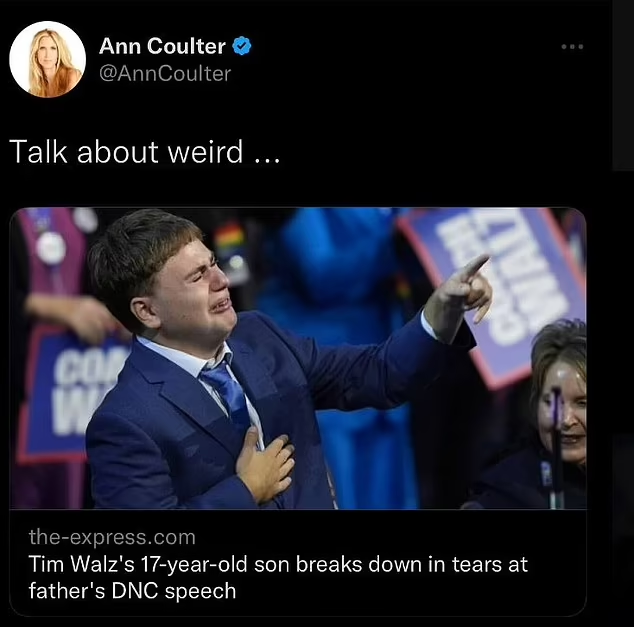
THE LEAD: Gus Walz, the teenage son of Democratic VP candidate Tim Walz, went viral during the DNC last week for his unabashed love of his father. Gus, who has a nonverbal learning disorder as well as anxiety and ADHD, yelled, “That’s my dad,” before he broke down crying during his father’s speech.

It was a sweet, touching moment of humanity that only took about six seconds for people to start ridiculing online:

Mike Crispi, a Trump supporter and podcaster from New Jersey, mocked Walz’s “stupid crying son” on X and added, “You raised your kid to be a puffy beta male. Congrats.”

Alec Lace, a Trump supporter who hosts a podcast about fatherhood, took his own swipe at the teenager: “Get that kid a tampon already,” he wrote, an apparent reference to a Minnesota state law that Walz signed as governor in that required schools to provide free menstrual supplies to students.


The professional media operatives also decided to get into the act:


Both Coulter and Weber issued apologies of a sort, with Coulter saying she took her post down once someone told her Tim was “austistc” and Weber noting  he “didn’t realize the kid was disabled.”

(SIDE NOTE: It’s unclear exactly how serious to take an apology from anyone who a) doesn’t take the time to spell the apology appropriately, b) takes a shot at a kid and only feels bad when the kid turned out to be “disabled,” or c) uses the term “disabled” rather than learn about the condition the kid he has is mocking.)

A QUICK HISTORY OF RECENT POLITICAL KIDS AND MEDIA: Kids whose parents decide to make a run for the highest office of the land don’t always get the best treatment in the media. I remember a teenage Chelsea Clinton taking a lot of guff in news reports for her “frizzy hair” and “awkwardness.”

The late-night TV crowd got into it as well, with various skits:

An SNL cold opening that featured “Wayne’s World” once took a shot at her that was so bad, NBC edited it out of all the reruns. (Strangely enough, they didn’t edit out the “schwing” the guys gave to the Gore daughters, who ranged in age from 13 to 19 around that time…)

The Bush twins were in their teens when George W. Bush was elected the first time, with Jenna’s “minor in possession” charge becoming fodder for the news reports and tabloids. (SNL mocked the twins as well, but this time had the dignity to wait until Bush was re-elected, putting them in their early 20s.)

Conservative radio host Glenn Beck took potshots at then 11-year-old Malia Obama, as part of a 2010 diatribe about the BP Oil Spill in the gulf,  a move he later apologized for making.

The Obama girls had the misfortune of being in the White House right around the time social media was becoming a thing, so their lives were not just the target of regularly stupid people using traditional media outlets, but also extra stupid ones Facebook and Twitter. In 2014, GOP staffer Elizabeth Lauten resigned after she raked the girls across the coals in a Facebook rant for needing to have “a little class.”

While Donald Trump was in the White House, teenage Barron Trump actually fared fairly well in regard to the media’s mockery machine. Most mainstream outlets considered him to be off limits, and SNL actually suspended Katie Rich for a tasteless Tweet about Barron in 2017.


DOCTOR OF PAPER HOT TAKE: I’m not sure what was worse: Picking on Gus Walz for showing human emotions toward his father or basically saying it would have been fine to mock a 17-year-old kid if he hadn’t had a neurodivergent condition. Both are deplorable, but one seems like it should put you at the gates of hell, while the other seems more like a VIP ticket to hell’s champagne room.

The underage children of political folks really have no agency, as they aren’t the ones who decided to run for office and put themselves in the public eye. When they are adults, they can choose to become more or less part of the public discussion.

Tiffany Trump was more in the background of her father’s political efforts while Don Jr., Eric and Ivanka Trump were part of the Trump political machine. Barron, now that he is 18, chose to be political delegate for Florida at the RNC, which does put him out there for public “discussion.” However, I still go back to the fact that he’s 18 and there should be at least a few guardrails people should consider in “discussing” him.

There aren’t too many hard-and-fast rules about who should or shouldn’t be put in the media spotlight and who shouldn’t but let’s consider a few points:

  • AGE: People we consider to be kids (under 18) should usually be off limits to mockery and punditry. Media professionals often take care to really avoid harming kids or generally putting them through the ringer even if they are tangentially related to a media story. The younger they are, the more protected they tend to be.  (We also tend to protect the very old in society for similar reasons. What makes you “very old” is in the eye of the beholder, but it is something we think about.) I tend to broaden the age range for “being a kid” a bit, with the idea that nobody is their best version of themselves between 18 and 22.


  • LEGAL ISSUES: Crimes open the door to more things being discussed in the media than do other forms of public participation. Thus, if Political Candidate A’s 17-year-old son skipped a class to play the latest version of Madden, leave the kid alone. If the kid crashed a car while driving drunk, started a public fight at a Starbucks or shot someone, that’s getting covered. The degree of the incident, coupled with the age of the participants operate on a sliding scale of debate among journalists as to what to say about whatever the kid has done.


  • COGNITIVE ABILITY AND CULTURAL SOPHISTICATION: Protecting people who are unable to protect themselves is at the core of everything from the SPJ code of ethics to the IRB research dictates. People with cognitive limitations of all varieties should be treated with extreme care when it comes to media coverage. I often extend this to the concept of cultural sophistication as well, given that there’s a huge difference between an 18-year-old kid (yeah, I said kid) who grew up in the spotlight and has been on TV more times than Lester Holt and the 18-year-old kid who grew up in a town of 400 people and never met anyone who wasn’t from that town. How each of those people is able to handle questions from a reporter clearly varies.


DISCUSSION STARTER: What do you think about the media coverage of Gus Walz and the other political “kids” in recent memory? What is or isn’t fair? What should or shouldn’t be out of bounds? What experiences have you had in your life makes you set those kinds of standards?