The Joke’s on You: Three reasons why student media outlets should never, ever publish April Fools’ editions (or similar pranks)

I built this about 15 years ago for the cover of a student media helpers guide for a high school news conference. Other than a few language tweaks, I don’t think much has changed…


THE LEAD: Humor is a personal, acquired taste that is hard to tap into on a broad scale, something the students at UNC’s Daily Tarheel learned the hard way this month:

On April Fools’ Day, the paper published a series of satirical articles, including one with a subheadline that said the paper had rebranded as The Daily Woke Heel. Others read “UNC brings back DEI—for whites,” and “A new way forward for the Dean Dome: a two-stadium solution.” Another, published on the website, said “Satire: Trump orders ALE in Chapel Hill to be replaced with ICE agents.”

The jokes did not go over well with some students, and the paper’s editor in chief immediately issued an apology. She wrote that the paper heard students’ “critiques and outrage.” She added, the paper’s “insensitive decisions and oversights” were “made by a newsroom and leadership team that undoubtedly exist in positions of power and privilege on this campus.”

JOKE’S ON YOU: Every April Fools’ Day, I thank the Lord I’m no longer a student newspaper adviser. When I was one, I found myself begging, pleading, cajoling and griping in hopes of keeping the students from making a colossal error in judgement by thinking they were funny.

To be fair, it wasn’t always just the April Fools’ Edition that led to problems and UNC is not alone in the “Oh… So, THAT happened” moments of dumbassery that have advisers going gray and bald before our time and strongly reconsidering truck-driving school.

One year, we did a bracket for “Bar-ch Madness,” in which we listed off the top 16 best places to get hammered around campus. The chancellor wasn’t pleased at our idea of promoting problematic drinking, but he was even less enthusiastic about us including one of the freshman dorms as a “dark horse” candidate.

Year-end issues are also a major concern, as students are usually either burnt to a crisp or at that punch-drunk level of euphoria that comes with nearing the end of the year. In one case, the student newspaper at the University of Utah reminded us that using drop-caps in design isn’t always just an aesthetic choice:

If you noticed the “more” in the headline and wondered if the other staffers’ columns had a more dignified and direct approach… well… not quite…

I could spend days showcasing stuff like this but as the opening graphic seeks to demonstrate, but that would be hypocritical at best. It isn’t like we were so great back in “my day” and now “these damned kids” are somehow sullying the greatness that was present back when typewriters clicked in newsrooms and everyone wore their Sunday best to cover the news.

(One piece I cannot find from “my day” ran here at Oshkosh, in which the staff photoshopped the chancellor’s head onto the famous Demi Moore pregnancy photo. He was not amused, I’m told.)

Instead, here are three reasons that might help prevent the next disaster, which is already on the clock, if that graphic is right:

YOU ARE NOT THAT FUNNY: Humor is one of the greatest talents in the world, in that to make someone laugh can be among the most amazing feelings we have as humans. Someone once explained that if you can tap into something funny, you force people to have an involuntary response to it that creates true joy within them.

Taking that talent and honing it takes years, and even then, it requires a deft touch and a lot of failure. When Richard Pryor died, his family found thousands of reels of tape in his home that provided a timeline of his efforts work-shopping his act.

He’d be at one club one night, trying to see if this bit would land or if tweaking this accent would improve the audience reaction. It took him days, weeks, months and sometimes years to tweak and improve little things that led to those epic, uproarious moments on stage.

If a guy with that level of talent and skill had to work that hard for that long to make even half of his stuff work, what are the chances that a group of college students, trying this on the fly is going to pull it off on the first pass?

As much as I have laughed in newsrooms over the years for a variety of reasons, I can assure you, nobody I’ve met is good enough to pull off humor on a mass-media scale like this. Trying it publicly is going to lead to more harm than good.


HUMOR IS A PERSONAL TASTE: If you don’t believe me, listen to the following comedians:

  • Richard Pryor
  • Taylor Tomlinson
  • Sam Kinison
  • Ali Wong
  • Jeff Foxworthy
  • Nikki Glazer

At least one of them will probably make you laugh and at least one of them will likely offend the hell out of you. Some of them are throwing out bits that you can completely relate to while others are likely not landing a single joke for you. Some feel too tame while others are dropping more F-bombs and slurs than a drunk Boston sports fan after watching an ESPN Hot Take show that gives the Patriots no shot at the playoffs this year.

Newsroom humor, in particular, is a special kind of humor. It’s a mix of sarcasm, mortician’s humor, snark and insult comedy. It’s also full of inside jokes and other things that make people still laugh 20 years after they’ve graduated. I’ve seen newsrooms post weird things on the walls, engage in meme-battles and develop quote books as survival-level defense mechanisms.

(To this day, I’m still somewhat scarred by the humor fight that happened at Ball State between my features desk and my design desk. It started when someone in design left a presentation for a class open, and someone on features stuck some weird images into the design kid’s PowerPoint.

The design kid then stuck a photo of a morbidly obese female adult film actress on the side of the monitor at the features desk. The features kid then responded by essentially iron-gluing an inappropriate image to the side of the design computer, something nobody noticed until the head of the Indianapolis Star came down with my boss for a tour of the newsroom.

The guy paused while visiting the design pod and then asked no one in particular, “Hey… Is that monkey blowing itself?”)

The point is, humor is in the eye of the beholder and few people outside of newsrooms really are beholding what we behold in there. If you want to amuse yourself, turn the place into your own little den of wiener jokes, dank memes and memorable quotes. Just keep it out of the paper (and the public eye in general).


YOU NEED TO TREASURE YOUR CREDIBILITY: Student journalists take on all the risks associated with journalism at any level. They can be attacked, threatened or arrested, and many already have been subjected to these measures.

They can be sued for any one of a dozen reasons, including libel and invasion of privacy. They also suffer the same insults and mistreatment all journalists receive for merely doing their job.

The one thing that makes it suck so much more is that they are often treated as second-class citizens in the field, even by those folks who should know better. I’ve heard of numerous examples of student journalists being told by professors and even professional media operatives that they’re “just playing journalist.”

Like they broke out a “Fisher Price ‘My First Reporter'” kit and asked Nana for an interview about her chocolate-chip cookies or something.

As student journalists, you have to fight so much harder to be taken seriously. You have to defend your work more vigorously than “professional” journalists when you break stories that upset people.

You also have those same “professionals” trying to swipe your stories, bogart your sources or otherwise treat you like some sort of minor-league baseball affiliate that they can raid when the “big team” needs something.

You earn your credibility a grain of sand at a time, knowing that any mistake can wash the whole sandcastle away and force you to start over. It’s so damned important, as it truly is the coin of the realm.

Doing “humor” like the things we showcased here is like dousing your reputation with gasoline and lighting a match, just to watch it burn.

And you’re not just burning down your own house, you’re making it impossible for the next generation to live there or even build on the ashes. Sources (particularly professors) have long memories.

Don’t give them a reason to think poorly of you if you can help it.


How to write the best obituary possible (A Throwback Post)

My reporting class today took a look at obituary writing, and I knew I wanted them to write something about the experience. Rather than having them write either a mock obit on a fake person or (perhaps more awkwardly) writing their own obituary, I asked them to simply tell me what they learned that they felt would be most important to remember when they eventually had to write an obituary.

Here were some of the more interesting ones:

“You have to be able to balance fact-based reporting with some of the aspects of a feature. Being accurate to the public record while being respectful of the memories that are being shared by the deceased’s loved ones can be tricky to do, but it is essential to writing a proper obituary.”


“Being overly flowery with word choice is not going to improve a poorly researched story.”


“It’s not just about having the facts right and accurately describing someone’s life. It’s also about getting the right vibes and the human elements of why that person matters and the impact they had.”


“I learned that when writing you want to focus on the life of the individual more than the death. This is important because you are not writing obituaries like a true crime story, but rather as a way for people to potentially connect to the fact that they knew this person, and also as a way for people close to the deceased individual to grieve in a manner that allows them joy.”


“I think it is important to understand and recognize when writing obituaries because it serves as a reminder to the journalist each time they are tasked with writing one, and don’t forget their human side when honing into their journalist side.”


With that in mind, here’s a throwback post that talks about the bigger issues in writing obits that we covered in the class today. Hope it helps.

Obituary Writing: Telling truths, not tales, in a reverent recounting of a life

In a discussion among student media advisers, one person noted that obituaries are probably the second-hardest things journalists have to do frequently. (The hardest? Interviewing family members about dead kids.) When a person dies, media outlets often serve as both town criers and official record keepers. They tell us who this person was, what made him or her important and what kind of life this person led. This is a difficult proposition, especially given that people have many facets and the public face of an individual isn’t always how those who knew the person best see him or her. Couple these concerns with the shock and grief the person’s loved ones and friends have experienced in the wake of the death and this has all the makings of a rough journalistic experience.

The New York Times experienced this earlier in the week when it published an obituary on Thomas Monson, the president of the Mormon Church. The Times produced a news obituary that focused on multiple facets of Monson and his affect on the church. This included references to his work to expand the reach and the population of its missionary forces as well as his unwillingness to ordain women and acknowledge same-sex marriages. The obituary drew criticism from many inside the church, leading the obituary editor to defend the choices the paper made in how it covered Monson. (For a sense of comparison, here is the official obituary/notification of death that the church itself wrote for Monson.)

You will likely find yourself writing an obituary at some point in time if you go into a news-related field.  Some of my favorite stories have been obituaries, including one I did on a professor who was stricken by polio shortly after he was married in the 1950s. I interviewed his wife, who was so generous with her recollections that I was really upset when we had to cut the hell out of the piece to make it fit the space we had for it. Still, she loved it and sent me a card thanking me for my time.

Some of my most painful stories have also been obituaries. The one that comes to mind is one I wrote about a 4-year-old boy who died of complications from AIDS. His mother, his father and one of his siblings also had AIDS at a time in which the illness brought you an almost immediate death sentence and status as a societal pariah. I spoke to the mother on the phone multiple times that night, including once around my deadline when she called me sobbing. Word about the 4-year-old’s death had become public knowledge and thus she was told that her older son, who did not have AIDS, would not be allowed to return to his daycare school. Other things, including some really bad choices by my editor, made for a truly horrific overall situation in which the woman called me up after the piece I co-wrote ran and told me what a miserable human being I was. She told me the boy’s father was so distraught by what we published that he would not leave the house to mourn his own son and that she held me responsible for that. Like I said, these things can be painful.

No matter the situation, there are some things you need to keep in mind when you are writing obituaries:

  • Don’t dodge the tough stuff: Your job as a journalist is to provide an objective, fair and balanced recounting of a person’s life. The Times’ editor makes a good point in noting that the paper’s job is to recount the person’s life, not to pay tribute or to serve as a eulogist. This means that you have to tell the story, however pleasant or unpleasant that might be. One of my favorite moments of honesty came from hockey legend Gordie Howe who was recalling the tight-fisted, cheap-as-heck former owner of the Detroit Red Wings:

    “I was a pallbearer for Jack,” says Howe. “We were all in the limousine, on the way to the cemetery, and everyone was saying something nice, toasting him. Then finally one of the pallbearers said, `I played for him, and he was a miserable sonofabitch. Now he’s … a dead, miserable sonofabitch.’”

    It’s not your fault if the person got arrested for something or treated people poorly. If these things are in the public record and they are a large part of how someone was known, you can’t just dodge them because you feel weird. Check out the Times’ obituary on Richard Nixon and you’ll notice that Watergate makes the headline and the lead. As much as that was likely unpleasant for the people who were closest to Nixon, it was a central point of his life and needed to be discussed. In short, don’t smooth off the rough edges because you are worried about how other people might feel. Tell the truth and let the chips fall where they may.


  • Avoid euphemisms: This goes back to the first point about being a journalist. You don’t want to soften the language or use euphemisms. People don’t “pass on” or “expire.” NFL quarterbacks pass and magazine subscriptions expire. People die. Also, unless you can prove it, don’t tell your readers that the person is “among the angels” or “resting in the arms of Jesus.” (Both of these euphemisms ended up in obituaries I edited at one point or another. They obviously didn’t make it to publication.) Say what you know for sure: The person died.


  • Double down on accuracy efforts: People who are reading obituaries about loved ones and friends are already on edge, so the last thing you want to do is tick them off by screwing up an obituary. I don’t know if this was just a matter of newspaper lore or if it was a real thing, but I was told more than once at a paper where I worked that there were only two things that would get us to “stop the presses:” 1) we printed the wrong lottery numbers and 2) we screwed up an obituary.
    True or not, the point was clear to me: Don’t screw up an obituary.
    Go back through your piece before you put it out for public consumption and check proper nouns for spelling and accuracy. Do the math yourself when it comes to the age (date of birth subtracted from date of death) and review each fact you possess to make sure you are sure about each one. If you need to make an extra call or something to verify information, do it. It’s better to be slightly annoying than wrong.


  • Accuracy cuts both ways: As much as you need to be accurate for the sake of the family, you also need to be accurate for the sake of the public record. This means verifying key information in the obituary before publishing it. The person who died might told family and friends about winning a medal during World War II or graduating at the top of her class at Harvard Law School. These could be accurate pieces of information or they could be tall tales meant to impress people. Before you publish things that could be factually inaccurate, you need to be sure you feel confident in your sourcing.
    Common sense dictates that you shouldn’t be shaking the family down for evidence on certain things (“OK, you say she liked to knit. Now, how do we KNOW she REALLY liked knitting? Do you have some sort of support for that?”) but you should try to verify fact-based elements with as many people as possible or check the information against publicly available information. Don’t get snowed by legends and myths. Publish only what you know for sure.


  • Don’t take things personally: Calling family, friends and colleagues of someone who just died can be really awkward and difficult for you as a reporter. Interviews with these people can be hard on them as well as hard on you. I found that when I did obituaries, I got one of three responses from people that I contacted:
    1. The source told me, “I’m sorry, but I really just can’t talk about this right now.” At that point, I apologized for intruding upon the person’s grief and left that person alone.
    2. The source is a fount of information and wanted to tell me EVERYTHING about the dead person. I found that for some of them, it was cathartic to share and eulogize and commemorate. It was like I was a new person in their circle of grief and they wanted to make sure I knew exactly why the person who died was someone worth knowing.
    3. The source was like a wounded animal and I made the mistake of sticking my hand where it didn’t belong. I have been called a vulture, a scumbag and other words I’ve been asked to avoid posting on this blog. One person even told me, “Your mother didn’t raise you right” because I had the audacity to make this phone call. I apologized profusely and once I hung up, I needed a couple minutes to shake it off. I knew it wasn’t my fault but it wasn’t easy either.

Your goal in an obituary is always to be respectful and decent while still retaining your journalistic sensibilities. It’s a fine line to walk, but if you do an obituary well, you will tell an interesting story about someone who had an impact on the world in some way. I like to think a story about this person who died should be good enough to make people wish they’d known that person while he or she was alive.

Help me help you help your students: Exploring Mass Com is up for a second edition

“It’s a real book!” and it’s aging, so let’s get the next edition rolling with your help.


The good folks at Sage took time out of their busy Tuesday to reach out with a conference call and tell me that my latest textbook was something of an anomaly. “Exploring Mass Communication” was closing in on Year Three in the market and most first editions tend not to do particularly well, they explained. That makes it a tough sell to the powers that be when authors and editors want to pitch for a second edition.

(I lived that experience once with another publisher. The book was not popular enough to merit an improved second edition, while still selling well enough for them to not sell me back the rights to shop it elsewhere. It took 11 years for me to get another bite at the apple, and that was after 10 years of begging…)

In the case of “Exploring Mass Com,” Sage was all gung-ho about getting a second edition to market to make sure it stayed both relevant and popular. The folks set me up Tuesday with a production team and a timeline, meaning we’ll have the next edition of the book out the door by January 2028.

I can’t thank you all enough for the help you’ve given me over the years, both in suggesting content and in adopting my books. Without you all, I’m basically producing exceptionally expensive coffee coasters and door stops. I’m always grateful when someone puts their faith in me and my work to take a chance on something I’ve done and I always want to let folks know that. I also want to make sure I’m meeting expectations.

WHAT WE ARE DOING ALREADY: 

The next edition of the book is in revision mode and we’ve already got a few updates planned for it that should help keep up with current events:

The AI Chapter: One of the first things I pitched was adding a new chapter on artificial intelligence and its impact on media. When I started working on this book about 112 years ago, we weren’t at a point where we were still confusing AI and VR and other bits of alphabet soup. Now, obviously, things have changed.

We’ll go with the same pattern in the chapter as those that were in the first edition: A little historical backstory, a look at the important pioneers, a deep dive into its impact on us as media consumers and a look at the careers that exist now, thanks to growth in the field. We’ll also have some exercises and other goodies to make the chapter appear like it’s been there the whole time.

Law Chapter: A lot has happened in terms of what the law says and what the courts have done in regard to media folks and their rights. We’ll be digging into new cases, adding examples and providing folks with a clearer view of the world of both paper law and trial law.

Data and Example Updates: Each chapter will get a refresh as far as the facts and figures related to the topic at hand. This will help shape discussions in class with a little more “spruced up” data as well as the ability to draw from relevant time frames for the students. No matter what we do in textbooks, examples and data tend to get old fast. With that in mind, we’ll hang on until the last minute to plug in those pieces and give you the freshest look at what the world looks like.

Increased and Improved Visuals: When we started the first edition, we had a certain amount of money set aside for photo and graphic permissions. As I have no idea what anything costs, other than Mustang parts, broken pinball machines and 1956 Topps Baseball Cards, Sage kind of “translated” that amount for me into the number of images we could buy with it and how that would break down across the chapters.

However, a funny thing happened to Mustang parts, pinball machines, baseball cards and photo permission costs between when I agreed to do the book and when we actually had to buy the permissions: Costs went through the roof. However, no one bothered to tell me or my editor that until we were already in production.

At one point, a permissions editor reached out and told me, “You know you’ve used about a third of your budget already and we’re only on Chapter 2…”

Nope. Didn’t know that. So we had to make do.

This time, however, we know what kind of hand we’re playing with from the jump and unless the Strait of Hormuz impacts the cost of photos, we should be able to better estimate things and get you some more and improved visuals.


WHAT I NEED FROM YOU ALL:

One of the best parts about running the blog is that I actually get to hear from people who have seen my stuff and have some suggestions for help. In one case, a professor has been sending me emailed notes about what he’s doing with each of my chapters and what he hopes I might integrate into the next edition. Rest assured, I’m definitely looking into each and every suggestion to see what I can do to make the book more of “your book” than “my book.”

That said, I could use even more help from a wider array of folks, so here’s the pitch: I need a couple favors.

FAVOR ONE: TELL ME WHAT TO FIX, CUT OR LEAVE. I’ve heard from folks over the years who tell me, “Y’know, your book would be great, if only you had X.” For those people, I try my best to do something with the blog to patch that perceived hole, as by the time they notice something is missing, the book is already in production.

I’ve also heard the, “Why did you get rid of X? I loved that thing!” The reason is usually either a) the concept aged out of being useful or b) someone else told me to kill it and I couldn’t think of a reason to argue.

So, if you’re using “Exploring Mass Com,” or have looked at it but gone elsewhere because of any reason whatsoever, please tell me what you like, what you hate and what I need to do to make this better. You can post on comments below or reach out through the Contact Page.

Any feedback is helpful feedback, so please don’t be shy.

FAVOR TWO: TAKE THE CHAPTERS FOR A SPIN: Every time I pitch a book or pitch a revision, the chapters I write go through a vigorous vetting process that involves experts in the field like you all. Sage has a running list of people who have volunteered to critique chapters when I have them ready for a looksee and they provide me with a lot of great feedback.

If you want to make an impact on how the book looks, this is the best place to start in a lot of ways. Sage provides you with the chapters and a brief survey about what you think. (I think they give you like a ham sandwich and a recognition in the preface of the book, but it also counts for service in a lot of places, people have told me. In my way of thinking, it’s a heck of a lot better than serving on the Committee for Determining Committee Assignments for Committee Work or something…)

If you’re interested, hit me up as well and I’ll get you on my pal Charles’ List of Awesomeness, and he’ll reach out when the time comes.


Thanks again for all your help with all of my books and for trusting that my weird way of communicating will somehow make sense to your students.

Vince (a.k.a. The Doctor of Paper)

Gone Fishin’: Someone Else’s Spring Break Edition

Right around now, college students are going on Spring Break, Easter Break, Mid-Semester Break or just “I Need a Break” Break. Ours was last week, but since I was blowing off stuff I was supposed to do then for things I had to do here, I figured I’d take a week off and hope nothing explodes.

Speaking of exploding, enjoy this typo, as you ponder the way in which someone could literally do this:

I hope he packed extra pants.

Until next week.

Vince (a.k.a. The Doctor of Paper)

Good Night, George Kennedy. My life would never have been what it is without you.

George Kennedy as I remember him most: Giving me a look that said, “Fair enough.”

George Kennedy, the former managing editor of the Columbia Missourian, longtime faculty member at Mizzou and legend of journalism education, died Friday after more than a decade of battling Parkinson’s.

Daryl is not alone in this, given how many people have already shared memories of George as well as the speed at which this information spread among those people who knew George.

One of the many difficulties with getting older is that I find myself losing mentors and heroes who helped me become the person I am. Of all those losses, this one really cuts me to my core.

I loved Susie Brandscheid.

I feared Cliff Behnke.

I admired Pat Simms.

But I wanted to be George Kennedy, even though our first conversation led me to believe I’d never spend one day working for him.

I was finishing my master’s degree in Wisconsin when I applied for a city editor position at the Columbia Missourian. I had about three years of part-time work on the State Journal city desk and about a year and a half of teaching experience.

I didn’t even realize that I was applying at Mizzou (God’s personal journalism school), in that the ad called it “the University of Missouri-Columbia,” which I took to mean a branch campus or something.

When I got there, it dawned on me these were the big dogs. George Kennedy would be my boss, the same George Kennedy who helped write the textbook that introduced me to journalism and the same textbook from which I was currently teaching.

My interview with George was a lunch date at Glenn’s restaurant, a few blocks from the Missourian office. On our walk over there, I was chattering away like methed up monkey, trying desperately to engage the man. He remained silent until we got to the restaurant.

He sat down and said two things: He turned to the waitress and said, “I’d like iced tea, please,” and then turned to me and said, “I have four people up for this job and everyone is more qualified than you are.”

I didn’t flinch, probably out of a youthful lack of self-awareness, and responded, “Maybe so, but none of them will work harder for you than I will.”

I still have no idea what possessed this man, who was doing important journalism before I was born, to hire a 23-year-old kid to run his night city desk, but from that point on, my sole goal was to prove he didn’t make a mistake.

Over the next few years, I learned more from George about journalism and life than I did from all of my degrees combined. So much of what George meant and the impact he had on me came from little moments that still make me laugh:

– We had misspelled the name of a soccer club in the paper, only to misspell it in a different way in the correction. Since all corrections had to run in my section, I asked if he wanted us to take another stab at it:

“No, I think we’ve done more than enough damage at this point.”

– We had one particularly terrible day, where it seemed everything in the paper was screwed up in some way. At the afternoon meeting, George let us know:

“Not only did we not manage to add to the sum of human knowledge today, I think we actually managed to subtract from it.”

– My first winter we got about a seven-inch snowstorm that managed to shut down the entire city for about a week. When I complained about Columbia’s ineptitude when it came to snow removal, he put it in perspective:

“Vince, you moved to Baptist country. They believe God put the snow there and God will take it away when He is ready.”

However, when I sat down to really think about the bigger things I learned from George, I came up with a handful of life lessons that shaped who I am and that continue to guide how I teach my students today:


INSPIRE CONFIDENCE IN THOSE WHO NEED IT MOST: One of the comments a friend left on my social media post about George’s death captured the essence of his leadership in one sentence:

“He believed in me before I did.”

That was never more true for me the night in October 2000, when we got a late-night call about a plane that crashed somewhere south of St. Louis. A rumor began to circulate that Gov. Mel Carnahan was aboard and had died in the crash..

I was dragging reporters in to make calls and confirm the rumor so we could put something together for a front-page story. The copy desk was redesigning the front on the fly, even though no one was sure we’d have the goods to run the story.

We had a midnight deadline and right around 10:45, I got a phone call from George.

“So, it sounds like you’ve got a pretty interesting night there…” he began.

He asked what we had and I filled him in on everything we were doing before asking him the obvious question: “Are you coming in?”

I figured he’d want to captain the ship, making sure that we made the right calls about what to run and how to state what we knew. I also figured he would want to keep the situation from going off the rails if things got out of hand and we had to redo the paper yet again. To this day, his answer stunned me:

“Why? I’ve got you.” And then he hung up.

I was 26 years old and had about two years of experience running a night city desk. George knew more about covering stuff like this than I’d ever know. This was probably the most important story we would have in the paper for years to come, and if we screwed it up, we’d be the cautionary tale for all journalism students going forward.

And yet, George never hesitated about putting the ball in my hands and telling me, “Go win this thing.”

From that moment on, I realized that inspiring confidence in others was the greatest gift a teacher could give. Every day, I sit with kids who are frustrated with their inability to get a job, get an internship, complete a project or even write a single sentence. They feel lost and incapable. They feel scared that they won’t get where they desperately want to go.

My job at that point is to do for them what George did for me: Give them the confidence that they need to accomplish these things on their own.


IN PUBLIC, PRAISE INDIVIDUALLY AND CRITICIZE COLLECTIVELY: Each day, students waited anxiously for George’s critique, titled “Second Guesses.” They’d look to the cork boards in the office for the print out or check their email repeatedly in anticipation of what George had to say.

In each edition, certain names got published in all caps, meaning those folks did something really good. It might have been a great story, a fantastic photo or an amazing graphic. A particular copy-desker might get a nod for a great headline or some deft editing.

That praise was more incredible than experiencing a first kiss for so many people. Students I taught, many now in their 40s, noted they still have printouts of “Second Guesses” tucked away somewhere in a file. Some have clipped out the paragraph that mentioned them and keep it taped to a computer monitor or pinned to an office wall.

(The students weren’t alone in their love of “Second Guesses.” I would model my night notes after George’s critiques and nothing made me feel better than when he would literally take my entire night note and use it as the basis for that day’s edition.

He’d start with something about how great the paper was and then say, “Here’s Vince, explaining how we managed to pull this off:” or something like that. Years later, when I had to do daily critiques, I realized he probably did this because a good night note essentially gave him a day off, but I still cherished the times he considered my words as worthy of subbing in for his.)

Not everything in those critiques was praise, however, as we screwed up a lot over the years. That said, never once did George lambaste anyone by name for their mistakes. It was always, “We need to do better” or “We shouldn’t have made this mistake” or “We can NEVER let this happen again.”

To his way of thinking, the “we” wasn’t providing cover for one bad actor. The “we” was really a “we” in that it wasn’t just the kid who made the mistake: It was the line editor who didn’t ask enough questions to improve the story. It was the copy-desker who didn’t catch the error. It was the designer who didn’t notice the mistake when we proofed the page. And George essentially included himself in that “we,” as he likely felt he probably should have done or said something somewhere along the line to prevent that mistake.

I found that I wanted to work for that kind of person and I really aspired to be that kind of person when I was in the critiquing seat. That approach always made me want to work even harder to make sure “we” got it right as often as possible.


NEVER BE AFRAID TO RECONSIDER YOUR POSITION: Despite the feelings most of us had about his omnipotence, George was always willing to hear opposing opinions and reconsider his own.

Case in point, we were chasing a story about who would be the next police chief in Columbia late one night. What we knew was that the city manager was going to make a public announcement the next day and that the new chief would be with him. We had four candidates, two of whom hadn’t heard from the city manager for months, one who said he wasn’t aware of the press conference and one who said he couldn’t talk that night, but would “gladly speak after the press conference.”

We basically connected all the dots we had, stopping short of declaring the one guy as the police chief, something George called us out for in “Second Guesses.” He felt we were trying to be cute about the situation instead of telling people what seemed patently obvious.

I went to see him after the critique published and I made the case that we didn’t have the final piece of the story for certain, so I’d rather be a bit soft than turn out to be wrong. At the time, there were a number of “Person holds press conference to announce what we brilliant media people know to be true, only for us to be totally wrong” stories happening. I explained I didn’t want to be one of those, nor did I want to teach the kids that a guess and a prayer was quality journalism.

George heard me out and then did this thing he always did when he was thinking about something: His tongue would touch the middle of his mustache and then he’d kind of pull his bottom lip in a bit as he furrowed his brow.

“Fair enough,” he said, using a phrase that was a trademark of his.

Another situation like this happened when George was on vacation. It was early in the summer term where a) the students are usually not as abundant or skilled because so many of them are off at internships and b) the students haven’t been trained enough to know how to “8-2” a phone yet, let alone cover major news.

However, in a small town nearby, two sheriff’s deputies were shot to death as part of a daring jailbreak that failed to break a guy out of jail. The deputies were well-known members of the community, the shooters were on the lam and the town was in a state of devastation. I made the decision to “flood the zone,” sending at least four reporters and a photographer to that area to get as many stories as we could about this.

The kids came back with great content about the town, the incident, the deputies and more. I think we took over most of the front page and a ton of space inside, where our coverage rivaled both the St. Louis Post-Dispatch and the Kansas City Star.

When George got back, I asked him what he thought about our approach and he told me he wouldn’t poured as much time and resources into that story, given where it happened and what our circulation area was. “That said,” he added. “I’m glad that you did.”

Too often, people in a position like George’s feel like they need to be an oracle or something, never wrong and never questioned. To be fair, George had an incredible batting average when it came to being right about stuff, but he wasn’t perfect and he knew it.

George taught me that it’s OK to be wrong and that when you are, it’s important to shift your thinking if you want to retain the respect of the people around you.


PLANT THE SEEDS AND WATCH THEM GROW: Perhaps the greatest gift George ever gave any of us was the ability to grow and develop in our own ways. That kind of selflessness is a rarity in the world of academia, to be sure.

Of all the stories people are sharing online after learning of George’s passing, the common thread is of how he influenced them by essentially helping them become the best version of themselves.

When George once asked me where I wanted to be in 10 years, I told him, “I want your job.” He got this kind of bemused look on his face, not because he thought I was incapable of growing into that kind of position, but because he didn’t want me to become George Kennedy 2.0.

He wanted me to become Vince Filak, 1.0.

George impacted the lives of thousands upon thousands of students by essentially planting seeds: He took what we were, put us in the best possible position to succeed, nurtured us until we could stand on our own and then let us become what we were destined to be. For that, I know I owe him a debt of gratitude, and I’m sure many others do as well.

George might not agree with that, but if he took a moment, he might say, “Fair enough.”

Please Share Your “Peak Chutzpah” Moments With Me

A few years back, I asked a question of my friends who were most familiar with Yiddish terms to find out if the word “chutzpah” could take a modifier or if it was singular in its description. For example, the words “unique” and “destroyed” can’t get any more or less special.

“Unique” means one of a kind, so something either is or isn’t unique. It can’t be “somewhat unique” or “supremely unique.” Same thing with “destroyed,” as it means the end of something’s existence. It can’t be “partially destroyed” or “completely destroyed.”

I never got an answer to this, so I coined the term “peak chutzpah” for those moments where someone has an immense amount of gall to ask for something, but also has a stunning lack of social awareness.

The purest example I had of “peak chutzpah” came from a young woman in my media writing class who skipped out on a writing and editing session and subsequently failed an assignment in a way she wouldn’t have if she had shown up. She then went to “Rate My Professor” and wrote a screed about me, including details that clearly identified her in it.

About an hour later, I got a LinkedIn request from her, with hopes I could help with some reference letters.

The reason I bring it up today is that I finally managed to get back into the office after Winter Storm Elsa dropped nearly two and a half feet of snow in my yard. The snow was drifting so high, I actually broke the plow on our ATV trying to clear it and had to hire a guy with a massive plow truck to make a path in our driveway.

He got stuck, although he managed to eventually get it done.

Our weather forecaster was way too excited about all of this… But he wasn’t wrong.

In between battles with the weather, I was working to help students get ready for their final writing assignment that was going to be critiqued and edited in today’s class. The roads were finally passable, so I got in extra early to build this stuff for them, only to get this email from a student:

Goodmorning Professor, I will kt make it to class. I worked till 2am and I am exhausted. Can you record today’s lecture?

I don’t know if this qualifies as “peak chutzpah,” but the person who wrote it could use a little help in editing and AP style.

With Spring Break near, despite the 15-foot piles of snow outside that seem to argue otherwise, I’d love to hear your best student chutzpah stories. I could use the boost and I’m sure we could all use a laugh.

Feel free to post below or hit me up on the contact page.

FCC Chair Brendan Carr and Secretary of Defense Pete Hegseth threaten media for not being polite, kind lapdogs

This is a photo of me at a high school journalism workshop, apparently trying to explain something that I hope isn’t what it looks like I’m trying to explain. If I can handle this photo of me existing, Pete Hegseth can handle whatever the hell photos they’re taking of him these days.

THE LEAD: The folks in the government are getting grumpy about the way the media is treating them to the point of threatening and banning outlets and coverage they don’t like.

Federal Communication Commission head Brendan Carr said he wants the coverage of the Iraq war to be more “patriotic,” lest the stations within his dominion see their licenses yanked:

The chair of the US Federal Communications Commission (FCC) has threatened to revoke broadcasters’ licences after US President Donald Trump criticised their coverage of the US-Israel war with Iran.

Brendan Carr told the BBC’s US partner CBS News that broadcasters’ licences were not a “property right” and warned they can be revoked if stations did not serve the public interest.

Carr’s threat came after he accused broadcasters of “running hoaxes and news distortions”, saying they can still “correct course” before their licence renewals.

Some Democratic lawmakers called Carr’s comments unconstitutional. The FCC issues licences to individual broadcast stations, but does not license TV networks.

In a “hold my beer” moment, Secretary of Defense Pete Hegseth went one step further, barring photo journalists from his Pentagon briefings for not making him look pretty enough:

The Defense Department has barred press photographers from briefings on the ongoing U.S.-Israeli military conflict with Iran after they published photos of Defense Secretary Pete Hegseth that his staff deemed “unflattering,” according to two people familiar with the decision who spoke on the condition of anonymity out of fear of retaliation.

I FEEL PETTY, OH SO PETTY: The media and the government have long had an adversarial relationship, with many political figures badmouthing and blaming on the fourth estate for whatever ails them. We’ve had politicians literally beating up reporters as well, with one “bodyslamming” a journalist in Montana, and yet still winning the election anyway.

This isn’t the standard fare of one saber-rattling chucklehead with limited power and an unlimited ego. This is the head of the FCC basically issuing a mob threat, which Democrats immediately rebuked him for making. Even Republicans who generally view the media as somewhere between a swamp rat and the crud that grows on your teeth when you forget to brush for two days are not having it:

Sen. Ron Johnson (R-Wis.) on Sunday rebuked Federal Communications Commission (FCC) Chair Brendan Carr’s threats to revoke broadcasters’ licenses over TV networks’ news coverage.

“I am a big supporter of the First Amendment,” Johnson said on Fox News’s “The Sunday Briefing.” “I do not like the heavy-handed government, no matter who is wielding it. … I would rather the federal government stay out of the private sector as much as possible.”

“The federal government’s role is to protect our freedoms — protect our constitutional rights,” the Wisconsin Republican added.

Johnson is my senator and I can’t remember the last time I fully agreed with him on anything, so to have us both on the same page might be as rare as seeing Jesus riding a unicorn. (You’re welcome…) Johnson’s essential position of, “I might not like what you are saying, but I’ll fight to the death for your right to say it,” is good to see, given that too few people tend to think about how life might look if the shoe were on the other foot.

The backlash against Hegseth isn’t as loud or strong, but the underlying concern of controlling the media shouldn’t be any less alarming. As much as his staff is now backtracking and claiming there’s a “space and fairness” issue driving this, I tend to believe the first report a little more for obvious reasons.

DOCTOR OF PAPER HOT TAKE: Let’s start with Hegseth because it’s easier. I’m a guy who has had his picture taken at a number of podium-based events and I swear to God, I never look good. I either look like I’m gesturing in hope of winning a game of Charades or my mouth is in some sort of position that looks like I’m eating rotten food or about to spit on someone. I’m also old and bald with bad neck hair, so that’s not helping anything either.

So, from that perspective, I can honestly say: Grow up, dude.

You were once on TV and you considered yourself a journalist, so it’s not like you don’t get the idea of how freedom of expression works. I can pretty much imagine the general outrage you’d put forth if a Democratic administration had tried to crack down on whatever you were doing on Fox News. For you to punk slap the media over a couple photographs you didn’t like when this photo of you exists seems a bit stupid:

As for Brendan Carr, his lack of understanding and his use of threats makes more sense. Carr got a bachelor’s in government before getting a law degree. He was a private practice attorney before being brought into the governmental machine in 2012. He never worked in the media, nor is his expertise in that field.

Carr reminds me of a number of school district attorneys and college counsel-folk I’ve dealt with over the years when school media got censored. They had this vibe like, “I’m a lawyer, thus I know everything and I’m way smarter than anyone else in the room.”

I remember one case in which I had to keep correcting a school lawyer about cases he claimed supported his position. Finally, I outlined several reasons he was wrong before turning to the superintendent and saying, “Ma’am, with all due respect, you’re getting terrible legal advice and likely overpaying for it.”

When governmental people come from the business or legal world, they fail to understand that they don’t have as much free reign as they used to. Being “in charge” back there meant they had unfettered power over anyone or anything within their fiefdom. In the government, we have rules and laws that constrain people from acting on their stupidest instincts.

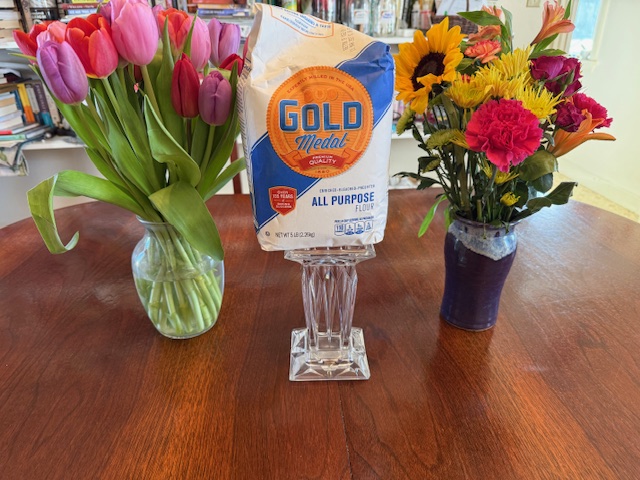
When it comes to getting quotes, go buy flowers instead of buying flour

When it comes to quotes, consider the difference between how you buy flowers and how you buy flour. Also, imagine them sitting in a nice vase…

In media writing courses, we talk about quotes being the spice that zips up the story or the sparkly diamond that draws the attention of the reader. However, not all quotes actually do this, because simply slapping quotation marks around a pedestrian set of words doesn’t get the job done.

PR practitioners tend to write press releases that have at least one block quote in them, with some releases being nothing but one giant “statement from X Person” quote. News writers tend to build the bodies of their stories with at least a few paraphrase-quote pairings that are meant to give readers varying views of a topic and a wide array of people a chance to speak. In a lot of cases, those quotes are either relatively pointless or they offer little in the way of quality.

How is it that so many people are proud, happy and thrilled to be there in EVERY PRESS RELEASE, ALL OF THE TIME, even when the writer can craft the quote for the person being quoted? How is it that reporters who get to interview sources also manage to come back with such “meh” quotes from sources who really SHOULD be so proud, happy and thrilled that they can’t shut up about their subject?

Here are the reasons why:

People are afraid to do anything different, lest they offend someone: The phrase, “It is better to remain silent at the risk of being thought a fool, than to talk and remove all doubt of it,” is usually where most people want to be when the chips are down.

To that end, it’s a lot easier to do a bland, mediocre quote than to state something important with your name attached to it. Interview subjects with experience tend to lapse into cliches to avoid really upsetting people, while the press release quotes also tend to play to the middle of boring to avoid controversy.


Writers aren’t as creative as they need to be: One of the things that differentiates PR from news is the concept of quoting sources. If there’s one area where I’ve seen people have the MOST difficulty in making the shift, it’s here.

News requires you to go out, find someone and get something out of their mouth in a word-for-word format. PR in many cases allows for practitioners to write up something on behalf of the client and then just get a “sign off” on it.

Even though you CAN do this, it doesn’t always follow that you SHOULD, primarily for the reason we’re noting here: You don’t know enough about your source, the topic or the non-data stuff to really come up with that whiz-bang quote that will make the difference here.

The same thing can be true of news writers, who don’t put enough time into their research to ask questions that probe or engage the source. If you ask a generic question, you tend to get a generic answer.


Writers aren’t pushing for quality: I can’t tell you how many times I was told to “get a quote” for a story. It was basically like this scene from “The Paper” where Michael Keaton just wants “something:”

I say this as a fellow sinner who often was on the hook for getting a quote, any quote I could from any source, just so that we could say we quoted someone. However, it seems like “get a quote” is a general resting pulse for how we do business.

With those things in mind, here are a few ideas on how to get better stuff:

Don’t shop for flour. Shop for flowers: In the middle of pierogi season at our house, Amy often sends me out for supplies, the most common of which was flour. The direction was simple: “Go to the store and get a bag of flour.” I dutifully comply by driving to the closest place I could and grabbing a five or 10 pound bag off the shelf that resembled the bag she had just emptied.

When I got sent into the field as a journalist, I often felt that was how I was supposed to get quotes. It was like “Go to the store and get a bag of flour.” OK, if that’s all I’m doing, all I care about is going there, picking something off the shelf and coming home.

That’s part of the problem with quotes: You don’t just want something off the shelf.

Instead of shopping for flour, think about shopping for flowers for someone you love. Think about what it is that makes that bouquet special, beautiful and different for them. Think about how you want the reaction to be when they see it. Think about doing more than grabbing whatever is convenient.


Research better beforehand to ask better questions: As we’ve said here repeatedly, the key to everything good we do in journalism is in the preparation. The more work we do at the front end of the process, the better things will be at the back end of the process.

One of the reasons PR quotes are so “meh” is that practitioners don’t dig into the topic or the organization to find things that make it special. When all we have to work off of is a baseline understanding of the concept, which usually comes from a buzzword-laden mission statement, we’re operating in Generic-ville.

The benefit of doing the research before crafting that quote is to make it feel genuine and informed. In adding special touches based on detailed information you found, you not only have a better chance of making your source sound good, but you also have a much better chance of drawing a reporter’s attention.

In the case of reporters and practitioners who rely on interviewing, the research ahead of time can help you shape more pointed and engaging questions that will elicit stronger responses. When you ask that, “So what can you tell me about X?” question, the source will lapse into their “greatest hits album” answer, with all the generic info and cliches. If you can ask something that shows you’ve invested time and energy in the question, you’re likely to get that source to be more engaged.


Change the source’s perspective: Most of the time, the sources we interview either play to us as media practitioners or play to a perceived audience of peers. Those quotes tend to be more jargon laden or otherwise disengaged, and they usually don’t do much for an actual audience that will eventually read their quotes.

Put the source in a different state of mind, based on your full understanding of who you see as the readership. Try asking a question like, “So how would you explain this to a worker on the assembly line?” or “What would you say to a parent in the school district about X?” or even “Could you explain this to me like you are talking to a child?”

In shifting the perspective of the source in terms of understanding the audience, you can get them to shuffle the deck a bit and deal you a better hand. I’m a particular fan of the “child” quote when I’m talking to a source who is clearly exceptionally well-versed on their subject, to the point of assuming everyone else knows as much as they do.

I also like the idea of thinking about who else might be a source in my story to shape the questions. For example, if I’m talking to a product seller, I like to ask them to shift focus to being a product consumer. If they’re a superintendent, I like to get them to shift to think like a parent, a teacher, a custodian or a kid.

In getting them to move, they tend to get out of the rut where cliches live and give me something different.

“It’s not a riot. It’s a large, prolonged disturbance.” Working through fact-checks and BS-checks (A Throwback Post)

When it comes to fact checking and BS detecting, I often tell students about a story I wrote involving the Mifflin Street Block Party about 30 years ago. The party got way out of hand late at night, with students setting bonfires in the middle of the street and even burning a car. When firefighters arrived to extinguish the blazes, the party participants repelled them with bottles, rocks, cans and anything else they could throw.

With the fire truck damaged and the firefighters outnumbered, the police eventually went in with riot gear and battled for control of the scene, as the party folks chanted, “F— THE PIGS!” at the top of their lungs.

The next day, I’m talking to the public information officer from Madison PD and I ask if, since it was the first time they donned riot gear since the Vietnam War, if they called out a 10-33, Riot In Progress.

“Don’t you dare call this a riot,” he told me.

I then explained I’d seen what had happened and the carnage that was left behind, so if it’s not a riot, what was it?

“It was a large, prolonged disturbance,” he told me before hanging up.

We are apparently entering another period of Jedi Mind Trick 101, in which people in power are telling the media, “Don’t call this a war. It’s not a war.” Therefore, I thought it might be a good time to pull this post the fact-checking exercise along with it out for another run.


Journalism 101: Facts matter, so don’t feel bad about forcing people to get them right

Screenshot

THE LEAD: In a blinding flash of the obvious, the Washington Post reported that politicians don’t like being told they’re wrong about things via a journalistic fact check. In other “water is wet” news, Donald Trump and his campaign seem particularly outraged by the temerity of journalists who actually researched topics and can prove he’s full of beans from time to time:

Trump nearly backed out of an August interview with a group of Black journalists after learning they planned to fact-check his claims. The following month, he and his allies repeatedly complained about the fact-checking that occurred during his debate with Vice President Kamala Harris, berating journalists and news executives in the middle of the televised debate.

And this month, Trump declined to sit down for an interview with CBS’s “60 Minutes” because he objected to the show’s practice of fact-checking, according to the show.

<SNIP>

The moves are the latest example of Trump’s long-held resistance to being called to account for his falsehoods, which have formed the bedrock of his political message for years. Just in recent weeks, for example, Trump has seized on fabricated tales of migrants eating pets and Venezuelan gangs overtaking cities in pushing his anti-immigration message as he seeks a second term in office.

THE BACKGROUND: The joke I always go back to is the familiar one of, “How can you tell when a politician is lying? Their lips are moving.” The idea that politicians fabricate situations is not a new one. Nixon’s “I am not a crook,” Clinton’s “I did not have sexual relations…” and Mark Sanford’s “hiking on the Appalachian trail” are some of the more infamous ones, as they intended to cover over embarrassing personal failings and limit political fall out.

Even more, politicians invent people they saw, they met and they heard, all in the service of some anecdote about salt-of-the-earth farmers getting the shaft, military leaders praising their brilliance or other similar moments of self-aggrandizing puffery. And of course there is the myth-making that surrounds some politicians, like George Washington’s cherry tree or Reagan’s trickle-down economics…

As far as this election is going, Tim Walz was fact-checked on his claims about his service, his presence in China during the Tiananmen Square protests and his family’s use of IVF services, each of which resulted in some disparities. Kamala Harris is also ringing up a few “false” ratings from Politifact on some of her claims regarding illegal drugs and her own previous political efforts.

Still, most of this is piddly stuff compared to what Trump does on a daily basis, both in terms of frequency and intensity. If Walz’s “carried weapons of war” statement is a leak in the truth boat, Trump is continually bashing the Titanic into the iceberg and flooding every compartment.

WHY DO WE CARE AS JOURNALISTS: Despite what the former president of the United States things, facts have a definition:  things that are known or proved to be true. The job of a journalist is to get the facts and report them, so that people can make informed decisions on important things in their lives. If you strip away everything else from journalism, that’s the beating heart at its core.

Telling journalists you will only talk to them if they promise not to fact check you is like telling me, “You can come to our party, but only if you promise to not be a bald, middle-aged white guy.” It’s what I am, so that’s going to be a bit hard to square that circle.

People rely on facts to have a shared understanding of reality, so that society can function. It’s why when we bring a shirt to the check out kid and that shirt is priced $19.99 plus tax, we understand it’s probably going to cost about $21 or $22, give or take your part of the country. If the kid says, “That price is fake news. You owe me $150 and can’t leave until you do,” that breaks the whole “shared understanding of reality” thing.

For years, journalists have been telling people, “You’re entitled to your own opinion, but not your own facts.” Somewhere along the way (I blame the internet), it actually became, “Pick your own facts and then be outraged when someone disagrees with you.”

EXERCISE TIME: Pick out a TikTok on any hot topic that’s going on today (politics, Diddy trial etc.) and write down whatever statements these people are declaring to be facts. Then, go fact check them against

The Junk Drawer: Hump Day Edition

Is the weekend maybe hiding in here somewhere?

In the middle of the week during the middle of the semester, it’s a bit of a drag for students and professors. With that in mind, here are a few things that might amuse you all, spark some discussions or generally make it feel like the weekend isn’t so far away:

FLORIDA’S VERSION OF “WHO WORE IT BETTER?”

You know you’re a journalist when the first question you have after reading this headline isn’t, “What the hell was wrong with this woman?” but rather “How did the manatee get into a bikini?”

In the world of misplaced modifiers, I think this one is the gold standard.

Speaking of “What the hell is wrong with people…

STOP, THINK, THEN POST: Dan O’Donnell, a conservative talk show host out here in Wisconsin used the occasion of the Iran attacks to call for the death of Minnesota Gov. Tim Walz:

O’Donnell later apologized for his posts and took them down, but there are still copies of this floating all over the internet. It’s also not great optics, given Minnesota House of Representatives Speaker Emerita Melissa Hortman and her husband Mark Hortman were killed in July, in an attack deemed politically motivated.

This serves as one more reminder that stupidity is bad, but amplifying it on social media is worse.

GLAD WE GOT THAT NAILED DOWN: Stories based on opinions, particularly those that can’t be supported or refuted, don’t usually do much for me, but I have to admit this one grabbed me:

The former star of “Growing Pains” and long-time evangelist for Christianity has done a lot for publicizing his faith and reaching out to others to help them find Jesus. That said, I’m wondering where he got the inside scoop on the existence of hell.

I’m also going to argue that if he doesn’t believe in “eternal conscious torment,” he never had a nun for a teacher like I did. Sr. Mary Kenneth still haunts me in my dreams some times…

Speaking of living rent-free in someone’s head…

EVERY TIME A STUDENT REMEMBERS SOMETHING YOU TEACH THEM, AN ANGEL GETS ITS WINGS: I teach a lot of 8 a.m. required classes for sophomores, so I’m never exactly sure how much the students learn from me or how much they think about what I’ve taught them.

That’s why when a student not only remembers what I taught them, but also reaches out to say that they found an example of it in the wild, it just warms my grinchy little heart:

Hi professor, I saw this on Facebook and just thought it was so coincidental that we worked on a draft lead about a case just like this I thought I’d share with you. I think they wrote this terribly:

I’d have to agree with the kid, given that we don’t find out about a dead body until halfway through the piece. I’m also somewhat disturbed by the phrase “a working fire.” As opposed to what? An unemployed fire?

And finally…

SUITABLE FOR FRAMING: Some students wait until week 12 of a 14-week term to start trying to act right in class. At that point, they realize they’re totally screwed, as the math won’t allow them to pass, so they beg for extra credit.

I usually post this on my door right about the time I get that first request:

Feel free to borrow that.

Have a great day.

Vince (a.k.a. The Doctor of Paper)

Reuters editor Jaimi Dowdell talks about the data team’s recent look at AI failures in medical procedures, how to do deep-dive stories and the importance of growth through discomfort as a journalist

The front page of the Reuters story on AI and medical usage.

The debate over artificial intelligence has dotted the pages of the blog significantly over the past year, with posts discussing the benefits some of these tools provide media professionals, as well as those mocking a number of the errors.

A recent deep-dive article from Reuters, however, took a look at the application of AI to the medical field, with some concerning results:

In 2021, a unit of healthcare giant Johnson & Johnson announced “a leap forward”: It had added artificial intelligence to a medical device used to treat chronic sinusitis, an inflammation of the sinuses. Acclarent said the software for its TruDi Navigation System would now use a machine-learning algorithm to assist ear, nose and throat specialists in surgeries.
The device had already been on the market for about three years. Until then, the U.S. Food and Drug Administration had received unconfirmed reports of seven instances in which the device malfunctioned and another report of a patient injury. Since AI was added to the device, the FDA has received unconfirmed reports of at least 100 malfunctions and adverse events.
At least 10 people were injured between late 2021 and November 2025, according to the reports. Most allegedly involved errors in which the TruDi Navigation System misinformed surgeons about the location of their instruments while they were using them inside patients’ heads during operations.
Cerebrospinal fluid reportedly leaked from one patient’s nose. In another reported case, a surgeon mistakenly punctured the base of a patient’s skull. In two other cases, patients each allegedly suffered strokes after a major artery was accidentally injured.

Among the names listed in the byline of this story is Jaimi Dowdell, one of the pros from the “Dynamics” textbooks and a frequent friend of the blog. 

Dowdell is a deputy editor of the data team at Reuters, a team she’s been part of for about eight years. In 2021, she received a Pulitzer Prize for Explanatory Reporting for the team’s look at qualified immunity. Prior to her time at Reuters, she worked for the St. Louis Dispatch and Investigative Reporters and Editors.

As this story was making the rounds, Dowdell was nice enough to share some insights about the story itself and her approach to investigative journalism. Below is a transcript of an email interview, edited for length and to make my questions sound less like they came from a goober:


We have talked over the years about how every story, big or small, has kind of an ideation point. What was it that had you all looking into the issue of AI and medical issues that led to this big story? (and how long did it take you to get it done?)

“I love this question because I think it’s fascinating how stories start. Rarely do we say, “I’m going to do a story about X” and it works out.

“This story began with a conversation with one of my colleagues. He had spent the past six months looking into issues surrounding artificial intelligence and he was interested in how patients were using AI chatbots to self diagnose. His idea of AI in the medical world got me thinking that AI must be impacting medicine in more ways.

“I had worked with the U.S. Food and Drug Administration’s database that tracks malfunctions and adverse events involving medical devices and knew that could be a resource. I then discovered the FDA had a list of AI-enabled medical devices. I started exploring the data and it wasn’t long before we felt like we had a story. We moved quickly from there. The entire process from reporting to editing and production took six months or less.”

What were some of the bigger “road blocks” you hit along the way and what made them problematic? How did you work around them or how did the inability to get past them impact the story?

We didn’t have many major roadblocks for this story. One of the challenges, though, was the technical aspect to the topic.

My colleagues and I spent a lot of time talking to people about the technology that goes into AI-enabled medical devices. I think we really had to understand that before we could write about it.

About ten years ago (damn, I got old fast…), when we were talking about your “Secrets in the Sky” series with the Boston Globe, you were telling me how there is a point where you have to figure out if the story is really there/worth it? You also mentioned that as a reporter you almost have to have a kind of “obsession” in getting the work done. Was that the case here for you and the team or was it something different this time?

“One of the best parts of my job is the time I’m given to explore topics. It’s a luxury that not many journalists have and I don’t take it for granted. During that exploration period, I often follow many leads and attempt to run down curiosities and questions. Then there’s that point we’ve talked about where you had to decide whether there is a story and it is worth it. For this story, that moment came quickly.

“Over the years I’ve learned that if you don’t have to work too hard to find examples that illustrate the trend or concept you’ve uncovered, there’s a good chance there is a story. There have been times when I’ve worked on ideas where it seems almost impossible to find more than one example. Does that mean it isn’t a story? Not necessarily, but it does indicate there may be a better use of your time.

“That wasn’t the case here. The growth we found in AI-enabled medical devices was the first indication there was a story. From there, it wasn’t too difficult to find examples of devices where potential issues had been flagged. Then, because all of this involves public health, it seemed an important and worthy topic in which to invest.

“And yes, there was an obsession. There’s almost always an obsession! I think that’s another indicator on whether the story is good or not. If I’m not ruminating about a story while exercising or waking up in the middle of the night with an idea, I might not have a great story. Is it healthy? Probably not. Each time I do a story like this, I think, ‘next time I won’t get so sucked in.’ But it always happens. I can’t speak for my colleagues on this story, but based on how often we spoke at all hours of the day, the obsession was there for them too.”

A lot of student journalists find a passion for doing bigger projects, but often find it to be frustrating because of a lack of resources or a lack of time. This might be especially true for those trying to meet work expectations of grinding out X number of pieces a month for student media or making class deadlines set by unreasonable professors. What kind of advice do you have for student or beginning journalists who want to try doing some of the deeper stories like the ones you do?

“The demands of unreasonable professors and the churn of student media is likely not that different from the professional world. There is a lot of news and there are a lot of demands on journalists these days. I didn’t start out getting to spend so much time on stories and neither did most of the journalists who do this type of work. But it can be done. I was able to dig deeper on stories even as a student and there are ways to get to do this type of work. Here are some suggestions:

  1. Don’t wait for permission. Too often, I see student or beginning journalists look to professors or editors to give them an assignment to dig deeper. If you wait, it’ll never happen.
  2. Be curious. Many of my stories started out because I just wanted to know something. Turn your own curiosities into a question or a hypothesis that reporting can help you answer and test. Do not think, “I’m going to do a story on this.” Instead, just work on being curious and looking for answers. The stories will reveal themselves to you in time.
  3. Start small. Instead of trying to do a big story right off the bat, include investigative elements into your regular work. For example, look for data that can help enrich a daily story. Start looking for source documents as you report. These small victories can lead to big stories down the road.
  4. Don’t be afraid of hard work. This type of journalism can be tedious and frustrating. If you’re feeling like it’s too hard, you might be doing it right.

If you could tell a student journalism kid anything about anything that you think would be helpful to them these days, what would it be? What would you like them to know?

“I’d say that none of us ever feels like we really have things figured out.

“I remember when I was in college, I looked forward to the days when I would know exactly what I wanted to do with my life. Guess what? It turns out we always feel a bit uncertain and we’re all basically kids.

“So get out there and embrace feeling uncomfortable. Whether you end up in journalism or something else, the growth, I’ve found, is often in the discomfort.”

Verified by ExactMetrics