The journalism films you should watch if you want to be a journalist (Part I)

Journalism films are all over the place lately, as are documentaries about journalists. It seems like if a film can include a typewriter, somebody smoking indoors and a sense of “taking on The Man,” it’s on a screen these days. Seth Meyers did a fantastic send up of this on his late-night show:


In the 1970s, “All The President’s Men” became the “must-watch movie” for journalism students. When I was in college, we gravitated to “The Paper,” as we all seemed to know random guys like Randy Quaid’s character who bordered on insane. (One of my newsroom friends started calling me “Hackett” after Michael Keaton’s Coke-guzzling, workaholic character.) Now? It could be one of a dozen or more fictional, documentary or “based on a true story” films, so I dug back through IMDB and put out the question to the Hivemind on what was “required” watching for budding journalists.

Below are my “Top Five” films in no particular order with some rationale behind my picks. I tended to consider three things in each pick I made:

  1. Did I watch it more than once because I liked something about it?
  2. Does it give viewers something important in it, regardless of the genre or format?
  3. Do I think students would actually watch this if they weren’t forced to and actually enjoy it?

Those considerations knocked out a couple films for me that others picked up on. I’m also quite certain it will have people screaming at me that I’m wrong.

In any case, here we go:

1) Judging Jewell (2014, ESPN: 30 for 30) – At shade under 22 minutes, this story packs a lot of lessons into a short space. In 1996, a bomb shattered the peace of the Olympics in Atlanta, Georgia, killing 2 people and injuring more than 100 others. This could have been much worse had it not been for the heroic actions of Richard Jewell, a security guard who was working at the Games for AT&T. Jewell spotted the package and began moving people away from that area before the bomb detonated.

Jewell was originally considered a hero, but the media turned on him when public sentiment held that Jewell was likely the bomber. What followed was an 88-day “trial by media” that demonstrates what can happen when the race to get the story becomes all-consuming. (My favorite lesson comes from the Atlanta Journal-Constitution, which ran a line about how Jewell “fits the profile of the lone bomber,” and why attribution matters so much in news writing.) Jewell was eventually exonerated, as terrorist Eric Robert Rudolph was captured and confessed to the bombing. However, Jewell never really recovered. This is a sad story and yet a good cautionary tale for journalists.

2) Spotlight (2015) Critics have compared this film to the classic “All The President’s Men,” in that it shows how reporting can bring down a powerful institution. It also has similarities in the ways in which the journalists had to engage in real “shoe leather” reporting to make this happen. The critical nature of sources, fact checking, working around problems and other things journalists pride themselves on are on full display here. One of the more interesting things is the early resistance from within the paper when it comes to “going after” the church. Although, like most “based on a true story” movies, we know how it will end, the tension that comes from the fear of being wrong makes this both a tale of aspiration and one of caution.


3) Shattered Glass (2003) – In between his stints as a young Anakin Skywalker, Hayden Christensen portrayed another character drawn to the dark side. Stephen Glass was a young, well-liked journalist at The New Republic when he engaged in a series of fraudulent behaviors that shook the magazine to its core in the late 1990s. Glass started by faking a few quotes here and there before eventually writing pure fiction and passing it off as fact. The epilogue of the film notes that 27 of the 41 pieces he published during his time at the magazine were partially or completely made up, not to mention fabrications he freelanced to a number of other publications.

Some aspects of the film, which is now 15 years old and based on an incident that happened two decades ago, don’t age well for younger viewers. The idea of having to use “every search engine on the web” to get information seems quaint, as does the discussion of the fear associated with an “internet publication going after a giant.” That said, the lessons are fantastic.

At some point in life, almost everyone has wanted to be “the cool kid.” Glass fell into that trap, as you can see in the “60 Minutes” interview below. He loved the attention and would do anything to get it, including wandering down a path of self-destruction.

I would also wager, most people also have found themselves in a jam at some point and thought, “If I just cut a corner here, I could get out of this alive.” Some do it and convince themselves they’ll “only do it this once.” Like most other things that are horrible for you, it’s never just once. If you take the Red Pill, you never hit the bottom of the rabbit hole. Even today, Glass is still dealing with his past.

https://vimeo.com/30824692


4) The Paper (1994) – It’s fiction, it’s ridiculous in spots and yet it is one of the few films that captures the complete randomness of life in a newsroom. From the A/C that breaks to the guy who swears he has “Watergate” on every story, this is a funny story with a great cast. If nothing else, this scene just nailed it for me:

“Who the hell took my stapler?”

If I had a dollar for every time something in a newsroom made me laugh, I’d be able to fund all the newspapers in the world forever. This movie reminds me of that every time I watch it. Probably a biased pick, but give it a look and tell me I’m wrong.

5) Nobody Speak: Trials of the Free Press (2017) – A wrestler, a sex tape and sleazy internet publication are at the central junction point of this film and perhaps the most important free-press case in decades. The movie looks at the trial of Bollea v. Gawker, which pits wrestling star Hulk Hogan (aka Terry Bollea) against an internet gossip magazine. Gawker was a publication that a lot of people hated for being mean-spirited and snotty, but it also went after “true things about bad people” to quote a former worker. However, at the heart of this case and this film are several crucial questions including, if a sex tape is news, who gets to decide that and what forces are at play behind all of this.

The film goes beyond the “guess who saw the naughty stuff” issue and digs into who was funding Hogan’s legal team, what other multi-millionaires are out there potentially undercutting press freedoms and what this means going forward.


Feel free to tell me I’m wrong about everything, if you so choose.

Tomorrow: The answer to “How can a list like this NOT include ‘All The President’s Men!’ as well as the suggestions of the Hivemind.

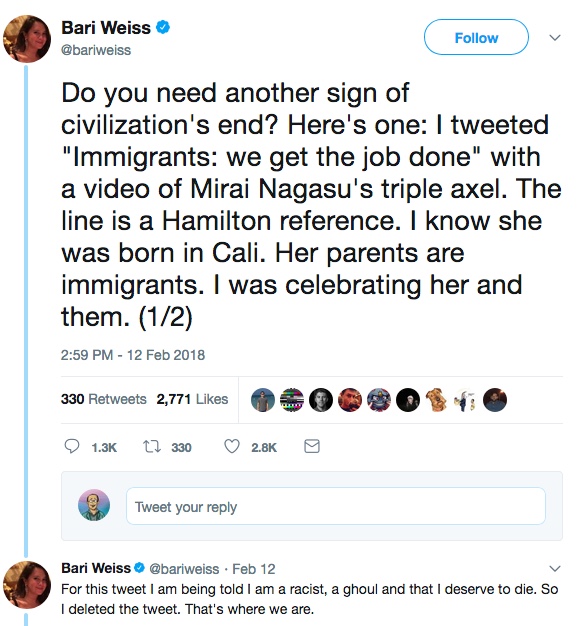
 

NYT’s Bari Weiss, “immigrants” who get the job done and Filak’s first rule of holes.

As we’ve mentioned before here, using social media is like playing with live ammo: You need to take it seriously, think things through before you publish and realize there are ramifications for your actions. Unfortunately for some people, having access to social media is like giving a toddler a bag of meth and an automatic weapon.

And, as we’ve mentioned here before, screwing up will happen. Your face is not on a lunchbox. You should do your best to avoid screwing up in the first place, but if you do, the worst thing you can do is double down on your screw up. As I’ve told my students who mess something up, “Filak’s first rule of holes is ‘When you find yourself in one, stop digging.'”

Case in point: Bari Weiss of the New York Times.

When Mirai Nagasu landed a triple axel during her performance at the Olympics, the first time a woman has done this in the history of the Games, Weiss tweeted out, “Immigrants: They get the job done.”

Nagasu is a U.S. citizen whose parents were immigrants and she has maintained dual citizenship in the U.S. and Japan. When someone pointed out this fact to Weiss, she responded in a dismissive and unsatisfying way:

5a8373182000004d00eaec8a

This, like most dismissive statements tossed at people on social media, did not go over well with the Twitterverse, which responded in pretty much the same array of rage you get whenever someone makes a racist comment, complains about politics or picks on Brittney Spears. Some people called Weiss on the carpet for not taking this issue seriously enough, while others cut right to the chase and essentially told her, “Here’s toaster. Go play in the bathtub.”

The problem wasn’t that she said something glib that put her in a hole. The problem was that she kept digging.

First, it was a reference to the fact she was quoting (incorrectly) the line from “Hamilton” about immigrants. Then it was her trying to bend reality to fit the notion this was a compliment and that it spoke to Nagasu’s immigrant parents. Then it was her chastising all of Twitter for picking on her:

WeissHamilton

Anyone who has spent any time on social media had to be thinking at this point, “How deep do you really want to dig? This hole is getting to the point where the core of the Earth is about to be exposed…” It was similar to what happened when Louise Linton, an actress and the wife of U.S. Treasury Secretary Steven Mnuchin, sent out an Instagram post that detailed her fashion wear as she stepped off a government plane.

When people poked at Linton for flaunting her wealth, she belittled them, told them they didn’t pay nearly as much in taxes as she did and then called one poster “adorably out of touch.”

599b9d001900002500dd4b99

Instantly, she became the “Marie Antoinette of Instagram” and became a symbol of out-of-touch wealth in this country. Recently, she has noted that she was “super-duper sorry” about her social media rant, which I’m sure will quell the crowds that continue to call for her head.

The lesson for today is a simple one: When you put something out into the public via a media channel, you will be held to account. Before you decide to snap back at people who are voicing their opinions about your opinions, stop and think about a couple things:

  1. Is it possible that I just screwed up and that people, although they may be expressing it in a way I don’t like, are right that I was off base?
  2. Will any good come from me randomly trying to justify what I wrote or am I just fanning the flames for trolls and people with a legitimate beef alike?
  3. Is this REALLY the hill I want to die on? In other words, is this worth me pouring a ton of time, effort and energy into trying to change the minds of people who probably won’t change their minds as I engage in an ever-escalating Quixotic attempt to “set the record straight” or will it just be a waste of time?

I never thought I’d say this, but maybe a New York Times journalist can learn something from a guy at Barstool.

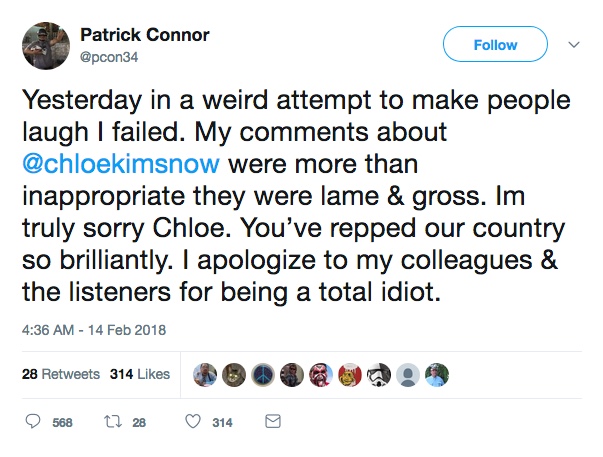
When Chloe Kim took the gold in the half-pipe event, Barstool radio host Patrick Connor called the 17-year-old “a hot piece of ass.” (Pause. Wipe the vomit off your lips and hang with me here…) After realizing that a grown man ogling an underage girl during the Olympics was not all that bright, he went on Twitter and wrote:

ConnorAss

No, that shouldn’t entirely let him off the hook and yes, there should be more ramifications for him, but he at least decided he was deep enough in the hole and it was time to stop digging.

Journalism education, first impressions and the importance of working hard for what you want: The Doctor of Paper on the Edupunx podcast

One of the greatest joys of being a professor is having students come back to see you, years later, once they have found their joy and passion.

Even if their first impression of you was, “Man, this guy’s a dick.”

Katy Hamm, who graduated from UWO with a degree in journalism, came back to Wisconsin for a holiday visit along with her partner, Craig Bidiman. Katy now works as the Coordinator of Student Activities at Lesley University in Cambridge, Massachusetts. Craig serves as the Health Education and Wellness Promotion Specialist at the University of Massachusetts Boston. They both have a passion for education, college media and a ton of other things related to student life at the college level.

One of their projects is the eduPUNX podcast, which covers a wide array of issues such as sexual assault prevention, educational opportunities and even grad-school blues. On the day after Christmas, they were nice enough to sit down with me and do a podcast about the current state of media, journalism education and how I got involved in this field to begin with. It was a blast and it’s punctuated by some of Craig’s musical choices, which made it even better. They just released the podcast this week, so I wanted to share it with you all. In doing it and listening to it, I learned a few things:

  • I can actually go almost an hour and a half without (really) cussing if I know I’m likely to be recorded. I think I need someone to follow me around with a microphone.
  • I’m not as negative about media as I thought I would be in all this. I think it has a lot to do with having both of them with me and how we kind of fed off of each other’s positive vibes. It’s good to be surrounded by good people.
  • Wisconsin is an objectively frigid place. It was -2 on the day we recorded this with a -25 windchill. Katy and I had to explain to Craig the concept of it being “too cold to snow.” Craig, who spent time in Oregon and now lives in Boston and is an almost fanatical runner, refused to run in weather this cold. He also now knows what it’s like to have your butt freeze.
  • I still hate the sound of my own voice. I feel bad for students who have to listen to me. Or maybe it’s just the “your voice always sounds funny to you” thing.
  • Katy’s first impression of me was not a positive one. The opening of the podcast will tell you that. I’m glad the impression didn’t stick, as she was a heck of a great student, a wonderful person and a top-notch member of the educational community.

You can catch my chat with them here, or you can subscribe to the podcast through iTunes as well. If my voice doesn’t annoy you, give me some feedback if you’d like to have me add podcasts to this site on any topic of interest.


3 things media students can learn from Harley Barber’s racist tirades

My Wednesday lecture to my media-writing class about social media and my Thursday look at the media law conveniently dovetailed with a horrific story out of the University of Alabama. A 19-year-old student named Harley Barber posted two videos on Instagram in which she repeatedly used vile, racist language.

(I’m linking to the Washington Post and the AL.com stories, but not the videos themselves, as they are definitely NSFW. If you decide to watch them, you might want to consider headphones and a crash helmet.)

Barber has been kicked out of her sorority (which she states on one of the videos is the most important thing in her life) and the university itself. Alpha Phi sorority and the university’s president issued statement condemning Barber’s racist tirades. Barber’s estranged mother spoke out against her daughter in the media and Barber herself has moved back to New Jersey and gone publicly quiet about the situation.

What happens next is unclear, but if the case of Justine Sacco, the PR practitioner who once tweeted about going to Africa and “hope I don’t get AIDS” is any indication, Barber may never recover.

Even if common sense and normal human decency has you thinking nothing Barber did could ever impact you, consider these three takeaways from this situation that will help you as a journalist:

  1. When you are on social media, you are playing with live ammo: I asked the students in my class how many people had a Twitter, Instagram or Snapchat account. All of them had at least one, and many had all three and more. I then said, “Understand this: You are all publishers and that comes with some huge risks.” I think it was the first time that many of them understood that social media provided them with a public presence that could go viral in a ridiculously fast time period. I could see at least a few of them mentally going back through their social media usage, wondering if they’d ever said something they might regret or posted an image the might embarrass them.
    Social media makes it extremely easy for people to post, share and comment on things in a way that traditional media outlets like TV stations and newspapers never could. That said, there also isn’t as much vetting that goes into tweets, posts and comments as there is in those other outlets. When you reach for your phone or a computer to hit social media, you’re locked and loaded and the safety is off. Don’t let a long line at the store, a bad break up or some other irritant drive you to rant on social media. The anger is momentary but the stupid could follow you forever.
  2. Free speech doesn’t mean consequence-free speech: The question of “Doesn’t the First Amendment allow her to say whatever she wants, no matter how vile?” came up in various conversations I had this week. The answer is yes, but that’s not the point.
    People confuse the idea of free speech as it’s explained in the First Amendment with consequence-free speech, as in you can do whatever you want and nothing bad will ever happen to you. The amendment notes that “Congress shall make no law … abridging the freedom of speech…” which courts have now taken to mean all forms of government shall not prevent people from opening their mouths and saying what they feel. (Obviously, that’s a little simplistic, as fighting words, time-place-manner restrictions as well as other court rulings have limited this.) That said, the First Amendment doesn’t mean you won’t suffer for your statements.
    Private organizations, such as the sorority, are allowed to impose rules and restrictions on what people say or what happens when they say something awful. Some educational institutions, both public and private, have “codes of conduct” that will place restrictions on some forms of speech or outline consequences for particularly vile speech.
    Even if those institutions didn’t or couldn’t levy consequences against someone like Barber for her language, there is always the court of public opinion ready to drop a hammer on people when they behave in a way seen as reprehensible. Before she went off the grid, Barber said she was receiving negative phone calls and other messages from people displeased in her choice of words, to put it mildly. As several members of the hivemind debated if the school could legally kick her out, I noted that the school might be doing Barber a favor in expelling her. It’s hard to imagine being Public Enemy Number One on a campus that size and having to go back to class like nothing happened.
    In short, every action has consequences and something like this can have incalculable ones.
  3. You are never as safe as you think you are: One of the things that came up in the Harley Barber saga was the fact she posted these videos on her “finsta,” or fake Instagram account. According to various sources, (read: a newspaper article and students I know who know way more about this stuff than I do) these “finsta” accounts are where people feel free to be who they are without ramifications. It’s like the Instagram account associated with you is who you are when you meet your date’s parents and the “finsta” is the party freak you become later that night.
    “Security features” of this kind can really lull people into a false sense of security and an erroneous belief that they have some level of privacy on this wonderful “information superhighway.” No matter how you set your Facebook privacy settings or how you lock down your Twitter account or how many “finsta” personas you have, someone can find you. Somebody out there knows you or will share it with someone who might not think your “Kanye Frat Party” isn’t that funny or that your 79-year-old house mother chanting the N-word in a video isn’t OK. You are never as safe as you think you are when it comes to these things.

Each time you use social media, you put yourself at legal, ethical and social risk, so make sure you are putting the requisite amount of thought into it. If you don’t, you never know what might happen.


Storify is dead. Long live the Storify approach to storytelling.

Getting something done early isn’t always the best idea when it comes to journalism. I worked a night desk for a number of years at a couple newspapers and I’ve had to perform triage surgery on more than a few stories and layouts because “breaking news” emerged, events fell through or entire stories changed. Once I got into academia, I thought I would be able to leave my “baling wire and duct tape” approach to fixing things behind, but that hasn’t been the case when it comes to writing textbooks that focus on an ever-changing field.

Case in point,  I bragged to my editor that I had updated the entire social media chapter in my media-writing book, fixed the Twitter references to include the new character limits and infused a number of key tools that were popular among reporters. And I was done two months early, to boot.

Her response was, “Wait, did you read about how Storify is no more? Do you want to take a second pass through (the chapter)?”

Less than a week after I was singing its praises, Storify got killed. Adobe, the tool’s owner, stated it would no longer allow for new people to sign up for Storify accounts and by 2018, pretty much everything “Storify-related” would be gone. I thought I was basically “so 26 seconds ago” about a tool that nobody used.


(This feeling went away when I told a hip high school journalism teacher about the news and she said, “I just learned how to use this thing and now it’s going away?”)

The truth is Storify is going away because a) it didn’t make money (biggest reason) and b) the tool itself lost value when we no longer needed it. It’s the same reason people aren’t making a ton of money in the phone-cord detangler industry or as door-to-door salesmen anymore.

The folks at Niemanlab interviewed Storify co-founder Xavier Damman about the death of his creation earlier this month. He noted that it would be great if Storify could continue in an open-source format, but the bigger takeaway was how Storify changed how journalists told stories:

Damman hopes that endures as Storify’s legacy: “When we started there was no Twitter embed and no Instagram embed or Facebook embed. The idea of using the content that people post as raw material was novel,” he said. “[Today], it’s more important than ever that we have journalists that actually go and tell stories using what people post on social media.”

Damman’s point (and the one I’m trying to make here) is that the “Storify approach” to journalism lives on, even as the tool itself is becoming obsolete. Blogging sites like this one allow writers to embed photos from various spots, include tweets in their original format and more as part of a post. Major news outlets have drawn content from a variety of social media platforms to tell breaking news stories and augment their own coverage of bigger topics. They mix and match posts, tweets and images through a series of embedding and sharing options to let their readers see a well-rounded story. All of that will continue without Storify itself.

What will also remain are the underlying skills associated with storytelling in a journalistic format. What Storify allowed users to do was make choices and present content in a way they previously couldn’t so that the users could do the best job possible when informing their readers. If the users were lousy at storytelling, content selection or any other “journalism” skills, the tool itself couldn’t make the story any better. However, having the skills and applying them through tools like Storify seriously enhanced the content the audience received. For those users who applied their skills in storytelling via the “Storify approach,” the death of the tool won’t matter.

Twitter’s move to 280 Characters and the “Fat Pants Theory” of fixing the wrong thing

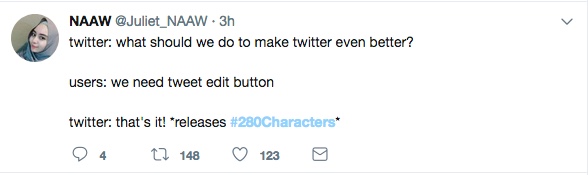
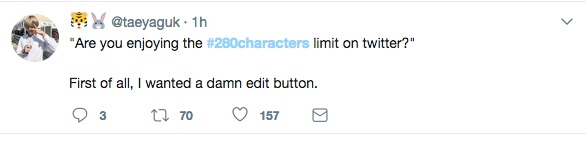
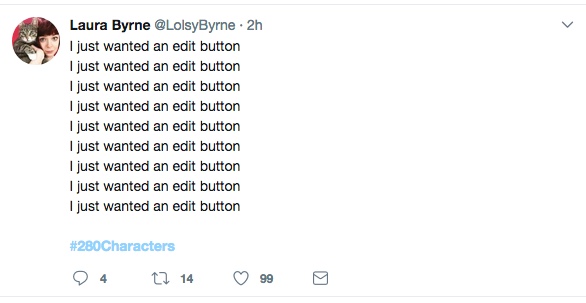
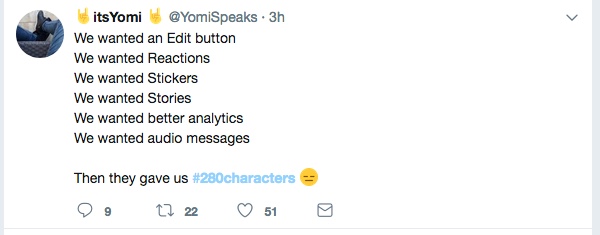
Twitter officially announced its move to 280 characters per tweet this week and generally speaking, people were a tad annoyed more about what they didn’t get than what they got:

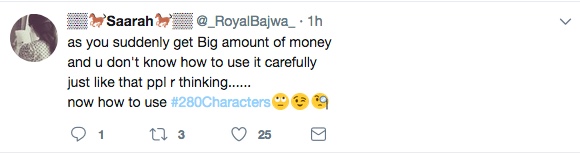
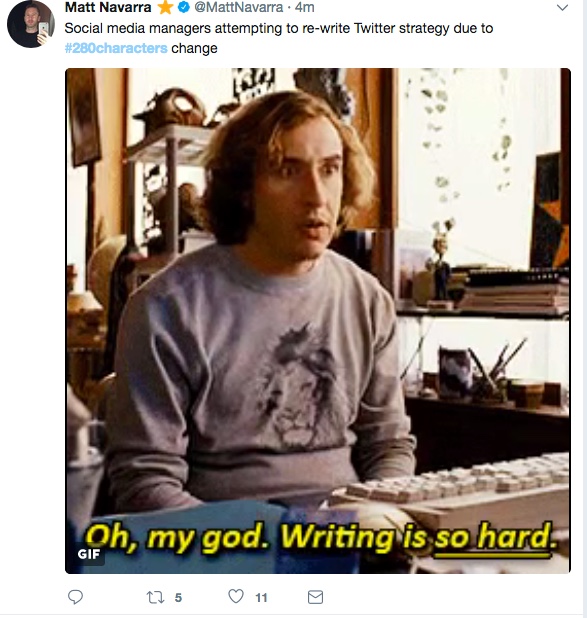
TwitterEdit1TwitterEdit2TwitterEdit5

The edit button issue is part of a larger problem: Organizations that don’t listen to their users. One of the biggest pushes on this blog and in these books is the idea of putting your audience’s needs front and center when you ply your trade. Some people on Twitter made that concern clear:

TwitterAudience1

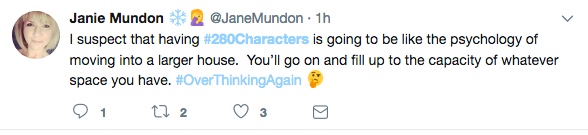
The second issue is that while Twitter is telling people that very few tweets reached the 280 character mark, it doesn’t mean they won’t. When Twitter first rolled this out, we noted this issue as the “bigger house” approach to having too much stuff. Apparently, we’re not alone in that thought:

TwitterHouseTheory

In rethinking this, however, the house thing isn’t entirely accurate, in that more space can lead to more stuff, but it’s not necessarily the worst thing on Earth. A more accurate “Filak-ism” might be the “Fat Pants Theory.” Here’s how it works:

  1. Let’s say I’m wearing jeans that are Size X and they fit fine, I’m eating well and the pants feel good.
  2. I start working out less because I’m lazy and I start eating more of my meals out of the vending machine at work and Taco Bell on my way home from work, thus my pants start feeling tighter and tighter. I’m uncomfortable in my pants.
  3. I solve the problem by buying larger pants. I now have jeans that fit me fine.

I know I have pants of various waistband sizes at home because of the “Fat Pants Theory,” even though I also know that buying new pants doesn’t solve the underlying problem: I need to get off my ass, work out more and eat better food. If I don’t do this, not only will those earlier pants fail to ever fit me again, but I’ll eventually grow out of these pants and the cycle will continue.

Twitter is doing exactly this: Instead of forcing people to learn how to improve writing, clarity and focus, they simply gave them larger pants and said, “Enjoy eating lard while you lay on the couch watching ‘Stranger Things.'” As journalists, the temptation to let a few of those tweets slide toward 150, 160 and 170 characters doesn’t seem like a big deal, just like that extra bag of chips or that extra Burrito Supreme doesn’t really hurt at first. In the end, however, we’ll eventually be begging for 560 characters if we aren’t careful.

Since it’s here and we aren’t going to get rid of it, consider the following issues when deciding to tweet under this new level of textual freedom:

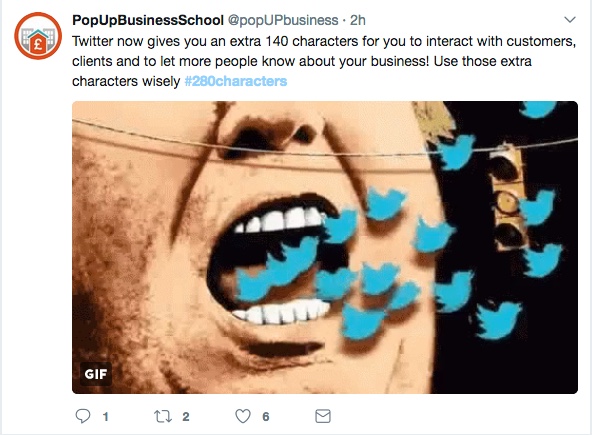
  • Just because you can, it doesn’t mean you should: The old Filak-ism rears its ugly head here again, with the idea that extra space means extra responsibility, not just extra freedom. Some organizations clearly got that idea when they posted their response to this change in restrictions:
    TwitterUseWisely
    Make sure that whatever you put into your tweet goes to the core of the primary point you are trying to get across and also that you remain focused on what the audience needs.
  • Edit anyway: One of the benefits of having a character limit was that it forced Twitter users to think and edit. The economy of the format meant you needed to swap out terms like “sustained injuries” for terms like “was hurt.” If you felt you needed the term “injuries” or “sustained,” you had to find ways to trim characters in other areas. It forced people to tighten their tweets. During that process, we were able to make sure that we had words spelled properly or that we had the precise message we wanted to send.

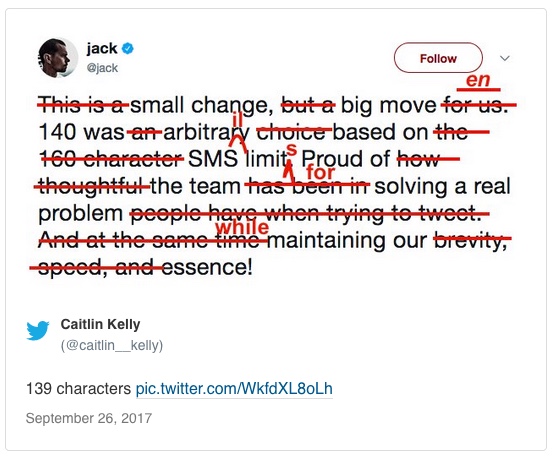
    Here’s a great look at how 280 can become 140 if we just focus on the writing:
    TwitterEDITED

  • Use this opportunity to fix some problems: As much bad as this change can do, you can use it to do some real good. First, one of the key, lame excuses for poor texting behavior was the character limit. People used “text speak” and annoying abbreviations, arguing that it was due to the restrictions of twitter. Thus you got this:

    TwitterTextSpeak
    OK, Twitter just doubled your space. Time to use actual words and complete sentences. U R able 2 wrt w/o BS abbr. so ppl w/brains can C U have 1 2.

    Second, a lot of social media policies were developed in a hurry because companies and organizations knew they needed one, even though nobody making the policy really knew what the policies should be. In some cases, these rules are arcane and in other cases, they never made sense. A number of places are considering changes in their policies to meet the opportunities of the new 280-character limit:

    TwitterNewPolicies
    Take this opportunity to weasel your way into the conversation and help set some logical boundaries and remove pointless restrictions. This rare policy shift will force leadership to reassess the rules on a larger level, so don’t miss this chance to get into the mix and help improve social media where you work.


A recap of #EditorTherapy session with @profKRG and me

In case you missed it, here is a rough transcript of the Q and A I did with Kenna Griffin on her “Editor Therapy” live session. It’s all just the basics, not including the additional comments from posters in reaction to us. (It’s hard to capture the core of what is going on during a tweet up after the fact.) In any case, I hope you enjoy it!

—-

I apologize for the excess tweets during the next hour as I host #EditorTherapy chat. Please join us!


Welcome to #EditorTherapy. I’m so happy you’re here!


It’s no secret that the tools we use to report the news are changing, as are audience expectations.


However, we also know that many of the fundamentals of journalism remain constant.


Tonight’s guest literally wrote the books on the changing nature of journalism.


Vince Filak (@DoctorOfPaper) is a professor and adviser to The Advance Titan (@atitan) at the University of Wisconsin Oshkosh (@uwoshkosh).


In addition, @DoctorOfPaper is the author of five journalism textbooks, including the Dynamics of Media Writing. Vince’s sixth book, Dynamics of Media Editing is due out in 2019.


We are fortunate to have @DoctorOfPaper with us to share his expertise on what’s changing and what’s remaining constant in journalism.


Before we dig in, please introduce yourself, including your title and student media outlet. #EditorTherapy


I am Kenna, a journalism professor and collegiate media adviser for @MediaOCU. #EditorTherapy


You can follow along with the chat with the #EditorTherapy hashtag and by following @profkrg.


We will use the Q&A format for the chat. Please include “A” and the question number before your responses. #EditorTherapy


Also, don’t forget the #EditorTherapy hashtag on all of your responses.


Q1 is on the way! Please introduce yourself now if you haven’t already.


Q1: Through your research and writing, what have you found to be the constants in journalism… things we all should foucs on? #EditorTherapy


A1: You need to communicate clearly and effectively via the best possible platform. #EditorTherapy


A1: Also, you need to focus on audience-centricity: What do your readers want to know, not what do you want to say. #EditorTherapy


A1: Finally, accuracy matters above all else. If you are clear and concise but wrong, you’re not helping anyone. #EditorTherapy


Q2: Overall, how are student journalists doing with these constants? What are some things they should focus on?


A2: Well in some cases, poorly in others. The understanding what a “fact” is needs work. #EditorTherapy


A2: The issue of how to tell people what matters most first could be stronger. #EditorTherapy


A2: However, they understand their peers and they work well in communicating with them. #EditorTherapy


Q3: What have you found to be the greatest changes in journalism… things we must adapt to? #EditorTherapy


A3: The days of “general interest” content are over. We need to come to grips with that. #EditorTherapy


A3: We need to look at what niche we fill w/our student publications and then defend that niche. #EditorTherapy


A3: I don’t need the @atitan to tell me about @RealDonaldTrump’s latest decree. I can get that anywhere. #EditorTherapy


A3: I need stuff I can’t get elsewhere, stuff about UWO. Be the expert at this niche and you’re good. #EditorTherapy


Q4: How are student journalists doing, overall, with these changes? #EditorTherapy


A4: It varies. Above all, students need to focus on “right tool, right job.” This matters a lot. #EditorTherapy


A4: Example: Some students who wouldn’t pick up a print paper insist on a print-first mentality. #EditorTherapy


A4: Some folks use Twitter for a specific purpose as a “receiver” of info, but don’t use it that way to “send” content. #EditorTherapy


A4: In other cases, students get it. They use the tools they would use to get info to communicate with readers. #EditorTherapy


Q5: What are some tools that today’s student journalists must have in their toolboxes? #EditorTherapy


A5: I believe you can NEVER have too many tools in your toolbox. It’s all about using them properly. #EditorTherapy


A5: Skills: Clarity, precision, accuracy, ability to connect w/an audience all matter. #EditorTherapy


A5: The biggest thing is being able to explain: “This matters to you, the reader, because…” #EditorTherapy


A5: In terms of platforms, they change so quickly, it’s tough to say what to use. That’s why skills matter more. #EditorTherapy


A5: I had to redo my “web” chapters in my reporting book TWICE before publication d/t tech shifts. #EditorTherapy


A5: Still, skills transfer: e.g. If you can write in a simple N-V-O structure, you can do headlines and tweets well. #EditorTherapy


Q6: What do you see as the most important trait that student journalists need, heading into the profession? #EditorTherapy


A6: Wonder and grit. If you don’t say “I wonder why” at least once a day, you won’t find great story ideas. #EditorTherapy


A6: Grit matters because without it, you’ll never get the answers you want when you are working a story. #EditorTherapy


Q7: Address the elephant in the chat. Is news dying? Is journalism still a viable career option? #EditorTherapy


A7: News will never die. Our definition of it and our consumption habits change but the “need to know” is eternal. #EditorTherapy

A7: We need to better understand what people need and how they want to receive it. #EditorTherapy


A7: Years ago, we wrote what we wanted and people had no real choice but to consume it how we sent it. #EditorTherapy


A7: Now, those standard news values alone don’t drive consumptions and we must cater to our readers better. #EditorTherapy


A7: I don’t mean pander to their wants, but rather focus on preferences of delivery for things they need. #EditorTherapy


Q8: Your next book is about editing. What did you find remained constant in editing process? #EditorTherapy


A8: 1) If you spell something wrong, someone will notice and think you are an idiot. #EditorTherapy


A8: 2) Editing is a multifaceted approach to content improvement. If you focus on that, you help the readers. #EditorTherapy


A8: 3) Everyone needs and editor (or two or three of them…) #EditorTherapy


Q9: What were some of the changes you found in your research of editing? #EditorTherapy


A9: Just like other J-areas, editing is about effectively reaching an audience. #EditorTherapy


A9: The editing aspect is shifting somewhat away from painstakingly adhering to grammar. #EditorTherapy


A9: Old-school: Like classical music, notes-on-page approach. New-school: Jazz, a structure with variations as needed. #EditorTherapy


Q10: What types of leadership skills do student journalists need to hone to carry with them into the profession? #EditorTherapy


A10: Leadership in general is key. We don’t train people how to be managers in school.  #EditorTherapy


A10: I once saw a line that “Editors are reporters whose feet have grown weary.” That’s been our approach.  #EditorTherapy


A10: Reporting and editing are two different skills. We need to help them with certain skills of management.  #EditorTherapy


A10: Skills: Collaboration, calmness, organization, finding common ground, learning to help others.  #EditorTherapy


Q11: In all of the research you’ve done on editing, writing and convergent journalism, what are some findings that surprised you? #EditorTherapy


A11: Most of the problems we face aren’t about the technology or news, but about the culture.  #EditorTherapy


A11: Convergence essentially failed because people held biases toward their old media identities.  #EditorTherapy


A11: Technology doesn’t matter as much as the core skills (writing/editing) and storytelling do.  #EditorTherapy


A11: One book I read said “The tone is in your fingers,” which meant technology won’t save lousy work.  #EditorTherapy


Q12: Blog ? from @GrammarPurist: “How much wood would a woodchuck chuck if a woodchuck could chuck wood?” #EditorTherapy


A12: A “chuck-load” of it.  #EditorTherapy


Q13: Important! Where can we buy your books? #EditorTherapy


A13: Amazon stocks them. My new one “Dynamics of News Reporting” comes out in 2018.  #EditorTherapy


A13: You can bid on an advance proof copy via @SPLC book auction at the ACP/CMA Dallas convention.  #EditorTherapy


A13: The blog, dynamicsofwriting.com, adds to both writing texts. Swing by and give it a look.  #EditorTherapy


Thank you so much for attending! #EditorTherapy


Did you know there is an #EditorTherapy Facebook page? I’d love to connect with you there.https://www.facebook.com/Editortherapy


We will not have #EditorTherapy next week because many students and advisers will be at #collegemedia17. Who will we see there?


Until next time, please visit me at www.profkrg.com for more practical resources for student journalists. #EditorTherapy


A legal eagle’s look at the Jemele Hill suspension, ESPN’s position and what students need to know about “the law” vs. “the contract.”

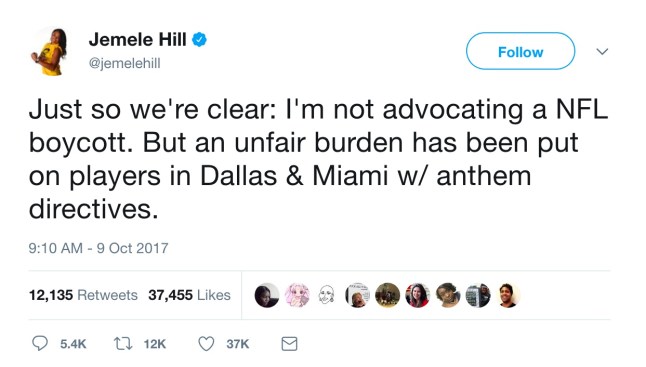
ESPN journalist Jemele Hill was suspended Monday for two weeks after she spoke out on Twitter once again on issues of racism and discrimination. In mid-September, Hill used Twitter to call the president a racist and stated that President Trump was “the most ignorant, offensive president” of her lifetime. More recently, she offered advice on social media to people who opposed Cowboys owner Jerry Jones’ stand on benching players who “disrespect the flag.”

Hill1Hill2

Rather than dealing with the issue of if Hill was right or wrong from a content perspective, I wanted to look at the legal issues surrounding this in hopes of providing guidance to journalism students. As we mentioned in both books, the First Amendment, freedom of speech and punishment for speech are all often misunderstood. With that in mind, I contacted Daxton “Chip” Stewart, an expert in free speech and the First Amendment to walk through this situation.

Stewart, an associate dean and associate professor of media law in the Bob Schieffer College of Communication at Texas Christian University, said he has discussed the Hill situation in class, both in terms of the law and the societal role of journalists. He said the first thing he often has to explain is that Hill’s suspension is not a violation of her First Amendment rights.

“This is a private company and a private deal,” Stewart said. “ESPN isn’t the government, so there’s no First Amendment issue here at all.”

He said broader free speech issues are of interest here, such as how a private organization allows its employees to engage in speech activities, but non-governmental institutions like ESPN can set policies that limit speech.

“If I violated a (similar) policy and if TCU punished me, I wouldn’t have a case,” Stewart said. “This is a private contract matter… In this case, ESPN has a social media policy and if she breaches it, she can be punished.”

Even if she were tweeting on her own time or adding a disclaimer about her tweets not representing anyone but her, Stewart said this wouldn’t matter as far as ESPN and the suspension go in relation to the First Amendment. That said, other rules and laws protect individuals rights that are outlined in the First Amendment.

“When you get beyond speech, there are federal anti-discrimination laws,” he said. “ESPN can’t say they’re only going to hire white men for jobs or something like that because that would clearly show a violation.”

“You can’t exclude people because of race, ethnicity or gender or ESPN couldn’t force you to go to a church as a part of your job,” he added, noting some exceptions to the “church” situation exist for people employed by some religious organizations.

The simple fact of employment, Stewart said, is that most people are “at-will” employees, which means they can be fired for almost any reason that isn’t clearly outlined as illegal in those anti-discrimination laws.

“You can be fired for any reason as long as it’s not discrimination or because you’re a whistle-blower or similar reasons in law,” he said. “A private university, for example, could fire you for doing something it didn’t like. Even if we think it’s a valid free speech activity, they can fire you because they just don’t renew your contract.”

That said, the “it’s not illegal but can still cause you problems” angle the book outlines for situations like this can cut both ways. Journalists have come to Hill’s defense and Stewart said the ramifications of this move are bad for ESPN.

“Nothing good is going to come from this for ESPN,” he said. “It’s really really bad optics and a really bad practice but it’s not illegal. They can absolutely make this choice.”

“Some of these sorts of incidents have a lot of collateral damage,” he added. “A lot of employees might be afraid to talk about it… They don’t want to be next. It’s a job. It’s a great job and who wouldn’t want to work for ESPN? But when ESPN disciplines an employee for something like this, a lot of people are going to clam up.”

SO HERE ARE THREE TAKEAWAYS FOR STUDENTS:

  1. Know the rules or ask before you break them: Jemele Hill is a smart, qualified journalist who knew what she was doing both times she sent the troublesome tweets. Other people don’t always know what a policy says or what a rule allows for. Thus, if you are considering a job somewhere and you have already built your social media brand, it would behoove you to figure out what the rules are and if you are willing to abide by them.
    “Anticipate potential conflicts and talk to your boss,” Stewart said. “See if you can get clearance. At least have that discussion or that argument ahead of time. If they ask you to sacrifice more than you are willing to give, you might decide to walk away from the job.”
  2. You are in an impossible situation: One of the big points Stewart wanted to make was that students going into the field will find themselves stuck between a rock and a hard place when it comes to this kind of thing. Media organizations hire people who have a voice and a point of view because they engage the audience and draw a following. However, when the wind blows the other way, things can get dicey.
    “You need to engage with your readers and social media is part of your brand and the news media encourage this,” he said. “They expect you to be a person and an interesting person, but don’t you dare step into controversial topics. It’s an impossible line. It’s like ‘Be authentic, but not on these things.'”
    “Your voice is important until people start complaining and then we want you to stop using your voice until we tell you to use it again…” he added. “It places an unfair expectation on students going out there but never the less it is the expectation.”
  3. Ask yourself, “Is this the hill I’m willing to die on?” Hill not only understands the topic upon which she is speaking, but she lives it as well. Stewart noted that her voice and her perspective on broader issues has great value to her employer and likely contributed to her hiring. She also understood this was a controversial topic and one that would likely put her at odds with her employer.
    She did it anyway and took the suspension.
    She hasn’t said as much, but I’d gather she felt the juice was worth the squeeze on this and that this topic mattered more than whatever ESPN would do to her.
    Not every topic on Twitter, every post on Facebook or every photo on Instagram fits that bill. When deciding if it’s worth it to take that stand, know beforehand what the punitive outcomes are likely to be and if you can live with them if they happen. Also, know how you would feel if you didn’t take that stand and how you would feel having failed to do so.
    Weigh the consequences and then make your decision.


3 things to learn from the “Tom Petty is Dead” debacle besides “check your facts.”

Rock legend Tom Petty died Monday at age 66 after suffering from cardiac arrest. What should have been a simple story got horribly complicated because a few news sources jumped the gun and declared him dead before he actually was.

TMZ, CBS and Rolling Stone were among the publications that reported Petty died in the afternoon. It turned out he was clinging to life but he was still alive. He died later that night, with an official confirmation from his spokesman that this was true, this time. However in the four hours between the first report and the actual death, the internet was flipping back and forth between him being alive and him being dead. Celebrities were providing condolences, which led other people to think that either he HAD died and the star knew something the rest of us didn’t or that everyone else knew something the star didn’t.

In short, it was a mess.

When it comes to a “teachable moment,” the obvious one is “Make sure you check your facts” or “Know what you’re talking about.” (Some reports called Petty’s ailment a “heart attack” which it wasn’t. Congestive heart failure, heart attacks and cardiac arrest are all somewhat different and here’s how.)  However, here are three other things journalism students can take away from this debacle:

  1. Once you press “send,” you can’t get it back: The line about false information attributed to Mark Twain was pretty accurate- “A lie can travel halfway around the world while the truth is still putting on its shoes.” In today’s world of social media and digital speed, that lie has an even bigger head start. This is why we should always treat that “send” button like the “big red button” it is. Everyone out there issued corrections immediately upon finding out that the LAPD clarified Petty’s status, but that still didn’t stop the deluge of “Petty is dead” content. “Send” is serious business and one you send it out there, you can’t ever really undo it.
  2. You are part of an information ecosystem: Grade-school science classes show you how a bug eats some poison and then the bird eats the bug and the snake eats the bird and so forth, each time passing the poison along. In media, especially these days with easy access to other media outlets’ content, we operate in much the same way.
    Even in “pre-digital” times, we still had an ecosystem that could get messed up pretty easily. On more than one occasion, a reporter at a newspaper wrote a story that was really wrong. A reporter at a second newspaper in that town couldn’t get all the facts that first story had (mainly because it was wrong), but didn’t want to fall behind, so he “cribbed” information from the first story and then included it in his story with a vague “sources said” attribution. The morning radio news folks saw the story in BOTH papers so they did a “rip and read” approach and just rewrote the story for the morning newscast using that info. Suddenly, EVERYONE is reporting something that is factually inaccurate.
    You have a duty to your audience to be accurate, but you also have a role in a media ecosystem to maintain. If you put poison in to the system with lousy reporting, or if you perpetuate poison by passing along information you didn’t independently verify, you’re destroying that ecosystem and ALL OF US in that system will be worse for it.
  3. Real people can get really hurt when we’re wrong: In the case of Petty’s death, you could argue in a reductive sense that the publications weren’t really wrong, but instead they were early. The guy had congestive heart failure, he wasn’t recovering and hey… it was only four hours, right? Not even close.
    AnnaKim Violet Petty, Tom Petty’s daughter, was one of the people dealing with the situation when reporter of her father’s death began to roll in. He wasn’t dead, even as more and more people kept reporting it. In response to the ongoing throng of misinformation, she sent several messages and made several posts that show exactly how painful this was for her. Other family members and friends also likely experienced that painful dissonance based on media reports and their own knowledge of his condition.
    Journalists often want to break news, be first and show what we know to our audience. There isn’t anything wrong with that as long as we’re right, responsible and decent about it. As much as we think of famous people as being in the public domain, they have kids, spouses and friends who can get hurt if we overstep bounds or fail to fact check in our search for fortune and glory.

3 things journalism folk should learn from a troll during the Las Vegas shooting

Many people awoke Monday to the news that a gunman had killed 50 people and injured 400 more in Las Vegas. Stephen Paddock, a 64-year-old man from Mesquite, Nevada who police have named as the shooter, was killed on the 32nd floor of the Mandalay Bay Hotel after the attack.

Police said he fired repeatedly from the hotel onto a country western music festival happening across the street along the Las Vegas Strip. Witnesses said the shooting was relentless and police have no motive for the attack at this time.

For some people, it was a time to question who we are as a nation. For others, it was frantic search for loved ones and a time to mourn those they knew who died or who cling to life.

For still others, it was time to be an a-hole.

A Twitter user posting under the name “Jack Sins” posted that he was desperately seeking his father, who was missing after the attack:

JackSins

It turns out that this was a fraud. The profile photo was the same one used elsewhere to pull the same stunt during the Manchester attack. In addition, it’s an internet meme. The “lost dad?” He’s porn star Johnny Sins.

Mashable reached out to this user to find out why he would use a horrific shooting to do something like this. His answer is almost more repugnant than his actions:

Mashable reached out to the troll to ask why he’s spreading misinformation during such a critical time.

“I think you know why,” he replied. “For the retweets :)”

He also said he’d probably do it again.

The point of the post isn’t to shame this guy, as that’s got to be impossible, but rather to provide a learning moment for journalism students who are starting off in the field and might be inclined to rely on social media for information. Consider these three takeaways from this situations:

  1. If your mother says she love you, go check it out: Part of the thing that separates journalism folk from some other media users is a dedication to separating fact from fiction and providing accurate information. Early reports in the wake of a chaotic event are almost always inaccurate at some level, so journalists always have to proceed with caution. Even in this case, media reports note erroneous reports about additional shooters at other properties along the strip. Some of those are based on honest errors while others are simply rumors that spread. Your job is to go out there and figure out what is right and what isn’t before publishing it. That’s especially true of things you see from sources you don’t know, which leads to point two…
  2. Sources matter: One of the big things we push in J-school is the use of official sources acting in an official capacity for a couple reasons: a) It protects you in case of information being erroneous or potentially libelous, thanks to the issue of privilege; b) Official sources have names and titles you can verify and they also tend to be much more conservative with what they say because they know they will be held to account for it. However, in cases like this, it’s not possible to ignore the human angle and simply churn out police-report-level data. This is why interviewing people who survived, people who escaped and other similar “real people.” The biggest thing you should do is verify your sources before you publish them. The people at the scene have a somewhat easier time doing this, as many reports noted people covered in blood or hunkering near injured friends. It’s hard to fake that, even if they wanted to. However, social media users can be sending information from anywhere and can do so with impunity.
    To that end, you really need to fact check the heck out of your sources when you can’t do a face-to-face interview. Look at how long the source has been on that platform, how many followers they have, what other posts/tweets they have made and what other topics they have covered. Treat this vetting the way you would any other “anonymous tip” that comes to you from a source you don’t know. Unless you are sure, don’t repost it. It’s your reputation and the reputation of your news organization on the line.
  3. People can be a-holes: If you read the interview between this troll and Mashable, it’s a pretty safe bet your thoughts will be somewhere along the lines of, “What the hell is wrong with this guy?” Most people have gotten some level of internet hoax or email blast where a king in Naganaworkhere has a squillion dollars in gold that he wants to give you, once you send him your bank account numbers and we know that’s crap. It’s also a pretty easy thing to explain: Somebody wants to dupe rubes out of their money.
    When it comes to something like this, the question of “Why?” is less obvious. The retweets aren’t going to be all that helpful in a lot of ways. Sure, there are ways to monetize heavily trafficked social media accounts, but beyond that’s going to be a one-hit wonder at best.
    As much as many people want to believe in the best in people and help people in a time of crisis, there are some folks out there who just want to screw with you for no good reason. As an individual, that can feel like a sting when you realize you contributed to the spreading of false information on a “gotcha” prank. As a journalist, there are far larger impacts. It never feels good to question people in the time of crisis, but if you remember that not everyone has the best of intentions, you can reasonably and tactfully apply a healthy level of skepticism to claims like this.

3 reasons Twitter moving to 280 characters won’t help journalists communicate more effectively (Or, “Filak-ism: Just because you can do something, it doesn’t mean you should)

(Once again proving that just because you can do something, it doesn’t mean you should do it.)

Before I wrote my first book for SAGE, I sketched out a handful of “Rules of the Road” that had to apply to ALL journalism. That ratty piece of hotel stationary with fading black ink on it sits in front of me every day at work, a reminder of the core principles of what matters most in this field.

When Twitter announced the other day that it was taking a trial run at doubling its character limit, I hated it, specifically because it violated several of those “Rules,” specifically:

  • Right tool for the right job
  • Just because you can do something, it doesn’t mean you should
  • Audience (and timeliness) matter most

In other words, Twitter could make it so tweets are 914,292 characters each, but that won’t make them any better or more helpful to readers, thus negating the value of the tool.

Here are three reasons why Twitter’s move to 280-character isn’t a great idea and/or why you should still shoot for that 140 limit:

  1. Noun-Verb-Object tells the best story: One of the biggest problems students have in transitioning from other forms of writing to media writing is learning to write tightly. One of the biggest reasons for that is their lack of strong sentence structure. In both books, we talk about the idea of starting with the noun-verb-object approach to a sentence and then building outward from that. Twitter, in its 140-character perfection, forces you to do that if you want to get your point across. When a sentence lacks a concrete noun or a vigorous verb, the writer must slather on adjectives and adverbs to get a point across. That makes for longer, weaker, lousier sentences.
  2. The Homeowner Theory on the Accumulation of Stuff: The more space you have, the more worthless crap you will accumulate.
    My first “grown-up job” had me moving 500 miles across the country and as such, they included a nice perk: A moving service. I packed everything in my studio apartment and had it ready for what I expected would be a full day of moving guys coming in and out of my place. The three movers walked in, looked around and started to laugh. “Is this it?” My total accumulation of goods didn’t even cover the back wall of the truck.
    The next move was from a two-bedroom apartment to our first house. The house had a giant rec room, where I dreamily envisioned adding a pool table and giant entertainment center. At the time, however, all we had to put in there was the beige velour floral couch I bought off a guy’s dead aunt for $50. We put the couch in that room and started laughing uncontrollably. It was this tiny speck of furniture in this giant room. We eventually bought a sectional and a pool table.
    Each move meant a bigger place and more crap. No matter what we thought we were doing, we kept adding more and more stuff. Thus the point: If you have extra space, you’re going to fill it with a lot of stuff you probably don’t need. If you are like our friends who live in tiny big-city apartments, you know you need to maximize space and get rid of stuff you don’t really need.
    Its true of space in a home, time in your day and characters in your tweet. If you are limited to 140, you’ll make the most of it. If you get 280, you’ll fill that space as well. Eventually, 280 also will seem too small because you keep cramming extra stuff in there and you get used to the larger size. It’s like knowing you’re gaining weight and that it’s not good but instead of trying to exercise more, you just buy bigger pants.
  3. It fails to demonstrate audience centricity: Look at the explanations that people have offered for this switch to 280:

    The idea of extending the length of Twitter posts has been contentious internally, batted around among product groups that are trying to find ways to persuade people to use the service more frequently. At 328 million users, Twitter has been criticized for its inability to attract more people. Investors have grown nervous, as that slowing of user growth has affected the company’s revenue.

    “We understand since many of you have been tweeting for years, there may be an emotional attachment to 140 characters,” the company said.

    As a result, Twitter said, if rules around characters are loosened, English-speaking users — who tend to use more characters in tweets — will also hit character limits less frequently. That may, in turn, lead English-speaking users to post more regularly.

    So, in short, Twitter is looking at this as a way to get more people sending more tweets as part of a profit motive and people who got used to the 140 characters are essentially just “emotional” in their concerns. Notice what’s missing here: The focus on people who RECEIVE information on twitter, a.k.a. the audience.
    The value of any tool you use in media writing is how well it does in reaching your audience members and providing them relevant, useful and interesting information. Nothing about the increase of the characters focuses on how much better the tweets will be or how the audience will be best served. The reason? It won’t, primarily for the reasons outlined in Points 1 and 2.

In the end, this might be tilting against windmills and everything will be fine. However, keep in mind this is just a “test” of the new limit so if you get to play with it, don’t get too attached. After all, once you get used to 280, it’s going to be hard to fit into that 140-character space.