Amazon spent somewhere in the neighborhood of $14 million during the Super Bowl for a minute-long teaser trailer of “Air,” a movie that tells the story of how Nike came to land Michael Jordan as a client. The Ben Affleck/Matt Damon flick follows a familiar trend these days, as it is “inspired by true events,” which is just a fancy way of saying, “We made up a bunch of stuff.”
Movies like “Elvis,” “Blonde,” and “I Wanna Dance With Somebody” have seen varying levels of post-hoc fact checking that call into question certain parts of the films, with film buffs rebuffing these concerns as mere “dramatization of controversial and contested historical events.” Still, these situations are small potatoes when compared to how some films and limited series have taken liberties with reality.
“Winning Time,” HBO’s look at the late 1970s/early 1980s rise of the L.A. Lakers, created massive amounts of controversy with the way in which it played fast and loose with the truth. Given the relatively recent era in which the events took place, the degree to which sports information is retained and a quality text from which to draw, it seemed almost purposeful that the series got so many things factually wrong, including places, dates, opponents and scores. This isn’t even accounting for how the athletes, including Magic Johnson and Kareem Abdul-Jabbar , publicly denounced the way in which they were portrayed.
Even more, Jerry West and his legal team have demanded an apology and retraction for the way in which the series portrayed the Laker legend, noting that the producers engaged in “legal malice.”
The New York Times did a deep dive on the cottage industry that has streaming services building mini-series around actual events, but then jazzing up reality to make life seem cooler than it was. The piece cites West’s portrayal as a “rage-aholic” as one of the more egregious cases of taking liberties with reality. It also points out that Linda Fairstein, the prosecutor in the “Central Park Five” case, is currently engaged in a lawsuit against HBO for its portrayal of her in the series “When They See Us.”
The defamation attorneys the Times quoted made it clear that these cases aren’t always easy to win, because the First Amendment does provide folks with the ability to create fiction based on true people. However, there are limits to this kind of thing:
Sometimes disclaimers are enough to protect a studio from legal liability, especially if they are prominently displayed in the opening credits and offer detail of what has been fictionalized — beyond a generic acknowledgment such as “based on real events,” legal experts say. The First Amendment offers broad protections for expressive works like film and television productions that depict real people by their real names.
But if someone can convincingly claim that he or she was harmed by what screenwriters made up, that is grounds for a strong defamation suit, said Jean-Paul Jassy, a lawyer who works on media and First Amendment cases in Los Angeles.
“A disclaimer is not a silver bullet,” he said.
This is in some ways akin to the way courts have afforded opinion pieces and reviews protection under the fair comment privilege. This allows writers to provide “pure opinion” that cannot be proven true or false without fear of falling afoul of defamation laws. That said, merely stating something is opinion isn’t a silver bullet either.
If you say, “In my opinion, Vince Filak is a lousy professor,” it falls into that opinion realm. It’s stated as such and there’s no way to define “lousy” so that a court could determine if I fit that definition or not. Plus, in defamation suits, the plaintiff (in this case, me) would have to show harm: Did I get fired? Did my classes shrink to the point I had to teach Medieval Basketweaving to maintain the course load in my contract? Did a group of random professors follow me around and mock me to the point I needed therapy? Probably not, so I’m not going anywhere with this.
However, if you say, “In my opinion, Vince Filak stabbed a student in the face with a fork during his 8 a.m. Writing for the Media Class on Feb. 20,” now you’re in trouble. It’s not an opinion, for starters, as we can prove it either happened or didn’t happen. It’s accusing me of a crime, which furthers my case. Plus, if that thing gains steam, I’m likely to get fired.
Writers, editors, producers and directors have always taken SOME liberties with reality when it comes to how they portray real people in fictional or semi-fictional stories. What makes this recent set of efforts more concerning is the degree to which they are bending the truth and the ways in which the fictionalization has the ability to warp public perception of real people in some harmful ways.
As for me, I’m looking forward to “Air” for the bad 1980s clothing and the Affleck/Damon banter that most of their collaborations pull off quite well. I’m also looking to see if anything gets dinged on a fact check, especially because, as anyone with any experience with Michael Jordan will tell you, he’ll take it personally.
The shooting victims were going about their daily routines, never once thinking, “These are likely the last moments of my life.” As a friend who survived a mass shooting once said, it’s not like what people tend to think of when they think of a situation like this. It’s not like The Doors music starts playing to let you know what’s about to occur.
However, kids of this generation know that death in this fashion is not rare for their peer group. As much my students don’t like to admit it, they have occasionally let it slip that they know something like this could happen to them at any point in time. More than a few have told me over the years they had concerns about the “one kid” in a classroom or a residence hall who “wasn’t quite right.”
The choices in how to proceed become frightful for them:
Is the kid just odd or a true threat? What if I report them and they decide to come after me?
What if I don’t speak up and something terrible happens?
So many of the basic choices these kids make every day can have fatal consequences that no one could ever see coming.
“If I run in a straight line, it’s easier for the person to shoot me,” she said in such a matter-of-fact tone, I still can’t process it.
What she and so many of her generation are forced to endure should be astounding to any reasonable person, whether they ever face a situation like the one at MSU or not.
It is no wonder that the kids aren’t all right these days.
The world they consume on those devices is one of pure bifurcation. One world is bursting with impossible dreams of aspirational lives. Social media images make everyone seem like they have more money, more friends, more experiences and more of every other amazing thing than they do. Even more, the filters on these social media apps make everyone look thinner, prettier and cooler as well.
The other world is soaked in tension and coated with anguish, just one spark away from exploding at any point in time, like a Molotov cocktail left near campfire. Mistakes aren’t just brief learning experiences. Thanks to the ability for information to spread like a virus, one wrong move can have a battalion of keyboard warriors attack them without warning or mercy. A post on social media, an ill-timed text message or a poorly conceived moment of levity could create a wave of devastation that could lead to incalculable losses, up to and including, their lives.
All of this doesn’t even take into account all of the other ways in which the world has repeatedly bludgeoned these kids.
This generation of students has just survived a once-in-a-century pandemic that took what little normalcy they had in their lives and tossed it about like a rag doll. They studied in isolation to complete courses that were hastily pushed online. Educational institutions sent them between home and school, never really knowing if the risk public gatherings presented to their physical health mattered more than the risks that isolation had for their mental health.
Both during and after this epidemic, college students worked two or three jobs to maintain any semblance of life, as they pay ridiculously high rents and bloated tuition fees, all so they could hear a professor with an incomprehensible sense of ego drone on about the importance of Viking pottery during the Middle Ages. Why? Because that blowhard got a Ph.D. on that topic and then convinced an entire institution of higher learning that this was an essential element of students’ “general education requirements.”
When they graduate, they know they are entering a world in which they will never be able to live as well as their parents, something that used to be the benchmark of generational success. Housing has become an investment commodity, making even a basic home out of reach for many college grads. Student loan debt continues to cripple borrowers, even as the government tries to stabilize things for them. Current students will face the same problems, knowing that not only will they not receive similar help, but also prior generations will scoff at them for being “fiscally irresponsible.”
Where is their port in the storm? Where is their “good life” that each generation was promised for “doing the right thing” and “playing by the rules?” Isn’t that what the students of MSU were doing Monday night? They were showing up for class, taking notes, getting the grades and pursuing the degree.
All to be “members of a club we don’t want to be a member of and we don’t want any more members in it,” to quote the friend I mentioned earlier. He meant the growing collective of people who are physically, mentally and emotionally scarred for life by the act of a violent domestic terrorist.
And that’s only if they were lucky enough to survive.
If all we can be is responsible for ourselves and all we can do is find ways to make incremental differences in the lives of those around us, it has to start here. If we can’t stop these terrifying events, we should at least find ways to help these kids exist better in the world in which the events occur.
It starts with grace and forgiveness for missteps and social faux pas that come from trying to balance far too much on too fragile of shoulders.
It starts with compassion and empathy for these students, who might not always look like it, but who are actually doing the best they can with what they have.
It starts with admitting the truth about the reality of our surroundings.
The kids aren’t all right. They need us to understand that.
I dug this one out for Throwback Thursday for two reasons:
It’s the end of the semester and I’ve got a lot of kids dragging out there who are operating under the overbearing expectations of some truly stupid professors, bosses and other alleged adults. I’ve heard “I must really suck” more often these days than I would at a vacuum cleaner self-affirmation conference.
My kid just got into the college of her choice.
The first one is pretty obvious: When people like this Everett Piper dude decide to make themselves out to be the second coming of perfection, while simultaneously crapping all over you, all for their own personal benefit, you need to know there are folks out here who want you to know you’re fine. Hang in there. Don’t give up.
The second one needs more context: Last year, Zoe sat down with her high school guidance counselor and talked about what she would like to do after graduation. She listed off several schools she wanted to attend, two of which were pretty heady picks, but not Ivy-League places or schools with a 0.0001 acceptance rate. These out-of-state places had strong accounting programs, an area for which she has a passion that defies explanation.
The counselor told her not to bother. Pick a couple UW branch schools because, “Nobody from Omro ever leaves the state for school.”
There is nothing wrong with a UW branch school. Her first acceptance letter came from a UW branch school and she was totally happy with that opportunity before her dream school came calling. Hell, I’m TEACHING at a UW branch school, despite what the marketing folks here will tell you through their branding.
(The rule in the marketing department, I’m told, is that they use hyphens with all UW schools except for us and the flagship campus because they need to set the tone as being a quality institution, not a second-rate branch. Never once have I met a student who told me, “I was considering UW-Stevens Point, but then I saw that hyphen and thought it had to be a total crap hole.” Then I saw the hyphen-free UW Oshkosh, and realized, “This is the place for me!”)
The point is, why would this person think it’s acceptable to tell a kid, “Look, don’t bother trying for stuff you want. It’s kind of a waste of both of our times.” Who does that?
Quite a few chuckleheads, including the one we’re covering in this post below. Enjoy the burn…
Dear students, Don’t let Everett Piper tell you that you suck.
For reasons past my understanding, this thing is making the rounds again:
The President of Oklahoma Wesleyan University gave a lecture to students they’ll never forget. Recently a student complained about a sermon that made him feel guilty and blamed the school for making students feel uncomfortable. This is not uncommon. Many universities now are so afraid of offending even one student, that political correctness has run amuck.
However, this University is based on religion and so one would expect that discipline, good character and personal accountability would be a big part of the curriculum.
Everett Piper, who is the President of the school, wrote a letter to the students admonishing them that playing the victim, blaming others and not admitting mistakes is not a way to live a productive and meaningful life. Here is the letter titled “This is Not a Day Care. It’s a University!”
Piper’s open letter originally made waves in 2015 when he first posted it and it suddenly went viral, thanks to his leveraging of social media and the talk-show circuit. Every so often, someone finds it again and posts it to a listserv or a Facebook feed and it starts to catch fire again.
Professors often deal with a wide array of students, but it is usually the best and worst ones that make the greatest of impressions. Thus, we tend to recall the kid who skipped seven weeks of class and then showed up for the final or the guy who swears his grandmother died 19 times in the semester to justify his frequent absences. Get about four professors in a room around this time of year and a game of, “I bet you can’t top this” will inevitably happen, as we tell tales about student baffling student behavior.
That said, this letter is total crap for a number of reasons. For students out there reading this, and who are tired of getting dumped on, here are a couple points to ponder before you let a guy like Everett Piper make you feel miserable during finals week:
Recall the Johnny Sain Axiom on Old Timers Day
Johnny Sain, a longtime pitcher and pitching coach, had a disdain for Old Timers Day, when out-of-shape old players would return and tell stories of their glory. He captured the reason perfectly and with a phrase you should always remember:
“The older these guys get, the better they used to be.”
I don’t know Everett Piper personally, but if he’s like every other human adult I ever met, I’m fairly confident he wasn’t perfect at the age of 19. If I had a nickel for every mistake I made, stupid thing I said, dumb question I asked and wrong position I held in my college years, I could buy Earth and evict Piper from it. The point is to learn from those mistakes and help other people who are likely to make those mistakes as well.
I occasionally get a question that goes something like, “Wow, you work with college students? Don’t you ever feel jealous of them for (whatever freedom they supposedly have to drink like a fish, hook up every night or just have a metabolism that doesn’t reflexively add inches to my waistline every day)?”
The answer, “No and HELL no.” I remember living off of buckets of Ramen and those frozen chicken things that were probably part cat, but were 10 for $5 at the local convenience store. I remember having to decide between another beer and laundry money. I remember the anxiety associated with asking people out, trying not to screw up a relationship and having to listen to The Cure for hours on end after each break up.
Would I care for a return to crappy apartments where the heat was controlled in only one unit, brown water that came out of the tap and a basement that smelled of god-knows-what? No thank you. I survived the first time and I’m lucky I got out with 10 fingers and 10 toes. Remembering that is what drives me to help you get better.
Too many people eventually get older and develop selective amnesia, thus allowing them to tell kids, “When I was YOUR AGE, I (never/always) did (whatever)…” and really believe it. I’d bet every dollar in my pocket against whatever Piper has in his that there were times when he whined as a student or groused about something being unfair or complained about how he felt without thinking about how it would sound to other people.
It’s not that we have too many trigger warnings or that too much stuff is gluten free or that we can’t say “Merry Christmas” to anyone without starting a culture war these days. Those are all strawmen, just like Piper’s student at the front of his letter.
The fact is, there have always been good things and bad things that people exalted or wailed about in life. It’s just the people doing it now have forgotten how much they hated hearing about their grandparents explaining how ungrateful “kids in your generation are these days,” which is why they do it to other people.
Keep that in mind if you ever end up the president of a university and you have an urge to yell at a kid for standing on your lawn.
Consider the Source
In journalism, we teach people to look at the source of the information before we consider how much weight to give it. Sure, from the outside, Everett Piper may look like the shining beacon of greatness upon the hill of glory, but consider the following information before you worry what he thinks about you:
He grew up in a town of about 8,000 people and attended a nearby private school of about 2,000 people in late 1970s/early 1980s, when you weren’t required to hock an internal organ to pay tuition. Upon graduation in 1982, he took off for the work world, as you can see below:
So he graduated at the age of 22/23, immediately went into academic administration and never left. Not exactly the story his university tells about him:
A native of Hillsdale Michigan, Dr. Piper grew up in a family that valued hard work, a mindset he carried with him as he moved from industry into pursuing a college degree.
Not sure how much “industry” work he did between the ages of 18 and 23 while in school, but he wasn’t a returning student, or a single parent, or a GI Bill kid, or any of those other kinds of folks I see on a daily basis who work their asses off to survive. He might or might not be the prototypical example of a guy who thinks he hit a triple when he was actually born on third base, but he’s also isn’t a latter-day “Rudy,” either.
Piper’s proud defense of his university not being a daycare seems a bit suspect, as he is making money off the deal. He turned his “catchphrase” into a nice cottage industry of castigating the youth and yelling about the snowflakes on his lawn.
Also, consider this line from his letter to the masses:
If you’re more interested in playing the “hater” card than you are in confessing your own hate; if you want to arrogantly lecture, rather than humbly learn; if you don’t want to feel guilt in your soul when you are guilty of sin; if you want to be enabled rather than confronted, there are many universities across the land (in Missouri and elsewhere) that will give you exactly what you want, but Oklahoma Wesleyan isn’t one of them.
(The emphasis on those two statements is mine.)
If the irony of that first line doesn’t send your hater-ade filled soul into laughing fits, I don’t know what will. It’s easy to “arrogantly lecture” people, as Piper has clearly shown with his letter doing exactly that. Also, instead of dumping all over the kid who came to you with this concern about a Bible passage you likely understood far better than he did, why not help that little snowflake “humbly learn” what it meant instead of using the kid as a strawman to bolster your self-serving position?
(Side note:When someone tells me that something “actually” happened and “I am not making this up” in successive paragraphs at the front of a story, I’d bet money that person is making something up.)
(It’s even more amazing than when you have the ability to monetize your grousing…)
The second line (and any other similar phrase) always annoys me when it comes from people in a position of advantage. When is the last time University President and Almighty Deity of Knowledge Everett Piper was called out for his horsepucky? Probably back when people were rocking popped collars and jamming out to Duran Duran. It’s easy to say that people need to be confronted when you possess the power and position to do so, without fear of retribution.
The problem isn’t that Everett Piper exists or that he has created a nice little business out of shaming college students with the tone of a high-strung school marm. The problem is that he isn’t alone.
Each generation likes to blame the one before for its problems and dump all over the one after it for not being perfect. As mentioned earlier, people like to get together and complain about how “a student did something you wouldn’t believe…”
Like any other stereotype, it contains a kernel of truth. Like any other stereotype, you can beat it. And like any other stereotype, you should call it out when you hear it.
Don’t let Piper and his ilk decide that you damned kids and your hippity-hoppity music are ruining this world and that if we could just get “Happy Days” back on the air, life would be good again. Don’t let this guy sell books off of the assumption that you will crumble or melt or whatever the comparative is that Piper or the next chucklehead uses to deride your generation. When someone decides to grump in your general direction, use your finely honed interviewing skills to pick apart their self-serving rubbish and demonstrate your intellectual journalistic superiority.
Sure, there are self-absorbed twerps in college who will claim their goldfish’s death merits a six-week extension on an already late paper. There are also dingleberries out there who misapply triggers and trigger warnings to mean anything they would prefer to avoid, as opposed to the actual medical situation they are. There are plenty of examples of students that make us shake our heads until we develop neck cramps.
However, when you see something like this, written by someone like Piper, take a moment and smile. Think to yourself, “Gee, it must be so sad to think so little of the people you are supposed to help that your best approach to dealing with ONE QUESTION is to publicly rip AN ENTIRE GENERATION to shreds with a letter and then go write a book to pat yourself on the back for being superior to anyone under the age of 22.”
Then, go back to working hard to be better than this guy is. Commit yourself to being the antithesis of what he purports you to be. In other words:
Whenever things seem tough around here, I like to poke through the blog’s archives because I often find inspiration here and there. Today is my mom’s birthday, so I went back to 2020 when I first wrote the piece below.
A lot has changed, in that I’ll actually get to see her this year for her birthday and she actually got to travel to see my grandfather this year as well. Despite feeling like I’m a cat trapped in a washing machine half the time this semester, at least I’m less worried about killing my parents with COVID every time I see them and hugs have returned to part of our normal lives.
What hasn’t changed, however, is the advice below. In reading through it, I found that these maxims still work, particularly number one. At a time like this in a semester like this, when people feel drained, outgunned and just ready to chuck it all, it’s nice to have someone in our lives who knows that this, too, shall pass.
So thanks, again, Mom. Looking forward to seeing you soon.
Happy Birthday, Mom: Four things my mother taught me that might help you, too
Back when we didn’t have to socially distance, Mom and I caught a Paul McCartney concert that was absolutely amazing.
(Editor’s Note: I do my best to follow the 70-20-10 rule for social media, in which only 10 percent is about some form of self-promotion. Today is one of those 10 percent days, so feel free to skip it if you feel I’ve already used up your willingness to tolerate me in promotion mode.
Also, if this or anything else I’ve ever done has helped you in any way, please feel free to wish my mom a happy birthday in the comments section. I’m sure it would be appreciated. -VFF)
No way, I thought at the time, this is going to impact Mom’s birthday in November. I wasn’t optimistic enough to assume we’d have a cure by then, but I figured we’d have some sort of control over this thing, mitigating its spread or at least keeping the numbers low.
This is why I don’t get paid to prognosticate.
Numbers are skyrocketing, especially here in Wisconsin and ICU beds are packed to the gills. It also seems like the disease keeps getting closer and closer to us, with more people at Amy’s work testing positive and various family and friends either testing positive or locking down thanks to close contact.
The same 100 miles of I-41 separate me from my folks that did back in March, although it now seems so much longer and bleaker. I held on to Mom’s birthday card until this weekend, planning to sneak down there and throw it to her from a six-foot distance across a frozen backyard. Then, I got a text from Amy saying ANOTHER person she was in contact with tested positive.
I put the card in the mail the next day.
In what is a rather perverse irony, as much as I miss my mother and I know Mom wants to see me, the ability to persist through this giant crap taco known as 2020 was instilled deeply in me by my mother over a lifetime of love and lessons.
So, without further ado, here are four things my mother taught me in life that might be helpful to you, too, as you try to hang in there for as long as it takes:
You’re tougher than you think you are, so pick yourself up and get back to work: The kitchen table in every house I ever occupied served as an important place for the family. It was where we ate, sure, but it was where we had family discussions, where we paid the bills, where we did our homework, where we worked through important business and where we just talked out whatever needed to be talked out.
When I was in college, I would come home on a Friday and sit at the table and talk to my mom about whatever was kicking my ass that day, week or month. Mom would have the ironing board propped up and she’d be plowing through a massive pile of wrinkled laundry as she listened to whatever was happening.
She didn’t always understand exactly why I was so upset about something or why I thought the way I did about the problem at hand. (Truth be told, I was probably being way more of a drama queen than whatever I was complaining about required me to be…) Still, she listened and asked questions and poked back when I went too far into the “woe is me” realm of self-pity.
In each discussion, I found that Mom somehow helped me realize that the problem I brought wasn’t insurmountable or that the impossible task could be done if I’d just work through it. She always told me she loved me, but she never blew sunshine up my keester. She gave me practical advice, helped me see things in a way I hadn’t and set me back on the path I needed to walk.
In short, she told me, “You’re not beaten. Get up. You are tougher than you think you are.”
And she was always right. And still is.
Use your gifts to help others as often as possible: Each year of her 45-year teaching career, it seemed, Mom would go back to her school and there would be at least one new teacher who looked as lost as a kid who got separated from their parents during Black Friday at Walmart. In the “teams” and “partners” that the schools used over the years to group the faculty, Mom constantly found herself paired with someone that had about six months of student teaching under their belt and a terrified look on their face.
It would have been so easy for her to have a “Crash Davis grouse session” each time she got paired with a newbie and had to start all over again, explaining everything from the location of the teachers lounge through to how to instill classroom discipline among a throng of hormonally challenged pre-teens. Instead, she found a way to get the best out of these people, giving them ample access to her materials, her lessons and, above all else, her experience.
Mom had a gift for being there for other people in the exact way they need it. It’s something that I always wanted to do, but it’s still something I’ve yet to master. In watching Mom operate, I realized this is part skill, part art and part gift.
What I have been able to do, however, is mimic her giving spirit in this area. When the pandemic hit, I had friends and colleagues in a panic over what to do or how to handle assignments, so I stopped everything I was doing to throw together the Corona Hotline page for journalism instructors. The fact that other people were struggling and I had a line on how to fix those struggles meant it was my responsibility to do something to help them. It’s also the reason I volunteer to critique newspapers, visit classrooms, speak at conventions and more.
If I could help someone, especially because I’d been lucky enough to have a gift that made it possible, well, I better damned well do it. That’s how I was raised.
Don’t let others dictate the terms of your life: If others were allowed to set the parameters of how my mother’s life were to play out, she would have been a wonderful housewife who would have raised a kid in a duplex and maybe seen a few of our 50 states while visiting random family members during the summers.
Even that might have been a bit much. The legendary family story had Mom and Dad explaining to my mother’s parents that they wanted to get married, only to be told, “You can’t right now. We need to buy new furniture.”
Instead, she spent 45 years teaching literal generations of kids in Cudahy, Wisconsin, having earned a college education during the early years of her marriage to my father. She wanted a college degree, so she fought for it. She wanted to teach, so she made it happen.
She has visited Canada, Mexico, Germany, Greece, Italy, England, France, Singapore and probably a dozen other places I’m forgetting, traveling with family and friends to see some of the greatest things this world has ever produced. She always came home and shared her photos and stories with as many people as possible (see the point above) and reveling in the opportunities to learn and grow.
She also spent 53 years (and counting) married to my father, outlasting the furniture that once populated my grandparents’ living room.
It would have been so easy for this shy daughter of a police officer to acquiesce to the demands of other people, particularly growing up in a small town during a time in which norms dictated actions. However, she decided that she had one life and she was going to use it as she saw fit. She wasn’t about to let other people tell her “no” for no good reason.
Her courage served as a model for my life.
The first journalism teacher I ever had the displeasure of meeting told me that I would never be a journalist and I probably wouldn’t be much of anything unless I learned a trade so I could provide for a family.
My doctoral adviser told me I should look for a high-level research institution so I could do scholarship and avoid dealing with undergraduate writing classes.
In each case, and dozens more, people thought they knew better than I did about what I should or shouldn’t be doing. In each case, I would politely nod my head and then go out and do what I knew I should do. Like Mom, I wasn’t going to let the expectations of people who didn’t have to live my life determine how I would go about living it.
In the end, that sense of self-evaluation gave me the most wonderful life possible.
Love what you do, no matter what: For her entire teaching career, Mom taught grade school and middle school students in one school district. Some people would wonder why she hadn’t earned a master’s degree, “moved up” to the high school and taught there. At the very least, why not bounce around to several districts and jack up your earnings and value?
Others, including her own father, thought she should have climbed the ladder, becoming an assistant principal, then a principal and maybe even a superintendent.
I’m glad she didn’t do any of these things because she essentially taught me to love what I do, no matter what.
She easily could have gotten a master’s out of the 1,923 academic credits she seemed to amass over the decades of “continuation learning” that was required of her to keep her teaching certification current. She had more than enough skills, expertise and knowledge to teach any college class on history or English, let alone teaching introductory composition to freshmen in high school. She oversaw plays, musicals, events and more that would have befuddled half the administrators in her district, so the ability to run a school or a district was in no way beyond her capabilities.
However, that’s not what she loved doing. She loved to teach specific subjects to those students in that district. So she did it.
The pressure to move up and climb ladders is always all around all of us. A “better” job is always one that offers more money, higher levels of responsibility and bigger organizations, it seems. If there’s one thing Mom taught me that I try desperately to teach my students is that they shouldn’t chase other people’s dreams. If they want to be happy, they need to find what makes them happy and do that.
If I had the inclination, I’m sure I could be a chair or a dean or a provost or whatever. (Amy would likely love it, dragging me into Brooks Brothers and telling the guy behind the counter to “Fix this.”) I’ve had the chances to do those things, but I’ve begged out of those opportunities every time.
The same is true about moving to a “better” job or a “name” program. Every so often, a friend will tap me on the shoulder and say, “Hey, we’ve got an opening and you’d be great here…” I politely thank them, think about it and then stay right where I am, teaching kids the difference between “libel” and “liable.”
Being happy doing something you love is like a double rainbow: A beautiful thing that doesn’t come around all that often. Mom found it and stuck with it. In doing so, she showed me that I could (and should) seek the same kind of thing for myself.
That’s one gift I could never thank her for enough.
Journalism legends Bob Woodward and Carl Bernstein have a moment of levity Friday at the Media Fest 22 keynote event in Washington, D.C.
At this year’s Media Fest, media legends Bob Woodward and Carl Bernstein provided a new generation of journalists with a glimpse of how they broke one of the biggest stories in news history and brought down the Nixon White House. The Friday keynote address helped commemorate the 50th anniversary of the Watergate break in and the subsequent reporting the Washington Post duo undertook to unravel the “Dirty Tricks” campaign the president and “all his men” engaged in prior to his reelection.
The most fascinating thing about these two men was not the lengths to which they went to find the truth or the volume of stories they wrote on this topic between the break-in and Nixon’s resignation two years later. Instead, it was the way in which they plied their trade in a fashion that any student journalist in that audience could mimic in at any student media outlet in the country.
To that point, here are five basic reporting axioms they followed that can make you successful as a beginning journalist:
GRAB THE OPPORTUNITIES WHEN THEY COME: The legendary story of Watergate began with a simple break-in at the Democratic National Headquarters. Five men were arrested on June 17, 1972 and going to be charged with burglary and wiretapping the next day, a Sunday.
The editors at the Post knew someone needed to cover that story and they chose Bob Woodward, but not for the reason you would think.
“(People in the newsroom asked) ‘Who would be dumb enough to come in today?’ and the editors thought of me,” Woodward said.
At the time, Woodward was 28 years old and had about two years of journalistic experience under his belt. Instead of complaining that he had to come in on a Sunday or that it was the kind of garbage story that would be lucky to yield a byline, Woodward went to court where he noticed something amazing: The men accused of the crime were all dressed in suits.
“I’ve never seen a well-dressed burglar,” Woodward said Friday.
His curiosity got the better of him and he began down a two-year road that would turn him into a household name. It all started with taking the opportunity he received from people who thought lesser of him.
When it comes to opportunities, don’t let them pass you by.
SHOW UP: Woodward and Bernstein repeated this mantra Friday throughout their keynote, which actually felt more like two old friends shooting the bull over a couple beers. As they recalled key moments throughout the evolution of their reporting, they kept noting how they got the stories by going places and meeting people.
Bernstein said the biggest break in the early days was finding a bookkeeper for the slush fund used to pay the Watergate conspirators and finance the dirty tricks. He went to her house and knocked on her door, only to be met by the woman’s sister, who wanted to get rid of him as fast as possible. Still, he persisted:
“I sort of kept my foot in the screen door,” he said. “(The bookkeeper) said ‘Don’t let him in,’ but she eventually let me in. The bookkeeper was intimidated but wanted to talk.”
From there, Bernstein hung with the bookkeeper and kept asking questions until he managed to get a big piece of the puzzle. Had he called her instead of showing up, it would have been much easier to get rid of him, but since he was literally face to face with her, the bookkeeper acquiesced.
That lesson stayed with the pair over time. Woodward said he realized he had “gotten lazy” during his later years as he was tracking down sources for one of his more recent books. After repeated attempts to reach a military official who had successfully evaded his requests, Woodward came to a simple realization:
“We’re not showing up enough,” he said.
Thus, he went to the general’s door at 8:17 p.m. on a Tuesday (“the perfect time” to get a source to talk, he noted) and knocked. The general answered the door and asked Woodward the first question of what would be an in-depth interview:
“Are you still doing this shit?”
Yes, he was, and apparently, it still works.
As much as it seems easier to shoot a text or an email to a source, it often isn’t as effective when you really need to get the bigger story. I know that I have leaned a little too much on the phone or email while I’m blogging, as opposed to going to someone’s place of business or knocking on an office door. However, I also realized that if I REALLY wanted to get something done, I had to physically go somewhere and be in someone’s presence. That still yields the best results, whether I’m trying to find out if someone got fired or if a person actually will be fulfilling my request to approve an HR document.
As uncomfortable as it might feel to go and “bother” someone, it feels much more uncomfortable for that person, which means they’ll usually give you what you want just to get rid of you.
WHEN IT COMES TO SOURCES, GO LOW: During their collaboration, the pair developed a solid working relationship, drawing from each other’s journalistic strengths and experiences. Woodward said the most important thing he learned from Bernstein was what kinds of people made for the best sources:
“Find people at the lower level,” Woodward said. “That’s what Carl taught me. We can’t go to the White House and ask people about this so we have to knock on doors and that’s the Bernstein method.”
In the early days, the sources who let the cat out of the bag were the desk workers, low-level employees and other people who weren’t in the positions of power. They were the people who knew what was going on because they were the ones who had to do the banal work of typing up documents, filing forms and moving information from one important person’s desk to the next.
It warmed my heart to hear this, because I’ve always found that my best contacts were the people who weren’t really high on the food chain. I knew the night-time deputy coroners, the secretary at the police department who kept trying to set me up with her grand-daughter, the janitor at the city-county building and other folks like that. At first, I figured it was because I wasn’t much of a reporter, so those “more important people” didn’t need to bother with me. I later realized what Woodward and Bernstein knew all along: These are the people who know everything and are more willing to tell you about it.
That’s the reason I tell my reporting students, “Never diss a desk jockey. They’re the folks who run the world.”
BE HONEST AND FAIR IN YOUR WORK: When the moderator introduced these two titans of journalism, she listed two resumes that would be the envy of anyone in the room: Multiple books, Pulitzer Prizes, important jobs at major publications and more. However, when they started working the Watergate story 50 years earlier, they were a couple unknown “kids” in the newsroom.
Each story they wrote contained unnamed sources, claiming the president and the people around him had done things no one in that office had ever been accused of doing before. The editors in the newsroom had faith in them, but many of their colleagues weren’t as sure.
“Who are these two kids?” Bernstein said, recalling the popular newsroom sentiment at the time. “This stuff can’t be true. Nixon is too smart. There was skepticism about us in this newsroom.”
As the White House continued to deny the allegations and assail the Post with criticism, the men kept at the story because they knew they were right.
“There comes a moment if you’ve done your reporting right, you understand the dimensions of the story you are working on,” Bernstein said.
However, they realized the most important thing about telling the story was that they had to make sure they weren’t trying to make reality fit what they thought was going to happen. At one point, even amid the nay-sayers around them, they figured out that this whole thing was leading on the path to Nixon likely being impeached. In explaining this to the crowd on Friday, they said it was crucial that they keep their reporting above board and not jump past where they facts had led them.
“People can’t think you have an agenda,” Bernstein said.
In today’s media, that statement might seem as quaint as if he said you needed to make sure your typewriter ribbon was fresh before starting a story, but it really shouldn’t. Journalistic fairness isn’t about finding fake balance, like publishing a story about how the moon isn’t made of green cheese but only after you find a “lunar cheeser” source to provide “the other side” of the argument. It’s about going into a situation well prepared and yet open minded.
The goal both of these guys had for their reporting wasn’t, “Let’s go get Nixon and stick it to The Man!” It was to draw the truth out of the people who knew it and present that information to their audience. When they stuck to that, they were able to tell the stories more effectively.
When you decide to cover anything at all, try to start with that idea of being open minded about your topic and your source. That should be guided by your research that prepared you for the piece. If you think the whole goal of the parking department on your campus is to fleece college students out of their hard-earned money, OK, fine. However, when you go in to interview those folks, actually keep an open mind and listen to what they have to say. They might change your mind, or they might not, but if you go in there with an agenda, nothing good is going to happen.
STAY HUMBLE: These two guys basically ended a presidency, took home every conceivable accolade in journalism and became journalistic nomenclature for exceptional reporting. Every journalist in that room, and all the overflow rooms, would give any body part they had to be 1/10th of what these guys have become. However, both in their demeanor and their presentation, Woodward and Bernstein never seemed to smack of ego or self-importance.
Woodward said the most important thing he learned throughout the Watergate saga was being humble and remaining the person he was before all of this happened. He said that Katharine Graham, the publisher of the Washington Post, helped him keep himself grounded after the Watergate scandal had ended:
“I got a note from Katharine Graham… It said, ‘Don’t start thinking too highly of yourself. Beware the demon pomposity. That demon wanders the halls of too many institutions,'” he said.
If Bob Woodward and Carl Bernstein can keep their egos in check, it’s safe to say any of the rest of us should be able to manage it as well.
Today’s post takes a look at things that go beyond the job hunt that recent grads told me they wished someone had told them before they graduated.
WELCOME TO WHEREVER YOU ARE:
I got a note from a former student who asked me about how to deal with “bad things.” She had recently graduated and was about nine months into her first career job. She was living in another state, in a small town in which she had never heard of prior to taking a job she loved.
After a few false starts of me guessing at what she meant, I picked up on a thread in her responses and asked, “Wait a minute. Are you feeling lonely?”
Bingo.
She had been actively involved in clubs, sports and other stuff while building an immaculate GPA at UWO. She was always on the go and always known wherever she went. Now, she was in a completely new place where she knew no one and she didn’t know how she was supposed to feel.
I had fewer friends, fewer interests and fewer people who knew/liked me when I made my first big move, but I felt similar pangs of anxiety. After my dad helped me move in, he spent the night before saying goodbye and leaving the next morning.
After he left, it dawned on me: Nobody here knows me at all.
(Side note thought: I could die in this apartment and nobody would notice until eventually I missed a rent payment or someone caught a whiff of decomp.)
I went from running constantly from 8 a.m. to 3 a.m. every day to working a nine-hour-a-day job and going home to… what? I took a lot of walks, bought groceries at normal times of day and generally looked for a place to fit in. It wasn’t easy, and apparently that was something others faced as well, given some responses I got from my former students:
It takes AWHILE to transition from being a college student to a working adult. Give yourself time and grace when going through this transition and don’t doubt your worth. You’ve got this.
Envision your life outside of work when considering a job – If you’re outdoorsy, does it have great trails? If you dig X, does it have X? The city has to pass the vibe check, or you’ll depend too much on work to bring you all your happiness.
Others noted that life got a little weird for them, living somewhere new, knowing nobody around them and generally losing that entire support structure of friends and family they’d taken for granted.
Friends and family are still there for you, just in a different way. It’s also an opportunity to spread your wings. Think about when you landed on campus four (or five or six) years earlier and how you didn’t know a damned thing about anything. It’s like that again, which sucks. That said, you survived and thrived in that once before, so the precedent is there for you to succeed.
WELCOME TO ROOKIE BALL
One of the hardest transitions people often make is from being the big cheese to the lowest of Limburger. It hit me hard when I took my first pro gig.
At the student newspaper, I didn’t get much editing. People generally said, “You’re great!” or at the very least, they had bigger problems to fix, so I kind of skated by with the assumption that whatever I was doing was fine.
When I got to the Major Leagues, I got a rude awakening. A lot of my copy was getting hacked and slashed. My source material was being questioned. My use of quotes was second-guessed. My overall ability to do a good job was under constant scrutiny.
At the time, I needed help, guidance and support, but I had a boss who had either no interest or no capability to provide those things:
(This editor can’t be bargained with. She can’t be reasoned with… And she won’t stop until you realize you suck!)
I eventually gained my sea legs, but I never forgot what it felt like to get my ears boxed in on a daily basis. Apparently, neither did some of the folks who responded to my post:
Imposter syndrome is real and it is awful.
Nobody knows what they’re doing… They’ve just been working through it longer than you have. Hang in there.
Being the newest person means everyone else has a leg up in some way… Be ready to work weekends and holidays.
You have to know what the rules are first before you break them.
It’s tempting when you’re new to think folks with more experience have everything figured out. The truth is everyone is making it up as they go along on most things.
In kind of pairing these previous two thoughts, something else a student mentioned resonated with me when it came to being the new kid: You’re often the youngest kid by a stretch.
The student who got me thinking about this issue told me she had this weird age gap thing. She was too old to connect with the people she covered (high school athletes) and yet too young to really connect with the people she spent time with (colleagues and the athletes’ parents). It felt like there was nobody her age to connect with.
For the majority of my career life, I was always the youngest person in the room. I was 21 when I got my first gig in a pro newsroom, 22 when I got my first teaching gig, 24 when I got my first professor/editor gig, 28 when I got my first tenure-track gig and so on…
Those early years were awkward, in that I often had nothing in common with my coworkers. The people at newsroom parties were talking about kids and soccer games and 401K accounts. Conversely, I was like, “Hey, uh… is that beer over there free for, like, anyone to take?” I was told rather bluntly that if I was caught “associating” with students, my boss would hide strap my ass to a pine rail and ship me out of town.
It wasn’t the easiest of situations in those early years, but it was even harder because I had nobody to talk to who was going through the same thing. Maybe that’s why still tell my students my door is always open, even after they graduate.
I know it sucks to be the rookie.
KEEPING UP WITH THE JONESES
Of all the advice the hivemind chipped in with, this insight needs to be screamed from the top of every mountain:
Try not to compare yourself to your friends who have seemingly better jobs. Instead of resenting the job you have, see what you can do to make it better – to make yourself better at it so you can easily move onto the next position.
During my doctoral program, I researched in the area of Social Comparison Theory, which examines the way in which people try to figure out how they stack up in a particular area of life by looking at other similar people in their area. I also watched it play out on a daily basis there as I taught kids at the journalism school.
It was a constant game of keeping up with the Joneses. If Bobby got a front-page article, Suzie needed to get the top article on the front page. If Jane wrote 40 stories in a semester, Carl needed to write 45.
It got even worse when they went after internship and employment opportunities. If Marco got an internship at a 75,000 circulation daily, Maria had to get an internship at a 100,000 circulation paper. If Nellie got a gig at a top 50 market TV station, Willie had to get one in a top 20 market.
I watched this transpire long after I left, with former students chasing each other up the golden ladder for no real reason other than to prove some level of superiority. I saw students leave perfectly good jobs to take on jobs that didn’t fit them because one of their peers had moved up a rank or got a gig at a larger publication.
In one case, a great student left a job where he was perfectly suited and wonderfully gifted as an editor in a smaller publication to chase other jobs that made no sense. He eventually ended up doing night cops at a paper in Kentucky, working for a mentally unbalanced night editor and feeling miserable. When I asked why he took the job, he cited two reasons:
The paper’s circulation was huge, comparatively speaking to his previous job.
One of his former cohorts had gotten a gig at some place “better” than where he was.
This made no sense unless you understand the competitive nature of the school, the kids and the field. I eventually got him to see that “better” is in the eye of the beholder.
I have friends that make more money than I do, but I wouldn’t trade positions with them under threat of death. I have friends with classier titles and bigger offices, but they also have more problems, or at least the types of problems I hate dealing with. I have friends who do a lot of things that, on paper, sound like they’re living a much “better” life than I am. However, I get a lot of stuff that can’t be measured on a spreadsheet and I’m relatively happy with a great portion of my life.
Every day is not an Academy-Award-winning performance, but it’s what I found works for me. I figured out that chasing someone else’s dream or trying to prove superiority by making myself miserable in my career made no sense.
A few other folks who chimed in on this topic made similar statements, saying they wished someone had told them to just worry about themselves and not chase the dreams of others. They finally figured out that comparing themselves to their former classmates made no sense and it made them miserable.
Once they settled in and just enjoyed being themselves, they found happiness.
THE FINAL ADVICE LIGHTNING ROUND:
Some of the best bits of advice didn’t really fall into a perfect category but it was so worth keeping, I figured this would be a good way to do it. So here comes the lightning round of advice:
Ask questions, ask for feedback, ask for what you need to succeed in a position and know that they hired you for a reason. And if that still isn’t working out, find something else that you love to do.
Know your worth and celebrate your accomplishments, achievements, and recognize the significance of your contributions. Don’t downplay them.
It’s very rare that in reality something is as high stakes as it can feel in the moment. After a fuck-up that felt career-ending for me but in retrospect did not matter in the slightest in the big picture, my boss told me “we’re not curing cancer.” And that’s stayed with me – very little is life or death, at the end of the day.
Your career is not your identity. It’s a reflection of you but it does not define you.
Well, that might not be everything, but I hope it’s a start.
If you have any other questions, comments or concerns, feel free to hit me up on the contact page.
Otherwise, have a great summer and best of luck in all you do.
(It’s not really that bad. You just need a few hacks here and there to soften the situation.)
A student showed up in my office a few weeks back with a big smile on her face and the peptic energy that only comes from wanting to tell someone else the best news in the world.
“Dr. Filak! I got a job!” she said, a mix of glee, elation and relief pouring out of her as she explained what she did and how this worked and where she was going to be employed.
I listened and congratulated her multiple times before I asked the inevitable question: “You don’t have to tell me if you don’t want to, but what was the offer?”
She proudly told me how much she was making, which was a decent amount. She wouldn’t have to steal Splenda packets from local diners or live on Ramen for every meal, that’s for sure.
When I asked how the negotiation for that amount went, she said, “Oh. They just gave me the salary they were going to pay me. I asked my parents if that was good money and they said it was, so I took it.”
She noticed the look on my face. “Oh no!” she said. “Did I do bad?”
“No,” I said. “But you could have done better…”
I then explained the whole process of salary negotiations to her and she realized something nobody at this institution had ever taught her: Salaries ARE negotiable. So are so many other things.
If universities are good at training students to develop skills that will help them get their first career jobs and put them on the path to a fully adult life, they absolutely suck at helping students make the transition from college to that life. I know this from my own experience, as well as that of colleagues and former students, so I thought a good wrap up for the semester would be one final lesson for the group: Life 101.
I asked the hivemind of folks I trust through various social media outlets and connections to tell me one thing they wished they’d known before they left school that they found out the hard way once they got into the “real world.”
Today’s post is the first of two that look at issues beyond graduation, focusing mainly on getting a job and the reality of that first job.
Tomorrow’s post will look at the life issues you face once you get out and become “a grown up” that you probably won’t see coming.
I hope this helps:
THE JOB SEARCH
There are few things more anxiety-provoking and terrifying than looking for a first career job out of college. You have put in the time and energy to pass the classes. You got the grades they said were going to propel you forward. You got involved in every activity someone said would “look great on a resume” and you worked at student media, internships and part-time gigs to fatten up your experience.
You put yourself out there and… crickets…
As a college student, I feared my parents’ basement. I constantly heard of students who did “all the right things” but ended up living back with their parents in a basement because they couldn’t get a job. I mentioned that to several students and several currently employed former students and the vibe was the same:
“I was scared to death that I’d done all this work and I’d be living back home in the basement. I never had a problem with my family, but I damned sure didn’t want to be back there as ‘that kid.'”
“I knew I could go home. I just didn’t want to. I wanted to be a grownup.”
I have said this before and the people who have experienced it have told me I am dead on with this analogy. Those who haven’t tell me I’m crazy. Then, they experience this and they convert to my way of thinking:
Your first job search is a lot like a bad dating experience: You are ready to go, so you put yourself out there. People are ignoring you and it feels awkward. You don’t know what’s wrong with you, so you get really worried.
Then, someone shows an interest and you have that kind of, “Cool. We should hang out. Let’s exchange info” moment and you get really excited. You start imagining how nice it’ll be and your mind takes you on flights of fancy regarding this relationship.
Then, you don’t hear from them for a while and you start wondering what you did wrong and why they aren’t calling. You start questioning everything you’ve done to this point. You wonder if you should reach out, but you don’t want to look needy.
Eventually, you’ll start to get angry with the, “OK, screw you. I don’t need you thing.” You give up, only to hear from that person shortly after that, with the person giving you a true and great reason why it took so long to reach out and that they really want to see you in a day or two, so let’s set this up…
And then you’re like, “OHMERGERD! I LOVE YOU SO MUCH RIGHT NOW!” but you play it cool and the cycle begins again…
As I’ve told more than a few sobbing students over the years, “It’s not you. You are good. The right people just haven’t figured that out yet. It’ll happen. Trust me.”
(In completing the analogy, that’s what my mother used to try to tell me each time I got dumped in high school… She wasn’t wrong, but the situation still sucked.)
THE JOB OFFER:
The first career job offer is something most people never forget, and I certainly remember getting my job offer from Mizzou.
Well, I remember most of it.
At one point when I was being offered the job and told about what this involved, I think I passed out on the phone. Blood was pounding in my ears, my chest felt like it was going to explode with joy like a frickin’ Care Bear and I couldn’t believe how lucky I was.
When the first offer came, I took it. No questions asked. I was so happy to be getting that job.
About two years later, my boss called me into his office and told me, “I need to let you know something. I totally screwed you.”
He explained that when he hired me, he gave me the lowest lowball offer he could, figuring I’d negotiate my way up to something more reasonable. When I didn’t, he was over a barrel. He couldn’t just give me more money, but he also knew I didn’t know any better.
(To be fair, he then told me he was getting me connected with the grad program so I could go after a Ph.D. It was a fair trade in the long run.)
He was a good guy and it never occurred to me that he had lowballed me. He then gave me the best advice I share on a regular basis, “Never take the first offer. Always negotiate for your worth.”
Of all the things people mentioned in their responses to me, salary negotiations were the most important:
“Journalism is not a ‘calling.’ It’s a business. Negotiate your pay. Don’t work for less than you’re worth. Think 5-10 years down the road.”
“Don’t count on the editor who hires you to have your economic interests at heart. You should be prepared to negotiate for the pay you need to live, and expect them to expect you to negotiate because it may be a LONG TIME before you have as much leverage to get yourself more money than when you have the initial job offer.”
“Know your worth and don’t settle just to get hired and have a job. A LOT of companies are hiring, so test the waters and see where you feel valued.”
“Agreed with everybody who said negotiate your starting salary. Do some research of similar roles in the area and don’t just take the first offer that comes because you’re scared/excited just to get one, which is what I did.”
In addition to negotiating salaries, people noted that they wished they’d negotiated for extra vacation time, an earlier start for health insurance, improved hours/requirements and other bennies that they thought were just written in stone.
Another person noted this “look forward” in life as crucial:
Take whatever 401k match is offered, even if you can’t contribute anything else right away.
WELCOME TO THE FIRST DAY OF THE REST OF YOUR LIFE (OR NOT)
When I went to my college orientation session about 30 years ago, the people there told us that we would likely change jobs about six or seven times in our lifetime. At that point, they meant that we would likely climb the corporate ladder, maybe switching companies within our field, but essentially staying put.
According to recent data, Millennials will change CAREERS almost six times in their lives. People now tend to stay with an employer for an average of three or four years, even with opportunities for advancement. This shifts the entire paradigm of how to look at your first job. Here are some thoughts from the hivemind:
“Paying your dues” is an outdated concept. Don’t let your parents, employers or friends convince you otherwise.
The quality of the job and the people you work with are far more important than the location.
Having a different approach to teaching and research is a GOOD thing!… Students need to know there’s many paths towards your goals in life. Do what works for you.
You don’t have to stay in the first job you get after college forever. It’s okay to change your mind or realize it’s not something you enjoy.
(I wish someone taught me how to deal with) not starting exactly in the position you want and how to be content with the growth process. Your degree does not always land you your dream job immediately.
This last point leads us to the unfortunate truth associated with taking that first job…
YOUR JOB MIGHT SUCK
As much as the dream job might be just a dream, it doesn’t mean suffering and pain should be your daily life at work. Everything from toxic workplace environments and weird bosses to feeling lost and becoming undervalued can make that first job you were so excited about feel like an abusive relationship.
I’ve worked for bosses that I would step in front of a bus for, because they were so helpful, supportive and just entirely amazing. I have also worked for bosses I wouldn’t feel bad about nudging into path of oncoming freeway traffic.
The folks who chimed in on this had similar experiences:
Your boss makes all the difference for how well you do in your first few jobs. Take your first job based on how well you vibe with the boss.
I once told my son that if he ever has a job where the manager/supervisor/head honcho etc, comes over and parks his butt on your desk, smiles and says, “we’re all like family here”…….Leave.
Also that just because things aren’t perfect, it isn’t necessarily your fault:
Your first job isn’t your only job. Sometimes it legitimately sucks and that’s OK. It’s not an indictment on you or your work.
Always work toward aligning what you want to do with what your job/career actually is, while still getting your current job’s work done of course. But always keep working toward doing what you want to do, even if your first job out of school isn’t your dream job (it won’t be).
The one caveat I’ll offer here is the one based on my own sense of paranoia: There’s nothing wrong with leaving a job because it’s not what you want or need. That said, have your next move already to go upon your decision to quit.
I equate it to the old “Tarzan” movies when he’s swinging from vine to vine across the jungle. Don’t let go of one vine until you have the other in hand.
TOMORROW: Life, or something like it, after college.
I think I set a record this week for “number of students breaking into tears in my office for reasons that have nothing to do with their grades.” The sheer volume of terrible things befalling my students would stun a team of oxen in its tracks and has me wondering if I’m somehow radioactive.
The one kid that really got to me was the best of the bunch: She’s six weeks from graduation, has worked in student media for quite some time, has a great resume and would be a great hire anywhere she chooses. Her problem is that the places that are hiring for things she’s good at are either just out of her educational or experiential range in many cases. In other cases, they’re not getting back to her or hiring other people.
The frustration for her was palpable, even as she started to cry, because she told me, “I swore to myself I wasn’t going to cry in your office. Dammit…” Once we got past that, it turned out she was not only facing all of these pressures, but also the pressure that comes with being the first in her family to go into this educational level and field. Her parents are in the “You got a job yet?” mode, which only makes sense if you’ve never gotten a job in this field at a point like this.
For her and all the other people who are dealing with anxiety, self-doubt and possibly antsy relatives, here’s a throwback post that I hope provides some solace.
—-
Your parents’ generation sucked at this, too: 4 helpful thoughts on finding your way through life
The nexus of his thesis is something students should keep in mind: You won’t know what you want to do until you end up running into it. That can make for some pretty high levels of anxiety for students and parents, as well as some really awkward family gatherings where random relatives feel it is their duty in life to say, “So you STILL don’t know what you’re doing yet?” instead of “Nice to see you. Pass the potatoes.”
In hopes of helping you defend your psyche from the chaotic panic and shutting down the naysayers who keep blaming your generation’s downfall on “FaceSpace and those iText things,” here are four things to keep in mind:
Everyone in college is lost and that’s just fine: At the beginning of each semester, I ask the students in each of my classes what they want to do with themselves once they get out of school. Some of them have a vague notion, half of an idea or a general sense, and that is about the BEST it gets. Only once in all my time teaching did I ever really have a kid tell me something straight-up honest and it was last semester:
Me:So what do you want to do with your IWM (Interactive Web Management) degree? Him:Make a ton of money. Me: How will that work? Him: I don’t know. I’m gonna figure that out when I graduate.
For the rest of the people in my class, it’s like this: “I want to graduate, get a job, not move into my parents’ basement and not have to answer stupid questions like this one from every relative who runs a business selling wiener dogs out of a mobile home and somehow thinks they’re better than me.” Spoiler alert: That’s the American dream of this generation.
Cunning is right, though, in that you won’t know what you want to do until you do it, which is why they force you to take a boatload of general education requirements in college: They figure you don’t know what you want, so they give you a taste of a bunch of stuff.
Instead of taking those classes with only the edict of “Please, God, not another 8 a.m. on Fridays,” look at classes that might interest you and see where they take you. That’s how you bump into things you might like to do for the rest of your life and find some direction. In the mean time, it’s not a problem to not know.
Being good at something doesn’t mean you should do it: The longest-running argument in my life is between my mom and me about what I should have done right out of college. She still believes that I would have made a great speechwriter for politicians, based on my various skill sets. I liked to write and had the ability to turn a phrase fairly easily. I did well in public speaking courses and extracurricular activities, such as debate and forensics. I worked well under pressure and could logically process information quickly. It seemed like a perfect fit for me.
Here’s the counterargument I had for mom: I hate politics.
I spent a lot of time with political figures during college, ranging from student government folks on up through the city and county leaders and found I disliked the majority of them and their attitudes. I never understood the wrangling and the gamesmanship they used to carve up their little portion of the world just a little bit finer. I also hated the arrogance and ego associated with the jobs. Why on Earth would I want to write things for people like this so they could snow under a whole bunch of voters in hopes of furthering their own petty agendas?
The point is, Mom and I were both right in some way. She was right that I had the talent and skill set to do this as a job, and I was right that I’d rather gargle with raw sewage than subject myself to that career path. Thus, the maxim outlined above.
You might have a talent, a skill or some general proclivities that push you into a realm of study or onto a career path, but keep in mind that just because you can do something, it doesn’t necessarily follow that you should. If you don’t like something, don’t put yourself in a position where you dedicate your life to it.
In this regard, Dad had the better take on this topic: Find something you like doing and you’ll never work a day in your life.
You are not a fraud, even though you will feel like one: During my doctoral program, we had a class in which every faculty member in the school could come in and discuss his or her research or offer us advice. Of all the advice I got at that point, a couple stuck with me, including this one from Dr. Stephanie Craft:
A few years into your career, you are going to look around and panic because you think that you are a fraud. You will worry that you aren’t good enough or smart enough or whatever and you figure that it’s only a matter of time before everyone else figures this out, too. You then start counting the days until the entire illusion you’ve built will shatter and you won’t know what to do.
Don’t worry. It’s not true. You are not a fraud. You will be able to push past this.
A few years ago, I read about this concept called “imposter syndrome” that essentially captures this whole notion perfectly. It happens to a lot of people and it’s not something you can necessarily dodge in advance of its arrival. When it hit me, it didn’t matter how much work I had done, how well I had done at that work or what everyone else thought about how awesome I was. All that mattered was that I figured I’d eventually get caught short and revealed as something between a carnival huckster and a guy selling snake oil out of the back of a covered wagon.
The one thing that made the difference was remembering what Dr. Craft told me and realizing her prescience on this fraud fear arriving also made it likely that she was right that I could beat it.
Your parents’ generation sucked at this, too: If your parents tell you that they knew everything when they were your age or that they had a job or that they knew their destiny, I’ve got two words for you: “Reality Bites.” This movie came out 25 years ago, or roughly around the time many of your parents were finishing up their college careers and looking around for whatever that next stage of life would provide. This movie really captured the post-collegiate zeitgeist better than almost anything else at the time, and it provides you with the perfect time capsule to look at what your parents dealt with.
If you strip away that last part, you realize that this generation didn’t know anything either, and I say that as PART OF IT. Sure, she fell in love at the end, which is pretty much what the film industry was selling at that point, but she didn’t have a job, was dead broke, had to use her father’s gas card to pay bills and there was no sense she was figuring it out. (And yes, that’s why reality really does bite.) Still, that generation eventually dug in, figured something out and managed to build a life that produced you.
Whatever they tell you about their origin story, view it through the prism of “Reality Bites” and you’ll probably be closer to reality.
If you have been following the story of UW-Oshkosh and how its University Marketing and Communications department has forced student journalists to route all interview requests through its staff, the story continues later today. Chancellor Andrew Leavitt, Editor-In-Chief Cory Sparks, UW-Oshkosh’s head of marketing and communications Peggy Breister and several other interested parties are meeting this morning to discuss this situation and try to figure out how best to move forward. If hear how that meeting turns out, I’ll make sure to let you all know.
Breister denied that the school had a policy like that or that she ever vetted any questions from the student newspaper, The Advance-Titan, before they were given to potential sources.
If you have the inclination, you can help with this situation by reaching out to the following people:
This is Chancellor Andrew Leavitt. He’s the head of UWO and a really all-around decent guy.
He prizes student press freedom and he was exceptionally helpful to me when I was advising the paper. I also know that he’s listening to people, as several folks have emailed him already and told me he was nice enough to respond to them.
His email is: leavitt@uwosh.edu
Please feel free to email him and explain to him why the approach UMC is taking here is problematic to you. Also, feel free to explain what you think the “best practices” should be for the relationship between UMC and student and/or all media.
This is Peggy Breister. She is the head of UMC at UWO and the person who wrote the emails I screen-shotted above.
Her email is: breistep@uwosh.edu
Please feel free to email her your thoughts about her approach to UMC, student media and other similar topics. Also, if you are displeased by her actions regarding the Advance-Titan, please feel free to respectfully explain how you think things should be handled in the future.
This is Cory Sparks. He is the current editor of the Advance-Titan and, in the interest of full disclosure, one of my students.
I’ve done my best to keep him out of the danger zone on any stupid thing I write on the blog and not ask him to comment on any of this, lest there be questions about entangling alliances.
That said, he and the A-T crew have been dealing with a lot of garbage these days because of this situation, so please feel free to email the kids at: atitan@uwosh.edu
Please let them know you’re supportive of their rights and that you are behind them.
In the mean time, I’m going to offer an unsolicited proposal for how best to make the UMC/A-T situation work so that both sides can get some work done and peacefully coexist.
Let’s start on the UMC side:
OPEN THE GATE, STOP THE GATEKEEPING: The first crucial thing to do is to unbottleneck the portal of information on the campus by eliminating UMC as a “must-stop shop” for all sources. Journalists, as noted in the earlier posts and basically every introductory reporting text ever written, work hard to build trust with sources and to create relationships with them. This whole approach of gatekeeping that provides only the sources UMC wants with ONLY the questions they vet in ONLY the timeline they see fit doesn’t jibe with the free and unfettered press elements of our Constitutional rights.
UMC can start by basically saying to the A-T, and any other journalist who wants to hear it, “You do you. If you want to go find sources on your own, contact people via whatever methods work for you both and work the field like the professionals you are, that’s cool by us. Go get ’em.” That’ll be a good first step to establishing trust and transparency.
OFFER SERVICES ON BOTH ENDS: The true goal of public relations practitioners is to facilitate relationships. That’s where the UMC should both start and stop, if the folks there want to be really successful. This means that the UMC folks should be there when a journalist needs an expert in the stock market or the situation in Ukraine or the history of UWO. When a journalist needs help, UMC has the ability to be an excellent matchmaker.
The same is true when sources want their stories told. Pitching stories to outside media outlets or developing content for publication on the university’s website can draw a lot of good attention for the students, faculty, staff and other folk at the university. That’s a great use of time, energy and skills to make UWO shine. Just knowing what some of my intro reporting kids are finding on the campus has given me some great insights as to some really cool things happening here that I’m sure folks would like to report in their media outlets.
PROVIDE TRAINING FOR POTENTIAL SOURCES: Here are two things I’ve heard from some weak UMC folks over the years as rationale behind their desire to control information or limit sources:
“If we let journalists wander around on campus, they might report on things that make the university look bad.”
“If we let anyone talk to journalists, who knows what those people will say?”
OK, well, for the first one, if you don’t want people to report things that make the university look bad, maybe fix the stuff that’s out there you fear people finding out about. This approach is akin to me locking the basement door because I’m afraid we’ll discover mold down there. The mold is either there or not, but it sure as hell isn’t going away just because we don’t see it.
Second, if you are really worried that people will have awkward conversations with journalists, try to help them feel more comfortable about talking to journalists. Again, avoiding something doesn’t tend to make things better.
Have a program with some professional folks (read: like our PR faculty) and give the UWO community the opportunity to get used to talking to other people about what’s going on. It’s not about keeping a lid on anything but about making it so these people are not putting everyone into a jam if they talk about stuff they don’t know about, get worried about saying the wrong thing (which usually leads to saying the wrong thing) or getting fired for talking to the press. The goal here is education so the right people can talk to reporters and deliver the most accurate message possible for the audience of the media outlets.
TAKE THE STAFF OFF THE LEASH: A couple things that bothered me in the emails I posted yesterday and in the conversations I had with former staffers was the idea that only a few people were strategically allowed to talk to the A-T on any given story. The folks who work, serve and learn here should all have the right to speak as they see fit. Of course, if they’re told “Don’t talk to the media,” they’re going to fear what could happen to them, even without an explicit penalty or threat.
(When my father or mother said, “Do something-or-other OR ELSE!” I was at least smart enough to know I didn’t want to know what the “or else” was. I have a feeling that’s where a lot of folks find themselves on this campus when told not to talk to the student journalists.)
Make a blanket statement to the campus community that they are free to talk to whomever they want without a papal blessing from UMC. If they choose to do so, there will be no harm and no foul that will befall them. If they feel uncomfortable about doing so, they can either get some advice from UMC, training through that future training program proposed above or beg off without concern. It’s their choice.
If the chancellor, the provost, the police chief or other “top dog” folk who are constantly running from pillar to post need UMC to help play matchmaker, that’s something that could be easily established and would make sense if need be. However, eliminate the blanket policy of nobody gets to talk to anybody without UMC’s say-so.
LEARN WHAT HILLS YOU ACTUALLY ARE WILLING TO DIE ON: The emails and the stories tell me that UMC personnel had no compunction about complaining vociferously about stories, headlines and other such things. Anyone has the right to complain about anything, really, as that’s also part of the free expression approach we are pushing on this blog.
That said, learn to let a few things go. Good grief, this is worse than when my mother-in-law was arguing with me over the importance of salted butter.
If there are true fact errors (The paper spells the chancellor’s name wrong, a professor is said to be “murdered” instead of “honored,” etc.), absolutely feel free to reach out with a “Hey, I just saw this and you might want to fix it.” Explain that you have no say over content whatsoever (because the law dictates that you have no say over content whatsoever) but that you wanted to let people know what’s up.
If it’s more nuanced, debatable, limited in scope or otherwise not that damned important, it’s worth understanding that every hill isn’t worth dying on. The more you complain about every little thing, the less likely people are to listen to you at all.
Let’s look at the A-T side:
ACCEPT THE RESPONSIBILITY: Perhaps one of the best experiences I ever had was when we took a group of student journalists to the Minnesota Twins game as part of a media convention. They were given a daily press pass and told by the PR staff there: “Batting practice starts at 4. You’re just like every other journalist here. Act accordingly.”
In a few cases, the students screwed up here and there with protocol and such, but for the most part, they made a reasonably good accounting of themselves. That’s what happens when you get responsibility and take it seriously, something I know the A-T staff (and every other student-media staff I’ve hung around with) understands.
Still, few things were more upsetting to my editors and fellow advisers over the years than when a staffer tripped over their own ego and fell on their ass, embarrassing the rest of us along with them. Editors realized that the more freedom they had to go get stuff, the more they had to be careful in training and reporter selection. Not every Johnny or Janie Freshman with an attitude and two clips from the Beaver County High School Tidbit could be sent to interview the chancellor or cover a shooting.
Knowing what I know about the A-T folks I’ve met, they know this and are more than capable of establishing this as a credo in the newsroom.
WORK WITH UMC: Working “with” someone means that there is shared understanding of goals, roles and equality. It’s two professionals, making a go of a relationship. This is what PR is all about and it’s what we teach here in the department.
When I worked cops and courts, I often met with a public information officer. We’d chat about things he thought were interesting and I’d ask questions about stories I had upcoming. If I needed something, I knew I could trust that person because we had a relationship that didn’t so much mirror the one in “Mommie Dearest.” I also worked with PIOs at the sheriff’s office, fire department and more in this same way.
The relationship between the paper and the PIOs wasn’t adversarial. It wasn’t a case of “us versus them.” It was the idea that, for the most part, we pretty much could agree that we wanted accurate information getting to the public in a way that was relevant, useful and interesting. Sure, we occasionally disagreed on how that was all supposed to work, but that’s what often happens in a relationship, so we worked it out.
ESTABLISH GROUND RULES: The key to working with UMC comes down understanding what the ground rules each side expects the other to play by. That’s a conversation the paper needs to start so there is no confusion about how this relationship is going to function.
One PR person at another university told me she would always answer my questions accurately and honestly. Then, she flat-out lied to me and when I caught her lying to me, her response was, “Well, in that situation, I decided it wasn’t something you should know.” That has the same internal logic as Amy telling me she’s never going to cheat on me and when I catch her in the act, she tells me, “Well, we’ve never had a pool boy before…”
Another person told me, “I’ll never lie to you, but I’m not going to tell you everything, either. That said, if you ask the right questions, I’ll always answer them honestly.” In other words, he wasn’t going to come out and tell me, “Hey, did you know the provost is running an ultimate bum-shock fight club in the basement of Academic Hall with homeless guys each weekend?” That said, if I knew enough of what was going on to ask him about that situation, he was going to tell me that it was happening. I got used to that.
The point is, you need to know how honest someone is going to be with you, and if what I’ve seen over the past couple days is an indication of where we stand, there’s going to need to be some serious bridge building on the UMC side of things. At this point, if Breister walked in to my office drenched to the bone and told me it was raining outside, I’d probably call at least six people and take a walk outdoors myself before believing it.
I have no idea if any of this helps, but I can’t imagine implementing any of it would make things any worse at this point.
In any case, we’re all pulling for you folks to get this thing done well. Have a great meeting.
I got one of the biggest thrills of my career Wednesday, as one of my former students asked me to speak to her journalism class at the University of Central Missouri. Dr. Julie Lewis teaches digital journalism at UCM while also advising the student newspaper, The Muleskinner. Half a lifetime ago, though, she was one of my police-beat students at Mizzou, grinding out copy for the Columbia Missourian.
It takes quite a lot to do the mental calisthenics necessary for me to reconcile that this incredible, accomplished educator, adviser and parent is the same kid who was known for walking around the newsroom without shoes on and chasing down every police scanner call.
At the end of the Zoom session, after her students had asked me everything from how I got started to what I thought about the media’s coverage of Ukraine, she got the final question:
She pointed to an article I had pinned on my wall and asked, “Can you tell them the Miracle on Ice story?”
For as long as I can remember, when I needed a mental lift or needed to inspire something in a student, I turned to the story of the 1980 U.S. Olympic Hockey Team. The kids, average age of 22, took to the ice in Lake Placid that February, predicted by their own Olympic committee to finish sixth or seven in the Games. Instead, they had a run for the ages.
They took on the Soviet Menace, the Red Army team that had won 42 games in a row, defeated the NHL All-Stars and bludgeoned pretty much everyone in their path and cracked them in half. Driving this team of unknowns against the best team in the world was Herb Brooks, the last man cut from the 1960 Olympic squad that won the country’s last gold medal in hockey.
If you wanted the ultimate in “uniquely said” quotes, Herb was your guy.
In gratitude to Dr. Lewis, today’s throwback post includes my five favorite “Brooks-isms” that nicely apply to student journalists:
“You don’t have the talent to win on talent alone:” 5 quotes from Herb Brooks and how they apply to your life as an up-and-coming journalist
In an odd twist of calendar calisthenics, Feb. 22 fell on a Friday and Feb. 24 fell on a Sunday, the same as they did 39 years ago when a team of relative unknown hockey players took the ice for the United States at the Lake Placid Olympics. The average age of the team members was 21 and the team was coached by the last man cut from the only U.S. team to ever win a gold medal in hockey to that point in history.
A guide to the Olympics put out by its own committee that year picked the U.S team to finish sixth or seventh. Instead, it toppled the greatest team in the world in a “Miracle on Ice” on Friday and finished off Finland on Sunday by scoring three goals in the final 20 minutes to secure the gold.
Woven among the various stories, legends and myths surrounding that team and its journey are a few of what the team called “Brooks-isms.” These often-caustic sayings from coach Herb Brooks kept the players motivated and often shaking their heads, wondering what the hell it was their coach was trying to say.
A much younger version of me and my friend Allison with the great Herb Brooks.
“You don’t have enough talent to win on talent alone.”
Brooks use to yell this at his players when they decided to coast against inferior opponents instead of really taking the game to them. In one infamous incident in Norway, his team loafed its way to a 3-3 tie against a really weak Norwegian squad. After the game, Brooks refused to let his team leave the ice and instead forced them to conduct skating drills until the guy running the arena shut off the lights.
Then, Brooks had them continue skating in the dark.
His point was a good one in that if you rely solely on your talent, you will often fail because talent only gets you so far in life. If you think you’re “too good” to cover a speech or a news conference, it’s at that precise moment that you will screw something up and end up in a whole lot of trouble. You need to treat each time you ply your trade like it is the most important thing you will do and make absolutely sure you give it everything you have. Failing to do that means you’re setting yourself up to fail.
“And maybe I’m a little smarter now than I was before for all the stupid things I’ve done.”
I found the other day this among the various quotes attributed to Brooks and I never realized he said something like this. However, I’ve told students something similar for years: “I’ve learned more from the things I’ve done wrong than anything I ever did right.”
I noticed that my students these days tend to fear mistakes and stress over failure to the point that they miss the point. As I have written more than a few times, you will screw up here. You are not on the side of a lunch box. That said, you have to know WHAT you did wrong, WHY it went wrong and HOW to make sure you don’t screw up that way again.
If you end up in a situation where an assignment goes to crap or you failed a test or something else goes horribly, horribly wrong, worry less about the grade and worry more about the WHY behind the grade. There are always professors out there who want to torture the heck out of students just because, but those are few and far between. If you go to the professor with the idea of, “I need to understand what went wrong so I can get better at this,” you will improve your future work and you probably will gain some serious respect.
“I’m not looking for the best players. I’m looking for the right ones.”
This is a bit of a cheat, as it was a line from the movie “Miracle,” but Brooks said similar things throughout his career in a variety of ways. He talked about looking at talent second and people first, as well as finding players by looking at who they are more and what they can do less.
Brooks understood something that is important for you to know: It’s not about your pedigree, your fancy internships, the degree from the “Lord Almighty School of Journalism and Deification” or anything else that has that shiny patina of “Look how important I am” that matters.
What matters is the way in which you will work to succeed, how hard you will push yourself to make yourself a valuable commodity, how badly you want something and to what degree you will sacrifice part of yourself for the greater good.
The “right” players are always going to beat the “best” players, as his team proved during that 1980 Olympic run.
“Risk something or forever sit with your dreams.”
People always tell you that life is short. It’s not true. Life is long, especially if you don’t decide to live it. When most of you are getting out of school, you’ll be sitting in that early-20s area of life. The average life expectancy of people in the U.S. is about 78 years, and that’s accounting for the fact that we’ve seen a decline in it over the past couple years. This means you have more life on the “coming up next” part of your life than the “I’m done with this” part of your life.
You have time. Take a shot at something.
Risk is scary and in some cases it’s not worth it, but you need to at least consider what it is that would make you happy and try it out. Eventually, you will have more responsibilities, more things weighing you down and more reasons not to do something. Take a calculated risk on a career path. Try a job that’s going to give you a chance at something unique. Do something that you said you always wanted to do.
If you don’t, the regrets will eat you alive.
“Play your game.”
With 10 minutes to go in the semi-final game against the Soviet Union, Mike Eruzione scored to give the U.S. a 4-3 lead. Goalie Jim Craig said once that it was “like banging a bee’s nest. All we’re gonna do is piss them off.”
The Soviet team had the ability to score five goals in three minute. Ken Dryden, who added commentary for the game, said in later years that in situations like this you dared to hope that you could win and then the Soviets would just crush your hope and leave you for dead.
Brooks knew this and he knew his team might panic and this whole thing could fall apart. He just kept telling his team, “Play your game.” Cameras during the end of that game caught him repeating that phrase like it was a mantra and it apparently worked. The team kept playing the way it knew how to play and it gave the Soviets fits.
The key here for you is pretty simple: Play your game. In a lot of cases, students make the mistake of chasing someone else’s dream or trying to prove themselves to be better based on other people’s standards. That’s crap. Play your own game and stick to what you do best and what make you happy and you’ll be fine.
He looked at the team and said, ‘If you lose this game, you’ll take it with you to your (expletive) grave. He turned around to walk out, stopped, look back and said, ‘Your (EXPLETIVE) grave.
I was so young once… So full of promise… so full of hair…
This semester marks the 25th year I’ve taught journalism at the college level. Just writing that makes no sense to me, but I did the math and it checks out.
In January 1997, Susie Brandscheid made good on her promise to give me my very own Journalism 205: News Writing and Reporting section to teach as a second-semester master’s student. How she pulled it off, given the number of qualified people there and the number of doctoral students who needed funding, I’ll never know. Still, there I was in Vilas Hall on the second floor (which was still somehow below ground) walking into a lab filled with Mac Classics and at least a few students who were older than I was.
I’d like to say that after that day, I never looked back and everything since has been part of a legend. The truth is, I think it’s a miracle I made it through that whole semester without doing something to get fired. If the Silicon Valley motto is “Move fast and break stuff,” my motto seemed to be “Move awkwardly, curse too much, break stuff, confuse people, try harder, see what happens, eventually get somewhere.”
One thing I believed in back then and even now is that nothing you ever do is a waste if you learn something from it. I learned a lot from that first class, and the one after that, and the one after that. Suddenly, I’ve gone from “as old as my students” to “as old as my students’ parents” and I have no idea how that happened. Youth has been replaced by experience and maybe even a little wisdom as well.
To kick off this year, here are 25 random thoughts I had in reflecting on the last quarter century of my life as a college journalism teacher.
The first day I showed up for my first class, I had the feeling of anxiety and excitement. Anxious that I wouldn’t be good at this and excited that I got to do this amazing job. I still get that feeling each semester. The year I don’t have it, well, that’s when retirement becomes an option.
Teaching brings with it a lot of emotions, but the one I find myself engaging with a lot these days is gratitude. When I look back at the past 25 years, there were some pivot points that really made the difference between me being who I am and me being someone totally different. Susie Brandscheid took the risk of hiring me to teach that first class. Tim Kelley took the risk of giving me my start in professional journalism, even after I misspelled his name on my cover letter. George Kennedy took the risk of hiring me, even though he had “four people for this job and everyone is more qualified” than I was. I realize I got lucky a lot because other people saw something in me that wasn’t evident on paper. I keep that in my mind a lot these days as I try to find those things in the kids I teach.
I have to admit, it’s really weird reading the same kinds of papers, journals and websites I’ve always read and seeing my former students’ bylines the things I’m reading. I get a kind of a “proud parent/Johnny Appleseed” thing going and immediately start reading what they wrote. That said, I have no compunction about emailing them and expressing my displeasure when they use the word “allegedly” or write “verb-noun” attributions.
I can’t remember the last time I saw a student of mine reading a book for fun. Every time I see one of them reading something and I ask, the response is, “Oh. I gotta read this for a class…” I have spent my life as a voracious reader. During the summer, I would ride my bike to the local library or the Hobby Shop a few miles away and load up on books. I’d then ride over to my grandma’s house and climb up into her giant maple, where we had rigged a little seat for me. I’d read all day until it was time to go home. The house was sold after she died. The tree was subsequently cut down. Even the library moved. Still, I think about that tree a lot and wonder if anyone does that kind of thing anymore in today’s age of phones and helicopter parents.
I learned more in life by screwing up than by doing something correctly and I found my students are the same way. When students in their 30s, 40s or even now 50s reach out to me, the stories they tell are of things that got their grade smacked down hard. Fact errors that cost them half a grade, failing to look up stuff in the AP book because “I just know it” and other similar disasters still sit in their minds and guide them to this day. They also tell these stories to their colleagues and subordinates as lessons learned. There is value in failure.
Laugh. It always helps.
It’s not important to know all the answers. It’s important to know which ones you know, which ones you don’t and how not to confuse the two. When I don’t know something, I tell the students, “I don’t know the answer, but I’ll get it for you.” I then find someone way smarter than me and get the answer for the kid. This technique would make me great at PR if I weren’t bad at everything else associated with PR.
After all this time, I joke that I’ve developed “grad-nesia,” which is a mental state where you forget that people you taught continue to get older and eventually graduate. I’ll be walking on campus and I’ll see a young woman outside the union and I’ll think, “Hey, there’s Emily! Hi Emily!” Then it hits me: Emily is now 32, she graduated about 10 years ago and I just scared the crap out of some random freshman.
Reading a lot has helped me find bits of writing that help me try to explain myself to other people, a ridiculously difficult task, I’ll grant you. When it comes to personal motivation, I remember this line about Herb Brooks: “He grew up on the east side of St. Paul, the son of an insurance underwriter, and the only thing that ever frightened him was failure.” When it comes to explaining how I view my job, I always liked this line from Jim Valvano’s obituary, “He was a little boy in a man’s suit, giggling because people were paying him to do this kind of work.” And when it comes to looking back on how lucky I’ve been, I go to Mike Eruzione when he described scoring the goal that beat the Russians in the Miracle on Ice: “The puck bounces out to me coming across the blue line… As my friends say to me to this day, ‘Three more inches to the left and you’d be painting bridges.'”
A student once asked if I had any regrets about anything I’ve done as a teacher. I wished I hadn’t done a couple things. For example, I once told a kid that I’ve “taken shits I’d be more proud of than what you’ve written.” Not exactly my best moment. However, I’d like to think I learned something from moments like that and that it made me more aware of how not to do stuff like that again in the future. If regret is based on perceived opportunity to do otherwise, I’d like to think I just tried my hardest to become more perceptive after each failure and take the better opportunity.
I realized a while back that students remember things I’ve told them, even if I don’t remember actually saying those things. When they repeat the bit of wisdom (or sarcasm) back to me, I often think, “Well, I don’t remember that, but it sounds weird enough to be something I probably said.” This has led to maybe one true regret: I never managed to put a lid on my mouth some days.
A student once explained me to a roommate like this, “He’s like a sewer pipe that’s opening is covered in a thin layer of tissue paper. When he doesn’t get enough sleep, it’s like someone removed the tissue paper.” Well… OK then…
I feel like I have mellowed with age. Stop laughing… All of you…
Analogies help. I believe in telling a story to get a point across. It was something I picked up in a lot of ways from other good teachers, like Steve Lorenzo and Greg Frederick. Mr. Frederick taught honors English at my high school and was great about helping people see things based on parallel stories. He also made me laugh a lot, like the time he told us about a class learning the Myth of Sisyphus. Shortly after that class, he brought up a parallel story to which one student said, “Hey, that’s just like that Syphilis guy!” It’s 30 years later, and I still remember that.
How the hell was that 30 years ago? When I see his picture online, Mr. Frederick hasn’t aged a bit. Neither has Steve Lorenzo. I, on the other hand, now have the look of a rumpled semi-peeled russet potato.
Speaking of Steve Lorenzo, my first journalism teacher, I realized how lucky I got in having him not only teach me but mentor me. There is a difference. When I got my first teaching gig, I confessed to him that I was worried I wouldn’t be as good as he was. He told me not to worry. I should just be as good as I could be and that I shouldn’t try to be him. His approach worked for him, but it might not work for me. Don’t be a copy, he noted. Be an original.
When I started at the Wisconsin State Journal and when I started teaching at UW-Madison, I was always the youngest person in the room. The same was true at Mizzou and Ball State for quite some time. The people at these various places used to say I was “good for my age,” which meant that I was fine, but with experience, I’d grow into something better than I was at the time. The thing that always terrified me was that I would eventually reach an age where I just had to be good, not “good for my age” and I wouldn’t be good. It still terrifies me.
The key difference between my first few years of teaching and my last few years has been how the students react when I give them a break in the middle of the class. Back in the days of a four-hour lecture/lab session at UW-Madison, when I called for a break, the kids grabbed their coats and rushed outside for a smoke break. They’d be puffing away like steam engines until I called them back to the classroom, which would then smell like a dirty ashtray. Today, the kids have the same reaction when I call for a break. It’s just that they grab their phones and start flipping through all the notices they received since the start of class. Same concept, different addiction, I guess.
I recently heard this and I’m going to use it this semester: “Don’t compare your beginning to someone else’s middle. It’ll only bring you down and make it harder for you to succeed.” That’s true in anything we do and it’s true in everything we are.
I used to dress up for class each day until I got an evaluation that noted: “Question: What’s 14 inches long and hangs from an asshole? Answer: Filak’s tie!” Now I dress like a homeless elf. See? Evaluations do have an impact!
In looking back and wincing more than occasionally at a few things I’ve done, I wonder if I would have gotten to 25 years of experience if I had to start today. I tried various ways to teach things that failed spectacularly, like the time I tried to use George Carlin’s “Airplane Announcements” to teach the value of precise language. Eeesh… In today’s age of everyone having an audio and video recorder and the ability to start a raging online rally against something in the blink of an eye, I honestly don’t think I would have gotten the chance to screw up and learn. That doesn’t make me feel sad for me, but rather for other folks who are likely better than I was, but aren’t likely to get to where I am now.
Empathy is not weakness. It requires one person to take the perspective of another person and then act accordingly. I can’t always keep up with the musical tastes, fashion sense or youthful verbiage of my students, but I believe that if I’m empathetic, I’ll always find a way to connect with them.
Some things are eternal: Water is wet, the sky is blue and attributions should go noun-verb.
I might not think of every kid I’ve taught of as frequently as I would like, but if you were ever in my classroom, rest assured, at some random interval in life, I’ll be thinking about 12 other things and suddenly stop and say to myself, “I wonder what ever happened to (FILL IN YOUR NAME HERE).” Don’t be afraid to reach out and fill me in.
I once said that best part of me has always been in the lives of my students. Wherever they go and whatever they do, I hope that I gave them what they need to be whatever they want to be. I see them like seeds that get planted in the spring, full of hope and promise. The joy comes when they blossom and become something so much more. If I do nothing more than help that process along for the rest of my life, it’s been a damned fine existence.


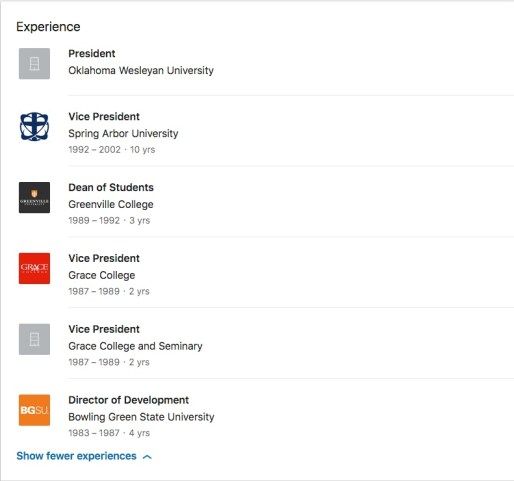


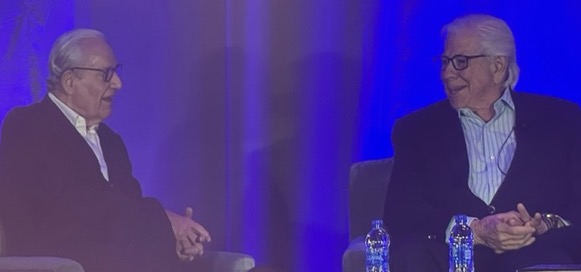


 This is Chancellor Andrew Leavitt. He’s the head of UWO and a really all-around decent guy.
 This is Cory Sparks. He is the current editor of the Advance-Titan and, in the interest of full disclosure, one of my students.

