My friend’s dog, Bo, got a chance to assess the “Exploring Mass Communication” text. Add “dog bed” to “coffee coaster” and “door stop” on the list of uses for my books. (Photo courtesy of Bryce McNeil)
In closing off the blog for this academic year, I have to admit, I have not looked forward to a summer quite as much in recent years as I have looked forward to this one.
Maybe it’s because we started later so we’re finishing later.
Maybe it’s because May is finally pretending to be part of summer around here, so we’re not getting 42-degree days with a chance of sleet.
It’s easy to become negative at the end of a semester like this. However, I remember reading an interview with Keith Richards of the Rolling Stones once where a journalist asked him about the totality of his life in the World’s Greatest Rock and Roll Band.
He said that he didn’t think about it every day or even every week, but occasionally, he’d be on stage playing the same songs he’d played forever and it just felt great. Wave after wave of people made up a packed audience in an arena or stadium and they’d be singing along.
“And just then,” he said. “I’d think to myself, ‘Jesus, what an incredible band.'”
This semester included some truly incredible moments that to not remember them or thank people for them would be disingenuous.
It’s really real! Just ask Bo!
For starters, the Exploring Mass Communication book finally hit the market. This was one of those projects that kept growing, changing, developing and more to the point I honestly wondered if it would ever see the light of day. Somehow it did and it seems like at least a few people like it, so I’m grateful to you all.
It’s a real pain in the rear to revamp an entire class to account for a new textbook, especially one that’s a first edition. My promise to you remains solid, though: I’m here for whatever you need.
When I pitched it, I assumed it would fall flat, as I have both the promotional appeal of a gecko-flavored lollipop and the smoothness of tartar sauce. However, it became the most popular thing I’ve done in a long time and it was an absolute JOY to see all those folks in Missouri, Illinois, Indiana, Iowa, Kansas, Florida, New Jersey, Delaware, Texas, Ohio, Maryland, Colorado and more.
I have to specially thank Julie Lewis of Central Missouri and the entire crew at Iowa State University for their hospitality when I drove out there to spend several days with these folks. It was really great feeling like what I was doing mattered enough for you to give up large chunks of your week in class as well as stockpile some Diet Coke for me.
Speaking of people who thought I had something to say, I was absolutely floored when I found out that the Scholastic Journalism Division of AEJMC considered me as a finalist for the Honors Lecture at this year’s convention in Philadelphia.
When I looked at the list of finalists, I went back in my head to my first conversation with the legendary scion of the Columbia Missourian, George Kennedy.
In interviewing me for a job, the first thing he said to me over lunch was, “I’ve got four people up for this job, and everybody is more qualified than you are.”
That was true here again, and there was no shame in losing to any of the other people up for this honor. That said, it looks like I’m going to Philly:
I also found out around that time that I was a finalist for the Oshcar Awards here at UWO. The athletic department honors the best of the best across all sports at this Oshcar event, so clearly I’d never heard of this thing, nor thought I would be at it. However, the department honors one person with an “appreciation award” for supporting student athletes in a variety of ways. It turned out the volleyball coach and team nominated me and I made the list of finalists.
No, this is not a Russian gangster named Dmitri. It’s volleyball coach Jon Ellman, a man I’m grateful I’ve been able to work with over the past several years as his team’s team fellow.
I didn’t win and the person who did win really, really deserved it. Even with the loss, it was the happiest I’ve ever been to be somewhere it was ridiculously obvious that I was the slowest, weakest and least coordinated person in the room.
As the term ends, I’ll be finishing the revisions to the third edition of “Dynamics of News Reporting and Writing,” and starting the revisions for the fourth edition of “Dynamics of Media Writing.” Sage seems to have continued faith in me, and that’s really all thanks to you folks. It’s a wonderfully strange feeling when I run into folks I’ve never met in person, only to hear them say, “Hey, I use your book in my class!”
(It really does, however, feel like I’m a total tool when I have to say, “Thanks! Which one?”)
I don’t know what next year holds, as things here have the potential to get better and/or worse at the same time over the summer. If that sentence doesn’t make sense to you, clearly, you’ve never worked in a university setting.
What I do know is that I’m grateful that things ended on a high note, that I’m still here blogging and that I’ve got a great summer to look forward to.
After the usual break, we’ll be back for the summer weekly schedule in mid-to-late-June, barring a disaster.
I wanted to break this out again because this year has been an epic dumpster fire for a lot of my fellow faculty here at UWO (and I’m sure elsewhere). The furloughs, the cuts, the overloads and more just seem to have taken a toll on us here.
I don’t think I’m alone in saying that I feel like I’m failing my students in some ways, given that I’m teaching out of my area of expertise, the number of kids I’m teaching has doubled from this time last year and I’m troubled by the massive uncertainties that face us here regarding academic reorganization.
The one thing I’ve got going for me? This mint jar:
The jar was a gift from our program assistant, Cindy, who retired this year. The jar sat on her desk and whenever kids (or I) needed a refresh or a moment of zen, we would stop by, grab a mint and talk a bit. (I probably owe her about $23,205.32 worth of mints by this point in life.)
Kids started noticing it on my desk this semester and started swinging by in between classes to grab a mint. Word got around that they could also crash in the office for a bit and talk about whatever was troubling them: A class that sucked, an internship that wasn’t getting back to them, a parent who didn’t understand why they didn’t have a job already lined up for after graduation… or whatever.
Without that jar, they probably wouldn’t come in and I wouldn’t get a chance to take their temperature on how life was treating them or take the opportunity to give them a bit of positive reinforcement. I realized that those moment were among the best moments of my day. Maybe I wasn’t curing cancer or saving the planet or preventing the downfall of democracy, but those pick-me-ups mattered. I also realized maybe I wasn’t doing as terribly at all of this as I felt like I was.
In looking back at this post, I realized that I was asking most of these questions on many of those mint stops. I’m sure a lot of you out there are asking them, too. With or without the mints.
5 questions good professors will never stop asking their students
A student showed up at my office around 7:30 this morning with a case of Diet Coke and a thank you card.
“I wanted to give you something to say thank you for being the best part of my semester,” she said. “You really gave all of us such a great experience.”
I was grateful she felt that way, but truth be told, it sure as hell didn’t feel like I was giving anyone a great experience. It was less like “Top Gun” excellence and more like, “Sully landing the plane on the Hudson RIver” survival. I found it a miracle that we made it this far and that nobody lost a limb in the process.
I know a lot of us in education feel like this year flat-out kicked our asses and that maybe our students aren’t getting the best out of us because of it. In an attempt to close off this year of weirdness, I found myself struggling for answers. After about a dozen attempts to write this piece, I decided that it’s less about what we know and demonstrate to our students that matters, but rather what we want to know and how we want to serve them that matters.
With that in mind, here are five questions I think good professors ask of their students, no matter the situation or how long it has been since we shared a classroom together:
ARE YOU OK?
I think most of us have asked this question at least 30 times a day over the past 18 months and really wanted to know the actual answer every single time.
Students often enter our offices with one specific need: A question about a test, a concern about a grade or a request for some sort of special dispensation on an upcoming deadline. However, great professors can see that there is usually something else going on underneath the surface as students mentally flail about like the feet of a duck that seemingly moves smoothly across a lake. There is a job that is overworking them, there is a family member who is leaning on them or there is a roommate who is sapping them of their will to live.
The regular people in their lives give them the “regular people” advice about what to do or how to cope or why they just need to suck it up. Professors tend to have a completely different angle on things because we’ve been around the block more times than a moron with a stuck turn signal.
In the game of life, Mom and Dad see their child as a piece on the board, moving toward a goal. Friends see fellow game-players who are trying to make it through unscathed. Professors not only see the whole board, but also every game that has ever been played in front of them over years or decades. We know not only what each move will do, but the six moves that can come after that initial choice that will allow us to better predict success or failure.
Still, tapping that resource can be tough for students who often thing we have more important things to do than help them with whatever is problematic in their lives. That’s why even just opening the door a little bit with “Are you OK?” can make a world of difference.
WHAT CAN I DO TO HELP?
Professors who care put themselves out there for students because without those students, our lives would be pretty dull and relatively meaningless. Helping other people has been baked into who I am since I was a kid. If someone is working on a project, I have been taught to grab a hammer or paint brush and put myself to work. If someone is struggling, you offer assistance in whatever way you can. You don’t wait for someone to ask for help. You ask how you can make things better.
In classes, sometimes the help is easy stuff like, “Can you read my lead and see if I’m on the right track?” or “I’m not sure what I’m supposed to take next semester. Can you look over my schedule?” Around this time of year, the help can be a little more taxing, but still pretty normal, like serving as a reference, writing a letter of recommendation or reassuring a parent that, yes, Johnny or Janie will get a job and, no, he or she won’t be living in your basement forever.
I have found some of the best moments in life come from helping my students, even when it had nothing to do with this semester’s class. I’ve taught students how to change their own oil and swap their car’s battery. I’ve fixed cars for kids who were about to get shafted by some greasy weasel at a 10-minute auto repair joint. Amy and I have brought freezer-ready dinners to students who just had babies and were overwhelmed with the responsibilities of being new parents. We’ve shared tips and given some kid-equipment to these folks as well. (That vibrating baby chair is a lifesaver some days, quite literally, one student told me.)
I’ve answered questions like, “How do you refinish a piece of furniture?” and “Can you tell me how bail bonds work?” (That one was a little dicey…) I’ve moved furniture and edited cover letters. None of it was a chore and thinking back on it makes me happy because these folks trusted me with whatever it was that needed doing.
The funny thing about this question? I find that once I ask it of a kid, I tend not to need to ask it again. After the first time, they’re the ones asking, “Could you help me with something?”
DO YOU KNOW HOW PROUD I AM OF YOU?
In the early phases, I tend to ask it on the simple stuff: You asked for help. You figured out how to properly attribute a quote. You got your first story published in student media. You got an internship at a place that NEVER gives internships to people from your school.
Once you graduate, you never stop being one of “my kids” and I don’t think I’m the only professor who feels that way about our connections with “our kids.” I watch from afar as you take jobs, move up the ladder and become leaders in the field. I see you start your own businesses, fight for social justice and make a name for yourselves. I’m proud to tell people, “I taught that kid!” when you show up in the newspaper (most times… Stay out of the police blotter…) or you are broadcasting on radio or TV. I am thrilled to let people know about your accomplishments and your awards and your growth as a professional.
However, you don’t have to do any of that stuff and I am still ridiculously proud of you. I’m proud of my students who have the courage to work through their mental health issues. I’m proud of my students who courageously battle cancer or overcome sicknesses and persevere. I’m proud of you for making amazing life choices to get married or to have kids or to go a completely different way. I’m proud that you are who you are and that you can stand on your own two feet and say, “This is who I am. Take it or leave it.”
When our paths first cross, so many of the students seem like newborn deer: gangly, gawky and awkward as they try to stand on wobbly legs in a world that seems far too fast for them. Somehow they learn to steady themselves and improve their overall presence. They get stronger and faster and better as they learn from doing things right and even more from doing things wrong. We’re there to guide them, but they have to do this on their own, otherwise, they’ll never be strong enough to make it when we’re not around.
When they actually put the pieces together, it’s something amazing to behold.
And it’s worth letting them know what a big deal that is.
WILL THAT MAKE YOU HAPPY?
The people who enter my class tend to have a lot of questions. If they stick with me for the rest of the degree, they tend to have even more. I’m not sure if this means I inspire them to think critically and question their surroundings, or if I’m just confusing the crap out of them.
However, most of the questions they ask are geared toward a tangible outcome: “What do I need to know for the test?” “Is it worth it to double major?” “Will this help me get a job?” “Is the salary for this job enough to keep me alive?”
These are all the questions we’ve been trained to ask in the college setting and they all make sense: You want to pass the class, graduate, get hired and earn enough to survive. The one thing that we tend not to think about in a real concrete way is if what we are doing will make us happy. Going through school always seems to feel like this scene from “School Ties:”
It took a long time for me to figure this out, but most of what makes life worth living and jobs worth taking is the degree to which you actually like what you’re doing. Dad always told me that if you find a job you love, you’ll never really work a day in your life. It’s mostly true, in that I have found that not every day is an Academy Award-winning performance and there are some days that are a lot better than others. However, when something makes me happy, I look forward to doing it. When something doesn’t, I tend to avoid it or do a half-assed job at it.
Students often tell me that they want to go to law school or grad school or start their own business or change majors or a million other things. The thing I immediately want to know is, “Do you think this will make you happy? If the answer is yes, plan well, hedge against failure and work like hell at it. If the answer is no, think again about why you want to do this at all.”
A lot of things that might make you happy aren’t going to be the smartest of choices, (“I want to start my own company where I blow bong hits in the lungs of people’s pets and post the videos on YouTube…”) which is where those other caveats come in. Still, we tend to consider the importance of happiness in inverse proportion to all the other things that are far less important than if we will really like what we’re getting ourselves into.
YOU KNOW I’M ALWAYS HERE IF YOU NEED ME, RIGHT?
I have now spent more of my life teaching college than I have not being a college teacher, and it doesn’t matter where I taught you or how long ago it was, you’re never really going to get rid of me.
The best part of my life is hearing back from students who have long since stopped needing my help on a test, my advice about an internship or my signature on a course override card. They have written more stories, covered more events, taught more classes, run more organizations and probably make more money than I ever have. However, when they really do need something, I’m thrilled to death when they show up in a chat or an email
A former student who is in her 40s sent me an email a few weeks back, asking if I’d support her effort to take a job at a big-name university. She has a doctorate, advising credentials that are amazing, a record as an elected public official and a lot more, so she needs me in the same way a Kardashian needs more publicity. However, I told her I was more than happy to do whatever she needed: Serve as a reference, write a letter or drive somewhere and talk to those people about why they’d be stupid not to hire her.
Another student got in touch a few years back when a source was threatening to sue him. I found the threat ridiculous and that his employer wasn’t doing more to support this kid, so I dug around and found some legal help that not only got the source to back off, but pushed the media outlet to leave the story alone.
I’ve refinished furniture for them as wedding gifts. I’ve seen their kids grow up in pictures and videos they post on social media. I’ve offered them condolences and heartfelt messages when they lose a parent or a loved one.
I’ve bought T-shirts and doodads from students who have started their own businesses. I’ve bought Girl Scout cookies from the children of former students, only pausing to think, “How in the hell are you old enough to have a kid who’s a Girl Scout?” (No matter how old they get or how esteemed they are, my students are eternally trapped in my mind’s eye somewhere between the ages of 18 and 22, showing up for an 8 a.m. bleary eyed and likely hungover.)
I’ve lit holy candles in my church for students recovering from cancer. I’ve prayed for all of them at one time or another, just because I figured they needed it.
Before we part company any time we connect, I always try to remember to let them know, “If you ever need me, you know I’m here for you, right?” I mean it every time and I know I’m not the only professor who feels this way.
If there’s one thing I hope they all know, it’s that the answer to this particular question should always be “Yes.”
I know that there are a solid number of you out there who actually abide by the request in this post most of the time. That said, that number appears to be dwindling significantly recently, so I need to make this plea.
I’ve always believed that as a professor, I owe it to you to try to explain things so that you can understand them. I also believe that if I don’t actually SAY something in explicit terms, it’s my fault when you screw up. If I do my best to lay it out, like I’m trying to teach a dog how to do calculus, and you still screw up, well, then, that’s on you.
I felt the need to put this post together after the first half of a semester that had me utterly vexed and befuddled at the current state of my courses. This isn’t a typical semester in which I have a couple kids who skip class constantly, a few others who fake their way around a few things and some dumb-ass behavior that makes me question the functionality of at least one student’s frontal lobes. There will always be one kid who shows up late so often I swear they’ll be late for their own funeral.
And it isn’t about the life events that get in the way for all of us. I still get the “I’m sick” emails or the notes about emergency surgeries and funerals. That happens all the time and, honestly, any professor who doesn’t understand this is someone I don’t want to know.
No, this appears to be a pandemic level of “I-Don’t-Give-A-Shit-itis” that has hit in a way I’ve never seen before on the college level. I had students miss deadlines for quizzes, writing assignments and even exams. Students were given days and even weeks to meet those goals, only to let the deadlines go by like a knee-buckling curve ball.
This isn’t just affecting my intro-level students, as several folks who are in their senior year have forgotten about midterms. The excuses are of the “I have no excuses, but let me fix this anyway” variety, with a steady stream of “I was unaware” emails, which appeared strange to me, given that I’d posted the information in the syllabus, flagged the deadline in the LMS and spoken repeatedly about it in class.
I keep thinking that these folks are suffering from whatever the hell Guy Pearce had in “Memento” and I’m strongly considering bring tattoo kits to class:
This also isn’t just affecting the students here at UWO, as I asked the hivemind of educators I trust if they’ve seen this as well. It turns out this is hitting states across the country, even those that haven’t recently legalized weed or consider a pub crawl to be a national holiday. A constant stream of attempting to spoon-feed students review questions, examples, instructions and extended deadlines has not proven to be a panacea for this situation.
Some educators speculate that this might be some sort of “long COVID” impact, with the idea that college students who spent their formative years merely trying to survive what we all assumed was the end of days weren’t properly prepared for self-reliance in their education. Others wondered if students felt their college efforts lacked value, given the high number of good-paying jobs that are currently available, sans a college degree. Still others pondered about the effects of artificial intelligence, as students looked for easier ways to get out of work. My sister-in-law, who teaches dance, had this insight:
“People are just lazy. We have a new generation of stupid on our hands.”
The cause and the cure are outside of my scope of knowledge, as I’m really not that kind of doctor. That said, please consider the following advice, as you move forward into the second half of the semester. Some of this may seem like it’s stuff you heard in second grade, but that’s probably because we need to dive that far back into the realm of education to properly reboot a few folks:
GIVE A SHIT: This is really the core of everything I’m going to say below, but again it bears repeating. If the way in which my 8 a.m. class tends to listen, I might have to say this six or seven more time before we’re done here.
I have told students over the years that the one thing I absolutely cannot teach them is how to care about a course. I can teach the basics of all sorts of rudimentary journalism skills and quite a few higher-level elements at that. I can teach students how to be tough, or brave, or nosy, or a dozen other “soft skills” that can aid them in their work.
The one thing I can’t make them do is “wanna.” If you don’t “wanna,” I can’t help you.
I get that not every course is your muse and that every class is not an Academy-Award-winning performance on the part of your instructor, but I know that a lot of us are really trying to make a difference. However, if you don’t care, it doesn’t matter.
And, if you don’t care, you should probably think about why you’re sitting in that classroom, spending a boatload of money that you’ll spend decades of your life paying back.
READ DIRECTIONS: When I was growing up, we were inundated with ads for a program called RIF: Reading Is Fundamental. The idea was that if you couldn’t read, you probably weren’t going anywhere in life:
This is really true in college, as you should be somewhere further along in your personal literacy than the crew of kids surrounding a relatively young Ed Asner here. Reading directions is a fantastic way of figuring out how much content you have to write, how many citations you need to include or even when something is due.
It might not be as much fun as if we did the directions in a TikTok, but when the Feds block this app for fear that the Chinese government is using it to figure out how stupid we all are, those literacy skills might come in handy.
PAY ATTENTION: College professors often have difficulty when we see you on laptops and tablets during class, because we’d love to pretend that you’re using these items to take copious notes and add deadlines to your calendars. However, when we call on you to verbally add your thoughts to the topic under discussion and your head pops up like a prairie dog getting electroshock therapy, you kind of give up the game.
Look, I get that we’re boring, despite how hard we work. I also know that not everything will apply to any one student in class. That said, you are PAYING for this. It’s like buying entry to the Golden Corral buffet and then quietly sipping a water in the corner. If that’s all you’re doing, why the hell did you come here?
Paying attention in class is a great way to actually learn stuff. This is particularly true if you are opposed to reading directions. I’m a big fan of both, but you need to do one or the other in order to survive in college. Neither of these things is asking too much or should come as a massive shock to you. We showed you the library, the classrooms and even professors’ offices during your campus tour: Books and lectures were not hidden from you.
Unless, of course, you were on your phone the whole time…
STOP PSEUDO-APOLOGIZING: I can’t tell you how many emails I’ve gotten that start with “I’m sorry” and then follow that up with a detailed outline of some easily avoidable screw up. I finally went and looked up what an apology actually entails and this is what I’ve found:
The Three A’s of Apologies
Acknowledgement. Acknowledge the situation and say you are sorry for what happened.
Acceptance. Hold yourself accountable and work to rectify the situation.
Amends. Talk about what you will do and start working on corrective measures.
What I’ve come to realize is that most of the apologies I get had none of those elements to them.
You’re not really sorry, in the idea that you are acknowledging the situation. Hell, some of you wouldn’t realize you’ve been hit by a bus until your phone told you as much or your Apple Watch stopped tracking your pulse. You just don’t like the negative outcome of what occurred and you want some way out of it.
You aren’t really accepting anything. Some of the emails I get say that the sender “will accept whatever punishment” I have in mind, but quickly following that up with “but I would really like it if (Fill in way of getting away with screwing up here).”
Also, I’m looking for amends. Maybe the sacrifice of a fatted calf would be a bit much, but some actual contrition and showing up on time for at least a week or two would help.
DON’T LIE: Journalists deal with weasels for most of our lives. This is why we have such great BS detectors and why we love nailing liars to the wall. In most cases, the lies students tell are so frickin’ unnecessary that they boggle the mind.
Case in point: I had a student tell me last week that she was going to miss class because she was sick. Totally fine, as they get two skips the whole term, and I don’t care what they’re for. I even go out of my way to say, “Look, if you want to tell me, ‘I got totally ‘faced last night and I reek of vomit and vodka sweat, so I’m skipping,’ I’m fine with that.”
However, when I got home, I found out from my kid that she met one of my students, who was applying for a job at the Olive Garden where Zoe works. It was my bed-ridden sickly waif who couldn’t make it to class, because it turned out her interview for the job was at that time.
The same thing applies to using AI to write your papers. We read enough college writing to know when something comes from a college student and when something comes from a computerized dictionary that spasms content. We also know that nobody writes to EXACTLY 500 words, so stop telling AI to write you a 500-word paper on a given topic.
I have worked ridiculously hard to be an empathetic ally to my students, so when I’m doing that and you lie to me, it makes me want to bring down a raging storm of hellfire upon you.
QUIT WASTING OUR TIME: After all of this, if you STILL can’t find it in your heart and soul to give a shit, that’s fine. Just stop wasting our time.
Believe it or not, some of your colleagues out there are desperate for help. They are applying for internships and jobs, but need help with resumes and cover letters. They are trying to bend their brains around this new form of writing that will be the foundation upon which a lot of their work after college will depend. They actually mean it when they stop by the office and start the conversation with, “Sorry to bother you, but…”
Every time you turn in some AI bullshit, you make us waste time determining how you cheated and filling out paperwork to have you penalized somehow. Every time you skip a class because “OMG earleeeee,” you make us waste time catching you up. Every time you blow a deadline and beg for forgiveness, you make us waste time taking a moral index of ourselves to see if we should bend a rule and help you out.
That’s time we could be spending on people who actually and honestly need our help and want to do the work. You’re not just annoying us, but you are actively depriving other people of an education they paid for and value.
If you can’t get to the point where you’re going to become one of those people, fine, just don’t make the rest of us suffer because of it.
I would tell you to just go work at Olive Garden, because I know they’re hiring, but something tells me their standards are probably higher than those we have here at the U.
I always liked this clip because it showed the importance of quality over quantity in some cases. That and it was essentially the moment Ford launched what I consider to be the greatest car ever made: The Mustang.
The nice people at the Texas Intercollegiate Press Association put this together to promote my Furlough Tour stop. All I could think when I saw this pitch was, “Dammit… I better be good at this…”
The Filak Furlough Tour hit Texas recently, as I got an opportunity through the Texas Intercollegiate Press Association to address students and advisers across the Lone Star State. The whole thing started with a basic request:
“One thing I see my students struggling with — and no doubt other campuses are the same — is staying on the surface. I’m seeing a dearth of deep dives, investigative and data-driven journalism, watchdog journalism, in-depth features. What we do have in abundance are truckloads of fluffy editorials.”
So, what’s the best way to get into all of this? Well for starters, here is Rule #1 to start you off in the right direction: You aren’t writing for yourself. You’re writing for an audience.
One of the main reasons people end up doing “fluffy editorials” is because they want to write things they care about. OK, that’s fine, but ask yourself this question: Does anyone else care about that thing?
I once had a student tell me that he planned to write an editorial for our student newspaper about how the U.S. should annex Puerto Rico. I remember asking him, “OK, but why should the readers of the Advance-Titan on the UWO campus care about this?” He stiffened up and said in a rather haughty voice, “EVERYONE should care about this!”
Um… OK… But a) do they? B) why should they? and c) what’s the point of it for a student newspaper on a regional campus in the middle of Wisconsin?
He didn’t get it, but my point was this: Writing about things you care about without thinking about your audience and what matters to the people out there is like deciding to become a chef at very nice restaurant because you like to eat. A chef is cooking for OTHER PEOPLE, so that’s where the joy and purpose lives. I wouldn’t want to go somewhere, order a steak and lobster dinner, only to have my server return with a plate of weird green stuff, explaining, “The chef feels strongly that people should be eating more organically braised kale, so enjoy!”
In terms of writing surface stuff, the reason why we end up doing it is because it’s easy and we’ve been trained to grind out pieces. There’s nothing wrong with learning how to bang out speech or meeting stories if you can find things that matter to your audience (see rule 1 above). However, as much as journalism is about quantity, it’s also about quality. You can’t just spend your whole life doing nothing but menial stories or you’ll want to throw yourself in front of a bus at some point in life.
Besides, quality endures while quantity fades.
Here’s what I mean. Every year, students come to campus and set up their apartments. They go to Walmart or Ikea and find a $50 tagboard piece of crap kitchen table and build it for the year. There’s nothing wrong with that kind of thing for students on a budget, especially if you’re sharing a house with people who view vodka as a food group and throw more parties in the place than a birthday clown on meth.
However, it’s never going to retain value or have lasting power. Throughout the year, I see broken ones of these tossed on the side of the road in front of apartment row on campus. A leg gave out, a side fell off, the top broke. At the end of the semester, none of those things is still around.
Contrast that with the table my great grandmother bought the year my grandmother was born. It lived in her house for decades and it was where all the meals of the family were eaten, the bills paid, the problems discussed. When holidays came, they tossed a couple leaves in there to make it big enough to accommodate everyone who could attend.
After she died, her son took the table with him and used it at his art studio. It withstood easels being banged on it, paint being dripped on it, brushes drying out on it and more.
When he died, my mom had to clean out his apartment. We saw the table there, just beat to hell and my mom said, “It’s a shame. That was where we used to have all of our best family gatherings and now it’s just done…” I told her, no way. I was taking it with me. I took it home, stripped off all the crap on the top, sanded out the imperfections and re-stained the whole thing. I then coated it all in a rockhard top coat. Today, 103 years after my great grandmother bought it, that table is beautiful and it’s in my dining room at my house.
The point is, you can’t just rely on throw-away crap if you plan to have any kind of value in this field. Sure, that table of my grandmother’s probably cost more than your $50 Ikea wonder, but it’s worth more, it carries on and it retains value. That’s where you want to be in this field at least some of the time.
So, how do you get there you might ask? Well, here are three things I think might help you find those stories and stick with them:
OPEN YOUR BRAIN: Freelance writer Jenna Glatz is fond of noting that coming up with a story idea is about learning to think that everything you experience could become a story. “Once your brain has opened up to this kind of idea generating, you’ll be amazed by how much more perceptive you’ll become in general,” Glatzer writes in Make a Real Living as a Freelance Writer. “Conversations you overhear will trigger ideas for new articles. An event you witness in a parking lot will trigger another. Moments before drifting off to sleep, you’ll think of your most compelling idea ever.”
I spend a lot of time driving to work each day along wide open roads and I do my best to open my brain. I try to notice what’s on the billboards along the highway or what vehicles are more prevalent around me. I listen to local radio to see what’s in the news and what’s on the ads. I also think about whatever the people in front of me at Kwik Trip are yammering about while buying their donuts and vape.
One of the first exercises I have my reporting and feature writing kids do is to leave their phones, their headphones and every other device in the classroom and then just go wander around for an hour with an open mind and open eyes/ears. When they come back to class, they have suddenly noticed all sorts of things they never knew were there before.
LEARN TO WONDER: Little kids are great for a variety of reasons, not the least of which is their sense of wonder.
A 4-year-old’s favorite question is “Why?” Kids want to know how stuff works, why it happens and the answers to all sorts of other important questions.
At some point, we stop incessantly asking “Why?” because we fear of looking stupid or because we stop caring about how things work. We stop engaging with the world around us and we no longer enjoy the wonderment we once experienced as little kids.
That’s a shame, because wondering more will lead to some incredible stories. Pair some of the 5Ws and 1H with the phrase “I wonder” and you’ll get some pretty interesting story ideas. Here are a few that rattled through my brain just this week:
I wonder why I can’t get a Diet Coke out of one of our vending machines.On our campus there is only one place I can actually buy a Diet Coke: A convenience store. Every place else, all I can get is a Diet Pepsi, which to me tastes like I’m licking a piece of chemically treated sheet metal. Why? Because our campus has a vending contract with the Pepsi Mafia, so I’m stuck. That said, I wondered why we got stuck with Pepsi. How does your university decide who gets the vending contract on your campus, how long is the contract and what kind of cash does the U get for exclusivity? Who has the say in where that money goes?
I wonder what the hardest scholarship to get on my campus is: What is the least-often claimed scholarship on your campus and what makes it a difficult one to achieve? (A scholarship for professional banjo players of Bohemian descent? A scholarship that requires perfect attendance since kindergarten?) Every year, we give out tons of scholarships, but there are those that go unclaimed every year because nobody applies or nobody is qualified for them. What is the longest untouched scholarship for your school and what other weird ones are out there?
I wonder if that law really exists. There are tons of urban legends out there about laws and rules at various schools and institutions. The one that makes the rounds from time to time is that certain housing set ups on campus are illegal if more than X number of women live together, as it technically qualifies as a brothel. It’s been debunked time and time again, but it still shows up.
I wonder what other people are wondering about: The Freedom of Information Act and state open records make certain documents to the public. If you are at a public university, you can get all sorts of information, including people’s salaries, departmental budgets and contracts the U signs with outside agencies.
One thing that most people don’t think to request? A list of the open records requests that people have made over a given period of time. (I had a student do this once. When I asked him why he did it, he said, “I just want to know what other people want to know.” Good point.)
GIVE A DAMN: The best bit of advice anyone ever gave me about writing a bigger piece was that I needed to make sure I cared about what I was doing. Charles Davis, now the dean of journalism at the University of Georgia, was one of my professors for my doctorate at Mizzou when he told me this. He explained that completing a dissertation, a giant monstrosity of research that no one would ever read, was only possible if you made sure you cared about what you were doing and you wanted to find the answers to the problem you were tackling.
“It’s like a marriage,” he said. “It’ll be with you in good times and in bad, in sickness and in health, until death or degree do you part.”
I think about that a lot when I’m writing a longer blog post, a book or anything else that is more than a brief but courteous email to a student explaining that, no, I’m not changing your grade after I filed it with the university. It’s not my fault you missed so much class that we almost held a candle light vigil for you.
Case in point: I read this fantastic story in the Milwaukee Journal Sentinel recently by a reporter named Mary Spicuzza. In 1978 in Milwaukee, her cousin Augie was killed by a car bomb, something her family never spoke of for decades. Over the past year, she dug into the history of her family, her cousin’s various transgressions in life and how a powerful mob boss in Milwaukee likely ordered the bombing that took Augie’s life. In reading this piece, you can sense the amount of work that went into it and how much deep digging it took. Why did she do it? She NEEDED to find the answer and thought her audience would want to know as well, given how famous this incident was all those years ago. In short, she gave a damn.
When I think back on the stories I wrote that I liked the most, they were the ones where I gave a damn. I cared about breaking a story about how the KKK was distributing pamphlets on newspaper racks in grocery stores. I gave a damn about being right when it came to whether a local dog track was going to close down, costing hundreds of jobs and thousands of dollars to the local economy. I really felt it was important to do a six-part series for the blog on mass shootings, so much so, I wore a bulletproof vest everywhere I went for six days.
Even with the books I write, I think less about what I want to tell you, and more about what you really want and need to know and how best I can help you and your teachers get that stuff.
If you care, you’ll get into it and you’ll be like a dog with a Frisbee: You won’t let go until you’re satisfied.
The question in the headline has come up a lot recently, both on the Filak Furlough Tour and from my own students. The way some folks talk about grad school, it sounds like a way to delay life a bit more, or at least push back some of those student loans. For others, it’s an opportunity to become part of a cadre of lifelong learners, who will some day become the “sage of the stage” themselves at a fine institution of higher learning. Reality, as is usually the situation, will vary on a case by case basis.
As I have told my students repeatedly about so many things, you don’t want to look at me for an example when it comes to making a decision about grad school.
At the time, I had about a year’s experience under my belt as a part-time night desk reporter at the Wisconsin State Journal. When I asked if that position could become a full-time job, the answer was less than encouraging. Even more, every job that I wanted to apply for required about three years of newsroom experience.
The job market stunk and I had one actual offer from a newspaper in Kirksville, Missouri, which would have paid me less than I was making as a cashier and grease monkey back home at the Mobil station. Even worse, the paper was terrible, the publisher was chain-smoking during my interview and the job came with no insurance benefits.
At the time, if you kept up with school and didn’t stop being a full-time student, you could stay on your parents’ insurance until you were 25. Also, my boss at the State Journal offered to kind of weld two part-time positions together and give me nearly full-time hours, but not the benefits or a true salary. Add that with the potential to teach a college class, already knowing the area and figuring that I’d finish a master’s in two years, I went for it. It turned out fine in the end, but to explain the whole process requires several beers and a non-disclosure agreement.
Based on what I’ve seen others do over the years, here are some helpful questions you might want to consider if you’re thinking of grad school or to ask anyone who asks if they should consider this path:
ARE YOU CHANGING FIELDS? This is the easiest one to figure out. If you got your degree in journalism, but you took a class in computer coding, psychology or biomedical engineering and found your muse, grad school makes sense. The goal of any form of education that you are going to pay ridiculous money for is to teach you something of value that you can use somehow. Usually that means it helps you get a job. I wouldn’t hire a welder to do journalism or a journalist to do welding, so making sure you have field-specific education makes sense.
IS THERE A SPECIALTY YOU DIDN’T GET IN YOUR UNDERGRAD? In some cases, you find that you want to really dig into a specific area of a field. A “regular” journalism degree might include one class on graphic design or 3D rendering or something that really piques your interest and you only have a base-level understanding of that topic. Going to a different place for grad school where they specialize in that might make a lot of sense. I often make the case that students who go here and find that they really like design or graphic arts in media might do well to get a master’s in that area at Ball State, which has a TON of great profs and resources in this area.
IS THERE A FINANCIAL BENEFIT TO THE EXTRA DEGREE? The question of if a higher-level degree helps or hurts a candidate varies widely based on the field and the employer. However, if there is a clear-cut financial value to getting this upper-level degree, it makes sense to bite the bullet now and go for it.
Case in point, when my mom was teaching, salary bumps were determined in “steps” and “lanes.” If I recall correctly, each step was based on years of experience while the lanes were determined by level of education. Hopping into a higher-ed “lane” got you more money faster. Mom still had to take credits to keep up with something else related to her contract, but she never got a master’s, despite probably having more credits than I have now with a Ph.D. She mentioned more than once if she had just gone for it earlier in her career, the master’s would have really turbocharged her earning power.
If you know that’s the case, or if your company is paying for it in hopes of paying you more when you get it, go for the grad gusto.
DO YOU WANT TO TEACH COLLEGE AT SOME POINT? When I got my master’s it meant I could teach at a college or university in my area of expertise. Many of my family members were teachers and I thought I would like to be like them and help people learn, so the master’s was a smart call. That said, my boss in Missouri told me that the Ph.D. was basically the “union card” for getting a stable, tenure-worthy job, so if I wanted to do this for the rest of my life, I probably should bite the bullet and get the doctorate done.
Today, master’s degrees are fine for both adjunct teaching and a lot of universities have opened up teaching faculty roles that don’t require the full collection of alphabet soup after your name. That said, the master’s is the “you must be at least this tall to ride the ride” measurement, so if standing in front of a room trying to explain the difference between “farther” and “further” or why you spell the word “lead” L-E-D-E, grad school makes sense.
ARE YOU RUNNING TO SOMETHING OR AWAY FROM SOMETHING? This gets a bit deeper on the personal end, but it’s an important question to ask. I often ask this of the kids who come back to see me when they’re about 25 and they say something like, “I think I’m going to grad school” or “I think I should change jobs” or “Do you think the circus is hiring?” When a quarter-life crisis hits, a massive change in life seems like the best idea, which is why I ask them this question.
Change bothers me a lot, just because of who I am and how I feel about it. That said, I know some changes are better than others. I can also attest to the importance of understanding WHY you’re changing something, which comes down to the question above. If you are running toward something (pay raise, new educational opportunities) and the grad school question comes up, that is a good change. If you’re running away from something (I don’t want to be an adult, I’m scared of getting a job that I’ll hate) and the grad school question comes up, it’s probably not a great idea.
It never hurts to ask, “Why are you considering doing this?” and then try to figure out which way you’re running.
ARE YOU GAINING MOMENTUM OR BURNING YOURSELF TO A CRISP? When I was growing up, taking a break anywhere before the completion of all of your schooling was considered verboten. The thinking was, “If you don’t go straight from high school to college (or college to master’s or whatever), you’re never going to go back.” And for a lot of people I know, that turned out to be true.
That said, concepts like “a gap year” never really existed as a positive opportunity to plan and recharge. The “keep moving ahead” approach also conflated the idea of continual motion with positive outcomes.
I truly believe in momentum, and if you don’t, go watch this recap of the 1993 Bills/Oilers game. Thus, if you’re in the zone when it comes to studying, learning and knocking out homework, great. Keep rolling. I also believe in the concept of burnout, so if school to this point has turned you into a charcoal briquette, pouring more work on top of yourself for meager/no pay while adding to your student loan debt and living in what passes for student housing these days makes no sense.
WHAT IS THE FLIP SIDE OF THE GRAD SCHOOL COIN? Instead of saying “Should I go to grad school?” consider asking “What will I do if I DON’T go to grad school?” In other words, what’s the other side of the coin on this one.
I’m a big fan of pro-con lists in making big life decisions and I’m also a big fan of not getting myopic on a choice being either/or. It’s not “grad school or no grad school” but rather “grad school or (OTHER PLAN).” In approaching it this way, you can figure out what else might be out there and avoid thinking of grad school as the only lifeboat off the Titanic.
I’m sure there are many other good questions to ask, but these should comfortably get you out of the “deer in the headlights” mode and toward making a solid decision, or helping someone else make a solid decision.
In discussing interviewing today in class, a student asked me a question that should bother more folks than it probably does:
“What if a source is wrong about something, but it’s not a big factual thing you can check? What do you do?”
It’s a good question, in that I’m sure I’ve told the same story 10,001 times to various classes with variations on a theme. In some cases, I’m often wondering if I’m accurately remembering the car I was driving when I went to the scene of a shooting, the editor who told me to “check on that fatality” that turned out not to be dead or a dozen other things that pretty much anybody involved might remember in some other way, but in no way does a big book of facts help settle the issue.
Case in point: This Christmas, I was at a family gathering where the time I somehow volunteered my dad to be a grade school soccer coach came up. The story was that Dad agreed to go to a meeting where this whole thing would be discussed and he then agreed to coach with a bunch of other dads.
The memory I had was of Dad putting on his nice brown suit to go to this meeting, where it turned out all the other dads were told that they’d be playing the game a bit. So my dad, being the awesome guy he is/was, ended up playing a bit in his dressed up clothes. To me, that story was burned in my head, as I remembered him coming home sweaty and carrying his coat. It also was a great touchstone for me about how much Dad loved me, in that he’s out there banging around a soccer ball in his good suit.
Dad looked at me and said, “That never happened.”
I explained my memory about it and said, “I know it happened because of (XYZ).”
He said, “No, that never happened that way. I never played soccer in a suit. I don’t know where you’re getting that from…”
We both immediately turned to Mom as the arbiter, and she couldn’t remember any of this, so for the rest of the night, I kept thinking, “I know I’m right” and I’m sure my Dad thought the same thing, too.
The point is, not everyone remembers everything the right way, so what happens when you’re supposed to tell stories that revolve around facts and not everyone agrees with what those are?
Here’s a look at how to help work through that issue:
How to avoid letting a source’s memory lapses or outright lies destroy your stories
I’ve made a point of telling anyone who will listen that if they need ANYTHING from me in terms of content to help their students or their student newsrooms, all they have to do is ask. Thus, the following request came from a fellow journalism teacher:
Do you have any great lessons or content on how to analyze if a source, esp a source for a profile, is lying or misrepresenting information (either purposefully or due to memory erosion)?
It’s difficult to know for sure when someone is lying or if there are memory gaps that make for some problematic moments within the story you want to tell. As I’ve often told folks in my classes, it’s not always about being perfectly successful in your efforts when it comes to something like this, but rather avoiding the things that can really screw you over that matters most.
With that said, here are a few things beginning reporters can do to mitigate disaster when dealing with a source that might not have the facts 100% perfect:
GET A SENSE OF THE SOURCE: One of the primary reasons I tell students they need to conduct interviews in person is so they can capture more observational elements to add color and feel to their pieces. A good side benefit of being in person is you can get the vibe of the source and decide how much you really want to trust them.
Some sources are great at hyping themselves up like they’re trying to sell you the Bass-O-Matic ’76. Others do some great “humblebrag” stuff that really can sound like they’re important and vaguely decent people. In spending time with these people, you can find out who is likely worth trusting and who you can’t trust any further than you’d trust a pyromaniac at a gas station.
The one thing to understand is that there is a crucial difference between people who are full of crap and people who literally have lost track of things over time. Honestly, I have told a number of stories over and over again to the point that I’m not sure if they’re perfectly accurate, slightly altered or complete BS. (I am grateful, however, that I found support for the famous “Olde Un Theatre” robbery and the “Mraz, where’s Mrefund?” headline.)
I had one student who SWORE she wrote an obituary that had a particularly awkward headline on it. I found the piece, with the headline she described, and it wasn’t her byline. Maybe she wrote the headline, or edited the piece or something else, but it wasn’t her byline. This is why it’s important to fact check basically everything when it comes to people telling you stuff that you plan to use in your work.
Once you get that vibe, you can do more work with the questions you have and the level of insistence you enact when dealing with your questions.
IN GOD WE TRUST, ALL OTHERS MUST PAY CASH: Even in profiles, there is a benefit to becoming what I call a “non-denominational skeptic” about the information you received. Whether you like the source or you wouldn’t believe them if they came into your house, soaking wet, and told you, “It’s raining out there,” apply a similar level of rigor to your questioning. This is particularly important when it comes to things you really plan to focus on as part of your story.
Let’s say you’re doing a profile on a business person who turned his life around after a rather rough patch in his 20s and now helps ex-convicts find work. You likely are going to ask what was the turning point that got this guy on the right path, and here’s the answer you get:
“I wasn’t a good person back then. I was arrested for a series of burglaries back in ’85 around the Cleveland area. I was supposed to get 6 years, but the judge gave me 12 and shipped me off to Folsom prison, way across the country. Being that far from home, in a prison like that, well, it changes a man. About 50 prisoners were killed while I was there for those 12 years and I always thought I’d be one. I told God, ‘If I ever get out of here alive, I’ll make my life right for whoever else gets out of here.’”
Sounds compelling and amazing. Now, how much of that is stuff you NEED to check? A goodly amount:
Check arrest records from “the Cleveland area” in 1985 and find out if this guy was ever arrested.
Check court records to find out if he did get sentenced to 12 years.
Check prison records to find out if he went to prison, let alone Folsom
Check prison records (and others) to find out if 50 people REALLY got killed out there from about 1985 to 1997.
This is just smart reporting and it will help you fill in some of the key details about the source’s live. Also, the more of this you can verify, the better off you are. The less you can verify, the less you should trust this source.
Clearly, you can’t verify if he “wasn’t a good person” or if he had a conversation with God. (“Hello, St. Peter? Yes, this is Vince Filak with the Dynamics of Writing blog. Is God there? I need to confirm a conversation He had back in 1985 or so…”) But you can check out enough stuff to feel like you’re not getting fed a line.
TRUST, BUT VERIFY: Another key way to poke back at people is to show interest and engagement with their stories while offering them ways to help verify this information for you.
If you’re interviewing someone and they say, “I was amazed when I received my Silver Star for my tour in Vietnam, but I really was just doing the same job as everybody else…” you could check a database when you get done with the interview. However, you could also try this approach during the interview:
“That is truly incredible! Could you show me the medal? I’d love to see it!”
or
“Do you have any pictures of the ceremony? My editor would love to put something visual with the story!”
If the answer is yes, you’re in decent shape. If the answer is a dodge or something like, “Nah, I threw it away.” then you are probably going to want to push back a bit more with stuff like, “So where was the incident that took place that got you considered for the honor?” or “I would love to talk to anyone who was in your platoon at the time for more on this…”
In other words, you’re giving the person an opportunity to verify this stuff for you. If they can’t or won’t, tread cautiously.
WEIGH COST VERSUS VALUE: Journalism in a lot of ways is like catching sand in a sieve. You’re never going to catch everything, but you want to make sure you don’t lose too much of the small stuff or any of the big stuff. To that end, you want to weigh the cost versus value of the amount of work you’re doing on any particular fact-finding dig.
Let’s say you’ve got a source that was paralyzed from the waist down during a car accident in high school. After that, he went into a deep depression, but found God and now goes on speaking tours throughout the country to explain how to overcome obstacles in life. The source tells you this:
“I was driving a 1979 Ford Thunderbird with this great V-8 351 Cleveland in it when I had the accident. The truck that hit me mangled that car like you wouldn’t believe. I honestly feel that if I had been driving something smaller, I’d be dead.”
The guy shows you a picture of the wreck, so you can see what happened to the car. He’s clearly paralyzed or has been faking it well for decades. The opinion is his that he might have died in a Toyota Camry. is it really important to fact check whether that car had the 351 Cleveland engine in it or if it might have had a 302 or a 351 Windsor? Probably not.
Look at what matters most and make sure those things are solid. The random fringe stuff can be checked if you have time and if it’s easy. However, it’s not going to behoove you to go plowing through thousands of DOT and Ford Factory Sheets to figure out what engine landed in what car in a case like this.
RESEARCH BEFORE, FACT CHECK AFTER: The goal of quality research in advance of talking to a source is to make sure you ask good questions and that you don’t get turned around if the source tries to BS you. The goal of a quality fact check is to make sure what the source told you makes sense before you publish the piece.
You then can decide to what degree you want to keep certain bits of information and what degree you feel the need to actively fact check with in a story. Ted Bridis, a fellow journalism prof, shared this example with a bunch of us to outline the ways in which a “personal tale” can have enough bullcrap in it to fertilize the back 40 acres. The writer of the piece literally takes each element that this source outlines as “fact” and checks it out with people after the fact to show what is clearly not true and why it matters.
If you ask the right questions, you’ll find that many sources will try to snow you less, as it’s clear you aren’t coming to them fresh off a turnip truck. However, there are still people out there who will try to convince you that they were the one who convinced Lin-Manuel Miranda to go with Hamilton instead of “Aaron Burr: The Death Metal Musical!”
That’s where the fact check really comes in.
FIND OTHER PEOPLE TO HELP: I remember certain things about my childhood that might or might not be true. Some of them, Mom or Dad might have an angle on (and judging by how we kept pretty much everything I ever did in the file cabinet in my folks’ back room at the house, we might actually have physical proof of that thing).
REPORTER: “Hey, I was talking to your mom and she said you never scored a basket in your fifth-grade season. She still has all the box scores. You did almost foul out of nine games, thought.” ME: “I’ll be darned. I swear I hit a basket at least once. Anyway, I’m sure that foul out thing is right, as I played basketball like Danny from ‘Grease’ that year…”
If you can get verification from people who would likely know, it’s probably a safe bet you can go with that information. If you can’t or the information seems to contradict, go back to the original source for verification:
REPORTER: “Hey, I was talking to your mom and she said she thinks that story about Mrs. Schutten screaming at your class was from fifth grade, not third grade. She said the woman taught you in both grades. I just wanted to know if you’re sure on what you told me.” ME: “Oh, yeah… I forgot that she got us twice… After I had Sr. Kenneth in fourth grade, the beatings we all took from that nun basically scrambled my memory for some things… Mom’s probably right, then.”
The goal of asking other people for things is to help solidify things that are important to telling your story. In some cases, you’ll have conflicting reports from key sources and it’s up to you to determine who you believe and how important those conflicting elements are.
A great example of this is in the book “Loose Balls” by Terry Pluto, where he outlines the wild life of the old American Basketball Association. He tells this one story about Marvin “Bad News” Barnes and how he missed a team flight to Norfolk, where Barnes and the Spirits of St. Louis were supposed to play the Virginia Squires.
Barnes blows off the flight and figures he’ll catch a later one, but it turns out he missed the last commercial flight to Norfolk. So he chartered a plane (something unheard of at the time) and got down there at the last minute. He shows up to the locker room with like 10 minutes to go before game time wearing a full-length fur coat, carrying a couple bags of McDonald’s burgers and a big smile. He opens his coat to reveal his uniform like he was changing from Clark Kent to Superman and declares, “Have no fear, BB (his nickname) is here.”
The story was verified by a number of people who all told essentially the same story. However, people deviated on one detail. During the game, the pilot supposedly showed up in the team huddle and demanded to be paid for the flight, so someone had to run back to the locker room and get Marvin’s checkbook so he could write the guy a check. The amount of the check varied widely from about $700 to more than $1,500, depending on who told it.
Pluto recognizes that the story perfectly captures the insanity that was Marvin Barnes and this team of weirdos. He knows that it is mostly true and pretty solid in its confirmation. He also knows people want to know what it cost to do this little stunt and that he doesn’t have the goods. He acknowledges that by including that information and the variations in his chapter. Something like that is easy enough to do if you have a few inconsistencies that don’t undermine the larger truth you’re trying to convey.
THE DUTY TO REPORT VERSUS THE DUTY TO PUBLISH: No matter how much effort a reporter puts into a story, there is never a guarantee that the story is absolutely right. Mistakes happen, memories fade, BS intrudes and more. The goal is to try to put forth the best version of reality, regardless of how difficult that is.
This is where we separate the duty to report and the duty to publish. As journalists, we need to ask questions and poke at facts to figure out what happened and why our readers should care. Not every effort we make in that realm will give us the results we feel comfortable with. To that end, we have to be OK with the decision not to publish something if we’re not 100% certain on the issue.
It’s better to have something missing or come up a little thin in a story than it is to publish something that is flat-out wrong.
A great example of this is an article Bethany McLean, a financial journalist, wrote in 2001 about Enron. The company basically had stock that just kept going up and up and up for no real reason and the company big wigs couldn’t explain to her in any meaningful way how money moved through the company. She knew something wasn’t right, but she wasn’t 100% sure of what it was.
In several interviews, she noted that there were several partnerships that were doing deals with Enron that appeared to be owned or operated by Enron executive Andy Fastow. She saw them disclosed, but she never mentioned them in her article. In the documentary, “The Smartest Guys in the Room,” she explained:
“There were these partnerships that were run by Andy Fastow that were doing business with Enron and they were disclosed in the company’s financial statements, but I didn’t mention them in the story because I thought, ‘Well, the accountants and the board of directors have said this is OK so I must be crazy to think there’s anything wrong with this.’ The story I ran was actually pretty meek. The title was “Is Enron Overpriced?” (because) in the end, I couldn’t prove that it was anything more than an overvalued stock and I was probably too naive to suspect there was anything more than that.”
She realized she had the duty to dig in hard on this. When she couldn’t make it work perfectly on the first pass, she understood that she didn’t want to screw this up, so she went with what she could prove.
As it turned out, the partnerships were a large component of a major financial fraud and the company was a house of cards, things McLean and others found out after she put out that first article. However, at the time, she couldn’t go beyond what she had, so she stuck to what she could prove and lived to fight another day.
A good friend and fellow professor inspired this Throwback Post, after a student reached out to her near the beginning of the semester with this request:
“I have a lot going on this semester. Can you tell me which classes are the most important so I can try to attend those?”
She politely responded to the student that she could not classify any one class period as more or less important than any other. That level of restraint means she needs to be involved in the next round of global peace talks.
Of course, the rest of us started chiming in with some of the better dumb things we’ve been asked or told over the years by students, including one person posting this gem:
I had a student who raised his hand on the first day going — this class is a lot of work. Why? It’s supposed to be a blow off course!
Yup. I’m here just to give you three credits and a side-order of fries…
So without further ado, here’s a look at some potentially useful comebacks for generally stupid questions…
Snappy Answers to Stupid Questions: Journalism Educator edition
Despite my parents’ best efforts, I got addicted to Mad magazine as a kid and fell in love with Al Jaffee’s acerbic wit. I’m sorry, all my former, current and future students…
Al Jaffee probably had a bigger influence on me than most people wished he’d had. The longtime cartoonist for Mad Magazine who died earlier this month at age 102, was both a gifted artist and a gifted humorist.
During his time at the publication, Mad had an amazing collection of talent, and each artist brought their own special vibe to the publication. Paul Coker drew his “horrifying cliches,” movie parodies and single-panel pieces. Sergio Aragones literally filled the magazine with his dialogue-free sketches, as he drew in the margins of the various spreads. Don Martin did some truly ridiculous cartoons, of which my favorite was the detective-wannabe Lance Parkertip, Noted Notary Public.
Jaffee, however, wrote his way into history with his “Snappy Answers to Stupid Questions,” which did exactly what the title promised. He’d present one of the dumber questions people tend to ask, and follow it with a series of sarcastic, snide or otherwise snappy responses, intended on laying low the idiot inquisitor.
As a kid, I took to Jaffee’s biting snap-backs like a fish to water, using his style of humor to keep bullies at bay in grade school and dabble in some class-clowning in high school. As I got older, I was told this kind of thing wasn’t age-appropriate for me but hey, if a guy can do this kind of stuff until he’s 102, I’ve got some time left on the clock.
In honor of Jaffee’s passing, here are a few Snappy Answers to Stupid Questions most of us tend to get as journalism educators:
“Sorry, I overslept. Did I miss anything important in class today?”
“No, we only did a bunch of unimportant stuff, like we do most days.”
“No, we just sat here and thought about how much we missed you.”
“Yeah, it was the best! We didn’t have to slow down and reexplain everything to this one kid who never pays attention and is constantly missing stuff while he’s Snapchatting the class period away.”
“Is this going to be on the test?”
“No, I enjoy throwing random facts at you for the sake of seeing how you react. It’s like my own little version of giving a lab rat an electric shock.”
“I’m not sure yet, but God forbid you be presented with information that might be valuable in its own right.”
“Probably not, because even though I said, ‘You want to write this down, because it’s going to be on the test,’ at least 912 times, I’m still debating how to handle this.”
“Why did I get an F on this assignment?”
“Because the university hasn’t figured out a way for me to give you anything lower.”
“Because given your writing ability, I figured this was as far as you ever got in learning the alphabet.”
“I understand that it’s probably a mystery, shrouded in the 20 or so sentences of feedback I wrote at the bottom of your paper, clearly outlining every point deduction.”
“Can I get an extension on this paper?”
“If you mean you want me to make the paper longer, sure.”
“Absolutely, because the six weeks I gave everyone else to accomplish it clearly wasn’t enough time for you to craft your incredibly expansive effort.”
“But what will I do in the meantime, as I wait to consume your exquisite prose? How will I pass the time as I await the dawning of your genius?”
“Can I do some extra credit to make up some points?”
“Given the effort you put into your ‘regular’ credit, giving you extra credit right now would seem to be an exercise in futility.”
“Sure, because when I said at the beginning of the year, and at least 12 times since, that the class will offer NO EXTRA CREDIT, I only meant that for other people who didn’t have the chutzpah to ask for it.”
“Do I HAVE to take the final exam?”
“I lack subpoena power and the university doesn’t equip me with a gun, so I can’t force you to do much of anything. That said, you probably won’t pass the class without at least a decent attempt.”
“Given that it won’t save your grade, no matter how well you do, I’d actually prefer you avoid wasting both of our times.”
“You know I’m graduating in two weeks, right?”
“Well, not if you need this class to do it…”
“That puts me in a quandary, as to pass you would mean I gave up on any standard I had for this class whatsoever, but to fail you would mean I’d need to tolerate your pointless presence again for a whole semester. Let me think about how much I hate myself right now and I’ll get back to you.”
“Is there ANYTHING I can do to pass this course at this point in the semester?”
“Can you invent a time machine and travel back to the start of the term when I told you to make sure you kept up with the reading and the assignments and kick your own ass to make sure you did so? If not, probably not.”
“Well, I’d ask for a bribe, but given your performance in class to this point, you’d probably screw that up, too.”
“Do you know who my father is?”
“Does HE know how to build a time machine to fix things for you? If not, I’m not sure how this is relevant to your grade.”
“No, but that’s probably because he found out how poorly you’re doing in school and immediately entered some form of witness protection.”
“No, but maybe a “23 and Me” kit could help.”
If any other pathologically stupid questions have come your way and you’d like some snappy answers, feel free to hit me up here and I’ll do my best to put together another list at some point.
It’s a weird thing seeing the cartoon version of yourself posted all over the place…
The Filak Furlough Tour landed in Ames, Iowa for a couple fun days of teaching classes and working with student journalists. This one was particularly neat for me because the first journalism teacher I ever had went here. Steve Lorenzo used to regale us with stories about his “sophomore year at Iowa State” when he would work for “The Daily.”
I remember one point where Steve did his “Back in (YEAR) when I was a sophomore at Iowa State…” thing and I chimed in with “Yeah, Steve, back in (YEAR) when I was in third grade…” I thought it was funny at the time because he was 30 and I was 19, but I have since gotten my “You Old” comeuppance, as students are now the same age as my kid…
Ugh. Let’s get on with Part II
IOWA STATE UNIVERSITY – AMES, IOWA
Scientists aren’t sure what this represents…
THE TOPIC: Hanging out with the students at The Daily and learning about how they do student media.
(They also have a thing about them that makes Amy want to feed them constantly. We’ve done more than a few chili suppers, holiday dinners and other such “Eat! Eat!” events where we shovel food at them like it’s going out of style.)
The students asked a lot of good questions about how to find stories, how to make sure they’re covering the campus adequately and how to improve writing. The one thing that they asked that really hit home with me was this: How do you recruit and retain staff members?
Trying to find people to work at the various student media outlets I’ve worked with has been like trying to find volunteers muck out Port-A-Potties. They either refuse to come to work, agree and then bail or they try a little and leave. In most cases, students tell me they have too much other stuff to do, they don’t have the time in general or they “don’t plan to work for a newspaper. (That last one makes me crazy.)
Here are the best bits of advice I could come up with for the students there:
LOOK FOR SKILLS, NOT BODIES: In a lot of cases, we do the same thing we always do when it comes to recruiting: We go to the intro writing class, tell the kids there they need clips to get a job/internship and that we’re having a meeting that night. That can work in some cases but not most.
What we really should be looking for are skills that can benefit the newspaper and thus the readership, not people who seem to be majoring in the right field. So, start going to the places where those skills live.
You want better editorial cartoons? Check out the art department and see who has drawing classes you could talk to. Same thing is true if you want some different angles on photography.
You want some political coverage? Hey, poli sci people seem to grow on trees around most campuses. Everyone thinks they’re going to be the next political voice of a generation, so let’s see if they can make it work. This might be a great spot for coverage of the local student government, columns that deal with local politics or even a podcast that could give people a chance to hear about some topics they might otherwise miss.
Speaking of podcasts, see if there are people with interests in a field that would be willing to do one or two for publication on your site. Back when podcasting was really new, we had a couple kids who majored in science areas (I can’t remember what that major was, nor can I remember how we ended up with science kids in the newsroom… It might have been a fever dream…). They wanted to do a weekly podcast, so we let them. Turned out to be one of the better elements of our digital presence.
Think about the computer science or information services people who love computers for improvements to your digital end. Design folks might find an interest in reworking your color palettes or your home page structure. See who’s out there and bring them in.
LOOK FOR PROFESSORS WHO CAN BRIBE KIDS: One of the best bribes in the world is extra credit. I think I could probably solve world hunger if I had access to a big enough class and enough thirst for extra credit in it. Use that to your advantage.
Talk to professors in the media departments to see if they’d be willing to offer extra credit for various things that would benefit the newsroom. That could be getting a story they wrote for class published, working a copy desk shift for credit in an editing class, doing a ride along with sales reps for an ad/marketing class or a dozen other things. If so, you have a great opportunity to get some extra stuff for your publication while simultaneously getting fresh blood into your newsroom.
Sure, maybe those people only do one thing and leave, but you at least get a chance to convince them to stay. Even more, if the bug does bite them, you’ll have a staffer for quite some time.
SHARE YOUR PASSION: In going through this whole thing with the staff, I asked a bunch of them, “Why did you come to the Daily in the first place?” Most of them gave the standard answers: I needed clips, I wanted experience, It looks good on a resume etc.
Then I asked the second question: “OK, so why are you still here?” That one took a bit longer.
My point was this: If you came here for those clips and that experience, you have that already. A number of kids were there for several years. A couple actually had other media gigs they were working in the pro scene while still working at the Daily. If the goal was to get the goods, you are done. Leave. Move on.
The answer that they eventually came up with was the one that they didn’t think about every day but was as much of a part of them as their own hearts: They fell in love with this place and the people and even though there were days they’d rather eat ground glass than track down the head of student government for a stupid quote about a stupid thing, they found this place to be their home. They got a lot more out of this than just a line on a resume.
THAT is what you need to imbue in the newbies if you want them to come in and stay for a while. If you can connect with people when they come in, make them see what makes the place tick, help them understand what this place is beyond just a bunch of old desks and a whiteboard full of inside jokes, you’ll get them and they’ll hang around much longer than those who don’t see it.
It’s OK to love the place. Show them that and they’ll love it too.
ONE LAST THING:
I made a bat for the journalism school as part of the Furlough Tour Gift package and the people there really seemed to love it. They asked me to put the Jack Trice logo on it. If you don’t know who that is, well, I didn’t either but in learning about him, I was in awe. I was thrilled that they liked it:
When we passed it around the newsroom, I explained how and why the bat thing came to be. The EIC was really interested so I told him if he emailed me and asked for something specific, I’d do it. When I got back, I had the request:
Hello, it is Andrew Harrington from the Iowa State Daily. Thank you again for coming in to visit the Iowa State Daily, we learned a lot and had a great time.
People were extremely entertained by the bat that was brought in, and I was wondering if there was a chance we could get a bat with our logo on it sent to us?
Once again I appreciate it, and let me know either way.
Andrew Harrington
It wasn’t as hard as the mule from UCM, but it was a bit of a challenge. Still, I think it turned out OK. I asked if they wanted a slogan on it as well. I loved what they asked for:
The Filak Furlough trip to the University of Central Missouri really needed a two-parter, in part because there were really two phases to this: The “dude-at-podium” part that we talked about on Monday and the more relaxed part, where I got to hang out with the staff of The Muleskinner.
I have always loved student media, even when student media didn’t really seem to love me. To understand why would take too long to explain, but I believe in the idea that you really can make a significant difference in the lives of many people if you are a student journalist. I also believe that there’s no better place to learn your craft than in a student newsroom that reeks of old pizza, sweaty anxiety and deadline fever.
Let’s get going…
University of Central Missouri – Warrensburg, MO
This is my happy place: In a student newsroom, talking shop with some great kids and critiquing a paper. Photo courtesy of Mingzhu Zhu, The Muleskinner.
THE TOPIC: Newspaper critique and editorial leadership discussion.
THE BASICS: One of the most important things I wanted the students (and you all) to know is that any critique I do is meant to look at things from a different perspective and help people get better. Yes, there might be some criticism in there, but it’s not about the workers. It’s about the work. As I said in the critique, “I have said to someone before, ‘That’s a terrible lead.’ but I’ve never said, “That’s a terrible lead and your haircut is even worse.'” The first one, albeit harsh, is about the work. The second one is a mean personal attack and I won’t ever go there.
So here we go…
A lot of what I talk about in critiques is based on critical thinking, particularly in terms of what people choose to cover and what they don’t choose to cover. In addition, I push a bit on the idea of how much space is dedicated to what kinds of things.
For example, we were talking about front page of the paper:
What I saw immediately was this amazing, locally drawn illustration that relates to the start of UCM’s welcome week. It was near the bottom of the page, while a photo of a ribbon-cutting on an aviation center that happened three weeks earlier was about the same size and near the top of the page. I asked why they went this route.
The answers were good in some cases: It’s a big project ($5.1 million), the area is really plugged into aviation and it made UCM the only university in the state to have its own public-use airport. These were all smart reasons for putting this story out front and getting it some major attention. On the down side, the image is well shot, but relatively common for a ribbon cutting and its also really old news. This is one of those moments where you might think, “How can I get the newsy stuff in the right spot while highlighting some very cool things that are unique to my publication?”
The suggestion I had was to push the illustration up near the top and package it as a centerpiece across the 4 or 4.5 columns of space available there, adding a little more information layering about the first week of school. Then you can run the airport thing down a 2 or 1.5 column rail that keeps the headline above the fold (kind of like what you have with the story in pink) and then strip the research story across the bottom, with the headline spanning all six columns and having the graphic breakout box in the last 1.5 columns of space next to the text.
If the airport story was really so important as to demand more attention, you could flip the whole concept a bit: Make a couple phone calls to airport folk to find out how things are going and give the story a quick refresh. Then, strip the airport story across the top, with a headline across all six columns, put the text below it across four columns and run the art in a two-column set up in the strip. Then centerpiece the illustration and run the research thing like you have it, but just lower on the page. Either way, you get more emphasis on one thing on the page that can really draw people’s attention: The local artwork.
We also talked about the arts page, which features reviews of “Barbie” and “Oppenheimer.” My question was, again, why this and why now? The students mentioned that these were pretty big movies and they had people who like writing movie reviews. I agreed that they were big, but they were big three or four months earlier. Also, people could get this kind of thing anywhere, whereas readers could only get info about UCM from the Muleskinner. When it came to the paper, they got like one, 8-page edition per month to cover the entirety of the school, so is it a great idea to give away 1/8th of that space in this way?
This isn’t to say there wasn’t great content in this paper, as there clearly was. I loved the photos of the basketball team, the artwork out front, the features related to their sports fans and more. Even the BarbiHeimer page had a great local illustration on it. This isn’t about the idea of something being good or bad, but rather a question of asking why we’re doing what we’re doing. If you have good reasons for doing something, great. Do it. If you don’t, reconsider.
We also talked about life on staff and how people tend to burn out over time. The EIC was particularly stressed and I can understand why. The head editor has to deal with all the content, the people, the readers, the budget stuff, the administrators and more. This kind of “face of the franchise” stuff is precisely why I never wanted to be a chair, a dean or a chancellor. Well, that and I’d have to dress differently…
Rather than cover all that here, I’m providing some links to a few pieces we did back in the day about stress, burnout and college media.
In Part III, I have a link to the Maslach Burnout Inventory, which allows you to test yourself for burnout in three key categories. If you want to do that and then want a copy of the decoder sheet, just hit me up via the contact page.
BEST QUESTION OF THE DAY: (This one came from the social media director Mingzhu Zhu, who was nice enough to share some photos of the events and make the promotional piece I put up on the previous post. She is a heck of a great media kid and any place out there would be lucky to have her after graduation.) I noticed that you’re only really on Twitter/X and LinkedIn for social media. Why are you using only those two platforms?
BEST ANSWER I HAD AT THE TIME: I’m really only on those platforms (plus Facebook) because that’s where my audience is and that’s where I can spend the most time effectively.
Knowing your audience and what they use is a key component of being effective on social media. I know I have a lot of current and former students on LinkedIn, who still read my stuff and like to learn from it. I know that I have both a broad reach on my regular Facebook profile and access to teacher-specific groups like Teachapalooza on Facebook.
Twitter/X is becoming more of a wildcard, and I’ve started to shift over to BlueSky now (same handle: @DoctorOfPaper), but the idea is that I still have solid connections there, and using that platform is a good way to share headlines and links. I’m able to track blog traffic to see where people come from and who shows up a lot. That helps me keep my focus on specific targets.
Also, these platforms rely heavily on text-based sharing, which is kind of my bread and butter. I’m not on Instagram that much because my images tend to suck and most of what we do here isn’t visual. I’m also not on TikTok, as it’s more video driven and meant for entertainment in a lot of ways, so it’s not something that fits my niche. Same thing with YouTube: I’m not doing vlogging.
Finally, I believe in making sure that I’m keeping an active presence on whatever social media channels I use. At a certain point, picking out too many channels will lead to a weaker overall social media presence across all of them. Even more, I don’t want to spend an inordinate amount of time chasing five people across four platforms. There’s a law of diminishing returns when you start pouring tons of time into the social media landscape, so a more targeted approach that yields richer returns is what I feel is best for me and the folks who pay attention to me.
SPECIAL THANKS: I wanted to really thank the staff of The Muleskinner for making me feel like a part of the family. I do miss a lot of the best of student media and these folks really do represent the best of us:
ONE LAST THING: I have been working on the bats for people and have been making relatively steady progress. I not only managed to get the bat for UCM done before I got there, I managed to apply my extremely limited art skills and get a relatively decent recreation of their mule mascot:
I’m also waiting for mail supplies for the folks that got done earlier. We’re getting there…
Here’s a story that might explain what we’re looking at for the Filak Furlough Tour:
When Zoe was in Girl Scouts, we had to sell Girl Scout cookies and unlike previous generations of kids who were told to go door to door, this one was told, “Give your parents the sheet and tell them to take it to work.” I think this was because a) the parents were better at putting the squeeze on people and b) the Girl Scouts were fearful a kid would ring the wrong bell and be abducted or something and that never looks good on the news.
At that point, I was still advising the newsroom here at UWO, so I took the sheet down there, feeling guilty that I was essentially asking students to subsidize my kid’s cookie fund. So, I told them all, “Look, I have this sheet. You don’t have to buy anything. No pressure. No guilt. To make this more reasonable, for every box you folks buy, I’ll match it with one I’ll buy for the newsroom so you can eat up on production nights.”
What I failed to realize was a) college kids do actually have money and b) Girl Scout cookies are apparently laced with an addictive chemical that makes college kids buy like there’s no tomorrow.
Long story short, I ended up buying more than 120 boxes of cookies for the newsroom that year because my parents taught me to live up to my promises. (SIDE NOTE: Zoe still didn’t end up with the most sales, as the parents in her troop that year would make “Dance Moms” seem mellow and well-adjusted by comparison.)
This leads us to the “Filak Furlough 2023-24 Tour “update.
The 11 slots filled in less than 8 hours. I then found out that I could divide my furlough days into half days, so I cut the ones in half where someone just wanted me to Zoom in and such, as opposed to come out and see their class. That filled up as well. I’m currently at about 23 schools that have locked in for this, along with several others that have asked me to let them know if I can slide them in for something or if someone drops out.
I’ll be traveling to Iowa, Missouri and Kansas, with other potential road trips possible. I’m also doing Zoom classes on crime coverage, sports journalism and why journalism matters, for sure. I’m also going to be on a panel with some really smart people talking about race, journalism and issues of DEI.
(In addition, I was offered opportunities to write for a journalism newsletter, blog for a lumber company and do a paid radio gig in Appleton. This doesn’t include the very nice offer from my chair, who asked if we could do kind of a “American Pickers-style” documentary together where he followed me around while I found and refinished furniture. Also my mom offered to pay me to come home and do tech support on her computer for a week. I’m coming home soon, mom, and you don’t have to pay me anything to fix the computer. Just make some shrimp salad…)
The point is, I’m thrilled as hell that people wanted to work with me on this. It feels good to be wanted and it’s a hell of a lot better than sitting around on a forced day off. I’m in the process of making dates and times work, so keep an eye on your email.
Also, if you still want to participate in this, I’ll make it work. Just shoot me a message through the contact page and tell me what you want and such. Even if I do it on my own non-furloughed time, I don’t care. I’d love to help out and work with you and your kids.
(And to make this clear, this is all freebie. I had a couple people ask what my fee would be. The answer is nothing. All you really need to do is find out where the nearest supply of Diet Coke is to wherever I’ll be speaking if I’m visiting your campus.)
That said, I’m going to live up to my word and everyone involved is getting a blog post, a book and a bat. It just might take a tad longer to get the bats done than I had originally planned, but it’s gonna happen. Again, my parents raised me right: You live up to the promises you make.
Which leads me to the last point…
I NEED YOUR HELP: I kind of joking said that if I sold out all the dates, I’m making T-shirts for this furlough tour. After I wrote that, I had at least a dozen people reaching out, including my kid, asking, “How can I buy a T-shirt if you pull this off?”
Well, I sold it out. And I suck at art and design, as this look back at my last attempt at art will clearly illustrate. So, I need anyone out there with any kind of skill set or interest or ability to put stuff together in a way that other people would want to wear it to design the front of the shirt.
You can come up with whatever name you want for the tour, as long as it’s got Filak and Furlough in there and isn’t R-rated. Also, don’t violate copyright by stealing a meme or something. Nothing says, “I’m a trustworthy journalism person” like violating basic tenets of media law.
The back will be the list of the places, schools and dates, so I’ve got that covered.
You can send that to me through the contact page as well, or through my gmail account (vffilak). If I pick yours, I’ll buy you one of the shirts and credit your work.
Thank you all so much and I’ll keep you all posted.
A number of my good friends have been proudly announcing their students’ good fortunes recently, as the College Media Association has announced its list of finalists for the Pinnacle Awards and the Associated Collegiate Press has announced its list of finalists for the Pacemaker Awards. These accolades recognize high levels of achievement in student media and to win one means a great deal to everyone involved.
In watching the social media posts from these adviser folks slide through my various feeds, I felt especially grateful that I wasn’t advising any more. This time of the year was always ridiculously stressful for my student media staffs, each of which were desperately checking their emails or refreshing websites to see if the finalists had been announced. The anxiety levels of “Did we win?” were just far too much to bear in many cases.
As great as it was to win something, I often found that it meant less than it should have in some cases because people had come to expect greatness from certain staffs. It was like the old Soviet Red Army hockey team: They won and won and won, so there was nothing but either the status quo or true disaster.
I also know a lot of staffs put in a lot of effort and when their names don’t show up on these lists, it’s like getting stabbed in the heart. What did we do wrong? What should we have done differently? Why do we suck? (The answers are nothing, nothing and you don’t suck.)
Today’s throwback post is meant not to throw dirt on anyone’s accomplishments, but to better help the majority of folks out there who didn’t grasp the brass ring understand why they should still feel good about their work and not feel so bad that they didn’t get the awards. It might also be helpful in the future to those folks who “succeeded” this time but might end up “failing” next time.
“We lost. This sucks.” Why not making the cut for journalism awards shouldn’t bother you so much.
Fall convention and awards season for college media is officially in the books, after the annual conference closed up shop in D.C. last week. ACP’s Pacemaker winners, CMA’s Pinnacle winners and the media convention’s best of show provided the student publications with a chance to strut their stuff and get recognized for their hard work.
You seem to hate awards even as you worked for places that won boatloads of them. What gives?
It’s great for the people who won, sure, but we lost. This sucks.
I never liked awards much, even when we were winning them, because they don’t mean what people think they mean. Even worse, administrators placed far too high of a value on them, equating award-winning publications with valuable publications. I watched as my students fell under that assumption as well, with the concept of “must-win” casting millstones around their necks and dragging them down into fear and anxiety.
The most vivid convention memory I have is one in which we were up for a major national award. My editor, a young woman with a brilliant track record and an impeccable intellect, sat quietly in the ballroom with me and several staffers. As the announcer began to read off names of winners and “not-quite winners,” I saw her hunched over, almost in pain as she rocked back and forth mumbling something. A student later told me, he heard her saying, “Please… Please… Please…” over and over again.
When our school was announced as a winner, she managed to straighten up and walk up to the front like a newborn deer that was just gaining its legs. She produced a wan smile for the photographer who shot a grip-and-grin image, and she retreated to spot in the audience. She smiled for about three seconds and then said, “What happens if we don’t win NEXT year?” The moment was over. It was already about doing it again.
This isn’t a one-off thing either. A good friend of mine mentioned that he still occasionally feels the sting of being the “one who broke the streak” when it came to winning his state’s “College Paper of the Year” contest. He’s in his 30s, he has a wife and a kid and he lives a wonderful life. Still, it’s the one that got away.
When it comes to contests, I’ve been on all three sides of this: The person putting in for an award, the person judging who should get an award and the person running an organization that needs to provide the awards. With that background, I’ve been able to tell students something that they don’t want to hear, that never seems to make the loss any better and that still is accurate in every way possible:
“Awards are great things and you should be proud to win one. However, they aren’t the end-all and be-all of life. These contests border on being entirely random when it comes to what makes the cut and what doesn’t, so when you win something, you should be honored, but don’t let it get to your head. When you don’t win something, you should NOT let it make you feel inferior, as there’s often more at play than just who did the best work.”
Before you read on, this isn’t meant to denigrate places that win stuff or give you a bunch of excuses if you don’t win. Sometimes, other people are just better or we just don’t make the cut. I’d like to think that everything we sent was gold, but if I had to be fair about it, when we lost, we probably deserved to lose. (And if I wanted to be even fairer, we probably won a few times when we shouldn’t have.)
The reason I’m opening this can of worms is because I see the devastated look on students’ faces too often after they don’t win stuff like this. They can’t distinguish between “My entry wasn’t good enough to win this year” and “I personally suck and should go die in a fire somewhere.” No matter what advisers say or what professors say or even what Mom says about you being just as good and just as gifted, it’s hard to see things that way when someone else is hoisting the hardware.
Here’s a look at a few key things that should help you feel not so bad about not winning awards for your hard work:
Showcase Editions on Steroids: I read a book once in which the author referred to the Russian concept of pokazuka, a slang term that means “just for show.” The idea dated back to the Potemkin villages and the tours of them that Catherine the Great used to take. To puff up their status, restaurants would cram their menus with foods that they didn’t have, farms would be quickly put into the wasteland to showcase unreal agriculture and everyone wore their Sunday best like it was common. This impressed the great leader and she marveled at her kingdom. When she left, the place went back to the same craphole it always was.
A lot of publications rely on pokazuka when it comes to contests. For example, one convention’s “best of show” required that the schools enter their most recent copy of the paper. Naturally, everyone knew when the convention was, so some papers would save the big features, the photo essays, the double-truck spreads and more for that issue.
Then, if you were really lucky, an administrator would resign, someone would crash a car on campus or some other form of insane entropy would occur while you were working on the paper: Bam! Breaking news gets added to the mix. When my livelihood came down to winning these things, we’d run multi-section papers, full color and insane graphics projects. My feature class always had a feature or two that was insanely long or good (or hopefully both) and we’d dump that in there as well. It turned out OK in many cases and even better in others.
Thus, rest assured, it wasn’t that your regular Tuesday paper wasn’t good enough. You just didn’t feed it enough steroids.
Making it rain: It’s not always about the quality of your entry, but rather the quantity of your entries.
For one contest, (again, back when my livelihood depended on such things) I found that we could enter the main event for X dollars: Send your five best papers and see if you win the big prize. However, with that X dollars, you were able to enter a certain number of individual entries for free as well, such as best news story, best front-page design, best column and so forth. If you wanted to enter more than that, it was like two bucks per entry. I started doing the math and I realized that I could do a hell of a lot of entering at that nominal rate.
I would require the upper editors to come to the newsroom on one Saturday before the deadline and we would spend all day there finding entries, pasting them up (pre-digital stuff) and signing forms. I’d buy lunch and dinner because it usually took about 13 to 16 hours to do all of it, but in the end, we’d have hundreds of entries.
It wasn’t that I was entering crap, but I stopped debating the minor merits of Entry Candidate A as opposed to those of Entry Candidate B. I just sent them both, as well as Candidates C through Z. It was like the Lazlo Approach to the Frito-Lay Sweepstakes in “Real Genius:”
In other words, just keep shooting and eventually you’ll hit. And we did. Bigly.
I can’t remember what the record overall was, but we swept through categories like Grant going through Richmond, often taking first through third and all three honorable mentions. In other cases, we might only grab one honorable mention, but it was still an award and it still meant something to a kid who earned it.
I couldn’t be certain that people weren’t just giving us an award because we had so damned many entries in each area and they felt a duty to give us SOMETHING. After all, it might have backfired on us if our massive presence meant people got annoyed. However, it didn’t seem to go that way, as we won more and more each year I did it.
So, you might be competing with a maniac out there like this, who essentially wipes out a forest of redwoods and overburdens the postal service with the idea of making it rain on a contest.
You hit into the shift: Baseball used to be relatively simple in terms of infield play: Two people on the left of second base, two on the right. Now, thanks to moneyball and advanced metrics, almost every pro game features more shifting than a fat guy trying to get comfortable in an airplane seat. You get three on the left or the right. You get right fielder playing like a deep roving second baseman. If they could let the peanut vendor stand to the left of the first baseman, I’d imagine we’d see that, too.
Thus, what used to be hits aren’t hits anymore. You essentially get unlucky in some truly unfair ways. That said, sometimes you get lucky and the shift benefits you, like when a left-handed power hitter accidentally check-swings a double down the left-field line while everyone on Earth (including the peanut vendor) is crowded on the right side of the diamond.
For example, one national convention tried to prevent people from steroiding up their editions for entry, so they set it up that you had to submit a certain number of issues from certain time periods. In one case, they kept those time periods so consistent that people could do the “steroids” thing and just pour resources into those papers during those time periods and then cycle off for another month or two. However, what tended to happen was that a few people got fortunate and other people got unfortunate. That giant scandal you covered for five weeks that brought down an administration? Yeah. Wrong weeks. The National Championship your school won, which you covered in glowing visual and graphic detail? Wrong weeks.
However, for some people, the ball bounced the other way: Their big stories synced up beautifully with the selected weeks and they get lucky as hell.
Luck plays a pretty big role in some of these things…
The Greg Maddux Theory of Being Great: Reputation matters an unfortunate amount when it comes to contests. That’s not to say that the reputations are unearned or that those are the only reasons why people from “Name Programs” win stuff, but reputations add a lot to the mix.
It’s a lot like when Greg Maddux used to pitch in the majors. He established himself as a guy who was always able to throw the ball EXACTLY where he wanted and that he was always able to hit the corners of the plate. He earned the reputation fair and square. However, Maddux didn’t ALWAYS hit the corner on every pitch. However, since he had the reputation of always throwing strikes, the umps gave him the benefit of the doubt and called a lot of balls strikes, thus making Maddux happy and pissing off the rest of the league.
The unfortunate comparative here is that when the “Name Programs” enter contests, they get the benefit of the doubt. They get the second look. They get the, “Oh, that’s OK” pass on a minor misstep here or there. They also get judges thinking they’re seeing something “groundbreaking” when it really might just be crap.
I worked at a couple of the “best” schools when it came to writers and designers and we had some great kids. However, the truth is that we had just as many kids who couldn’t find their asses with two hands and a flashlight as anywhere else. We had kids who designed pages that looked like a ransom note mated with a Rorschach test. We had kids who wrote narrative leads that sounded like they were conceived on acid. Still, having that “Name Program” rep got their work a second look.
In one case of judging, I was picking through publications to see who would make the cut for a collection of national awards. As Koretzky noted, a lot of the first pass is about skimming out stuff that’s not good, so my job was to eliminate stuff before a group of us would come together to and debate the merits of what was left. I kept tossing the ones that didn’t make the cut on the floor next to me and eventually the contest coordinators came by to scoop them up.
At one point, one of them picked up a paper and handed it to the other with a worried look. They both murmured something like, “Uh.. Uh-oh…” I asked what the problem was and they said, “Well, this paper ALWAYS wins an award so we’re just surprised…”
OK, but that year it sucked and I started laying out why I thought it wasn’t going to make it. They both backed off immediately, but as they walked away, I heard one of them say something to the effect of how upset the adviser at that publication was going to be.
Part of me wanted to give it another look because I started to doubt myself, even though I knew I was right. The other part of me got pissed that I was second-guessing myself because of the reputation other people had conferred upon this publication. It stayed out of the stack, but that bugged me. And it still does.
Judges are human… : The word “judge” seems to communicate fairness, clarity, wisdom and more. For most of the media contests, however, the word “judge” seems to translate to “person who answered the email plea for help.” Koretzky does more than an adequate job of going over this, so I won’t belabor it here. What I will talk about is the ways in which human failings can lead you to miss out on the prize you covet.
We get tired, so we might glaze over an error that should have bounced out a competitor or we might glaze over while reading your amazing prose. We can get grumpy about something in particular that leads us to be overly harsh in making the first cut. (Personal beef: I hate verb-noun attributions. When I see them I start to twitch. I try to push past it in judging contest entries, but it does take a toll. I know I’m not the only one with a personal gripe that can nudge something to the “pitch” pile.)
We also don’t all have the same experiences, which can lead to vastly different readings of pieces. Case in point: I was judging a pro contest with two other people and we individually needed to pull our personal finalists that we would then debate as a group. In the column-writing category, the best column out of the entire pack, in my opinion, was this one that reflected on how getting the one thing you always wanted sometimes was more about the memories it created than the item itself.
The guy who wrote it was in his mid-50s and he used the analogy of how he and his brothers begged for Electric Football for Christmas.
His parents kept saying no, but eventually they relented and that Christmas was a joyful one. However, it went beyond that to explain how that game and that joy and that experience became their sibling touchstone for years to come.
For me, it was the slam-dunk winner. For the other two people? It didn’t even make it out of the junk pile.
“I never heard of this stupid game,” one judge said. “Why would people watch little plastic guys vibrate on a table?”
The other judge added, “Did kids really play with that?”
Um… YES! It was the greatest game on Earth at the time and it was something we all desperately wanted. Even if it wasn’t, it was more of a metaphor for the connectivity of siblings. Hell, even I knew that and I was an only child. Still, the more I tried to explain this, the less they seemed to see the value in it.
Another point was why didn’t the kids just go out and buy it themselves? Well, because not all of us were rich, so we had to beg for stuff for Christmas.
It was clear that my experiences didn’t match theirs and it was an impediment in the judging process.
The column didn’t win first prize, but with a lot of argumentation, it made the top five.
…And occasionally biased as hell: In some cases, judges play favorites. This can be because they know a program, they worked some place or they are friends with an adviser. The converse can also be true, if a program, place or adviser really pissed off the judge. We do our best to ignore those things and if we’re really ethical, we spend a lot of time trying to make sure we don’t fall into that trap.
In college media, a lot of state contests get judged by people who used to be in student media, so they carry those battle scars with them. If you think I’m kidding, ask someone who worked for the Daily Cardinal what they think about the Badger Herald. These two papers competed as dailies at UW-Madison for decades and if you find someone in his or her 30s, 50s or 70s today who worked on one side of the newspaper war, they STILL hold grudges.
I also know that when I needed judges, I always went to former students who were currently in the field. At first, this made sense because they’re pros, they tend to owe me a favor and I can hold their feet to the fire in case they let the thing slide. However, in retrospect, I wondered if the judges held on to little biases based on how snotty bigger schools had been to them or been more open minded when it came to schools like the ones they attended.
That can make for some difficult judging decisions.
Then there are cases like this one that I experienced on a “shared judging” assignment:
We were looking at high school papers to determine which ones would be finalists for a set of national awards. Again, the goal was to cut down the stack to a predetermined number so that a bunch of us could debate the merits of the survivors. The rule was each person got say over a specific stack. If they had a concern, they could call in another judge for help, but it was basically one person’s say and that was that.
Another judge came by and looked at my stack of rejects. “What’s this one doing in here?” he demanded.
I told him it didn’t make the cut and that I had others that were better and that’s about it.
He stormed off in a huff and I heard him loudly talking to the contest coordinator about this. How he knew the adviser and she was a friend of his and how this was CLEARLY a judging error and on and on…
The contest coordinator asked a second judge to give this a second look. The judge concurred with my opinion that, no, it wasn’t horrible, but it didn’t make the cut and that it wasn’t as good as the others she had seen in her stacks (or assumed were in mine).
The guy then flew into a series of histrionics about how unfair this was and how neither of us understood the greatness of this school’s program and on and on. The next day, they had a THIRD judge read it, who was a friend of both the coordinator and the apoplectic judge. He said that it would just be better if we moved it into the “finalists” stack.
Which they did.
The kicker was that after all that, this judge STILL wasn’t satisfied because not only did it deserve finalist status, in his estimation, but it deserved one of the awards we were giving out. That’s when I put my foot down and basically said to the coordinator, “Look, there is no way this thing is a winner. We had TWO judges look at it and it wasn’t even supposed to get this far. Now that we jury-rigged the system to get it this far, you think we should go even a step further?”
After I threatened to name names on all this in public, it remained just a “finalist.”


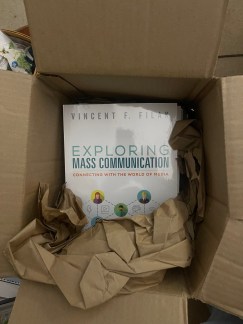


 The
The 


