A Lot at Steak: How U.S. Education Secretary Linda McMahon’s AI Blunder Led to Marketing Gold

THE LEAD: Secretary of Education Linda McMahon managed to confuse AI (artificial intelligence) with A.1. (steak sauce) while delivering her comments at the ASU+GSV Summit last week.

The gaffe became fodder for all sorts of internet humor, but company responsible for making the condiment saw an awesome opportunity and took full advantage of the mistake:

A.1. Sauce capitalized on McMahon’s blunder by posting an Instagram post on their verified account saying, “You heard her. Every school should have access to A.1.”

“Agree, best to start them early,” the picture attached to the post reads.

Other Instagram users loved the response from the Kraft Heinz-owned brand. One user even commented, “I will be buying a bottle or two because of this post.”


KRAFT-ING MARKETING GOLD AGAIN: Kraft Heinz, which markets A.1., has a decent track record of grabbing a cultural moment and running with it. The company took advantage of the “Barbenheimer” explosion by introducing a pink “Barbie-cue” sauce and has also linked a ranch dressing to Taylor Swift. In each case, the company drew attention to its brand, garnered some nice free media publicity and avoided the kinds of gaffes often associated with trying to ride a trend.

Despite the random uncertainty in the market these days, the stock closed up on Friday and has shown a gain from $27.60 on April 9 to $29.33 on Friday. Although that time frame corresponds with the comments McMahon made about A.1., it’s a bit simplistic to say the gains were solely connected to that mistake.

In its rating of best food stocks to buy according to billionaires, Insider Monkey rated Kraft Heinz at the top of the list for a number of reasons, including global supply chain and reliance on AI (not A.1.) for keeping factories humming. Still, people are saying they’re buying a bottle or two of the steak sauce as a result of the gaffe:

So far, A.1.’s loyal fans seem to be in support of its “new sauce.”

“My husband wants a bottle for his desk,” one commenter wrote under the brand’s post. “He teaches middle school, at least until they replace him with A.1.”


BLOG FLASHBACK: Kraft Heinz isn’t alone in taking advantage of dumb situation with some marketing genius. As we noted back in 2018, Country Time Lemonade drew a lot of attention after it created its “Legal Ade” defense fund for kids who had been fined for not having a business permit to run their lemonade stands.

Like the A.1. effort, this worked because it was on the right side of the argument, made fun of the utterly ridiculous and didn’t run a significant risk of hurting its brand with this maneuver.

Other organizations tend not to be as lucky when they jumped in on trending hashtags or didn’t think about potential blow back before entering the larger discussion.

DISCUSSION TIME: What do you think Kraft Heinz should do next? Ride the wave? Leave it alone? Try something else? Also, what other marketing maneuvers have you seen that tried to connect with a trend? Did they succeed or fail in your eyes? Why?

It’s all fun and games until someone sues you for being an idiot: Pat McAfee Edition

ESPN forced to put out 'don't sue us' disclaimer as Pat McAfee show launches on live TV as NFL icon apologizes at start | The US Sun

The disclaimer on the front of Pat McAfee’s show.

THE LEAD: Pat McAfee, former NFL punter and current podcast maven, amplified an internet rumor on his show about Ole Miss quarterback Jaxon Dart and his girlfriend, Mary Kate Cornett. The unsupported allegation was that the 18-year-old freshman student was involved in a “triangle” of sexual relations with Dart and Dart’s father.

After suffering weeks of abuse, threats and other unpleasantness via the Online Idiot Brigade of Dude-Bros, Cornett plans to sue for defamation:

Now she is looking to hold accountable those who contributed to ruining her life, with McAfee and his network, ESPN, clearly in her sights.

“I’m not a public figure that you can go talk about on your show to get more views,” Cornett said on NBC.

BACKGROUND: McAfee is one of several larger “main-stream” media outlets that amplified this rumor. Barstool Sports folks promoted the rumor, along with a meme coin of Cornett. Former NFL player Antonio Brown posted a meme about the rumor. And this doesn’t count the number of other yahoos and local “shock-jock” idiots who did their own hot takes on the topic.

As a result, Cornett’s life has become a literal living hell:

As the rumor spread, Cornett removed her name from outside her dorm room, but she still had vile messages slipped under her door. Campus police told her she was a target, and she moved into emergency housing and switched to online courses.

Houston police showed up to her mother’s house, guns drawn, in the early hours of Feb. 27, in an apparent instance of “swatting” – when someone falsely reports a crime in hopes of dispatching emergency responders to a residence. According to security camera footage and a police report reviewed by The Athletic, the homicide division responded to the call.

After her phone number was posted online, Cornett’s voicemail was filled with degrading messages. In one, a man laughs as he says that she’s been a “naughty girl” and cheerfully asks her to give him a call. Another male caller says that he has a son, too, in case she’s interested. Several people texted her obscene messages, calling her a “whore” and a “slut” and advised her to kill herself.


UNDERSTANDING THE LAW: I talked to a couple Legal Eagle friends about this and they’re pretty much in agreement that anything from a defamation suit to an invasion of privacy case would likely tilt in Cornett’s favor. The key things to consider are this:

  • Cornett is not a public figure by any reasonable definition of the term, which means defamation is easier to prove. Yes, she’s dating a high-profile college athlete in the days of NIL money, but that doesn’t make her fair game. If she were a high-profile athlete or if she were promoting her personal brand of something or other online with a “brought to you by Jaxon Dart’s girlfriend,” McAfee’s actions would remain despicable, but the law could be a bit murkier. As a private individual, the standard she has to prove is negligence, not actual malice.
  • The rumor and the people spreading it (especially McAfee) have offered no proof for the allegations they are making about Cornett. As far as anyone can tell, this started out as a random post on YikYak and just kind of spread all over the place. Truth is one of the best “silver bullet” defenses against libel, which is why accuracy is so vital in journalism. If you accuse your university president of running a cocaine ring out of the basement of the student union, and you can prove it, you’re likely up for a Pulitzer, as opposed to a multi-million-dollar legal bill.
  • McAfee is not protected by the word “allegedly,” despite him and his panel of merry men slathering it about like mayo on a BLT. As we’ve discussed before, “allegedly” offers no legal protection.
  • McAfee is also not protected by his stupid disclaimer about it just being a joke-y show with a bunch of “stooges” just throwing bull around. If simple disclaimers like that worked, I’d put one on the back of Amy’s truck that says, “Disclaimer: I have a lead foot and a total disregard for my speedometer, so don’t pull me over to ticket me. I won’t change my behavior.”
  • Hyperbole doesn’t protect him either. The concept of hyperbole is that something has to be so outlandish that no reasonable person would believe it to be true. That’s why the Flynt v. Falwell case ended up in the favor of the porn producer, not the televangelist.

DOCTOR OF PAPER HOT TAKE: The first and most obvious thought is that Pat McAfee should know better than to do this. He’s 37 years old, so he’s been a grown-up for quite some time. He graduated with a communications degree from West Virginia University, so it’s likely he ran into some course at some point about what is and isn’t legal to say on air. He’s got a listener base of nearly 3 million people, so he should know that anything he says has a real chance to have a significant impact.

Even if he were none of those things, basic human decency plus the ability to observe the carnage that has befallen this poor kid* should have clued him in that it’s time to call off the dogs and apologize about this. (*Yes, the law considers her an adult, but she’s still basically a kid. Tell me you felt like a fully formed adult ready to deal with the world at large and I’ll be hard-pressed to believe you.)

Life as a teenager is ridiculously hard as it is. People are angry, petty and stupid. You feel lost and unable to control anything. Your mind races and wanders all at the same time as you try to figure things out for yourself, as every adult around you seems to be asking, “So, what are you going to do next?”

That doesn’t even account for the way in which social media has amplified the “Mean Girls” aspects of life, in which rumors spread more quickly, people get more vitriolic and anxiety can become amplified many times over. The crap teens say to their peers on a daily basis on social media channels could peel paint and give a truck driver the vapors. Now, imagine that it’s the entire world seemingly aligning against you for no good reason other than some chucklehead thought it would be funny to tell people you slept with someone’s dad.

I can’t imagine a way out. Actually, I can and others have as well, which is devastating beyond belief.

I$ Ca$h $peech? Elon Musk has a couple million thoughts on that…

Make It Rain Money GIF - Find & Share on GIPHY
An artistic rendering of Elon Musk’s rally in Green Bay on Sunday…

THE LEAD: Elon Musk handed out two $1 million checks Sunday as part of his efforts to rally voters for Brad Schimel in the Wisconsin State Supreme Court race.

Musk apparently decided that dumping $20 million in ad money into my home state’s Supreme Court Election wasn’t doing enough, so he decided to start handing out money to potential voters like it was parade candy.

Aside from offering people $100 each to sign a petition against “activist judges” (a thinly veiled swipe at the Democrat-backed candidate Susan Crawford), he took it a step further in offering the big cash prizes to a couple Wisconsin voters.

State AG Josh Kaul filed suit in an attempt to block this move, even as Musk was reshaping his offer:

Kaul is asking a Madison-based state appeals court to issue an order barring Musk from handing out $1 million checks to voters ahead of a planned Sunday event in Green Bay. The Democratic Attorney General first sought the ruling from a Columbia County judge who declined to act before Sunday, according to Kaul.

In a since-deleted post on X, Musk said he would hold an event Sunday in Wisconsin and hand out $1 million checks to voters “in appreciation for you taking the time to vote.”

But after election experts and Democrats raised questions about whether the offer violated the state’s election bribery laws, Musk deleted the post and said he would instead be handing over the checks to two people who would serve as spokespeople for his “Petition In Opposition To Activist Judges.” The new post also no longer said attendance would be limited “to those who have voted in the Supreme Court election,” as the original post had stated.

The appeals court rejected Kaul’s efforts on Saturday, noting that he hadn’t fully supported his application properly, so the judges denied his request. The Supreme Court also shot down his request.

BASIC BACKGROUND ON THE RACE: If you live outside of Wisconsin and have a limited interest in politics, you probably never heard of Susan Crawford or Brad Schimel. If you live in the state of Wisconsin, you probably know their names better than you know the name of your current pets.

(It’s also likely that you think all the Supreme Court will do is rule on when to set pedophiles free, given that seemed to be the gist of every attack ad on both sides of this.)

Like most court races, the Wisconsin Supreme Court election is supposed to be a non-partisan affair. As has become the case everywhere, that’s not entirely true, as both Republicans and Democrats basically pick sides and pour time, effort and cash into getting a candidate more to their liking onto the court.

Unlike most other statewide races in the country, people all over the place have taken a vested interest in whether Crawford or Schimel wins. According to a Milwaukee Journal-Sentinel analysis, people from all 50 states have dumped a record amount of cash into this election. The Brennan Center reported last week that the two campaigns and outside groups have spent more than $73 million on the race, which doesn’t account for whatever was spent since March 24.

The main reason is that whoever ends up winning will tilt the “non-partisan” court 4-3 toward a more liberal or more conservative side of the spectrum. With questions about gerrymandered state maps, women’s rights to bodily autonomy, state workers’ union rights, gun regulations and more likely coming down the road to the Supreme Seven, this race is seen as a really big deal for Wisconsin and beyond.

BASIC BACKGROUND ON FINANCIAL SPEECH AND ELECTIONS: In 2010, the U.S. Supreme Court voted 5-4 in the Citizens United v. the Federal Election Commission case that outside interest groups could spend as much money as they wanted to influence the outcome of elections via messaging of all kinds.

According to the Brennan Center, this led to the creation of giant “Super PACs” (political action committees) that wealthy interests could use basically steer election outcomes:

In other words, super PACs are not bound by spending limits on what they can collect or spend. Additionally, super PACs are required to disclose their donors, but those donors can include dark money groups, which make the original source of the donations unclear. And while super PACs are technically prohibited from working directly with candidates, weak rules that are supposed to enforce this separation have often proven ineffective.

The court in the Citizens United decision did note, however, that the law could limit money in politics if it was clear that the money was being used in a form of outright bribery, or  “quid pro quo corruption.” So, in short, Rich Dude/Dudette X can drop $500 billion into ads, mailers, events, social media posts and people wearing sandwich boards promoting a candidate for the Omro Dog Catcher Election, but they can’t hand $100 bills to voters outside a polling place for the purpose of buying their votes.

THE SMELL OF MUSK: Elon’s offers are clearly outside of the norm of what we’ve seen in politics to date (at least in recent years). To be fair, he’s giving out cash to people who sign a pledge that has no legally binding requirements and isn’t capable of creating any legally binding action if he reaches a certain number of signatures. In fact, people could take his money, use it to print up a boat load of Susan Crawford lawn signs and move on if they chose.

He also initially tried to skirt the rules meant to tamp down on bribery by making the two $1 million offers a kind of Publishers Clearinghouse Giveaway of sorts. His offer this time was for those folks who helped get the signature, which again, have no actual value in the broader sense of this election, so offering money for them is kind of like when the tooth fairy would pony up cash for your baby incisors.

What becomes a concern here is the psychological impact of reinforcing desired behaviors. The approach Musk is taking to get people to lean toward his liking is like Pavlov’s dogs, Skinner’s pigeons and Bandura’s bobo dolls all in one. Although the law has outlined strict rules for what is and isn’t bribery, psychological researchers have found the line between bribery and reinforcement to be a little fuzzier.

DISCUSSION STARTER: Where do you stand when it comes to the ideas outlined in the articles linked throughout here, particularly as they relate to the offering of money to complete a task like the petition Musk wanted people to sign? Is this a harmless stunt, a bribery attempt to undermine electoral legitimacy or something in between? Explain what you think and why and see if anyone can change your mind.


You are always in the public eye, so it pays to keep that in mind (a.k.a. we used to call it the World Wide Web for a reason)

This ensemble is from the “Dress to fire people” line…

THE LEAD (Part I): Being a social media influencer can take a lot of work, but multitasking between firing people as part of the Office of Personnel Management and showcasing clothing options that collectively cost more than my first car tends to lead to problems:

On the day O.P.M. sent a memo to all federal department and agency heads asking for lists of underperforming employees to terminate, she flaunted a “work look” that included a purple skirt that her followers could also purchase, retailing at $475. She would get a commission if they used her link.

The spokeswoman, McLaurine Pinover, is not the only member of the Trump administration to have used her federal office to promote outside business interests, but former agency officials and ethics watchdogs say that the timing and content of the videos were both unlawful and especially tone-deaf.


I wonder how they tracked her down after she scribble out her… Oh… Yeah…

THE LEAD (Part II): Being a racist jerk tends to lead to a lot of backlash, particularly when you leave enough clues for people to find you.

On March 2, Stephanie Lovins, while dining at Cazuelas Mexican Cantina in Columbus, Ohio, left a message for Ricardo, a U.S. citizen serving her.

In the signature section of her receipt, Lovins wrote: “I hope Trump deports you,” followed by “Zero. You suck.” The incident occurred after Lovins grew upset over the restaurant’s “one coupon per table” policy.

A restaurant employee who found the receipt shared a photo on social media, and it quickly went viral, provoking widespread condemnation and calls for Lovins’ termination.


DIGITALLY DUMB: In both cases, the people involved tried to wiggle their way out of this situation. In Pinover’s case, she did the “Ugh… like, why are you making such a big deal about this?” thing, arguing that she didn’t make any money and trying to garner sympathy for her influencer attempts:

In a statement, Ms. Pinover said she never made any money from the fashion videos.

“While I was battling breast cancer as a new mom, I felt so unlike myself. I turned to social media shortly after as a personal outlet,” she wrote. “I never made any income and with only about 800 followers, I’m surprised the so-called ‘newspaper of record’ finds this newsworthy. My focus remains on serving the American people at O.P.M.”


In the case of Lovins, she went with what I call the “Shaggy Defense” when confronted:

Lovins initially denied any involvement, claiming on social media that her credit card had been lost or stolen and that someone else had used it.

“My credit card was lost/stolen, and someone attempted to use it. Thanks for the notifications! This has been reported through my bank,” she wrote on Facebook.

“Thank you for all the recent notifications of scammers and profile hackers! I recently discovered a lost/missing credit card and an attempted use/purchase. I appreciate your patience while I manage the situation,” she wrote in a post on LinkedIn….

However, this was discovered to be a false statement after the restaurant reviewed CCTV footage and confirmed that she was inside the restaurant, leading to her termination.


DOCTOR OF PAPER FLASHBACK: Two things came to mind in reading these stories. First, it was the idea that anything we do nowadays is private is almost quaint, but particularly so when you actively jump online.

I remember in the early ’00s when I had a student who wrote a blog post/diatribe about a conservative student on our campus. When that conservative kid saw the post, she put out the Bat Signal to conservative websites and media outlets, thus leading to this exchange between me and my student:

HER: This isn’t fair! I’m getting attacked by all these people who she shared the piece with.

ME: What do you mean it’s not fair? You published a hit piece on her, so she’s telling people to tell you what they think about it.

HER: But that wasn’t supposed to be for her! It was only for my friends! It was supposed to be private!

ME: What part of the “WORLD WIDE WEB” do you not understand?

Second, I had a similar situation where we were going to launch the reporting book and the folks at Sage wanted me to do a whole new social media profile:

ME: I’ve got a Twitter account and I’ve got a ton of followers already. Why should I delete that and do a different one?

EDITOR: Vince, do you remember what you ate for lunch yesterday?

ME: Um… No…

EDITOR: How about last week Tuesday?

ME: Not a clue…

EDITOR: Right. So you’ve been on Twitter for about 10 years at this point… How many of those tweets are things you remember well and are totally proud of?

ME: (Quietly setting fire to every digital account and device I ever owned…)

To be fair, I’m sure I wasn’t asking for money or to deport a server, but I was extremely upset about the Cubs stealing the 2016 World Series from my Cleveland squad, so I’m sure I didn’t cover myself in glory there…


BLOG FLASHBACK: We’ve had a number of these cases in which people behaving badly ended up getting shared online, leading to terrible outcomes.

There was the college student who didn’t think anyone would share her “Finsta” tirade about Black people. We also had the kid at UW-Madison, who apparently thought her “private thoughts” on forcing the ghosts of Black people to “pick cotton”   wasn’t going to go viral. Then, there was the kid who had a swastika flag and a whiteboard full of slurs getting outed at UW-Oshkosh.

I’m sure there were more, but I started getting depressed, so let’s just leave it at those and say these are not rare occurrences.


WHY YOU SHOULD CARE: Given that the sheer tonnage of time people spend online each day could stun a team of oxen in its tracks, there are a couple key takeaways for folks that bear repeating:

Nothing is “just” anything anymore: If you’re thinking you “just” sent that photo to a friend or you “just” made that less-than-savory joke to your private Facebook friends or you “just” acted like a dipstick in public once, welcome to your reality check.

Dad used to tell me stories about guys at work who would tell off-color jokes or poke fun at each other in ways that boggle my mind. I don’t know if it’s so much that these things were terrible or if now I’m just so attuned to the crap storm that could come from those jokes or putdowns that freak me out.

I like to think that it’s half of a piece of each, in that more people had thicker skin while fewer people were perpetually offended and that we have evolved to prevent some truly unsavory behavior in the work environment.

Either way, we are clearly beyond getting free passes in life with the justification of, “C’mon, it was just…”


Everything is public: I don’t like that everything I do is public these days or that someone could decide, “Hey, it’s F— with Filak Time!” and look for a McDonald’s receipt I was writing stupid crap on back in 1998 or something.  However, that’s the field I’m in and that’s the reality of our surroundings.

You can avoid a lot of this by not being online as much or not sharing as much stuff online, but for digital natives, media operatives and anyone under the age of 60 who wants to remain part of broader society, that’s a tough ask.

This is why paranoia is my best friend, why I try to count to 10 before I write anything out of anger and I always imagine the headline in the Advance-Titan of “UWO professor suspended for (Dumb thing I’m thinking about doing)” before I do anything.

It doesn’t solve everything, but it does tend to keep me more centered than I would otherwise be.


Know the rules: This more applies to the first case, as opposed to the second one, although understanding “one coupon per table” before losing your mind on a server has a tangential connection here.

When social media first emerged, a lot of people running organizations were in their 50s and 60s and they knew two things about it: 1) They didn’t know what it was or how it worked and 2) They wanted to use it somehow for the betterment of their organization.

Thus, they tended to turn to young people who had grown up a bit with this and really didn’t give them any major rules. It was like the Wild West, although I’d argue you could probably do more damage with one tweet than you could with a trusty six-shooter back in the day.

Once things started to go haywire, due to missteps by the posters or generally not paying attention well enough to the hashtags involved in other posts, the leaders at those places started putting some basic rules in place. By now, most places have a pretty solid rule book on what people can and can’t do on social media, which includes where and when they can or can’t do it.

One of the things most organizations (and the cops who tend to pull Amy over) say is, “Not knowing the rules is no excuse for not following them.” This is why it’s important, upon getting a new job, to know what it is that you can and can’t do, especially in terms of your outward-facing presence.

I know there are things I can’t put up in my office (political endorsement signs) and things that probably could get me in trouble if they upset people (Vintage Cleveland Baseball nodders come to mind). There are also things that are a little more nebulous, like, “What is the rule of the thumb on using my computer to blog like this?”

Long story short, it pays to know what the rules are before they become problematic. And it also pays not to be a racist ass-hat, even if you don’t think people will call you out for it.


Time flies when you’re not scavenging for toilet paper: The Fifth Anniversary of COVID

It’s hard for me to wrap my head around the idea that it was just five years ago that the entire world was turned upside down. In some ways, it seems so much longer and in others, it feels like just yesterday that we were all washing our mail, rationing Clorox wipes and storming grocery stores like it was the Invasion of Normandy in search of toilet paper.

The Milwaukee Journal-Sentinel published the first “COVID at Five Years” story I’ve seen, although I’m sure there will be more if journalists can find the time and discipline not to chase every “We’re gonna buy Nova Scotia and turn it into a car wash” brain twitch coming out of the White House. In looking back, the MJS hit on some things that COVID ushered into our social conscious:

Beyond the grim health toll, the cultural impact has been substantial. We learned about PPEs and contact tracing. We mark time as “before COVID” and “after COVID.” We use phrases like “jumping on a Zoom call,” talk about “the new normal,” and ask about “curbside pickup.”

More than anything, we felt and discussed isolation. Talk to bartenders or baristas, psychologists or scientists, and it’s as if a larger-than-typical chunk of our population lost, or in the case of young people never developed, the ability to have what once were normal social interactions.

The effects of social isolation on mental health “didn’t have boundaries,” said Dr. Pam Wilson, vice president of medical affairs at Sixteenth Street Community Health Center. “They affected everyone.”

(As I wrote this, the BBC sent along its look at the outbreak, so now I’m up to two articles.)

What people remember is likely a function of where they were living, what stage in life they were at and how directly this virus impacted them personally. I tend to remember some of the dumbest things possible, even as my wife was a nurse and putting herself at risk to make sure people could receive heath care.

I remember sending an email to the guy who ran our monthly baseball card shows right about this time of the month, asking if he had planned to cancel, as things were starting to get weird up here. His initial response was, “Nah, this is all overblown. See you in a couple weeks.”

I didn’t see him again for more than two years.

I also remember watching every university around me starting to close and shift to online learning. My reporting class was getting edgy, as they had a 24-hour Midterm From Hell about to begin. One kid asked me two days before we were about to start it, “What if they shut the university down before this happens?”

“Look, folks, we’re behind people, but I tend to think that if they were going to shut us down, they would have done it by now,” I said.

After class, I opened my email to find the, “We’re going into hibernation, run for the hills” email that got us into distance learning for the year or two.

The rest was a blur of random weirdness, although I have to admit we got really lucky that Amy put us in for monthly toilet paper deliveries about a year earlier and apparently we don’t use as much as Amazon liked to send each month. Before COVID, I was grousing about having to store cases of TP. During COVID, I felt borderline opulent in using the bathroom.

I remember putting together “care packages” for my parents, who would drive up and visit from the other end of the driveway. Extra toilet paper, Clorox wipes, books of puzzles and anything else I could find. I also remember that about two months earlier, my dad and I bought a sports card collection of more than 3 million cards. (No, that’s not a typo. It filled the back of a U-Haul.)

I would pull out boxes of cards and put them with the care package so Dad could keep himself busy by sorting and pricing cards during the pandemic. Given his general twitchiness, I imagine that keeping him plied with cards might have saved his marriage, or even kept my mother from burying him in a shallow grave in the backyard.

The point of this recall is not just to mark time, but also to look for opportunities to do some good reporting now. The obvious stories are things like, “What was it like for us five years ago?”  or “What did we do then that now seems ridiculous?” (Washing the mail comes to mind…)

However, there are now ways to dig into issues like long COVID, digital isolation (why have a meeting when you can have a Zoom?), mental health impacts, changes to education (a snow day apparently is no longer a snow day thanks to distance learning) and other similar changes.

It might also be worth asking what we learned overall from this kind of thing? Whenever I used to hear people talking about majoring in “supply-chain management,” I thought it meant they needed a major and they planned to work for their dad’s company. Now? I know how important that is. Same thing with people who worked in labs and planned for the zombie apocalypse. I have a lot better understanding of why I should care about washing my hands and not licking door knobs.

The point is, now would be a good time to take a retrospective look at what happened and what we now know about life on the other side of the pandemic.

It might even help us avoid another one.

A Mississippi newspaper can criticize the city once again after a judge lifts her suppression order

The paper’s banner says, “We are patriotic blues lovers on buckle of the Cotton Belt.” The editorial says, “Don’t mess with the First Amendment.” The approach to website design says, “This site will download easily with your AOL free trial.”

THE LEAD: A judge in Mississippi, who had forced a local newspaper to remove an editorial critical of the city government from its website, reversed her decision on Wednesday, after the city dropped its lawsuit against the paper and the entire Fourth Estate lost its mind on her.

The judge, Crystal Wise Martin of Hinds County Chancery Court, lifted the order after Clarksdale city officials voted earlier this week to abandon their libel lawsuit against the local paper, The Clarksdale Press Register.

On Thursday, Wyatt Emmerich, the president of Emmerich Newspapers, which owns the The Press Register, said that he planned to republish the editorial at the center of the case.


THE BACKGROUND: The Clarksdale Press Register wrote that the city was being shifty in not notifying the publication that it planned to ask for a 2 percent “sin tax” at a Feb. 4 special meeting. The editorial also alleged the city leaders might have ulterior, personal motives for keeping the press ignorant of the event to give the proposal a smoother ride.

It turned out, the city clerk drafted the notice, but forgot to send it to the paper. The clerk apologized, but the horse was already out of the barn. The city voted at its next meeting to sue for libel, and that the editorial was likely to create problems at the legislative level for the bill.

As part of the suit, the city asked the court to force the paper to remove the editorial from its website, which the judge did, prior to her subsequent reversal.


STUPIDITY ON PARADE: First Amendment proponents (and college students cramming for their media law midterms) can easily point to why both parts of the city’s claims are stupid.

First, a city can’t sue for libel like Clarksdale was doing and get away with it. The 1964 NY Times v. Sullivan case set the standard for this issue, in that a public figure must demonstrate that the publication acted with “actual malice,” meaning it knew it was wrong and did something anyway. In this case, it was clear the paper DIDN’T have the document and that was the crux of the argument.

The only place it comes close to being problematic is in the paragraph: “Have commissioners or the mayor gotten kickback from the community?” it asked. “Until Tuesday we had not heard of any. Maybe they just want a few nights in Jackson to lobby for this idea — at public expense.” However, you can’t libel someone with a question, which is how all those talking heads on B-list “news” outlets have gotten away with their outlandish crap for years.

(I’d love to try this some time for marketing purposes: “Can we assume that using textbooks other than those written by Vince Filak means your media instructor is a psychopathic pedophile with several dead bodies in their garage?” I think I just heard one of the folks at Sage drop like a stone…)

Second, nothing says, “Let’s keep this quiet,” like starting a lawsuit against a newspaper, thus GUARANTEEING everyone on Earth is going to find out about this and want to read it. In fact, the paper reestablished the editorial on its website after the court ruling, and you can read the paper’s piece here.

The Press Register claims a weekly readership of 7,750. To put that in context, we were cranking out about 14,000 DAILY COPIES of the Ball State Daily News in Muncie, Indiana when I was advising that student newspaper back in the 2000s. Still, something tells me the Google searches for that place could draw enough energy to dim the sun after this ham-handed censorship effort and it’s not because people were excited to learn about “the birthplace of the blues” all of a sudden.


QUOTE OF THE YEAR: This one comes from Wyatt Emmerich, whose company owns the Press Register, talking about the city’s approach to this whole debacle:

“As I warned them, it blew up in their face and it created a national outcry,” he said. “It embarrassed the city, and they realized what they had done was a mistake.”


An avid proponent of Pedialyte is born (A Throwback Post)

The first conversation of my morning went something like this:

Colleague: “Hey, you’re back! How are you doing?”

Me: “I’m drinking blue Pedialyte out of a rocks glass at 7:30 in the morning, so there’s that…”

The reason for my foray into the world of children’s beverages was also the reason for the blog being MIA this week: The Norovirus.

I somehow managed to contract this fun bug over the weekend and it made its presence known loudly and viciously multiple times around 1, 2 and 3 in the morning. The next three days were nothing but sleep and fear of subsequent outbursts.

I will not get graphic, but I will say that I have not been that violently ill or subsequently headache-crippled in years. If I had to put it in the Pantheon of Filak Deathspirals, it would be only below the time I got food poisoning so bad I still refuse to eat at that restaurant 20 years later and the “Free Tequila Slammer Debacle of 1992.”

My Lord and Savior, with deference to the Catholic Church, in this week of malady was Pedialyte drink and Pedialyte popsicles. This nectar of the divine gave me much needed hydration while not further angering the stomach gods. If the folks at Pedialyte ever need an endorsement, they’ve got it. (I highly recommend blue, purple and orange, although the pink popsicles aren’t bad.)

With me still on the mend and with work having overcome my desk, I thought it wise to use a Throwback Thursday to make a post and set up next week, where I will hopefully be more alert and back on solid foods.

Thus, enjoy this earlier ode to Pedialyte and its amazing marketing shift.

Sick toddlers and drunk college students unite! (Why Pedialyte’s marketing shift worked and what you can learn from the company’s approach.)

The first time I heard the word “Pedialyte,” my wife was yelling it at me.

Our daughter was less than a year old and had consumed some formula that wasn’t agreeing with her. She had started vomiting, even though she didn’t have the vomit reflex yet. Her whole head would turn red and then she’d expel some of the semi-digested crud and look up at us like, “What did you do to me?”

Amy was worried Zoe would get dehydrated and thus fall into some series of other horrifying illnesses. (We were first-time parents, so everything freaked us out. Our friends with seven kids were like, “Let her barf a bit. She’ll learn…”) Thus, I was dispatched to the closest store to get Pedialyte.

“What is this stuff?” I asked, as I struggled to understand her over the screaming child rolling about on her blanket.

“PEDIALYTE! For GOD’S SAKE. It’s (expletive) PEDIALYTE!” she screamed over the noise machine that was our child.

At first, I couldn’t find it, as I wandered around like the clueless dad I was. Still, I wasn’t leaving without “(expletive) Pedialyte,” lest I end up buried in a shallow grave in my backyard that night.

Fear of death and vomit are inspirational.

I eventually found the stuff and got home and the kid started to normalize. As she got older, Pedialyte became less important to us around the house. I would only see it in parenting magazine ads or during daytime TV shows, hawked as essentially kiddie Gatorade. The marketers had a great niche product that sold a simple idea to a key demographic: Parents who were freaked out about their vomit-plagued kids becoming brain-dead raisins.

That’s why I was amazed when I saw this article on how Pedialyte has shifted market focus to draw in a whole new generation of users: Vomit-plagued older kids, who would likely drink toxic waste if you told them it would cure a hangover.

The article notes that about three years ago, Pedialyte began targeting the “hangover market,” pitching itself as a cure for dehydration that could provide relief for those who over-imbibe. In the years before that, the “Pedialyte cure” had been passed along by word of mouth in colleges and universities across the country, so the company decided to embrace it with marketing. The company’s Twitter feed and other social media outlets focus on this premise, with images of college-aged people guzzling the beverage and tweets that respond to people asking for hangover help. It incorporated the hashtag of #notjustforbabies to brand itself as being useful for these situations.

I asked my 8 a.m. class, which usually looks like extras on “The Walking Dead,” if they ever heard of Pedialyte and at least four people woke up long enough to tell me, “Oh, yeah! That’s the hangover cure stuff!”

And it works on vomiting infants, too!

Consider the following points to help you understand why this worked for Pedialyte, when so many other shifts like this fail:

The market expansion didn’t cost the company its initial market. On far too many occasions, a company will go after a different demographic or take a different approach to grab new users in a way that undermines or degrades it original audience. When a company decides to market to a younger audience to tap the youth market, it can lose older audience members, who feel left out or abandoned.

In this case, the Pedialyte people managed to tap another demographic (hungover college-aged students/drinkers of alcoholic beverages who need hangover relief) without losing the people who initially used the product (parents of dehydrating infants and toddlers). The markets are not mutually exclusive, nor would marketing to one group make the other group uneasy. It’s not like a baby-formula manufacturer marketing its product as “the best formula for helping drug lords cut their cocaine!”


The new pitch doesn’t force an identity change. Pedialyte still does what it says it does: It rehydrates people. It’s not trying to market itself now in an off-label way, like telling people they can use it to scrub rust off a car muffler or something. The identity remains the same and thus all of the characteristics and benefits of the product still apply in the marketing material. If you boil down the pitch for Pedialyte, you can simply say, “Drink this stuff because it stops you from feeling yucky when you’re dehydrated.” That’s true for infants who contracted a “tummy bug” and college students who “swear tequila never messes me up like this.”


The tone/feel for each marketing approach matches the vibe of the audience. Here is an advertisement that Pedialyte runs to target parents:

PedialyteKids

See what you have here in terms of tone and feel: Caring parent, cute kid, doctor’s recommendation, easy to use and fun flavors. It also reflects a softness with the colors, the background, the imagery and more.

Now look at the one for adults:

PedialyteHangover

A half-naked college-age guy who just woke up, clearly in pain and blinded by the light of his refrigerator. The fridge is a mess of random stuff with the only color coming from the Pedialyte bottle. The images are starker, the color scheme is darker and the fonts are more utilitarian. Even though the characteristics of the product are the same (rehydration), the benefits described are different than those outlined in those in the parenting ad (kids= easy to use, less sugar, fixes the kids after they get diarrhea; adults= stop the head pounding, fix the dry mouth, defeat the hangover).

Each piece works because it acknowledges its audience, targets the people in it and then makes a reader-appropriate pitch. The parents feel safer that they aren’t giving their kids something sugary or with too much extra non-essential stuff in it. They feel comforted that it’s the number one pediatrician-approved drink. It provides reassurances for them that they are doing a good, safe, effective thing for their children. For the hangover crowd, it’s not about doctor approval or the active ingredients that make parents feel secure in their choices. The ad essentially says, “Well, you got really messed up last night. Here’s something that will stop you from feeling like you were run over by a bus.”

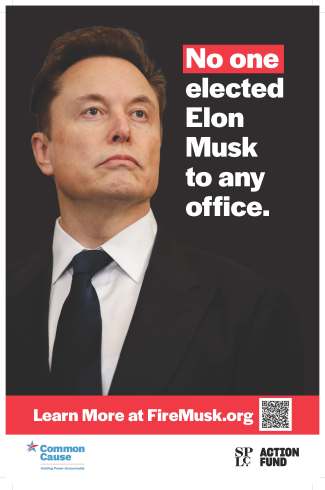
The Washington Post Kills Ad Demanding Trump Fire Elon Musk

Copies of the ads the Common Cause and Southern Poverty Law Center planned to run in the Post.

THE LEAD: The Washington Post pulled an ad set to run Tuesday that called for President Donald Trump to Fire Elon Musk. Several organizations chipped in to run a wrap-around, a specialized ad approach that tends to draw a lot of attention in print publications.

Common Cause said it was told by the newspaper on Friday that the ad was being pulled. The full-page ad, known as a wraparound, would have covered the front and back pages of editions delivered to the White House, the Pentagon and Congress, and was planned in collaboration with the Southern Poverty Law Center Action Fund.

A separate, full-page ad with the same themes would have been allowed to run inside the newspaper, but the two groups chose to cancel the internal ad as well. Both ads would have cost the groups $115,000.

“We asked why they wouldn’t run the wrap when we clearly met the guidelines if they were allowing the internal ad,” said Virginia Kase Solomón, the president and chief executive of Common Cause. “They said they were not at liberty to give us a reason.”

Jeff Bezos, the owner of the Post and reason why you could drunk-order a pimple-popping ear toy online, has made several moves that indicate a general sense of deference to the Trump administration. Prior to the presidential election, Bezos ended the paper’s tradition of running an editorial endorsement of one candidate. (The unspoken but obvious reason was that the newspaper folks weren’t picking Trump.)

Bezos also was in the “tech bros row” for Trump’s inauguration, along with Mark Zuckerberg and Sam Altman. A key factor in his preferred seating was likely that Amazon had donated $1 million to Trump’s inauguration fund.

Although Bezos was not interviewed or quoted for the “ad kill story,” the Post’s PR division offered a bland response in his stead:

A Washington Post spokeswoman said in an emailed statement that the newspaper did not comment on internal decisions related to specific advertising campaigns and pointed to its publicly available general guidelines for advertising.

(If you don’t feel like downloading the Post’s ad brochure, let me just say it’s the most pedestrian thing on Earth. It also does stipulate that the Post “reserves the right to position, revise, or refuse to publish any advertisement for failure to comply with the guidelines set forth below, or for any other reason.”)


UNDERSTANDING THE LAW AND THE AD GAME: Advertising falls under the umbrella of what the government calls commercial speech, meaning it’s meant to sponsor or promote the purchase of goods and services. It hasn’t always been protected speech, and as recently as the 1940s, courts had ruled that purely commercial advertising is not protected by the First Amendment.

Court rulings since then have either eroded or eliminated that stance and have led to some basic rules in regard to how advertising can or can’t be censored. In short, if someone is trying to get you to buy something or sell something, it’s probably going to fall into the realm of advertising and the courts will engage in strict scrutiny while examining the regulation of it.

Strict scrutiny in this case basically boils down to this: the state has to prove it has a good reason to regulate the ad and that the regulation will actually accomplish the outcome the government says it will and it will do so in a reasonable, not overreaching way.


PUBLIC VERSUS PRIVATE REGULATION: The key thing to understand here is that none of that stuff applies to what the Post did. Those laws basically apply to governmental action. So, if Trump had heard about the ad and decided to force the Post NOT to run it, that’s where the legal stuff on strict scrutiny etc. would come into play. The Post is a private media entity and it has the ability to accept or deny ads for any number of reasons.

Most newspapers (and I’m assuming other media outlets I haven’t dealt with the ad end of) have basic rules about what they will or won’t accept for ads, based on what they think is important to their readers.

Obvious things that get rejected are ads for illegal products. If I wanted to run an ad in the Advance-Titan, our student newspaper at UWO, for “Dr. Vinnie’s House Of Crystal Meth and Cocaine,” I’m guessing I’d get a pretty strong rejection. Back in the day, we rejected ads for off-shored internet casinos because they had all sorts of legal problems. (That almost seems quaint now that we’ve got ESPN’s “journalists” stepping up for gambling apps and pitching parlays to their audiences.)

Other things that get rejected can be based on how the audience is likely to feel about a product or any special stipulations between the media outlet and any intervening organization. For example, a friend who used to advise the student newspaper at the University of Notre Dame once told me that the paper was forbidden from accepting alcohol ads, due to its status as the official paper of the university. I know that some publications accept ads for strip clubs, abortion services and marijuana dispensaries, regardless of the legality associated with those enterprises.

Newspapers also often have a basic “because we said so” stipulation, just like the Post did. As I was fond of saying to my staff, we could institute “Screw You Tuesday,” in which we rejected any ads that people tried to place on a Tuesday, because, well, “Screw you, that’s why.” It’s not a great way to do business, clearly, but it is legal.

DOCTOR OF PAPER HOT TAKE: First, I’d love to be in a financial position to turn down $115,000 “just because.” Have you ever seen how excited people get when they get close to that on “Wheel of Fortune?”

Second, and I can speak from experience on this, it sucks to be pinned in a corner on an ad buy like this. This group could have chosen one of a dozen major metros, but they picked the Post for a pretty good reason and it wasn’t necessarily that Trump reads it.

When I was advising the Advance-Titan, we got an offer to include a 12-page pro-life insert into our paper for about twice what we would normally charge. Like most student newspapers, we were struggling financially, so the money would have been welcome. That said, in digging into how this insert played elsewhere, we found that researchers had found legitimate concerns regarding the factual accuracy of some of the claims in the insert. Furthermore, it would put the paper in the middle of a debate we had no real interest in entering.

After the staff debated and discussed this a bit, the editor came to me and said, “How do we deal with this and not be screwed?”

“You’re screwed either way,” I told him. “If you run it, you’ll have people on the other side of the issue up in arms about it and you’ll catch the same grief as other places that ran it for the accuracy issues.”

He interrupted me. “OK, so then I won’t run it and we’re fine…”

“No,” I explained. “If you don’t run it, this organization is going to put out the Bat Signal to every media outlet that will pay attention saying that you’re pro-abortion and that you’re suppressing their speech. There will be news articles and comments and blog posts and everything else coming at you for this.”

“Like I said, you’re screwed either way. So do what you think is best, stick with it and don’t get into a war of words over it.”

He decided not to run the ad, and pretty much everything I noted above happened, but somehow worse. A press release went out, newspapers ran stories, a local talk radio guy in Milwaukee did about a half-hour on how criminal we were and all that. It eventually went away, but I think the editor doubled his smoking habit until it did.

In the Post case, Bezos clearly doesn’t need the money and he’s clearly dealing with someone who has no compunction about being vengeful when someone is perceived as disloyal, so not running this ad does make sense in that regard. The paper has that right and it can (and has) exercised it.

That said, the optics are really terrible, especially when coupled with the previous actions in regard to Trump. The Post itself will likely suffer credibility issues in general as a result of this.

When Bezos bought the Post, the prevailing thought was, “This is great, because he doesn’t need anyone’s money. He can do whatever he wants and not have to bow to the whims of the rich and powerful.”

Well, we were about half right on all of that.

DISCUSSION STARTER: If you ran the Post, what would you do with this ad? Also, what kinds of ads would you be willing to take (or reject) based on what you think about the publication, its audience and your own sense of what is fair?

A Look at “Apple Cider Vinegar” and How the Media Ecosystem Works

Earlier this month, Netflix dropped its most recent “tru-ish crime drama” mini-series, “Apple Cider Vinegar.” The series follows the rise and fall of wellness “guru” Belle Gibson, whose claims that she survived a terminal brain tumor (and other similar health crises) through the use of a wellness diet.

Here’s the trailer, which gives you a pretty solid look at what you’ll get over the six-episode saga:

The trailer and the series both seem to emphasize this odd game of “one-on-one” between Belle and Milla, the latter of which is not a real person. Experts digging into the series have offered theories about who Milla might be based on and to what degree Belle knew her, but it’s not as “Hatfields and McCoys” as we see in some clips and episodes.

We could spend about 8,000 words doing a “what’s true and what’s not” about this whole situation, but that wouldn’t really get us much in the way of value. What is interesting is to see how we got to a six-part mini-series about this health influencer and how it’s part of a pattern in media.

I’ve made the case in multiple classes that whether you’re in print, broadcast, film, social media, public relations, advertising or any other part of media that I missed, you’re not in a silo, but part of larger media ecosystem. In some cases, this is easy to see and it’s pretty linear: A PR practitioner puts out a press release on X topic, which mainstream media practitioners receive and use to craft a story. That story then gets shared on social media, where other media participants add information, provide commentary, offer other facets of coverage and so forth. Based on how loud that gets, the mainstream media, the original PR firm or other PR agencies can choose to respond, augment or ignore what’s going on.

In the case of Belle Gibson, we start with the easiest media on-ramp available: Social media. She began posting on various websites in the early 2010s and then developed a following through her “Healthy Belle” Instagram account. As she gained followers and attention, she developed the app “The Whole Pantry” in 2013, which had recipes related to the lifestyle she said had helped her beat her brain tumor. The success of the app led a Penguin Books subsidiary to publish a print edition cookbook of the same name and concept in 2014.

As she continued to get more and more attention, she had both supporters and detractors on social media. Her fans saw her as providing an alternative to the “cut, burn and poison” approach to cancer, while others had a hard time believing she could stop Stage 4 brain cancer with a smoothie.

Around this time, another part of the media ecosystem kicked in, as investigative reporters at The Age received information from one of Gibson’s former friends in 2015 that undercut her claims of raising money for charity and her recovery from cancer. Beau Donelly and Nick Toscano began digging into Gibson’s past and her claims to find that significant doubts existed among people who knew Gibson that she ever had cancer. They also reported that she didn’t donate money she raised for charity to said charity and that fans were beginning to turn on her.

As social media was continuing to shift the tide, Gibson fessed up in 2015 to The Weekly, explaining she never had cancer. “60 Minutes Australia” did a giant episode on Gibson in 2015, which included a confronting interview:

At this time, both print/online and broadcast media were digging into Gibson even more. Penguin pulled her book, her social media empire began to collapse and other publications found themselves in hot water over previous coverage of Gibson. Cosmopolitan had given Gibson a “Fearless Female” award while Elle Australia had reported her “miracle” story without fact-checking her cancer claims.

Somewhere in the middle of all of this, Gibson hired a PR firm to try to fix the situation. The folks there dropped her as the situation got out of hand.

In 2016, Consumer Affairs Victoria attempted to fine Gibson for violations of Australian Consumer Law. Reports indicate that she disappeared from public view, but as of 2020, she had not paid the fine.

While the mainstream media was keeping track of Gibson’s legal issues, Toscano and Donelly had turned their reporting into a longer-form read with the 2017 book, “The Woman Who Fooled the World.” They were also appearing on podcasts, media talk shows and more to discuss the situation.

Eventually, the story morphed into the “true-ish story based on a lie” that Netflix has put together, titled “Apple Cider Vinegar.” As the series launched, mainstream media stories about Gibson’s whereabouts have emerged, and, again, influencers and podcasters are taking another look at the story. (In addition, Netflix is posting the 2023 documentary, “The Search for Instagram’s Worst Con Artist,” next week. This piece covers the Gibson situation from a less “tru-ish” and more “true” angle.)

In looking back on this, we can see how this story continued to grow, morph and spread at least seven media forms (social, app, book, newspaper/website, broadcast, streaming, public relations)  to say nothing of the tangential elements I likely missed. Obviously, not every story gets the full Netflix treatment or has Tara Brown ripping someone to shreds. However, it does demonstrate the ways in which the media ecosystem feeds upon an event, a situation, a story or a concept over time and across platforms.

EXERCISE TIME: Take a look at pretty much anything else a big-name streaming service is doing as a docu-series/docu-drama and see how many other tentacles of media you can find touching that story at any point. Try to isolate where the story really started and then piece together a timeline as best you can that provides a look at which media entered the fray where and contributed what aspects of information to the story.

Time to Dissect the Super Bowl Ads for Audience-Centricity and Interest Elements

One major tradition surrounding the Super Bowl, other than complaining that whatever it was was the worst half-time show ever, is a deep dive into the commercials. Countless ad orgs, commentators, marketing pros and other folks will spend hours upon hours making bests and worsts lists. In any given year, there will be the ads that tug on heart strings, ads that are flat out ridiculous, ads that insult at least three demographic groups and ads that leave us wondering, “OK, what the heck was that?”

Rather than go the traditional way here, let’s make some sense of the ads from the perspective of how media content is supposed to work.

  1. Define and understand your audience well enough to provide content that caters to the people in it.
  2. Use specific interest elements to pique and hold the audience members’ attention.

Here is a link to a pretty good running tally of all the ads:


Go through the ads and find the one that you like (or hate) the most and start to analyze based on the key points above:

Audience: Break down the demographics based on who tends to watch the Super Bowl, according to a reliable source you can find online. Then, see what segment of that broader chunk is most likely the target of this ad from that perspective. Then, move into the psychographic elements that you think are at the core of what the target audience members most likely ascribe to in their lives. In short, what values, feelings, connections and more is the ad you picked trying to tap into.

(As for the third element we outline in the book, it’s highly unlikely the geographic element will play a role here, but if you find something, go for it.)

Then, move into the next phase by assessing the interest elements that draw the attention of audience members:

  • Fame
  • Oddity
  • Conflict
  • Immediacy
  • Impact

As we often note, you won’t be able to catch all five of these in most cases. At least one should be present in any media content. See how many you can find and then assess if those elements are being successfully tapped.

Some of the goals of the ads will work or won’t work because the people making the ads didn’t correctly match elements like “fame” or “impact” with what the target audience knows or understands. (I bring this up, as Amy and I were watching part of the half-time show and when someone came out to sing with Kendrick Lamar, we both asked, “OK, who the heck is that?” We eventually asked our cooler, hipper sister-in-law, who was nice enough not to shame us as part of the process…)

See what you can come up with as part of this analysis, particularly if you thought any given ad really worked or really flopped.

At the very least, it’s a good excuse to watch some videos in class today.


A cussing meteorologist, a porn-star professor and a fan of racy rap: The Suicide Squad sequel of free speech cases (A Throwback Post)

I hadn’t intended to turn the first week back into a First Amendment showcase of sorts, but real life has a way of dictating content, which leads us to today’s installment of “Weird Free Speech Situations Theater.”

In this case, it is a settlement over what constitutes “unprofessional” social media posts for a pharmacy student:

A month after Kimberly Diei enrolled as a doctor of pharmacy student at the University of Tennessee, the college’s professional conduct committee received an anonymous complaint about her posts on social media.

The college reviewed her posts, which included racy rap lyrics and tight dresses, and concluded that they were vulgar and unprofessional. It threatened to expel her.

For the last four years, Ms. Diei has been fighting her school in court, arguing that her posts were fun and sex-positive, and unconnected to her status as a student. Now she has won a settlement: On either Wednesday or Thursday, she expects to receive a check for $250,000 — both vindication and relief, she said.

This situation, as well as the ones involving Joe Gow and Sam Kuffel had me thinking back to previous posts about the support of free speech and how the court cases involving it never are about benign speech. As Zach Greenberg noted in his interview with the blog, nobody tends to throw a fit when someone comes out as “pro-cute puppy photo,” so most free speech situations tend to be about things people find beyond the pale.

Thus, free speech advocates tend to end up with the “worst heroes ever,” to borrow a phrase from “The Suicide Squad” movie trailer. Here’s a look back at the first time we made that argument on the blog.


A rock star with a heroin problem, the “Bong Hits 4 Jesus” guy and a foul-mouthed cheerleader: The Suicide Squad of free speech court cases

A frequent joke told among lawyers is that the best case is the one with a carload of nuns as your client and a busload of priests as your witnesses. In most cases, however, it seems more like this scene from “The Wire.”

When it comes to First Amendment law, it would be great if we had more cases in which polite, articulate young people like Mary Beth Tinker who quietly wore a black armband to school to protest the Vietnam War. Her choice led to hate mail and threats, but also a ground-breaking Supreme Court case regarding student free-speech rights. And, looking back on it now, people can understand better her underlying concerns about the war as well as her relatively mild statement against it.

Tinker v. Des Moines (1969) established that students do not shed their Constitutional rights at the schoolhouse gate. It also provided protections for students who wish to express themselves against intrusion from school overreach.

Unfortunately, an upcoming case in which a high school student did her best “Scarface” dialogue on Snapchat could be the case that undoes a lot of those protections in a digital age:

In 2017, ninth-grader Brandi Levy said on Snapchat some version of what stressed-out students have been saying on the back of the school bus since the invention of buses: “Fuck school fuck softball fuck cheer fuck everything.”

The post was shared on a Saturday afternoon during a trip to the local convenience store, disappeared from Snapchat by Sunday afternoon, and caused no disturbance at school whatsoever—except to irritate the cheerleading coach, who banned Levy from the squad for a year.

She filed suit, and in June 2020, a federal appeals court ruled that school authorities violated the First Amendment by disciplining her for the off-campus speech. Now, the Mahanoy district is asking the Supreme Court to overturn that ruling.

The case doesn’t matter in regard to that single incident anymore. Levy is now a college student, the cheer team has had a complete turnover in terms of membership and nothing the court could do would change what happened in regard to the punishment levied at the time.

However, if the court decides to overturn that appeals court’s ruling, it could mean that schools can now actively monitor social media and punish students for ANYTHING that appears to be “objectionable.” If that doesn’t scare you, you probably had one of the six “really cool” high school principals I was always told existed somewhere.

Me? I dealt with a lot of nuns and balding guys who wore short-sleeve shirts with brown ties. This is terrifying…

This leads to the point of the post: It seems like we NEVER get the perfect Supreme Court case that perfectly showcases speech that deserves to be protected for the betterment of society. It’s never the student newspaper that was censored for reporting that the principal had stolen money or the kid with the bullhorn outside the school telling people not to eat cafeteria food because the workers were being abused.

It’s always something with an F-bomb, a nude pick or a drug reference that we get to stand behind and say, “Hey, look… You CAN’T censor this because… well… geez…”

We don’t get Superman, Batman, Aquaman or Wonder Woman as our defenders of freedom.

We get The Suicide Squad:

In other words, we get a “mental defective dressed as a court jester,” a “guy who wears a toilet seat on his head” and a “shark with hands,” to quote the red-band trailer I’m not allowed to show you here…

If you think I’m kidding about this, consider the following court cases on important topics:

The landmark case for online speech and defamation? Rocker/Actress/Woman I’d be most scared of meeting in a dark alley Courtney Love won and survived an appeal of her “twibel” case (Twitter plus libel) in 2014. Love, whose outlandish behavior and heroin abuse have long been the subject of media coverage, stated that an attorney had been “bought off” instead of helping Love recoup parts of her late husband’s estate.

A crucial Supreme Court case regarding speech at school sponsored events? Morse v. Frederick, also known as the “Bong Hits 4 Jesus” case. A student held up a sign at an event proclaiming the cryptic message. When the sign was taken away by school administrators, the student later sued claiming his First-Amendment rights had been violated. The SCOTUS ruled that schools have the right to remove pro-drug messages, even though students have some free speech rights at school.

The case that dealt directly with a reporter’s right to maintain confidential sources? Branzburg v. Hayes, which dealt with reporters being forced to disclose the names of sources who were manufacturing hashish.

And, of course, the case involving satire and hyperbole in regard to public figures comes from the apparent patron saint of this blog, pornographer Larry Flynt.

Now, the question of whether students can get smacked around for writing things on their own time on their own social media that school officials dislike comes down to one foul-mouthed 14-year-old cheerleader.

The problem with all of these cases is that it becomes so much easier to suppress speech that is unpopular, vulgar or otherwise disagreeable.

If the reporters in Branzburg were protecting whistleblowers who had uncovered some sort of dark plot by a foreign government to go all “Red Dawn” on the U.S., it would likely feel better to the courts to support their interests in remaining anonymous.

If the school was trying to suppress speech about the superintendent stealing money from the district to buy weed, maybe a “No Bong Hits 4 Superintendent Smith” sign would have garnered a different outcome.

If Sally Fields had tweeted about potential legal malfeasance (while wearing her “Flying Nun” costume), it might not have felt like the entire future of online free speech hinged on whether the defendant was going to lose her mind on the stand and start throwing things at the jury.

If the cheerleader had done her rant without the f-bomb, maybe the courts would be more inclined to side with her at every level.

However, we don’t get to choose the cases that decide our fate, which is why it’s important to make sure that we stand up for all speech because what one person thinks is a felony charge, others might consider a misdemeanor at best. In the mean time, keep an eye on this one, as it’s got a lot more at stake than a lot of people think.