Editing your own work can be extremely difficult because if you didn’t think it was right in the first place, you probably wouldn’t have written it. Add that to the fact we have spell checks, Google and more, we tend to think that we’ve got everything covered.
That is, until someone else reads it, finds 138,025 problems and we end up looking like idiots.
Throughout the process of editing, you should be looking for all errors, large and small. (A post that says, “Make sure stuff is spelled right” or “Always check your facts” is a tad reductive at this stage of the semester. That said, I’m still seeing those kinds of errors, so do both of those things first and then come back to this post.)
Beyond keying in on the basics, you should also spend some time looking at the bigger picture when it comes to the value of the story. Since students like to get all A’s, here are a few A’s to consider when looking at a story.
Accuracy: You want to make sure that you’re not just fact checking but accuracy checking the bigger sense of if this is actually accurate and representative of reality.
For example, the statement “Vince Filak has been an owner of two professional sports teams” is factually accurate: I own a share of Packers stock and when the Cleveland baseball team went public back in the late 1990s, I had 10 shares of that as well. I was “an owner” of two teams, both of which were professional teams. (Although some days with Cleveland, it wasn’t always the case.)
That said, this isn’t really representative of reality because it leads people to believe I might have been in an owners box, giving Jerry Jones grief over the play of the Cowboys.
When you read through your work for accuracy, ask yourself, “Could someone conceivably misinterpret what I’m trying to tell them?” If so, try to rework it to better represent things in an accurate and clear fashion. Just because something “sounds good,” it doesn’t follow that you should keep it as is.
Advantages: Journalists love being first to provide people with information. “The big scoop” drives many people in the field to push for big stories. In most cases, those stories don’t mean as much as the everyday stories that can impact people’s lives. Valuable content can also be lost in stories amid a sea of glib quotes and tortured prose.
This is one of the more difficult things about self-editing: You tend to get really deep into the topic, to the point in which you forget that your readers are getting this for the first time. They don’t know all the stuff you do, nor do they have a strong sense of why they should care. To that end, you want to make sure you are highlighting key advantages in the story you are writing.
During your self-edit, look for ways to tell people “This matters to you because X!” or “Here’s why you should care!” Look for ways to showcase those advantages for your readers.
Accessible: The reason people go to a website, pick up a newspaper, thumb through a magazine or use any other form of media is to be engaged, entertained or educated. The only way any of these things can occur is if the reader can understand the material itself.
In the self-edit, go back through and look at every term that you think your mom or your kid brother wouldn’t understand from the jump. If the jargon is unfamiliar to them, it might be unfamiliar to your readers.
That doesn’t mean you’ll cut every term that doesn’t make sense to common folk. You will often write for readers who are as attuned to a topic as you are, if not more. That said, you should question the degree to which your audience can follow along with what you’re trying to say before you just let the abbreviations and “inside baseball” terms slide by.
If they can’t read it easily, they will go elsewhere for their information. Shape your stories so they reflect the vocabulary, knowledge base and tone you expect your audience to embrace. Make your stories good reads, and people will continue to consume your content.
As noted many times before, whenever something weird happens in media, friends tend to hit me up with a “Did you see this? Thought it would be great for the blog!” message.
If you say it three times, does Beetlejuice’s cousin, Improvejuice, show up?
A former student sent this along from a press release she was working off of:
Press release from the university, it was the second sentence:
“The Golden Eagles improved from 2019 as they improved their team average from 30:50.31 to 29:49.95, an improvement of over a minute.”
Think they improved?
I don’t know… Can you tell it to me in a more concrete fashion?
And finally…
That’s DOCTOR LORD “FILAK, YOU A-HOLE” to you, pal!
I don’t know what Facebook has done to its algorithms, but I’m getting a lot of weird suggestions lately. A female friend I knew well in high school had a birthday recently and it suggested I send her a “BUTT-wiser” towel as a thoughtful gift. It also decided that apparently I needed to up my self-importance game a bit, so it suggested this:
I bet all the Scottish lords who shop at Costco get some serious respect from the sample ladies…
Journalists must have a decent vocabulary to make sure they can communicate effectively to an audience. To assist my students in this regard, kids in my Feature Writing class have been required to smell or feel a mystery substance without being able to see it. They then have to generate 15 words that describe the sensation accurately and clearly.
The point I was trying to make in those lessons was that distinctions in verbiage convey specific images to your audience. There’s a difference between “sticky” and “slimy” or between “cool” and “cold.” In taking a whiff from the mystery bags, students found themselves debating among the terms “scent” and “odor” and “stench.”
Distinctions like this can make the difference between a vivid word picture and a fuzzy mental image, but really can’t do much harm to the readers or the field. A recent court decision in Wisconsin, however, demonstrates how word choices can literally shape opportunities for justice.
Kyle Rittenhouse is on trial for his actions during a protest in Kenosha, Wisconsin, in August. 2020. Rittenhouse shot three people, killing two of them, as part of a collection of citizens who came down to “monitor” the civil unrest that occurred after police officer Rusty Sheskey shot Jacob Blake seven times as Blake was getting into his SUV. Rittenhouse is currently on trial for these shootings and the judge in the case made a specific requirement as to how participants in the case should refer to certain people involved:
During Rittenhouse’s upcoming trial on homicide charges, prosecutors must refer to the two people he fatally shot — Joseph Rosenbaum and Anthony Huber — and one he wounded — Gaige Grosskreutz — as Mr. Rosenbaum, Mr. Huber and Mr. Grosskreutz, or the people who were shot, or as to Rosenbaum and Huber, the decedents.
They may not be referred to as victims.
<SNIP>
Assistant District Attorney Thomas Binger countered by seeking to bar defense lawyers from calling the men “looters, rioters, arsonists or any other pejorative term.”
While looting, rioting and arson occurred in the two nights before the shooting, Binger argued that unless there’s specific proof Rosenbaum, Huber and Grosskreutz were engaged in any of those actions, and that Rittenhouse had seen it, the labels are even more “loaded” than what judge ascribes to “victim.”
In both cases, people were taking items necessary to their survival from places without paying for them (primarily because everything was destroyed or abandoned at that time, and nobody showed up to run the register at the local convenience store). However, the “looting” tag carries with it a criminal vibe while the “finding” tag seems to indicate the people just were walking around and discovered the stuff under a pile of leaves on the sidewalk or something.
Feminist scholars have long noted the incongruity in language as to how men and women are described. A few common pairings include:
Women are “pushy” while men are “assertive”
Women are “bossy” while men “take charge”
Women are “stubborn” while men are “persistent”
We could go on for days, but the point is that language matters in how we tell stories. Here are a couple hints to improve your word selection when it comes to potential biases in language:
WOULD YOU USE THE DESCRIPTOR OF THE SITUATION WAS REVERSED?: One of the key ways to determine fairness in language or description is to turn the tables and see if it still works for you. My favorite example comes from Jim Bouton’s book, “Ball Four,” in which one of his teammates notes that he wouldn’t mind the papers referring to him as “the black first baseman” if only they would refer to his counterpart as “the white first baseman.”
The same is true of descriptions like “the female mayor” or “the woman CEO” and so forth. Calling attention unnecessarily to an attribute that you wouldn’t flip the other way is clearly an indicator that you might want to rethink that descriptor. I can’t remember seeing headlines about “the white quarterback” or “the male company president” and I bet most of you can’t either. Same thing with references to a “straight wedding” or a “cis gender politician.”
This doesn’t mean all descriptors of any kind like this should be ignored or eliminated. What it does mean is that you should think about why you’re doing what you’re doing and see if it makes sense.
DOES THE TERM HAVE A LOADED MEANING?: I can’t think of any time I’ve heard someone described as “a looter” or “a rioter” and had a positive reaction to that person. Those terms carry with them some negative baggage. Conversely, I’ve seen an array of meanings ascribed to the term “clowning around” that range from bright and happy to racist.
Calling a member of the city council a “bureaucrat” can be technically accurate, as that person is a governmental figure, but it also brings up an image of someone who cares more about laws than people or who obstructs important actions by adhering to the letter of the law.
Calling a new policy a “reform” can be technically correct, as it will reshape the legal landscape in regard to the the way something is done, thus re-forming something. However, the term carries with it a positive meaning that leads people to believe something is a good idea. For example, a plan to cut benefits to working parents who are operating just above the poverty line can be deemed “welfare reform” and seen in a positive light.
The one I just saw that made me think was “unskilled labor.” In a post on this term, someone noted that all labor is skilled. If you took Bill Gates and stuck him with a road construction crew, he would be as lost as can be. If you took Jamie Dimon and put him in charge of a Naperville McDonald’s during lunch rush, he would probably end up with a crowd of really angry people and some severe grease burns. The term “unskilled labor” is meant to diminish the value of what certain people do and thus make it easier to discount them or pay them less.
All sorts of terms have a particular angle on them, such as “pro-life” for people who are against abortion rights, to “anti-death,” to people who opposed capital punishment. The question you need to ask is if your choice of words is providing bias or giving favor to a particular side of a debate.
DOES THAT WORD MEAN WHAT YOU THINK IT MEANS: Whenever I’m writing and I’m half guessing at the meaning of a word, I’m mystically transported back to eighth grade and hearing my mother’s voice yelling from another room, “Look it up! You’ve got a dictionary in there!”
We talked about this a bit during one of The Junk Drawer posts, where a reporter talked about this lead and word choice:
MILWAUKEE — In the immediate aftermath of a legendary performance to close out the 2021 NBA Finals and win a championship for the first time in his career, Milwaukee Bucks superstar Giannis Antetokounmpo declared that he signed his five-year, supermax contract extension prior to the season because “there was a job that had to be finished,” and that staying in Milwaukee meant doing it the “hard way.”
Aside from the 83 other problems we noted, the use of the word “aftermath” is wrong, given that it means “the consequences or aftereffects of a significant unpleasant event.”
I still love the student who finally learned after years of using “penultimate” to describe something that was super-extra ultimate, the word actually meant “second to last.”
The point is to know the meaning of the word before you use it.
That’s an important point I hoped I emphasized in that penultimate paragraph.
I had to go back and find this post after I had a student note in a report that something “cone sided” with something else. Immediately, the j-nerds were off and running with their “all intensive purposes,” “youth in Asia,” “acid tape” and more.
With that in mind, here’s a look back at using the right damned words again…
—
Writing 101: We’re still not using the right damned words…
Journalism is about using the right word in the right way all of the time, a task we fail at far too often as we saw with last week’s “Throwback Thursday” post on using the right damned word. When this post first ran, some editors chimed in with a few of their favorite errors, but not much else happened.
This time, the post hit the academic circuit, where instructors of all kinds found themselves sharing the “greatest hits album” of errors as well, proving once again that it’s not just journalism where wordplay can turn ugly.
(One reader chastised me, noting that “learning disabilities make it hard for some people to recognize their errors,” and that I should think twice about posting such a list. I have taught hundreds of students with diagnosed and undiagnosed learning disabilities over my decades in higher ed. I’ve also worked closely with the various offices that serve these students so I could assist my pupils and recognize signs that students may need this kind of assistance. I can assure you that I would never make fun of a student, or the student’s work, in such a case. I can also assure you that what we’re talking about here sure as hell ain’t that.)
So, with that out of the way and with all of this in mind, here’s an expanded list of word failures educators seem to be seeing more of these days:
ethnic:Related to large groups of people classed according to common racial, national, tribal, religious, linguistic or cultural origin or background. “Leaders of ethnic communities met Thursday to discuss bias complaints against community police officers.”
ethic: A set of moral principles, especially ones relating to or affirming a specified group, field, or form of conduct. “People admired Stan for his strong work ethic.”
barely: By a small amount; almost not. “After that final exam, I barely passed statistics.”
barley: A hardy cereal plant that is used in various cooked dishes. “Ethel added barley to her beef soup to make it thicker and more delicious.”
(Speaking of cereal, the “c” version of this is meant to denote certain grains used in food or breakfast foods made, in part, from those grains. The “s” version, as in “serial,” means in an order or a pattern, like the sequential numbers on money or the specific way certain people kill. Thus, if you hear read the phrase “cereal killer,” it’s time to watch out for that damned leprechaun on your Lucky Charms box.)
insight: The ability to understand or comprehend something at a higher level than others can. “Because she studied royal protocol for years, YaVonda had a keen insight as to how to behave when she met the queen.”
incite: An attempt to get others to act in a violent or lawless fashion. “If Bobby goes down to that peaceful protest, he will incite the crowd to riot.”
Spainders: Not a damned word.
Spaniards: People from Spain.
Spaniels: A dog breed with long silky hair.
Coulda/Woulda/Shoulda: What your mother tells you after you screwed up.
Could of/Would of/Should of: Not damned word couplings.
Could have/Would have/Should have: What you could have, would have or should have written in your paper instead of the previous two sets of words.
highschool: Not a damned word, unless there’s a drug euphemism I can’t locate online. “Jimmy had trouble rolling a joint, but after Susie took him to highschool, he was a master of the Zig Zags.”
high school: Where kids in the U.S. go from ages 14-18 (or more) to learn stuff. “If I had paid attention in high school, I probably wouldn’t be making all these word-choice errors.”
trial: A court hearing in which people are found to be guilty or not guilty on charges brought against them. “Liam was found not guilty after his recent murder trial.”
trail: A path or roadway you hike on. “The cowboys agreed that after the cattle drive, they’d meet at the end of the Chisholm trail to camp for the night.”
manor: A place people live. “Batman’s Batcave was hidden under the stately Wayne Manor.”
manner: A way of being. “Jim’s off-putting manner made the women in his office feel awkward when they were near him.”
saleing: Despite what your marketing professor is trying to make happen, it’s not a damned word:
selling: What people are actually doing when other people are actively buying stuff the marketing people are promoting. “These Melon Patch Dolls are selling like hot cakes this holiday season!”
Weeknd: Something that used to not be a damned word until Abel Makkonen Tesfaye came along and created some truly bangin’ music.
weekend: The time at the end of the week, in which some people who aren’t teachers or professors, get to relax and enjoy themselves. “I can’t wait for the weekend to get here so I can sleep late.”
weakened: Something that has deteriorated in some way from its previous position of strength. “Luis is worried about COVID-19 because he has a weakened immune system.”
(Side note: If anyone tells you they have a “weekend immune system,” they either a) have word-choice issues, b) need to spend Monday through Friday in a plastic bubble or c) are making some reference about their partying prowess like, “Don’t worry, bro… I can handle as much tequila as you can sling my way due to my weekend immune system!”)
thrown: Tossed, pitched or otherwise hurled. “The ball was thrown to the plate, but the runner was safe at home.”
throne: The thing kings and queens get to sit on. “The throne in Buckingham Palace is not as ornate as I would have imagined it to be.”
(Side note: “Game of Thrones” would be a lot different if it were “Game of Throwns.”)
customer: Person buying something. “The customer is always right, even if they’re being a total knob about it…”
costumer: A person or company that makes fanciful outfits for actors and actresses. “Janine spent five years on Broadway as a costumer for a prominent theater group.”
porpoise: An aquatic mammal that looks like a dolphin but is actually a small-toothed member of the whale family. “I wanted to go to Sea World so I could look at a porpoise.”
purpose: A reason for being. “I believe my purpose in life is to embarrass my kid in front of any boy, girl or creature she chooses to date.”
peak: The top level of an occurrence, or the highest elevation of a mountain. “Lamont ate four sandwiches before the race, so there’s no way he’ll reach peak performance.” OR “Alaina climbed to the peak of Mount Everest.”
peek: A quick glimpse of something. “I just needed to take a peek inside my kid’s room to realize the place was a disaster area.”
pique: Heighten or stimulate. “The package that came for her roommate served to pique Marlena’s curiosity.”
bizarre: Weird, strange, unexpected, abnormal. “When the superintendent jumped on the table and began to cluck like a chicken, the school board meeting took a bizarre turn.”
bazaar: A place in which goods are sold or traded, traditionally linked to Middle Eastern cultures. “To make money for his family, Abdul sold trinkets to tourists at the bazaar.”
ballot: A thing you use to cast a vote. “On her ballot, Maria selected ‘None of the Above’ for mayor.”
ballad: A slow, folksy song of a narrative nature. “Johnny Cash sang ‘The Ballad of Ira Hayes,’ on his ‘Bitter Tears’ album.”
Flamingo: A tall wading bird that is often pink. “I saw a flamingo while vacationing in Florida.”
Flamenco: A form of song and dance traditionally associated with cultures in southern Spain. “There are more than 50 types of Flamenco that experts have distinguished within the art form.”
Although I would like to say that there is no such thing as a “flamingo dance,” it turns out that in one instance, it is the case. Enjoy:
Even small errors in journalism, like getting a date wrong or misspelling a street name, can cost you a great amount of credibility with your readers. So, I’m wondering what the folks of Boulder, Colorado thought when they woke up Saturday to find their paper had retracted a story due to massive journalistic fraud:
The Camera is retracting an article that appeared in its Sept. 11 edition, headlined “Reflections on finding peace.” The newspaper has concluded the article substantially misrepresented the stories of its primary subjects — Mark Pfundstein, John Maynard and Danna Hirsch.
The Camera has determined that multiple statements attributed to these sources, including purported direct quotations, were fabricated.
What follows this embarrassing, but seemingly tame, opening is a list of at least 30 egregious errors and fabrications in a story The Boulder Daily Camera published for its 9/11 edition. The paper itself notes that “this list does not necessarily constitute every error in the article,” which at this point felt like the paper said, “Somebody found ANOTHER screw up? Oh, hell, we give up on this…”
It’s not always possible to fact check every quote, nor has every source who claimed “That’s not what I said,” been right about that statement, but this is beyond ridiculous. Of the errors listed, here are a couple that I think a semi-decent editor would have caught:
The headline’s labeling of the subjects of the story as “survivors of 9/11.” None were present at any of the attack locations.
The location of the Pentagon.
The timing of some events on 9/11.
The story is truly retracted, as in I couldn’t find it anywhere online and others who had been tracking it noted it “suddenly went ‘poof.'”
(UPDATE: Shout out to Ted Bridis who found the original story via press reader. You can see it here.)
According to the bio on the paper’s website, Morganroth worked for the Prairie Mountain Media organization since December and has more than 20 years of experience in media:
When it comes to situations like this one, the reason for blogging about it is to point out things that we can all learn from. In this case, I think there are multiple “teachable moments” related to all of the aspects of this debacle:
BE TRANSPARENT: The Daily Camera was about half right in its actions related to this mess. First, it retracted the story. Second, it tried to make amends to its sources and readers (kinda). Third, it promised to deal with the situation so it wouldn’t happen again.
Where it failed was in several key areas of transparency, such as killing the story from its archives entirely. Although several other major media outlet such as Rolling Stone have done similar things, the model the Atlantic used in regard to Ruth Shalit Barrett’s retracted piece on parents obsessed over niche sports seems to be the best. The magazine ran the entire correction/retraction under her byline and included a PDF of the original article for people to read so they could see what the editors initially saw.
In deleting the original, we all have no real idea what the editors saw or how truly egregious the content was. Sure we can guess from what they’ve told us, but the line about not being sure it caught all the errors doesn’t give me a lot of confidence in my ability to make a guess.
However, when we’re talking about someone who fabricated THIS MUCH stuff in ONE ARTICLE, it probably merits naming names so people can figure out what other stuff this person wrote and how seriously it should be taken.
Between that 9/11 article and her final listing on the publication’s website, Morganroth appears to have written at least five other pieces. How much of those are real? Do they contain errors that might need correcting? If they readers don’t know who faked the 9/11 story, how can they feel secure in the work ANYONE at the paper did?
Think about it like this: If you went home to eat some leftovers for dinner tonight, and your roommate said, “Hey, I ate some leftovers for lunch and I’ve been throwing up all day,” wouldn’t it be highly likely that you’d like to know what they ate? And if they DIDN’T tell you, what’s the likelihood you’d be calling for a pizza instead of touching anything in the fridge?
By explaining who did what, the paper could limit the credibility damage and support the people at the paper who continue to abide by the ethical standards of journalism.
START DIGGING: Every time something like this happens, I go back to what my friend Allison used to tell me about shady folks she covered her investigative reporting days: “They never did it just once.”
When Glass did an interview with “60 Minutes” a few years after he was caught, he outlined the way in which he took a small step into the world of fraud with a single faked quote. After that, it was a few more of them until eventually, he was making up things out of whole cloth.
I could be wrong in my assumption here, but I’m guessing Morganroth probably followed a similar pattern. I can’t believe a journalist of with any longevity in the field would be Dudley Do Right for their entire career and then wake up one day and go to this level of fraud on a single story.
When a story emerges from a reporter and it’s found to have fakery in it, particularly in such an egregious fashion as the 9/11 story had, it’s like seeing a cockroach in your apartment: It’s not good for anyone involved and that roach probably has more than a few friends you haven’t found yet.
To what degree folks at Morganroth’s former media outlets decide to dig into this remains to be seen, but given what we’ve seen here, they probably should start digging.
DON’T START: In terms of a lesson for beginning journalists, I guess the easiest one is “don’t try this at home.” I might be cynical here, but I’m guessing almost every reporter at some time or another thought about cutting a corner. As we saw with the Mike Ward situation, it was almost always in regard to those “salt-of-the-earth” people who were just in the story to add color to it.
(I always hated those stories, as I found that people viewed me with suspicion when I approached them and they never had anything amazing to say. Still, I went about my duty to ask them if they were really enjoying their ice cream cones on this wonderful sunny day at the beach.)
If you get lazy or frustrated or annoyed or whatever, it can be so easy to rationalize a bit of fakery:
Nobody’s going to know if the guy who liked corn dogs at the county fair really exists…
I’m sure there’s a fan out there who thinks the team could win it all this year…
Everybody loves a parade…
In looking at these examples, it can seem like an innocuous move that doesn’t hurt anyone. In looking at the Daily Camera story and the others listed here, you can see making this move leads nowhere good.
It’s never just one time. It’s never just the one hot-dog vendor or ride operator. It always gets bigger. Someone almost always finds out. Nothing will ever be the same for your career after it occurs.
The best way to avoid a situation like the one in Boulder is to not put yourself in it in the first place.
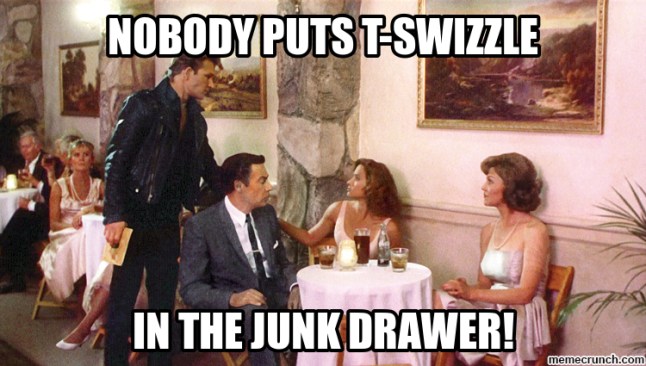
Welcome to this edition of the junk drawer. As we have outlined in previous junk drawer posts, this is a random collection of stuff that is important but didn’t fit anywhere else, much like that drawer in the kitchen of most of our homes.
Here’s a look at some screw-ups, stories and updates:
MAYBE JUST BE BETTER AT YOUR JOB? At the risk of creating anarchy with the title of this post, let’s tackle how Taylor Swift ended up in the middle of a controversy surrounding police officers in Alameda County. It turns out that, in addition to not understanding copyright law, the First Amendment and general common sense, at least one officer in this fine hamlet doesn’t understand how YouTube’s service agreement works either:
Last month, Sergeant David Shelby, an Alameda County Sheriff’s Department officer, was caught playing Taylor Swift’s “Blank Space” from his phone as he was being filmed by activists, in a move he said was done “so that you can’t post on YouTube.” The incident was the latest in a bizarre trend in which police officers play copyrighted music while they are being filmed by the public, in hopes of triggering social media antipiracy filters, which would theoretically get the video deleted.
Aside from not doing what he had hoped it would do (keeping people from filming him and/or allowing YouTube’s “bots” to save him), Shelby actually brought more attention to his actions from both inside and outside of the police department. He is apparently not the only one who has tried this:
In the last few months, cops across the country have been trying this cute little trick for keeping their interactions with the public off social media: Playing pop songs over interactions with the public when they’re being filmed. One Beverly Hills cop played Sublime’s “Santeria” when he realized he was being live-streamed in February and another with the Beatles’ “Yesterday,” and another in Illinois tried it with Blake Shelton’s “Nobody But You” in March.
They think that if the audio captured was smothered by a copyrighted song, posting it to sites like Instagram or YouTube would result in the poster getting smacked with a copyright takedown notice—and the platform would either remove the video, mute the audio, or ban the user altogether. In each of these cases, it didn’t work, and the videos remained online. People have a First Amendment right to film the police.
Shelby tried it, but it didn’t work: the video stayed up on the Anti Police-Terror Project channel, and now has almost 740,000 views.
It’s unclear what any of these officers were doing at the time that made them so worried that they were being filmed, but maybe THAT should have been the bigger concern. If you’re doing something so bad that evidence of it requires you to try to force illegal actions (copyright infringement) on other people to get away with it, that doesn’t say much for you.
On the other hand, I’m waiting for the first time some officer tries this with a Brittney Spears song, so this can start making the rounds again:
Speaking of outrage…
I AM FURIOUS AT… UM…: Journalism has two simple rules when it comes to telling a decent story:
Tell me what happened.
Tell me why I care.
Usually, people being upset with something leads to a pretty good answer to both of those stories. That said, it only really works if you let us in on what you know:
OK, Augusta McDonald might have been following the story, and the outrage, and the lawsuit, but maybe a couple people out there reading this thing (read: Me and Amy at least…) have no damned idea what happened, so how about filling us in? The photo of a basketball team (I think) with blurred faces and three smug looking weasels in red shirts isn’t helping here either.
I get that you don’t always want to give away the whole story in the promo like they do in “The Kentucky Fried Movie” but for Pete’s sake, give us a bit of a hint in either the head, the lead or the photo captions.
Speaking of things that are usually Kentucky-fried…
THE CHICKENS COME HOME TO ROOST FOR THE AP: Fred Vultee, a journalism professor at Wayne State University and eternal copy-editing god, was fond of telling folks that it’s just as easy to drown in 2 inches of water as is to drown in the Pacific Ocean. His point, in the editing realm, was that we should read every piece of copy carefully and fact check everything, regardless of how important we think it is.
I’ve often taken this a step further in explaining to students that it’s rarely the deep-dive, FOIA-driven, scandal-based investigative piece that ends up with problems or that costs journalists their jobs. It’s usually the small stuff that we either overlook, joke about or just make random assumptions on that tend to kill us.
When the AP distributed the story to all of its member news outlets, it also distributed a photo of an egg laying operation, rather than one of a broiler operation such as Sanderson Farms, or Wayne Farms, with which Sanderson Farms will merge.
And that layer operation photo was published on the websites of some of the nation’s major news outlets, such as USA Today, Financial Times, U.S. News and World Report, Boston Globe, and many others. Considering USA Today is part of the Gannett network, which owns over 100 daily newspapers and 1,000 weekly newspapers, its hard to tell how many readers saw this.
But the simple fact is that way too many people did. And my guess would be most of those people don’t understand that broilers and layers are totally different breeds of chicken and the operations are completely different.
Chickens are chickens, in their minds.
(Side Note: We have eight chickens at the ol’ homestead now and all I really know about them is how to build stuff like a coop, a “poultry palace” and a chicken run. Well, that and that it’s a major pain in the keester to try to catch them when Amy says, “Go make sure the chickens are in the coop for the night.”
If you ever want to visualize a humorous moment, imagine the author of your textbook cursing in the darkness while diving headlong after a pile of fleeing poultry, only to grab one by the leg and be beaten about the face with its wings.
You’re welcome…)
The thing that is important to understand here is not that the AP had some sort of fowl up (Sorry, I had to…) but rather that there are ALWAYS people out there who have niche interests reading your stuff and they are ALWAYS going to be upset when you screw up their beloved topic. For an earlier edition of the media writing book, I interviewed Meghan Plummer, who was working at the Experimental Aircraft Association as a publications editor. She told me stories about how she would get angry letters and emails when she’d mistake one kind of tail rudder from another in a piece or incorrectly note the year in which a plane was built or flown.
To some folks, planes are planes, but Plummer understood that these people have a passion for the topic and have come to expect that the material they read from an aviation publication will feed that passion. Keep those kinds of folks in mind when you’re writing about a topic, even if you couldn’t care less about it.
And finally, speaking of things you couldn’t care less about…
THIRD TIME IS THE CHARM: The Dynamics of Media Writing’s Third Edition has just pressed and is available for purchase at all fine textbook institutions (and I imagine free downloading already on at least three hacker sites). The update covers a lot of the crucial updates in the law, ethics, social media and web writing while doubling down on the basics that that still matter in all fields of writing.
It’s been more than a decade since I went looking for a media-writing text that treated each field of media equitably and honestly, if for no other reason than I was tired of having students in my class say, “I’m going into PR! Why do I need this stuff? The whole book is just news, news, news…” I can still remember the conversation I had with Matt Byrnie of SAGE at an AEJ conference that led to this book:
Matt: “That’s a great book! We don’t have it. You should totally write it.”
Me: “I don’t want to write a book. I want you to have someone write it so I can buy it from you.”
Matt: “You don’t understand. NOBODY has that book. That’s why I need you to do it.”
We scheduled a sit down for noon the next day where I would pitch him a concept. I remember doodling on a piece of paper from the Renaissance Hotel with ideas, rules and core concepts. When I showed it to him, he said, “We might have something here.”
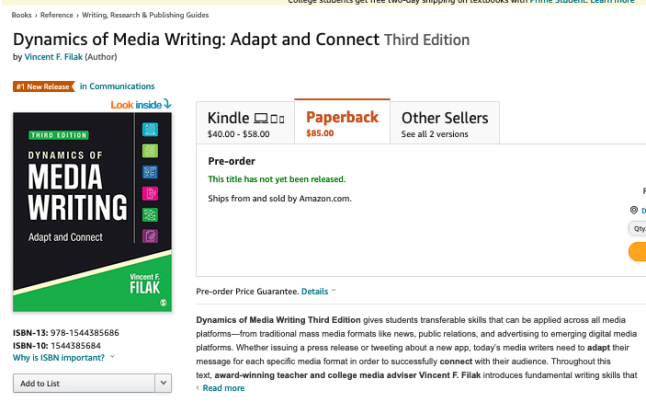
I looked the book up at Amazon when putting this post together and saw this:
Number one new release in communications? Maybe we do have something here… And I’d like to thank all of you who read my stuff for making that happen.
I’ve made a point of telling anyone who will listen that if they need ANYTHING from me in terms of content to help their students or their student newsrooms, all they have to do is ask. Thus, the following request came from a fellow journalism teacher:
Do you have any great lessons or content on how to analyze if a source, esp a source for a profile, is lying or misrepresenting information (either purposefully or due to memory erosion)?
It’s difficult to know for sure when someone is lying or if there are memory gaps that make for some problematic moments within the story you want to tell. As I’ve often told folks in my classes, it’s not always about being perfectly successful in your efforts when it comes to something like this, but rather avoiding the things that can really screw you over that matters most.
With that said, here are a few things beginning reporters can do to mitigate disaster when dealing with a source that might not have the facts 100% perfect:
GET A SENSE OF THE SOURCE: One of the primary reasons I tell students they need to conduct interviews in person is so they can capture more observational elements to add color and feel to their pieces. A good side benefit of being in person is you can get the vibe of the source and decide how much you really want to trust them.
Some sources are great at hyping themselves up like they’re trying to sell you the Bass-O-Matic ’76. Others do some great “humblebrag” stuff that really can sound like they’re important and vaguely decent people. In spending time with these people, you can find out who is likely worth trusting and who you can’t trust any further than you’d trust a pyromaniac at a gas station.
The one thing to understand is that there is a crucial difference between people who are full of crap and people who literally have lost track of things over time. Honestly, I have told a number of stories over and over again to the point that I’m not sure if they’re perfectly accurate, slightly altered or complete BS. (I am grateful, however, that I found support for the famous “Olde Un Theatre” robbery and the “Mraz, where’s Mrefund?” headline.)
I had one student who SWORE she wrote an obituary that had a particularly awkward headline on it. I found the piece, with the headline she described, and it wasn’t her byline. Maybe she wrote the headline, or edited the piece or something else, but it wasn’t her byline. This is why it’s important to fact check basically everything when it comes to people telling you stuff that you plan to use in your work.
Once you get that vibe, you can do more work with the questions you have and the level of insistence you enact when dealing with your questions.
IN GOD WE TRUST, ALL OTHERS MUST PAY CASH: Even in profiles, there is a benefit to becoming what I call a “non-denominational skeptic” about the information you received. Whether you like the source or you wouldn’t believe them if they came into your house, soaking wet, and told you, “It’s raining out there,” apply a similar level of rigor to your questioning. This is particularly important when it comes to things you really plan to focus on as part of your story.
Let’s say you’re doing a profile on a business person who turned his life around after a rather rough patch in his 20s and now helps ex-convicts find work. You likely are going to ask what was the turning point that got this guy on the right path, and here’s the answer you get:
“I wasn’t a good person back then. I was arrested for a series of burglaries back in ’85 around the Cleveland area. I was supposed to get 6 years, but the judge gave me 12 and shipped me off to Folsom prison, way across the country. Being that far from home, in a prison like that, well, it changes a man. About 50 prisoners were killed while I was there for those 12 years and I always thought I’d be one. I told God, ‘If I ever get out of here alive, I’ll make my life right for whoever else gets out of here.'”
Sounds compelling and amazing. Now, how much of that is stuff you NEED to check? A goodly amount:
Check arrest records from “the Cleveland area” in 1985 and find out if this guy was ever arrested.
Check court records to find out if he did get sentenced to 12 years.
Check prison records to find out if he went to prison, let alone Folsom
Check prison records (and others) to find out if 50 people REALLY got killed out there from about 1985 to 1997.
This is just smart reporting and it will help you fill in some of the key details about the source’s live. Also, the more of this you can verify, the better off you are. The less you can verify, the less you should trust this source.
Clearly, you can’t verify if he “wasn’t a good person” or if he had a conversation with God. (“Hello, St. Peter? Yes, this is Vince Filak with the Dynamics of Writing blog. Is God there? I need to confirm a conversation He had back in 1985 or so…”) But you can check out enough stuff to feel like you’re not getting fed a line.
TRUST, BUT VERIFY: Another key way to poke back at people is to show interest and engagement with their stories while offering them ways to help verify this information for you.
If you’re interviewing someone and they say, “I was amazed when I received my Silver Star for my tour in Vietnam, but I really was just doing the same job as everybody else…” you could check a database when you get done with the interview. However, you could also try this approach during the interview:
“That is truly incredible! Could you show me the medal? I’d love to see it!”
or
“Do you have any pictures of the ceremony? My editor would love to put something visual with the story!”
If the answer is yes, you’re in decent shape. If the answer is a dodge or something like, “Nah, I threw it away.” then you are probably going to want to push back a bit more with stuff like, “So where was the incident that took place that got you considered for the honor?” or “I would love to talk to anyone who was in your platoon at the time for more on this…”
In other words, you’re giving the person an opportunity to verify this stuff for you. If they can’t or won’t, tread cautiously.
WEIGH COST VERSUS VALUE: Journalism in a lot of ways is like catching sand in a sieve. You’re never going to catch everything, but you want to make sure you don’t lose too much of the small stuff or any of the big stuff. To that end, you want to weigh the cost versus value of the amount of work you’re doing on any particular fact-finding dig.
Let’s say you’ve got a source that was paralyzed from the waist down during a car accident in high school. After that, he went into a deep depression, but found God and now goes on speaking tours throughout the country to explain how to overcome obstacles in life. The source tells you this:
“I was driving a 1979 Ford Thunderbird with this great V-8 351 Cleveland in it when I had the accident. The truck that hit me mangled that car like you wouldn’t believe. I honestly feel that if I had been driving something smaller, I’d be dead.”
The guy shows you a picture of the wreck, so you can see what happened to the car. He’s clearly paralyzed or has been faking it well for decades. The opinion is his that he might have died in a Toyota Camry. is it really important to fact check whether that car had the 351 Cleveland engine in it or if it might have had a 302 or a 351 Windsor? Probably not.
Look at what matters most and make sure those things are solid. The random fringe stuff can be checked if you have time and if it’s easy. However, it’s not going to behoove you to go plowing through thousands of DOT and Ford Factory Sheets to figure out what engine landed in what car in a case like this.
RESEARCH BEFORE, FACT CHECK AFTER: The goal of quality research in advance of talking to a source is to make sure you ask good questions and that you don’t get turned around if the source tries to BS you. The goal of a quality fact check is to make sure what the source told you makes sense before you publish the piece.
You then can decide to what degree you want to keep certain bits of information and what degree you feel the need to actively fact check with in a story. Ted Bridis, a fellow journalism prof, shared this example with a bunch of us to outline the ways in which a “personal tale” can have enough bullcrap in it to fertilize the back 40 acres. The writer of the piece literally takes each element that this source outlines as “fact” and checks it out with people after the fact to show what is clearly not true and why it matters.
If you ask the right questions, you’ll find that many sources will try to snow you less, as it’s clear you aren’t coming to them fresh off a turnip truck. However, there are still people out there who will try to convince you that they were the one who convinced Lin-Manuel Miranda to go with Hamilton instead of “Aaron Burr: The Death Metal Musical!”
That’s where the fact check really comes in.
FIND OTHER PEOPLE TO HELP: I remember certain things about my childhood that might or might not be true. Some of them, Mom or Dad might have an angle on (and judging by how we kept pretty much everything I ever did in the file cabinet in my folks’ back room at the house, we might actually have physical proof of that thing).
REPORTER: “Hey, I was talking to your mom and she said you never scored a basket in your fifth-grade season. She still has all the box scores. You did almost foul out of nine games, thought.” ME: “I’ll be darned. I swear I hit a basket at least once. Anyway, I’m sure that foul out thing is right, as I played basketball like Danny from ‘Grease’ that year…”
If you can get verification from people who would likely know, it’s probably a safe bet you can go with that information. If you can’t or the information seems to contradict, go back to the original source for verification:
REPORTER: “Hey, I was talking to your mom and she said she thinks that story about Mrs. Schutten screaming at your class was from fifth grade, not third grade. She said the woman taught you in both grades. I just wanted to know if you’re sure on what you told me.” ME: “Oh, yeah… I forgot that she got us twice… After I had Sr. Kenneth in fourth grade, the beatings we all took from that nun basically scrambled my memory for some things… Mom’s probably right, then.”
The goal of asking other people for things is to help solidify things that are important to telling your story. In some cases, you’ll have conflicting reports from key sources and it’s up to you to determine who you believe and how important those conflicting elements are.
A great example of this is in the book “Loose Balls” by Terry Pluto, where he outlines the wild life of the old American Basketball Association. He tells this one story about Marvin “Bad News” Barnes and how he missed a team flight to Norfolk, where Barnes and the Spirits of St. Louis were supposed to play the Virginia Squires.
Barnes blows off the flight and figures he’ll catch a later one, but it turns out he missed the last commercial flight to Norfolk. So he chartered a plane (something unheard of at the time) and got down there at the last minute. He shows up to the locker room with like 10 minutes to go before game time wearing a full-length fur coat, carrying a couple bags of McDonald’s burgers and a big smile. He opens his coat to reveal his uniform like he was changing from Clark Kent to Superman and declares, “Have no fear, BB (his nickname) is here.”
The story was verified by a number of people who all told essentially the same story. However, people deviated on one detail. During the game, the pilot supposedly showed up in the team huddle and demanded to be paid for the flight, so someone had to run back to the locker room and get Marvin’s checkbook so he could write the guy a check. The amount of the check varied widely from about $700 to more than $1,500, depending on who told it.
Pluto recognizes that the story perfectly captures the insanity that was Marvin Barnes and this team of weirdos. He knows that it is mostly true and pretty solid in its confirmation. He also knows people want to know what it cost to do this little stunt and that he doesn’t have the goods. He acknowledges that by including that information and the variations in his chapter. Something like that is easy enough to do if you have a few inconsistencies that don’t undermine the larger truth you’re trying to convey.
THE DUTY TO REPORT VERSUS THE DUTY TO PUBLISH: No matter how much effort a reporter puts into a story, there is never a guarantee that the story is absolutely right. Mistakes happen, memories fade, BS intrudes and more. The goal is to try to put forth the best version of reality, regardless of how difficult that is.
This is where we separate the duty to report and the duty to publish. As journalists, we need to ask questions and poke at facts to figure out what happened and why our readers should care. Not every effort we make in that realm will give us the results we feel comfortable with. To that end, we have to be OK with the decision not to publish something if we’re not 100% certain on the issue.
It’s better to have something missing or come up a little thin in a story than it is to publish something that is flat-out wrong.
A great example of this is an article Bethany McLean, a financial journalist, wrote in 2001 about Enron. The company basically had stock that just kept going up and up and up for no real reason and the company big wigs couldn’t explain to her in any meaningful way how money moved through the company. She knew something wasn’t right, but she wasn’t 100% sure of what it was.
In several interviews, she noted that there were several partnerships that were doing deals with Enron that appeared to be owned or operated by Enron executive Andy Fastow. She saw them disclosed, but she never mentioned them in her article. In the documentary, “The Smartest Guys in the Room,” she explained:
“There were these partnerships that were run by Andy Fastow that were doing business with Enron and they were disclosed in the company’s financial statements, but I didn’t mention them in the story because I thought, ‘Well, the accountants and the board of directors have said this is OK so I must be crazy to think there’s anything wrong with this.’ The story I ran was actually pretty meek. The title was “Is Enron Overpriced?” (because) in the end, I couldn’t prove that it was anything more than an overvalued stock and I was probably too naive to suspect there was anything more than that.”
She realized she had the duty to dig in hard on this. When she couldn’t make it work perfectly on the first pass, she understood that she didn’t want to screw this up, so she went with what she could prove.
As it turned out, the partnerships were a large component of a major financial fraud and the company was a house of cards, things McLean and others found out after she put out that first article. However, at the time, she couldn’t go beyond what she had, so she stuck to what she could prove and lived to fight another day.
(Allegedly, we’ve got enough paint in here to fix the Plover water tower.)
Welcome to this edition of the junk drawer. As we have outlined in previous junk drawer posts, this is a random collection of stuff that is important but didn’t fit anywhere else, much like that drawer in the kitchen of most of our homes.
Here’s a look at some screw-ups, stories and updates:
WHERE IS BILL GATES AND HIS SQUIGGLY RED LINE WHEN YOU NEED THEM?
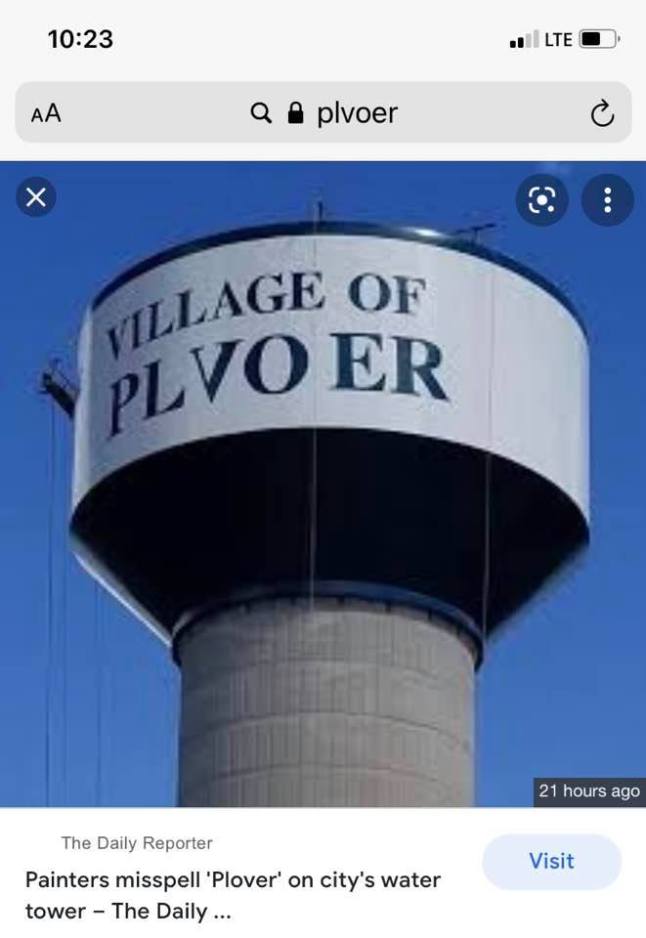
I often rely on spell check to bail me out of a “how is that spelled?” situation. That said, people can’t always rely on a spellcheck function to save them, as the folks in Plover, Wisconsin found out recently:
THE MILWAUKEE JOURNAL-SENTINEL HAS LEARNED BASIC MATH
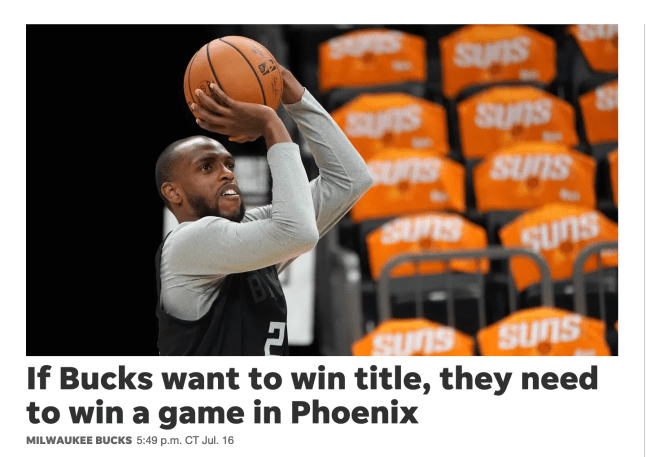
Some things are kind of patently obvious, but when you say them in sports with conviction (or a big honkin’ headline) they seem almost profound. To wit, in advance of Game 5 of the NBA finals, my hometown paper made this bold proclamation:
Let’s review how the NBA finals and basic math work:
The Phoenix Suns have the home-court advantage in the best-of-seven series, meaning four games will be played in Phoenix and three will be played in Milwaukee.
To win a best-of-seven series, a team needs to win four games out of the seven available.
If only three games are played in Milwaukee, the Bucks will obviously need to win at least one game in Phoenix.
This reminds me of the time I heard a coach say something along the lines of, “Most of our best come-from-behind wins happened when the other team was ahead.”
And, the Bucks did win one in Phoenix and won the championship, so I guess the headline wasn’t wrong, just dumb…
In other “Bucks-related news…”
IT’S A LEAD, NOT A CLOWN CAR
(If you’ve got this vibe happening in your lead, you might want to rework it…)
I get that not every lead can be 25-35 words, simply covering the 5W’s and 1H, but there needs to be some sort of limit to how much stuff a writer tries to cram into a single sentence. Here’s a look at a lead written shortly after the “Bucks in Six” victory on Tuesday night:
MILWAUKEE — In the immediate aftermath of a legendary performance to close out the 2021 NBA Finals and win a championship for the first time in his career, Milwaukee Bucks superstar Giannis Antetokounmpo declared that he signed his five-year, supermax contract extension prior to the season because “there was a job that had to be finished,” and that staying in Milwaukee meant doing it the “hard way.”
That’s 67 words, which is almost twice the “legal max” for a decent news lead. The problem with this lead isn’t just that it’s too long, but also that it’s a rambling word salad that abuses every element of writing we teach:
Lousy word choice: “Aftermath” means “the consequences or aftereffects of a significant unpleasant event.” If this was this wonderful and legendary thing, it shouldn’t have aftermath for Giannis. It should have aftermath for the Suns.
Adjective-palooza: “Immediate aftermath” and “legendary performance” go without saying, but there’s also “his five-year, supermax contract extension.” You could chop upwards of five words out of here and still have the same meaning.
“Partial Quotes” that “don’t help:” Read both of those partial quotes and tell me exactly why they are in quote marks. Save partial quotes for things that merit them like odd phrases or dangerous terms: (During his post-game interview, forward Bob Smith called referee Jim Xfer a “racist, cracker punk” for calling a foul on him in the game’s closing seconds, adding, there was no way Xfer would make “that bulls–t call on a bench-warming white boy.”)
Drowning the noun-verb-object: When students have difficulty figuring out what a sentence is trying to convey, I tell them to do a simple sentence diagram so they can locate the noun and verb (and possibly the object). Once they find those, they can build around them judiciously. Here, the author drowns the sentence core in all sorts of slop that doesn’t help people understand the point of the story. The simpler and more plain the sentence core, the better off you are. Let this cheesy PSA from the 1980s be your guide:
I get the journalists are often trying to couch their statements or cover their keesters, but the use of allegedly here makes even less sense than it usually would:
A vehicle allegedly struck a 6-year-old girl who was riding a bike on the 2100 block of High Ridge Trail in Fitchburg between 7:30 and 8 p.m. Sunday evening.
A few reasons why this is dumb:
If “allegedly” is meant to keep us safe as writers (which it doesn’t do, but let’s just say it does for the sake of the argument), exactly what are we worried about getting sued for here? Are we worried that an unnamed vehicle will sue? The girl’s parents? The bike? Allegedly used in association with a direct accusation at least would make sense (“Sen. Jane Jones allegedly stole money from her campaign fund.”) but here?
If “allegedly” is trying to cover us as writers in case the thing we said happened didn’t happen (which again… yeah… I know… broken record here…), what are we trying to say in the lead? That we don’t believe the girl? (“Mommy! I got hit by a car while riding my bike!” “Honey, is that really true or were you doing street BMX again?”)
If we are really worried about couching things in the lead, why was this the headline: 6-year-old riding bike struck by vehicle in Fitchburg
When it comes to “allegedly,” we’ll let Lou Redwood of “Semi Pro” have the final say here:
Welcome to this edition of the junk drawer. As we have outlined in previous junk drawer posts, this is a random collection of stuff that is important but didn’t fit anywhere else, much like that drawer in the kitchen of most of our homes.
Let’s take a spin:
I SUPPOSE ALL NUMBER 16s LOOK ALIKE TO SOME PEOPLE:
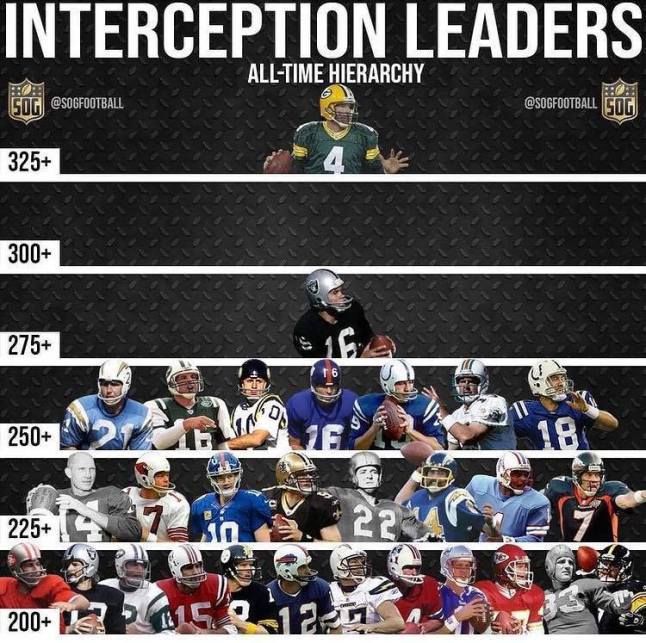
A friend forwarded this to me to point out the truly awful nature of Brett Favre’s accuracy issues:
Point taken. Brett made Vinny Testaverde look like a pin-point passer. However, that’s not the only thing I noticed here.
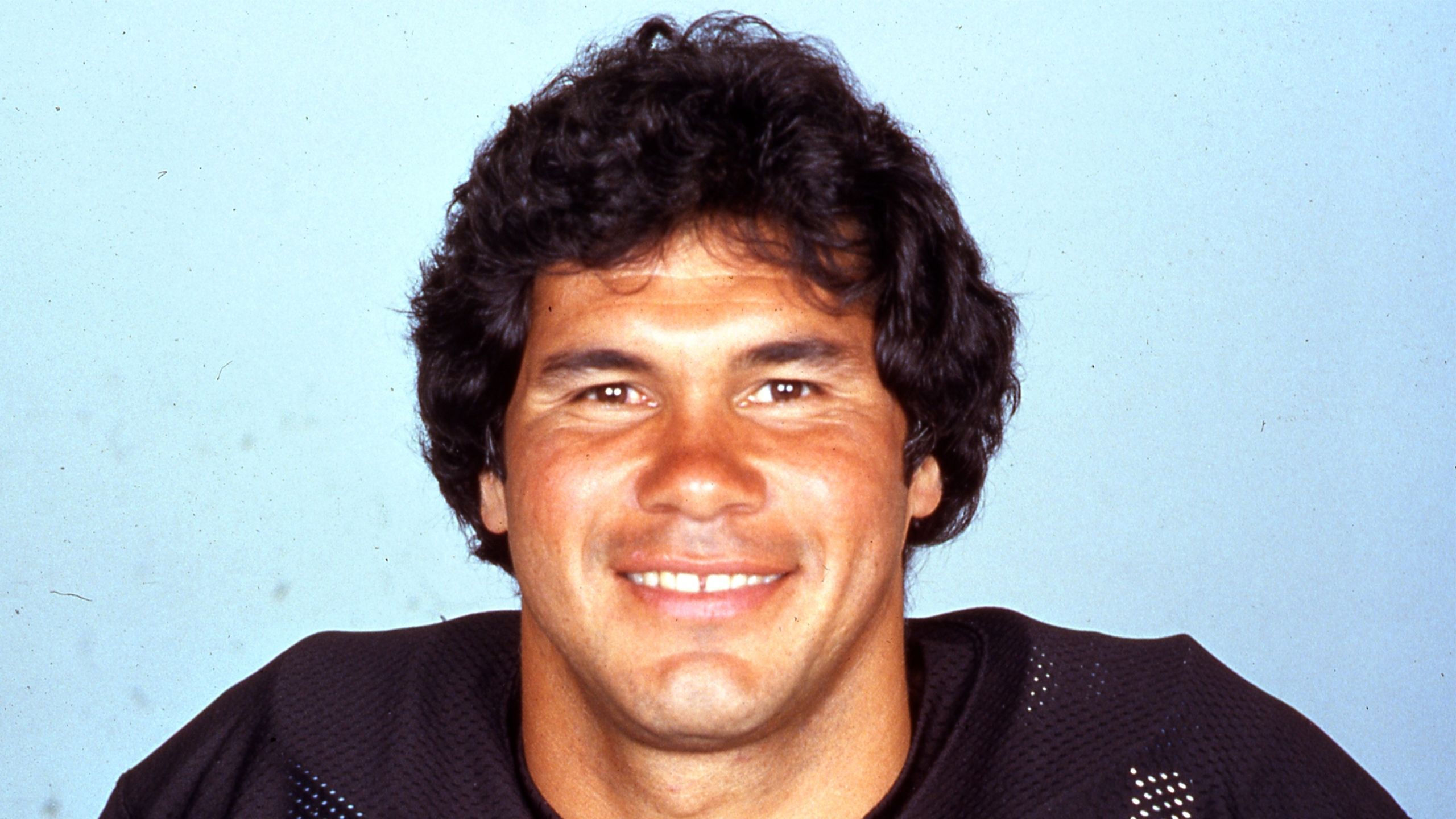
When Favre threw his 278th pick of his career, he passed longevity legend George Blanda, who did spend an appreciable part of his career with the Oakland Raiders. The problem here? That’s not a picture of Blanda. It’s fellow Raider and fellow Number 16, Jim Plunkett.
Plunkett, the guy in the first picture, only threw 198 picks while Blanda, the guy in the second picture, who started his career before Favre was born, threw 277.
I suppose there’s something to be said for being accurate when you’re trying to pick on someone else…
THE GREATEST HEADLINE EVER (AT LEAST I THINK SO):
When you get to my age, you start to wonder if you actually saw some of the things you saw, or if you are literally stuck in “legend mode.” (As in, “I swear to GOD that happened… It didn’t? Where the hell did I get that from?”)
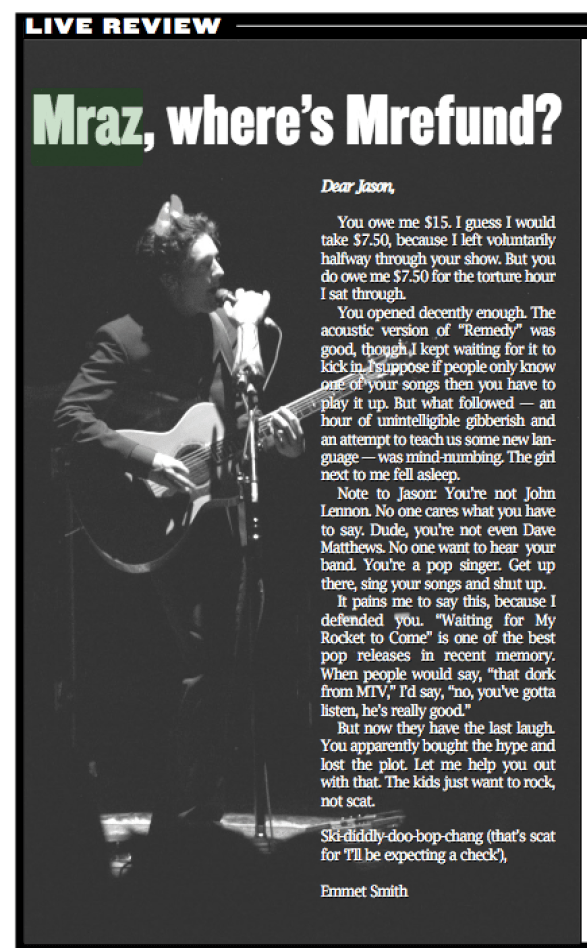
Case in point, I’ve often talked about one of the most clever and off the cuff headlines I’ve ever seen, even though I never could find a copy of it. When up-and-coming-performer Jason Mraz played a concert at Ball State in the early 2000s, it was a disaster witnessed by one of our newsroom design vets. He promised to not only write a review for it, but he had the headline picked out.
Given the student and given the performance, I spent a week fearing what he would come up with. When it ran, I thought it was the most amazing thing I’d seen in years.
Somewhere along the way, I lost my copy of that paper and no one else seemed to have it. Eventually, I figured I just made it up. However, another former student let me know that Ball State just digitized all sorts of archives, including the student paper. I did a little digging and I”m so glad I did.
Behold the glory of Emmet Smith’s snark:
Speaking of great headlines…
YOU HAD ME AT “VASECTOMIES”…
To keep up with what’s going on the PR side of the business, I signed up for a press release service that literally sends me about a half dozen emails a day. Every one of them is some organization promoting something or other and I’d say that when I’m not working on PR stuff for a book or a class, 99.99% of them end up in the trash without a second thought.
Then there was this:
I have to admit it was a good release and campaign, in that, it did the following:
Drew my attention with a headline that had me thinking, “What the heck is this? I gotta find out.”
Fulfilled the promise set out in the headline.
Clearly and in descending order of importance told me what was going on, why it was going on and why it mattered.
Tied two things that could seemingly not be further apart together in a coherent and logical way, once I actually read into it.
Took a risk, but a calculated one that probably paid off better than if these folks soft-peddled it.
And, finally, speaking of things take some testicular fortitude…
HATERS GONNA HATE, TEXTBOOK AUTHORS GONNA TEXTBOOK, I GUESS…
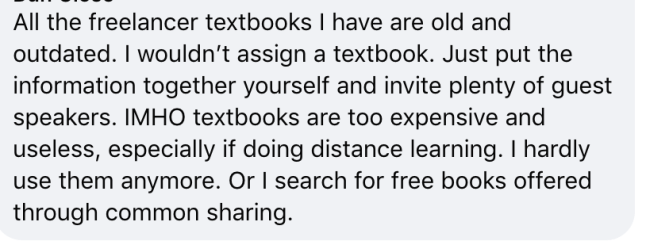
I’m in a number of teaching groups online where we to our best to help each other out. I didn’t think I was overdrawn at the favor bank, so I asked for some help to find a textbook for a freelancing class I’m going to teach in the fall.
Here was the one response that kind of bugged me (I cut the name off to save the embarrassment):
Couple things:
I was looking at trying to find a book, so you telling me not to bother isn’t really helpful. It would be like calling Triple A for a tow after my car broke down and the operator saying, “You really should just use public transportation. It’s safer and more ecologically friendly.” Maybe, but that’s not the point right now.
Saying “In my humble opinion” doesn’t make it humble when you say it this way. In fact, it’s rarely humble. It’s like whenever someone says, “I’m not racist, but…” I’m bracing for some stuff that would make Archie Bunker blush.
“Too expensive and useless…” Um… Dude? The very first chapter in all of my textbooks I’ve done for SAGE is about how to know you’re audience. Maybe if you read one of them, you’d know why this statement kind of rubs me the wrong way. Then again, maybe not.
Time to go back to writing another chapter for an expensive and useless textbook I’m working on. I’m guessing I shouldn’t ask this guy for a back cover blurb…
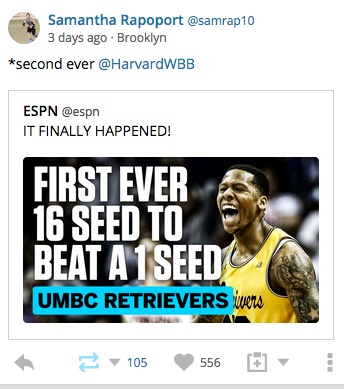
So with that in mind, we throw back back to another “first” that wasn’t from three years ago to give people a few helpful hints on reporting sports achievements of this type.
—
3 lessons beginning sports writers should learn from the 16-seeded UMBC Retrievers win over No. 1 Virginia
Sports journalism thrives on record-setting performances, amazing finishes and moments when the impossible occurs. As the NCAA men’s Division I tournament began last week, one “unbreakable” record appeared safe: No 16 seed in that tournament had ever defeated a 1 seed in the tournament. In 135 chances, the 16 seed was 0-135.
This leads to three simple lessons to take forward:
Don’t assume only men play: In a number of sports, men and women participate and women have the edge when it comes to records. For example, the person with the most open-era singles wins at Wimbledon isn’t Roger Federer with eight, but rather Martina Navratilova with nine. The person with the most goals in Olympic soccer history is Cristiane, a player for the Brazilian women’s national team. If you think something is a first, a last or an only, make sure to check both sides of the gender ledger before calling it a one-of-a-kind event.
Don’t assume your level of competition is the only level out there: Sports have multiple divisions at the collegiate level (D-I, D-II and D-III), so just because a D-I team hasn’t pulled something off, don’t assume no one else ever has. When an NFL record is broken, keep in mind it isn’t the only “pro” league to ever exist, so if you are making a statement about all professional football history, make sure to check back on things like the WFL and the USFL. Or, just stick to calling it an NFL record.
Don’t assume that because “everybody said” something that “everybody is right: Watching the “first-ever 16 seed” (a redundancy that was almost as bad as the error itself) story fly around the internet had people piling on until someone decided to set the record straight:
This leads to the main point of this post and the bigger overall lesson: Say ONLY what you KNOW for SURE. Don’t get caught up in the hype or assume something has NEVER happened just because you don’t know that it happened before or because “everyone knows” that something hasn’t happened. Instead, write what you can prove: No 16-seeded men’s team in this history of the NCAA D-I tournament had beaten a 1 seed in 135 attempts before UMBC defeated Virginia.
Your readers will still enjoy your work, the outcome is still impressive and you will have the benefit of being accurate.
During the 2020 presidential election, multiple people made claims that the voting systems had been rigged to favor Democrat candidate Joe Biden. Several of then-President Donald Trump’s allies and associates took to various media platforms to repeat these allegations, arguing that the voting systems had been compromised and that any outcome which did not place Trump back in the White House was a result of fraud.
Dominion Voting Systems, which produces many of the electronic voting machines used in the election, apparently isn’t too thrilled about this, as the folks there have filed several lawsuits regarding these claims. It’s gotten so bad that some media outlets are keeping track of who is being sued, for how much and for what reason, like ESPN tracking the movement of NFL free agents.
The most recent suit is one that is most likely of interest to the folks reading the blog, as Dominion filed a $1.6 billion suit Friday against Fox News, alleging the company knew it was allowing lies about the election to proliferate:
In the lawsuit, Dominion argued that Fox and several of its on-air personalities elevated baseless claims about the voting company rigging the 2020 election and allowed falsehoods by their guests to go unchecked, including a wild claim that the company’s machines were manufactured in “Venezuela to rig elections for the dictator Hugo Chávez” and that Dominion’s algorithm manipulated votes so that then-President Trump would lose.
“Fox engaged in this knowing and reckless propagation of these enormous falsehoods in order to profit off these lies,” reads the lawsuit. “Fox wanted to continue to protect its broadcast ratings, catering to an audience deeply loyal to President Trump.”
The lawsuit argues that there are actual damages to the company’s brand, but also to the workers who are just trying to make a living. The suit notes that Fox’s conduct not only will cost the company more than $600 million in the next eight years, but also that front-line workers have been threatened.
Fox has noted that it will defend itself, having already filed several motions to dismiss and that the company “is proud of our 2020 election coverage, which stands in the highest tradition of American journalism.”
Here are a few things to take away from this and several other lawsuits filed in regard to the voting systems:
A FREE PRESS IS NOT A CONSEQUENCE-FREE PRESS: A lot of folks misinterpret the First Amendment to mean you are protected against all sorts of things when you publish content. The truth is that all the amendment guarantees is that the government shall not prevent you from publishing material. That’s basically it.
It doesn’t mean that other people can’t stop you, like the owner of a website where you post content, the publisher of a newspaper or a producer at a broadcast station. It also doesn’t mean you can get away with whatever you want without paying the price.
When you say something that is false and harmful, you can be in a lot of trouble, which is why professors push so hard on students to make ABSOLUTELY SURE on every fact in a story. It’s also why editors pick and pick and pick at stories with reporters, as to avoid any potential landmines.
If I get up on Fox News and tell the world that I have information supporting the notion that the chancellor of my university is running a cocaine ring out of the student union in exchange for getting away with a murder he committed in 1987, I’m going to be in a HECK of a lot of trouble because it’s not true and it’s going to harm him.
It also leads to the second point…
UNLIKELY, UNREAL AND COMPLETELY UNBELIEVABLE ARE ALL DIFFERENT THINGS: One of the dumber defenses in a Dominion suit is that of former Trump lawyer Sidney Powell. The company is suing her for $1.3 billion, arguing she knowingly spread a baseless claim that Dominion and another voting system company were working with the late Hugo Chavez of Venezuela to rig the election.
It was just conjecture. No reasonable person would conclude those allegations were true statements of fact. Besides, in heated political arguments, people tend to exaggerate. You should dismiss the lawsuit or at least move it to my home state.
That’s essentially the defense offered by Sidney Powell’s lawyers to the $1.3 billion defamation lawsuit brought by Denver-based voting Dominion Voting Systems, Inc. Dominion provides voting equipment to more than 1,300 jurisdictions in 28 states including Colorado.
We’ve talked about this kind of claim earlier this year when porn mogul Larry Flynt died. The “no reasonable person” defense was at the core of his Supreme Court appeal, when the Rev. Jerry Falwell sued Flynt for publishing a spoof advertisement involving him. Flynt won the appeal with a unanimous decision, but before Powell pops open the champagne, I’d consider these issues:
Flynt was publishing a porn mag, known for all sorts of really outlandish stuff, including a photo of a woman being stuffed into a meat grinder. Powell was on nightly news outlets and other media platforms purporting to deliver truthful information gathered from inside sources.
Flynt’s ad claimed that the highly religious Falwell lost his virginity by having sex with his mother and a goat in an outhouse, which is almost the textbook definition of outlandish. Powell was claiming election fraud, something other countries had experienced and something that people within the government were also stating as fact.
Flynt was a strip-club owner who published pictures of naked people in magazines that had been banned in multiple cities. Powell had been a counselor to the president of the United States.
When it comes to the idea of hyperbole and satire, or otherwise outlandish things, you have a pretty high bar to clear if you want to be on safe side of that argument. Had Flynt claimed that Falwell stole money from his congregation, he would have likely been on much shakier ground, given that other high-profile preachers had been accused or convicted of such things. The same thing could be said had he claimed Falwell had slept with prostitutes or committed adultery, given the climate of the time. However, nobody reading the Campari spoof thought, “Wow! Reverend Jerry is a really kinky guy! Guess you learn something new every day…”
Powell’s defense in this case is that nobody could have believed a legal expert who worked with the president in regard to voting irregularities when she said the company responsible for voting reliability failed in its task. I’m really interested to see how that plays out, but more out of morbid curiosity to see if the judge can keep a straight face throughout the trial, not because it’ll set a new precedent.
THE MUDDLING OF OPINION AND FACT IS ALWAYS A CONCERN: When I teach basic media writing to students, one of the hardest things for them to figure out is what is an opinion and what is a fact. It often comes down to me scrawling “SAYS WHO?” on their paper 183 times before they understand what they can say and what they shouldn’t say. Occasionally, we would have the discussion of “You are wearing a black shirt. That is a fact. You are wearing a NICE black shirt. That is my opinion.”
Cable news organizations have long muddied the waters of what is opinion and what is fact, almost to the point where people either don’t know the difference or don’t care as long as it matches up with what they believe. I often wonder if a lot of high-profile people end up buying their own BS to the point that they themselves think, “If I believe it, it must be true.”
Journalism pushes harder on people to verify information, clarify where the information originated and remain rigorous in reporting only what we can prove. At least, that’s the goal we have in mind when it comes to separating opinion from fact.
To help us clarify the distinctions a bit better, the U.S. Court of Appeals offered a four-step examination as part of its ruling in Ollman v. Evans (1984) to help people see if a statement falls into the realm of fact or opinion:
Can the statement be proved true or false?Courts have held that factual statements can be proved true or false. A statement like “The New York Yankees have won 27 World Series championships” can be proved true or false by examining their records in the annals of baseball. The truth or falsity of a statement like “The New York Yankees are the best baseball team ever” cannot be determined, because it lacks several key elements for us to examine. In a defamation case, the plaintiff must prove that the material is false, and this can be the case only if the material of a factual, as opposed to an opinion-based, nature.
What is the common or ordinary meaning of the words?People often use euphemistic language in their daily discourse. If you referred to a sloppy person as a pig, that person might be upset, but they can’t win a libel suit by demonstrating that they are not “an omnivorous domesticated hoofed mammal with sparse bristly hair and a flat snout for rooting in the soil, kept for its meat.” The common meaning that the person has poor personal hygiene or fails to keep their home neat and clean is clearly the way in which most people would interpret that remark.
What is the journalistic context of the remark?Who is saying something and the way in which they are saying it matter greatly in determining if something is a fact or not. For example, if you’re telling a joke involving two men walking into a bar, people are clearly expecting something different than if you are testifying in front of Congress. Content published on the news pages of a legacy media outlet is contextually different from a series of blog posts on a goofball-based website that would make the staff at the National Enquirer roll their eyes. The statements made on air during a newscast are contextually different from those made on a “morning zoo” radio show.
What is the social context of the remark? Where we tend to see opinions and where we tend to see facts often help define which are which. For example, a lecture on the biology related to procreation is expected to be based in facts, while two groups of protesters confronting each other outside an abortion clinic will be a more heated and opinionated exchange.