Throwback Thursday: So… No, then? (or why it’s important to research your readers before you pitch to them)

This blog post from three years ago kept popping up as a “suggested read” for me on various other posts, so I think it’s the blogging gods’ way of saying it needs a rerun.

Not to get into an Academy Award speech or anything, but I have to say I’ve been really, really blessed and really, really lucky that folks seemed to take a liking to my books. I’m grateful to you all every day because, as we say in the first chapter of every book, if I don’t have an audience, nothing else matters.

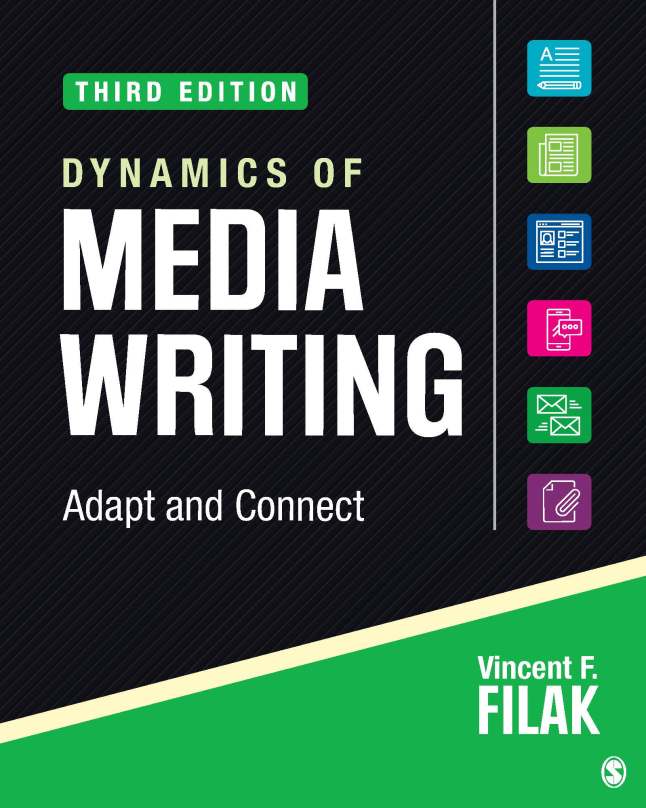
The folks at SAGE sent along the cover for the upcoming third edition for the “Dynamics of Media Writing” text, which should be out this August or September, I believe. I’m finishing the copy edits now with my main man, Jim Kelly. (If anyone you know ever tells you that copy editors don’t matter, send them my way for a firm and thorough verbal beat down. Jim has saved my keester so many times, I lost track.)

In case you wanted a sneak peek, here you go:

So, without further ado (or book pimping), here’s a look at what happens when you don’t have a good marketing staff to do your research and you end up on the embarrassing end of an email exchange with someone. (Rest assured, the folks at SAGE are great at marketing, and I can pretty much already guess who’s going to email me with a reminder to “please stop using the phrase ‘book pimping’ on your blog.”)


So… No, then? (or why it’s important to research your readers before you pitch to them)

I understand this blog tends to skew more toward news than some folks might appreciate, given that my entire pitch for the “Dynamics of Media Writing” is that ALL disciplines of media (news, PR, Ad, marketing etc.) can get something of value out of it. The skew is due to trying to cover both the media-writing text and the news reporting and writing text in one spot. It also also comes from the idea that a lot of things people perceive as “news” things are actually valuable for all media, including skills like interviewing, research, inverted-pyramid writing and so forth. Finally, it seems that news folks tend to make more public mistakes than do some of the other disciplines, so I get more content there. (If you want me to hit on more topics in the PR/Ad/Marketing stuff, feel free to pitch me some thoughts. I’d love to do it.)

That said, occasionally there is a specific foul up in a specific part of the field that bears some analysis. Consider that when you look at this email I got the other day. I redacted the identifiers as best I could:

Dear Professor Filak,

​Greetings from (COMPANY NAME)! ​I hope this finds you well. In the coming months, (AUTHOR NAMES) will begin to revise the twelfth edition of their introductory journalism text, (REPORTING BOOK NAME). ​This text strives to give students the knowledge and skills they need to master the nuts and bolts of news stories, as well as guidance for landing a job in an evolving journalism industry.
Right now we are seeking instructors to review the twelfth edition of (REPORTING BOOK NAME) ​a​nd provide feedback. This input is invaluable to us, ​as it ​giv​es​ us a greater sense of how to best address both instructor and student needs. ​If you are currently teaching the introductory news reporting and writing course or will be teaching the course soon, would you be interested in offering your feedback?
If you would like to review, please respond to this email and let me know if you will need a copy of the printed text. You should plan to submit your comments via TextReviews by 2/6/18. In return for your help, we would like to offer you (MONEY).
At your earliest convenience, kindly respond to this e-mail to let me know if you are available and interested in participating. ​Again, please let me know if you will need a copy of (REPORTING BOOK NAME)
I’m always happy to help people and I’m not averse to making a buck by pretending to know what I’m talking about, but this felt both awkward and ridiculous. One of the things both “Dynamics” books push a lot is the idea of making sure you know what you’re talking about before you ask a question. The books also push the idea of researching your audience members so you know how best to approach them. Either the person writing this email didn’t do that or just didn’t care.
Here’s how I know that: It’s called “Google.”
Had this person done even a basic search on me she would have learned several things:
  • I am teaching the courses they associate with this book. I teach nothing but these courses, as you can find on the UWO journalism department website. The line of “If you are currently teaching the introductory news reporting and writing course or will be teaching the course soon…” tells me I’m on a list somewhere and this is a form email at best.
  • I wrote several books, including one that is likely to be some form of competition for this book. (I’m not saying it will be as good or better or anything, but my title includes words like “news,” “reporting” and “writing,” so it’s a pretty safe bet we’re vying for the same students.) This was literally one of the top five items on the first page of my Google search. She also sent her message the same day I got this alert from Amazon:NumberOne
    (I have no idea how Amazon quantifies “#1 New Release in Journalism” but I’ll take it.)

    The point is, it wasn’t a secret, so it appeared that she didn’t look me up and was like the guy at the bar telling me, “Hey, see that babe over there? I’m totally going to score with her!” and I’m like, “Uh, dude, that’s my wife…”
    On the other hand, maybe she did look me up, found the book and asked anyway, which is like the even-worse guy at the bar who’s saying, “Hey man, your wife is pretty hot. Any chance you can give me some tips on how to score with her?”

Thinking about all of that for a moment, I did the polite thing and emailed back, explaining how I felt this would be a conflict of interest (it is), and that any advice I gave her would be likely be somewhat problematic as the author of a competing book (it is).  I also noted that I know the book she is pitching well (I do) and I know the authors well (I do), so this would also be a bit awkward for me (it really is). Here was her email back to me, which again made me think she wasn’t actually reading this:

Hi Professor Filak,

Thanks so much for letting me know. We will certainly keep you in mind for future projects!

So, again, the point of the blog isn’t to beat people up for doing things poorly but rather to offer advice on how to do things better. Here are a few basic tips:

  • Research first, then write: You don’t have to do an Ancestry.com profile on every person to whom you market or with whom you engage in outreach, but it’s not hard to Google someone. Most people put more social-media stalking effort into learning about the “new kid” at school than this person put into finding out about me. In marketing, you often have access to proprietary data as well, so you can find out if this person had any previous engagement with your organization. In my case, I used that book for more than a decade and still keep up with it, so that might have been something she could have found.
  • Personalize when possible: If you are sending out 100,000 requests for something like a survey and you are expecting a 10 percent response, you will not have the ability to personalize all of the information on everyone’s card or email. That makes sense. However, when you are microtargeting a group of people with a specific set of skills or interests and that group isn’t going to overwhelm a data center, work on personalizing your content. That line about “If you are currently teaching the introductory news reporting and writing course or will be teaching the course soon…” could have easily been tweaked to say something like, “I see you have taught writing and reporting courses at UW-Oshkosh…” and it wouldn’t have taken much. Making these minor tweaks shows that you have done your research. Engaging in some personalized communication shows your readers you care enough to see them as individuals as opposed to a wad of names on a spreadsheet.
  • Try not to screw up, but if you do, don’t ignore it: The one thing that stuck with me when I got that response email from her was that I didn’t think she figured out what she was actually asking me or why it was weird. I had that feeling that if I had written her back and said, “I’m sorry I can’t do this because I’ve just been placed in an intergalactic prison for the rest of my life for murdering a flock of Tribbles with a phaser I set to ‘kill’ instead of ‘stun,’” I would have gotten the exact same email back. The whole exchange really reminded me of this scene:
 The thing that is important to realize is that you are going into a field that has two important and scary things going for it:
  1. It’s small enough that you’re really about two degrees of separation from everyone else, so people know other people.
  2. People in the field love to talk.

If you end up screwing up because you didn’t do the first two things suggested above, don’t compound the problem.

I have no idea if I’ll ever get approached by this publisher to review anything, but I know I will always carry with me the memory of this interaction. Had it been a great interaction, that would have been good for the publisher. Unfortunately, that wasn’t the case.

The Junk Drawer: Doritos Conspiracy Edition

If you stare into this mess long enough, you’ll see the message to the followers of QAnon… Unless, of course, you’re in on the conspiracy…

Welcome to this edition of the junk drawer. As we have outlined in previous junk drawer posts, this is a random collection of stuff that is important but didn’t fit anywhere else, much like that drawer in the kitchen of most of our homes.

Without further ado, here’s a mix of the good, the bad and the truly weird…

Update on the Indiana Daily Student

Last week, we talked about the financial problems associated with the Indiana Daily Student, the student publication at Indiana University. The staff published a letter-from-the-editor, explaining how the paper was likely to run out of money at the end of the semester and its future was tenuous at best.

As the editors gear up for another semester, there appears to be some potential good news, as IU has made it clear it knows the paper is hurting and that this media outlet has too much value to let it die on the vine.  According to the joint statement from the IDS, the School of Media and the provost’s office, the paper can operate at a deficit for three years, starting in the 2021 fiscal year. During that time, the three groups will work together to find a viable long-term solution to make the paper financially stable.

This shows some great forethought on the part of the school and it provides the student journalists the opportunity to breathe a bit while this gets sorted out. It’s truly one of the best possible outcomes anyone had the right to expect, so congratulations to all parties involved.

Speaking of dealing with tough times as a journalist…


Reporting: Come for the insurrection, stay for the threats

The riot on Jan. 6 demonstrated a number of things, not the least of which was a general disdain for journalists and journalism. Consider what happened to several reporters during the scrum when they had to abandon their gear:

Just in case you weren’t entirely clear of how these people felt about journalists, here’s another tidbit from that scene…


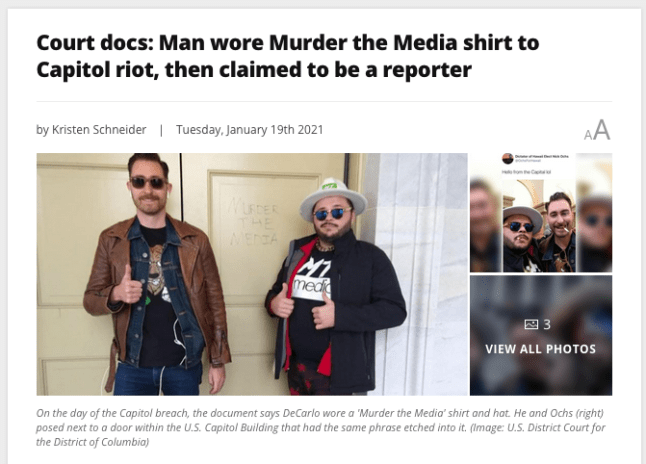
The one that got me the most, however, was a shot of the door inside the Capitol. Someone had found the time (and the spelling acumen) to express their dissatisfaction with how journalists operate in this country through graffiti:

(Side note: He might have pretended to be a writer, but he sure as hell couldn’t have passed as a photog, given that no photojournalist I know would EVER do a posed shot let alone one with the “thumbs up” approach.)

I find it interesting that the people who want to “murder the media” probably couldn’t adequately define the media, outline what areas of it are most dissatisfying to them or explain what it is they dislike about it. Because to do that, hey, they’d need to be educated or at least aware of things going on around them… and that might require MEDIA!

Speaking of life-and-death issues…


One professor is releasing more posthumous material than Tupac

Students often wonder to what degree professors pay attention to their emails, questions, discussion board posts and other forms of interaction. In at least one case, the professor has a pretty good reason for being less-than-responsive to their inquiries this semester.

He’s been dead for almost two years.

During one of those recent lectures, a question occurred to Ansuini that he wanted to follow-up on with the professor. He was eager to learn more about a particular example the professor had used.

So he paused the video on his laptop and Googled the professor’s name in order to find his email — that seemed quicker than hunting around for the syllabus on his desktop. What he found instead was an obituary. At first he assumed it must be for someone else with the same name.

In fact, no: François-Marc Gagnon, an art-history professor at Montreal’s Concordia University, had passed away in 2019 at age 83. Turns out Ansuini’s favorite new professor was dead.

Turns out, there had been another professor “ghost teaching” the course at the direction of the university. While people debate property rights of his lectures, I’d have a real hard time sticking with this class. It was weird for me watching the final episodes of “Jeopardy!” with Alex Trebek, knowing he was dead already. I also haven’t been able to listen to my Bill Cosby records for years, now that I know he was a sexual predator.

Speaking of other awkward collections…


That’s a pretty nice ass. you’re trying to sell

In editing, we joke about how headline abbreviations need to avoid causing more problems than they solve. (The best one was about an interstate murder investigation which states, “Ill. man accused of Mass. murder”) In working through some Marketplace listings, I came across an offer I almost couldn’t refuse:


And, finally, speaking of things that you can’t make up, no matter how hard you try…


Doritos: Illuminati and Sea Salt Flavor

I always appreciate honesty and thoroughness in all of the corrections I read, but I have to admit, I wondered how in the world the content in this one ever saw the light of day:

I’m only imagining the conversation that led up to this:

Editor: “You sure on this QAnon pin thing?”

Writer: “Well, it was orange and triangle shaped… I mean what else could it be?”

Editor: “All right, let’s run it!”

As always, this comes with a valuable lesson, which is, “If you don’t want to be accused of being part of a conspiracy-theory group with ties to all sorts of unsavory people and actions, don’t eat Doritos.”

UPDATE: Turns out, I got smoked. This was apparently debunked, as a friend told me after this ran:

The content in that one never did see the light of day.

https://www.usatoday.com/story/news/factcheck/2021/01/16/fact-check-cnn-correction-ted-cruz-dorito-chip-fake/4189434001/

Dammit. I hate when this happens. Goes to show that I’m going to need to work on being a bit more careful.

Vince

(a.k.a. The Doctor of Paper)

Why should a reader care? A question you need to answer in all media writing

As part of a book I’m putting together for introduction to mass communication courses, I decided to break out key events and important people in an expanded timeline. In doing this, I added a chunk of text under each one of the points that I titled, “Why You Should Care.”

The folks at SAGE, and at least one reviewer, thought this was kind of jarring, almost a snarky affront to educational standards. Me? I thought it was common sense, given that if I can’t tell you why you should care about something, well… Why would you?

In today’s media climate, more and more sources are disseminating more and more messages  more and more frequently and in louder and louder ways. The idea, at least based on what I’m seeing out there, is that if we scream something loudly enough and do it often enough, people will eventually start to think, “Well, I guess that’s important.” In truth, we have often found that this repetition becomes more of an annoyance than anything else, plus once we stop bludgeoning people with those messages, they eventually stop caring about them.

When it comes to all forms of media writing, you need to be able to tell people not just WHAT happened, but also the “So What?” aspect of it, as one of my old bosses would say. If you can’t do that, you’re not coming at the content from an audience-centric perspective. You’re just cranking content out of a grist mill.

Here are two conversations I had with people this week who work in the field that really drove that home for me:

The first was a conversation with a student who is graduating and currently works as the main reporter at a small-market local news operation. He was grousing about how hard it is to get people to see value in his paper and his stories.

He told me that people care about certain things in the region he covers and he writes about those things, so why is it more people aren’t reading what he’s writing?

“How do you know that?” I asked him. “How do you know that they care about X, Y or Z?”

“Well, they SHOULD care…” he replied, leading me to understand what the problem was.

Journalists have long adopted the philosophy that we know best when it comes to what matters to our readers. For quite some time, we were right about that, almost entirely by accident.

Reporters lived in the areas they covered, earned wages similar to the people for whom they wrote and dealt with the same problems as their readers. In addition, they were integral members of the community, so people TOLD them things that mattered to them and thus the reporters used that insight to cover things of interest.

That’s not the case anymore today, so we have to work a lot harder to figure out what matters to the readers and we have to compete with a lot more voices that are drowning us out.

It’s no longer enough to write about a city council meeting and figure that our readers are going to figure out why it matters or what happened of value. We can’t assume that readers are going to look at the paper or our website and think, “Hey, I bet these folks have all the answers. Let me carefully and deliberately examine their content and assess it through a high level of critical thinking.”

As fast as things move these days, you have to tell people, “Hey, look over here! This matters because….” It’s like trying to feed your dog a pill some days, but once you get good at it, it becomes easier the next time, as people will continue to use media that shows them value.

The second conversation was with a colleague who teaches PR in our department. We were commiserating over the way in which students were writing stories and press releases.

What we both realized was that our students were going in one of two directions with their opening paragraphs:

  1. “An event is occurring. You now know this.”
  2. Welcome to hyperbole central, in which we make the intro to “The Muppet Show” look subdued by comparison.

When she told the students to dial down the hyperbole, they essentially went back and wrote the “An event is occurring” paragraph. They then groused that the opening was boring.

“Well, you better find something that makes it interesting,” she said she tells the kids. “If you don’t care about something, why should a reporter?”

It’s a good point and one that can go even a step further: If the reporter actually goes to the event and only can report that the event occurred, why will the readers care? There has to be SOMETHING that made the reporter think the event was worth covering or SOMETHING that came out of it that can be of value to the readers.

If you can’t find that as a writer of any form of media, you’re in trouble. Advertisers can’t just write, “Buy my stuff. It’s available.” News writers can’t put out a story that says, “Something happened and I went there to look at it.” PR professionals can’t send out press releases that note, “Our client is doing a thing that you can look at. C’mon over.”

This is why audience centricity and the interest elements of Fame, Oddity, Conflict, Immediacy and Impact need to be at the forefront of your mind as a writer. What do you know about your audience’s needs and what interest element or elements might grab their attention so you can fulfill those needs?

In other words, tell people why they should care in a simple and direct way. After that, they’ll keep coming back for more.

4 journalism-based rules Washington and Cleveland need to follow in renaming their teams

The Washington NFL Football Team announced earlier this month that it would engage in a name change, after decades of protests from people who found the moniker “Redskins” racist. All it took was a demand from a multi-million-dollar sponsor, and suddenly, the team was all about doing the right thing.

Shortly there after, the Cleveland Major League Baseball Team announced it would be looking into whether “Indians” should still be part of the sporting zeitgeist. About two years earlier, the team mostly retired its long-time mascot Chief Wahoo from its merchandise and apparel.

(As a long-time and long-suffering Cleveland fan of multiple sports, I have to say one was well overdue. It’s been tough to wear baseball gear supporting the team I have loved since I was 10 in this day and age. That said, and this isn’t a defense, but it likely used to be a hell of a lot worse when they had this logo.)

Meanwhile, the Atlanta Braves have decided that tradition is too strong for a team that has called at least two other cities home and features the mascot “Chief Noc-A-Homa” as well as the “chant and tomahawk chop” routine to consider making a change. Must be a lot of money in those foam tomahawks…

I guess, as Meatloaf once opined, “Two Out of Three Ain’t Bad.” That said, while trying to fix one stupid thing, there is always the risk of creating other stupid things. Bad nickname choices can lead to awkward double meaning, stupid logos and some very difficult editorial decisions for writers.

With all of this in mind, here are the four journalism-based requests for Washington and Cleveland as they begin their quest for better nomenclature:

DODGE GRAMMAR PROBLEMS: The first thing we need to make clear is that the name has to be plural, and I mean VISIBLY plural with an “S” on the end of whatever the teams pick. (Sorry, no Mice or Moose.)

Some of the dumbest grammar arguments come out of singular team names like the Colorado Avalanche, the Minnesota Wild, the Miami Heat or the Orlando Magic. As a team grammatically operates as a gender-neutral single entity, the singular team names get the same treatment. That means when the Bucks play the Heat, the pronouns would be “They play it.” Of course, it’s grammatically correct and yet it makes absolutely no sense at all.

Unless the players can form into one entity like Voltron or use a single collective consciousness like the Borg, you MUST use a pluralized name for the sake of all of us.

Also, no names that can be read as a verb. We don’t need another Thunder or Jazz to make for some really bad headlines like “Bucks deal Thunder third-straight loss.” A bad headline break in that can make them sound like Zeus tossing bolts around.

Another verb-based moment of stupidity would be “Raptors play Jazz tonight,” which would look something like this, I’m sure:


AVOID HEADLINE HEADACHES: Journalists have to think about how things will look in the big type, so please keep in mind that certain words don’t work all that well. Case in point is the old San Diego team from the American Basketball Association:

Conquist

It was a lousy team, (and the term has its own awkward past) but it did have a really cool logo. The problem was trying to squeeze “CONQUISTADORS” into any kind of head specs. When the designer gave you a one-column headline for a game between these guys and the Dallas Chaparrals, it was a safe bet that he thought you were having an affair with his wife.

To solve that brain-bending problem, journalists started referring to the team as “The Q’s” which made about as much sense as anything else in the ABA.

THINK LIKE A 12-YEAR-OLD BOY: A team name like the “Lumberjacks” can seem like a great idea at the time, but it definitely puts headline writers in a pickle, as we noted above. Those scribes trying to fit 10 pounds of stuff in a 5-pound bag can end up making things worse if they fail to have a dirty mind:

JacksOff

Do I dare ask about the “position changes?”

Before you get too far into the idea of what the next name should be for either of these franchises, have an intern in the PR department Google every potential euphemism for male and female genitalia as well as doing a deep dive into every possible corner of the internet for references for disturbing sex acts.

That means, despite the city’s proud history of shipbuilding, you do not want to go with the “Cleveland Steamers.”

Also, consider every possible noun and verb you plan to use as part of a social media campaign or every potential permutation of your name when placed into a hashtag.  (I can imagine the Oakland A’s doing a promotion where plating a certain number of runs could lead to free meal or something. The result would be the #asscorefour hashtag, which sounds like one of many sequels to a porn film.)

RESEARCH THE HELL OUT OF IT BEFORE YOU DECIDE:  Anything you pick should go through the standard vetting process for copyright, fan engagement and such, no doubt. However, if you get only one good swing at this name change thing, you better dig a lot deeper to ensure you aren’t accidentally stepping on a racial, sexist or homophobic landmine.

Here’s what I mean: A Texas PR firm that specialized in food and drink was looking for a fun and engaging name back in 2012. The two women, who are white, came up with what they saw as a quirky, on-point moniker, so they did a quick Google search to see if anyone else had used it. Turned out, it was the title of a Billie Holiday song from the 1930s, but they figured it was so far afield, it wouldn’t be a problem, so they went with it.

The name? “Strange Fruit.”

A bit more than a quick search might have helped this PR firm avoid two years of bad PR. The song is about the lynching of African Americans and the lyrics aren’t opaque on that point. The women eventually rebranded as “Perennial PR,” but even that had problems when they failed to grab social media accounts by that name. Someone else did and had a lot of fun at their expense.

That means you start looking for everything that ever was when it comes to any name you want to pick. You think something like the “Washington Potomacs” seems cool and safe, make sure you’re not ticking off people with a sense of Negro League Baseball history. Pretty sure you don’t want to name them the “Washington Marshals,” as law-enforcement names aren’t really getting much love these days, plus it could seem to be a minor nod to former owner George Preston Marshall (yes, the spelling is different), who didn’t have an open mind on issues of race.

And for the love of God, avoid the “Washington Woodsmen.” No, I didn’t know this was a thing. Yes, I looked through the entire Urban Dictionary’s “W” section, which is something Dan Snyder’s people should do as well.

No, you don’t want to know what it means.


Dead Ducks: How a minor-league baseball team made a major-league screw-up while trying to be funny during a pandemic

Dead Ducks

I never know how to take it when former students tell me things like, “I saw this massive media screw-up and immediately thought of you!” That said, I’m grateful for the help in identifying the face-palm moments of life that keep the blog humming.

UPDATE: The president of the organization got back to me on this. I posted his response in full below.


Like many other sports franchises, the Madison Mallards baseball team in Wisconsin is coming to terms with what to make of a lost season. The Northwoods League team decided Wednesday to formally cancel its entire schedule, announcing the decision with an approach that could politely be referred to as “tone-deaf:

In Memoriam: Madison Mallards 2020 Season (2020-2020)
The 2020 Mallards Baseball season, a highly anticipated summer mainstay on the cusp of its 20th season, ended before it even had a chance to start on Wednesday, June 24th at 5:00 pm.

Survived by its mascots, Maynard, Millie, and Bonehead, a dedicated staff, supportive corporate partners, and a city full of fans, the season will be dearly missed by many. The Mallards, born in 2001, have provided decades of fun, community, and wieners. Their 20th season in Madison would have been no different.

The cause of the “death” of this season is, of course, the coronavirus pandemic that has sickened more than 2.3 million people in the United States as of the latest count. The death toll has reached past the 120,000 mark for the country, with more than 750 of those in the state of Wisconsin. Dane County, where the Mallards play, is listed as a hot spot for the virus, one of 22 counties in the state registering spikes in the “high” range, according to state DHS data.

So, maybe the obituary approach wasn’t exactly the wisest of ways to alert the readers on this one. (Also, and I know it’s a minor point, but how in the hell did the Mallards provide “decades of fun” if the team is short of its 20th season? I get that journalists aren’t good at math, but you gotta get at least two of something, in this case it would be decades, before you can pluralize something.)

The closing paragraphs of the “obituary” decided to take the concept of “EEEESHHH” to a major-league level:

A Celebration of Life will take place at the Duck Pond on June 29th, 2020 from 5:00pm to 8:00pm. Entry will be free for fans, with beer and concessions for purchase, and the opening of our new Team Store.

In lieu of flowers, fans are encouraged to support by attending upcoming events at the Duck Pond, shopping in our online team store, or sending condolences and fan mail to info@mallardsbaseball.com.

Let’s unpack this:

  • We are having a “funeral” for a season that was essentially “stillborn,” to carry out the writer’s death metaphor to its most disturbing and yet accurate end.
  • The writer is encouraging people to come out en masse for this “funeral” during a pandemic in which social distancing is the primary way of avoiding contracting an actual illness that has the potential to be fatal.
  • What’s the draw? A free admission to an empty ball field in celebration of a NEW TEAM SHOP where you can buy stuff for a team that’s not playing. Oh, and you can buy beer and hotdogs as well.
  • The “in lieu of flowers” line had me shaking my head. Also, I’m not sure why I’m sending you “condolences” at this time…

I put in a note to the “Info” address above, asking for some thoughts and rationale on their approach here. The president of the organization got back to me with this note:


Professor,

Thanks for your note. The Mallards role in our community for 20 years has been to provide a place for people to escape from their day-to-day routine. One of our old ad slogans was actually “Welcome to your 9-inning vacation.”
As we grapple with the real challenges of 2020 for our world, our community and our business, we thought it was important for the Mallards to continue to do what we do & hopefully provide a bit of levity for our fans. As evidence of us most likely being on the right path, I still haven’t seen a negative comment on social media related to the obituary part of what we did. I think our fans understand our satirical tone & that we would never intend to offend anyone. And, when we have delivered the wrong message in the past (which we have done) our fans have been quick to point it out & scold us on social media, as you would expect.
We will have more measures in place than simply socially distancing people at our Monday event. We didn’t feel the need to outline all the protocols in this post, but we will be clarifying them as we move forward. We’ve worked extremely closely with the Health Dept here & we know how to execute safe events and we will not allow a scene to develop similar to what has been seen at bars across the country. We have one of the largest venues in Madison & we’ll have plenty of room for people to safely gather.
Thanks for your time & consideration of our position on this. I authentically hope to see you at the ballpark next summer!
Vern Stenman
President
Big Top Sports + Entertainment

I have to say, I appreciate that the guy who runs the show would actually take time to respond to me, basically a chimp with a blog. I’m not exactly sure I’m buying into the “we haven’t seen a negative comment” defense, because a) not having seen something doesn’t mean it’s not there and b) the word “yet” should be clearly implied there… Granted, this isn’t as horrible as some of the other gaffes we’ve covered on the blog before, but “This could have been worse” isn’t exactly the target I’m thinking you want to be shooting for.

He’s standing by his approach, which is fine. Maybe I’m wrong about this, having lost a family friend to the coronavirus and knowing other immuno-compromised people I worry about every day. (It must be a cold day in hell right now, as I’m potentially being overly sensitive to something…) If I’m not, I’m sure the more people who see this will tell him. And to be fair, he did say if this gets ugly and they were wrong, they’d pony up. That’s a fair and fine strategy.

I’ll also stick by my two points below, made prior to Mr. Stenman’s email:

You aren’t as clever as you think you are: The idea of trying to “spice” up dull copy is an admirable one, but some situations call for straight-forward information dissemination. It’s the reason we don’t note that people who died during an explosion “went out with a bang” or that a drug overdose victim “failed the Pepsi Challenge and went with coke.”

I got smoked on a lead to a story once like that when I was filling in for a day-side cops reporter. The PIO at the station clued me into a burglary where this guy stole some tools and about 20 cases of soda from a local business. It was hot outside and we were talking about being too thirsty for their own good, so I wrote a lead that played on this idea, focusing on the soda.

The owner of the business called to complain that the true loss was the high-end manufacturing tools, worth tens of thousands of dollars, not the soda from the break room. He felt we were mocking his situation and that I wasn’t taking the burglary seriously. My managing editor crawled inside me with his shoes on, and I deserved it.

The point is that, yes, you write a seemingly interminable number of “noun-verb-object” leads that just give people the facts and you desperately want to do something more amazing than that. That said, this isn’t about you. It’s about your readers. Think about what happens when a Madison Mallards fan who lost a family member or a friend to the coronavirus reads this. Whatever you’ve got in your head, I bet it’s not good.


Paranoia is your best friend: I think I say this at least once per week during regular class periods, and it bears repeating here. A really good way of avoiding problems in your writing, reporting and publishing is to first consider what you are doing and then ask, “What are the infinite number of ways this could go wrong and make me look like a complete idiot?”

I joke about the voices in my head arguing about stuff quite a bit, but I’ll honestly tell you this: I do listen to specific voices when I’m writing. When I come across an issue of race, I think about a friend of mine who is an expert on this and another friend who deals with racist stuff on a way-too-frequent basis. When I come across an issue that could be seen as sexist, I have another friend’s voice in my head, arguing that there is a better way to write whatever it is I’m writing. When I start cursing on the blog, I can hear my publisher’s voice, yelling, “Vince, people from small religious schools read this!” (I then quietly delete the cussing and find a euphemism like “chucklehead” to replace what I really want to say.)

The paranoia that something could turn me into a tragic tale of wasted youth… er… middle-age… keeps me from doing a lot of tragically stupid things. Keeping your paranoia meter finely tuned won’t prevent every problem, but it will keep you from walking off a 20-foot ledge directly into a lava pool populated by robot sharks. Or whatever your recurring nightmare is…


Nursing, Social Media Experience and “Knowing I belonged:” How Emily Reise landed a digital marketing job during a pandemic

EmilyMugWith graduation drawing close, college students across the country are panicking even more than usual as they try to get a job in the middle of a pandemic. Even professionals with years of field experience are concerned about moving jobs or finding a career path as the coronavirus has made it difficult to find opportunities or stability.

Emily Reise a public relations and social media professional managed to navigate this new landscape amazingly well, landing her current position as a digital marketing coordinator for Nurses PRN in Appleton, Wisconsin about a month ago.

Reise majored in public relations and minored in environmental studies at UW-Oshkosh, all while undertaking four internships in her field. Upon graduation, she headed to St. Paul, Minnesota to work as a social media coordinator for Midwest Sign. After a year and a half, she was looking for a chance to come back home to the Fox River Valley, and found Nurses PRN.

According to its website, Nurses PRN is a staffing agency that connects clients and nurses “driven by the simple idea that better nursing care leads to better patient care.” The company notes that it has 500 active employees and fills approximately 6,000 shifts monthly for its clients.

Reise was nice enough to answer a few questions about what she learned as a student that she still uses and what she does in her new job:


You landed at Nurses PRN right in the middle of a pandemic and you are responsible for digital marketing content. I guess two questions that come off of that statement are a) What does your job normally entail? and b) What is life like dealing with this job now in the middle of this insanity?

“A normal day would consist of me taking leads from Facebook ads and ‘gifting’ them to recruiters in the company depending on the area they are staffing and the type of nurse they need. I am the main social media guru, so I make the content calendar, come up with content, strategize social media campaigns and monitor comments and messages. I also have my hands in email marketing, events, managing job boards, and helping edit and write website copy.

“Landing a job in the middle of a pandemic, especially in the nursing field, is chaotic to say the least! Everything is abnormal and changing which demands a ton of agility when approaching ads and job boards. Certain jobs are streaming in because of layoffs and furloughs that normally we never had an excess of. This floods the ads and gives us tons of leads we may need or not need depending on facility need. This forces me to jump in and start making decisions whether to shut off ads, make new ones, or edit the creative or copy. There is no ‘normal’ right now and no directions on how to adjust social media ads for nurses when there is a global pandemic.”


How did you land a job during this time of absolute uncertainty, given all the cuts to everything and how it seems like the economy is going to hell in a speedboat? What was it that drew you to this company and what was it that got them to find you as the perfect fit?

“I was looking for a new opportunity back home in the Fox Valley since I was living in the Twin Cities. I chose a day in March and interviewed with five different companies. Nurses PRN was the first company I interviewed with. By the end of the interview I remember telling them, ‘I am at a 10, I want this job- hire me today!” (They didn’t hire me that day.)

“I knew I belonged there because of how laid back and enthusiastic the marketing team was about their jobs. I clicked instantly with them. I found out later they were looking for an upbeat person who wasn’t afraid to express new ideas. Luckily, I can talk to a brick wall… I felt I connected well and after working for many companies, I now know that company culture and the people I work with is the most important factor for me.

“I got the job the next week and had to finish my current job. Two weeks after I put in my two weeks, though, the COVID-19 pandemic was heightened and I was worried they would move my start date back. Instead, they shipped a laptop, work phone, and training manuals right to my house so I could start remotely. Even though it’s not perfect, I’m so thankful to have a job during these uncertain times and working for a company who takes risks and cares enough to let me start on time.”


In your career to date, what are some of the most important things you learned in college in terms of being prepared to do this work? In other words, what “tools” were the most important things that college put into your “toolbox” for your career?

“Learning to write for blogs, website copy, and press releases has proved to be invaluable in my career. At my previous job, I wrote around 49 blogs in the year of 2019 alone. Now I mostly edit other people’s written work but taking Writing for the Media taught me to always comb through everything with an eye for detail.

(I still remember the day I got my assignment back from you and I went and cried in your office because I got an F since I spelled the lady’s last name in the story with an “a” instead of an “e.” You called that a major error and said I will always remember to double check details like that and never changed the grade. WELL, YOU WERE RIGHT! I STILL TELL PEOPLE ABOUT IT!)”


Right about now, a ton of students are looking for jobs and there is always that fear of “Oh, dear Lord, what happens when I can’t get a job?” As someone who graduated not that long ago (and who I know had some of those jitters at certain times), what kinds of advice can you give the kids who are graduating and worried about what will be out there for them, especially given our current situation?

“One of the biggest chunks of advice I can give grads, especially during the pandemic, is to be open minded. I thought I was going to be working for a sustainability company doing public relations. Now I’m working for a nurse staffing company as a marketer.

“I realized that the largest factors in finding a job you love isn’t just about the industry you are in, but the work you are doing, the people you work with, and the overall company culture. Don’t be too picky, if you think you would like the job duties, apply for it!”


Cheap  (and kind of self-serving) question: If Emily “now” could go back in time and talk to the Emily who was just starting her degree (with a “Writing for the Media” class), what would you tell her?

“I would say, ‘You’re right, you won’t be a journalist, but you will use these skills every single day in your career.’ Writing is something all employers crave in marketing and PR employees.

“I had to do multiple tests during interview processes to prove to the employers I knew how to write a press release or blog. I write for the media daily whether that be for social media, website copy, press releases, or blogs.

“Also, Filak was right. You will always remember spelling that damn person’s last name wrong.”

God (and your husband) will be watching: The failed Peloton Christmas ad campaign

Unless you have been living in a cave, or a part of the country in which your brother’s spouse is considered inheritable property, you probably know that Peloton has landed on the “most-hated” list for gifts this Christmas, thanks in large part to the ad shown above.

Social media users have skewered the ad for its gender stereotypes, its use of a “gender normative” set of characters and its generally creepy “God is watching” vibe:

Peloton is so far sticking by its widely mocked holiday ad. The spot, called “The Gift that Gives Back,” continued to air Tuesday evening on networks including ESPN, Lifetime, Bravo and HGTV, according to ad-tracking service iSpot, even as criticism grew.

The ad, about a woman whose husband gifts her an apparent life-changing exercise bike, sparked a gender backlash that clearly clashed with any seasonal cheer the brand was expecting.

“It’s a complete male fantasy ad,” says Kit Yarrow, a consumer psychologist, noting that the spot could inspire men to be “gifting heroes” and get “skinnier spouses.”

A Peloton costs between $2,250 and $2,700, depending on which package you buy. That’s pretty pricey for something destined to become a high-tech clothing rack. It’s probably even more expensive when you factor in the therapy you’ll need when the instructor starts screaming at you to work harder or in the case of this parody, your divorce:

https://twitter.com/evaandheriud/status/1201610153549848580?s=09

A good friend who is a feminist scholar nailed the Peloton ad in a way I couldn’t:

She is already fit and she documents every minute for him as if he is watching her every move. Look at her face. At the end she says her life is so much better but there is no evidence given why her life is better, except that she gets up before dawn when she doesn’t want to so she can ride some bike for him. No one should do such things only because another person wants them to.

After I read that post, I went back and rewatched the ad. I noticed things like the look on the wife’s face on day one: It’s a mix of fear and “I hope to please you.” The fact she records every day for the purpose of eventually showing him the video at the end is freakish. The fact that she seems to be biking at all hours seems obsessive. The daughter seeing her already-thin mom biking like a maniac provides a strange modeling behavior. Also, what the hell was the guy doing all this time? Is he in a room full of TVs watching her like Billy Baldwin in “Sliver?”  At the local bar getting fat on beer and pork rinds, because, hey, it’s not like he has to worry about his waistline.

Holiday ads for high priced items tend to really lead to awkward advertisements. The Kay Jewelers “Woman who is scared of lightning and needs man to protect her” ad stereotypes women in multiple ways. Also their slogan of “Every Kiss begins with Kay” seems to imply, “Wanna get laid? Buy her some jewelry!”

Pick any Lexus ad that involves a big red bow and you essentially can see even more awkwardness. If you want to step past the fact it’s pretty much always some rich handsome dude buying some trophy wife woman an overpriced Toyota with better hubcaps, you can still see some real creepy in this ad:

Not sure what they were going for here. “Lexus: Bring out the little girl in your wife.” Eeew.

If the maxim, “There’s no such thing as bad publicity” is true, Peloton is getting a heck of a lot of value out of body-shaming a stick-thin woman. People are debating the ad online and morning shows are running it on a constant loop to give it an official “tsk tsk.”

However, the truth probably is that the company did more harm than good to its brand. The stock price, which got a quick uptick after the ad went viral, has since gone back down, in a slide some are calling a “nightmare.” Also, any guy who picked up a Peloton in November thinking, “She was asking about this thing. I’m a great guy for getting it.” is now swearing up and down to Citibank that this was a fraudulent charge.

Maybe the only person who came out of this with any benefit was Monica Ruiz, the wife in the commercial, who scored another gig based on her role:

South Dakota tells the world it’s on meth (or how to make a fool of your state for less than $500,000)

MethLogo

Sometimes, the jokes just write themselves…

South Dakota wanted to take on its burgeoning methamphetamine problem head on, so it invested heavily both in an attempt to treat addicts and a marketing campaign to let people know the state was serious about addressing the crisis.

Well, at least one of these things might work:

South Dakota is on meth — at least, that’s the message behind a new anti-drug ad campaign so widely mocked that one marketing expert could only laugh before calling it “a colossal blunder.”

The “Meth. We’re On It.” awareness initiative was unveiled Monday by South Dakota Gov. Kristi L. Noem (R) to address the state’s methamphetamine crisis. In a news release, officials underscored the importance of combating drug use in a state where twice as many 12- to 17-year-olds reported using meth compared with the national average.

According to news reports, Broadhead Co. out of Minneapolis was responsible for the meth campaign, which cost about $449,000

 The state’s contract with Broadhead, effective until May 31, 2020, states that the contract shouldn’t exceed $1.4 million.

In its proposal, Broadhead says the tagline “I’m on Meth” will create “a movement for all South Dakotans to take an active role in keeping their state a great place to live.”

Right… Because when someone walks up to you and says “I’m on Meth,” the first thing you’re thinking is, “Wow! I want to live near that guy!”

Broadhead has several other campaigns on its website that have kind of that “edgy” feel to them, with many of them related to agriculture:

CattleFirst

Given their motto of breaking through with non-status quo ideas, I was left wondering if “Cow Lives Matter” was taken… Then there was this:

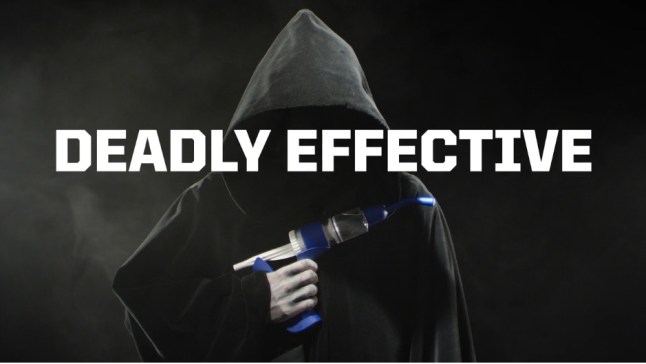
DeadlyEffective

I don’t even want to know what that thing is used for, but I now have much more sympathy for cows than I did before I saw this…


I kept imagining this conversation going on at Broadhead when it came to the “meth” campaign:

Rep 1: Hey, remember our #porkplease campaign? I bet we can’t look any dumber with an awkward approach than that!

Rep 2: Hold my beer…

In any case, here are two “teachable moments” to take away from this fiasco:

PARANOIA IS YOUR FRIEND: As we have said time and time again here, paranoia is your best friend when launching any kind of public endeavor. It’s the reason I reread the word “public” every time I write it, just to avoid something like this:

PublicSchoolBillboard

It’s why magazine names should really be considered when you start designing things:

pic-dump-303-7

Even if you think, “There’s no way this could be a problem…” just think again:

PenisMag

Or why you need you still need to “consider the fold” when you design pages:

Headweiner

You want to always ask yourself, “How could this thing go wrong?” The first person who said, “Meth? I’m on it!” should have had six people around him/her saying, “Uh… PHRASING!”


OBSERVE FILAK’S FIRST RULE OF HOLES: The rule is simple: When you find yourself in a hole, stop digging. Instead, Gov. Kristi Noem “doubled down” on the meth slogan in media statements after Twitter basically had a good laugh at her state’s expense.

South Dakota Gov. Kristi Noem (R) is defending the state’s launch of an anti-drug campaign with the slogan “Meth, we’re on it.”

The tagline drew a mix of criticism and ridicule across Twitter on Monday, but Noem cited the backlash as proof that efforts to raise awareness around South Dakota’s methamphetamine crisis was, in fact, working.

“Meth is IN SD. Twitter can make a joke of it, but when it comes down to it – Meth is a serious problem in SD. We are here to Get. It. OUT,” Noem tweeted Monday night.

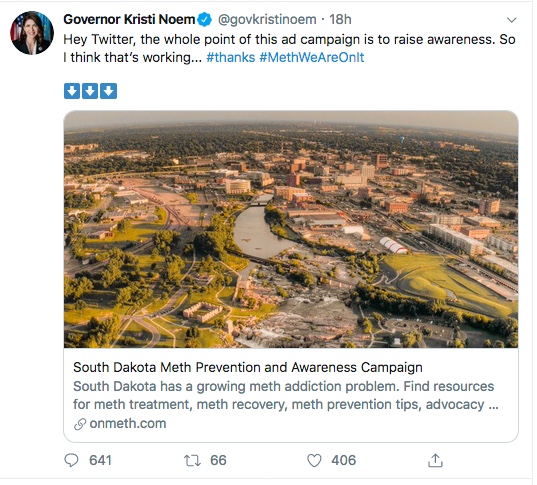
She also decided that it was a good thing everyone was now asking if the entire state was on meth:

NoemTweet

OK, look, I get that everyone is paying attention to you now, and there’s nothing you can do about it (and you just blew through about half-a-million dollars to turn your state into a laughing stock). And we can argue that “There’s no such thing as bad publicity,” until the end of time.

However, saying we told everyone “we’re on meth” was a good idea because it “drew attention” is like saying former Toronto Mayor Rob Ford helped people understand the severity of the city’s crack epidemic:


Or trying to combat child sex abuse with the slogan: “Kids, We Feel You.”

Once you realize you’re going to do more harm than good when you continue to insist this really isn’t as bad as people are making it out to be, stop digging.


The Junk Drawer: Dead sources who refuse to talk, the use of dead kids as a marketing campaign and other mistakes to avoid

As we noted in an earlier post, the Junk Drawer is usually full of stuff that didn’t fit anywhere else but you still need, so let’s enjoy a few of the more awkward moments sent in by the hivemind and other friends out there:

DEAD MEN TELL NO TALES: When you’re doing breaking news live, you often find yourself on an adrenaline high and you also try to tell people all the important stuff you did to get them as much information as possible. In the case of KTLA’s Sara Welch, she went above and beyond to get as much information as she could regarding a fatal crash:

I have no idea whom Welch was trying to reach, but I’m guessing she really wasn’t shaking down a dead guy for answers. Then again, this approach sometimes works in the movies: (Probably NSFW)


Speaking of shaking down the dead…

MASS SHOOTINGS AREN’T MARKETING OPPORTUNITIES: Certain names or terms are so indelibly linked with horrible things (Nazis, Jeffrey Dahmer, Virginia Tech shooting) that they are essentially the third rail of marketing: You just don’t step on them if you want to make it out of here alive. We have mentioned a few marketing failures in this regard, such as the “coolest monkey in the jungle” sweatshirt and the “pillows and skirt by Auschwitz” fashion movement. However, the folks at Bstroy decided to up the “what the hell is wrong with you?” fashion movement by creating hoodies with the names of school shooting sites on them. Naturally, they were laced with bullet holes:

BstroyFAIL

Look, I have a hard enough time understanding why my kid (and seemingly everyone else in her demographic group) wants clothes with holes in them, but I’m pretty sure nobody with an inkling of human empathy or at least one-third of a brain thought this was a good idea.

As the internet freaked out on the “edgy company,” the owners issued a statement that violated “Filak’s First Rule of Holes:

“Sometimes life can be painfully ironic,” the statement reads. “Like the irony of dying violently in a place you considered to be a safe, controlled environment, like school. We are reminded all the time of life’s fragility, shortness, and unpredictability yet we are also reminded of its infinite potential.”

Mmmhmm… Speaking of bad ideas poorly executed…

WORD CHOICE MATTERS: Case in point, the questioning of a ship captain whose boat exploded into flames:

69511389_10156200929926191_4240205174485811200_n

I like my captain grilled medium-rare, with a little pink… Speaking of conception:

DID THE KID SHANK SOMEONE AT HIS BIRTH?: Misplaced modifiers end up causing all sorts of problem, as does awkward structure and horrible punctuation. These things all deserve attention, even if you’re “just on Twitter.”

DeadSonInJail

The first two times I read this, it sounded like an infant was found dead in his jail cell and all I kept thinking was, “How the hell did a 6-month-old kid end up in jail? Did he hold the delivery room hostage or something?” Eventually, I read it the right way, but honestly, this is an easy clarification.

Two commas solve this problem:

A XX-year-old man, awaiting trial for the death of his 6-month-old son, was found dead in his jail cell, authorities say.

Remember, Twitter did this really nice thing for us in doubling the number of characters we can use to explain things. (Personally, I still don’t like the 280-character limit, as I explained in the “Fat Pants Theory,” but I’m getting used to it.) That said, you should feel free to write in complete sentences and maybe include a little more punctuation as needed.

Have a good start to your week!

Vince

(a.k.a. The Doctor of Paper)


Journalists and burnout: A pre-semester plea

School starts back this week or next week or, in my case, after Labor Day, so the drum beat of readings, homework, quizzes and tests is about to begin once again. For a lot of you, so will the career-based extra-curricular activities you have come to love, such as student publications, student broadcast or student professional groups. Even though a lot of us could really do with another month of summer, we tend to feel refreshed and ready to go once again, diving into these things with vigor and a backpack full of new office supplies.

The hard part comes about six weeks later when tests come crashing down, the paper that was “so far away” is due tomorrow and everything at the student media outlets is spinning out of control. The stress, the anxiety and, yes, the burnout begins.

The Columbia Journalism Review looked at this from a professional perspective recently, with writer Bailey Dick outlining how professionals in journalism tended to blow off stress and such until self-destructive behaviors kicked in. A good friend of mine, Scott Reinardy from the University of Kansas, has published a wide array of studies that have outlined and supported these concerns in all sorts of journalists. His book on “Journalism’s Lost Generation” showcases how burnout has created serious problems in our field.

What’s important to understand is that burnout isn’t something that happens overnight or something that is inevitable. It’s like when the “oil change” light comes on in your car. It means, “Hey, you might want to look at this…” If you get things handled right then and there, you’ll probably be OK. If you wait 50,000 miles to look into this situation, it should come as no surprise to you if your engine explodes and your car becomes useful only as a 3,000-pound paperweight. The build starts now (or even earlier) in the field. You need to look at what is happening to you and how you can work through it.

Fighting it starts with the understanding of what you can handle, what you can’t handle and how best to react when facing either of those situations. It starts by acknowledging your strengths and limitations. It also helps to examine what you want to prioritize and what can wait for another day. It forces you to see how certain things are affecting you and pushing you toward unhealthy changes and coping strategies.

The problem with burnout is that we only tend to see it when it hits and hits hard. It’s like that oil change example: Suddenly your engine’s on fire while you’re driving 70 mph on the freeway and you start to think, “Oh crap, NOW I have to deal with this.” It often takes a breakdown for us to come to grips with the idea that we have a problem. We talk about disaster in the past tense, not as something we’re building toward that could be avoided.

With that in mind, consider this post as a plea of sorts. Start monitoring yourself now at the beginning of the term for the early signs of burnout. If you’re wondering what they are, Scott’s got some great thoughts in here as well as in some of his other research. Give yourself that baseline from which you can figure out how you’re actually doing along the way.

As for me, I’m taking the official summer break now. I’ll be back with the regular daily (Monday-Thursday ish) schedule starting after Labor Day when my classes resume.

Thanks for reading,

Vince

(a.k.a. The Doctor of Paper)

Unblock this: Modern advertising and why we hate it

According to the media-writing book:

Advertising is about more than telling people what to buy and where to buy it. It is a communication format that mixes information and persuasion elements in an attempt to convince audience members to act. The desired action can take many forms, including purchasing a product, supporting a candidate or forming an opinion. In addition, some advertising is geared toward preventing action, such as buying some other company’s product, supporting a different candidate or changing an opinion.

Much of what makes this happen is about knowing your audience, which we discussed at length elsewhere in this blog and in these books. Demographics, geographics, psychographics and more all play a role in making sure the message gets from a valued organization to an interested and engaged receiver. Given what most of us experience on a daily basis, particularly on the web, that might seem as idealistic as taking Cinderella as your spirit animal.

If you want to know why advertising and media operations are in such ugly spots today, consider a recent experience I had in trying to read an online column. See if it matches with what you tend to experience and then ask yourself if that initial paragraph meets with reality:

One of my favorite authors, Terry Pluto, writes about Cleveland sports for the Plain-Dealer’s website and a link to one of his columns popped up in my Facebook feed. I clicked on the link and hopped over to the PD’s site, only to get a lock screen in which it noted I was using an ad blocker and asked me to disable it.

Some sites give you an option to continue without shutting off the blocker. Some try to guilt you into shutting it off. Some are like a Joe Pesci character on a meth bender, demanding you turn off the frickin’ blocker, you frickin’ mook… In this case, the PD gave me the “shut it off” option and nothing else. (Previous times, I got an option.)

As I noted earlier, I’m OK with paying for content. I’m also fine with the model that has driven media for decades through its salad days: Ads pay the bills for the content. However, consider these crucial messages that I got as a result of shutting off the blocker:

AdBlock1

Um… OK, apparently “history” is now about ’70s fashion and boobs… And thanks for trying to entice me with the “not suitable for all eyes.” It’s like the Simpsons monorail trick, but with sexual intrigue.

AdBlock3

AdBlock4

What the internet apparently thinks it knows, is that I’m broke, looking to cheat on my wife/get murdered and I have attention deficit disorder since it gave me TWO of these ads. It also presupposes that “older women” means anyone who can buy booze without the clerk breaking out a black light on her ID and that I wasn’t thinking, “Isn’t that Elizabeth Shue?” Moving on…

AdBlock6

If you touch your lip, you’re dying of cancer. Got it. Thanks.

AdBlock2

I’m not really deaf. I’m just ignoring you…

And finally:

AdBlock5

(I spent three minutes trying to type a word that effectively captures that sound I make when I’m feeling like I’m throwing up in my mouth. Whatever that noise is, fill it in here…)

I’m guessing your experiences are somewhat similar to mine, with tweaks for age brackets and theoretical senses of what “kids your age” want to see: Hot chicks/dudes are waiting in your area… 10 simple ways to stop (Acne/HPV/Failing Calculus for a third time)… SHOCKING! You won’t believe what (Fill in your childhood Disney Show love interest) looks like now!…  Drivers in (fill in your area) can BEAT SPEED TRAPS…

This is what advertising has devolved into for a number of reasons:

  1. It’s cheaper: You can place millions of impressions for the cost of what it would take to get a full page ad in a major metro paper.
  2. You have wider reach: A newspaper or a broadcast signal can only reach so far. An internet ad can come from anywhere on earth (except our old newsroom, where apparently you can’t get a signal to save your life).
  3. Fewer risks/restrictions: There used to be a lot of vetting and careful checking of ads and products. Now, ad groups and sites and collectives just send out anything as long as the CC number works or the check clears.
  4. Money: Media outlets have always been accused of being cash whores when it comes to advertising. Back in the earlier days when money was free-flowing, they could rebut this by avoiding sketchy ads. In the “we’re still OK” days, they were more like Julia Roberts in “Pretty Woman.” Today? Um…  My only analogies will get me redflagged by my editor, so just think of the lowest level of willingness to do stuff for money you can and you’re about there…

The unfortunate byproduct of this approach is a race to the bottom for advertising in the same way there appears to be a race to the bottom in news and other media fields. It can be easy to go along with the crowd in this regard, but if you want to make your advertising worth something, think about what it is you’re trying to do to create a message that reaches your readers and effectively evokes something from them. A great example of this just came out today (h/t Al Tompkins) with Nike showcasing the Women’s World Cup Team victory:


And here’s my favorite one from a few years back that still gives me the chills:

Nike gets it: Tap into something. Know your audience. Showcase the emotions associated with those people.

In the soccer one, it was one of announcing their presence with authority. With the Cavs one, it was that complete sense of quiet disbelief. The audience EXPECTED the women’s team to win and so it talked about the greatness of that team. Cleveland had gotten crushed so many times before, the audience EXPECTED the Cavs to lose (especially after going down 3-1 in the series). It got the emotions just right and it didn’t layer on the schmaltz.

If advertisers want to get beyond an eyeball grab, they have to fit more into this mold and touch on what we talked about at the beginning of the post. If the media companies that take their money want people to shut off the ad blockers, they’re going to have to ask questions that go beyond, “And what’s the 3-digit verification code on the back of the card?”

And if I ever want to eat lunch again, I’m not ever seeing another episode of Dr. Pimple Popper.