“Go take pictures of birds:” What happens when so-called adults treat student journalists poorly (and three tips for dealing with the situation properly)

When it comes to crime or disasters, the folks working the scene have a job to do and journalists need to respect that. However, respect goes both ways, something a firefighter interacting with journalists from The (El Camino College) Union didn’t quite understand:

The firefighter told (Rosemary) Montalvo, an assistant photo editor who was taking pictures of the scene, to “Go take pictures of birds,” she said.

“In my head I said ‘OK, we’re not going to get anywhere with him,’ so I decided to say ‘can I have your name and your badge number,” Montalvo said.

The firefighter refused, and said he intentionally was wearing nothing that would identify him, Montalvo said.

This isn’t the first time a student journalist met with the journalistic equivalent of a “Go (expletive) yourself” comment from a person in power. A few years back, a journalist for the Royal Purple, the paper at UW-Whitewater, apparently ran afoul of the school’s head football coach, who told him the perennial D-III national champions were off limits to the paper:

According to a story in the student paper, Leipold took the action after becoming angry over an editorial titled, “Spoiled athletes need reality check.”

Leipold then initially decided that no one from the student-run newspaper could call anyone associated with the football program unless he approved. And he said coaches or players would not be allowed to answer questions from student reporters during the 2009 season.

“The door is shut,” Leipold said Wednesday. “Go cover soccer…”

Leipold later apologized for his actions, but the sense that student journalism is some how “less than” really should bother anyone associated with journalism. I recall one incident in which our student paper’s photo editor went to the police station to request a mug shot we needed. The person at the desk flatly denied one existed for the photo editor. When the editor pointed to a copy of the photo pinned to a cork board over this woman’s desk, her response was, “Oh, that’s for the real newspaper in town,” meaning the city paper, the Muncie Star-Press. He returned empty handed and fuming.

The situation that bothered me the most, however, was one in which a student reporter told a broadcast news professor that she had to skip a class to cover a bit of breaking news. He responded that when she was done “playing journalist,” she should consider the importance of making it to class.

I get that nobody likes getting skipped out on, but a professor in a media field should clearly understand that breaking news happens and that insinuating that this was playing a Fisher-Price “My First Journalism” game is disingenuously insulting. Student journalists run the same risks as anyone else when it comes to being in the field. An active shooter doesn’t say, “Oh, you’re just PLAYING journalist, so let’s skip you…” A fire doesn’t go out of its way not to burn a student because, well, it’s just make-believe journalism. If you don’t believe me that student journalists risk a lot, go take a look at the Cavalier Daily’s coverage of the “Unite the Right” rally a few years back. Tear gas stings everyone equally and there were a lot of folks with guns out there who probably weren’t checking press passes to see which people were “real journalists.”

Student journalists also operate under the same First Amendment freedoms and run the same legal risks as anyone else. A student who libels a professor doesn’t get a “do-over” or something. A student publication that violates copyright can’t fight off a lawsuit with a hand-drawn “I’m berry berry sorry” card and a coupon for a “super-duper feature” in the next issue. People on the receiving end of problematic coverage from a student media outlet can decide to what degree they want to press the point legally, the same as if the offending work appeared in the New York Times.

When confronted with people who decide that your work lacks merit, simply because you are a student, consider these thoughts:


Remain Calm: When something essentially tries to treat you like a child, nothing proves their point better than if you act like one. Sure, that chucklehead is violating the Bill of Rights, flouting the law and basically ticking you off, but it’s much better to be in the right than to give that person ammunition to use against you later. A good rule of thumb: The worse your opponent acts, the more decent you should act.


Follow the Law: The approach the students at The Union took was perfect: Here’s the law, we’re just fine and we’re not going anywhere. They knew what their rights were and why it was they could do what they wanted. This is why most journalism programs make law a required course and why most student media organizations stress it for their staffers.

The Union folks also took a great step when they asked for identifying information from the official so they could deal with this after they did their job. The fact the guy did the, “You can’t make me! Neener, Neener, Neeeeenerrrr” thing pretty much made it clear he knew he was wrong. The staff followed up on the issue later with the fire department and got a nice apology from officials there, who promised to look into this issue.


Stay Safe: This is especially true when you cover chaotic or breaking situations. The law can protect you from a lot of ramifications, but sometimes, being right, calm and lawful won’t make you whole. The conversation I had with Tim Dodson from Virginia really drove home that point: He was watching people carry torches and guns, dealing with tear gas and riotous conditions and looking at a situation that ended with at least one person dead. Did he and his staff have the right to be there? Absolutely. If something had gone wrong, was the law on their side? Totally.

However, none of that helped if some idiot decided to punch him out or someone started shooting. The same thing is true if you find yourself covering a fire that is raging out of control. The law might make you judgment-proof, but it won’t make you fire-proof.

(A fire captain once told me a story about a broadcaster who wanted to do a stand-up in front of a building that was still on fire. He told her not to stand where she wanted to stand and then he left the area. She then immediately went to that spot to do the stand up, only to find that something the firefighters were doing caused several windows to explode outward. She was showered in flaming debris and almost hurt badly.)

This is why good relations between public safety professionals and media members is crucial. I was lucky to know a number of police and fire folks who were good to me over the years when I was a reporter. We respected each other, so when one of them told me, “Stand here” or “Don’t go over there,” I trusted it was for my own good and the good of the integrity of their operation. If I had experienced what the students at The Union experienced, I might have stood elsewhere or went somewhere that could have been dangerous.

I hope that future exchanges between those folks and public safety officers are better, because trust and credibility can make a huge difference when it comes to working together to get both of their jobs done.


Former Georgia State Rep. Andy Welch proposes legislation to stop journalists from being so mean to him.

As we’ve explained repeatedly here before, just because you don’t like what journalists are doing, it doesn’t mean that it’s illegal, immoral or unethical. Apparently, Andy Welch, an outgoing state representative in Georgia, didn’t get the message, given his attempt to create a Journalism Ethics Board in his state:

The measure was sponsored by Rep. Andy Welch, R-McDonough, a lawyer who has expressed frustration with what he saw as bias from a TV reporter who asked him questions about legislation recently. He said he thinks the profession could benefit by setting ethical standards for all journalists to follow. Five other Republicans signed on to sponsor the bill.

Welch, who was unopposed in his November 2018 reelection bid, submitted this bill with the approach of a kid pulling a Halloween prank that involved a flaming bag of dog poo:

 Welch announced he would be resigning from the General Assembly after the session, which ended Tuesday. However, his bill remains alive for consideration during the 2020 session.

The bill would force the chancellor of the University of Georgia System to set up the board, which I hope would be referred to as “The JEB.” It would also require “The JEB” to establish the “canons of ethics” for journalism in the state, a “voluntary accreditation” system, a grievance process and a series of sanctions for people who violated whatever it is that this group established as “canons.”

Beyond these rather annoying bad ideas comes some horribly bad ones:

If approved, the bill would also mandate that anyone interviewed by the media would be able to request and receive copies of photographs and audio and video recordings taken by reporters and photographers. Such copies would have to be provided free of cost, even though state and local governments are allowed to charge the public for copies of any documents it provides.

If a media outlet refuses to provide the copies, it would be subject to a lawsuit and a civil penalty, under the bill.

Various media organizations, including the National Press Photographers Association and the Georgia First Amendment Foundation, have already spoken out against this idea. I offered a law expert/journalism faculty member a chance to offer some thoughts on this thing happening in his state, but he declined, noting it wasn’t “worth my getting involved.”

He’s right that this is way beneath him to dignify something this dumb with a response. Fortunately, there’s very little beneath me, so I figured I’d outline a few points that might inform or amuse anyone worried about this:


We already have something like this, only better, clearer and non-Draconian. The Society for Professional Journalists Code of Ethics, which you can find here, outlines the ways in which ethical journalists are expected to behave as they ply their trade. Michael King, president of the NPPA, pointed this out as he highlighted both groups’ codes in his statement about the bill:

Ironically, the bill calls for the creation of an ethics board to be housed at the University of Georgia-Athens’ Henry W. Grady College of Journalism and Mass Communication, where NPPA is headquartered. We have confirmed that the bill was introduced without their knowledge or approval.

Robust codes of ethics — including NPPA’s and SPJ’s — have existed for decades and are widely accepted as industry standards. No agent of any government should play any role in setting ethical or accreditation standards for journalism.

What you don’t see in either code is a “crime and punishment” section, because, um… that’s not the point of an ethical code. In couching his “law” as an “ethics” issue, Welch is trying to circumvent the First Amendment, which a) prohibits most of what he’s trying to accomplish and b) was established as a Constitutional right for a reason (namely the Founding Fathers saw the importance of a free and unfettered press, even if Andy Welch doesn’t).


Something shouldn’t be illegal just because you don’t like it. We pretty much covered this concept with our look at John Oliver, Bob Murray and the infamous Mr. Nutterbutter, but for those of you who missed it, enjoy this link.

According to the Atlanta Journal-Constitution, Welch and several other legislators don’t like the way the media down there keep digging into their sketchy behavior. Welch himself was rather perturbed with questions from a TV reporter that he felt were biased. What those questions entailed, the AJC doesn’t make clear, but given his thin skin on this topic, I’m guessing they were only slightly tougher than this hard-hitting set of inquiries:

It’s unfortunate that Welch doesn’t like being questioned on things that he’s doing as a legislator, but that’s part of the gig when you take the job. (It’s like taking a job as the person who has to empty the Port-O-Johns at the county fair and then complaining about all the crap you have to deal with (literally) every day. As nice as it would be for you to mandate that people “hold it until they get home” so that your job would be easier, that’s not gonna happen.)

King notes in the NPPA statement that the organization will keep an eye on this bill for a variety of reasons including “the abrupt resignation of its author from the Georgia General Assembly.” The purpose of the media in this country is to hold our leaders to account for whatever it is we think the citizenry needs to know, which for me will include what led to this “abrupt resignation.” (Google news alert, here I come!)

We’re paid to be nosy and dig into stuff, even if it’s stuff you don’t like.


We don’t license journalists in this country, something for which Welch should be thankful. As bad of an idea as this is, and as horrible as it would be for journalism, and as unconstitutional as it is, I would LOVE to see this thing happen for JUST ONE DAY for one simple reason: Andy Welch has a blog.

(Irony alert: It’s tagline? “The Heart of Every Good Partnership is Trust”)

When people like Welch think about journalism, journalists and media-based endeavors, they tend to think of whatever TV reporter rubbed them the wrong way with a question five minutes earlier. What they don’t realize is that we are a long way from the days in which area “journalism” consisted of one or two major metro newspapers and three TV stations.

These days, anyone with a phone and access to an app can become a journalist in the most basic sense. When you yammer on Facebook about the annoying kid holding up the line at the cafeteria or you tweet about your landlord being a convicted murderer, that counts as journalism.

Welch’s hard-hitting expose on Week Seven of the Legislative session, his look at the “Hands-Free Georgia Act” (which sounds like something out of a “Chainsaw Massacre” movie) and  his post about the success of the Locust Grove High School baseball team, in which he has serious antecedent-pronoun-agreement issues also count as journalism in this new digital realm. Some of this journalism may be intriguing and some of it may be painfully dull, but it’s all given the same wide berth to operate unfettered under the banner of journalism.

I can’t say what will happen for sure with all this, but if I had to guess, I’d wager heavy on these two things occurring:

  1. This bill will die fast and quiet.
  2. Every media organization in the state that could have been subjected to “The JEB” will spend the next four weeks digging into anything Welch has ever done and trying to figure out what led to his “abrupt resignation” from the statehouse.

Inflatable rats and car horns aren’t free speech. Flipping the bird? Totally protected…

Courts often must parse what does and does not count as protected speech, and apparently, a giant inflatable rat doesn’t fit the bill, according to a court ruling last week:

A Wisconsin town’s sign ordinance did not violate a local union’s free speech rights, even though the ordinance prohibited the union from displaying its 12-foot inflatable rat, Scabby the Rat, to symbolize its protest against a local business.

The union erected Scabby the Rat to protest a local car dealership in the Town of Grand Chute, alleging the dealership was paying nonstandard, lower wages to masons on a construction project. The union placed Scabby the Rat in a right-of-way on a major thoroughfare near the dealership, drawing attention to protesting picketers nearby.

In other cases, courts have ruled in favor of some “different” forms of speech, such as holding protest signs, yelling slogans or even singing.

A Wisconsin appeals court ruled on Thursday morning that a state requirement for singers in the state Capitol to obtain a permit was unconstitutional.

The ruling by Judge JoAnne Kloppenburg of the 4th District Court of Appeals appears to be the last word on the matter, which became a hot-button issue during the summer of 2013 when Capitol Police arrested hundreds of protesters for singing in the Capitol rotunda without a permit.

However, my favorite parsing of what is and isn’t free speech involves a probation and parole official from Wisconsin who was disgruntled with then-Gov. Scott Walker.

Between 5:30 p.m. and 5:45 p.m. each day, someone in a black Honda would drive past Walker’s house in Wauwatosa, blow his horn like crazy, give the finger through his sunroof and shout, “Recall Walker.”

He was ticketed for using his horn, a charge he fought to no avail:

Milwaukee County Circuit Judge Mary Kuhnmuench found that there was no precedent for horn-honking being constitutionally protected political speech. Brodhead, who represented himself, was fined $166.20.

That said, he was still able to continue his protest without the use of a horn, and he did so.

During the workweek, he leaves his downtown office around 5 p.m., drives by the governor’s residence near the corner of N. 68th St. and W. Blue Mound Road, offers a one-finger salute and bellows his support of the Walker recall effort.

Only now he doesn’t blow his horn.

So, you can call someone a rat, but you can’t display a giant rat. Conversely, you can flip the bird at someone to honk them off, but don’t honk at them while you do it.

Who says the law isn’t fun?

“Count to Five:” Why Clarence Thomas’ interest in relitigating Times v. Sullivan isn’t going anywhere fast

The editor of the Democrat-Reporter in Linden, Alabama published an editorial in which he called on the Ku Klux Klan begin night rides against “Democrats in the Republican Party and Democrats (who) are plotting to raise taxes in Alabama.”  This became the biggest freakout moment of the day Tuesday for journalists, journalism professors and anyone with a vested interest in media, until Supreme Court Justice Clarence Thomas pulled a “Hold my beer” moment.

Thomas, writing for himself only in a concurring opinion, stated that Supreme Court should reexamine the 1964 decision in New York Times v. Sullivan, in which the court held that a public figure had to prove actual malice in order to win a libel suit:

He said the decision had no basis in the Constitution as it was understood by the people who drafted and ratified it.

“New York Times and the court’s decisions extending it were policy-driven decisions masquerading as constitutional law,” Justice Thomas wrote.

Thomas’ writing involved the court’s decision to reject an appeal from Kathrine McKee, one of the women who accused Bill Cosby of sexual assault. She claimed she had been libeled because Cosby’s lawyer called her dishonest. As a public figure, the court held that Sullivan applied and thus she had to show actual malice had occurred.  (Sullivan is one of the most important free-press decisions ever issued by the court as it makes it much harder for public figures to use libel laws as a sword instead of a shield. For a good synopsis of the facts on Sullivan, you can go here. If you want to read the whole decision, you can go here.)

About six seconds after news of Thomas’ statements on Sullivan emerged, journalism folk in all of my social media feeds began mildly to seriously panicking over what this could mean. My first two thoughts were:

  1. Clarence Thomas? The last time I thought about him at all was when I got excited to see Wendell Pierce playing him in an HBO film about the Anita Hill controversy. (To be fair, Pierce probably played Thomas better than Thomas plays himself.)
  2. This guy is shit-talking the Warren Court on a 9-0 decision? That’s like me calling out LeBron James based on basketball talent. Also, although unanimous decisions are the norm on the Roberts Court, it’s hard to imagine it running the table on a decision as crucial as Sullivan.

To get something like this rolling, Thomas would need to find four other justices to see the law the way he does in this area, which is a tall order. Still, the idea that something this important could be undone by someone this unimportant bothered me, so I asked media-law expert Daxton “Chip” Stewart to give me a sense how worrisome this bit of news is.

“First thought, it’s nothing to freak out about because Thomas has always been like this,” Stewart said via email. “(Former Justice Antonin) Scalia famously hated Times v. Sullivan, but he knew he couldn’t get a majority to go along with him, so he gave up trying to kill it. Thomas isn’t so shy. Remember, he wrote a separate concurring opinion in the Bong Hits 4 Jesus case to say that Tinker was wrongly decided and students have no free speech rights. The guy is no friend to the First Amendment rights that the Court has recognized over the past century.”

Stewart said even though no one sided with Thomas in his decision, the question of what this means going forward will depend on how the rest of the judicial system reacts.

“The most important thing about this Thomas opinion is that nobody else joined it,” he said. “He’s out on a limb. The potential problem is that it opens up a window for other aggrieved anti-media judges to think that maybe overturning Sullivan is in the realm of possibility or at least legitimate legal discussion. They’re already doing the same thing in Roe v. Wade — appellate court judges boldly rejecting it as precedent, saying it was wrongly decided and it’s time for the Supreme Court to overturn it. That flies in the face of the entire notion of stare decisis.

Thomas is also floating a trial balloon to see if any of the new appointees think this is an idea worth pursuing. The Times pointed out in its coverage today that both justices Brett Kavanaugh and Neil Gorsuch haven’t stridently opposed the Sullivan ruling, with Gorsuch saying during his confirmation hearing that he relied on Sullivan during one of his prior rulings.

Stewart said it is possible that both men could lean more toward President Donald Trump’s idea of “opening up the libel laws” and thus shift their stance on this issue. He also noted that Justice Samuel Alito is a “wild card,” but that Chief Justice John Roberts “cares too much about SCOTUS legitimacy and precedent to burn it on something as small (to him) as press freedom.”

“So the big risk would be if another Trump appointee were to come on in the seat of one of the liberal/moderate wing of the court (Ginsburg, Kagan, Breyer, Sotomayor) and join up an anti-media bloc of Thomas, Gorsuch, Kavanaugh, and maybe Alito,” he said. “Then there’s five votes to undo Justice (William) Brennan’s historic opinion in Sullivan.

“And as Brennan famously said, the most important thing for a justice to be able to do is to count to five.”


As student journalists, how do you report on rape allegations? Pretty much the same way you report on anything else.

A friend of mine sent me a link to an article posted on a writing website that had her seriously concerned and had me grateful that I wasn’t in her shoes.

The college-aged woman who wrote the article stated that the head of a university’s student government had raped her. She outlined the history of their relationship, including previous consensual sexual interactions, discussed her own history of sexual encounters and detailed the incident in which she states the man had sex with her without using a condom and without her consent to do so.

In addition, she outlined specific allegations including:

  • She was not the only person with whom this man had non-consensual sex: “It appears that there are many more young women than just myself who have been assaulted or harassed by him,” she wrote.
  • She heard from another woman that this man had infected multiple partners with chlamydia. (She wrote that she underwent testing and her test came back negative.)
  • She heard from that same woman that this man had cheated on her with multiple partners.

My friend advises the student publication at the university where this woman attends (or attended) school and where this man serves as the head of the student government. In other words, this has massive ramifications for the audience her paper serves.

The question then becomes, “How does a student media outlet go about reporting on a rape allegation, made in this fashion, in a decent, fair and ethical way while also keeping a watchful eye on any legal ramifications?” The answer in the headline is a bit glib, but it is more true than not: Basically the same way you report on anything else.

Consider these basic building blocks:

Background research must come first: Nobody wants to look like an idiot when they get into a story where they have no prior knowledge of the topic. While really bad reporters kind of fake their way through a topic, good reporters dig deep to fully understand it well enough to speak intelligently on it. Consider this the first thing you must do for ALL stories, whether you’re trying to explain how the sport of curling works (my first “what the hell do I know about this?” story that required ridiculous amounts of research) or trying to figure out how to ask questions in an interview with a rape survivor.

No matter how scary the story, you are not the first person to cover any given topic. That means there are experts out there who can help you figure things out. In the case of a story on rape, the people at the Rape, Abuse & Incest National Network (RAINN) and the folks at the Dart Center can provide you with information on the topic at hand and how to navigate your reporting. In many cases, organizations like these have put together guides, tips and hints, such as the Dart Center’s guide to covering sexual violence and trauma or its step-by-step outline of how to report on campus rapes and sexual assaults.

The best way to not feel like you’re going to do something stupid in your reporting and writing is to make yourself as smart as possible on the topic.

If your mother says she loves you, go check it out: This is the first rule of all good journalism. In other words, go do some digging for yourself before you rely on anything you hear second hand. Ask for an interview with the woman who wrote the story so you can hear her story first hand. Ask for an interview with other people directly attached to the story, such as the man accused in this story. Look for things elements of the story that can be verified without traumatizing anyone or making it look like you have already decided who is right and who is wrong.

Cases involving false rape allegations are quite rare, but the premier example of a story like this that went off the rails in a horrifying way was the Rolling Stone story, “A Rape on Campus.” The piece told the story of “Jackie,” a University of Virginia student who told the writer she had been gang raped at a fraternity party. “Jackie” also stated that the administration wouldn’t do anything to help her and that it was more concerned in protecting the image of the school than investigating her situation.

The piece ended up being retracted and it led to multi-million-dollar lawsuits against the magazine. The fraternity reached a $1.65 million settlement with the magazine, while the administrator made out to be the “chief villain” of the story reached a confidential settlement, after a federal jury awarded her a $3 million judgment that the magazine was appealing.

A post-mortem analysis of the story by the Columbia Graduate School of Journalism and commissioned by Rolling Stone found that the magazine had failed to do basic reporting to verify the claims asserted in the story and that the piece had basic facts wrong. The report stated the reporter never interviewed the friends “Jackie” had mentioned, instead relying on her recollections of what they told her. It also noted that specific parties and dates of events didn’t fit with actual events or parties, something that would have been easy enough to verify. The report also outline other similar things like this that could have been done to help put the magazine on a stronger footing or better decide how to proceed with the piece.

Simply put, you are a reporter, so report. That doesn’t mean you don’t believe someone, but you have to make sure you can support the content you publish to the best of your ability.

Check your legal liabilities: The Student Press Law Center provides student journalists with free legal advice on a wide array of topics. If you have concerns that a story might libel someone, a call or email to SPLC is worth your time. The “Dynamics” textbooks list off the key elements of libel as:

  • Publication: Did you disseminate the content to someone other than the person claiming to be libeled?
  • Identification: Is the person claiming to be libeled named or otherwise easily known based on how he or she is described in the story?
  • Harm: Can the person claiming to be libeled demonstrate serious damage to his or her reputation? This usually involves being accused of a crime or associated with “unsavory” illnesses.
  • Fault: Can the person claiming to be libeled show that the person publishing the content either did something wrong or failed to do something that should have been done to prevent the libelous content from being published?

In case you’re wondering, a story like this would go four-for-four in terms of these items. That means you’re into the defenses against libel, including truth, privilege and so forth. What also makes this interesting is the issue of what level of fault the man in this story would have to prove. Ordinary citizens only have to prove negligence, which is easier to show, while public figures have to demonstrate actual malice. In that instance, the public figure has to show the material was false and that the publisher had a reckless disregard for the truth. The SPLC is your friend, so give the folks there a call with questions before you publish.

The duty to report is not the same as the duty to publish: If you do your reporting and you aren’t certain you have enough of the story to tell the story, wait until you can gather enough content to feel more secure. If you find that your reporting hasn’t revealed enough to support or refute conclusions crucial to the story itself, don’t feel pressured to publish something because you are worried about “how it would look.” You are responsible for what you publish, so you need to feel confident you can stand behind what you put out there.

It’s always better to be late than wrong.


Once you get deeper into the writing, you should pay additional attention to style, word choice and clarity to avoid creating problems for your sources and your readers. In addition, having a legal eagle and an expert in the field give you a quick review for some thoughts and polish points to consider won’t hurt either.

This is obviously a serious and delicate topic, which means tact matters as does basic human decency. That said you can do all of this and adhere to quality reporting standards to make sure you put your best possible story forward.

No Neuralizer for Nemec: When your alma mater backs off in a suit over open records.

Last week, we noted that Alex Nemec’s alma mater sued him over a set of documents he legally obtained as part of a court ruling. The record keeper at UW-Oshkosh inadvertently sent him copies of the unredacted reports, leading the state’s Department of Justice to file a motion, asking the courts to reopen the matter. Even more, the professor who is the subject of these documents, Willis Hagen, asked the court to force Nemec to “name names” of anyone he might have shared this information with.

The degree to which the state was basically asking Nemec to forget everything he learned in those unredacted documents and never disclose anything about the content within had both First Amendment and privacy issues, as Nemec’s lawyer noted at the time.

On Friday, the state backed off:

32V3931-78 Notice of Withdrawal of Motion to Reopen F-S 10-26-18_Page_132V3931-78-Notice-of-Withdrawal-of-Motion-to-Reopen-F-S-10-26-18_Page_2.jpg

Nemec emailed me Friday to let me know his lawyer had forwarded him this. The upshot is that the state has decided against pursuing the reopening of the case and pursuing the injunction, so he can continue to report as he sees fit based on what he learned, without fear of a neuralizer:

Neuralizer12
(Next time, Alex… Next time…)

Nemec said the only issue left at hand is if Hagen wishes to pursue his request to “name names,” which would require him to file a motion on his own. If he does, Nemec said, it will come before the judge on Nov. 21.

We’ll keep you posted.

What happens when your alma mater screws up an open-records release and then sics the Department of Justice on you.

As a student journalist, Alex Nemec heard a rumor that a business professor was teaching a class when some university officials entered the room, removed the professor and dismissed the class. The next time the class met, he heard, the students had a new teacher and nobody knew what happened.

He wanted the answer to a very simple question: Did this actually happen and, if so, why?

His attempt to find out the answer has taken almost two years, during which time he has written several stories on the topic, graduated from college and endured a court battle over tangential records. He remains no closer to finding out the answer to his question and his legal tussles continue to take strange twists.

The latest twist involves the Department of Justice filing an emergency petition with the court to bar Nemec from reporting on the documents he received as part of an appeals court ruling.

The reason? The university official responsible for sending him a set of redacted documents screwed up:

The case dates to early 2017 when Nemec, then a reporter for UW-Oshkosh’s student newspaper, The Advance-Titan, filed an open records request with the university seeking Hagen’s disciplinary records and emails.

Hagen sued the university and the Board of Regents for the University of Wisconsin System to block their release. The judge ordered the records released but with some material redacted. And that decision was upheld on appeal.

When the records custodian finally released the documents in August, she inadvertently sent the unredacted copies to Nemec, according to Schimel’s notice to the court.

Schimel is asking that the court force Nemec to destroy the records and bar him from sharing or publishing any information that had been mistakenly released. In a separate filing, Hagen is asking the court to require Nemec to “identify all persons and entities to whom he disclosed the confidential information.”

Simply to boil this down, the person who sent the records messed up and sent the wrong records to Nemec in August. About 45 days later, she realized that she messed up and first attempted to get Nemec to “do the right thing” by promising not to publish anything in those records. When he declined to do so, as he had legally obtained the records, the DOJ filed the emergency motion, which won’t be heard until November.

Here are three key things that should really concern anyone interested in the First Amendment and governmental overreach:


Nemec didn’t violate the law, but he is being treated like a criminal

The most important thing to keep in mind here is this: This situation is not Nemec’s fault. I’ve had to say that so many times in regard to this situation that I feel like I’m in “Good Will Hunting.”

Nemec didn’t slip the records keeper a $20 to get the unredacted records. He didn’t break into an office and steal them. He didn’t do whatever the hell this is from “Passenger 57.” All he did was take the records that were sent legally to him by the record keeper as per the court ruling. The courts have held that the First Amendment protects the publication of information that is truthful and lawfully obtained, even when the information comes from the inadvertent release of the documents.

A recent case occurred in Florida, where the Sun-Sentinel requested educational documents pertaining to the Parkland school shooter, Nikolas Cruz. When the school released the records, the redactions didn’t “stick” so the paper could see everything on those pages. The content that the district intended to redact but didn’t showed multiple failings on the part of the school district pertaining to Cruz and directly contradicted public statements district officials made about Cruz.

The judge in the case, Elizabeth Scherer, blasted the paper for what it published and threatened to dictate what the paper could and could not publish. As we noted here at the time, the paper did not violate the law, but the courts would be violating the First Amendment if they continued down the “we’ll tell you what to publish” path.

As Nemec’s lawyer noted in her filing on this case:

Plaintiff and Defendants in this case focus their injunction motions on Intervenor’s conduct, but these requests are either moot (because they request Nemec to delete the records when they have already been deleted), are unconstitutional as a prior restraint on speech (as in the requests to enjoin Nemec from publicly disseminating the redacted information), or are themselves an unprecedented intrusion on news reporting and private lives (as in Hagen’s request that Nemec name all the people with whom he has shared the information).

There is no question that Nemec legally obtained the information, and now that he has, “[t]he choice of material to go into a newspaper . . . and treatment of public issues and public officials—whether fair or unfair—constitute the exercise of editorial control and judgment. It has yet to be demonstrated how governmental regulation of this crucial process can be exercised consistent with First Amendment guarantees of a free press as they have evolved to this time.” Miami Herald Publ’g Co. v. Tornillo, 418 U.S. 214, 258 (1971).

In other words, it’s up to Nemec to decide what he does with this information. His ethical standards and editorial discretion will guide him, not an attempt at prior restraint.


The extreme level of intended suppression borders on insanity

The state is trying to put the ketchup back in the bottle, by requiring Nemec to get rid of all the files and only rely on what he would learn in the new “cleaned” set of documents if he were to publish a story.

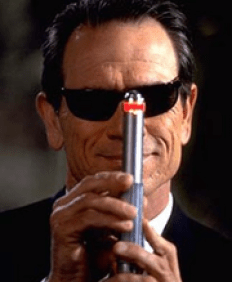
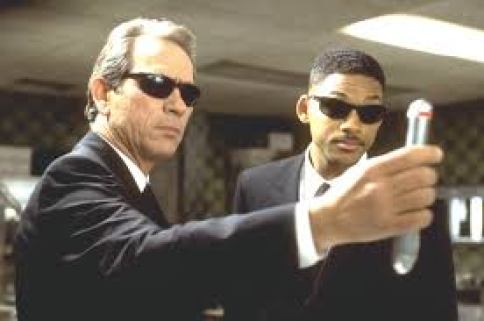
That means the state is asking him to suppress his knowledge of the things he already read in those earlier documents and not share that information, whether or not he finds it to be newsworthy, with the public. Unless the DOJ possesses a “Men In Black” memory wand, this isn’t going to really work.

MIBCLEAN

(Hold still, Alex. This isn’t going to hurt at all…)

While the state’s position borders on the absurd, what the Journal-Sentinel wrote in regard to Hagen’s filing comes across as downright frightening. His request is to force Nemec to provide the names of anyone with whom he might have shared the documents or spoken to about them.

First, stop and think about the chilling effect that would have on almost anyone who might speak to a journalist about any matter of public importance. This isn’t a case in which Nemec is being asked to disclose sources for a greater public good, but rather one in which he is asked to tell the state the names of people he might have discussed legally obtained information. His parents, his girlfriend, people with whom he works, journalists at his former student newspaper and more. (Full disclosure: I know I would be on that list, as Nemec and I have been discussing this whole case for more than 18 months.)

When I first saw Hagen’s demand, although the parallels aren’t perfect, my mind immediately went back to the HUAC trials of the 1950s and McCarthyism and it was damned scary.

Second, consider that Nemec had this information for 45 days. I can’t remember what I had for lunch yesterday, but he’s supposed to come up with a laundry list of people and organizations that might have heard about the unredacted information in the past month and a half? What if he’s wrong or forgets someone? Then what?

Also, let’s pretend that the courts would require him to do so AND Nemec had the mental fortitude to remember every, single person or group that he spoke to about this. What now? My guess would be that THOSE people would be the next to see some sort of suppression filing requiring that THEY list off everyone who THEY might have spoken to or shared information with about this. How far does this web of “don’t you dare” go?


How bad could this really BE?

Over the past 20-some years in which I have filed open-records requests and helped others file them, I have NEVER seen a situation get to this point. In most cases, these requests don’t even BECOME cases because people don’t take the issue to court, no matter WHAT is contained in those documents.

We had a situation out here in which a student in my reporting class requested documents pertaining to the firing of the university’s volleyball coach. She put in the request in March and after all the necessary notifications and time delays, she had the documents in August. You can read the article here, but as kind of a “trigger warning,” here’s a paragraph that gives you a sense of what these documents lay out:

One of Schaefer’s athletes filed a sexual harassment report against him with Dean of Students Art Munin on May 19, 2017. The report stated that Schaefer bought the student drinks, played a game called “nut ball,” texted him in a sexual manner and gifted him with a “jerk off cloth.”

The level of fighting to keep things under wraps here has me absolutely flummoxed as to what it is that Hagen and the university are trying to keep out of the public eye. I feel like Jacob in “Hot Tub Time Machine:”

The reason I’m perplexed is because the way I’m looking at it, this could be one of two things:

  • This is a case of trying to kill a fly with a sledgehammer. There’s nothing in this thing that is so horrifying that it would irreparably damage the university or Hagen if it were released to the public. It’s a situation in which people might feel better if they could control the situation, but there’s nothing there that requires a shoe box labeled “Cincinnati.” The university might want to limit the release of names of other people involved and so forth, but as noted above, that’s not their call now if precedent means anything. I know Nemec well enough to know that just because he could do something, it doesn’t follow that he will. If he didn’t have an ethical code, he would have posted the documents everywhere, in their unredacted form, already.


  • Gwyneth Paltrow’s head is in the box and nobody wants us to know. Opening the unredacted portions of these documents to public scrutiny would reveal something horrifying about the university, Hagen or some combination therein. I really don’t think this is the case for a simple reason: These documents pertain to an incident before the one that Nemec really wanted to know about. After this situation was resolved, Hagen was able to continue working at UWO. If these documents contained that “What’s in the box?” level of concern, there’s no way that would have happened. Still, according to Nemec’s story, Hagen was removed from a CLASSROOM and his classes were reassigned and it’s unclear to the public WHY, so I would have to assume SOMETHING weird is going on. How weird? We might never know

The judge will hear arguments on Nov. 21. It’s unclear to what degree there’s going to be more on this, and Nemec has declined to comment on any of this until the case is settled. Making things even more bizarre, the university is still sitting on a set of redacted records more directly pertaining to Nemec’s original request until this situation is resolved.

Although it would be interesting to find out what these documents all say, the bigger issue is what the court’s rulings will say about what journalists can say in these situations.

“Here is someone who has power and money trying to bully us into taking down negative coverage:” 3 things you can learn from an award-winning journalist’s fight to keep his work public.

As a reporter for Great 98 in Mayville, Wisconsin, Alex Crowe found himself digging into allegations of corruption and special treatment in the city’s police department. His work looked into a Department of Justice investigation that revealed the department helped cover up a drug-related offense at the request of an officer. Tom Poellot, the officer accused of trying to cover for his son, denied that he was involved in any alterations to that police report, even though that information was included in a criminal complaint filed against former Mayville Police Chief Christopher MacNeill.

Crowe’s efforts garnered a lot of attention for the station’s news operation and earned him a first-place award from the Wisconsin Broadcasters Association in the category of Best Significant Community Impact in 2017.

A year or so later, everything went to hell in a speedboat.

Poellot’s lawyer contacted the station and demanded the station pull down the articles, claiming Crowe broke the law in his reporting.

“He claims we violated Wisconsin Statutes Section 938.396(1)(b)(1)  which says you cannot identify a minor involved in a crime,” Crowe wrote in an email. “I wrote that Poellot’s son had been caught at school, but never identified the kid. All word-for-word form DOJ criminal complaint against MacNeill.”

Crowe said the attorney had been extremely aggressive in his approach and Crowe’s superiors at the station were concerned enough to consider pulling the stories off line and scrubbing them from all social media. The costs associated with a protracted legal fight were also potentially prohibitive, Crowe was told.

To better understand the legal issues associated with his stories, Crowe contacted the Reporters Committee for Freedom of the Press, a non-profit group that “provides pro bono legal representation, amicus curiae support, and other legal resources to protect First Amendment freedoms and the newsgathering rights of journalists.”

“I sent an email late one night, and received a call back literally minutes later from a lawyer in D.C. who was furious with the way we were being treated,” Crowe wrote. “She put me in contact with a lawyer in Madison who works with the Wisconsin Newspaper Association as well as the Wisconsin Broadcasters Association. He was able to cite specific Wisconsin State Statutes that provide protections for the press, as well as refute the chief/lawyer’s claims that we were in violation of a different set of statutes. We told the other side that we had been in contact with multiple lawyers who helped us put together a response, and have not heard back from the lawyer representing the chief in Cudahy for weeks. Hopefully, the matter has been resolved.”

(The stories are still available on the Great 98 website here and here and you, so feel free to read them. They’re truly great bits of quality local journalism. If you want to hear what Crowe said about them for this blog when they first came out, you can click here and here.)

I asked Crowe what he learned from this experience and he had a few tips. Below are some of his thoughts (in quotes) and three things I think you can take away from this experience:


Pair intuition and research before you respond.

When I worked as a journalist, a student newspaper adviser, and even as a professor, I would hear about ridiculously absurd statements people would make about the intersection of law and the media. Stuff like:

  • “You can’t publish the name of a criminal because the person could sue us.”
  • “We don’t have to release that document (to the media) because we don’t feel you are entitled to it.”
  • “We know we released that document, but we sent you the wrong one and we’re relying on your ethical integrity as a journalist to destroy it and let us send you a new one.”
  • “You published my son’s name in the paper! I’m suing you for making him look bad.” (The “son” had been arrested after participating in a violent, public altercation. I imagine THAT might have made him look bad, but what do I know?)

My favorite one was a response to an open records request in which we were denied access to a set of evaluations that a search committee had inadvertently made public. The responding records keeper stated that the documents were available under some arcane part of Indiana law in which they weren’t public, but rather more like interoffice memos meant to be shared only among about 30,000 students, faculty and staff on the campus. Just not for publication in the student newspaper, with its circulation of about 10,000.

When it came to Crowe’s situation, it felt like bullying to me. The use of a lawyer and a specific state statute can scare the hell out of anyone who isn’t a legal expert. The phrase, “Do X or we’re going to sue you” coming from a lawyer can make you want to cower in a corner and say, “Please don’t hurt me!” Instead, find your own ringer in this game and see what he or she can do to balance the playing field.

Whenever someone threatens to sue you or withholds a document from you or does anything else like that, take a few moments and start processing what you have heard in a logical fashion. Once you do this a few times (and take a decent com law class), you can develop a pretty good BS detector. Let intuition guide you, and then do some research, call some experts and figure out how accurate this information actually is.

“I would encourage any student to read up on the laws/statutes in their state that regard to reporting and publishing of information, because we really needed to know what the law said and who it protected before crafting a response,” Crowe said.

The more you know, the better off you are.


You’re not in this alone. Use your network to find help.

When Crowe first was told he would have to take down the stories, he reached out to me and I helped direct him to the RCFP. How did I know to do this? I didn’t, so I asked a couple of the legal eagles I knew, who had seen this kind of thing before and they pointed me toward that group.

When we talk about “networking” in college classes, this is the kind of thing we’re trying to get across. People you meet and connect with can help you. If those people don’t have the answers, chances are pretty good they’ll know someone who does have the answers.

“I would HIGHLY encourage students to get informed about resources available to them, such as the Reporters Committee for Freedom of the Press,” Crowe said. “If I wasn’t able to get professional assistance from that organization, I would have been forced to pull the story and it would have been erased from online archives as well.”

For students, the Student Press Law Center is a great resource and the folks there can help with free legal advice when your attempt to do journalism runs into someone else’s desire for you to stop doing whatever it is you’re doing.

The ability to say, “Oh, you think you’re going to back me into a corner? That’s not going to happen because I have a lawyer, too” must feel so good. I know it’s probably nothing like this, but I always loved this line from Andrew Garfield in “The Social Network.”


Figure out if this is the hill you are willing to die on and if the juice is worth the squeeze. Then act accordingly.

I just managed to merge two of my favorite Filak-isms into one subhead, so it’s a good day for me. The point is that you need to figure out if it’s worth it to fight back and how far you are willing to go to defend that position. In some cases, the ask is minimal and the degree to which they are a pain in your keester is maximum, so you do it, even though you could stand your ground on an issue.

In this case, however, Crowe saw a much bigger picture and a much more important issue:

“Honestly, it was mostly about the principle of the matter,” Crowe stated. “We did absolutely nothing wrong in our reporting, yet here is someone who has power and money trying to bully us into taking down negative coverage that he doesn’t like while hiding behind his son as a means to try and get the story taken down. I didn’t like the fact that I was being asked to take my very legitimate reporting down just because the subject didn’t like what was written.

“We took our information directly from the DOJ/DCI report, along with other pillars of good reporting (including) interviews and in-person courtroom coverage…” he added. “It was important to keep the work published because, in my mind, if we have to take one story down after a bogus legal threat, that just opens the door for others to follow suit.”

The idea of opening Pandora’s Box or creating a “slippery slope” can occasionally be much ado about nothing. In this case, however, if he backed down, he might have found himself having to back off repeatedly, as his station would have established a problematic precedent: If we punch you hard enough in the nose (legally speaking), you will hide important news we don’t want people to see.

“I’ve learned that there are people who will do whatever it takes to try and get negative coverage erased from the internet,” he said. “This went way beyond someone trying to scrub their image. This is the first time I have had someone really come after me personally for something I reported on, and no matter how legit the reporting was, the lawyers kept coming.”

When you face a situation like this, you’ll be put to the test and you’ll need to determine how far you are willing to go to do what you think is right. Then, you’ll have to be willing to deal with the fall out. In either case, you’ll need to know that you can live with yourself after you make that choice and take your stand.

You might not win every time, but you’ll sleep better at night.


Answers to 4 Key Questions About the Legal Issues Associated with an Anonymous Sexual-Assault-Accusation Website

After yesterday’s post on the “Make Them Scared UW” website, several questions rolled in that make for some interesting follow ups.

The site, constructed by some University of Washington students, allows for the anonymous posting of names students say engaged in sexual assault and harassment, as well any other information associated with the incident or incidents. According to The Daily at the University of Washington, 41 names were published as of Monday.

In the FAQ section, the administrators explain, “Make Them Scared is a communal rape list. It is intended to be an online hub for anyone who wants to expose the names of their attackers and harassers, and to fill a gap left by inadequate treatment of these cases by formal institutions.”

In addition, the administrators state:

Q: Why are you called “Make them Scared”?

A: This admittedly ominous-sounding name alludes to the injustice of women having to live their life in fear of sexual assault and harassment, while perpetrators can easily live their lives free of any fear of being caught or held accountable for their actions. Our goal is just that: to make perpetrators afraid that if they commit or have committed an act of sexual assault or harassment, they will be held accountable for their actions.

Rather than rehash all the information on libel, my personal paranoia about anonymous allegations of any kind and the issue of sexual misconduct of any stripe, we’re going to talk about four key questions that came up in the wake of yesterday’s post:


WHAT ARE THE RISKS TO THE PEOPLE POSTING CONTENT ON THIS SITE?

Several people asked this question and much of the post yesterday touches on this in regard to the potential for libel. The individuals who post statements like “PERSON X from SCHOOL Y raped me” are making statements of fact, not opinion. An opinion statement like “I wouldn’t think anyone would want to be alone in a parked car with PERSON X from SCHOOL Y” or “PERSON X from SCHOOL Y isn’t someone I would feel safe around” would have fewer risks. The statement of fact (as in, “I’m declaring this to have actually occurred.”) opens the poster up to a potential libel claim.

The most crucial issue here is whether a claim can be proven to be demonstrably false. The other items noted in the SPLC’s libel checklist will likely be checked through posting a rape declaration on this site: Publication (check), identification (check), harm (probably going to be a check) and fault (probably a negligence standard, as these appear to be private figures and that’s easier to prove). The issue of “crying rape” has been discussed in the previous post (To be clear: I believe victims and false allegations are extremely rare), but with an anonymous set up, it is possible that a “prank” allegation could get through at some level or that the verbiage the person uses in describing their attack could be legally insufficient.

In short, a lot can happen here, so potential ramifications aren’t clear cut.


CAN WEBSITES REALLY BE SUED FOR WHAT OTHER PEOPLE WRITE ON THEM?

I got this question from a student media adviser and it’s a good one:

The (blog post) doesn’t note – and correct me if I’m wrong about this – that
the owner of a site that allows people to post comments can’t be sued for
those comments, even if they monitor posts. That’s the law as I understand
it and as our attorney explained it to us. Newspapers, of course, want to
be ethical and responsible, but if a libelous comment slips by and gets
posted under a story, the newspaper/publisher/owner of the site can’t be
sued.

Correct?

Courts have sought ways to hold harmless owners of websites when people post content on them that might be in some way defamatory or otherwise illegal. One example of this is the Online Copyright Infringement Liability Limitation Act, in which lawmakers struck a balance between protecting copyright and indemnifying websites against harm. OCILLA provides a process for all parties involved to work through issues associated with illegally posted material. For example, if person posts a photo that belongs to someone else, the actual owner can reach out to the publication and work to have that content removed without the risk of the publication being sued for copyright violations.

A more germane law in this case is Section 230 of the Communications Decency Act states that Internet providers and other media platforms are not liable for content posted to their site by people who are not directly connected with the organization. This is what the adviser was asking about in relation to the “Make Them Scared UW” site.

Congress provided Section 230 as a shield for providers who wanted to monitor discussion forums and remove offensive content. While the earliest court cases involved Internet service providers, such as America Online (AOL), courts have broadly applied the protections under this section. They have immunized social networking sites like Facebook and sales sites such as Amazon.com for comments users made on their sites. Site operators run a risk of losing that immunity if they actively encourage people to post illegal material. Beyond that exception, however, the courts have generally favored publishers.

This basically means that if someone were to go on your student newspaper’s website and post under your story about the university president winning an award that “Sophomore Bill Smith murdered three people and got away with it,” you could get rid of the comment without fear. In addition, Bill Smith would be unlikely to win a lawsuit against you based solely on that random person’s comment.

Broadly speaking, the presence of an open forum in which people can post potentially libelous content will not lead the owner of that forum to fall victim to a libel suit. Thus, the adviser is right about what his lawyer told his newspaper staff. Stuff that random schmoes post on their newspaper’s website that has the potential to libel people is a beef between the poster and the person being posted about.

However, there is a distinction that’s important to understand between the issue the adviser noted about his newspaper’s liability regarding comments and the “Make Them Scared UW” site, which is where question came in…


DOES THIS LAW ACTUALLY PROTECT THIS WEBSITE?

Section 230 was meant to protect internet “providers,” which was initially associated with places that sold you internet access and then spread to open social media platforms like Facebook and Twitter. This is why Mark Zuckerberg doesn’t worry about going broke every time that guy in your dorm gets drunk and starts writing horribly defamatory stuff about the girl who just dumped him.

The dorm dude is in trouble but Mark is fine, and the reason he is fine comes down to the fact he isn’t serving as a publisher. Simply speaking, Mark Zuckerberg doesn’t solicit specific content from you or assign you content to post. He doesn’t vet the material and make editorial choices about what will be published and what can’t be seen publicly. He doesn’t get involved in the day-to-day choices of what gets produced on his site and what doesn’t.

The “Make Them Scared UW” site runs on a wiki, but one in which content is submitted to the people who run it. Those people make choices about what is published and what isn’t. They vet the content and serve in other editorial capacities, it would seem, based on how the information is gathered. It uses a website form to have people submit content directly to the administrators for examination. It also explains the process of how a name gets added to the list:

Q: What will happen after I submit a name?
A: One of our site’s moderators will review your submission, verify your contact information, and after receiving your confirmation, publish the information you provided us (minus any personally identifying info) on the list page on our site. The information you provide us will not be used for any other purposes. Whether or not a submitter wants to also report to academic or legal institutions is their choice, not ours.

Based on this process, I asked media law expert Chip Stewart for his thoughts on if this fell under Section 230 or if the site ran some serious risks:

I think gathering info in this format, then reviewing it, then pushing it to a wiki is an act of publishing — they’re not just an “interactive computer service” at this point. This isn’t comments section or a chat room or a forum in which the ISP is a bystander… This is bad. I don’t see Sec. 230 stretching to protect something like the anonymous sexual assault website.

Stewart said this felt akin to a court case involving the Roommates.com site, where drop-down menus prompted users to provide information that actually violated federal housing laws. The court ruled that this kind of prompt structure, which mirrors the approach “Make Them Scared UW” uses, made the website more of a publisher than a distributor.

In short, the court could go either way, but this is a risky approach.


AREN’T THE POSTERS AND THE ADMINISTRATION ANONYMOUS? EVEN IF SOMEONE COULD PROVE LIBEL, HOW ARE YOU GOING TO CATCH THE PEOPLE ASSOCIATED WITH THE SITE?

People leave digital footprints everywhere they go, whether they know about them or not. In most cases, the companies that manage and maintain that data will keep it safe and push back against anyone in the public asking for unmasking of this information. However, court orders change the game, Stewart said:

The ISP (Internet Service Provider) will roll over on its (the website’s) creators upon subpoena.

Twitter says as much in its guidelines for use, noting it will comply with subpoenas for private information. Blogger, which appears to be the hosting site for the “Make Them Scared UW” blog, has already gone through this in a high-profile case involving a fashion model and an anonymous blog. The blogger was unmasked and later threatened to sue Google for violating her privacy, but experts said the case held little chance of success:

Jeffrey Toobin, CNN’s senior legal analyst, said Google was complying with a court order and that disclosing Port’s name cannot be viewed as violating her rights.

“Google never promises anyone absolute anonymity,” Toobin said. “There are all sorts of circumstances when Google cooperates with law enforcement.”

Google itself also made it clear that your desire to be anonymous isn’t going to be the company’s concern in many cases:

In response to CNN’s request for an interview, Google issued a statement:

“Google does comply with valid legal processes, such as court orders and subpoenas, and these same processes apply to all law-abiding companies. At the same time, we have a legal team whose job is to scrutinize these requests and make sure they meet not only the letter but the spirit of the law.”

This makes it highly likely that if an individual on that list were to feel strongly enough about filing a libel suit and make a strong enough case in doing so, a subpoena would be enough to break through the anonymity shell surrounding the site and its posters.

“Scared” as hell: A look at an anonymous sexual-assault-accusations website and the issue of libel

I spent about 20 minutes in totally stunned brain lock, trying to find a way to introduce this post and what inspired it. Since I still have nothing, let’s have the student journalists at The University of Washington explain the source of my consternation: a website someone on their campus unveiled last week:

A site called “Make them scared UW” allows users to anonymously accuse people of sexual assault and harassment. In less than a week, dozens of allegations have been made against men both within and outside of the UW community.

<SNIP>

The site published eight names Wednesday, Sept. 26. As of Monday, Oct. 1, there are 41 accusations of sexual assault or harassment. Administrators of the website told The Daily via email that the website has received more than 5,000 page views during this time. However, not all allegations published to date are against students at the UW.

The site’s domain name was registered Nov. 29, 2017, with additional security so as not to reveal the identity of the individual who registered it.

The website claims it will update daily as new accusations are brought forward. Those running the website hope it inspires similar projects at other schools, and they have included resources to do so.

This was about as restrained as my first reaction could be:

Or something to that effect…

Anyone who publishes content for public consumption on any platform needs a healthy respect for the law. Media writers hear the phrase “I’ll sue you” more often than the phrase “Is anyone eating this last slice of pizza?” is heard in a college dorm. The most prominent legal concern in the media community is the concept of libel, which many people accuse journalists of even though few of them actually understand what it means.

And just so we’re clear, The Daily’s news story on this website is fine in terms of legal issues. The people who posted on this website itself? This seems like it’s a libel suit waiting to happen. Just to make sure I was right about this, I asked that question of Daxton “Chip” Stewart, a media law expert and faculty member at TCU.

Stewart discussed a similar issue last year when a public spreadsheet titled “SHITTY MEDIA MEN” made the rounds. The document allowed women to share their experiences anonymously pertaining to specific men in the media field who engaged in abuse and harassment:

“Anyone on that list could sue for libel. And anyone contributing to the list would be a potential defendant,” said media law professor Chip Stewart via Twitter direct message. “Labeling someone a rapist or sexual harasser is making a statement of fact. It’s not enough to say ‘it’s only a rumor I heard.’ You’re going to be subject to lawsuits if you’re the person who spreads the rumor. Or the person who created the document in the first place. Or if you republish it.”

When it came to similar concerns about the “Make Them Scared UW” website, his response couldn’t have been clearer:

Yeah… everyone who touches that thing is a potential libel defendant or witness.

Libel refers to the publication of false, defamatory statements that can harm a person’s reputation. The harm can come in a variety of ways, such as financial losses, persistent ridicule or societal hatred.  The Student Press Law Center outlines four key points an individual must demonstrate if he or she hopes to successfully sue for libel:

  • Publication
  • Identification
  • Harm
  • Fault

Before we get too deep into this topic, the first big thing to keep in mind is that libel applies to FALSE statements. The truth has been the best possible defense against libel since the days of John Peter Zenger  when powdered wigs were in fashion. Truth protects journalists from libel concerns in almost all cases and it is the main reason why people like me push so hard on students to make sure every story is 100 percent accurate.

The second big thing to keep in mind is that I am in no way, shape or form accusing ANYONE of making false accusations regarding sexual assault, sexual harassment or sexual misconduct. Everything I know, have read, have learned and have discussed on this topic leads me to believe victims. FBI data shows that false claims represent only 2 percent of all sexual assault claims, or essentially the same percentage of false reports for any other felony.

The thing that makes this situation different and simultaneously concerning is that significant differences exist between any type of claims made formally to police or other authorities and statements made anonymously on a website. I don’t know how the administrators of this site go about verifying information, including the identity of the individual making the claim. The Daily’s article indicates vetting occurs, but it is unclear the degree of rigor associated with that vetting. Generally speaking, I fear risk and this seems like an extremely risky situation that is just asking for a libel suit if the site’s administrators aren’t extremely careful.

For the sake of argument, let’s walk through each of four points listed above and apply them to the posts people make on the “Make Them Scared UW” site:

Publication: The material must be disseminated to someone other than the person who is claiming to be libeled. This is often misconstrued as being “a newspaper thing,” as people assume publication has to be some mass-distributed paper of some kind. The truth is you can libel someone in an ad, in a press release, on Twitter or on a blog, just to name a few. If you hand wrote something that met the level of defamatory falsehood noted in the definition of libel, made 100 photocopies of it and then passed the copies out around campus, you have published content.

In the case of this website, it is available for public consumption and according to The Daily’s article, “Administrators of the website told The Daily via email that the website has received more than 5,000 page views during this time.” That would appear to easily meet the standard of publication.

Identification: The material must be “of and concerning” the person suing for libel. Traditionally, the simplest way to prove identification is to establish that the defamatory material names the individual suing for libel. If you wrote something horrible and defamatory about “UWO journalism professor Vince Filak” (please don’t), I’d have a pretty easy case in proving identification.

However, not naming someone doesn’t get you off the hook. If you referred to a “UWO journalism professor who lives in Omro, Wisconsin, and has published at least three textbooks with the word ‘Dynamics’ in the title,” it’s pretty easy for me to demonstrate identification has occurred. In the case of the “Make Them Scared UW” website, identification is more simple. The story notes that the site lists names and in some cases more:

The wide range of allegations are attached to the name of the accused and include other identifying information such as workplace or campus affiliations in some cases. In other cases, there is no more than a name, a rape allegation, and a “no” where the website asks if the accuser reported the incident.

This is also where this site deviates significantly from #metoo and other similar discussions of sexual assault, harassment and misconduct. In those movements, people generally did not specifically identify their assailants, as you can see in this series of examples. Any individual in those cases who felt they had been falsely accused and wanted to attempt a libel suit would have a much tougher time proving identification than would the people named on the “Make Them Scared UW” site.

Harm: The person suing must demonstrate that the published material does serious damage to his or her reputation. People can demonstrate this in a variety of ways, such as financial loss and loss of standing within a community. For example, if a libelous statement about me cost me my teaching job, I can demonstrate financial harm. If a libelous statement led to my picture getting posted at the local grocery store with a warning, “DO NOT LET THIS FREAK NEAR THE AVOCADOS,” I could demonstrate loss of reputation.

The standard for establishing harm varies based on the context, the person, the community and other issues. For example, saying a man is “sexually active with a woman” probably wouldn’t disparage the person if he is married and trying to have children with his wife. However, that same statement about a Catholic priest, who has taken a vow of celibacy, could be defamatory.

SPLC lists some these topics as “danger zones” for libel concerns:

  • Accusing someone of committing a crime
  • Making sexual references, including intimations regarding sexual activities, sexual proclivities and sexual orientation
  • Producing claims of unethical or unscrupulous behavior
  • Associating someone with a contagious disease or unsavory actions
  • Using statements that allege racism or other forms of bigotry

I might be overstating this a touch, but I’m going to say I’d have a hard time right now thinking of a riskier area in terms of potentially harming an individual’s reputation than accusing him or her of sexual assault, rape or other similar misdeeds. Given that the website essentially gives people the opportunity to accuse people of these actions, it seems harm is here.

Fault: The person alleging libel must demonstrate that the reporter created harm through an act of commission (did something wrong) or omission (failed to do something he or she should have). The standard for establishing fault differs based on the plaintiff in the case. Private individuals must only show that the defendant acted with negligence. Public figures must demonstrate that actual malice was present.

The people named on the site, from what I can tell, would likely fit into the private individual category, and thus the lower standard of negligence would apply here. The issues debated here would include how much vetting did the site administrators do before allowing names to become public, what level of proof was required for them to publish the names and what else did they do or should they have done to avoid harm to the accused.

The Daily story notes:

Since its launch on Monday, Sept. 24, moderators have requested additional information from accusers that they say they are using to vet the allegations.

<SNIP>

The website moderators acknowledged that they are aware publishing false accusations makes them vulnerable to libel or defamation lawsuits.

“We hope that anyone whose name was inaccurately posted on our site will let us know so we can remedy the situation. We’ve verified each claim to the best of our ability, and have not published any claims which we believed to be false,” the moderators wrote in an email to The Daily.

Several names have been removed from the list.

It’s unclear from this how the vetting occurred or if the courts would see this as meeting the proper level of care. In addition, removing the names after accusing people of this would not necessarily shield these individuals from a libel suit.

Overall, this website appears to be the kind of thing that leads me to break out in hives. I went there to take a look at the content and even being there, I had this going off in my head:

I didn’t want to link to it, post content from it and I was even worried about writing this post that talked about it. With that in mind, I asked Stewart for any words of wisdom he thought might put this whole thing into perspective. He told me I was essentially fine writing about it, but also mentioned this:

Just remember that hyperlinking to these things is legally OK for journalists, but ethically dicey. But once you repeat it on your site, you’re probably republishing and liable as well. Proceed with caution.

GAME TIME! See how well you know your First Amendment rights on this Constitution Day.

Today is Constitution Day, which commemorates the day in 1787 that the Founding Fathers last met to dot the I’s and cross the T’s on the Constitution. The holiday itself evolved into its current status after several iterations, such as “I am an American Day” and “Citizenship Day.”

In 2004, Sen. Robert Byrd of West Virginia urged his colleagues to support the inclusion of an amendment to an omnibus spending bill that would change the name of the day to the Constitution Day and Citizenship Day. The amendment required that the head of every federal agency provide employees with educational material pertaining to the Constitution on that day. It also stated that each educational institution that gets federal funding should provide programming regarding the Constitution on the holiday.

Given the importance of the First Amendment to the Constitution to media folks, it’s worth asking: How well do you know what freedoms and protections the First Amendment provides? The Student Press Law Center gives you a way to find out with this handy 10-minute quiz. The 30 questions here cover a wide array of topics and scenarios.

Sure, it would be great to get all of them right, but that’s not the only thing that matters here. The better you understand your rights and WHY they are protected, the more easily you can stand up for yourself as a media practitioner and a citizen.

Click here to give the quiz a try.