The Joke’s on You: Three reasons why student media outlets should never, ever publish April Fools’ editions (or similar pranks)

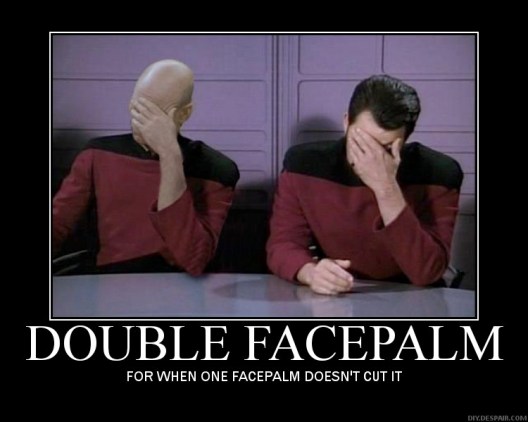
I built this about 15 years ago for the cover of a student media helpers guide for a high school news conference. Other than a few language tweaks, I don’t think much has changed…


THE LEAD: Humor is a personal, acquired taste that is hard to tap into on a broad scale, something the students at UNC’s Daily Tarheel learned the hard way this month:

On April Fools’ Day, the paper published a series of satirical articles, including one with a subheadline that said the paper had rebranded as The Daily Woke Heel. Others read “UNC brings back DEI—for whites,” and “A new way forward for the Dean Dome: a two-stadium solution.” Another, published on the website, said “Satire: Trump orders ALE in Chapel Hill to be replaced with ICE agents.”

The jokes did not go over well with some students, and the paper’s editor in chief immediately issued an apology. She wrote that the paper heard students’ “critiques and outrage.” She added, the paper’s “insensitive decisions and oversights” were “made by a newsroom and leadership team that undoubtedly exist in positions of power and privilege on this campus.”

JOKE’S ON YOU: Every April Fools’ Day, I thank the Lord I’m no longer a student newspaper adviser. When I was one, I found myself begging, pleading, cajoling and griping in hopes of keeping the students from making a colossal error in judgement by thinking they were funny.

To be fair, it wasn’t always just the April Fools’ Edition that led to problems and UNC is not alone in the “Oh… So, THAT happened” moments of dumbassery that have advisers going gray and bald before our time and strongly reconsidering truck-driving school.

One year, we did a bracket for “Bar-ch Madness,” in which we listed off the top 16 best places to get hammered around campus. The chancellor wasn’t pleased at our idea of promoting problematic drinking, but he was even less enthusiastic about us including one of the freshman dorms as a “dark horse” candidate.

Year-end issues are also a major concern, as students are usually either burnt to a crisp or at that punch-drunk level of euphoria that comes with nearing the end of the year. In one case, the student newspaper at the University of Utah reminded us that using drop-caps in design isn’t always just an aesthetic choice:

If you noticed the “more” in the headline and wondered if the other staffers’ columns had a more dignified and direct approach… well… not quite…

I could spend days showcasing stuff like this but as the opening graphic seeks to demonstrate, but that would be hypocritical at best. It isn’t like we were so great back in “my day” and now “these damned kids” are somehow sullying the greatness that was present back when typewriters clicked in newsrooms and everyone wore their Sunday best to cover the news.

(One piece I cannot find from “my day” ran here at Oshkosh, in which the staff photoshopped the chancellor’s head onto the famous Demi Moore pregnancy photo. He was not amused, I’m told.)

Instead, here are three reasons that might help prevent the next disaster, which is already on the clock, if that graphic is right:

YOU ARE NOT THAT FUNNY: Humor is one of the greatest talents in the world, in that to make someone laugh can be among the most amazing feelings we have as humans. Someone once explained that if you can tap into something funny, you force people to have an involuntary response to it that creates true joy within them.

Taking that talent and honing it takes years, and even then, it requires a deft touch and a lot of failure. When Richard Pryor died, his family found thousands of reels of tape in his home that provided a timeline of his efforts work-shopping his act.

He’d be at one club one night, trying to see if this bit would land or if tweaking this accent would improve the audience reaction. It took him days, weeks, months and sometimes years to tweak and improve little things that led to those epic, uproarious moments on stage.

If a guy with that level of talent and skill had to work that hard for that long to make even half of his stuff work, what are the chances that a group of college students, trying this on the fly is going to pull it off on the first pass?

As much as I have laughed in newsrooms over the years for a variety of reasons, I can assure you, nobody I’ve met is good enough to pull off humor on a mass-media scale like this. Trying it publicly is going to lead to more harm than good.


HUMOR IS A PERSONAL TASTE: If you don’t believe me, listen to the following comedians:

  • Richard Pryor
  • Taylor Tomlinson
  • Sam Kinison
  • Ali Wong
  • Jeff Foxworthy
  • Nikki Glazer

At least one of them will probably make you laugh and at least one of them will likely offend the hell out of you. Some of them are throwing out bits that you can completely relate to while others are likely not landing a single joke for you. Some feel too tame while others are dropping more F-bombs and slurs than a drunk Boston sports fan after watching an ESPN Hot Take show that gives the Patriots no shot at the playoffs this year.

Newsroom humor, in particular, is a special kind of humor. It’s a mix of sarcasm, mortician’s humor, snark and insult comedy. It’s also full of inside jokes and other things that make people still laugh 20 years after they’ve graduated. I’ve seen newsrooms post weird things on the walls, engage in meme-battles and develop quote books as survival-level defense mechanisms.

(To this day, I’m still somewhat scarred by the humor fight that happened at Ball State between my features desk and my design desk. It started when someone in design left a presentation for a class open, and someone on features stuck some weird images into the design kid’s PowerPoint.

The design kid then stuck a photo of a morbidly obese female adult film actress on the side of the monitor at the features desk. The features kid then responded by essentially iron-gluing an inappropriate image to the side of the design computer, something nobody noticed until the head of the Indianapolis Star came down with my boss for a tour of the newsroom.

The guy paused while visiting the design pod and then asked no one in particular, “Hey… Is that monkey blowing itself?”)

The point is, humor is in the eye of the beholder and few people outside of newsrooms really are beholding what we behold in there. If you want to amuse yourself, turn the place into your own little den of wiener jokes, dank memes and memorable quotes. Just keep it out of the paper (and the public eye in general).


YOU NEED TO TREASURE YOUR CREDIBILITY: Student journalists take on all the risks associated with journalism at any level. They can be attacked, threatened or arrested, and many already have been subjected to these measures.

They can be sued for any one of a dozen reasons, including libel and invasion of privacy. They also suffer the same insults and mistreatment all journalists receive for merely doing their job.

The one thing that makes it suck so much more is that they are often treated as second-class citizens in the field, even by those folks who should know better. I’ve heard of numerous examples of student journalists being told by professors and even professional media operatives that they’re “just playing journalist.”

Like they broke out a “Fisher Price ‘My First Reporter'” kit and asked Nana for an interview about her chocolate-chip cookies or something.

As student journalists, you have to fight so much harder to be taken seriously. You have to defend your work more vigorously than “professional” journalists when you break stories that upset people.

You also have those same “professionals” trying to swipe your stories, bogart your sources or otherwise treat you like some sort of minor-league baseball affiliate that they can raid when the “big team” needs something.

You earn your credibility a grain of sand at a time, knowing that any mistake can wash the whole sandcastle away and force you to start over. It’s so damned important, as it truly is the coin of the realm.

Doing “humor” like the things we showcased here is like dousing your reputation with gasoline and lighting a match, just to watch it burn.

And you’re not just burning down your own house, you’re making it impossible for the next generation to live there or even build on the ashes. Sources (particularly professors) have long memories.

Don’t give them a reason to think poorly of you if you can help it.
 

A plea for sportswriters on Opening Day: Avoid cliches and just tell me what happened (A throwback post)

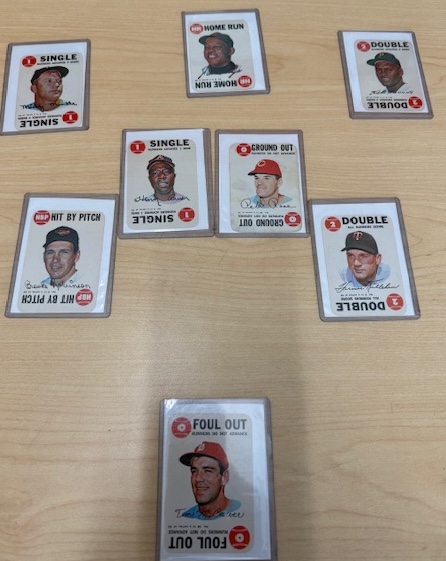
Some of the cards from my 1968 Topps Game insert set. Picking through them, I built the best line up I could imagine. Hank Aaron is out of position at short, although he did come up through the Negro League and Minor Leagues at short before switching to the outfield. I can’t even begin to imagine what this line up would cost today…

With the start of the baseball season today, I dug around and found one of my earlier posts about sports journalism that I thought could use a repeat for Throwback Thursday. Between what I’m already seeing in sports stories for baseball and what my students were writing for “March Madness” leads, I’m pleading once again for sportswriters to write for the audience and not for themselves.

If they don’t, at least I’ll get a few fresh examples for the “bad leads” file that could power at least a dozen lectures at this point.


Writing sports leads that don’t suck: Avoid cliches. Rely on facts. Tell me what happened and why I care.

Newer sportswriters tend to go one of two ways when confronted with writing a lead:

  1. This was the most sensational, inspirational, celebrational, muppetational event in all of human history! The death and resurrection of Jesus Christ? Yeah, take a back seat to this 0-0 soccer game between the Northeast West South-Central State Barbers and the Our Lady of Perpetual Motion Twitchers!
  2. Fill in flat cliche here. That is all.

While we’ve talked about the problems with hyperbole and the need to rely on facts before, a) we haven’t talked about it much in sports and b) the bigger problem in sports tends to be the latter issue. Sports lend themselves to cliche more than any other area of journalism and they do nothing good but bury the actual lead.

Case in point (and a minor plug for our school): The UW-Oshkosh men’s basketball team earned its first trip to the NCAA Final Four. It had been more than 15 years since the Titans even made the Sweet 16. Here are some things to consider as “important” that took place on Saturday night:

  • The team made its first Final Four game in school history.
  • The underdog Titans defeated the No. 9 team in the country on its home court.
  • Ben Boots scored a career-high 36 points to help the team win.
  • One of the reason Boots scored so many is because senior guard Charlie Noone was tossed out/fouled out after catching a technical foul for his fifth foul of the game in the middle of the second half. Noone was a career 1,000-point scorer, a big deal at this level.
  • Down 6 points with 1:45 to go in the game, Boots hit two key threes to knot the score.
  • The game went into overtime, the second time this season a clash between these teams went into overtime. (The previous one was a double-OT game.)
  • Refs called 45 fouls, costing Augustana two of its key big men.

In short, there is no shortage of amazing things you could use for a lead. Here is what the local newspaper posted as its lead:

ROCK ISLAND, Ill. – History was made by the University of Wisconsin-Oshkosh men’s basketball team Saturday night.

jiFfM

Three quick things here:

  1. The lead is a cliche and a bad one at that. History is ALWAYS made. You reading this blog post is technically making history.
  2. The lead is written in passive voice. The cliche of “Titans make history” wasn’t even active.
  3. HOW the Titans made history is probably something people would like to know in the lead. What did they do? Did the coach murder a referee after a bad call? Did the whole team lose its uniforms and play the game in clown costumes borrowed from the circus? Did the team steal basketball powers a la “Space Jam” to win a game? Did they lose by more points than any team ever? Good grief…

When it comes to writing a sports lead, here are three key things to remember:

  1. Rely on the facts and tell me what happened: You don’t have to sell me on something being amazing. Just tell me what happened that was factual and yet cool and let me figure it out for myself. If the authors had woven in any of the components listed in bullets above, they would have had a great lead.
  2. Don’t assume people will read beyond the lead: Deadwood in the lead is a death knell for a story. The second paragraph is better and the head and deck include key information. However, you can’t rely on other components of the story to save you when you write a lousy lead. It’s like telling the cop who pulled you over for speeding how everyone else was driving faster: It doesn’t make you any less guilty.
  3. Remember your audience: Write for your readers, as in people who probably didn’t attend the game. If you went home after watching that game and your roommate asked, “Hey, how was the game?” what would you tell your roommate? “We won! We’re in the Final Four!” Would you ever imagine walking into your apartment and announcing, “History was made!” in response to that question? Probably not.

Good Night, George Kennedy. My life would never have been what it is without you.

George Kennedy as I remember him most: Giving me a look that said, “Fair enough.”

George Kennedy, the former managing editor of the Columbia Missourian, longtime faculty member at Mizzou and legend of journalism education, died Friday after more than a decade of battling Parkinson’s.

Daryl is not alone in this, given how many people have already shared memories of George as well as the speed at which this information spread among those people who knew George.

One of the many difficulties with getting older is that I find myself losing mentors and heroes who helped me become the person I am. Of all those losses, this one really cuts me to my core.

I loved Susie Brandscheid.

I feared Cliff Behnke.

I admired Pat Simms.

But I wanted to be George Kennedy, even though our first conversation led me to believe I’d never spend one day working for him.

I was finishing my master’s degree in Wisconsin when I applied for a city editor position at the Columbia Missourian. I had about three years of part-time work on the State Journal city desk and about a year and a half of teaching experience.

I didn’t even realize that I was applying at Mizzou (God’s personal journalism school), in that the ad called it “the University of Missouri-Columbia,” which I took to mean a branch campus or something.

When I got there, it dawned on me these were the big dogs. George Kennedy would be my boss, the same George Kennedy who helped write the textbook that introduced me to journalism and the same textbook from which I was currently teaching.

My interview with George was a lunch date at Glenn’s restaurant, a few blocks from the Missourian office. On our walk over there, I was chattering away like methed up monkey, trying desperately to engage the man. He remained silent until we got to the restaurant.

He sat down and said two things: He turned to the waitress and said, “I’d like iced tea, please,” and then turned to me and said, “I have four people up for this job and everyone is more qualified than you are.”

I didn’t flinch, probably out of a youthful lack of self-awareness, and responded, “Maybe so, but none of them will work harder for you than I will.”

I still have no idea what possessed this man, who was doing important journalism before I was born, to hire a 23-year-old kid to run his night city desk, but from that point on, my sole goal was to prove he didn’t make a mistake.

Over the next few years, I learned more from George about journalism and life than I did from all of my degrees combined. So much of what George meant and the impact he had on me came from little moments that still make me laugh:

– We had misspelled the name of a soccer club in the paper, only to misspell it in a different way in the correction. Since all corrections had to run in my section, I asked if he wanted us to take another stab at it:

“No, I think we’ve done more than enough damage at this point.”

– We had one particularly terrible day, where it seemed everything in the paper was screwed up in some way. At the afternoon meeting, George let us know:

“Not only did we not manage to add to the sum of human knowledge today, I think we actually managed to subtract from it.”

– My first winter we got about a seven-inch snowstorm that managed to shut down the entire city for about a week. When I complained about Columbia’s ineptitude when it came to snow removal, he put it in perspective:

“Vince, you moved to Baptist country. They believe God put the snow there and God will take it away when He is ready.”

However, when I sat down to really think about the bigger things I learned from George, I came up with a handful of life lessons that shaped who I am and that continue to guide how I teach my students today:


INSPIRE CONFIDENCE IN THOSE WHO NEED IT MOST: One of the comments a friend left on my social media post about George’s death captured the essence of his leadership in one sentence:

“He believed in me before I did.”

That was never more true for me the night in October 2000, when we got a late-night call about a plane that crashed somewhere south of St. Louis. A rumor began to circulate that Gov. Mel Carnahan was aboard and had died in the crash..

I was dragging reporters in to make calls and confirm the rumor so we could put something together for a front-page story. The copy desk was redesigning the front on the fly, even though no one was sure we’d have the goods to run the story.

We had a midnight deadline and right around 10:45, I got a phone call from George.

“So, it sounds like you’ve got a pretty interesting night there…” he began.

He asked what we had and I filled him in on everything we were doing before asking him the obvious question: “Are you coming in?”

I figured he’d want to captain the ship, making sure that we made the right calls about what to run and how to state what we knew. I also figured he would want to keep the situation from going off the rails if things got out of hand and we had to redo the paper yet again. To this day, his answer stunned me:

“Why? I’ve got you.” And then he hung up.

I was 26 years old and had about two years of experience running a night city desk. George knew more about covering stuff like this than I’d ever know. This was probably the most important story we would have in the paper for years to come, and if we screwed it up, we’d be the cautionary tale for all journalism students going forward.

And yet, George never hesitated about putting the ball in my hands and telling me, “Go win this thing.”

From that moment on, I realized that inspiring confidence in others was the greatest gift a teacher could give. Every day, I sit with kids who are frustrated with their inability to get a job, get an internship, complete a project or even write a single sentence. They feel lost and incapable. They feel scared that they won’t get where they desperately want to go.

My job at that point is to do for them what George did for me: Give them the confidence that they need to accomplish these things on their own.


IN PUBLIC, PRAISE INDIVIDUALLY AND CRITICIZE COLLECTIVELY: Each day, students waited anxiously for George’s critique, titled “Second Guesses.” They’d look to the cork boards in the office for the print out or check their email repeatedly in anticipation of what George had to say.

In each edition, certain names got published in all caps, meaning those folks did something really good. It might have been a great story, a fantastic photo or an amazing graphic. A particular copy-desker might get a nod for a great headline or some deft editing.

That praise was more incredible than experiencing a first kiss for so many people. Students I taught, many now in their 40s, noted they still have printouts of “Second Guesses” tucked away somewhere in a file. Some have clipped out the paragraph that mentioned them and keep it taped to a computer monitor or pinned to an office wall.

(The students weren’t alone in their love of “Second Guesses.” I would model my night notes after George’s critiques and nothing made me feel better than when he would literally take my entire night note and use it as the basis for that day’s edition.

He’d start with something about how great the paper was and then say, “Here’s Vince, explaining how we managed to pull this off:” or something like that. Years later, when I had to do daily critiques, I realized he probably did this because a good night note essentially gave him a day off, but I still cherished the times he considered my words as worthy of subbing in for his.)

Not everything in those critiques was praise, however, as we screwed up a lot over the years. That said, never once did George lambaste anyone by name for their mistakes. It was always, “We need to do better” or “We shouldn’t have made this mistake” or “We can NEVER let this happen again.”

To his way of thinking, the “we” wasn’t providing cover for one bad actor. The “we” was really a “we” in that it wasn’t just the kid who made the mistake: It was the line editor who didn’t ask enough questions to improve the story. It was the copy-desker who didn’t catch the error. It was the designer who didn’t notice the mistake when we proofed the page. And George essentially included himself in that “we,” as he likely felt he probably should have done or said something somewhere along the line to prevent that mistake.

I found that I wanted to work for that kind of person and I really aspired to be that kind of person when I was in the critiquing seat. That approach always made me want to work even harder to make sure “we” got it right as often as possible.


NEVER BE AFRAID TO RECONSIDER YOUR POSITION: Despite the feelings most of us had about his omnipotence, George was always willing to hear opposing opinions and reconsider his own.

Case in point, we were chasing a story about who would be the next police chief in Columbia late one night. What we knew was that the city manager was going to make a public announcement the next day and that the new chief would be with him. We had four candidates, two of whom hadn’t heard from the city manager for months, one who said he wasn’t aware of the press conference and one who said he couldn’t talk that night, but would “gladly speak after the press conference.”

We basically connected all the dots we had, stopping short of declaring the one guy as the police chief, something George called us out for in “Second Guesses.” He felt we were trying to be cute about the situation instead of telling people what seemed patently obvious.

I went to see him after the critique published and I made the case that we didn’t have the final piece of the story for certain, so I’d rather be a bit soft than turn out to be wrong. At the time, there were a number of “Person holds press conference to announce what we brilliant media people know to be true, only for us to be totally wrong” stories happening. I explained I didn’t want to be one of those, nor did I want to teach the kids that a guess and a prayer was quality journalism.

George heard me out and then did this thing he always did when he was thinking about something: His tongue would touch the middle of his mustache and then he’d kind of pull his bottom lip in a bit as he furrowed his brow.

“Fair enough,” he said, using a phrase that was a trademark of his.

Another situation like this happened when George was on vacation. It was early in the summer term where a) the students are usually not as abundant or skilled because so many of them are off at internships and b) the students haven’t been trained enough to know how to “8-2” a phone yet, let alone cover major news.

However, in a small town nearby, two sheriff’s deputies were shot to death as part of a daring jailbreak that failed to break a guy out of jail. The deputies were well-known members of the community, the shooters were on the lam and the town was in a state of devastation. I made the decision to “flood the zone,” sending at least four reporters and a photographer to that area to get as many stories as we could about this.

The kids came back with great content about the town, the incident, the deputies and more. I think we took over most of the front page and a ton of space inside, where our coverage rivaled both the St. Louis Post-Dispatch and the Kansas City Star.

When George got back, I asked him what he thought about our approach and he told me he wouldn’t poured as much time and resources into that story, given where it happened and what our circulation area was. “That said,” he added. “I’m glad that you did.”

Too often, people in a position like George’s feel like they need to be an oracle or something, never wrong and never questioned. To be fair, George had an incredible batting average when it came to being right about stuff, but he wasn’t perfect and he knew it.

George taught me that it’s OK to be wrong and that when you are, it’s important to shift your thinking if you want to retain the respect of the people around you.


PLANT THE SEEDS AND WATCH THEM GROW: Perhaps the greatest gift George ever gave any of us was the ability to grow and develop in our own ways. That kind of selflessness is a rarity in the world of academia, to be sure.

Of all the stories people are sharing online after learning of George’s passing, the common thread is of how he influenced them by essentially helping them become the best version of themselves.

When George once asked me where I wanted to be in 10 years, I told him, “I want your job.” He got this kind of bemused look on his face, not because he thought I was incapable of growing into that kind of position, but because he didn’t want me to become George Kennedy 2.0.

He wanted me to become Vince Filak, 1.0.

George impacted the lives of thousands upon thousands of students by essentially planting seeds: He took what we were, put us in the best possible position to succeed, nurtured us until we could stand on our own and then let us become what we were destined to be. For that, I know I owe him a debt of gratitude, and I’m sure many others do as well.

George might not agree with that, but if he took a moment, he might say, “Fair enough.”

Blog Post No. 1,000: A Bit of Heartfelt Gratitude to Sage

When Sage had me start this blog eight years ago to promote my reporting book, I did so under two strict conditions:

  1. I had total control over the content. They couldn’t demand, require or censor anything I decided to post here.
  2. This was not going to be a “rah-rah site” that just pimped out my books or blindly praised the company that published them.

With those two things in mind, I decided to dedicate the 1000th post of this blog to the company that changed my life 12 years ago and that has my loyalty for as long as they’re willing to have it. Please consider this an honest, heart-felt endorsement. 


My bookshelf the day I got my very first copy of my very first book for Sage. At the time, I couldn’t believe I had three titles with my name on them, and one with my name only on it. 


I can still see the strange confluence of events that happened at an AEJMC convention in Washington, D.C. that really altered the trajectory of my life and led me down a path that has made me ridiculously happy as a teacher, a writer and a colleague.

I was a few years into what seemed to be a terrible professional decision to come home to Wisconsin and teach at the University of Wisconsin Oshkosh. I had given up a job where people loved me, I had a sparse teaching load and I advised one of the best college newspapers in the country for a position that required me to give up rank, take a pay cut and work with at least one “colleague” who had publicly expressed disdain for my hiring.

(Another colleague told me that in the meeting where my hiring was announce, at a pay level that was a 25 percent cut from where I was coming, mind you, this individual stated, “For that kind of money, we could have gotten someone good.” Eeesh.)

The biggest problem I was facing was teaching basic media writing to students across a wide array of disciplines, including advertising, public relations, print-style news, broadcast, interactive web management and more. My background in news was seen as a bias and the books I could offer as texts basically crapped all over everything that wasn’t a newspaper reporting job. Thus, I set out to find a text that would make for a more equitable discussion of media while still imbuing students with the core elements of media writing that most news-writing texts professed.

Matt Byrnie, who was an acquisitions editor staffing the Sage booth at AEJ that year, asked me to sketch out a concept for a book like the one I needed and then meet with him later in the conference. Despite having my name on two books already at that point in time, I had no idea what to do here. That said, in the middle of an interminable panel session, I found a bit of hotel stationary and started scratching out a few concepts. The idea wasn’t necessarily WHAT needed to be taught, but rather HOW to approach this concept.

The rough sketch of what I pitched to Matt Byrnie still hangs in front of me every day in the office. It reminds me of what I promised I’d do and how important it felt to do it well at that point.

After our meeting, Matt seemed enthused, but I’d been there before with people in publishing: At first they’re all excited and then they ghost you like you owe them money. Still, I reached out to Matt and pitched the book. He not only agreed to do this one, but he also had me pitch a second book at that point as well.

He hung in there with me as I fumbled about the process of meeting the needs of his production team while I tried to stick as close as I could to the “rules of the road” I built on that bit of scratch paper. He was enthusiastic and supportive, kind and decent. He made me feel like what I was doing mattered, not just because it could sell X units for a corporate overlord, but because he thought it could add value to the field.

If it had all started and stopped with Matt showing faith in me, I would be fine with Sage, but not nearly as loyal as I am. Shortly before “Dynamics of Media Writing” launched, Matt reached out to me and told me he had been promoted and that my book would now be in the hands of some Terri person I’d never met. I lost my mind, thinking, “Here we go again. I’m totally screwed.”

Instead, Terri turned out to be every bit the partner Matt was. So was the person who followed her when she left the field, and so was the next person after that person got promoted. And on and on it went. Each editor I worked with from Janae to Lily to Anna to Charles and more gave me the sense that I was the most important thing in the world at that moment and that they’d do anything to help me get where I thought my work should go.

They encouraged me to try new things like the blog, guesting on podcasts, doing videos and more. They also provided financial support to keep the lights on at the blog, professional support to make sure the podcasts didn’t sound stupid and strong editors to make my videos look a lot less like a guy filming a hostage video in Saw’s kill room.

They also supported me in some of my more insane ideas, even as I’m sure they had to endure a few moments like this in explaining me to their bosses. When I decided to wear a bulletproof vest around for a week and write about it on the blog, they didn’t try to talk me out of it.

When I referred to promotional efforts as “book pimping,” they winced, but didn’t tell me to knock it off. When I decided to take the 11-day forced vacation from UWO and turn it into a John-Oliver-esque “furlough tour” complete with T-shirts to commemorate the event, Sage not only supported it, but they bought T-shirts for their staffers.

The person who bought the shirts for her team was Staci Wittek, probably the best person I’ve ever had the privilege of working with at any level, anywhere. Staci’s official title is Senior Product Specialist, Communication and Media Studies at SAGE Publications, but that doesn’t come close to what she has done for me (and I’m sure many others) who have books under her watchful marketing eye.

She’s had me do videos for her reps to explain the book, reach out to potential leads on behalf of reps, build additional resources for people who need them and more. She’s also so willing to do pretty much any ridiculous promotional idea that comes rolling out of the junk drawer that is my brain.

Without Staci, none of my books would have succeeded because she put so much work, energy and faith into what I’ve built. She’s the difference-maker, like Michael Jordan was with the Bulls.

The reps for Sage stop by my office for a chat every time they’re on campus. It’s always, “What can I do for you, Vince?” not “Here’s how you need to help me sell your stuff.” We laugh about various things, share stories and get to know each other. It really does have that family vibe, a rarity in a day and age where corporate culture and survival of the fittest seem to rule the roost.

Every time I part company with someone from Sage, I always say the same thing: “Thanks for everything, and if you ever need anything, just tell me what it is and you’ll get it.” It’s the same thing I say to my students, my colleagues and everyone else who matters to me in life.

And by the way, here’s that same bookshelf, 10 years later…

The books in Chinese and Arabic are two translations of one of my textbooks. You have to take my word for it, as I had to take someone else’s word for it. If you read either language, and it turns out they’re actually “Mein Kampf” or something, please tell me so I can fix this…

Thanks for everything, Sage folks. I look forward to the next great adventure.

Most sincerely,

Vince (a.k.a. The Doctor of Paper)

It’s time for some unpleasant honesty for journalism folks based on the Olivia Nuzzi/Ryan Lizza/RFK Jr. debacle

Believe it or not, this post is still up on Olivia Nuzzi’s X account… 

THE LEAD: As much as I wished this weren’t the case, we aren’t finished learning all the lurid details of the Olivia Nuzzi/Ryan Lizza/RFK Jr. debacle: 

Robert F. Kennedy Jr. wrote disgraced political reporter Olivia Nuzzi an outrageously raunchy “poem,” which was dramatically revealed by her ex-fiancé and reporter Ryan Lizza in the second part of his series exposing the secrets of his ethics-challenged ex.

“Yr open mouth awaiting my harvest,” Kennedy Jr., the current Secretary of Health and Human Services, wrote to Nuzzi in undated texts recounted by Lizza in a piece published on his Substack early Saturday.

The poem was included in Lizza’s second part of his series about the affair between his former fiancee and the current Health and Human Services secretary. The post titled “Part 2: She did it again” is available on Lizza’s Substack.

I’m not linking to it here for three specific reasons:

  1. The piece is behind a paywall and I can’t in good conscience promote this as journalism or something worth spending $10 on. I would rather set fire to a ten dollar bill than pay for whatever the hell is back there.
  2. The teaser paragraphs alone introduced enough “explicit content” that would have my editors at Sage literally having aneurysms.
  3. My mother reads this blog and I don’t know what would be worse if she clicked that link: Having her asking me what certain sexual terms Lizza uses mean or having her tell tell me she completely understood everything and didn’t need a translator.

    Either way, it’d feel like this:


THE BACKGROUND: Oh, hell, where to begin?

Nuzzi was booted from her job with New York magazine after her “inappropriate relationship” with RFK Jr. came to light. Nuzzi had written a glowing profile of the Kennedy offspring, while also finding herself infatuated with him to the point of having a long-distance-messaging-with-sexy-photos-but-we-pinky-swear-we-didn’t-bang relationship.

Lizza, Nuzzi’s fiance at the time, who has his own history of icky sex allegations, broke off the engagement and made some very public statements about Nuzzi and this situation.

Both mercifully dropped off the map until this month, when Nuzzi’s “American Canto” book hit the shelves, leading to a “little girl lost” style profile on her by the NY Times. In response to some of the stuff in the book, Lizza took to his Substack to publish a response titled, “Part 1: How I found out.”  In that post, he pulled a “Sixth Sense” twist at the end to reveal his whole “I can’t believe she’s cheating on me” build up wasn’t about RFK, but instead about former South Carolina Gov. Mark Sanford.

Meanwhile, Nuzzi is now working for Vanity Fair, and media folks are a-flutter discussing this situation.


DOCTOR OF PAPER HOT TAKE: It’s too easy to crap all over Nuzzi, Lizza and everyone else involved in this situation. Right now, this feels like staring at a multiple-vehicle car wreck on the interstate. Instead of taking the easy path, consider the following difficult advice:


BASIC ADVICE TO FELLOW EDUCATORS AND MEDIA PROS: We need to be honest with ourselves, the public and our students, even though it really sucks.

Whenever a situation like Nuzzi-gate (as we’re apparently calling it now) pops up, a common refrain that emerges is, “Female journalists don’t sleep with sources.” I know a number of professors, former journalists and current journalists who hate it when this kind of thing happens, because it reinforces thread-bare stereotypes about women and it debases the work quality female journalists have done.

Here’s the problem: Lousy examples exist in almost every field and they create misery for the rest of the folks in that field. I don’t like it any more than you do, but it’s the reality of our surroundings.

Trust me, every time some jagwad professor decides to treat his undergraduates like a sexual charcuterie board, I want to die inside a little. I hate that I find myself second-guessing every interaction I have with students for at least two weeks, wondering if they think I might be “one of those.”

That said, I can’t tell students, “Professors don’t sleep with students,” because despite the ever-present blank stares they give me in class, I know they aren’t completely unaware of reality. I’ve even overheard students I know talking among themselves about skeezy professors hitting on them or their friends.

I also can’t just say, “Well, I don’t do that…” because that’s just really creepy to make them think that I’m thinking that I have to tell them that and too damned specific to make anyone feel better about it. It’s usually why I just shake my head and say, “What the hell is wrong with people?”

In regard to journalism, I’ve met multiple former and current journalists who “engaged in inappropriate sexual relationships” with people they cover. In one case, a local reporter who also worked at a local university was accused of sleeping with someone she had profiled. A friend told me that his wife worked with her years earlier, so I asked what she recalled about the reporter. The response: “Tell Vince she was a whore who occasionally wrote stuff.”

Another friend who worked with this journalist in another newsroom told me the majority of the staff knew about multiple similar indiscretions, so they referred to her by a nickname that merged part of her last name with the word “rabbit.”

In another case, one guy confessed to me that as a student journalist he “accidentally” slept with a student athlete while he was a sports reporter and editor at the student newspaper. The following is my recollection of the conversation:

Him: “Um…” Blank stare. “This is not good, right?”

Me: “Well, I wouldn’t add it to my resume… I don’t get how you “accidentally” slept with her. Did you trip and fall on something?”

Him: “No, I mean I didn’t know she was on the team until just before we… you know…”

Me: “I’ve got so many questions, not the least of which would be, ‘How did her athletic affiliation come up at that exact moment?’ ‘How little did you know about her before you decided to sleep with her that this nugget of information didn’t come up?’ and ‘Did you maybe think about not doing this when you became aware of this situation?'”

It went downhill from there…

I don’t think I’m that special that I knew at least a handful of people who had violated this basic tenet of journalism, so I imagine more than a few other folks reading this have a “Hooo boy…. not good…” story of this nature.

We need to stop pretending that this kind of thing doesn’t happen and be more on point about what we want to say here:

  1. Most journalists do not sleep with sources period, let alone to gain special access for stories. A small number of journalists are bad actors, but to paint all journalists with a wide brush because of them is unfair to those who aren’t.
  2. None of us who don’t violate the rules are thrilled by the people who do, particularly when their actions reinforce negative stereotypes against people who have already had to work harder than they should to make it in the field.
  3. Those of us who take this job seriously are not going to pretend that those people don’t exist, but we are going to make damned sure you know we aren’t like them.

I’m sure there’s a better way to say this, but at least we’re being honest and letting people we aren’t thrilled by this, either.


BASIC ADVICE FOR STUDENT JOURNALISTS:  I can’t stress this enough, but for every situation like this, where it seems like the world turns out great by flouting the rules, there are dozens more that are just god-awful disasterbacles that never get a book deal.

Colby Hall of Media-ite made the case that Nuzzi, his DM buddy, really just learned how to play the game based on the way the system has shifted, so we can’t really hold it against her:

The glamorous photo shoots, the Lana Del Rey cosplay with the white Mustang convertible on PCH, the literary ambiguity about Kennedy’s identity in her book, the defiant framing that positions her as a victim bearing witness to power.

But here’s what I’ve come to understand: This isn’t tone-deaf. It’s the only move that makes economic sense in 2025.

Nuzzi has correctly read our current media ecosystem. There is no path back to institutional credibility for her—those institutions are dying anyway, and they were never going to reward rule-following in the first place. But there IS a path forward through celebrity, through controversy, through the monetization of scandal itself.

The Vanity Fair job. The book deal. The rehabilitation tour that’s a Klieg light away from what it really wants to be. She’s not trying to rebuild her reputation as a journalist—she’s building a different kind of brand entirely, one where being interesting matters more than being ethical, where attention is the only currency that still spends.

Please don’t buy into that line of thinking. She’s the “it” thing at the moment, but that fades pretty quickly and even if it doesn’t for her, it doesn’t follow it will work for you. If you don’t believe me, ask anyone who tried to become a millionaire starting an “Only Fans” account.

As much as it might seem like a great idea to be that rule-breaking, cool-as-hell rebel in the moment, these things don’t end well. As someone who has watched almost every VH1’s “Behind the Music” episode, I can pretty much guarantee short-term career thinking leads to some long-term misery. And unlike video games, you can’t just hit the reset button once things start going bad.

Follow the rules, behave better than the attention-seeking toddler at the grocery store and do the job to the best of your ability. You might not become famous, but that’s likely to be a good thing.


BASIC ADVICE TO PROFESSIONAL MEDIA OUTLETS: Watching Vanity Fair hire Nuzzi is like watching pro sports teams picking up troubled players who have talent, arguing that, in their system, the player will thrive. What they fail to realize is that even if the talent is in there somewhere, the human foibles are going to massively undercut it and you’re essentially just buying trouble.

With that in mind, I’m begging you. Stop buying trouble.

First, the juice is rarely ever worth the squeeze. Everyone is out there thinking they are buying the next Hunter S. Thompson. Instead, they’re buying the next Ruth S. Barrett. Hiring people like this has the same internal logic of cashing in your 401K and using it to buy lottery tickets to secure your retirement.

Second, you’ll make my job a lot easier as a professor because I won’t have explain to students that to get their dream job, they should work hard, play by the rules, and then pray they don’t lose out to someone who banged a source and now has 2.3 million followers on Instagram.

I’m having a hard enough time getting them avoid bias in their writing, abide by grammar rules and attribute the hell out of things, what with all the god-awful crap that’s passing journalism these days. I don’t want to have this conversation:

ME: You can’t write a profile story about your best friend. It’s not ethically sound.

STUDENT: So, why can (REPORTER X) sleep with a profile subject and land a job with a six-figure salary?

ME: Go read your AP style book.

Third, you need to understand the “Cockroach Theory of Terrible Behavior.” When you see one cockroach in a house, rest assured it’s not the only one around, like he’s on vacation or something. For every one you see, there are several more just waiting to show up.

I remember being at my college newspaper during an editor election, where one candidate was trying to justify some bad behavior, explaining, “Oh, that was an isolated incident.” Once we retired to debate his candidacy, the one guy piped up with, “I counted 10 or 11 ‘isolated incidents.’ How many does it take to make a trend?”

Vanity Fair is already playing defense on the hiring, as they were “take by surprise” at Lizza’s accusations about Nuzzi’s nuzzling with Sanford. The magazine is “looking at all the facts” in this situation as it decides how the hell it’s going to get out of this situation before another cockroach comes crawling out of the corner.

If you want to see the best of journalism, hire good quality people. Promote and showcase them as what’s worth doing in the field. Let us in the classroom highlight the good work done in the right circumstances.

None of this will stop another Nuzzi situation, but at least you can help us point to this as a cautionary tale and not a smooth career move.

The Junk Drawer: The Big, Beautiful Edition

Hey! There’s my big, beautiful tape dispenser!

Welcome to this edition of the junk drawer. As we have outlined in previous junk drawer posts, this is a random collection of stuff that is important but didn’t fit anywhere else, much like that drawer in the kitchen of most of our homes.


SCORE ONE FOR THE GOOD GUYS

Officials in Marion County, Kansas agreed to pay approximately $3 million dollars to a small local newspaper after it assisted in raiding the paper’s office in 2023. The settlement also included an apology from the county.

We covered this back when the raid happened, but as a brief recap: City and county law enforcement executed a search warrant at the Marion County Record in search of information that a reporter had illegally searched criminal records. The raid was a blatant violation of the First Amendment and led to a series of lawsuits.

Suits against the city and other individuals are ongoing.


“QUIET PIGGY” IS GOING TO BE THE NAME OF MY “FASTER PUSSYCAT” COVER BAND:

President Donald Trump went 2-for-2 in reminding me I lack the proper restraint to be a reporter any more. On Tuesday, he went into a tirade against ABC journalist Mary Bruce for asking questions about the release of the Epstein files and the murder of journalist Jamal Khashoggi.

Aside from calling her a “terrible journalist,” he noted that she asked a “horrible, insubordinate and just a terrible question.” I’d argue that’s not possible, in that to be insubordinate, she’d have to be working for him or for Saudi Crown Prince Mohammed bin Salman, who was the target of the question.

On Friday, Trump essentially did more insult in less space when he told BBC reporter Catherine Lucey “Quiet! Quiet, Piggy!” after she asked a question on Air Force One.

In both cases, the journalists and their institutions refused to counter punch, with the BBC issuing a statement about its commitment to “asking questions without fear or favor,” while ABC remained silent.

Neither journalist has made a fuss about the situation, speaking either to their amazing professionalism, the way they’ve gotten used to these temper tantrums or both. If that happened to me, I’d probably be in the middle of a Secret Service-led cavity search due to my lack of decorum.


HEY CHATGPT, WRITE A CATCHY SUBHEAD HERE FOR ME BECAUSE I’M AS LAZY AS THIS SOURCE IN THE NEXT SEGMENT:

A former student sent me this one with a note: “This has gotta be up there with your students’ terrible chatgpt emails asking for extra credit and leaving [Enter Professor Name] at the start.”


STOP TRYING TO MAKE “FETCH” HAPPEN:

When are people going to get the message that simply repeating a phrase doesn’t make it a thing? President Donald Trump often starts a trend in how he refers to something in a weird way, only to have a bunch of imitators jump on the bandwagon, making it awkward for those of us trying to write about his stuff.

Case in point, his use of “Big, Beautiful” to describe the centerpiece of his current administration’s bill that dealt with tax cuts. He kept it up to the point that everyone, including the IRS’s own website, finds itself having to parrot this line. Now, Texas is in on this thing, as it’s referring to its redistricting attempt in a similar fashion:

“We are running under the lines lawfully passed by the Big Beautiful map and the courts will not thwart the will of Texas voters and their Representatives,” Cain said. “We are confident this temporary court obstruction will be swiftly overcome.”

<SNIP>

Texas Attorney General Ken Paxton, a Republican

“The radical left is once again trying to undermine the will of the people. The Big Beautiful Map was entirely legal and passed for partisan purposes to better represent the political affiliations of Texas. For years, Democrats have engaged in partisan redistricting intended to eliminate Republican representation.”

I’m not commenting on the intent, actions or outcome of either of these things, but I can say I feel for the reporters who have to ask questions using this nomenclature. It sounds either like we’re trying to engage a small child (“Who’s my big, beautiful boy?”) or it’s part of a particularly niche fetish site (“Click Here for Hot Videos of Big, Beautiful Bill!”)

This clearly must stop.

PERHAPS THEY’LL RELOCATE TO NEW JERERSEY:


And finally… 

A student who was doing a survey in my Writing for the Media course was chatting with me about a few things when she said she was going to be taking that class next semester.

“People who have taken this class are like, ‘Good luck with that,'” she said.

She then explained that she heard the class is hard, it requires a ton of writing and that a lot of people fail it.

I wasn’t entirely sure what to think about that, so I told the student this:

“Go back to the people who said they failed the class and ask them two questions: “Did you turn in every assignment on time?” and “Did you ask for help when you were confused?” I’d bet my house that the answer to one, if not both, of those questions is ‘No.'”

She also said something that kind of broke my brain a little bit:

“What’s weird is all the people I know who failed your class said they loved it and thought you were a great professor. They said it was really hard but they enjoyed it. It’s usually not what I hear from my friends about a class. It’s usually, ‘I got an A. It was a great class.’ or ‘I failed and the professor was an asshole.'”

So… Thanks? I guess… for whatever that says about me and my teaching acumen.

How to make things relevant for your readers when they no longer have shared, collective experiences

On this date in 1960, the Pittsburgh Pirates defeated the New York Yankees in Game 7 of the World Series on Bill Mazeroski’s ninth-inning walk-off home run.

To fully understand the gravity of the moment for many people living in that time, it’s instructive to listen to sports journalist Beano Cook’s assessment of the situation:

“If you grew up in Pittsburgh, the way I did, you remember where you were when heard F.D.R. died, when you heard about Pearl Harbor, when you heard the war ended and where you were when Mazeroski hit the homer.”

I’m sure not every human being on Earth had that kind of reaction to it, especially Yankees fans who considered World Series domination to be their birthright, but it does speak to the larger sense of how we once had a sense of shared moments in time.

During my life time, there have been a few of those “where were you” moments that stick in my head to this day. I remember being on the floor of my parents’ living room on that yellow shag carpeting in front of the old Admiral-brand TV we had when the Miracle on Ice occurred.

I remember being in the Doctoral Pit in Columbia, Missouri with several other former journos-turned-Ph.D.-students huddled around an old tube-style TV as we watched the towers collapse on Sept. 11, 2001. (I also remember having to go to a multi-variate statistics class, taught by an international grad student who had no idea what was going on. To this day, I still can’t figure out binomials.)

In today’s era of quick-hit social media, in which algorithms feed us more of what we want to see and isolate us from a wide array of viewpoints, I don’t know if shared cultural moments are possible for this generation, but the litmus test might be the shooting death of Charlie Kirk.

A recent analysis of what people thought about Kirk, his death and the person arrested on suspicion of shooting him found that social media created completely different worlds in which individuals learned about all of this. In addition, social media companies have removed a lot of the guardrails that were once considered crucial in eliminating factually incorrect content and tamping down rage.

As much as it seems like EVERYONE around me has an opinion on Kirk, his death and everything that’s wrong with the world today that led to it, I am still running into students who know nothing about any of this.

And I’m teaching in a media-based field where knowing what’s going on around you is kind of important.

Rather than going down the rabbit hole of whose values are better or what people don’t see thanks to self-feeding loops of social media destruction, I think it’s more important to realize that horse is out of the barn. What matters now is how we deal with it as journalists, give that most of our job is providing content to people in a way that’s relevant, useful and interesting to them.

Here are a few things to realize about the people out there consuming our content and how we need to serve it up differently for them:

NEVER ASSUME THEY KNOW ANYTHING: This seems a bit blunt and harsh, but we don’t all see the same news at 10 p.m. or read the same newspaper on the train ride into the city anymore. Just because people exist on X, Facebook, SnapChat, TikTok or Chorp, it doesn’t follow that they know anything we’re trying to talk about either.

Everything is individualized, so while my feed might be filled with calm, rational discussions about social policies in higher ed, the person right next to me might be learning that Bad Bunny’s Super Bowl appearance is part of a plot to explode the brains of ICE agents with a sound ray that will also turn undocumented migrants trans.

(We have the technology… You are just being kept in the dark about it. Read more about my inside information at the website http://www.areyoufrickinseriouslystupid.com)

What this essentially means is that we have to start from a position of less than zero to explain situations to our readers if we want them to get anything out of anything we are trying to tell them.

I used to tell students that 1-4 sentences of background was usually enough to catch people up on topics of interest. As much as that number might need to increase exponentially, it also needs to be counterbalanced against the minuscule attention span people have, so it’s going to be a fine line to walk.

This leads to the second point…

WRITE IT LIKE YOU’D WANT TO READ IT: The goal of most standard media writing is to get to the point immediately. The problem is that most people don’t write for others the way they want content sent to them in the realm of social media. That creates a massive disconnect we need to fix.

I did a study a few years back involving student journalists who were responsible for running social media for the media outlet. I asked them to rate a bunch of uses and gratifications they have for social media they received. In other words, what do you like that you get and how you get it from social media? I then asked them to outline the approach they took to sending social media to other people as a source from their media outlet.

The results? Almost zero overlap between what they considered “best practices” for social media they consume and the way they themselves provide it to other people. In most cases, they liked writing really long and involved stuff but they hated reading it. They also liked things to be quick and direct, but felt it necessary to avoid being that direct in their own work.

Studies of social media and its impact on the brain are mixed, but one discussion about the topic seemed to make the most sense to me. The writer basically said that social media exercises our brains in certain ways, so we not only get used to that, but the other aspects of our minds tend to atrophy a bit. The author compared it to “skipping leg day” at the gym but doubling up on core exercises: One part gets weaker while the others get stronger.

This kind of media consumption limits our ability to do the more strenuous mental work that non-social-media use requires. It also impacts our ability to create memories, so writing giant diatribes with six interweaving plot lines isn’t going to help the readers in any meaningful way. So, if we want to get across to the people, we need to build it in a way they’ll best understand it.


SELF-INTEREST IS OUR ONLY SALVATION:  If we have but one thing in common anymore, it is literally the interest we have in why something matters to us personally. If that’s all we have to go on, we’re going to need to saddle up that horse and ride it to death.

To be fair, some larger moments over the past 20 years only stick in my brain because I had a personal connection to them. The 2007 shooting at Virginia Tech mattered a great deal to me because I knew the media advisers at that papers and I had spoken to some student journalists from there at one point. I remember refreshing my email every 0.5 seconds, hoping for a response from a friend to tell me she was OK.

The Las Vegas shooting fell into a similar vein, in that my aunt and uncle were in Vegas at that point. I remember trying to teach a class and keeping an eye on text messages from my mom to tell me if my family members were safe.

And again, I’m PAID to be aware of larger issues that get a ton of media coverage, so if I’m falling down on this, I can’t imagine what it’s like to people who are learning nothing other than what TikTok feeds them.

At one place I worked, we used to require the students to finish the sentence “This matters because…” before they were allowed to start writing their stories. Bringing something like this back for all media writers, with a more direct version like “This matters to YOU, my reader, because…” might help us better focus our attention on the “how” and “why” elements of what we’re covering as we target the demographic, psychographic and geographic needs of our specific audience members.

We often have to remind students that they’re not writing for themselves, but rather the audience. Now, we might not only need to double down on that, but also make sure they have a full sense of who is out there and and a laser-like focus on making it relevant to them.

The Four-Word Interview Rides Again (A Throwback Post)

Today’s post was sparked by a Facebook memory that reminded me both how damned old I am and how lucky I am.

My dad took the above picture 16 years ago today, just after I purchased my first mid-life crisis vehicle: A 1968 Ford Mustang. Dad knew it was the right thing to do as we were taking a test drive. (I can’t repeat exactly what he said here, as the editors at Sage might have their heads implode, but trust me, it was accurate recognition of pure joy.)

The old part should be obvious, but I want to quantify the lucky part.

I’m lucky that I’ve got a wife who told me, “Go get it. We’ll figure out the rest later.” I’m lucky my dad, who always “had a guy,” could take it to a mechanic to get an honest review and then help me go get it. I’m lucky I have a mom who helped me understand that everyone needs some joy in their lives, or else life isn’t really worth a whole lot. I’m lucky I have a job where a car like this wasn’t going to negatively impact the family or what we need to do to survive.

Beyond that, I wanted to say I’m lucky to have the opportunity to converse with you all on a weekly basis. Yesterday’s post had a number of people I’ve never met reaching out to tell me, “Thank you! I’ve been complaining about (FILL IN THE TOPIC) for a while and maybe the kids will now listen!” I’m lucky that I’ve got the folks at Sage, especially Staci Wittek, who is constantly finding ways to tell people that what I write is good for their students.

Not everything is roses and sunbeams in life, but I will say that when I would get behind the wheel of that car, a lot of the anxiety or distress that comes from all the world’s problems just kind of melt away a little bit.

For that and everything else good around me, I am grateful.


The Four-Word Interview

262061_2304935341586_1282884_n
(The subject of a four-word interview.)

I stopped off to get gas this morning when a man in his 70s approached me.

“What year?” he asked, pointing to the Mustang.

“’68.” I told him.

He nodded. “Nice.” He then got in his truck and drove away.

In the simplest of terms, this was a perfect interview and the whole thing took four words.

In all the reporting and writing classes I have taught, the biggest problem students tell me they have is interviewing. They don’t know what to ask or how to ask it. They feel awkward talking to other people or they get the sense that they’re being pests. They would rather just email people and hope for answers instead of approaching people in public and talking to them. This is why interviewing features prominently in both the Dynamics of Media Writing and the Dynamics of News Reporting & Writing.

Interviewing is a skill and like any skill, you need to practice it to become better at it. That said, it is important to understand that every day, you conduct dozens of interviews, so you are probably better at it than you think you are. You ask your roommates how their day went, you ask the waitress what the special of the day is and you ask your professor, “Will this be on the test?” If you don’t think of these interactions as interviews, it’s because you are overthinking the concept of interviewing.

The purpose of an interview is to ask someone who knows something that you need to know for the information you seek. When you get that information, you do something with it. The guy at the gas station wanted to know one thing: What year Mustang was I driving? He figured the best source was me, the owner of the car. He asked a question that would elicit the answer he sought. He got his information and he moved on.

Interviewing as a journalist can seem much more complicated than that, mainly because you have to do a lot of preparation, you need to troll for quotes and you need to figure out how the answers fit in the broader context of your story. That’s all true, but if you start with the basic premise of “What do I need to know?” your interviews can feel more natural and less forced.

“Can You Libel a Disaster?” (And several other questions that came to mind after The Atlantic gave Ruth Shalit Barrett $1 Million)

Ruth Shalit Barrett received more than $1 million after suing The Atlantic for defamation, based on its approach to retracting this story. For that kind of money, they must have said this is a photo of Barrett drowning a couple dozen kids in a pool laced with electrical lines. 

THE LEAD: When in doubt, sue somebody, because it apparently works:

The Atlantic quietly agreed to pay more than $1 million early this summer to settle a lawsuit by the writer Ruth Shalit Barrett, who had accused the magazine of defamation after it took the rare step of retracting an article she had written and replacing it with an editor’s note, according to a person with knowledge of the settlement.

Ms. Barrett, who wrote an article about youth sports in wealthy areas as a freelancer for The Atlantic in 2020, sued the publication and one of its editors in January 2022. She said the outlet had smeared her reputation and asked for $1 million in damages.


DOCTOR OF PAPER FLASHBACK: I was working on another post over the weekend when I noticed a post I wrote several years ago about Barrett’s article and subsequent lawsuit was getting heavy traffic for no apparent reason. A quick Google search of her name helped me figure it out.

At the time, I figured there was NO WAY this thing was going anywhere. The strength of my prediction powers is also why I suck at Fantasy Football.


THE DETAILS: Barrett wrote a story about niche sports that rich parents were pushing their kids to enter, in hopes of gaining an edge when the kids applied to Ivy League schools. The story had a number of problems, including an anonymous source that wasn’t that anonymous, the creation of a kid out of thin air, the exaggeration of an injury to a kid during a fencing match and more.

Eric Wemple of the Washington Post dug into this story and started finding more and more things that didn’t make sense, something the editors of The Atlantic also began to notice. At some point, they decided, “Screw it, we can’t save the patient” and retracted the story with a lengthy editor’s note about the story and Barrett’s history in media.

As a result, Barrett filed the suit, arguing that the note defamed her in several ways. She asked for it to be rewritten and that she be given the story’s publishing rights. The two sides went to arbitration, leading to some edits to the note and a lot of cash.


A FEW QUESTIONS: In reading this over and over again, I found myself asking several rhetorical questions, one of which was, “Can I sue Sage for no good reason with the hopes that they give me a squillion dollars to go away for a while?”  While the answer to that one marinates in your mind, here are a couple others:

CAN YOU LIBEL A DISASTER? I’m not calling Barrett a disaster for obvious reasons, not the least of which is I don’t have a million bucks I want to throw away. I’m more or less wondering how we started with a story so bad that it required a full retraction and ended with a pay day of this nature.

The publication stated it was aware of her history of not quite exhibiting the best level of judgment in regard to journalistic integrity. Wemple dug a bit deeper into her life and found more than a few clinkers along the way, including problems with the story on these weird sports. The fact checkers were lied to in at least two cases, with one source being encouraged to lie. (The original note said “at least one” while the new note says “one,” a distinction without merit from a language position. Also, who told you it was “only” one? The person you initially found was involved in all the lying and encouraging others to lie, so… um…)

Courts have ruled on a number of occasions that certain people and situations are “libel-proof,” in that nothing further can be done to harm their reputation. In addition, courts have stated that libel doesn’t apply if only “incremental harm” can be demonstrated. In the former, the courts basically say that someone or something is so bad, any statement that might be libelous toward any other person or group won’t qualify as libel. In the latter, it’s like a person in prison for 10 counts of murder sues you for reporting that they have a dozen unpaid parking tickets.

In looping back to this situation, I fail to see how the changes to the note or the statements regarding Barrett improved the situation to the point of avoiding libel. The distinctions in here feel to me like the quote in “Great Balls of Fire!” when someone yells at Jerry Lee Lewis that  he married his 12 year old cousin, Myra, to which she retorts, “Second cousin, twice removed!” Oh. Well.

The question of how bad was the defamation in relation to what was already out there has me pondering what level of reputation she recouped as a result of the suit. In short, do people who thought poorly of her now think better of her after this? Or did people who thought better of her before the retraction think worse of her AFTER that retraction?

Or did the big check just make things better?


WHEN DID GP GO MIA? I seem to remember a time, not so long ago, when people did things on “GP” or “general principle.” In other words, it was standing up for the right side of something or holding someone to account for something, even if it would be easier to just throw in the towel.

Case in point, my parents told me when I first got my license that if I got a speeding ticket, I’d lose my right to drive for a protracted period of time. No muss, no fuss, no BS. Just put the keys on the table. Sure enough, when I was 17, I was ticketed for speeding along a stretch of road that was a notorious speed trap. I walked into the house, put the ticket on the table, dropped the keys on top of it and that was that for a while.

What my parents DIDN’T foresee was that I was involved in about 912 activities that required me to be at various locations at night and on weekends. It would have been far easier for them to just give me back the keys and let me drive myself. However, Mom and Dad dug in and ended up driving me to and from all those things until the predetermined punishment time had ended. It was inconvenient for them, but they decided the principle of the thing mattered. I learned a lot from that and have since avoided speeding tickets, although now that I’ve said that, I’m sure I’m getting nailed on the way home.

The larger point is: When did we stop fighting just because the fights were hard? We’ve recently had the “60 Minutes” lawsuit, the ABC lawsuit, and several other lawsuits that have the “Fourth Estate” folding like a cheap cardboard box in a rainstorm. It’s like, “It’s cheaper and easier to just pay people to go away.” Well, that’s like paying protection money to the mob, assuming it’s a one-time thing.

It’s not just the news business, but it seems like we fold up everywhere: A kid threatens us, we change a grade. A social media “influencer” pulls focus onto a post we made, we take it down and apologize. Don’t even get me started about what the kids are doing in the ice cream aisle at Walmart these days. What happened to standing on principle?

There are times where I go into a situation knowing full well I’m going to lose and there are other times, where the risks are pretty damned high that I will. Still, there’s something that says, “No. You aren’t folding. You’re gonna play this hand out, because you can’t live with yourself if you don’t.”

I feel this moment so deeply

I understand that money is a predominant factor in pretty much everything in the world today and I know that it’s easy to say what I would or wouldn’t do when it’s not my money to spend. That said, I think back to the people I admire the hell out of in this business, who would never have acquiesced as easily as it seems like so many people are so willing to do.

“Education in Indiana is a mess right now:” Student media are getting beat up in the Hoosier State

THE LEAD: Indiana, home of some of the best student media outlets in the country, appears bound and determined to kill off that reputation in some of the dumbest ways possible.

Purdue University recently informed its independent student newspaper, The Purdue Exponent, that the university would no longer assist in distributing print copies of the paper. Purdue also informed the Exponent it no longer wants the Purdue name to be commercially associated with the paper and that Exponent staff can no longer purchase parking passes on campus.

<SNIP>

Indiana University’s student newspaper, the Indiana Daily Student, has reduced its print distribution from weekly to a few times a month while struggling to navigate a changing relationship with the school.

Last year, the IDS found out from a leaked document that it would be part of a financial merger that included IU student television and WIUX. As part of the new arrangement, the IDS’ weekly print distribution was reduced.

This year, the IDS applied for funding from mandatory student fees through the university’s standard review process. The student-run Committee for Fee Review unanimously approved the proposal, but Provost Rahul Shrivastav rejected it — apparently the first time a provost had overruled the student committee’s decision.


DOCTOR OF PAPER HOT TAKE: Student media is always on the cusp of being beaten to death, but this situation hurts a little more because a) There appear to be fewer guardrails to prevent this kind of stuff these days in student media (and media in general) and b) it’s happening in Indiana, which has a strong, proud history of awesome student media that was well protected from overreach.

The logic behind both maneuvers appears to be as flimsy as the reason to keep Indiana’s Blue Laws on the books. (When I lived there in the mid 2000s, I wasn’t able to buy beer for making brats on a Sunday. That’s a crime against humanity, if you’re from Wisconsin.)

In Purdue’s case, the argument is that a contract expired and it’s time to reconsider the relationship between the paper and the campus. This might make sense, if the contract hadn’t expired in 2014 and yet both sides have abided by the contract terms in the intervening 11 years. Also, a “reconsideration” should probably involve some discussion between the parties (missing here) and some explanation as to WHY they’re reconsidering it (missing here as well).

In Indiana’s case, it’s a rolling clustermess of stupidity that we covered last year in detail. What was initially pitched as a “convergence effort” seems to be morphing into something else. To make up for the cutting of the print edition, something the students resisted, but the admin demanded, the Indiana Daily Student applied for campus funds to make up the difference. The student group that needed to approve it did so, but apparently “the kids’ opinion” only counts when it does what the admin wants, so the provost red-flagged the operation. According to coverage of this, it was the only time this kind of overreach happened. 

The students have the support of amazing organizations like SPLC, FIRE, ACP and CMA. In addition, student media outlets tend to have deep, rich alumni networks of people who will step up and say, “Oh HELL NO!” when this kind of thing happens. That said, the overall environment in which the media finds itself these days seems to make it easier to beat up on the media and get them to acquiesce to outrageous demands. That’s a clear concern.

The second concern about this happening in Indiana is really more problematic to the student media community at large than it might seem at first glance. When a friend of mine tipped me to this situation, she noted, “Education in Indiana is a mess right now.”

To my way of looking at it, hearing that Indiana is falling this hard is like hearing the New York Yankees are going bankrupt and turning to a little league team for players. If that’s happening to a big dog, the rest of the litter is screwed.

Two days after I got to Ball State to become a media adviser,  Louis Ingelhart was sitting in my office, ready to explain to me the importance of free and unfettered student media in this state. Louie was the gray eminence of student media in the state and in the country at that point. Every major First Amendment award worth winning, he won as a champion of free press. After he retired, pretty much every student media award associated with the First Amendment was named after him. He had established a policy that the only hands that should be reaching out to student media were helping hands and hands full of cash. Other than that, it was hands off.

One day later, I found a letter with a post-it stuck in my mailbox: It was from Louie, telling me I should get involved with SPLC. I still have that letter nearly 25 years later.

The ink has faded over the years, but it remains one of my favorite possessions.

It wasn’t just Louie, though. My boss in the department stood up for us more times than I wished she had to, all without once thinking about it being easier to acquiesce to the dark overlords of suppression. When we got a new dean who asked, “If Vince isn’t down in the newsroom every night editing the kids’ stuff, what are we paying him for?” she set the guy straight and made sure he understood how life worked.

At Indiana, we had David Adams, who helped develop outstanding journalists in a professional environment, all while making sure nobody messed with the IDS (and other outlets). Dave and I sat on the Indiana Collegiate Press Association board for about five years, and that group had significant participation from all the big and small schools, the publics and the privates. Administrators learned that the kids all had “big friends” who were not going to let the university steal the kids’ lunch money. Department heads at Indiana State, IU, Ball State, Purdue and others were behind the kids’ rights.

Now it looks like the admins aren’t as afraid as they used to be. That’s not to say that the advisers, student media outlets and student media folks aren’t as tough as they used to be. Not at all. In fact, they’re probably tougher and stronger than we were because they HAVE TO BE. However, it sucks that they have to be that good at this. Even more, it’s disappointing that administrators don’t understand they’re killing the goose that laid the golden egg.

Getting a publication off the ground is ridiculously hard. Keeping it running is even harder. Making sure it stays consistently awesome for a protracted period of time? Yeah, I’ve got a better chance of growing a “Farrah Do” by tomorrow than having that occur on the regular. Watching these people starve and abuse these kinds of publications is like watching some idiot spinning donuts in a parking lot with a classic car. Why wreck something something so amazing?

And, not to put too fine of a point on it, but if Indiana is kicking around student media, given the state’s decent history on being a beacon for First Amendment freedom, it’s going to get worse for everyone else as well.

A Mob Shakedown, Chump Change or An Affront to The Foundations of The Country: Framing Paramount’s $16M Settlement With President Trump

This interview, which literally and figuratively did absolutely nothing to the outcome of the 2024 presidential election, was at the core of a multi-billion-dollar lawsuit President Donald Trump filed against “60 Minutes.” 

THE LEAD: Paramount agreed late Tuesday to pay $16 million to settle President Donald Trump’s lawsuit over the editing of a Kamala Harris interview on “60 Minutes” that Trump deemed fraudulent and deceptive.

Trump sued Paramount in November for $10 billion, claiming the editing of the interview created “partisan and unlawful acts of election and voter interference” intended to “mislead the public and attempt to tip the scales” of the 2024 election toward Harris.

Experts had long noted that the suit was frivolous and that Trump had a better shot of quarterbacking the Cleveland Browns to a Super Bowl title this year than he did of winning this case. Still, the parent company of “60 Minutes” took the settlement route, as a corporate sale of several billion dollars seemed to be at risk if it didn’t:

Many lawyers had dismissed Mr. Trump’s lawsuit as baseless and believed that CBS would have ultimately prevailed in court, in part because the network did not report anything factually inaccurate, and the First Amendment gives publishers wide leeway to determine how to present information.

But Shari Redstone, the chair and controlling shareholder of Paramount, told her board that she favored exploring a settlement with Mr. Trump. Some executives at the company viewed the president’s lawsuit as a potential hurdle to completing a multibillion-dollar sale of the company to the Hollywood studio Skydance, which requires the Trump administration’s approval.

After weeks of negotiations with a mediator, lawyers for Paramount and Mr. Trump worked through the weekend to reach a deal ahead of a court deadline that would have required both sides to begin producing internal documents for discovery, according to two people familiar with the negotiations.

FRAMING THE OUTCOME: We talked about Framing Theory a few months back, but for a brief recap, the idea is that how the media chooses to focus on an issue can shape how people in general will look at that issue. In this case, here are three I’ve seen pop up:

The Mob Shakedown: In most good gangster movies and TV shows, a scene emerges that showcases how to threaten someone without actually threatening them. It’s a pure demonstration of the power the “Don,” the “boss” or the “enforcer” has: Force someone to do something they don’t want to do out of pure fear of what otherwise might happen.

The shakedown scene usually starts with the gangster offering “friendship” or “protection” for a business owner, explaining that the world is a dangerous place and that a lot of bad things can happen. So, for a small percentage of the owner’s finances, this gangster will keep those bad things at bay.

If the owner protests, the gangster tends to get a little more specific while still being vague, offering “God forbid” scenarios like how a mysterious fire could burn the business to the ground or how a random act of violence could lead to the owner being hospitalized for serious injuries. However, fortunately, a payment to this “ambassador of goodwill” can pretty much eliminate those possibilities:

(This was the best “shakedown” scene I could find from any TV show or movie that a) didn’t use enough F-bombs to destroy an underground nuclear bunker, b) use other pejorative language regarding someone’s race, gender, ethnicity, sexual orientation or pet preference and c) didn’t actually use the violence that was suggested earlier in the clip. Still, it’s not pure enough for totally virgin ears, so watch at your discretion.)

In the Paramount case, the company had a multi-billion-dollar deal waiting in the wings, but it needed “the Don’s” blessing to go through and a lot of terrible things can happen to a deal if, God forbid, the FCC decided to look reeeeeeealllly closely at it. I mean, who knows what might happen to all that money? If Paramount lost that deal just because of a little misunderstanding it could make right with this “60 Minutes” thing? Hey… I’m just saying…

Of course, the Trump administration definitely wasn’t doing that:

Brendan Carr, the chairman of the Federal Communications Commission, has said the president’s lawsuit against Paramount was not linked to the F.C.C.’s review of the company’s merger with Skydance. Paramount has also said the two issues were unrelated.

Right. And the business owner got that black eye and broken arm after “accidentally” falling down a flight of stairs before coming to the conclusion that protection money is a small price to pay for proper piece of mind.


Chump Change: If you look at some of the more successful campaigns to get money out of people, they tend to be the ones that appear to be the least taxing or consequential. Case in point, each year, my alma mater (or maters) send me a pledge card, asking for a “gift” of between a few hundred and a few thousand dollars. Those always go right in the trash without a second thought.

That said, I have a hard time recalling the last time I refused to “round up” at the grocery store, the hardware store or anywhere else for whatever charity the business was repping at the time. It’s like, “Hell, I’m already $132.47 into the Kroeger Family at this point. What’s another 53 cents for a good cause?”

In addition, I’ve seen people drop a few coins in a parking lot and refuse to pick them up, folks at rummage sales drop the “and XX cents” on a customer’s total and other similar maneuvers that basically just round off a relatively insignificant amount of cash.

Thus, the concept of “chump change.”

I personally have a hard time thinking about $16 million as “chump change,” but everything in life is relative, as noted in this clip from “The Social Network:”

I suppose if I’m looking at it from the perspective of a multi-billion-dollar company that wants to make several billion dollars on a deal, giving up $16 million isn’t a lot to make things happen. I also suppose that if a collections company told me I owed $1,000 to a creditor, but I could pay it off today for $1.60, I’d probably avoid the argument and fork over the cash. (Trust me on this one: The comparative math is solid.)

To Paramount, this is the cost of doing business. It’s rounding up at the register to move things along. It’s chump change.


An Affront to The Foundations of The Country:  After the news broke about the Paramount capitulation, it might have felt like time stood still for a few minutes. That’s probably because when Edward R. Murrow, Katherine Graham, Walter Cronkite, Ben Bradlee and David Brinkley (among other journalists) started simultaneously started spinning in their graves, the Earth found itself dealing with that “Superman The Movie” trick:

We’ve discussed SLAPP suits here before, where people with virtually no case whatsoever sue for a ton of money to get people to back off. In many of those cases, the defendants lack the sufficient means to truly stand their ground and fight back on behalf of truth, justice and the American way, so they knuckle under.

In this situation, Paramount had the funds, the legal might and the legal precedents to stand up for all the mom and pop media operations (whatever of those are left) and tell the president where to put his suit. Paramount also had the opportunity to stand up for the free press and free speech rights that have defined the country for generations.

It’s something Graham and Bradlee did before when a president came at them. It’s something Murrow did in a time in which a demagogue rattled this country to its core. It’s something so many other journalists and journalism operations have done in big and small ways to reassure us all that our rights are not a “when it’s convenient to people in power” thing.

But a funny thing happened on the way to our current predicament. News outlets are now part of larger conglomerates with larger concerns. TV news always lost money, relative to other programming, but it was seen as part of the deal: You give us quality news, we let you use the public airwaves. Newspapers use to make money and hold sway over larger groups of people. Furthermore, they weren’t part of a collective that also did entertainment programming, sold time shares, controlled real estate and answered to shareholders. Their concern was doing the news well and defending their right to do it.

For Paramount, “60 Minutes” is a “property” of the company, just like all the other stuff they put on TV. If an episode of “School Spirits” pissed off enough people to prevent a multi-billion-dollar deal from happening, they’d kill it or edit it or pay off someone, too. Cost of doing business. That’s the company’s view. The needs of the many outweigh the needs of the one.

However, when one company lets the powerful dictate the news based on threats like this suit, it undermines the strength of those First Amendment rights for everyone else.