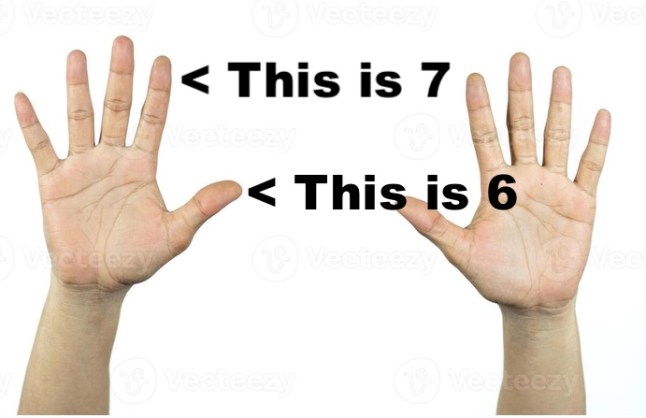
The Joke’s on You: Three reasons why student media outlets should never, ever publish April Fools’ editions (or similar pranks)

I built this about 15 years ago for the cover of a student media helpers guide for a high school news conference. Other than a few language tweaks, I don’t think much has changed…


THE LEAD: Humor is a personal, acquired taste that is hard to tap into on a broad scale, something the students at UNC’s Daily Tarheel learned the hard way this month:

On April Fools’ Day, the paper published a series of satirical articles, including one with a subheadline that said the paper had rebranded as The Daily Woke Heel. Others read “UNC brings back DEI—for whites,” and “A new way forward for the Dean Dome: a two-stadium solution.” Another, published on the website, said “Satire: Trump orders ALE in Chapel Hill to be replaced with ICE agents.”

The jokes did not go over well with some students, and the paper’s editor in chief immediately issued an apology. She wrote that the paper heard students’ “critiques and outrage.” She added, the paper’s “insensitive decisions and oversights” were “made by a newsroom and leadership team that undoubtedly exist in positions of power and privilege on this campus.”

JOKE’S ON YOU: Every April Fools’ Day, I thank the Lord I’m no longer a student newspaper adviser. When I was one, I found myself begging, pleading, cajoling and griping in hopes of keeping the students from making a colossal error in judgement by thinking they were funny.

To be fair, it wasn’t always just the April Fools’ Edition that led to problems and UNC is not alone in the “Oh… So, THAT happened” moments of dumbassery that have advisers going gray and bald before our time and strongly reconsidering truck-driving school.

One year, we did a bracket for “Bar-ch Madness,” in which we listed off the top 16 best places to get hammered around campus. The chancellor wasn’t pleased at our idea of promoting problematic drinking, but he was even less enthusiastic about us including one of the freshman dorms as a “dark horse” candidate.

Year-end issues are also a major concern, as students are usually either burnt to a crisp or at that punch-drunk level of euphoria that comes with nearing the end of the year. In one case, the student newspaper at the University of Utah reminded us that using drop-caps in design isn’t always just an aesthetic choice:

If you noticed the “more” in the headline and wondered if the other staffers’ columns had a more dignified and direct approach… well… not quite…

I could spend days showcasing stuff like this but as the opening graphic seeks to demonstrate, but that would be hypocritical at best. It isn’t like we were so great back in “my day” and now “these damned kids” are somehow sullying the greatness that was present back when typewriters clicked in newsrooms and everyone wore their Sunday best to cover the news.

(One piece I cannot find from “my day” ran here at Oshkosh, in which the staff photoshopped the chancellor’s head onto the famous Demi Moore pregnancy photo. He was not amused, I’m told.)

Instead, here are three reasons that might help prevent the next disaster, which is already on the clock, if that graphic is right:

YOU ARE NOT THAT FUNNY: Humor is one of the greatest talents in the world, in that to make someone laugh can be among the most amazing feelings we have as humans. Someone once explained that if you can tap into something funny, you force people to have an involuntary response to it that creates true joy within them.

Taking that talent and honing it takes years, and even then, it requires a deft touch and a lot of failure. When Richard Pryor died, his family found thousands of reels of tape in his home that provided a timeline of his efforts work-shopping his act.

He’d be at one club one night, trying to see if this bit would land or if tweaking this accent would improve the audience reaction. It took him days, weeks, months and sometimes years to tweak and improve little things that led to those epic, uproarious moments on stage.

If a guy with that level of talent and skill had to work that hard for that long to make even half of his stuff work, what are the chances that a group of college students, trying this on the fly is going to pull it off on the first pass?

As much as I have laughed in newsrooms over the years for a variety of reasons, I can assure you, nobody I’ve met is good enough to pull off humor on a mass-media scale like this. Trying it publicly is going to lead to more harm than good.


HUMOR IS A PERSONAL TASTE: If you don’t believe me, listen to the following comedians:

  • Richard Pryor
  • Taylor Tomlinson
  • Sam Kinison
  • Ali Wong
  • Jeff Foxworthy
  • Nikki Glazer

At least one of them will probably make you laugh and at least one of them will likely offend the hell out of you. Some of them are throwing out bits that you can completely relate to while others are likely not landing a single joke for you. Some feel too tame while others are dropping more F-bombs and slurs than a drunk Boston sports fan after watching an ESPN Hot Take show that gives the Patriots no shot at the playoffs this year.

Newsroom humor, in particular, is a special kind of humor. It’s a mix of sarcasm, mortician’s humor, snark and insult comedy. It’s also full of inside jokes and other things that make people still laugh 20 years after they’ve graduated. I’ve seen newsrooms post weird things on the walls, engage in meme-battles and develop quote books as survival-level defense mechanisms.

(To this day, I’m still somewhat scarred by the humor fight that happened at Ball State between my features desk and my design desk. It started when someone in design left a presentation for a class open, and someone on features stuck some weird images into the design kid’s PowerPoint.

The design kid then stuck a photo of a morbidly obese female adult film actress on the side of the monitor at the features desk. The features kid then responded by essentially iron-gluing an inappropriate image to the side of the design computer, something nobody noticed until the head of the Indianapolis Star came down with my boss for a tour of the newsroom.

The guy paused while visiting the design pod and then asked no one in particular, “Hey… Is that monkey blowing itself?”)

The point is, humor is in the eye of the beholder and few people outside of newsrooms really are beholding what we behold in there. If you want to amuse yourself, turn the place into your own little den of wiener jokes, dank memes and memorable quotes. Just keep it out of the paper (and the public eye in general).


YOU NEED TO TREASURE YOUR CREDIBILITY: Student journalists take on all the risks associated with journalism at any level. They can be attacked, threatened or arrested, and many already have been subjected to these measures.

They can be sued for any one of a dozen reasons, including libel and invasion of privacy. They also suffer the same insults and mistreatment all journalists receive for merely doing their job.

The one thing that makes it suck so much more is that they are often treated as second-class citizens in the field, even by those folks who should know better. I’ve heard of numerous examples of student journalists being told by professors and even professional media operatives that they’re “just playing journalist.”

Like they broke out a “Fisher Price ‘My First Reporter'” kit and asked Nana for an interview about her chocolate-chip cookies or something.

As student journalists, you have to fight so much harder to be taken seriously. You have to defend your work more vigorously than “professional” journalists when you break stories that upset people.

You also have those same “professionals” trying to swipe your stories, bogart your sources or otherwise treat you like some sort of minor-league baseball affiliate that they can raid when the “big team” needs something.

You earn your credibility a grain of sand at a time, knowing that any mistake can wash the whole sandcastle away and force you to start over. It’s so damned important, as it truly is the coin of the realm.

Doing “humor” like the things we showcased here is like dousing your reputation with gasoline and lighting a match, just to watch it burn.

And you’re not just burning down your own house, you’re making it impossible for the next generation to live there or even build on the ashes. Sources (particularly professors) have long memories.

Don’t give them a reason to think poorly of you if you can help it.


Help me help you help your students: Exploring Mass Com is up for a second edition

“It’s a real book!” and it’s aging, so let’s get the next edition rolling with your help.


The good folks at Sage took time out of their busy Tuesday to reach out with a conference call and tell me that my latest textbook was something of an anomaly. “Exploring Mass Communication” was closing in on Year Three in the market and most first editions tend not to do particularly well, they explained. That makes it a tough sell to the powers that be when authors and editors want to pitch for a second edition.

(I lived that experience once with another publisher. The book was not popular enough to merit an improved second edition, while still selling well enough for them to not sell me back the rights to shop it elsewhere. It took 11 years for me to get another bite at the apple, and that was after 10 years of begging…)

In the case of “Exploring Mass Com,” Sage was all gung-ho about getting a second edition to market to make sure it stayed both relevant and popular. The folks set me up Tuesday with a production team and a timeline, meaning we’ll have the next edition of the book out the door by January 2028.

I can’t thank you all enough for the help you’ve given me over the years, both in suggesting content and in adopting my books. Without you all, I’m basically producing exceptionally expensive coffee coasters and door stops. I’m always grateful when someone puts their faith in me and my work to take a chance on something I’ve done and I always want to let folks know that. I also want to make sure I’m meeting expectations.

WHAT WE ARE DOING ALREADY: 

The next edition of the book is in revision mode and we’ve already got a few updates planned for it that should help keep up with current events:

The AI Chapter: One of the first things I pitched was adding a new chapter on artificial intelligence and its impact on media. When I started working on this book about 112 years ago, we weren’t at a point where we were still confusing AI and VR and other bits of alphabet soup. Now, obviously, things have changed.

We’ll go with the same pattern in the chapter as those that were in the first edition: A little historical backstory, a look at the important pioneers, a deep dive into its impact on us as media consumers and a look at the careers that exist now, thanks to growth in the field. We’ll also have some exercises and other goodies to make the chapter appear like it’s been there the whole time.

Law Chapter: A lot has happened in terms of what the law says and what the courts have done in regard to media folks and their rights. We’ll be digging into new cases, adding examples and providing folks with a clearer view of the world of both paper law and trial law.

Data and Example Updates: Each chapter will get a refresh as far as the facts and figures related to the topic at hand. This will help shape discussions in class with a little more “spruced up” data as well as the ability to draw from relevant time frames for the students. No matter what we do in textbooks, examples and data tend to get old fast. With that in mind, we’ll hang on until the last minute to plug in those pieces and give you the freshest look at what the world looks like.

Increased and Improved Visuals: When we started the first edition, we had a certain amount of money set aside for photo and graphic permissions. As I have no idea what anything costs, other than Mustang parts, broken pinball machines and 1956 Topps Baseball Cards, Sage kind of “translated” that amount for me into the number of images we could buy with it and how that would break down across the chapters.

However, a funny thing happened to Mustang parts, pinball machines, baseball cards and photo permission costs between when I agreed to do the book and when we actually had to buy the permissions: Costs went through the roof. However, no one bothered to tell me or my editor that until we were already in production.

At one point, a permissions editor reached out and told me, “You know you’ve used about a third of your budget already and we’re only on Chapter 2…”

Nope. Didn’t know that. So we had to make do.

This time, however, we know what kind of hand we’re playing with from the jump and unless the Strait of Hormuz impacts the cost of photos, we should be able to better estimate things and get you some more and improved visuals.


WHAT I NEED FROM YOU ALL:

One of the best parts about running the blog is that I actually get to hear from people who have seen my stuff and have some suggestions for help. In one case, a professor has been sending me emailed notes about what he’s doing with each of my chapters and what he hopes I might integrate into the next edition. Rest assured, I’m definitely looking into each and every suggestion to see what I can do to make the book more of “your book” than “my book.”

That said, I could use even more help from a wider array of folks, so here’s the pitch: I need a couple favors.

FAVOR ONE: TELL ME WHAT TO FIX, CUT OR LEAVE. I’ve heard from folks over the years who tell me, “Y’know, your book would be great, if only you had X.” For those people, I try my best to do something with the blog to patch that perceived hole, as by the time they notice something is missing, the book is already in production.

I’ve also heard the, “Why did you get rid of X? I loved that thing!” The reason is usually either a) the concept aged out of being useful or b) someone else told me to kill it and I couldn’t think of a reason to argue.

So, if you’re using “Exploring Mass Com,” or have looked at it but gone elsewhere because of any reason whatsoever, please tell me what you like, what you hate and what I need to do to make this better. You can post on comments below or reach out through the Contact Page.

Any feedback is helpful feedback, so please don’t be shy.

FAVOR TWO: TAKE THE CHAPTERS FOR A SPIN: Every time I pitch a book or pitch a revision, the chapters I write go through a vigorous vetting process that involves experts in the field like you all. Sage has a running list of people who have volunteered to critique chapters when I have them ready for a looksee and they provide me with a lot of great feedback.

If you want to make an impact on how the book looks, this is the best place to start in a lot of ways. Sage provides you with the chapters and a brief survey about what you think. (I think they give you like a ham sandwich and a recognition in the preface of the book, but it also counts for service in a lot of places, people have told me. In my way of thinking, it’s a heck of a lot better than serving on the Committee for Determining Committee Assignments for Committee Work or something…)

If you’re interested, hit me up as well and I’ll get you on my pal Charles’ List of Awesomeness, and he’ll reach out when the time comes.


Thanks again for all your help with all of my books and for trusting that my weird way of communicating will somehow make sense to your students.

Vince (a.k.a. The Doctor of Paper)

Good Night, George Kennedy. My life would never have been what it is without you.

George Kennedy as I remember him most: Giving me a look that said, “Fair enough.”

George Kennedy, the former managing editor of the Columbia Missourian, longtime faculty member at Mizzou and legend of journalism education, died Friday after more than a decade of battling Parkinson’s.

Daryl is not alone in this, given how many people have already shared memories of George as well as the speed at which this information spread among those people who knew George.

One of the many difficulties with getting older is that I find myself losing mentors and heroes who helped me become the person I am. Of all those losses, this one really cuts me to my core.

I loved Susie Brandscheid.

I feared Cliff Behnke.

I admired Pat Simms.

But I wanted to be George Kennedy, even though our first conversation led me to believe I’d never spend one day working for him.

I was finishing my master’s degree in Wisconsin when I applied for a city editor position at the Columbia Missourian. I had about three years of part-time work on the State Journal city desk and about a year and a half of teaching experience.

I didn’t even realize that I was applying at Mizzou (God’s personal journalism school), in that the ad called it “the University of Missouri-Columbia,” which I took to mean a branch campus or something.

When I got there, it dawned on me these were the big dogs. George Kennedy would be my boss, the same George Kennedy who helped write the textbook that introduced me to journalism and the same textbook from which I was currently teaching.

My interview with George was a lunch date at Glenn’s restaurant, a few blocks from the Missourian office. On our walk over there, I was chattering away like methed up monkey, trying desperately to engage the man. He remained silent until we got to the restaurant.

He sat down and said two things: He turned to the waitress and said, “I’d like iced tea, please,” and then turned to me and said, “I have four people up for this job and everyone is more qualified than you are.”

I didn’t flinch, probably out of a youthful lack of self-awareness, and responded, “Maybe so, but none of them will work harder for you than I will.”

I still have no idea what possessed this man, who was doing important journalism before I was born, to hire a 23-year-old kid to run his night city desk, but from that point on, my sole goal was to prove he didn’t make a mistake.

Over the next few years, I learned more from George about journalism and life than I did from all of my degrees combined. So much of what George meant and the impact he had on me came from little moments that still make me laugh:

– We had misspelled the name of a soccer club in the paper, only to misspell it in a different way in the correction. Since all corrections had to run in my section, I asked if he wanted us to take another stab at it:

“No, I think we’ve done more than enough damage at this point.”

– We had one particularly terrible day, where it seemed everything in the paper was screwed up in some way. At the afternoon meeting, George let us know:

“Not only did we not manage to add to the sum of human knowledge today, I think we actually managed to subtract from it.”

– My first winter we got about a seven-inch snowstorm that managed to shut down the entire city for about a week. When I complained about Columbia’s ineptitude when it came to snow removal, he put it in perspective:

“Vince, you moved to Baptist country. They believe God put the snow there and God will take it away when He is ready.”

However, when I sat down to really think about the bigger things I learned from George, I came up with a handful of life lessons that shaped who I am and that continue to guide how I teach my students today:


INSPIRE CONFIDENCE IN THOSE WHO NEED IT MOST: One of the comments a friend left on my social media post about George’s death captured the essence of his leadership in one sentence:

“He believed in me before I did.”

That was never more true for me the night in October 2000, when we got a late-night call about a plane that crashed somewhere south of St. Louis. A rumor began to circulate that Gov. Mel Carnahan was aboard and had died in the crash..

I was dragging reporters in to make calls and confirm the rumor so we could put something together for a front-page story. The copy desk was redesigning the front on the fly, even though no one was sure we’d have the goods to run the story.

We had a midnight deadline and right around 10:45, I got a phone call from George.

“So, it sounds like you’ve got a pretty interesting night there…” he began.

He asked what we had and I filled him in on everything we were doing before asking him the obvious question: “Are you coming in?”

I figured he’d want to captain the ship, making sure that we made the right calls about what to run and how to state what we knew. I also figured he would want to keep the situation from going off the rails if things got out of hand and we had to redo the paper yet again. To this day, his answer stunned me:

“Why? I’ve got you.” And then he hung up.

I was 26 years old and had about two years of experience running a night city desk. George knew more about covering stuff like this than I’d ever know. This was probably the most important story we would have in the paper for years to come, and if we screwed it up, we’d be the cautionary tale for all journalism students going forward.

And yet, George never hesitated about putting the ball in my hands and telling me, “Go win this thing.”

From that moment on, I realized that inspiring confidence in others was the greatest gift a teacher could give. Every day, I sit with kids who are frustrated with their inability to get a job, get an internship, complete a project or even write a single sentence. They feel lost and incapable. They feel scared that they won’t get where they desperately want to go.

My job at that point is to do for them what George did for me: Give them the confidence that they need to accomplish these things on their own.


IN PUBLIC, PRAISE INDIVIDUALLY AND CRITICIZE COLLECTIVELY: Each day, students waited anxiously for George’s critique, titled “Second Guesses.” They’d look to the cork boards in the office for the print out or check their email repeatedly in anticipation of what George had to say.

In each edition, certain names got published in all caps, meaning those folks did something really good. It might have been a great story, a fantastic photo or an amazing graphic. A particular copy-desker might get a nod for a great headline or some deft editing.

That praise was more incredible than experiencing a first kiss for so many people. Students I taught, many now in their 40s, noted they still have printouts of “Second Guesses” tucked away somewhere in a file. Some have clipped out the paragraph that mentioned them and keep it taped to a computer monitor or pinned to an office wall.

(The students weren’t alone in their love of “Second Guesses.” I would model my night notes after George’s critiques and nothing made me feel better than when he would literally take my entire night note and use it as the basis for that day’s edition.

He’d start with something about how great the paper was and then say, “Here’s Vince, explaining how we managed to pull this off:” or something like that. Years later, when I had to do daily critiques, I realized he probably did this because a good night note essentially gave him a day off, but I still cherished the times he considered my words as worthy of subbing in for his.)

Not everything in those critiques was praise, however, as we screwed up a lot over the years. That said, never once did George lambaste anyone by name for their mistakes. It was always, “We need to do better” or “We shouldn’t have made this mistake” or “We can NEVER let this happen again.”

To his way of thinking, the “we” wasn’t providing cover for one bad actor. The “we” was really a “we” in that it wasn’t just the kid who made the mistake: It was the line editor who didn’t ask enough questions to improve the story. It was the copy-desker who didn’t catch the error. It was the designer who didn’t notice the mistake when we proofed the page. And George essentially included himself in that “we,” as he likely felt he probably should have done or said something somewhere along the line to prevent that mistake.

I found that I wanted to work for that kind of person and I really aspired to be that kind of person when I was in the critiquing seat. That approach always made me want to work even harder to make sure “we” got it right as often as possible.


NEVER BE AFRAID TO RECONSIDER YOUR POSITION: Despite the feelings most of us had about his omnipotence, George was always willing to hear opposing opinions and reconsider his own.

Case in point, we were chasing a story about who would be the next police chief in Columbia late one night. What we knew was that the city manager was going to make a public announcement the next day and that the new chief would be with him. We had four candidates, two of whom hadn’t heard from the city manager for months, one who said he wasn’t aware of the press conference and one who said he couldn’t talk that night, but would “gladly speak after the press conference.”

We basically connected all the dots we had, stopping short of declaring the one guy as the police chief, something George called us out for in “Second Guesses.” He felt we were trying to be cute about the situation instead of telling people what seemed patently obvious.

I went to see him after the critique published and I made the case that we didn’t have the final piece of the story for certain, so I’d rather be a bit soft than turn out to be wrong. At the time, there were a number of “Person holds press conference to announce what we brilliant media people know to be true, only for us to be totally wrong” stories happening. I explained I didn’t want to be one of those, nor did I want to teach the kids that a guess and a prayer was quality journalism.

George heard me out and then did this thing he always did when he was thinking about something: His tongue would touch the middle of his mustache and then he’d kind of pull his bottom lip in a bit as he furrowed his brow.

“Fair enough,” he said, using a phrase that was a trademark of his.

Another situation like this happened when George was on vacation. It was early in the summer term where a) the students are usually not as abundant or skilled because so many of them are off at internships and b) the students haven’t been trained enough to know how to “8-2” a phone yet, let alone cover major news.

However, in a small town nearby, two sheriff’s deputies were shot to death as part of a daring jailbreak that failed to break a guy out of jail. The deputies were well-known members of the community, the shooters were on the lam and the town was in a state of devastation. I made the decision to “flood the zone,” sending at least four reporters and a photographer to that area to get as many stories as we could about this.

The kids came back with great content about the town, the incident, the deputies and more. I think we took over most of the front page and a ton of space inside, where our coverage rivaled both the St. Louis Post-Dispatch and the Kansas City Star.

When George got back, I asked him what he thought about our approach and he told me he wouldn’t poured as much time and resources into that story, given where it happened and what our circulation area was. “That said,” he added. “I’m glad that you did.”

Too often, people in a position like George’s feel like they need to be an oracle or something, never wrong and never questioned. To be fair, George had an incredible batting average when it came to being right about stuff, but he wasn’t perfect and he knew it.

George taught me that it’s OK to be wrong and that when you are, it’s important to shift your thinking if you want to retain the respect of the people around you.


PLANT THE SEEDS AND WATCH THEM GROW: Perhaps the greatest gift George ever gave any of us was the ability to grow and develop in our own ways. That kind of selflessness is a rarity in the world of academia, to be sure.

Of all the stories people are sharing online after learning of George’s passing, the common thread is of how he influenced them by essentially helping them become the best version of themselves.

When George once asked me where I wanted to be in 10 years, I told him, “I want your job.” He got this kind of bemused look on his face, not because he thought I was incapable of growing into that kind of position, but because he didn’t want me to become George Kennedy 2.0.

He wanted me to become Vince Filak, 1.0.

George impacted the lives of thousands upon thousands of students by essentially planting seeds: He took what we were, put us in the best possible position to succeed, nurtured us until we could stand on our own and then let us become what we were destined to be. For that, I know I owe him a debt of gratitude, and I’m sure many others do as well.

George might not agree with that, but if he took a moment, he might say, “Fair enough.”

Please Share Your “Peak Chutzpah” Moments With Me

A few years back, I asked a question of my friends who were most familiar with Yiddish terms to find out if the word “chutzpah” could take a modifier or if it was singular in its description. For example, the words “unique” and “destroyed” can’t get any more or less special.

“Unique” means one of a kind, so something either is or isn’t unique. It can’t be “somewhat unique” or “supremely unique.” Same thing with “destroyed,” as it means the end of something’s existence. It can’t be “partially destroyed” or “completely destroyed.”

I never got an answer to this, so I coined the term “peak chutzpah” for those moments where someone has an immense amount of gall to ask for something, but also has a stunning lack of social awareness.

The purest example I had of “peak chutzpah” came from a young woman in my media writing class who skipped out on a writing and editing session and subsequently failed an assignment in a way she wouldn’t have if she had shown up. She then went to “Rate My Professor” and wrote a screed about me, including details that clearly identified her in it.

About an hour later, I got a LinkedIn request from her, with hopes I could help with some reference letters.

The reason I bring it up today is that I finally managed to get back into the office after Winter Storm Elsa dropped nearly two and a half feet of snow in my yard. The snow was drifting so high, I actually broke the plow on our ATV trying to clear it and had to hire a guy with a massive plow truck to make a path in our driveway.

He got stuck, although he managed to eventually get it done.

Our weather forecaster was way too excited about all of this… But he wasn’t wrong.

In between battles with the weather, I was working to help students get ready for their final writing assignment that was going to be critiqued and edited in today’s class. The roads were finally passable, so I got in extra early to build this stuff for them, only to get this email from a student:

Goodmorning Professor, I will kt make it to class. I worked till 2am and I am exhausted. Can you record today’s lecture?

I don’t know if this qualifies as “peak chutzpah,” but the person who wrote it could use a little help in editing and AP style.

With Spring Break near, despite the 15-foot piles of snow outside that seem to argue otherwise, I’d love to hear your best student chutzpah stories. I could use the boost and I’m sure we could all use a laugh.

Feel free to post below or hit me up on the contact page.

FCC Chair Brendan Carr and Secretary of Defense Pete Hegseth threaten media for not being polite, kind lapdogs

This is a photo of me at a high school journalism workshop, apparently trying to explain something that I hope isn’t what it looks like I’m trying to explain. If I can handle this photo of me existing, Pete Hegseth can handle whatever the hell photos they’re taking of him these days.

THE LEAD: The folks in the government are getting grumpy about the way the media is treating them to the point of threatening and banning outlets and coverage they don’t like.

Federal Communication Commission head Brendan Carr said he wants the coverage of the Iraq war to be more “patriotic,” lest the stations within his dominion see their licenses yanked:

The chair of the US Federal Communications Commission (FCC) has threatened to revoke broadcasters’ licences after US President Donald Trump criticised their coverage of the US-Israel war with Iran.

Brendan Carr told the BBC’s US partner CBS News that broadcasters’ licences were not a “property right” and warned they can be revoked if stations did not serve the public interest.

Carr’s threat came after he accused broadcasters of “running hoaxes and news distortions”, saying they can still “correct course” before their licence renewals.

Some Democratic lawmakers called Carr’s comments unconstitutional. The FCC issues licences to individual broadcast stations, but does not license TV networks.

In a “hold my beer” moment, Secretary of Defense Pete Hegseth went one step further, barring photo journalists from his Pentagon briefings for not making him look pretty enough:

The Defense Department has barred press photographers from briefings on the ongoing U.S.-Israeli military conflict with Iran after they published photos of Defense Secretary Pete Hegseth that his staff deemed “unflattering,” according to two people familiar with the decision who spoke on the condition of anonymity out of fear of retaliation.

I FEEL PETTY, OH SO PETTY: The media and the government have long had an adversarial relationship, with many political figures badmouthing and blaming on the fourth estate for whatever ails them. We’ve had politicians literally beating up reporters as well, with one “bodyslamming” a journalist in Montana, and yet still winning the election anyway.

This isn’t the standard fare of one saber-rattling chucklehead with limited power and an unlimited ego. This is the head of the FCC basically issuing a mob threat, which Democrats immediately rebuked him for making. Even Republicans who generally view the media as somewhere between a swamp rat and the crud that grows on your teeth when you forget to brush for two days are not having it:

Sen. Ron Johnson (R-Wis.) on Sunday rebuked Federal Communications Commission (FCC) Chair Brendan Carr’s threats to revoke broadcasters’ licenses over TV networks’ news coverage.

“I am a big supporter of the First Amendment,” Johnson said on Fox News’s “The Sunday Briefing.” “I do not like the heavy-handed government, no matter who is wielding it. … I would rather the federal government stay out of the private sector as much as possible.”

“The federal government’s role is to protect our freedoms — protect our constitutional rights,” the Wisconsin Republican added.

Johnson is my senator and I can’t remember the last time I fully agreed with him on anything, so to have us both on the same page might be as rare as seeing Jesus riding a unicorn. (You’re welcome…) Johnson’s essential position of, “I might not like what you are saying, but I’ll fight to the death for your right to say it,” is good to see, given that too few people tend to think about how life might look if the shoe were on the other foot.

The backlash against Hegseth isn’t as loud or strong, but the underlying concern of controlling the media shouldn’t be any less alarming. As much as his staff is now backtracking and claiming there’s a “space and fairness” issue driving this, I tend to believe the first report a little more for obvious reasons.

DOCTOR OF PAPER HOT TAKE: Let’s start with Hegseth because it’s easier. I’m a guy who has had his picture taken at a number of podium-based events and I swear to God, I never look good. I either look like I’m gesturing in hope of winning a game of Charades or my mouth is in some sort of position that looks like I’m eating rotten food or about to spit on someone. I’m also old and bald with bad neck hair, so that’s not helping anything either.

So, from that perspective, I can honestly say: Grow up, dude.

You were once on TV and you considered yourself a journalist, so it’s not like you don’t get the idea of how freedom of expression works. I can pretty much imagine the general outrage you’d put forth if a Democratic administration had tried to crack down on whatever you were doing on Fox News. For you to punk slap the media over a couple photographs you didn’t like when this photo of you exists seems a bit stupid:

As for Brendan Carr, his lack of understanding and his use of threats makes more sense. Carr got a bachelor’s in government before getting a law degree. He was a private practice attorney before being brought into the governmental machine in 2012. He never worked in the media, nor is his expertise in that field.

Carr reminds me of a number of school district attorneys and college counsel-folk I’ve dealt with over the years when school media got censored. They had this vibe like, “I’m a lawyer, thus I know everything and I’m way smarter than anyone else in the room.”

I remember one case in which I had to keep correcting a school lawyer about cases he claimed supported his position. Finally, I outlined several reasons he was wrong before turning to the superintendent and saying, “Ma’am, with all due respect, you’re getting terrible legal advice and likely overpaying for it.”

When governmental people come from the business or legal world, they fail to understand that they don’t have as much free reign as they used to. Being “in charge” back there meant they had unfettered power over anyone or anything within their fiefdom. In the government, we have rules and laws that constrain people from acting on their stupidest instincts.

The Junk Drawer: Hump Day Edition

Is the weekend maybe hiding in here somewhere?

In the middle of the week during the middle of the semester, it’s a bit of a drag for students and professors. With that in mind, here are a few things that might amuse you all, spark some discussions or generally make it feel like the weekend isn’t so far away:

FLORIDA’S VERSION OF “WHO WORE IT BETTER?”

You know you’re a journalist when the first question you have after reading this headline isn’t, “What the hell was wrong with this woman?” but rather “How did the manatee get into a bikini?”

In the world of misplaced modifiers, I think this one is the gold standard.

Speaking of “What the hell is wrong with people…

STOP, THINK, THEN POST: Dan O’Donnell, a conservative talk show host out here in Wisconsin used the occasion of the Iran attacks to call for the death of Minnesota Gov. Tim Walz:

O’Donnell later apologized for his posts and took them down, but there are still copies of this floating all over the internet. It’s also not great optics, given Minnesota House of Representatives Speaker Emerita Melissa Hortman and her husband Mark Hortman were killed in July, in an attack deemed politically motivated.

This serves as one more reminder that stupidity is bad, but amplifying it on social media is worse.

GLAD WE GOT THAT NAILED DOWN: Stories based on opinions, particularly those that can’t be supported or refuted, don’t usually do much for me, but I have to admit this one grabbed me:

The former star of “Growing Pains” and long-time evangelist for Christianity has done a lot for publicizing his faith and reaching out to others to help them find Jesus. That said, I’m wondering where he got the inside scoop on the existence of hell.

I’m also going to argue that if he doesn’t believe in “eternal conscious torment,” he never had a nun for a teacher like I did. Sr. Mary Kenneth still haunts me in my dreams some times…

Speaking of living rent-free in someone’s head…

EVERY TIME A STUDENT REMEMBERS SOMETHING YOU TEACH THEM, AN ANGEL GETS ITS WINGS: I teach a lot of 8 a.m. required classes for sophomores, so I’m never exactly sure how much the students learn from me or how much they think about what I’ve taught them.

That’s why when a student not only remembers what I taught them, but also reaches out to say that they found an example of it in the wild, it just warms my grinchy little heart:

Hi professor, I saw this on Facebook and just thought it was so coincidental that we worked on a draft lead about a case just like this I thought I’d share with you. I think they wrote this terribly:

I’d have to agree with the kid, given that we don’t find out about a dead body until halfway through the piece. I’m also somewhat disturbed by the phrase “a working fire.” As opposed to what? An unemployed fire?

And finally…

SUITABLE FOR FRAMING: Some students wait until week 12 of a 14-week term to start trying to act right in class. At that point, they realize they’re totally screwed, as the math won’t allow them to pass, so they beg for extra credit.

I usually post this on my door right about the time I get that first request:

Feel free to borrow that.

Have a great day.

Vince (a.k.a. The Doctor of Paper)

UNC policy allows the U to record classes without telling professors or students, while students aren’t allowed to record at all

If you feel like this, you might be working at UNC…

THE LEAD: The University of North Carolina has implemented a policy that dictates who can and can’t record classroom content, which includes a terrifying Big Brother option for the university itself:

The University may record a class or access existing classroom recordings without the permission or knowledge of the instructor being recorded for the following purposes:

  • To gather evidence in connection with an investigation into alleged violations of University policy, when authorized in writing by the Provost and the Chief Human Resources Officer; and
  • For any other lawful purpose, when authorized in writing by the Provost and the Office of University Counsel, who will consult with the Chair of the Faculty.


BACKGROUND: The university had run into several issues related to recordings of professors over the years, only to figure out it really had no policy in place to deal with such things.

The tipping point appeared to be when UNC decided not to renew business professor Larry Chavis’s contract after reviewing recordings of his classes. Chavis noted he had no idea the university was recording him.

When called to account for this surreptitious move, the U fell back on the “well, we’re a one-party consent state” thing, which is true but a bit wobbly at best.


A FEW BASIC OBSERVATIONS: I found myself thinking about a couple aspects of the policy that either people haven’t considered very well or they just hope they won’t have to deal with in the future. Consider the following:

Rules for student recordings: I’m not sure exactly how this came into play, but the document makes it against UNC law for students to record in the classroom, except under specific circumstances:

Students may not record classes, including online classes, without express advance permission from the instructor teaching the class they wish to record. Students approved for recording as a University Compliance Office (UCO) accommodation to address a disability, pregnancy, or religious accommodation must notify instructors of their approved accommodation by sending an accommodation notification plan in advance of any recording. The approved accommodation plan must indicate the means by which the recording will be accomplished and any other details pertaining to the recording or its use.

Well, for starters, how are you going to monitor that, given students carry about 97 digital devices on them at any point in time? I guess if I’m in my computer lab at UWO with 20-some kids, maybe I might notice a kid’s phone set to record, but most likely not. In a UNC pit class, though? Not a chance in hell.

Add that to the lack of a specific “or else what” in this policy and I’m thinking this thing is going to be relatively toothless when it comes to enforcement. I’m not an expert on university policy or UNC’s policies in particular, but I don’t see a “If you do X, you will suffer Y” in this document. The document also doesn’t say, “See POLICY X for punishments” so I’m left to wonder if the kids will record anyway depending on how strict the policy and problematic the punishment.


Martyrs to the cause: Most of the kerfuffle I’ve seen in relation to classroom recordings getting out into the world is related to students trying to “expose” professorial bias. We’ve covered a few of these here, and there are dozens more cases elsewhere in which a student records a professor doing or saying something that upsets a large group of the perpetually offended. Once that match of outrage hits the kerosene of social media, the professor’s goose is cooked.

With that in mind (and the previous point in mind as well), I somehow doubt this kind of thing will stop. Even more, I imagine that a kid who “exposes” a professor via an illicit recording at UNC will now be hailed as a martyr to the cause if any punishment befalls that kid.

(“Let’s all remember the brave sacrifice of Jimmy, who recorded Professor Jones misgendering a piece of wicker in Underwater Basketweaving 385. That ‘stern talking to’ he got from the dean will haunt him always…”)

We have a world in which social media rules, “gotcha fame” is aspirational and people are way too full of themselves around the academic world. Recordings are going to happen.


To Chill or Not To Chill: I’ve studied the concept of the Willingness to Self-Censor for a number of years and found that many people have an innate sense of how willing they are to speak out or shut up when faced with controversy. Certain topics tend to spark this more in all people, but many topics spark it in specific people. In short, there are a lot of reasons why people will hold their tongues and it’s not always because they don’t have something to say.

Conversely, I’ve dealt with academics all my adult life and I found that many of them apparently have some sort of condition that makes them think everyone should hear what they have to say about everything, regardless of the circumstances.


Michael Palm, president of UNC’s chapter of the American Association of University Professors and associate professor in the UNC Department of Communication, said faculty members are aware they may be monitored by the University or even outside groups.

“My sense is that most faculty, at this point, just assume they’re being watched,” Palm said.

<SNIP>

“I think it is unquestionable that there has been a chilling effect on campus and that many more faculty now than at any other time that I’ve been a faculty member — and I’ve been at UNC for 18 years — are self-censoring out of fear for what might happen if the wrong people disapprove of the content in their classes,” Palm said.

If I’m being honest, there are days I have a “come at me, bro” vibe going on when it comes to my classroom. If you think I’ve said something stupid, childish, offensive or whatever… well… take a number, I guess. Then there are other days where, if I think about all the potential ways something like this could screw me, you couldn’t pull a needle out of my keester with a tow truck.

What I foresee here is that the students are going to lose a lot, thanks to this policy. The professors who really SHOULD be curbed a bit in regard to their histrionics and side-rambles will be the ones thinking, “Well, that’s for other people…” The folks who are more like academic prairie dogs, popping their little heads out of their holes juuuuuusssst enough to see if the coast is clear, will stay under ground for fear of getting whacked.

Cleveland Plain Dealer honcho Chris Quinn took time out of his busy schedule to crap all over journalism schools about their views on AI, despite not actually knowing their views on AI

I hope the computer-based journalism helpers Chris Quinn is putting his faith in work better than the Cleveland Plain Dealer website. I tried to buy a subscription to view his diatribe about journalism schools and AI, only to have a spinning wheel of death show up for about a day or so…

THE LEAD: Chris Quinn, the VP of content for the Cleveland Plain Dealer, took a victory lap over the weekend, bragging about how he removed the writing requirements associated with journalism via “AI specialists,” while also telling journalism schools they suck:

Because we want reporters gathering information, these jobs are 100 percent reporting. We have an AI rewrite specialist who turns their material into drafts. We fact-check everything. Editors review it. Reporters get the final say. Humans — not AI — control every step.

By removing writing from reporters’ workloads, we’ve effectively freed up an extra workday for them each week. They’re spending it on the street — doing in-person interviews, meeting sources for coffee. That’s where real stories emerge, and they’re returning with more ideas than we can handle.

<SNIP>

Journalism programs are decades behind. Many graduating students have unrealistic expectations. They imagine themselves as long-form magazine storytellers, chasing a romanticized version of journalism that largely never existed.

That’s what they’re taught.


DISSECTION TIME, PART I: Let’s look at both Quinn’s arguments as well as take some time to disprove them, starting with his view of students and journalism programs:

The Strawman Student: Quinn’s piece begins with an exemplar of how students suck these days, especially because we teach them poorly at every journalism school in the country:

A college student withdrew from consideration for a reporting role in our newsroom this week because of how we use artificial intelligence.

It reminded me again how college journalism programs are failing to prepare students for the workforce.

I don’t have a reason to doubt Quinn that this kid exists, but I also have no reason to trust him. I’d like to see the withdrawal letter/email/voicemail the kid sent and I’d probably also like to talk to the kid.

See, Chris, sometimes people tell you stuff that isn’t true, like “I really wish I could make it to your party” or “The break up isn’t about you, it’s about me” or “It happens to a lot of guys and it’s not a big deal.”

Maybe this kid didn’t want to work for someone who saw their role in the newsroom as feeding grist into a mill for a robot overlord. Maybe they actually enjoyed writing, so giving up the part of the job they like wasn’t worth it to them. Maybe, and I say this as a huge fan of the sports teams, they didn’t want to move to Cleveland.

Could be a lot of things, but blaming it solely on your AI policy helps you nicely set up your argument that journalism schools suck.


The Incorrect Overgeneralizations: The bigger problem here is the leap from this one kid not liking something to all journalism programs failing all of the kids out there all of the time. Even if we pretend that this one alleged kid was so allegedly horrified at the Plain Dealer’s amazing-as-hell AI set up that they had to pull out immediately, it doesn’t follow that all kids in all schools are taught to hate AI. This is called negative social stereotyping.

Even if that feels like a bit of hyperbole, let’s at least agree that not every kid who comes out of a program is the exact same in terms of quality, maturity and expectations.

Also, I think we can agree that not every journalism program is created equal, so while the kids at University A might be using smudge pots to ward off the evil spirits used to power AI, kids at University B might be getting some good data journalism help, transcription services and other goodies, courtesy of AI.

Then again, maybe we can’t agree, given this generalization:

Like many students we’ve spoken with in the past year, this one had been told repeatedly by professors that AI is bad. We heard the same thing at the National Association of Black Journalists convention in Cleveland in August. Student after student said it.

Chris, did you bother to dig a bit deeper on this, because there are a few nuances that merit consideration. First, who were these professors? Were they in journalism or were they in departments where they’ve gotten used to grading 500-word essays that AI can now crank out in 18 seconds, thus putting the fear of God into these people?

What kind of AI was under discussion? Traditional AI? Generative AI? Did the professors state that certain AI programs are less helpful than others, or that relying solely on whatever content AI puked up was dangerous from a fact-based standpoint?

Did the professors explain the “black box” and “hallucination” concerns about AI? Did the professors show them example after example after example of how AI completely screwed the pooch, thus trying to help them see that you can’t just turn it loose and hope for the best? 

I’m also curious, given your disdain for journalism programs, where did the amazing Hannah Drown and Molly Walsh garner their educational pedigree that mixed the poli sci, business and non-profit knowledge you desperately want kids to have?

Oh… Yeah…

Given their background, I’m wondering how Hannah and Molly feel about this proud declaration you made:

Fortunately for those of us who know exactly what skills we need in applicants, AI has altered the landscape so dramatically that we don’t need journalism school grads.

We don’t need any damned JOURNALISM GRADUATES… Except, of course, the two we hired to do this work that we’re so proud of…


The Erroneous View of J-Schools: I’d like to know how many journalism programs Quinn visited in the past five years. A five-year span would cover the time frame where artificial intelligence would have become relevant enough for schools to start embracing a relatively stable set of AI tools.

I’d put the over/under at about three schools, and I’d advise people to take the under.

There are likely colleges that are shunning AI, but clearly many more are embracing specific aspects of these tools.

CUNY has an entire AI Journalism lab for professionals to come back and learn the ropes. Northeastern University is diving into the research and practical ends of AI with its AI Literacy Lab. The Medill School at Northwestern University has its Knight Lab to work on AI and media. Arizona State University has put a ton of resources into its work on AI and news innovation. University of Northern Colorado built a production course that teaches students how to meld AI and journalism effectively.

Stanford, UCLA, Atlantic International University, Florida and Columbia are just a few of the other schools that have Journalism-based AI courses on the books, and those are just the ones I found on through a cursory search. That’s not even counting all the programs (ours here included) that have infused AI into the current courses we have, so we can demonstrate the value of the tools while we teach caution as well.

(NOTE: If your school or your class does some AI stuff, feel free to pipe up in the comments section. I bet we could really make a run at the record for most comments on the blog.)

I not only teach about artificial intelligence in my classrooms, but I also include chapters on it in my books and provide basic exercises to educators that showcase its strengths and weaknesses.

What we have here is a collection of facts, supported by links to additional information. I’d like to think that’s a bit stronger case than Chris Quinn’s “Old Man Yells at Cloud” approach to generalizing about what’s wrong with journalism schools today.


The “Road Less Traveled” Advice: Quinn’s ignorant view on J-school is problematically compounded by his educational suggestions for kids who want to enter his glorious newsroom:

If you’re a student considering journalism, I’d skip that degree. Study political science. Learn technology. Understand how government, businesses and nonprofits work. Take communications law and ethics as electives. Skip much of the rest.


Got it. Just like you did back in the day! Right, Chris? Oh… Wait…

I don’t know if he’s going to be on College of Media and Communication Dean David Boardman’s Christmas card list this year, but I’d love to see Boardman’s reaction to this column… 


Aside from the “do as I say, not as I did” thing, if I wanted to tank a kid’s future, I’d pretty much tell that kid to do exactly what Quinn is saying here.

Technology changes so rapidly that whatever the kid learned in freshman year would likely be obsolete by graduation. You can learn tools, but it’s important to know the broader ways in which they should be applied to further your skills and connect with your audience. For example, in my day, we didn’t major in Quark XPress. We majored in design, used the tool in conjunction with our broader understanding of the field and then adapted to technology changes.

In addition, there’s a reason the phrase “Why try? Go Poli Sci” is still heard in the halls of many academic institutions. It’s also much more likely to be in the “paper law” as opposed to the “trial law” end of the spectrum. I’m not saying a certificate, minor or even double major in this is field is bad, particularly if you want to take your media skills into the political realm. However, you’re not making it to a newsroom solely on a steady diet of Politics and Genocide or Western European Politics courses.

I’d also like to know where Quinn thinks students are getting their interviewing skills, their social media experience or their general reporting knowledge in this newly formed major he’s promoting here.

Being forced to meet people takes effort, particularly based on how today’s generation of students has grown up in a digital-first, post-pandemic, borderline-anthropophobic world. Research suggests that nearly 45 percent of Gen Z men have never asked someone out on a date in person, so if Quinn is assuming this fresh crop of potential folks can do this without some reporting courses (still a thing) or other forced socialization, I’ve got some unfortunate news for him.

Also, com law might not matter much any more, if what’s happening in the real world is any indication…


DISSECTION TIME, PART II:  With that out of the way, let’s pick apart Quinn’s views on artificial intelligence and the glorious way in which it has drastically improved his newsroom:

AI! It’s FANTASTIC! (Usually):  Quinn has gone all-in on AI, which is always dangerous when it comes to a new technology. Actually, it’s usually dangerous in any situation, given that most new ideas suffer a lot of growing pains before they eventually become valuable, but so much less so than what was expected.

Still, he’s a fan:

Artificial intelligence is not bad for newsrooms. It’s the future of them. It already allows us to be faster, more thorough and more comprehensible. It frees time for what matters most: gathering facts and developing stories to serve you.

Anyone entering this field should be immersing themselves in AI.

I’ll buy faster, but I’m not entirely sold on the other descriptors here, given what we’ve seen AI mess up already. Dare I say Quinn is “chasing a romanticized version” of this technological marvel.

AI has fouled up a ton of content in some pretty awkward ways, including calling a guy “useless” in his own obituary, misnaming the city in which an NFL team resides, cliche-festing local sports stories and screwing up an entire development plan in a local news story. That’s not counting the number of times people got tricked by AI sources or generally misled by AI-generated content.


Words, Words, Words…: Quinn seems to take an almost perverse level of pride in how much content his staff members can grab and how none of them has to do any actual writing any more:

By removing writing from reporters’ workloads, we’ve effectively freed up an extra workday for them each week. They’re spending it on the street — doing in-person interviews, meeting sources for coffee. That’s where real stories emerge, and they’re returning with more ideas than we can handle.

I get that it’s important to do deeper reporting, spend more time with sources and connect with the communities journalists cover. However, the question becomes, “How much of all that good will and strong effort is wasted if you just toss everything in an AI blender and then watch the content move along like you’re “Laverne and Shirley” at the Shotz Brewery?”

Plus, and maybe Quinn doesn’t give a damn, but I’ve found that when I invest a lot in the reporting, I tend to care about the story I want to tell. That usually leads to some stronger, more engaging pieces based on well-crafted writing.

Being a writer isn’t a negative, particularly if you want to write for the benefit of an audience that is interested in what you have to say. I think I’m qualified to say that, given everything I sit down to write has me thinking, “Who would want to read this and what would they want to know?”

I’m not sure if AI has gotten to that point yet, but I know good writers have.


Quantity over Quality: I forget what movie it was in, but there was a scene in which prisoners were told, “We’ve got good news and bad news. The bad news is that all we have for your dinner tonight is horse manure.” When someone asks, “So what’s the good news?” the official replied, “There’s plenty of it.”

Which brings us back to the Plain Dealer’s Bin of AI Content…

A quick look at the list of stories Hannah Drown put together recently provides some sense of the quantity. Each day she appears to be on the job, a handful or more stories with her byline show up. She’s got coverage of events at the Lorain County Junior Vocational School, a UAW strike in the area, a pop-up shop at the Lorain Community College, a school lockout in Elyria and more. The volume is there.

The quality, however, leaves something to be desired.

These are mostly stories that could have easily come from a press release rewrite, featuring a “Hey, come check out this new thing” approach. These lack depth and nuance, not to mention any level of critical thought. The stories have overly long sentences, generally lack flow and are as dry as a popcorn fart.

For all the bragging Quinn does about reporters getting a chance to sit with sources, meet for coffee and chat these people up, most of the content comes straight from documents, not people. A look through more than a dozen of these pieces revealed virtually no direct quotes or specific references to interviews with these salt-of-the-earth individuals.

For example, a story about a school teacher who donated bone marrow to a complete stranger half a world away would seem to be exactly the kind of piece that would engage readers through amazing storytelling. Instead, we get this lead:

LORAIN, Ohio — Valentine’s Day usually arrives with candy hearts and roses, but this year, one of the clearest acts of love connected to the holiday came without flowers at all.

We get no direct information from the teacher about the experience, nothing from the folks at the National Marrow Donor Program talking about the value of the program and nothing from people who have had their lives saved through some of these selfless acts.

The story has zero quotes in it and reads like a “how-to manual” for getting on the bone marrow registry and donating it to someone. Boring doesn’t begin to cover it.

I’m not entirely sure I can blame Drown for this, as it is her job to just shovel content into the front end of the pipeline. It’s also not stated to what degree AI did any work on this (or any other) piece in her clip file, which I’d consider a bit of an ethical concern.

What I can say is that if my name were on these things, I’d want the writing to be a lot better than it is. As we’ve noted before, AI essentially creates an average of EVERYTHING it takes in, regardless of quality, and this definitely feels like “C” writing.

What goes unsaid in Quinn’s magnum opus is that people now have an abundance of media outlets at their disposal that provide vast sums of content. Journalists have to grab people by the eyeballs and hang onto them in a way that distinguishes their work from the noise.

This is where quality writing and keen storytelling come into play and where the generic “held a meeting” leads that AI can churn out will fail.


(FINAL NOTE: I’m sure Quinn would be horrified at the amount of time I spent writing this piece, given his “crank ‘er out” philosophy. I’m fine with it, though, because I believe dedication to one’s craft matters a lot, even if the point is just to tell someone they’re full of crap.)

Journalism-related concepts that played out as well in the medical world while I was getting gallbladder surgery

My boss was nice enough to let people know I’d be out for a bit, but this is a little vague… Not like THAT’S gonna lead to speculation…

At the start of every semester, I try to come back with a “X number of things I’ve learned” or a “X years of teaching have taught me” kind of post. It was ruminating (I swear) when my second gallbladder attack in four days hit me badly enough to head to the ER at midnight the day before school started.

Although everything went well, I found myself living out little moments that had me shifting into “analogy mode” as I saw parallels between where I was (the hospital) and where I wanted to be (a journalism classroom). So, as I continue to mend and catch up with the 82,324 things that have landed on my desk while I was gone, I thought a simple slow-walk post of advice would be a good start to what has already been a shaky semester.

(Also, to be fair, I’m still on meds, somewhat hazy and worried I’d somehow come in hot on a topic like Bad Bunny or something that would end up getting me fired without me entirely knowing why.)

So, here are a couple of the maxims that ring true in journalism that kind of came home to me throughout my hospital stay and recovery:

ACCURACY ABOVE ALL ELSE: We’ve been having a lot of conversations like this around the house:

Me: Who called?

Zoe: She didn’t leave her name on the voicemail.

Me: Can I listen to it?

Zoe: She was just like “Hi, this is mumble mumble and I’m with…

Me: So she did leave a name, but you just didn’t understand it? Is it possible that maybe if I listened to it, I could figure it out?

Zoe: Well, I guess…

As much as I expect that out of my kid, I didn’t think I should expect it from a healthcare provider.

Case in point: Upon leaving the hospital, the discharge nurse is going through all the stuff I should or should do, eat or drink. She tells me to avoid fried food and fatty food like bacon. Due to the lack of the gallbladder, these things are likely to create severe gastric distress in the early stages of my recovery.

OK, got it. Most of my diet goes on the shelf.

The other night, Amy made this amazing chicken and potato thing that was part of our “healthy eating” resolution for the year. About 20 minutes after I ate it, I’m in stomach-cramp hell for about two hours. Turns out, she used olive oil on the stuff, which has the same basic effect as those other two things, even though the nurse didn’t mention it and we all usually seem to think olive oil baking is good and deep-fried drumsticks are bad.

I often think about the way in which we ask questions of people in journalism and how we get “almost” answers, or how sources provide information that’s direct but not entirely accurate. From now on, I plan to start interrogating sources like the entirety of my GI tract depends on it.


VOCABULARY MATTERS: We always talk about picking the right word, the proper descriptor or the exact phrase to help the audience understand things accurately. In news stories, it’s relatively important. In the medical field, it means a hell of a lot more.

In trying to explain what he found when he dug into my gut, the surgeon referred to the gallbladder as “angry,” “wicked” and “gnarly.” Those descriptors sound more like the tappers at a South Boston pub than a description of a human organ.

In addition, he explained that something had happened causing my gallbladder to grow a “rind” over the top of it and encase it tightly against my liver. What created said rind and what the rind was composed of, he would not venture a guess. Apparently, I just have a brie-like defense mechanism against gallstones or something.

I didn’t need the whole medical textbook explanation, but it did dawn on me that I felt like I was interviewing Nuke LaLoosh in “Bull Durham” for a bit here:

When it comes to telling people things, keep your audience in mind and use strong, clear vocabulary that helps the folks out there understand exactly what is going on and why they should care.


CONNECTIONS CUT BOTH WAYS: We talk a lot in reporting about the importance of having strong connections with good sources. Those kinds of relationships can give you an edge when it comes to a big scoop, a key interview or a sense of confidence on a topic.

They can also be a problem if sources try to ask you for things you can’t provide or they assume you won’t write about things they don’t like. I always tell students, “It’s great having the mayor feeding you tips, right up until the point his kid gets busted for a DUI and he wants you to keep it out of the paper.”

In terms of connections at the hospital, I was not only being treated at the same hospital where Amy had worked for several years, but I was actually on her old unit. This led to some significant comfort for me in terms of knowing (relatively speaking) who some of these folks are. It was also great because they had nothing but praise for Amy and wanted to know how she was doing at her new job and so forth. I also knew I had a rock-star surgeon because Amy had worked with this guy’s post-op patients over the years, so she knew him and his work.

The “cuts both ways” part really was more of my own making, in that I was groggy and gimpy most of the time, with that “gown” barely doing much of anything. As a massive social hermit, I don’t even like to be in the house when Amy has friends over, so you can imagine how I’d feel about needing their help to wander semi-bare-assed to the bathroom several times a day.

(The closest parallel I can offer is this one time when my parents and I went to a restaurant during the summer and it turned out one of my mother’s teaching colleagues was there waiting tables. She ended up as our server, which felt awkward as hell when I needed to flag her down for another Diet Coke or ask about desert. And at least I was fully clothed there…)

The nurses and staffers were totally professional, even when I managed to set off the bed alarm that Amy used to tell me would tick off the staff to no end. They were also patient with me as my body seemed to be re-calibrating all functions at the same time for no real reason. And it wasn’t like I would be flailing naked down the halls if Amy DIDN’T know these people. Still, it was a combination of comfort and clumsy.

And finally…

TRANSPARENCY IS THE BEST VIRTUE: My buddy, Pritch, used to tell me that in PR transparency is everything, even if what is happening is something you’d rather hide. Abiding by that rule, the first chance I got, I told everyone in my classes what had happened, what the doctors were saying and when we might be able to get back together.

Some kids who knew me but weren’t in the classes I’m teaching got the message on the whiteboard outside my office and kind of freaked out. My boss explained he didn’t want to disclose my health issues without my permission, which is great. However, I know how the minds of journalists work and I could only imagine what it was these people thought had happened to me.

I’ve told Amy this many a’ time: When I die, put the cause of death in the obituary, no matter what. If I died when I broke my neck falling off the couch trying to complete the “bite your own toenails TikTok challenge,” tell people that. It may appear stupid and demeaning, but if I cared enough about it to die doing it, well… there you go. Besides, whatever I did, the speculation of what I might have done will be far worse, I guarantee.

I understand that some folks might be more demure or more guarded than that, which I get, but the less you tell people, the larger the space for the rumor mill to operate. It’s a good rule for PR folks putting out messages and it’s a good thing to remind sources of when they try to get weaselly.


Tell me how to help people with money I might not actually get: A look at the Anthropic AI lawsuit and its $1.5 billion settlement

As if this semester hasn’t been weird enough, I got this email from a colleague on Monday:

In case you hadn’t seen this, Anthropic is being sued for copyright infringement.  Two of your books were swept up by them, and you are entitled to file a claim for damages: https://www.anthropiccopyrightsettlement.com/ 


Abiding by the “if your mother says she loves you, go check it out rule,”  I did a search on the site and found that he was right.

I’m honored that someone considers my work worthy of theft…

It’s Doctor of Paper 2, AI Pirates 0, apparently:

In one of the largest copyright settlements involving generative artificial intelligence, Anthropic AI, a leading company in the generative AI space, has agreed to pay $1.5 billion to settle a copyright infringement lawsuit brought by a group of authors.

<SNIP>

The settlement, which U.S. Senior District Judge William Alsup in San Francisco will consider approving next week, is in a case that involved the first substantive decision on how fair use applies to generative AI systems. It also suggests an inflection point in the ongoing legal fights between the creative industries and the AI companies accused of illegally using artistic works to train the large language models that underpin their widely-used AI systems.


BACKGROUND: Anthropic trained its AI using a ton of content, including a boatload of books and other copyrighted material. In the case of things that were open to the public or properly purchased, this was apparently fine, based on the “fair use” doctrine associated with copyright.

The argument the lawyers for Anthropic made was that the training of AI on these books was a transformative effort, meaning that the books themselves were changed into something else entirely through this process. Transformative acts have often been protected as fair use for years and it’s why Google could digitize books as part of a search-engine service and Andy Warhol could present Campbell’s soup cans to the world.

(It’s also why Roy Orbison is likely spinning in his grave over 2 Live Crew’s version of “Oh, Pretty Woman” or why we get thumbnail images before clicking on a link to visit “Perfect 10” magazine, so maybe it hasn’t always been the greatest of things… )

That worked for a lot of the content they fed the AI beast, but unfortunately some of the stuff they fed it came from sites that pirated copies of texts:

(The judge) also found that Anthropic had illegally acquired millions of books through online libraries like Library Genesis and Pirate Library Mirror that many tech companies have used to supplement the huge amounts of digital text needed to train A.I. technologies. When Anthropic downloaded these libraries, the judge ruled, its executives knew they contained pirated books.

Anthropic could have purchased the books from many sellers, the judge said, but instead preferred to “steal” them to avoid what the company’s chief executive, Dario Amodei, called “legal/practice/business slog” in court documents. Companies and individuals who willfully infringe on copyright can face significantly higher damages — up to $150,000 per work — than those who are not aware they are breaking the law.


If this dude thought getting the books the legal way was a “slog,” he should try writing a book once…

In any case, I reached out to Sage and they are on this, noting I should be getting a letter or email from them to explain what to do and how to fill out a claim form. News stories noted that authors could get up to $3,000 per text, but I’m pretty darned certain there’s no way I’m getting that.

Sage is really the aggrieved party in this, given that the folks there put in the “slog” to get this book built, shipped, marketed and in the stores in time for the Christmas rush. There’s a mention of royalty percentages, so I might get like 5-10% or whatever of whatever the actual amount is. Then again, I might get nothing.

That said, let’s do the thing we all do when we buy that Mega-Millions ticket: Plan to spend money we might never get…

FUN WITH MONEY: As I noted on the “About” page, comedian John Oliver is my spirit guide in everything I do here. One of the things I love most about “Last Week Tonight” is when Oliver does something incredibly weird to sponsor something he finds particularly important.

It’s why he bought Russell Crowe’s leather jockstrap from the movie “Cinderella Man” and stationed it in one of the last remaining Blockbuster Video stores in the country. It’s why he wrote a book about Vice President Mike Pence’s pet rabbit (Marlon Bundo) and turned it into a fundraiser for the Trevor Project and AIDS United. He even managed to buy the website “John Oliver’s Junk” and use it for an auction that raised more than $1.5 million to support public broadcasting.

I’m sure I lack that kind of star power and I might end up getting $50 and a ham sandwich out of this, at best. Still, not for nothing, but Oliver’s weird fundraising efforts got a Koala Chlamydia Ward named after him, so let’s reach for the stars on this one…

Here’s the deal: Whatever I get, I’ll see if Sage would be willing to match it. Then, whatever we scrape together, we’re gonna do something with it that you think is fun, weird, good or all three and more.

Either post below or use the contact form on the website to tell me what you want me to do with my pirate’s booty, whatever of that I actually get.

A few thoughts came to mind already:

Honestly, it could be anything, or nothing if we get shut out. The point is, let’s plan to do something to commemorate this one time where the words “Vince Filak” and “lawsuit” is a cause for celebration, as we make a point to help someone or something important in a random and oblique way.

Thanks for reading as always.

Vince (a.k.a. The Doctor of Paper)

It’s time for some unpleasant honesty for journalism folks based on the Olivia Nuzzi/Ryan Lizza/RFK Jr. debacle

Believe it or not, this post is still up on Olivia Nuzzi’s X account… 

THE LEAD: As much as I wished this weren’t the case, we aren’t finished learning all the lurid details of the Olivia Nuzzi/Ryan Lizza/RFK Jr. debacle: 

Robert F. Kennedy Jr. wrote disgraced political reporter Olivia Nuzzi an outrageously raunchy “poem,” which was dramatically revealed by her ex-fiancé and reporter Ryan Lizza in the second part of his series exposing the secrets of his ethics-challenged ex.

“Yr open mouth awaiting my harvest,” Kennedy Jr., the current Secretary of Health and Human Services, wrote to Nuzzi in undated texts recounted by Lizza in a piece published on his Substack early Saturday.

The poem was included in Lizza’s second part of his series about the affair between his former fiancee and the current Health and Human Services secretary. The post titled “Part 2: She did it again” is available on Lizza’s Substack.

I’m not linking to it here for three specific reasons:

  1. The piece is behind a paywall and I can’t in good conscience promote this as journalism or something worth spending $10 on. I would rather set fire to a ten dollar bill than pay for whatever the hell is back there.
  2. The teaser paragraphs alone introduced enough “explicit content” that would have my editors at Sage literally having aneurysms.
  3. My mother reads this blog and I don’t know what would be worse if she clicked that link: Having her asking me what certain sexual terms Lizza uses mean or having her tell tell me she completely understood everything and didn’t need a translator.

    Either way, it’d feel like this:


THE BACKGROUND: Oh, hell, where to begin?

Nuzzi was booted from her job with New York magazine after her “inappropriate relationship” with RFK Jr. came to light. Nuzzi had written a glowing profile of the Kennedy offspring, while also finding herself infatuated with him to the point of having a long-distance-messaging-with-sexy-photos-but-we-pinky-swear-we-didn’t-bang relationship.

Lizza, Nuzzi’s fiance at the time, who has his own history of icky sex allegations, broke off the engagement and made some very public statements about Nuzzi and this situation.

Both mercifully dropped off the map until this month, when Nuzzi’s “American Canto” book hit the shelves, leading to a “little girl lost” style profile on her by the NY Times. In response to some of the stuff in the book, Lizza took to his Substack to publish a response titled, “Part 1: How I found out.”  In that post, he pulled a “Sixth Sense” twist at the end to reveal his whole “I can’t believe she’s cheating on me” build up wasn’t about RFK, but instead about former South Carolina Gov. Mark Sanford.

Meanwhile, Nuzzi is now working for Vanity Fair, and media folks are a-flutter discussing this situation.


DOCTOR OF PAPER HOT TAKE: It’s too easy to crap all over Nuzzi, Lizza and everyone else involved in this situation. Right now, this feels like staring at a multiple-vehicle car wreck on the interstate. Instead of taking the easy path, consider the following difficult advice:


BASIC ADVICE TO FELLOW EDUCATORS AND MEDIA PROS: We need to be honest with ourselves, the public and our students, even though it really sucks.

Whenever a situation like Nuzzi-gate (as we’re apparently calling it now) pops up, a common refrain that emerges is, “Female journalists don’t sleep with sources.” I know a number of professors, former journalists and current journalists who hate it when this kind of thing happens, because it reinforces thread-bare stereotypes about women and it debases the work quality female journalists have done.

Here’s the problem: Lousy examples exist in almost every field and they create misery for the rest of the folks in that field. I don’t like it any more than you do, but it’s the reality of our surroundings.

Trust me, every time some jagwad professor decides to treat his undergraduates like a sexual charcuterie board, I want to die inside a little. I hate that I find myself second-guessing every interaction I have with students for at least two weeks, wondering if they think I might be “one of those.”

That said, I can’t tell students, “Professors don’t sleep with students,” because despite the ever-present blank stares they give me in class, I know they aren’t completely unaware of reality. I’ve even overheard students I know talking among themselves about skeezy professors hitting on them or their friends.

I also can’t just say, “Well, I don’t do that…” because that’s just really creepy to make them think that I’m thinking that I have to tell them that and too damned specific to make anyone feel better about it. It’s usually why I just shake my head and say, “What the hell is wrong with people?”

In regard to journalism, I’ve met multiple former and current journalists who “engaged in inappropriate sexual relationships” with people they cover. In one case, a local reporter who also worked at a local university was accused of sleeping with someone she had profiled. A friend told me that his wife worked with her years earlier, so I asked what she recalled about the reporter. The response: “Tell Vince she was a whore who occasionally wrote stuff.”

Another friend who worked with this journalist in another newsroom told me the majority of the staff knew about multiple similar indiscretions, so they referred to her by a nickname that merged part of her last name with the word “rabbit.”

In another case, one guy confessed to me that as a student journalist he “accidentally” slept with a student athlete while he was a sports reporter and editor at the student newspaper. The following is my recollection of the conversation:

Him: “Um…” Blank stare. “This is not good, right?”

Me: “Well, I wouldn’t add it to my resume… I don’t get how you “accidentally” slept with her. Did you trip and fall on something?”

Him: “No, I mean I didn’t know she was on the team until just before we… you know…”

Me: “I’ve got so many questions, not the least of which would be, ‘How did her athletic affiliation come up at that exact moment?’ ‘How little did you know about her before you decided to sleep with her that this nugget of information didn’t come up?’ and ‘Did you maybe think about not doing this when you became aware of this situation?'”

It went downhill from there…

I don’t think I’m that special that I knew at least a handful of people who had violated this basic tenet of journalism, so I imagine more than a few other folks reading this have a “Hooo boy…. not good…” story of this nature.

We need to stop pretending that this kind of thing doesn’t happen and be more on point about what we want to say here:

  1. Most journalists do not sleep with sources period, let alone to gain special access for stories. A small number of journalists are bad actors, but to paint all journalists with a wide brush because of them is unfair to those who aren’t.
  2. None of us who don’t violate the rules are thrilled by the people who do, particularly when their actions reinforce negative stereotypes against people who have already had to work harder than they should to make it in the field.
  3. Those of us who take this job seriously are not going to pretend that those people don’t exist, but we are going to make damned sure you know we aren’t like them.

I’m sure there’s a better way to say this, but at least we’re being honest and letting people we aren’t thrilled by this, either.


BASIC ADVICE FOR STUDENT JOURNALISTS:  I can’t stress this enough, but for every situation like this, where it seems like the world turns out great by flouting the rules, there are dozens more that are just god-awful disasterbacles that never get a book deal.

Colby Hall of Media-ite made the case that Nuzzi, his DM buddy, really just learned how to play the game based on the way the system has shifted, so we can’t really hold it against her:

The glamorous photo shoots, the Lana Del Rey cosplay with the white Mustang convertible on PCH, the literary ambiguity about Kennedy’s identity in her book, the defiant framing that positions her as a victim bearing witness to power.

But here’s what I’ve come to understand: This isn’t tone-deaf. It’s the only move that makes economic sense in 2025.

Nuzzi has correctly read our current media ecosystem. There is no path back to institutional credibility for her—those institutions are dying anyway, and they were never going to reward rule-following in the first place. But there IS a path forward through celebrity, through controversy, through the monetization of scandal itself.

The Vanity Fair job. The book deal. The rehabilitation tour that’s a Klieg light away from what it really wants to be. She’s not trying to rebuild her reputation as a journalist—she’s building a different kind of brand entirely, one where being interesting matters more than being ethical, where attention is the only currency that still spends.

Please don’t buy into that line of thinking. She’s the “it” thing at the moment, but that fades pretty quickly and even if it doesn’t for her, it doesn’t follow it will work for you. If you don’t believe me, ask anyone who tried to become a millionaire starting an “Only Fans” account.

As much as it might seem like a great idea to be that rule-breaking, cool-as-hell rebel in the moment, these things don’t end well. As someone who has watched almost every VH1’s “Behind the Music” episode, I can pretty much guarantee short-term career thinking leads to some long-term misery. And unlike video games, you can’t just hit the reset button once things start going bad.

Follow the rules, behave better than the attention-seeking toddler at the grocery store and do the job to the best of your ability. You might not become famous, but that’s likely to be a good thing.


BASIC ADVICE TO PROFESSIONAL MEDIA OUTLETS: Watching Vanity Fair hire Nuzzi is like watching pro sports teams picking up troubled players who have talent, arguing that, in their system, the player will thrive. What they fail to realize is that even if the talent is in there somewhere, the human foibles are going to massively undercut it and you’re essentially just buying trouble.

With that in mind, I’m begging you. Stop buying trouble.

First, the juice is rarely ever worth the squeeze. Everyone is out there thinking they are buying the next Hunter S. Thompson. Instead, they’re buying the next Ruth S. Barrett. Hiring people like this has the same internal logic of cashing in your 401K and using it to buy lottery tickets to secure your retirement.

Second, you’ll make my job a lot easier as a professor because I won’t have explain to students that to get their dream job, they should work hard, play by the rules, and then pray they don’t lose out to someone who banged a source and now has 2.3 million followers on Instagram.

I’m having a hard enough time getting them avoid bias in their writing, abide by grammar rules and attribute the hell out of things, what with all the god-awful crap that’s passing journalism these days. I don’t want to have this conversation:

ME: You can’t write a profile story about your best friend. It’s not ethically sound.

STUDENT: So, why can (REPORTER X) sleep with a profile subject and land a job with a six-figure salary?

ME: Go read your AP style book.

Third, you need to understand the “Cockroach Theory of Terrible Behavior.” When you see one cockroach in a house, rest assured it’s not the only one around, like he’s on vacation or something. For every one you see, there are several more just waiting to show up.

I remember being at my college newspaper during an editor election, where one candidate was trying to justify some bad behavior, explaining, “Oh, that was an isolated incident.” Once we retired to debate his candidacy, the one guy piped up with, “I counted 10 or 11 ‘isolated incidents.’ How many does it take to make a trend?”

Vanity Fair is already playing defense on the hiring, as they were “take by surprise” at Lizza’s accusations about Nuzzi’s nuzzling with Sanford. The magazine is “looking at all the facts” in this situation as it decides how the hell it’s going to get out of this situation before another cockroach comes crawling out of the corner.

If you want to see the best of journalism, hire good quality people. Promote and showcase them as what’s worth doing in the field. Let us in the classroom highlight the good work done in the right circumstances.

None of this will stop another Nuzzi situation, but at least you can help us point to this as a cautionary tale and not a smooth career move.