THE LEAD: Mahmoud Khalil, a graduate student at Columbia University and a legal U.S. resident, was picked up in an ICE raid Saturday and faces deportation. Khalil was a leading voice in the Palestine protests on the university’s campus last spring.
Khalil was detained Saturday night as he and his wife were returning to their Columbia University-owned apartment in upper Manhattan by officials from the U.S. Department of Homeland Security.
The agents told the couple that Khalil was being detained because his student visa had been revoked.
When his wife provided documents proving he was a green card holder, the agents said that was also being revoked and took him away in handcuffs, according to a lawsuit Khalil’s attorneys filed challenging his detention.
President Donald Trump discussed the matter in a social media post in which he supported the arrest and potential deportation, calling Khalil a “terrorist sympathizer” for his stand on the Palestine situation.
Secretary of State Marco Rubio concurred, saying Khalil’s protest actions were “aligned with Hamas” and thus it was acceptable to revoke his green card (and his marriage to a U.S. citizen, I guess) and deport him.
DOCTOR OF PAPER FLASHBACK:We talked about the issues related to protests last year when a number of campuses were dealing with upheaval and cracking down on students who peaceably assembled. As we noted back then, you can’t just support free speech when it’s speech you like. The same is essentially true for all of the other aspects of the First Amendment.
In other words, if you’re cool with people standing up for Side A of an issue, you have to be cool with people standing up for Side B of that issue. As long as the protests and speech don’t run afoul of what the law has already stated as being out of bounds (fighting words, child porn etc.), the Bill of Rights protects those actions.
WHY YOU SHOULD CARE: You could easily make an argument that this is one guy, speaking out on a topic in a way that a lot of people don’t like, so it shouldn’t really matter.
You could make that argument and it would be both dead wrong and dangerous.
The actions here underlie a broader set of concerns for anyone who supports free expression. Earlier in March, the president noted he would crack down on colleges and universities that allowed for “illegal protests” to persist. It wasn’t clear what made something an “illegal protest” in the eyes of this administration, but I imagine that the translation would be “anything the president doesn’t like.”
Anyone who has an opinion about anything should probably be concerned about this approach, even if you disagree with everything Khalil stands for. Without legal protections for expression, it could be just a matter of time before whatever you think is worth talking about could land you in prison under some sort of trumped up charge.
DOCTOR OF PAPER HOT TAKE: Again, I don’t like a lot of speech or protests, and I’m pretty sure I wouldn’t agree with most of what Khalil has to say. That’s not the point of sticking up for his rights.
The law has long held that the government can’t suppress speech it doesn’t like, but it seems like we’re living in some sort of parallel universe right now where the government tends to do something beyond the pale and ask questions later. The Elon Musk line about how the administration will “make mistakes” but fix them up once they realize they made a mistake is a bad idea in general, but it’s even worse when it come to the inalienable rights associated with our country’s founding.
If the courts give the administration a pass and say, “Well, it’s just this one guy and, yeah, screw Palestine anyway,” it sets a dangerous precedent for when someone else upsets this administration. The cure for speech we don’t like is not to crush that speech. It’s more speech that presents a counterbalance to the original speech.
Even if the courts let this guy go, we still have the problem of how these actions have the potential to chill speech throughout the country. It’s like a bad parent smacking a kid in the head for voicing an opinion. That kid is probably not going to pipe up again, but the rest of the kids in that family are probably also going to keep their mouths shut.
That’s not how we’re supposed to roll as the United States.
It’s hard for me to wrap my head around the idea that it was just five years ago that the entire world was turned upside down. In some ways, it seems so much longer and in others, it feels like just yesterday that we were all washing our mail, rationing Clorox wipes and storming grocery stores like it was the Invasion of Normandy in search of toilet paper.
Beyond the grim health toll, the cultural impact has been substantial. We learned about PPEs and contact tracing. We mark time as “before COVID” and “after COVID.” We use phrases like “jumping on a Zoom call,” talk about “the new normal,” and ask about “curbside pickup.”
More than anything, we felt and discussed isolation. Talk to bartenders or baristas, psychologists or scientists, and it’s as if a larger-than-typical chunk of our population lost, or in the case of young people never developed, the ability to have what once were normal social interactions.
The effects of social isolation on mental health “didn’t have boundaries,” said Dr. Pam Wilson, vice president of medical affairs at Sixteenth Street Community Health Center. “They affected everyone.”
What people remember is likely a function of where they were living, what stage in life they were at and how directly this virus impacted them personally. I tend to remember some of the dumbest things possible, even as my wife was a nurse and putting herself at risk to make sure people could receive heath care.
I remember sending an email to the guy who ran our monthly baseball card shows right about this time of the month, asking if he had planned to cancel, as things were starting to get weird up here. His initial response was, “Nah, this is all overblown. See you in a couple weeks.”
I didn’t see him again for more than two years.
I also remember watching every university around me starting to close and shift to online learning. My reporting class was getting edgy, as they had a 24-hour Midterm From Hell about to begin. One kid asked me two days before we were about to start it, “What if they shut the university down before this happens?”
“Look, folks, we’re behind people, but I tend to think that if they were going to shut us down, they would have done it by now,” I said.
After class, I opened my email to find the, “We’re going into hibernation, run for the hills” email that got us into distance learning for the year or two.
The rest was a blur of random weirdness, although I have to admit we got really lucky that Amy put us in for monthly toilet paper deliveries about a year earlier and apparently we don’t use as much as Amazon liked to send each month. Before COVID, I was grousing about having to store cases of TP. During COVID, I felt borderline opulent in using the bathroom.
I remember putting together “care packages” for my parents, who would drive up and visit from the other end of the driveway. Extra toilet paper, Clorox wipes, books of puzzles and anything else I could find. I also remember that about two months earlier, my dad and I bought a sports card collection of more than 3 million cards. (No, that’s not a typo. It filled the back of a U-Haul.)
I would pull out boxes of cards and put them with the care package so Dad could keep himself busy by sorting and pricing cards during the pandemic. Given his general twitchiness, I imagine that keeping him plied with cards might have saved his marriage, or even kept my mother from burying him in a shallow grave in the backyard.
The point of this recall is not just to mark time, but also to look for opportunities to do some good reporting now. The obvious stories are things like, “What was it like for us five years ago?” or “What did we do then that now seems ridiculous?” (Washing the mail comes to mind…)
However, there are now ways to dig into issues like long COVID, digital isolation (why have a meeting when you can have a Zoom?), mental health impacts, changes to education (a snow day apparently is no longer a snow day thanks to distance learning) and other similar changes.
It might also be worth asking what we learned overall from this kind of thing? Whenever I used to hear people talking about majoring in “supply-chain management,” I thought it meant they needed a major and they planned to work for their dad’s company. Now? I know how important that is. Same thing with people who worked in labs and planned for the zombie apocalypse. I have a lot better understanding of why I should care about washing my hands and not licking door knobs.
The point is, now would be a good time to take a retrospective look at what happened and what we now know about life on the other side of the pandemic.
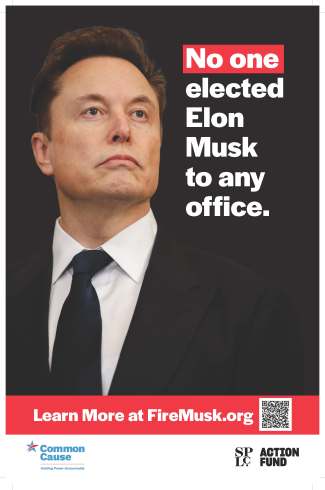
Copies of the ads the Common Cause and Southern Poverty Law Center planned to run in the Post.
THE LEAD:The Washington Post pulled an ad set to run Tuesday that called for President Donald Trump to Fire Elon Musk. Several organizations chipped in to run a wrap-around, a specialized ad approach that tends to draw a lot of attention in print publications.
Common Cause said it was told by the newspaper on Friday that the ad was being pulled. The full-page ad, known as a wraparound, would have covered the front and back pages of editions delivered to the White House, the Pentagon and Congress, and was planned in collaboration with the Southern Poverty Law Center Action Fund.
A separate, full-page ad with the same themes would have been allowed to run inside the newspaper, but the two groups chose to cancel the internal ad as well. Both ads would have cost the groups $115,000.
“We asked why they wouldn’t run the wrap when we clearly met the guidelines if they were allowing the internal ad,” said Virginia Kase Solomón, the president and chief executive of Common Cause. “They said they were not at liberty to give us a reason.”
Although Bezos was not interviewed or quoted for the “ad kill story,” the Post’s PR division offered a bland response in his stead:
A Washington Post spokeswoman said in an emailed statement that the newspaper did not comment on internal decisions related to specific advertising campaigns and pointed to its publicly available general guidelines for advertising.
(If you don’t feel like downloading the Post’s ad brochure, let me just say it’s the most pedestrian thing on Earth. It also does stipulate that the Post “reserves the right to position, revise, or refuse to publish any advertisement for failure to comply with the guidelines set forth below, or for any other reason.”)
UNDERSTANDING THE LAW AND THE AD GAME: Advertising falls under the umbrella of what the government calls commercial speech, meaning it’s meant to sponsor or promote the purchase of goods and services. It hasn’t always been protected speech, and as recently as the 1940s, courts had ruled that purely commercial advertising is not protected by the First Amendment.
Court rulings since then have either eroded or eliminated that stance and have led to some basic rules in regard to how advertising can or can’t be censored. In short, if someone is trying to get you to buy something or sell something, it’s probably going to fall into the realm of advertising and the courts will engage in strict scrutiny while examining the regulation of it.
Strict scrutiny in this case basically boils down to this: the state has to prove it has a good reason to regulate the ad and that the regulation will actually accomplish the outcome the government says it will and it will do so in a reasonable, not overreaching way.
PUBLIC VERSUS PRIVATE REGULATION: The key thing to understand here is that none of that stuff applies to what the Post did. Those laws basically apply to governmental action. So, if Trump had heard about the ad and decided to force the Post NOT to run it, that’s where the legal stuff on strict scrutiny etc. would come into play. The Post is a private media entity and it has the ability to accept or deny ads for any number of reasons.
Most newspapers (and I’m assuming other media outlets I haven’t dealt with the ad end of) have basic rules about what they will or won’t accept for ads, based on what they think is important to their readers.
Obvious things that get rejected are ads for illegal products. If I wanted to run an ad in the Advance-Titan, our student newspaper at UWO, for “Dr. Vinnie’s House Of Crystal Meth and Cocaine,” I’m guessing I’d get a pretty strong rejection. Back in the day, we rejected ads for off-shored internet casinos because they had all sorts of legal problems. (That almost seems quaint now that we’ve got ESPN’s “journalists” stepping up for gambling apps and pitching parlays to their audiences.)
Other things that get rejected can be based on how the audience is likely to feel about a product or any special stipulations between the media outlet and any intervening organization. For example, a friend who used to advise the student newspaper at the University of Notre Dame once told me that the paper was forbidden from accepting alcohol ads, due to its status as the official paper of the university. I know that some publications accept ads for strip clubs, abortion services and marijuana dispensaries, regardless of the legality associated with those enterprises.
Newspapers also often have a basic “because we said so” stipulation, just like the Post did. As I was fond of saying to my staff, we could institute “Screw You Tuesday,” in which we rejected any ads that people tried to place on a Tuesday, because, well, “Screw you, that’s why.” It’s not a great way to do business, clearly, but it is legal.
DOCTOR OF PAPER HOT TAKE: First, I’d love to be in a financial position to turn down $115,000 “just because.” Have you ever seen how excited people get when they get close to that on “Wheel of Fortune?”
Second, and I can speak from experience on this, it sucks to be pinned in a corner on an ad buy like this. This group could have chosen one of a dozen major metros, but they picked the Post for a pretty good reason and it wasn’t necessarily that Trump reads it.
When I was advising the Advance-Titan, we got an offer to include a 12-page pro-life insert into our paper for about twice what we would normally charge. Like most student newspapers, we were struggling financially, so the money would have been welcome. That said, in digging into how this insert played elsewhere, we found that researchers had found legitimate concerns regarding the factual accuracy of some of the claims in the insert. Furthermore, it would put the paper in the middle of a debate we had no real interest in entering.
After the staff debated and discussed this a bit, the editor came to me and said, “How do we deal with this and not be screwed?”
“You’re screwed either way,” I told him. “If you run it, you’ll have people on the other side of the issue up in arms about it and you’ll catch the same grief as other places that ran it for the accuracy issues.”
He interrupted me. “OK, so then I won’t run it and we’re fine…”
“No,” I explained. “If you don’t run it, this organization is going to put out the Bat Signal to every media outlet that will pay attention saying that you’re pro-abortion and that you’re suppressing their speech. There will be news articles and comments and blog posts and everything else coming at you for this.”
“Like I said, you’re screwed either way. So do what you think is best, stick with it and don’t get into a war of words over it.”
He decided not to run the ad, and pretty much everything I noted above happened, but somehow worse. A press release went out, newspapers ran stories, a local talk radio guy in Milwaukee did about a half-hour on how criminal we were and all that. It eventually went away, but I think the editor doubled his smoking habit until it did.
In the Post case, Bezos clearly doesn’t need the money and he’s clearly dealing with someone who has no compunction about being vengeful when someone is perceived as disloyal, so not running this ad does make sense in that regard. The paper has that right and it can (and has) exercised it.
That said, the optics are really terrible, especially when coupled with the previous actions in regard to Trump. The Post itself will likely suffer credibility issues in general as a result of this.
When Bezos bought the Post, the prevailing thought was, “This is great, because he doesn’t need anyone’s money. He can do whatever he wants and not have to bow to the whims of the rich and powerful.”
Well, we were about half right on all of that.
DISCUSSION STARTER: If you ran the Post, what would you do with this ad? Also, what kinds of ads would you be willing to take (or reject) based on what you think about the publication, its audience and your own sense of what is fair?
THE LEAD: The Trump administration barred several journalists from the Associated Press from reporting opportunities in and around the White House over the past week for not calling the body of water to the south of the country the Gulf of America.
“This is now the third day AP reporters have been barred from covering the president — first as a member of the pool, and now from a formal press conference — an incredible disservice to the billions of people who rely on The Associated Press for nonpartisan news,” Pace said.
The dispute began Tuesday, when the AP was informed that it would be barred from attending White House events because of the organization’s decision to continue using the name Gulf of Mexico, not the Gulf of America, as Trump decreed in an executive order last month.
BRIEF RECAP OF THE SITUATION: President Donald Trump declared that the Gulf of Mexico should actually be named the Gulf of America, a declaration he codified with an executive order on Jan. 20. He doubled down on this declaration, when he deemed Feb. 9 the first “Gulf of America Day.”
Apple and Google maps have made the switch to this nomenclature, even as media outlets and foreign officials have pushed back on this move. (Apparently Bing followed suit, but nobody really noticed because… I mean… c’mon… It’s Bing.) The president of Mexico has threatened to sue Google over this change, while the AP and the White House apparently remain in a standoff over the issue.
In this case, the AP tried to “split the baby” by both acknowledging Trump’s actions while also not letting 400 years of history and global tradition get scrapped with the stroke of a pen:
Screenshot
In short, “Here’s what we’ve always called it, here’s how it now impacts U.S. government stuff, here’s who can ignore it and here’s our best way forward.” Apparently, that wasn’t good enough for the Trump administration.
CAN TRUMP DO THIS (Part I) ?: The larger question of Trump’s right to rename the gulf unilaterally depends on the specific question being asked. As far as the U.S. government is concerned, yes, he can really do this and has. Reports indicate that both the Department of the Interior and the Geographic Names Information System (GNIS), the official federal database of all U.S. geographic names, are moving in this direction.
In terms of what can be enforced upon the rest of the world, no. The United Nations Convention on the Law of the Sea essentially established that countries have control of things like this only as far as 12 nautical miles from the coastline. (Mexico essentially makes this argument in its lawsuit against Google.) Also, as much as he might like it to be true, Trump does not dictate what everyone on the planet does. Therefore, his declaration has no jurisdiction beyond certain borders.
Generally speaking, the law dictates that the denial of a pass is within the rights of an administration, provided there is “an explicit and meaningful standard” to support its actions and “afford procedural protections.” That case did not say what it would take to revoke a pass, nor did it provide any clarity here in regard to who gets to go into the Oval Office or the Rose Garden or whatever.
DOCTOR OF PAPER HOT TAKE: There’s a lot to unpack here and it’s not entirely one-sided. As much as I hate having to discuss the First Amendment an “it depends” kind of way, at least this time, it doesn’t involve porn.
White House Press Secretary Karoline Leavitt is not entirely wrong in saying that a) covering the White House isn’t something everyone gets to do and b) the administration does have some leeway in how it controls who gets to go where when space is limited. I know I can’t just hop on a plane and demand access to the press room, let alone slide into the Oval Office for a chinwag with DJT, just because I’m writing a blog that dozens of people read.
It’s also no big secret that sources have always played favorites with media outlets. It would piss me off to no end when one of my reporters at the Columbia Missourian would call a police source about some story we had heard about and be told, “Nope… Nothing like that going on.” Then, miraculously, the Columbia Daily Tribune’s ancient cops reporter would somehow manage to break THAT EXACT STORY as an “exclusive” within two days.
I also used to hate the way that the Muncie Star-Press managed to have a great “buddy-buddy” relationship with the Ball State athletic office, so whenever something important would be going on (adding lights to the stadium, scheduling a nationally televised game), the Daily News kids would get shut out and the Star-Press would slather it all over the front page. To think the Trump administration would play more fairly with the national press than some yokel sources in the Midwest would with the local press seems to strain credulity.
Hell, it was so obvious he played favorites during his first term, John Oliver had some fun with it:
These kinds of things aren’t a blatant violation of the First Amendment, even if they feel petty and unfair.
All of that being said, I hate what Trump did here and I totally support AP’s position in regard to the coercive nature of this exclusionary maneuver. It does smack of favoritism, it does undermine their ability to spread information and it reeks of petty bull-pucky. I have a long-standing hatred for bullying, and that’s just what is happening here: “Do what we tell you to do, or else.”
This isn’t a new thing for Trump, nor will it be the only instance of it. I imagine there will be more than a few press passes getting yanked over the next few years, along with the obligatory lawsuits to get the Trump administration to back down. I also imagine that there will be additional significant efforts to cow the media throughout Trump’s reign. If there’s one thing this administration has consistently blessed with favor, it’s those who lavish unrelenting and uncritical praise upon the Dear Leader.
AP right now is in a game of “chicken” with the White House and I certainly don’t want the AP to back down. We could argue that nomenclature of this nature is petty and stupid (see the “freedom fries” debacle), but the bigger issue would be the press caving to power to curry favor. That’s the kind of loss of credibility that the AP could never get back once their reporters lost it. So, please, AP folks, for the sake of all of us out here trying to teach students how to do quality, unbiased journalism, fight like hell to get back what you have lost.
That said, the establishment doesn’t owe the AP a Snickers bar simply because they’re used to getting top-shelf treatment. I would argue that if you work for AP, you’re probably among some of the best, most-resourceful and dedicated reporters on the planet. You don’t get to the top of the heap like that be being spoon-fed and softly petted, so treat this slight like any other obstacle you would need to overcome.
I’d suggest you follow the lead from the folks getting the shaft at the Pentagon: “We’re going to work around this cheap ploy, because that’s what we do and we will not be deterred in holding the administration to account for its actions because that’s our job.”
Earlier this month, Netflix dropped its most recent “tru-ish crime drama” mini-series, “Apple Cider Vinegar.” The series follows the rise and fall of wellness “guru” Belle Gibson, whose claims that she survived a terminal brain tumor (and other similar health crises) through the use of a wellness diet.
Here’s the trailer, which gives you a pretty solid look at what you’ll get over the six-episode saga:
The trailer and the series both seem to emphasize this odd game of “one-on-one” between Belle and Milla, the latter of which is not a real person. Experts digging into the series have offered theories about who Milla might be based on and to what degree Belle knew her, but it’s not as “Hatfields and McCoys” as we see in some clips and episodes.
We could spend about 8,000 words doing a “what’s true and what’s not” about this whole situation, but that wouldn’t really get us much in the way of value. What is interesting is to see how we got to a six-part mini-series about this health influencer and how it’s part of a pattern in media.
I’ve made the case in multiple classes that whether you’re in print, broadcast, film, social media, public relations, advertising or any other part of media that I missed, you’re not in a silo, but part of larger media ecosystem. In some cases, this is easy to see and it’s pretty linear: A PR practitioner puts out a press release on X topic, which mainstream media practitioners receive and use to craft a story. That story then gets shared on social media, where other media participants add information, provide commentary, offer other facets of coverage and so forth. Based on how loud that gets, the mainstream media, the original PR firm or other PR agencies can choose to respond, augment or ignore what’s going on.
In the case of Belle Gibson, we start with the easiest media on-ramp available: Social media. She began posting on various websites in the early 2010s and then developed a following through her “Healthy Belle” Instagram account. As she gained followers and attention, she developed the app “The Whole Pantry” in 2013, which had recipes related to the lifestyle she said had helped her beat her brain tumor. The success of the app led a Penguin Books subsidiary to publish a print edition cookbook of the same name and concept in 2014.
As she continued to get more and more attention, she had both supporters and detractors on social media. Her fans saw her as providing an alternative to the “cut, burn and poison” approach to cancer, while others had a hard time believing she could stop Stage 4 brain cancer with a smoothie.
As social media was continuing to shift the tide, Gibson fessed up in 2015 to The Weekly, explaining she never had cancer. “60 Minutes Australia” did a giant episode on Gibson in 2015, which included a confronting interview:
At this time, both print/online and broadcast media were digging into Gibson even more. Penguin pulled her book, her social media empire began to collapse and other publications found themselves in hot water over previous coverage of Gibson. Cosmopolitan had given Gibson a “Fearless Female” award while Elle Australia had reported her “miracle” story without fact-checking her cancer claims.
While the mainstream media was keeping track of Gibson’s legal issues, Toscano and Donelly had turned their reporting into a longer-form read with the 2017 book, “The Woman Who Fooled the World.” They were also appearing on podcasts, media talk shows and more to discuss the situation.
In looking back on this, we can see how this story continued to grow, morph and spread at least seven media forms (social, app, book, newspaper/website, broadcast, streaming, public relations) to say nothing of the tangential elements I likely missed. Obviously, not every story gets the full Netflix treatment or has Tara Brown ripping someone to shreds. However, it does demonstrate the ways in which the media ecosystem feeds upon an event, a situation, a story or a concept over time and across platforms.
EXERCISE TIME: Take a look at pretty much anything else a big-name streaming service is doing as a docu-series/docu-drama and see how many other tentacles of media you can find touching that story at any point. Try to isolate where the story really started and then piece together a timeline as best you can that provides a look at which media entered the fray where and contributed what aspects of information to the story.
One major tradition surrounding the Super Bowl, other than complaining that whatever it was was the worst half-time show ever, is a deep dive into the commercials. Countless ad orgs, commentators, marketing pros and other folks will spend hours upon hours making bests and worsts lists. In any given year, there will be the ads that tug on heart strings, ads that are flat out ridiculous, ads that insult at least three demographic groups and ads that leave us wondering, “OK, what the heck was that?”
Rather than go the traditional way here, let’s make some sense of the ads from the perspective of how media content is supposed to work.
Define and understand your audience well enough to provide content that caters to the people in it.
Use specific interest elements to pique and hold the audience members’ attention.
Here is a link to a pretty good running tally of all the ads:
Go through the ads and find the one that you like (or hate) the most and start to analyze based on the key points above:
Audience: Break down the demographics based on who tends to watch the Super Bowl, according to a reliable source you can find online. Then, see what segment of that broader chunk is most likely the target of this ad from that perspective. Then, move into the psychographic elements that you think are at the core of what the target audience members most likely ascribe to in their lives. In short, what values, feelings, connections and more is the ad you picked trying to tap into.
(As for the third element we outline in the book, it’s highly unlikely the geographic element will play a role here, but if you find something, go for it.)
Then, move into the next phase by assessing the interest elements that draw the attention of audience members:
Fame
Oddity
Conflict
Immediacy
Impact
As we often note, you won’t be able to catch all five of these in most cases. At least one should be present in any media content. See how many you can find and then assess if those elements are being successfully tapped.
Some of the goals of the ads will work or won’t work because the people making the ads didn’t correctly match elements like “fame” or “impact” with what the target audience knows or understands. (I bring this up, as Amy and I were watching part of the half-time show and when someone came out to sing with Kendrick Lamar, we both asked, “OK, who the heck is that?” We eventually asked our cooler, hipper sister-in-law, who was nice enough not to shame us as part of the process…)
See what you can come up with as part of this analysis, particularly if you thought any given ad really worked or really flopped.
At the very least, it’s a good excuse to watch some videos in class today.
THE LEAD: Social media users and microbloggers found their tipping point when it came to the way in which X (formerly Twitter) was turning into a hell-scape. In the wake of the election, millions of users have shut down their X accounts and moved to one of several other sites that offered relatively the same services as X, but without the trolling and content manipulation.
Bluesky, a fledgling social media platform, reported Thursday that 1 million users had signed up in a single day. Some frustrated X users appear to have flocked to the newer network in recent weeks.
Bluesky, which began as an internal project by then-Twitter CEO Jack Dorsey in 2019, was invitation-only until it opened to the public in February. Since 2021, it has been an independent company with Jay Graber as its CEO.
It currently has about 18 million users. Graber posted Friday that the platform is growing by 10,000 users every 10 to 15 minutes.
While Bluesky remains small compared to established online spaces, it has emerged as an alternative for those looking for a different mood and less influenced by X owner Elon Musk, a close ally of President-elect Donald Trump.
BACKGROUND: Alternatives like Bluesky, Threads, Mastodon and others have existed on the fringes of microblogging sites for several years, but never managed to gain traction. Twitter/X had the benefit of being one of the earliest sites of this nature, which meant that most people interested in this form of social media had developed significant followings there.
It’s unclear as to how many users have left X since the election of Donald Trump, with whom X owner Elon Musk has aligned himself. While the argument that X has become too toxic and conspiratorial is an oft-stated reason for leaving, the massive exodus also tended to coincide with Musk’s update to the service agreement:
A new terms of service document, which took effect on Nov. 15, allows Musk to use tweets, photos and videos — even from private accounts — to train Grok, the platform’s AI bot.
“You agree that this license includes the right for us to (i) analyze text and other information you provide … for use with and training of our machine learning and artificial intelligence models, whether generative or another type,” the terms say under the section about users’ rights.
They also stipulate that users’ content may be modified or adapted for other media.
Users will not be paid for their content, which could end up in the hands of other companies, organizations or individuals.
The company will not monitor posts for truthfulness.
“You may be exposed to Content that might be offensive, harmful, inaccurate or otherwise inappropriate, or in some cases, postings that have been mislabeled or are otherwise deceptive,” the terms say. “All Content is the sole responsibility of the person who originated such Content.”
If you are moved/moving to Bluesky, post your addy down in the comments or send it to me via the Contact Page and I’ll build us a starter kit.
DOCTOR OF PAPER HOT TAKE:Social media has always been a shifting landscape in which almost anything can (and usually does) happen. Over the past 15-20 years, there have been very few platforms that have remained a standard bearer for this form of communication. Facebook, LinkedIn, Instagram and Twitter were kind of the Fab Four in that regard.
I’ve been watching social media for years, in large part because I’ve been writing books that have chapters on it and I hate looking dated or stupid. When I first had to write the draft of the “Dynamics of Media Writing,” the folks at Sage had me write the social media chapter first as part of the “pitch” they wanted to send to potential adopters.
I protested, arguing that it would be old and dated by the time it went to press, but they said they needed it as an example of what made the book current and fresh, so I did it.
From the first draft of that chapter until the day we published, I ended up rewriting the chapter completely FOUR TIMES. That didn’t count the last-second adjustments to things like Twitter moving from 140 characters to 280 characters and the death of a random platform or two.
What makes this particular situation so depressing is that Elon Musk doesn’t give a damn about this situation, or at least he’s doing a great job of pretending he doesn’t.
That said, this is exactly how social media is supposed to operate, based on its underlying paradigm: Platforms that cater to the audience interests and needs tend to thrive, while those that decide to do it “their way” regardless of what the audience wants tend to dry up and blow away.
If ever there was an example of how NOT to keep an eye on audience centricity, X is probably it.
EXERCISE TIME: Take a look back at the graveyard of social media platforms that no longer exist and see how, when and why they tended to go belly up. In analyzing those examples, how do you see some of these newly popular sites doing in terms of thriving or dying? What other opportunities might exist in the wake of the X exodus?
(I had planned to do a quick Q and A with the IDS folks and post that right after the initial post I put together on this. However, as I dug deeper, this whole thing got officially out of hand. I’m working on a series I hope will be ready next week. Don’t worry, IDS folks. I haven’t abandoned you. It’s just that there’s a lot more weird than meets the eye.)
Second, I spoke to the UWO volleyball team last night about their vision for the rest of the season. Coach said they were tired, beaten up and not sure of themselves in some cases. In discussing their approach and how best to meet some goals, I broke out the titular phrase listed in the headline.
Finally, I ended up spending time earlier this month with Allison and Tony at their place in Michigan. Somewhere in the calm, cool morning, surrounded by pines as big as skyscrapers, we were talking and realized we’d known each other for more than 30 years. That’s a lot of life and a lot of opportunities to pick a hill or two to die on. As we reminisced, it hit me that we must have picked the right hills, or at least avoided the wrong ones, to make it this far and still be the best of friends.
Enjoy.
SLAPPed around: How people with money who dislike your work can make your life miserable (legally)
The short version of this was that Oliver did a big piece on the coal-mining industry, in which he called out Murray’s company and made fun of the 79-year-old for a variety of things he did and said. Murray filed suit in West Virginia, claiming Oliver defamed him and seeking not only damages (to be specified by the court), but also a permanent injunction barring Oliver from ever broadcasting the piece again. It also sought to eliminate all copies of the “Last Week Tonight” story from public viewing.
A year ago, the state threw out the case against Oliver and HBO, stating that this was satire in some cases and free speech in all cases. (I still think the greatest legal argument came from the amicus brief filed by the West Virginia ACLU that noted, “Anyone Can Legally Say, ‘Eat Shit, Bob.’”) When the court tossed the case, Oliver let his fans know about it in a truly “Last Week Tonight” fashion:
Contrary to the title of that clip, however, Murray hadn’t given up the ship quite yet. He appealed the decision to the state’s supreme court before eventually dropping the case recently. Oliver then finally made good on his 2-year-old promise to tell us “the whole story” about what happened with the suit.
(Normally, I would upload the link to the piece here, but I think my publisher would kill me in this case if I did so. I have been told repeatedly that “students at small religious institutions” read this blog as part of their homework. Let’s just say that the dancing and singing number at the end is “a lot.” Feel free to find it on your own on YouTube.)
Oliver, however, didn’t spend all 25 minutes of the main story on a self-congratulatory Broadway-style number that pushed satire into a completely incredible stratosphere. His main point was about the way in which people with money can engage in ridiculous lawsuits to crush dissent, which is something of serious concern to journalists these days.
Strategic Lawsuits Against Public Participation, or SLAPPs, use the legal system as a sword as opposed to a shield. The goal of these, according to the Public Participation Project, is to crush free speech with lawsuits that have no merit:
SLAPPs are used to silence and harass critics by forcing them to spend money to defend these baseless suits. SLAPP filers don’t go to court to seek justice. Rather, SLAPPS are intended to intimidate those who disagree with them or their activities by draining the target’s financial resources.
In Oliver’s case, it cost about $200,000 to defend the coal piece and led to a tripling of his libel insurance premiums. And that was BEFORE he ran his giant Broadway number that went even further in talking crap about Bob Murray.
About 30 states have anti-SLAPP laws on the books now, which try to cut this kind of nonsense off at the pass. Although they vary from state to state, the gist of anti-SLAPP laws is that the person being sued can ask the court to view the story in question as being in the public interest (or at least free speech). It then is the plaintiff’s job to show that the suit has merit.
If those folks can’t meet that burden and it becomes clear it’s a SLAPP suit, the case gets tossed. In some cases, the law calls for the plaintiff to cover all legal bills derived from this stupid exercise.
However, not every state has these laws (Murray sued Oliver in West Virginia for precisely that reason) and not all laws are equally helpful to journalists. This makes life a little dicey for you if you want to take a shot at someone who has probably done something wrong but is likely to be extremely litigious.
Every time you ply your trade, you run the risk of being sued, regardless of if you did something wrong or if someone is just being a chucklehead. With that in mind, here are a few things to think about when it comes to SLAPPs:
IT’S NOT A SUIT UNTIL IT’S FILED: My good buddy Fred Vultee used to say this a lot on the copy desk when a story about someone threatening to sue would come across his desk. His point, and it’s a good one, was that anyone can threaten anything. Until paperwork is filed, all this huffing and puffing does is create a lot of wind.
As we pointed out in earlier posts, you shouldn’t panic and try to run away whenever someone threatens you with a suit. Instead, you should see what it is that is upsetting that person, if that concern has merit and if something needs to be done to resolve the concern before it gets too far down the road. If you’re wrong, an anti-SLAPP law isn’t going to help you.
As the Reporters Committee for Freedom of the Press points out, anti-SLAPP laws aren’t meant to solve every legal problem for journalists. They are just one more tool in your toolbox that can be helpful when a specific situation comes up.
If you’re right, and it become clear this person is just trying to mess with you, then you can start thinking about lawyers, laws and SLAPP stuff.
DOES SOMEONE HAVE YOUR BACK?: When we talked to Alex Crowe of The Great 98 a year or so ago, he found himself in the middle of what could be considered a SLAPP case. He reported on a messy police situation, which included a reference to a drug bust and a cop’s kid. The officer involved threatened to sue unless the station scrubbed its website of all stories involving this.
Although point one really applies here, sometimes, just the threat of a suit is enough to make people up the chain nervous about sticking their necks out for you. In Crowe’s case, the first inclination of the people around him was to back off. He did, however, know that if he could protect himself and the station without draining every resource from the organization, he would still be in decent shape. That’s where the RCFP came into play. The folks there provided him with legal advice, some pro-bono counsel and a chance to push back at the threats. That was enough to put the kabosh on the whole thing.
Organizations vary as do bosses. I’ve worked for people who would step in front of a bus for me. I’ve also worked for people who would not only push me in front of a bus, but would be more than glad to drive it over me a couple times if it kept their keesters out of the fire. This was the determining factor for a lot of what it was that I was doing in terms of fighting with angry sources, disgruntled subjects and other folks who were potentially litigious.
If you know where you stand with the people who might or might not stand with you on a situation, you at least have a sense of how scared you should be going forward. For all of his zany antics, something tells me that Oliver had more than a few conversations with his bosses at HBO about what might happen as a result of going after Murray before he aired the piece.
IS THE JUICE WORTH THE SQUEEZE?: In employing this “Filak-ism,” I’m likely to earn the ire of many old-school news journalists. In the idealized world of news, the goal is to tell the truth, consequences be damned. You HAVE to tell the truth and you MUST push back against powerful forces. In the movies, it always looks like this:
There’s that sense of “Damn the torpedoes! Full speed ahead!” that brings vigor to journalism and that is trumpeted as “this is why we do what we do.” I’ll never argue that in a perfect world, the bad guys get punished, the truth gets told and Gary Cooper always rides off into the sunset with Grace Kelly.
We don’t live in a perfect world and if you need any proof of that, go look at the approval ratings of journalists these days.
My friend Allison and I used to ask when we would deal with difficult situations or plan those Quixotic efforts, “Is this the hill you’re willing to die on?” In other words, if everything goes to hell in a speedboat and you don’t end up winning the day and Gary Cooper gets run over by a horse while Grace Kelly runs off with the blacksmith instead, are you OK with that? Was this worth it?
In the case of Crowe’s story, he felt it was worth it and he ran the risk of losing the fight, the ability to do good news and maybe even his job. In the case of the “Spotlight” story, the Boston Globe eventually got the pieces in front of the public and unveiled some of the darkest elements of the powerful force that was the Catholic church.
In the case of John Oliver, well, we got another awesome moment or 12 from Mr. Nutterbutter, so I guess that was good as well.
The point is, if you’re going to take on someone who will likely torture you with legal stuff and drain your piggy bank of every last cent, make sure you feel it’s a worthwhile endeavor. If you don’t, then let it go and be OK with the fact someone is getting away with lousy behavior because of your choices.
Trump nearly backed out of an August interview with a group of Black journalists after learning they planned to fact-check his claims. The following month, he and his allies repeatedly complained about the fact-checking that occurred during his debate with Vice President Kamala Harris, berating journalists and news executives in the middle of the televised debate.
And this month, Trump declined to sit down for an interview with CBS’s “60 Minutes” because he objected to the show’s practice of fact-checking, according to the show.
<SNIP>
The moves are the latest example of Trump’s long-held resistance to being called to account for his falsehoods, which have formed the bedrock of his political message for years. Just in recent weeks, for example, Trump has seized on fabricated tales of migrants eating pets and Venezuelan gangs overtaking cities in pushing his anti-immigration message as he seeks a second term in office.
THE BACKGROUND: The joke I always go back to is the familiar one of, “How can you tell when a politician is lying? Their lips are moving.” The idea that politicians fabricate situations is not a new one. Nixon’s “I am not a crook,” Clinton’s “I did not have sexual relations…” and Mark Sanford’s “hiking on the Appalachian trail” are some of the more infamous ones, as they intended to cover over embarrassing personal failings and limit political fall out.
Even more, politicians invent people they saw, they met and they heard, all in the service of some anecdote about salt-of-the-earth farmers getting the shaft, military leaders praising their brilliance or other similar moments of self-aggrandizing puffery. And of course there is the myth-making that surrounds some politicians, like George Washington’s cherry tree or Reagan’s trickle-down economics…
As far as this election is going, Tim Walz was fact-checked on his claims about his service, his presence in China during the Tiananmen Square protests and his family’s use of IVF services, each of which resulted in some disparities. Kamala Harris is also ringing up a few “false” ratings from Politifact on some of her claims regarding illegal drugs and her own previous political efforts.
Still, most of this is piddly stuff compared to what Trump does on a daily basis, both in terms of frequency and intensity. If Walz’s “carried weapons of war” statement is a leak in the truth boat, Trump is continually bashing the Titanic into the iceberg and flooding every compartment.
WHY DO WE CARE AS JOURNALISTS: Despite what the former president of the United States things, facts have a definition: things that are known or proved to be true. The job of a journalist is to get the facts and report them, so that people can make informed decisions on important things in their lives. If you strip away everything else from journalism, that’s the beating heart at its core.
Telling journalists you will only talk to them if they promise not to fact check you is like telling me, “You can come to our party, but only if you promise to not be a bald, middle-aged white guy.” It’s what I am, so that’s going to be a bit hard to square that circle.
People rely on facts to have a shared understanding of reality, so that society can function. It’s why when we bring a shirt to the check out kid and that shirt is priced $19.99 plus tax, we understand it’s probably going to cost about $21 or $22, give or take your part of the country. If the kid says, “That price is fake news. You owe me $150 and can’t leave until you do,” that breaks the whole “shared understanding of reality” thing.
For years, journalists have been telling people, “You’re entitled to your own opinion, but not your own facts.” Somewhere along the way (I blame the internet), it actually became, “Pick your own facts and then be outraged when someone disagrees with you.”
EXERCISE TIME: Pick out a TikTok on any hot topic that’s going on today (politics, Diddy trial etc.) and write down whatever statements these people are declaring to be facts. Then, go fact check them against
One month after a judge declared Google’s search engine an illegal monopoly, the tech giant faces another antitrust lawsuit that threatens to break up the company, this time over its advertising technology.
The Justice Department and a coalition of states contend that Google built and maintains a monopoly over the technology that matches online publishers to advertisers. Dominance over the software on both the buy side and the sell side of the transaction enables Google to keep as much as 36 cents on the dollar when it brokers sales between publishers and advertisers, the government contends in court papers.
CHUTZPAH MOMENT OF THE YEAR: Google is trying to swat the suit aside by claiming the revenue it receives for its ad programs is actually shrinking:
In recent years, Google Networks, the division of the Mountain View, California-based tech giant that includes such services as AdSense and Google Ad Manager that are at the heart of the case, actually have seen declining revenue, from $31.7 billion in 2021 to $31.3 billion in 2023, according to the company’s annual reports.
(Emphasis mine)
Well, hell’s bells… Somebody get me a crying towel.
THE BASICS: Monopolies are great things if you have one and lousy things if you’re the rest of the world. It’s been a while since we really had a lot of cases like this in court.
One of the more famous examples was the Rockefeller’s Standard Oil monopoly, where that company controlled about 95 percent of the oil business in the U.S. When a potential competitor would pop up, Rockefeller would drop the prices so low that it was impossible for the competitor to survive. After taking those losses, but killing off the competition, Standard Oil would put the prices back where it wanted and go on with life. It took about 30 years, but the company finally was broken up in 1911.
Despite my students’ estimation of my age, I wasn’t there for that monopoly, but I was around when the government decided to break up the Bell system in 1984. AT&T essentially controlled almost every aspect of the telephone system, including local, long-distance, telegraph service and equipment manufacturing. The breakup allowed for more competition, cheaper phone rates and even the advances that allowed for the internet to really become the thing we’ve all come to know and love.
WHY YOU SHOULD CARE: In going back to the AT&T situation, I remember when we had to buy or lease the actual phones in our home from authorized dealers. When a hotel closed down, my uncle knew a guy who knew a guy who managed to smuggle a ton of phones out of there and was selling them black-market style for much less than you could buy one from AT&T. It sounds absolutely ridiculous now, but that’s how it worked back then: AT&T owned the ball, the playing field and the entirety of the game, so you were stuck with what AT&T wants.
In the case of Google’s situation, the ad rates they set are based on almost nothing other than what they feel they should be set at, a figure that clearly favors them more than you or me. The only way to truly know if something is or isn’t priced properly is to compare it to other similar items in the field.
For example, when I go to a baseball card show and I want to buy the most recent bobblehead that the Brewers gave away for a game promotion, I can go to a dozen tables where people have them and compare the price. If everyone is sitting at about $25, I can decide which one I’ll buy or see if one is cheaper and make a deal for $20.
Yes this is real. It weighs like 3 pounds and I desperately want it…
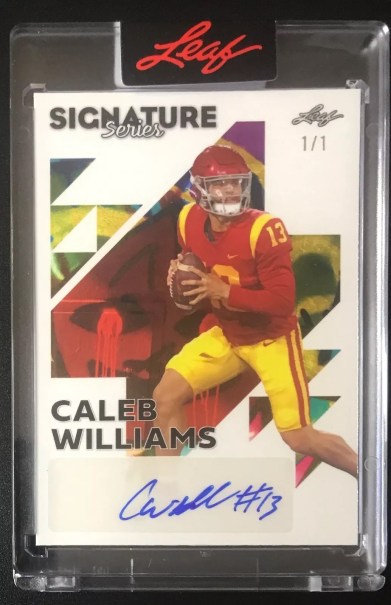
However, if I want to buy a one-of-one rookie card of Caleb Williams, I’m stuck paying whatever that seller wants to charge. There’s only one in existence and trying to figure out if it should be more or less than a one-of-one Brock Purdy or a one-of-one Justin Fields is just guess work. Even if I can argue that it should be more than Fields or less than Purdy, it doesn’t matter if the dealer won’t budge on the price.
In three years, he’ll be the finest back-up QB that Pittsburgh has on its roster, just like the last couple guys the Bears drafted as their QB savior…
The same thing applies to monopolies. If one rental company in your college town owns all the rental property, you’re essentially stuck paying whatever that company wants to charge for rent, regardless of how much the roof leaks or if you’re time-sharing the bathroom with a family of disgruntled raccoons.
You can make the argument that if Google is doing a great job of giving people what they want, nothing else really should matter and the government should leave them alone. That said, because Google is essentially killing off every possible competitor before those competing forces can show any value, we don’t KNOW if Google is the best. If competition is allowed to develop and Google still rules the roost, then we will know it earned our patronage through quality service.
However, as is the case with all monopolies, the one thing we know right now is that Google is the biggest and only option.
DISCUSSION STARTER: Do you feel that monopolies matter to you? Do you have any concerns about Google’s status and its ability to control a large portion of the digital search and ad world? Or do you just care that it works when you need it?
THE LEAD: The Extra-Special, We-Want-You-to-Buy-Peacock-Streaming, I-Bet-Brazil-Is-Amazing Friday night game between the Green Bay Packers and Philadelphia Eagles got off to an ugly start, with terrible field conditions and ended even worse, with franchise quarterback Jordan Love writhing in pain on that lousy turf.
What makes all of this worthy of a post today wasn’t the Friday event, but the subsequent spread of information I witnessed Saturday that became a perfect microcosm of why media literacy matters so much.
THE BACKSTORY: The first Saturday of each month, Dad and I are at the Oak Creek Salvation Army as part of the largest sports card and memorabilia show in Wisconsin. We set up a couple tables and sell our wares, which range from cheap packs of cards from the junk-wax era to old programs from the Packers glory days.
More than 700 people came through the door that day, with about 695 of them wondering about how bad Jordan Love’s injury was. Between selling stuff and looking for stuff to buy, I heard dozens of theories on what was going on with Love and his knee and what it meant to the Packers season. These included:
Torn ligaments, he’s out for the season.
It’s an ankle, not a knee. Should be able to tape it up.
They don’t think it’s that bad. Should be back next week with rest.
This could be career ending. I mean, did you SEE him limping off the field?
Packers KNOW what’s going on, but they aren’t saying anything until they know they can grab an extra QB.
SOURCE CHECK: Each time someone I was chatting with said one of these or the other dozen things they were saying with absolute certainty about Love’s injury, I asked a basic question:
Where did you get that?
The answers were a mishmash of things like, “I saw it on Twitter” (Sorry, Elon, nobody’s calling it X in casual conversation. I think we just call it X in the media so you won’t crash a rocket on our houses or buy our media outlets.) to “I know a guy who…” to “I saw it on my phone” to “I just heard those guys over there talking about it…” (That’s always reassuring.)
None of these people could point me to one specific source that had any kind of insight whatsoever as to the specific injury, the actual diagnosis and the expected time of recovery. Personally, I dropped a note to a former student of mine who was in Brazil covering the game and he never even got back to me with an answer. At his press conference after the event, coach Matt LaFleur straight up said he didn’t know and they expected to get an MRI when the team got back to Green Bay.
GREEN BAY − Green Bay Packers quarterback Jordan Love injured the medial collateral ligament in his left knee and is expected to miss “a couple” of weeks, PackersNews has confirmed.
Earlier, ESPN’s Adam Schefter reported on X, formerly Twitter, that Love “is believed to have injured his MCL, pending further testing. It is not expected to be a season-ending injury, but he is expected to miss some time.”
Look at those two paragraphs, complete with actual sourcing. Now, you can think PackersNews is a lousy publication or that Adam Schefter is a shill for the NFL if you want, but at least you have two sources that are in the know cited in relation to this injury.
The rest of the piece continues that way, with references to sources like NFL Network’s Tom Pelissero, The Athletic’s Dianna Russini and PackersNews reporter Tom Silverstein. In each case THOSE people had sources that told them things. Again, you can like or dislike any of those sources, but at least we know who they are, as opposed to “My phone told me” or “The guy in front of me ordering a Sloppy Joe was saying…”
MEDIA-LITERACY MOMENT: One of the most important things to understand about today’s media is that literally ANYONE can participate through various channels that can spread information far and wide. This is great when it allows for a wide array of normally underrepresented voices to put forth information that matters to people. It’s also great when it can shine a light on reality that otherwise would have gone unseen, as was the case with the George Floyd incident.
That said, it can be a terrible thing when people who don’t know anything get information from other people who don’t know anything and keep perpetuating the stupidity of even less-informed people further up the food chain. In the race to be first or to just get a lot of attention, people without a true understanding of how the media SHOULD work use tools they don’t fully grasp to make a mess of reality.
One of the most important things you should do when you get information, even if it’s from a platform use a lot and even if it supports your viewpoint, is to figure out who initiated that content.
In short, always ask, “Where did you get that?” before believing (or sharing) information and you won’t get sucked into a rumor mill or some viral stupidity.
DISCUSSION STARTER: How much faith do you put in any of the information you receive through the various platforms you use? What makes you more or less likely to consider the information valid? Also, what level of certainty to you apply when it comes to information you receive to share it with other people along your social media networks?