What employers will likely ask you at a job interview and how to avoid killing your chances with your answers (A Throwback Post)

A former student stopped by to visit a little bit ago to get some help in assessing a couple job opportunities. He’d been out of school for about six months and been looking for a decent landing spot, all while avoiding the LinkedIn recruiters who found him “perfect” for an opportunity that was clearly a Ponzi scheme.

In our discussion, one thing he mentioned that stuck with me was, “I really wish they had taught me how to do a job interview while I was here.” I immediately wrote that down and taped it up next to my computer to remind me that I needed to add this skill to my upcoming “Life 101” course in the fall.

The issue of interviewing also hit my desk the other day when LinkedIn’s Andrew Seaman posted some valuable advice on what companies are looking for out of job interviews these days. (His “Get Hired” series is one of those things every student should sign up for, even if he doesn’t always focus on their particular field. He’s got great advice and great resources.)

A lot of this is what a lot of us intuitively teach our students, but the clarity comes from the structure and analogies in here. To add to his medley of advice, please consider this throwback post that gives students some good advice on the topic as well.


Four questions you will likely get asked at a media job interview and how to avoid killing your chances with your answers

With Thanksgiving around the corner, a number of you out there are headed toward that awkward moment at the family dinner in which some relative asks, “So… You graduate next month… You got a job yet?”

The fear of unemployment after college is not without merit, regardless of when you graduate (or graduated) and how well (or poorly) the economy is rolling along. The job-seeking process is filled with awkwardness, anxiety and anguish, a situation I have frequently compared to a bad dating experience.

During that process, a number of things can make or break you. Some of those things are out of your control:

  • You lack the experience or expertise for the position.
  • The company is looking for something else other than what you provide.
  • Some chucklehead on the committee makes a stupid-yet-compelling argument that knocks you out of the pool.
  • A ringer ends up in the pool for some reason and thus you find yourself competing against someone like Bob Woodward for a night GA job at the Beaver County Tidbit.

One thing that is mostly within your control, however, is the initial interview phase of the process, in which your potential future co-workers ask you a string of random inquiries based on whatever HR approved for them. We are currently going through this kind of thing here at the U, where we are searching for a colleague in the journalism department, so I’ve gotten kind of a refresher on the questions and answers that work and that don’t.

To help you along in this narrow way, here are a few questions you might hear in that initial phone/Zoom call, what the questions are trying to ascertain and how to answer (or not answer) them:


“What do you know about (NAME OF ORGANIZATION)?”

What they want to know: This is usually the warm-up question outside of “Can you tell us a little bit about yourself?” The goal here is simple: They want to find out if you did any research between when you discovered the job and this phone/Zoom interview. If you are going into a journalism-related field, you damned well better have done some research on this before you get there. Nothing says, “I’m going to be a lousy reporter/editor/PR practitioner/marketer” like the answer, “Oh… I know you have a job opening!”

The Answer: Don’t turn this thing into a 1950s Chamber of Commerce film that includes every tidbit you can find on Wikipedia.

Instead, look for key things associated with the organization itself. In most cases, place post information that matters to them on the “About Us” section of their website. Dig around in there for some elements that can form the broad strokes of your answer. Then, do a decent Google search on the organization, and rely on trade press or recent news pieces. This is where you can find if the agency just won some major award or if the newspaper is currently digging into something particularly shady. Highlight those elements as well, as they show you are looking into not just what they are, but also what they are doing/have done that is impressive.

Finally, look for ways to integrate yourself or your interests into the answer. This will help the interviewer start to imagine you as part of the organization’s story. It can be something like, “I know that you just won the IRE prize for investigative reporting. That series of trash collectors selling rat meat to unsuspecting grocery stores was amazing and I’ve always had a strong interest in big projects like that. I’d love to work with Bill and Sue on their next investigation.”

WHAT NOT TO DO: There are many ways you can screw this up, but here are the two basic ones:

  1. Don’t do any research and spitball it, hoping for the best. This is usually something people figure out right away and that will almost immediately place you on the “reject” pile. If they think your answer to a question is BS, they’re likely to start wondering what else you BS-ed along the way.
  2. Confuse the place with some other place you are applying for a job. It feels like the “I, Ross, take thee Rachel” moment from “Friends” for the people on the other end of that interview.

“Where do you see yourself in five years?”

What they want to know: Of all the possible interview questions, this one has always felt like the stupidest one to me. I wish I had the gumption to answer in one of two ways:

  1. “Probably stuck here, doing an interview with a job candidate and asking that stupid question of them.”
  2. “If I knew the future in any meaningful way, I’d be buying lottery tickets, not applying for this job.”

That said, what they actually want to know is if you have any kind of longer-term plan for your life and to what degree you see yourself growing and developing in their organization. Nobody wants to hire someone with no direction or sense of growth potential. To that end, you need to have a way to deal with this question without killing your chances of getting the job.

THE ANSWER: Demonstrate that you see yourself as both present at the organization and growing through your work at it. This can be something like, “I see myself doing both (THING YOU’RE BEING HIRED FOR) and (THING THAT IS SOMEWHAT ASPIRATIONAL, YET ATTAINABLE).” In the case of a reporter, it could be covering the daily grind of political stuff at the city council while doing more open-records reporting. In PR it could be cranking out press releases for clients while looking to develop a more involved strategy for clients across multiple platforms.

Another key here is to show value in areas that are beginning to develop. Five to eight years ago, that would be talking about social media and helping to draw eyeballs to your work by establishing a dominant presence on certain platforms. (Come to think of it, that’s still what we’re hearing people say, so maybe stick with that…) Look at the job description and look at what other jobs in the field are demanding and you’ll be able to paint a picture of someone who helps this organization stay on the “cutting edge” while retaining “bedrock tenets of the field.”

WHAT NOT TO DO: First, don’t give either of the answers I listed above. Second, don’t get too basic or aspirational in your answer.

If you go with the “I’m going to be here doing this job to the best of my ability” answer, they see you as a pedestrian hire who will literally do exactly what is asked of you and nothing more.

While that can kill your chances, the aspirational answer will kill them even faster: “I see myself working for (BIG NAME ORGANIZATION) in (BIG NAME CITY) where I’m doing (BIG DEAL STUFF).” Nothing says to a potential employer who is NOT a “big name” that they shouldn’t hire you more than the answer that essentially lets them know you see them as a stepping stone to something better.

Even if the organization knows it’s not a desirable career endpoint and even if you know you want to get in, get experience and get out, this is not the time to make those goals clear. It would be like during that slow dance at prom, when your date asks, “Do you think about us in the future?” and you answer with, “Sure. I figure I get laid tonight, probably date you throughout the next month until graduation. Then, I’m going off to college, where I promise we’ll keep up a long-distance thing until I find a better and hotter option in my res hall.”

“What do you see as your greatest strength and your greatest weakness?”

WHAT THEY WANT TO KNOW: They are trying to figure out if you are in any way self-aware and be honest about it. That said, there are red flags in the honesty that you don’t want to raise (see the prom example above). They want to know how well you know yourself to determine if you actually can do the things you say you can do. They also want a sense of “fit” when it comes to personality and social skill, most of which will be related to this answer.

The Answer: You need to be ready for this one, as I think it’s a keyboard macro that every HR rep has set up on their computer for job interviews. (Control-Alt-DUH, is probably the key combination.) Look for strengths that reflect their needs and your resume, while avoiding the generics. “Hard worker” and “team player” shouldn’t be the core of your argument here. That said, you can demonstrate your value here if you pair something they desperately want with something you excel at in a way in which they can see you in the position.

For example, if on the job ad, the company lists something like “Must be able to work under tight deadlines,” you could say something like, “I think my greatest strength is how well I work quickly under pressure. I spent three years on the night desk at the Smithton Daily Crier, and I had to turn around a lot of late-breaking news, without a lot of information, and make sure it was totally accurate. That experience is something I’ve carried over to my other jobs such as… ” and away you go.

As for the negative, look for negatives that can be trained out of you like, “I haven’t worked in a (large/medium/small) office like yours before, so I know I’d have to do some adjusting” work well, as do things that point to growth like, “I’m not as experienced as people who have been doing this for 10/20/50 years, so I know I have a lot to learn.”

WHAT NOT TO DO: You need to avoid things that overshadow everything else you have said, make you look like psychotic or can’t be fixed over time. In short, you don’t want people to remember you as “That candidate who said they bite their toenails in the break room” person or something. You also don’t want something where people can fear what you’ll be like at work, such as “I’m so competitive when it comes to stories, I’d stab a coworker in the neck to get a scoop.” Remember, your goal is to become an enticing option, not a cautionary tale.

“Do you have any questions for us?”

What they want to know: This always seems like a throw-away question because, in most cases, it comes at the end of the interview and it flips the interview on its head, giving you control of the dice. This question is only partially for you, in that you can get a few things clarified. However, it’s also for them, trying to determine what things matter to you above all else, as well as if you are still interested in this job going forward.

The Answer: You need a couple questions that demonstrate your interest in the position in a meaningful and productive way like, “I noticed you tend to work in teams when it comes to advertising strategies. Would I be integrated into one of your current teams or is there a process for new hires to become part of a newly built team?” That shows a) you know about their processes, b) you have an interest in working there, even after they asked you the previous three questions and more and c) you want them to see you becoming part of the organization.

You can also ask clarifying questions that allow them to expand on things, like, “You mentioned that this job would require me to do daily stories and in-depth pieces. What kind of balance would you want from me in this regard to help best serve the needs of the paper and the readers?” This shows the same kinds of things as above, while also showing that you were listening to them during the interview instead of just waiting to speak.

Other good questions include things like, “What is the time table for the rest of the search?” or “When might I hear from you again regarding the position?” These are simple, but show interest.

WHAT NOT TO DO:   This is always up for debate, given the situation, but here are a few things that I know tend to turn me off in a phone interview:

  1. Salary questions: It’s not that you SHOULDN’T ask this, but I’d argue that if you are on a phone/Zoom interview, it’s probably not the right place for this one. You will obviously want to know the answer to this, but that’s more of an in-person interview question. At this point, they’re still weeding people out, and anything that shatters the illusion that you are just a wonderful person whose sole purpose is to do fantastic things as part of their organization runs a risk here.
  2. “Serial Killer” questions: At this point, they are still trying to figure out if they like you or not, so questions that open a weird line of questioning can undo a lot of the good you’ve done. Things like, “The ad mentions a background check. Does that look into things that might have happened overseas?” suddenly have me thinking you buried a dead hooker in the sands of Cairo or something. When it comes to prepping out your questions, look at them the same way you read headlines to make sure you aren’t unduly worrying your potential employer. Have a friend or trusted adviser read them over as well for any “vibe” concerns.
  3. No questions: If you have no questions, come up with at least a few that will reinforce your awesomeness and how wonderful of a fit you would be in the job. Not asking questions can be somewhat of a turnoff for people.

That’s the best I’ve got. Hope it helps!

ASU’s use of AI to build classes from faculty Canvas course materials has instructors saying “WTF?” (A Throwback Post)

THE LEAD: You can call it “experimental AI” or “educational innovation,” but where I’m from, we call this “theft…”

Arizona State University soft launched a web app earlier this month that allows anyone, for $5 per month, to create an apparently unlimited number of customized “learning modules” using artificial intelligence. The AI chatbot, called Atom, uses online instructional materials from ASU professors to create a course that’s tailored to the goals, interests and skill level of the user. After asking a handful of questions and processing for about five minutes, Atom debuts a personalized course that includes readings, quizzes and videos from a half dozen experts at ASU.

But several professors whose content Atom pulls from were surprised to learn that their materials—including video lectures, slide decks and online assignments—were being perused, clipped and repackaged for these short online course modules. The faculty wasn’t told anything about the app, ASU Atomic, they said.

(SIDE NOTE: I so DESPERATELY want to use a video clip here from “Ted 2” that smack talks Arizona State right now, given how stupid this situation is, but I think the editors at Sage might pop a brain bleed. The tamest thing said in that exchange was, “Do you say Arizona State University or just HPV-U?” Anyway… I digress…)

BACKGROUND: The university is doing everything to both say that tapping the braintrust of the faculty through this AI thing is the greatest thing on earth while also telling faculty this is just experimental and there’s no real concern here.

As with most things administrators SWEAR aren’t problems, the faculty members refuse to buy this bull-pucky:

As is the case for many AI chatbots still in their infancy, Atom gets things wrong. In the module it designed for Hanlon, it included clips from an old lecture he gave focused on the work and career of 20th-century literary theorist Cleanth Brooks. Throughout the course it called the critic “Client” Brooks.

<SNIP>

Ostling is worried that Atomic “will start being used widely, and I have content on my Canvas shelves that would be very inappropriate to show up without context in a course,” he said. “Not only do I think the students will be poorly served because they might learn things that aren’t true, but it could potentially get me in trouble.”

I’m feeling this as well, given that I often have students interview other students for classroom-only exercises that get posted to Canvas. So, for example, a student talking about their experience at the local Pub Crawl might not be all that thrilled if that info becomes part of a database of content for everyone to see.

Even more, I have to occasionally create “alternative timeline scenarios” for the students. For example, to have my students write an “announcement press release,” I make up the scenario that our current chancellor resigned a while back, the university did a search and today is announcing the hiring of the next chancellor. It’s a logical scenario that would be something students might be expected to do as PR practitioners (hiring news release) and it forces them to focus on what to include in a short space.

However, I obviously have made up the name of the person we hired as well as that person’s background and accomplishments. If AI slurps it up and treats it as gospel, that’s not going to be good for anyone involved.

This all led me to today’s throwback post about our system trying to steal faculty content for what I would assume could be a situation like this. Even if the Universities of Wisconsin folks double-pinky promise not to turn my work into AI slop, I still don’t want them co-opting my life’s work for all the reasons listed below.

I did a check on how this is going and the board of regents hasn’t passed this yet, but I’m always leery of summer months, as that’s a great time for universities to pass these “take out the trash” bills, because nobody’s looking.


The Universities of Wisconsin System is trying to steal faculty’s copyright rights to educational material. Please help fight this stupid power grab.

(The system says, “We would never look to diminish your rights or take your hard-earned work away from you.” What the system actually does is more accurately depicted in the scene above.)

THE SHORT, SHORT VERSION: The Universities of Wisconsin System is trying to rewrite its copyright policy and assign itself the rights to the educational work and scholarly materials faculty create. If this goes through, faculty who have spent years building and improving their courses could get the shaft and I have no idea if I’ll be able to share stuff that I’ve always shared with you.

If you think this is as stupid as I do, please email system President Jay Rothman at president@wisconsin.edu and tell him not to let this policy pass.

(UPDATE: Rothman is no longer the president, but that email address will still get you where you need to go.)

THE LONGER, MORE NUANCED VERSION: Here’s a deep dive on the way the system is trying to recreate its copyright policy in a way that disenfranchises its faculty:

THE LEAD: The Universities of Wisconsin has decided to rewrite its rules involving intellectual property, giving the system total ownership over pretty much everything faculty create:

The UW System is proposing a new copyright policy that professors say would eliminate faculty ownership of instructional materials. The revisions are stoking alarm among professors statewide who say such a move would cheapen higher education into a mass-produced commodity.

“This policy change is nothing less than a drastic redefinition of the employment contract, one that represents a massive seizing of our intellectual property on a grand scale,” professors from nine of the 13 UW campuses wrote in a recent letter to UW System President Jay Rothman. “It would allow any UW campuses to fire any employee and nonetheless continue teaching their courses in perpetuity with no obligation to continue paying the employee for their work.”

Aside from owning faculty syllabi, lecture notes and exam materials, UW would also have ownership rights over the scholarship faculty create:

A draft of the new policy, obtained by the Milwaukee Journal Sentinel, would eliminate existing copyright language and replace it with the assertion that UW System holds ownership of both “institutional work” and “scholarly work.”

<SNIP>

“Scholarly work” includes most of what professors produce, such as lecture notes, course materials, journal articles and books. The UW System transfers copyright ownership to the author, as is customary in higher education, but notes that it “reserves” the right to use the works for purposes “consistent with its educational mission and academic norms.”


DOCTOR OF PAPER HOT TAKE: Given that I’ve got about a dozen textbooks in the field, I edit a journal that needs scholarly work to keep it running, I spent seven years crafting hundreds of blog posts and that I’ve built a ton of courses over my nearly 30 years of teaching, this was basically my calm, metered reaction:

beaker from the muppet show is screaming with the words time to freakout above him

I’ve already sent a copy of the proposal to Sage for its team of lawyers to go over, so I’m hopeful that I receive an answer along the lines of, “Calm down… Have a Diet Coke… This isn’t going to destroy what you’ve spent decades creating…”

In the meantime, let’s lay out how stupid and problematic this is:

The quality of your courses depend on the people you’re pissing off:  We essentially went through this in my media-writing class today and a collection of sophomores and juniors understood it, so I’m hoping it might make sense to the Board of Regents.

I proposed the following scenario to one kid in the class: Let’s say you turned in a really good story as an assignment for this class. In fact, I thought it was so good, I took your name off of it, put my name on it and submitted it to the local paper. The paper then paid me $50 for the story.

I then asked the kid, “So, given that every time you turn in something good, I’m going to take it, put my name on it and make money from it, how likely are you to put forth your best effort in this class?”

The kid said, “There’s no way I’m going to do anything good for you anymore.”

Right. So, let’s play that out here: If every time I work REALLY hard on making good stuff for my class, the U is just going to claim it as its own, why would I bother to do anything more than the bare minimum to make my class work?

I guess you could make the argument that pride in our work and a desire to make things better for our students could inspire us to do great things, even in the face of a naked power grab by the system, but if you’re going to treat us like mercenaries, we’re going to behave that way.

This will stifle innovation, limit interest in developing new courses and create a general sense of animosity among faculty. It will also likely inspire professors to find new ways to hide stuff from the administration folks, as one person on social media suggested to me:

This stuff isn’t a product, but rather a process: Inherent to the system’s argument is the basic premise of work product: You built this stuff while you were employed by us and required to do so. Therefore, since we paid you for this, the stuff is ours.

That works in the private sector, where we’re tasked with specific outcomes and granted special provisions to create this kind of work product. For example, I know that when I worked at the Wisconsin State Journal, I wrote a lot of articles that the paper published. Implicit in my employment agreement was the premise that I was acting on behalf of the paper, writing things that the paper tasked me to write and publishing those things in a copyrighted publication. They own that stuff and I’m cool with that. I don’t think I’m ever going to want to republish a weather story I wrote in 1996, and if I did something cool I wanted to show my students, that’s acceptable use.

However, when it comes to my media-writing class, I didn’t get hired to write lecture notes and syllabi for that class. In fact, what I wrote was a tweaked version of something I’d been working on for decades. I’d drafted some of this conceptual stuff when I was working at UW-Madison, improved upon it when I was at Mizzou, reconfigured it at Ball State and then adapted it here. This isn’t like you hired me to bake a cake for your birthday. This is a tree I’ve been growing and tending for years and years.


The material might not be UW’s to steal: Even if you don’t buy the argument above, the instructors might not own the material they’re using in the first place.

Textbook publishers aren’t just sending out desk copies of a dead-tree books and telling fledgling professors, “Vaya con Dios.” They actually build a ton of back-end stuff into the educational packages they provide these days, which includes a lot of the stuff the system is trying to get its grubby little paws on.

I know for my books at Sage, we have sample syllabi, PowerPoint slides for lectures, notes for instructors, exercises and test banks crammed with questions. I might even be forgetting some of the stuff we provide.

(Shameless Plug: Sage really is amazing when it comes to this kind of stuff. If you ever need a book, check these folks out first, especially if you need some help with the shaping and molding of the entire class experience.)

These things are available to instructors because Sage built them to go along with the authors’ textbooks. The professors can use them as they are, add stuff, cut stuff or otherwise tweak what they receive. That said, it’s not theirs to sell or give away. Sage holds the copyright for this stuff and I imagine Sage and the other book publishers who pour a ton of time and resources into building these things would be more than a bit peeved if the UW System tried to claim it as its own.


The Coy and Vance Duke Theory of Education: When I was a kid, I loved “The Dukes of Hazzard” television show, which ran every Friday for about seven or eight years. The show involved two cousins, Bo and Luke Duke, getting into scrapes with the corrupt law enforcement of Hazzard County and doing amazing car chases in their 1969 Dodge Charger. Along with patriarch Uncle Jesse Duke and the lovely cousin Daisy Duke, the boys were “makin’ their way, the only way they know how,” to quote the theme song.

It was a simple show that drew a good audience and it seemed to work well. However, around the fifth season, John Schneider and Tom Wopat (who played Bo and Luke, respectively) got into a contract dispute with the studio over salaries. Rather than pay them and move on with life, the studio had the idea in its head that the car (the General Lee) was actually the star of the show, so it didn’t matter who was driving it and that they didn’t need these two pretty boys at all.

Enter new cousins: Coy and Vance Duke.

If ever there was a knock-off of a brand name, this was it. Like the original Duke Boys, one was blonde, one was brunette. They essentially wore the same wardrobe, had the same catch phrases and did the same insane driving stuff. That said, the ratings took a dump and after one season, Bo and Luke “returned from driving the NASCAR circuit” and Coy and Vance ended up fading from memory.

What the universities are doing here is essentially the same kind of thing. They figure, “Well, hell, if we have the notes, the syllabus and the PowerPoint slides, we don’t really need the professor who created them at the front of the room.” These folks assume that once we decide to leave, retire or whatever, they can just plug in an adjunct at a fraction of the cost and things will run like a Swiss watch.  And that’s not just me being paranoid, as other folks see it as well:

I pretty much know my notes aren’t going to be helpful to other people as I wrote them based on a lot of my experiences in the field. Notes like (BUS FIRE STORY GOES HERE) or (EXPLAIN DRUG DEALER SHOT THING) probably won’t work for a random Coy or Vance they bring in to teach my class after they decide they don’t need me anymore.


HERE’S WHY YOU SHOULD CARE: One of the biggest reasons I’m worried about this is because it impacts what I can do with my materials. That’s also the main reason why I think you should care about it, too.

I never took this job to get rich and I certainly don’t like the idea of coming across like Daffy Duck when he found the treasure room:

However, when I know stuff is mine to do with as I please, that tends to benefit a lot of other people as well. Whenever someone shoots me an email and says, “Hey, how do you organize your class?” I’m always happy to give them a copy of my syllabus. When someone needs an assignment I’ve built, I’m glad to share it with them or on the blog.

When we went into COVID lock down, I basically dumped everything I ever did that I thought would help people into the Corona Hotline section of the blog for free. All those goodies remain there to this day, so feel free to help yourself.

If this policy passes, I might not be as free to offer that kind of generosity any more, and that would really tick me off.

An Open Challenge for Writers of “Graduating Staffer Says Goodbye” Columns in Student Newspapers

(Depending on your view, the senior goodbye columns that tend to populate student newspapers this time of year are fine or an abomination against the basic tenets of journalism. Or, in some cases, both.)


One of the best resources online for student media stuff, student journalism and generally keeping up with anything related to journalism at the college level is Barbara Allen’s College Journalism Newsletter.

(Thanks to some recent sponsorship, she’s taken down the paywall, but as a continuing paying customer, I have to say, I get far more out of her wisdom than I pay for.)

Allen’s look at student media this week included her thoughts on the traditional “senior columns” that graduating student media staffers write in the final issue of the paper:

I always have a complicated reaction when I read them, but this semester, something finally became clear.

The curmudgeon in me: “What value do these columns have to the community or audiences?” The momma bear: “What’s the harm in these hardworking students finally just having a few column inches of fun?”

What finally struck me this year has been hiding in plain sight all along: These columns provide incredible insights into precisely why students value student media.

<SNIP>

My call to action for you this week, whether you’re running a student newsroom or lecturing to classrooms or running an entire journalism department: What about your student media program is revealed when you read between the lines of these student farewell columns? And how can you synthesize that information for future recruitment, talking points, mentoring and classroom lessons?

I’ll get to that last paragraph in a subsequent post, but today I wanted to commiserate a bit with Allen over her “maybe yes/maybe no” vibe when it comes to these kinds of things.

I also want to offer your students a chance to kick my ass all over the place.

Personally, I have no problem with these “goodbye” columns. The students who write them work for little to no money, work way too many hours not to be in violation of some sort of forced servitude law, get constantly beaten up in the world of public opinion for minor errors and generally have a decent portion of the soul eroded through this “extra-curricular activity.” If they want a chunk of newspaper space or a spot on the website to say their peace, I’m a big fan.

However, I’ll challenge the group of students building theirs right now to do them better than the seniors have in the past. If they do, I’ll feature their pieces on the blog. I’ll also gladly submit to any reasonable request they have of me (public decency and libel laws still apply. Oh, and I’m not writing your senior thesis for you…)

Here are the three points of this challenge:

STOP BEING SO PREDICTABLE: If there’s one thing that drives me nuts about these things is that they are so generic, I could write them in my sleep. It took all of about 20 minutes to create this “Madlibs” version of the typical senior goodbye column:

If you really learned so much at the paper over the course of your college career, consider demonstrating it by doing something engaging and special. At the very least, make your piece somehow different from the other six “goodbye” pieces that are running right next to yours in the paper.

Prove you’re better than the script of a B-movie horror flick and do something that doesn’t have the words “generic” and “cliche” written all over it.


ESCAPE FROM PERSONAL PRONOUN HELL: It isn’t easy to write a piece about yourself without being self-referential. That said, as much as this piece is for you, it’s also for other people, so try to find a way to cut back on the uses of “I” and “me” and “my” in here.

On a lark, I pulled the first three paragraphs of the last three of these “send off” pieces available on various student media outlets. Self-referential pronouns (I, me, my etc.) accounted for about 12-14% of all words used there.

It’s not always easy to cut back on these, and there’s no shame in being personally reflective in a piece like this. However, when you sound like Donald Trump writing his autobiography while on a meth bender, you really need to reconsider your approach to all this.


MAKE YOUR MEMORIES MEMORABLE (IN A GOOD WAY): As we mentioned in a previous post, a set of “goodbye columns” can be memorable for all the wrong reasons. What we’re talking about here is leaving behind something wonderfully memorable.

As someone who writes a ton of copy for various platforms, I’ll be the first to admit that not every day is filled with brilliance and not every missive should win a Pulitzer. Some pieces are good, others are like the “get me over fastball” that just has to be in the strike zone somewhere and at least a few are wince-worthy duds. It’s the normal curve of writing a lot.

However, you only get one shot at this. It’s your staff goodbye, your senior “bon voyage,” your one golden moment in the sun. Make it something epic and special in a way that the rest of us can feel it, too.

One of the best things that can be said of a well-reported and deftly written obituary is that people who read it learn about someone in whose death they wished they’d gotten to know in life. That is the thing the piece you are writing right now should provide for your readers.

Sure, the people who know you best will get a lot out of the stories you tell and the memories you share, but people who DON’T know you should find themselves enamored with your tales and desperate to connect with this newsroom you describe.

Give this thing one good swing and make it count. I can’t wait to see it.


A Look at the Dianna Russini and Mike Vrabel Situation: When Sources and Journalists Get Too Close, Bad Things Happen (An Unfortunately Repetitive Throwback Post)

A reporter and a source getting way too close for ethical comfort. Also, for all the times people have told me that sources and journalists NEVER hook up like this, I keep seeing a lot of sources and journalists hooking up like this… 


THE LEAD: Here we go again….

Longtime NFL reporter Dianna Russini has resigned from her role as a senior insider with The Athletic, according to the Associated Press. Her departure comes amid an investigation by The Athletic into Russini’s conduct and her relationship with Patriots coach Mike Vrabel. In photos published by Page Six last week, the two were seen spending time together at the Ambiente resort in Sedona, Ariz. ahead of the NFL’s annual owners meetings in Phoenix last month.

In her resignation announcement, Russini made the case that this was a set of cherry-picked images that took a totally innocent vacation involving multiple people and turned it into a tryst of some sort. Rather than actually showcase that, she said she refused to dignify the story and resigned instead:

“Moreover, this media frenzy is hurtling forward without regard for the review process The Athletic is trying to complete,” she continued. “It continues to escalate, fueled by repeated leaks, and I have no interest in submitting to a public inquiry that has already caused far more damage than I am willing to accept. Rather than allowing this to continue, I have decided to step aside now—before my current contract expires on June 30. I do so not because I accept the narrative that has been constructed around this episode, but because I refuse to lend it further oxygen or to let it define me or my career.”

That statement has the same effect as trying to put out a fire with gasoline. As a journalist, she has GOT to know that if ANY of her sources made a similar statement, she’d crawl so far up their rear end, they could taste her hairspray.

DOCTOR OF PAPER FLASHBACK: We’ve only covered this topic about a dozen times on the blog, ranging from the look at the Ali Watkins/James Wolfe situation at the New York Times to Olivia Nuzzi and RFK Jr.’s eeew-fest.

If there’s one common thread among these situations, it almost always mentions three things:

  • Who was or wasn’t engaged/married in whatever entanglement is going on
  • Any age gap between the male and female participants (This time its about seven years, which isn’t bad when you’re 50 and 43, or at least it’s not this. In most situations like this, we get an ancient guy and a woman 20-50 years younger)
  • A loud and immediate statement of support for the journalist that ages like milk in the sun.

(This case has yet to be fully explored, so it’s unclear if this is more of a “Kathy Scruggs” situation of unfounded sexual accusations or a full-on “Nuzzi-gate” situation that will be used in an emergency when syrup of ipecac is not available. The Athletic says it will continue its investigation to find out what happened, which it had to do regardless of Russini’s employment status if it wanted to have any credibility in journalism.)

What’s ridiculous is that in trying to pull a single “Throwback Thursday” post together, I found myself with almost too many examples of how gender, media, ethics and entanglements led to bad outcomes. Thus, here are some links to previous posts that might have some value to consider:

I’m sure I have more of these things somewhere, but let’s say that this is enough as a starter pack for “How not to make it in journalism.”

Have a good weekend.

Vince (a.k.a. The Doctor of Paper)


The Joke’s on You: Three reasons why student media outlets should never, ever publish April Fools’ editions (or similar pranks)

I built this about 15 years ago for the cover of a student media helpers guide for a high school news conference. Other than a few language tweaks, I don’t think much has changed…


THE LEAD: Humor is a personal, acquired taste that is hard to tap into on a broad scale, something the students at UNC’s Daily Tarheel learned the hard way this month:

On April Fools’ Day, the paper published a series of satirical articles, including one with a subheadline that said the paper had rebranded as The Daily Woke Heel. Others read “UNC brings back DEI—for whites,” and “A new way forward for the Dean Dome: a two-stadium solution.” Another, published on the website, said “Satire: Trump orders ALE in Chapel Hill to be replaced with ICE agents.”

The jokes did not go over well with some students, and the paper’s editor in chief immediately issued an apology. She wrote that the paper heard students’ “critiques and outrage.” She added, the paper’s “insensitive decisions and oversights” were “made by a newsroom and leadership team that undoubtedly exist in positions of power and privilege on this campus.”

JOKE’S ON YOU: Every April Fools’ Day, I thank the Lord I’m no longer a student newspaper adviser. When I was one, I found myself begging, pleading, cajoling and griping in hopes of keeping the students from making a colossal error in judgement by thinking they were funny.

To be fair, it wasn’t always just the April Fools’ Edition that led to problems and UNC is not alone in the “Oh… So, THAT happened” moments of dumbassery that have advisers going gray and bald before our time and strongly reconsidering truck-driving school.

One year, we did a bracket for “Bar-ch Madness,” in which we listed off the top 16 best places to get hammered around campus. The chancellor wasn’t pleased at our idea of promoting problematic drinking, but he was even less enthusiastic about us including one of the freshman dorms as a “dark horse” candidate.

Year-end issues are also a major concern, as students are usually either burnt to a crisp or at that punch-drunk level of euphoria that comes with nearing the end of the year. In one case, the student newspaper at the University of Utah reminded us that using drop-caps in design isn’t always just an aesthetic choice:

If you noticed the “more” in the headline and wondered if the other staffers’ columns had a more dignified and direct approach… well… not quite…

I could spend days showcasing stuff like this but as the opening graphic seeks to demonstrate, but that would be hypocritical at best. It isn’t like we were so great back in “my day” and now “these damned kids” are somehow sullying the greatness that was present back when typewriters clicked in newsrooms and everyone wore their Sunday best to cover the news.

(One piece I cannot find from “my day” ran here at Oshkosh, in which the staff photoshopped the chancellor’s head onto the famous Demi Moore pregnancy photo. He was not amused, I’m told.)

Instead, here are three reasons that might help prevent the next disaster, which is already on the clock, if that graphic is right:

YOU ARE NOT THAT FUNNY: Humor is one of the greatest talents in the world, in that to make someone laugh can be among the most amazing feelings we have as humans. Someone once explained that if you can tap into something funny, you force people to have an involuntary response to it that creates true joy within them.

Taking that talent and honing it takes years, and even then, it requires a deft touch and a lot of failure. When Richard Pryor died, his family found thousands of reels of tape in his home that provided a timeline of his efforts work-shopping his act.

He’d be at one club one night, trying to see if this bit would land or if tweaking this accent would improve the audience reaction. It took him days, weeks, months and sometimes years to tweak and improve little things that led to those epic, uproarious moments on stage.

If a guy with that level of talent and skill had to work that hard for that long to make even half of his stuff work, what are the chances that a group of college students, trying this on the fly is going to pull it off on the first pass?

As much as I have laughed in newsrooms over the years for a variety of reasons, I can assure you, nobody I’ve met is good enough to pull off humor on a mass-media scale like this. Trying it publicly is going to lead to more harm than good.


HUMOR IS A PERSONAL TASTE: If you don’t believe me, listen to the following comedians:

  • Richard Pryor
  • Taylor Tomlinson
  • Sam Kinison
  • Ali Wong
  • Jeff Foxworthy
  • Nikki Glazer

At least one of them will probably make you laugh and at least one of them will likely offend the hell out of you. Some of them are throwing out bits that you can completely relate to while others are likely not landing a single joke for you. Some feel too tame while others are dropping more F-bombs and slurs than a drunk Boston sports fan after watching an ESPN Hot Take show that gives the Patriots no shot at the playoffs this year.

Newsroom humor, in particular, is a special kind of humor. It’s a mix of sarcasm, mortician’s humor, snark and insult comedy. It’s also full of inside jokes and other things that make people still laugh 20 years after they’ve graduated. I’ve seen newsrooms post weird things on the walls, engage in meme-battles and develop quote books as survival-level defense mechanisms.

(To this day, I’m still somewhat scarred by the humor fight that happened at Ball State between my features desk and my design desk. It started when someone in design left a presentation for a class open, and someone on features stuck some weird images into the design kid’s PowerPoint.

The design kid then stuck a photo of a morbidly obese female adult film actress on the side of the monitor at the features desk. The features kid then responded by essentially iron-gluing an inappropriate image to the side of the design computer, something nobody noticed until the head of the Indianapolis Star came down with my boss for a tour of the newsroom.

The guy paused while visiting the design pod and then asked no one in particular, “Hey… Is that monkey blowing itself?”)

The point is, humor is in the eye of the beholder and few people outside of newsrooms really are beholding what we behold in there. If you want to amuse yourself, turn the place into your own little den of wiener jokes, dank memes and memorable quotes. Just keep it out of the paper (and the public eye in general).


YOU NEED TO TREASURE YOUR CREDIBILITY: Student journalists take on all the risks associated with journalism at any level. They can be attacked, threatened or arrested, and many already have been subjected to these measures.

They can be sued for any one of a dozen reasons, including libel and invasion of privacy. They also suffer the same insults and mistreatment all journalists receive for merely doing their job.

The one thing that makes it suck so much more is that they are often treated as second-class citizens in the field, even by those folks who should know better. I’ve heard of numerous examples of student journalists being told by professors and even professional media operatives that they’re “just playing journalist.”

Like they broke out a “Fisher Price ‘My First Reporter'” kit and asked Nana for an interview about her chocolate-chip cookies or something.

As student journalists, you have to fight so much harder to be taken seriously. You have to defend your work more vigorously than “professional” journalists when you break stories that upset people.

You also have those same “professionals” trying to swipe your stories, bogart your sources or otherwise treat you like some sort of minor-league baseball affiliate that they can raid when the “big team” needs something.

You earn your credibility a grain of sand at a time, knowing that any mistake can wash the whole sandcastle away and force you to start over. It’s so damned important, as it truly is the coin of the realm.

Doing “humor” like the things we showcased here is like dousing your reputation with gasoline and lighting a match, just to watch it burn.

And you’re not just burning down your own house, you’re making it impossible for the next generation to live there or even build on the ashes. Sources (particularly professors) have long memories.

Don’t give them a reason to think poorly of you if you can help it.


The Anchoring Bias, The Leak and The Scoop: Why First Is Often Considered Best

(I acknowledge that this phrase is trademarked to Ricky Bobby Inc.)

Since the beginning of competitive media, immediacy has been a core value for all practitioners. As much as it was about “leaking” information to a source to get your position out ahead of competitors or finding the “scoop” to make you and your outlet look great, bigger things are actually at stake in terms of credibility.

Anchoring bias is a psychological theory that states people will always compare all subsequent information they received to the first piece of information they see. In simplest terms, the first piece of information “anchors” one’s opinion of a topic to a point of view or a sense of reality, with everything else simply relating to that concept.

For example, Dad and I were doing a card show this weekend, where we sell sports stuff and generally enjoy just hanging out together. Like most weekends, people come to the table and offer to sell us some of their old cards or memorabilia. The problem we usually have is that the people have “done some research” (read: I checked eBay for the highest priced version of whatever it is I have) and then ask us to buy their stuff.

I can explain until I’m blue in the face that the price on eBay is an “asking” not a “someone paid this amount” price or that the 1951 Mickey Mantle online is in perfect condition while the one they have looks like it was run over by a lawn mower, but it never seems to matter. They are stuck on that price, which rarely leads to a fruitful negotiation. They then try the same thing with a dozen other dealers and are continually disappointed with the outcome.

Anchor bias has a strong hold on people’s minds, which is why being the first voice people hear is crucial in several fields. Let’s take a quick walk through them:

PUBLIC RELATIONS: Messaging is always crucial in public relations, and it’s usually vital to get that message out first. For starters, if news reporter are trying to tell a story and nobody is talking, they’ll listen to those folks who are. That gets you a foot in the door that waiting around won’t.

In crisis communication, good practitioners have adopted the 15-20-60-90 rule, which states that within 15 minutes of a crisis, the organization needs to acknowledge the situation and begin communicating. The faster you get out there, the more your voice will be considered the anchor.

KEY DANGER POINT: When you wait too long and someone else gets to set the agenda and establish the anchor position, you will end up not only playing from behind, but also look like you’re lying. If you are reacting to someone else’s statements, you’re caught in a crouch and you might not be able to convince people what really happened.

Here’s a great scene from the movie “School Ties,” in which one of the students at a prestigious boarding school has cheated, but the students are told they must determine who it was:


In stepping up to say that he saw David cheat, Dillon established the anchor point. After that, it becomes a debate. Had it gone the other way, the arguments that followed would have been much different. If you care to know how it all ends, you can watch it here.

Get out front so you can tell people your side of things while they’re still open to new ideas instead of being anchored to whatever they heard from someone more willing to step up and say their peace.

NEWS FOLKS: Being first has been the gold standard for news people since the concept of a scoop began. I can honestly tell you from experience, being first felt great (only when I was right, however, so accuracy remains a bellwether for what we do here.

Research has found that when people find a source of information that fulfills their informational needs, they’ll keep going back to that source as they build a habit of content consumption. If you can get to something important first, you can demonstrate your value to the readers and viewers. You can also outdo the competition by becoming their “go-to” source of information.

This is why you need to establish sources in the field that will trust you and seek you out as a vessel of content. If you can prove to enough people in enough places that what you do is good, fair and helpful, you’ll become that person who gets the text, email or phone call with the latest information. If you prove the opposite, you’ll be out in the cold.

KEY DANGER POINT (Part I): Being first is great, but even anchors can get pulled up when faced with a torrent of opposing forces. People are likely to believe you as the anchor, but you have to be RIGHT above all else. Otherwise, you might win the battle and lose the war, having them trust you until they literally can’t anymore on this one story and then deciding they need to find a better source going forward.

I’ve told people for years that I’d rather be slower and right than fast and wrong. Fast and right is obviously what we’re shooting for here, but in the end, if you don’t have the goods, don’t make a move.

KEY DANGER POINT (Part II): Keep an eye on how you approach your stories based on what information you got first or which source you interviewed first. If the anchor bias works for the audience in terms of the first piece of information being considered gospel, you are likely to find the same thing happening in your reporting.

For example, let’s say that a developer wants to build a set of apartments for lower-middle-class people in your town. A local environmental agency is opposed to it because the folks there say it will damage a fragile ecosystem in a nearby lake and will also contribute traffic and garbage to the area. A local politician is in favor of it because it will bring much needed homes to his district, along with a strong tax base to help keep the city coffers filled. A local activist is opposing the building, saying the politician and the builder are cutting backroom deals to make money for themselves, while screwing over renters and taxpayers.

When you reach out to contact these people, how much will you be relying on what the first person to respond has to say to you? If the activist gets back to you, will the story shift to one of public corruption? If the developer responds first, will it be about housing for people who usually get priced out of the market? What about the other two?

I can honestly say that there have been times when I contacted a couple sources for comment on a story and I trusted the person who got back to me last the least. In some cases, it even shifted my questions: “I just heard from Alderperson Smith that this is nothing but a financial scam meant to benefit you. What do you have to say in response?” (read: I think you’re a weasel, but I’ll let you try to weasel out of it if you think you can…)

Coming to a story with an open mind is always a good thing, but it can’t just stop at that starting point. It needs to continue throughout the reporting and writing process to give everyone a fair shake.


A plea for sportswriters on Opening Day: Avoid cliches and just tell me what happened (A throwback post)

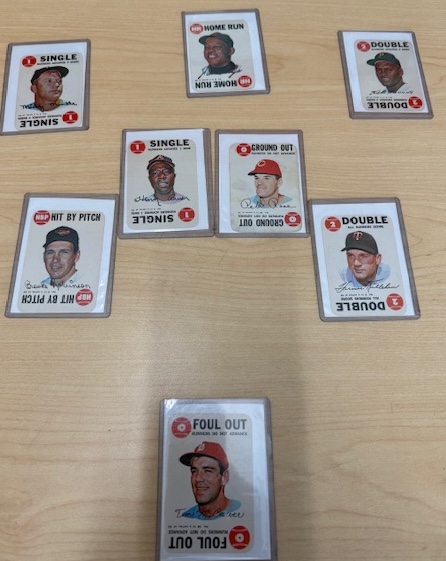
Some of the cards from my 1968 Topps Game insert set. Picking through them, I built the best line up I could imagine. Hank Aaron is out of position at short, although he did come up through the Negro League and Minor Leagues at short before switching to the outfield. I can’t even begin to imagine what this line up would cost today…

With the start of the baseball season today, I dug around and found one of my earlier posts about sports journalism that I thought could use a repeat for Throwback Thursday. Between what I’m already seeing in sports stories for baseball and what my students were writing for “March Madness” leads, I’m pleading once again for sportswriters to write for the audience and not for themselves.

If they don’t, at least I’ll get a few fresh examples for the “bad leads” file that could power at least a dozen lectures at this point.


Writing sports leads that don’t suck: Avoid cliches. Rely on facts. Tell me what happened and why I care.

Newer sportswriters tend to go one of two ways when confronted with writing a lead:

  1. This was the most sensational, inspirational, celebrational, muppetational event in all of human history! The death and resurrection of Jesus Christ? Yeah, take a back seat to this 0-0 soccer game between the Northeast West South-Central State Barbers and the Our Lady of Perpetual Motion Twitchers!
  2. Fill in flat cliche here. That is all.

While we’ve talked about the problems with hyperbole and the need to rely on facts before, a) we haven’t talked about it much in sports and b) the bigger problem in sports tends to be the latter issue. Sports lend themselves to cliche more than any other area of journalism and they do nothing good but bury the actual lead.

Case in point (and a minor plug for our school): The UW-Oshkosh men’s basketball team earned its first trip to the NCAA Final Four. It had been more than 15 years since the Titans even made the Sweet 16. Here are some things to consider as “important” that took place on Saturday night:

  • The team made its first Final Four game in school history.
  • The underdog Titans defeated the No. 9 team in the country on its home court.
  • Ben Boots scored a career-high 36 points to help the team win.
  • One of the reason Boots scored so many is because senior guard Charlie Noone was tossed out/fouled out after catching a technical foul for his fifth foul of the game in the middle of the second half. Noone was a career 1,000-point scorer, a big deal at this level.
  • Down 6 points with 1:45 to go in the game, Boots hit two key threes to knot the score.
  • The game went into overtime, the second time this season a clash between these teams went into overtime. (The previous one was a double-OT game.)
  • Refs called 45 fouls, costing Augustana two of its key big men.

In short, there is no shortage of amazing things you could use for a lead. Here is what the local newspaper posted as its lead:

ROCK ISLAND, Ill. – History was made by the University of Wisconsin-Oshkosh men’s basketball team Saturday night.

jiFfM

Three quick things here:

  1. The lead is a cliche and a bad one at that. History is ALWAYS made. You reading this blog post is technically making history.
  2. The lead is written in passive voice. The cliche of “Titans make history” wasn’t even active.
  3. HOW the Titans made history is probably something people would like to know in the lead. What did they do? Did the coach murder a referee after a bad call? Did the whole team lose its uniforms and play the game in clown costumes borrowed from the circus? Did the team steal basketball powers a la “Space Jam” to win a game? Did they lose by more points than any team ever? Good grief…

When it comes to writing a sports lead, here are three key things to remember:

  1. Rely on the facts and tell me what happened: You don’t have to sell me on something being amazing. Just tell me what happened that was factual and yet cool and let me figure it out for myself. If the authors had woven in any of the components listed in bullets above, they would have had a great lead.
  2. Don’t assume people will read beyond the lead: Deadwood in the lead is a death knell for a story. The second paragraph is better and the head and deck include key information. However, you can’t rely on other components of the story to save you when you write a lousy lead. It’s like telling the cop who pulled you over for speeding how everyone else was driving faster: It doesn’t make you any less guilty.
  3. Remember your audience: Write for your readers, as in people who probably didn’t attend the game. If you went home after watching that game and your roommate asked, “Hey, how was the game?” what would you tell your roommate? “We won! We’re in the Final Four!” Would you ever imagine walking into your apartment and announcing, “History was made!” in response to that question? Probably not.

When Life Hands You Lemons, Make Lemon Pound Cake: Afroman beats Adams County deputies in defamation case


THE LEAD: The First Amendment is alive and well in Ohio, as the courts ruled rapper Afroman can make fun of anyone who kicks in his door in a quest for lemon pound cake:

The rapper Afroman did not defame seven sheriff’s deputies or invade their privacy when he put out a series of catchy, flamboyantly insulting music videos about them after they raided his home in 2022, an Adams County, Ohio jury ruled on Wednesday.

In a three-day trial that pitted two very different notions of personal outrage against each other, Afroman, whose legal name is Joseph Foreman, successfully argued that he had a First Amendment right to mock the deputies, as public figures, and that the over-the-top lyrics of his viral songs could not reasonably be taken as literal statements of fact.

BACKGROUND: The 2022 raid was based on a warrant seeking evidence that Afroman was engaged in drug trafficking and kidnapping. The rapper’s house had multiple cameras recording the raid, one of which captured a deputy doing a double take of a glass cake dish containing a loaf of lemon pound cake.

Meet Officer Pound Cake, who did not put down his gun and grab a slice and thus cannot testify if Mama’s recipe was, in fact, so nice.

The raid produced no evidence of either allegation in the warrant, but it did lead to a lot of video footage of deputies looking through Afroman’s property, breaking down his door and other miscellaneous actions.

Afroman used the footage in several music videos to mock the law enforcement officials. After the videos went viral, merch began to arrive in the form of “Officer Pound Cake” T-shirts and the like. At that point, several deputies sued for defamation and image appropriation, claiming the rapper used their images without their consent and that his album of songs and subsequent videos caused them significant harm.


DOCTOR OF PAPER HOT TAKE:  What people who sue in cases like this fail to realize is:

A) You’re essentially trying to put out a fire with gasoline. The minute this thing began, people started paying more attention to Afroman, his videos and even Officer Pound Cake. I haven’t thought of Afroman in more than 20 years, but now the guy is all over my feed thanks to this lawsuit.

B) Unless you can prove (and I mean REALLY prove) that you were directly defamed in a clear, obvious and serious way, You have absolutely no shot of winning a suit like this, which means all your doing is what we outlined in Point A.

Case after case involving rappers, parody artists and other similar entertainment-based performances has demonstrated that this kind of stuff is protected speech.  It also does nothing more than draw people to the very thing you didn’t want them to see.

When the PMRC put out its list of the Filthy 15, the artists and albums listed there spiked in popularity. When Jerry Falwell sued over a spoof ad in Hustler magazine, he targeted a publication that would be here one month, gone the next and likely only seen by a few hundred thousand people. However, now his name is associated with a Supreme Court case that every student in media law has seen, along with seeing the ad.

I get that it’s not fun to be the butt of the joke (believe me, after 12 years of Catholic school as the awkward kid in class, I get it.). That said, mockery is protected speech and pretty much everyone in public life gets their turn in the crap-barrel. The sooner you learn to let it go or embrace it, the less likely this will come up every day of your life.

How to cope with stress and burnout as student journalists and journalism students (A Throwback Post)

Today’s throwback post is kind of a four-parter, in that I’m bringing back the series I did five years ago on stress and burnout. The reason is pretty simple: I’m seeing it all around me at school.

I’ve got kids with mono trying to make it to “draft day” for their papers, while also staying committed to their school sports. I’ve got students who found out that the university didn’t quite count their credits they way they did, thus forcing them to jam an extra 7-week class into their schedule to graduate on time. I’ve got kids lining up for fewer and fewer seats in classes that more and more of them need.

To paraphrase Ethan Hawke from “Reality Bites,” if I could bottle the tension around here, I could solve the energy crisis.

I’m guessing I’m not alone in seeing this, unless, of course, your spring break happens earlier than mine. Either way, neither stress nor burnout is going away any time soon, so I hope this helps.


Stress and Burnout, Part IV: Hints and tips for slowing the burn

Editor’s Note: This week, we’re doing a deep dive into the topic of stress and burnout among student journalists and journalism students. The issues addressed here are part of a larger set of research articles I’ve done with colleagues, outside work done by those colleagues (as well as other researchers) and presentations I’ve done over the years at student media conventions. If you are interested in learning more, please hit me up on the contact page.

In case you missed the earlier posts:


First and foremost, I want to be clear that if you are experiencing severe burnout, either based on the scores you tallied from the Maslach Burnout Inventory or based on intuition after reading the previous posts, you should seek help. Most campuses I know of have mental health professionals who can assist you in whatever concerns you while many others have programs that seek to take care of students who feel like they’re breaking down.

I am not “that kind of doctor,” so please find someone who is.

That said, if you’re feeling a bit crispy around the edges or you want to knock your MBI scores down a few pegs, here are some lower-end suggestions that can assist you in mellowing out a bit, consider these options:

TAKE CARE OF YOURSELF: If there’s one good thing the pandemic has provided people, it’s the realization that illness can’t be overcome with gumption. I can’t count the number of times I’ve pushed myself past my limits while sick because, “I don’t have time to be sick.” That phrase is so ingrained in the mentality of journalism folks that we should have it translated into Latin and carved above the door of every student newsroom.

We often had students in the newsroom or the classroom looking like something out of “Dawn of the Dead,” pumping orange juice, cold meds and throat lozenges into themselves like they were stuffing a turkey. They wanted to write “just one more” story or edit “just one more” page, as they sounded like they were hacking up a lung. The idea is that being there at 50% (OK, maybe more like 25%) is better than not being there at all.

The truth of the matter is, if we just took care of ourselves a bit better, we wouldn’t get sick as often (usually). If we did get sick, we would recover to full strength better if we took the break when we needed it.

You can’t do anything when you’re sick or dead, as both tend to diminish productivity.

Early and regular coping techniques are good to keep yourself from dropping off: daily exercise, regular meals that include several parts of the food pyramid and quality sleep.

Now, let’s make something clear here. Walking briskly to the vending machine three times a day does not count for exercise and a regular meal schedule. Sleep isn’t well had passing out on the floor of the newsroom with a coat over your head. You need real versions of each of these elements.

(If you can’t sleep because you’re too worried, that’s another warning sign. You’ll want to see the student health folks for some recommendations.)


FIND YOUR HAPPY PLACE (OUTSIDE OF YOUR JOURNALISM LIFE): I was always amused when I worked in the newsroom and students decided they had finally had ENOUGH of whatever was bothering them that week.

“I need to get out of here,” they’d mutter. “I gotta leave the newsroom and get away from these people.”

Then, they’d get together with all of the same people they were grousing about and go to a bar or a party where they’d continue to discuss whatever was bothering them in the newsroom. It had the same internal logic of celebrating your first day of sobriety with a bottle of tequila.

There is nothing wrong with loving your job, your newsroom, your classes, your clubs or anything else. However, you eventually need a break from all of those “joyful” activities to just relax and actually enjoy something. You need to find something that brings you to your “happy place.”

Happiness can come from a variety of areas. One adviser I heard from told me she brought her dog into the newsroom on occasion. “You can’t be stressed out when you’re petting a dog,” she said. That’s pretty true. Little kids can also be amazing in this regard. Many years ago, I would bring my 2-year-old daughter into the newsroom. She’d dress up in princess clothes or build block towers with the editors. She’d draw with them and in the end they’d feel better.

The simple and small pleasures have been known to stave off stressful situations. After a particularly stressful day, several of us in a newsroom used to agree to meet online to play a game in which we were in “arena combat” and the goal was to blow each other up until the timer ran out. These days, I force myself to play a game of pinball or two to wind down and get away from the stress of the day.


PRIORITIZE AND SET LIMITS: This sounds easier said than done, but it’s like going on a diet or committing to an exercise regiment: Once you get into the groove, it becomes part of what you do.

Prioritizing can help you figure out which things you should focus on and in what order, thus eliminating the feeling of being overwhelmed. For some people, it’s about writing out things that HAVE TO happen in a given day on a list and taking pleasure in crossing them off. For others, it’s about learning how to determine which things need their attention and what things can be ignored, refused or delegated.

An approach I saw once used a color coding system to list off a bunch of things: Red meant it needed to be done before the end of business that day/week/hour/whatever. Yellow meant once the reds were done, a couple of these things could really use some attention. Green meant it got done when it got done and could be ignored for the foreseeable future.

Eventually when the list got pretty much crossed off, the person would make another list and re-evaluate the pieces that were left. Some of those greens needed to become yellows. A couple yellows might be red at this point. In addition, new stuff would fill in here and there in varying colors as well. It worked for that person, which was all it had to do.

Setting limits can be numerical, like, “Once the first five things on this list get done, I’m getting lunch,” or “I owe six emails today and that’s all I’m doing unless there’s a hostage situation that requires me to respond via email.” The limits could also be time-based, like deciding you’re going to turn off the computer by X time at night or you won’t work from A to B times during the day. One particularly clever way of doing this is to charge your laptop to full capacity and then leave your power cord at home. Once you run out of battery juice, you’re done for the day. Everyone else will just have to cope.

If you’re like me, (read: having grown up Catholic or in some other guilt-based system of existence) this can be really tough because you don’t want to feel like you’re letting people down or that you disappointed someone by not doing what they needed. This is how I end up writing letters of recommendation in 12 minutes after some kid I knew three semesters ago emails me with a desperate need and I don’t want them thinking I’m an uppity jerknugget.

However, I try to explain to people that for me to be the thing they want me to be (read: functional, helpful, valuable, intellectually on the ball etc.), I need to avoid burning out. In other words, “Do you want the thing done or do you want it done well?”


LEARN WHAT TO CARE ABOUT: If you write every headline in 100 point bold, screaming, you’ll never know what you should care about and your audience will tune you out. Same can be said about dealing with people.

When some professor in the history department makes some snide comment in front of a class about the newspaper or your major or a club you run, let it go. People who think they know what you do while actually having no clue about what you actually do in any of these areas are plentiful. No sense getting bent out of shape over an academic twerp. When the head of the journalism department says, “Your (club/paper/group) sucks. We’re cutting your funding and kicking you out.” That’s something to care a bit more about.

I often go back to the line about “Is this the hill you’re willing to die on?” when considering how stressed a situation should make me. I also find that people who can’t make this kind of distinction tend to think every hill is the one that EVERYONE around them MUST die on EVERY TIME. Learn to avoid these people and learn to avoid becoming one of these people.


HAVE A GOOD CREW IN YOUR CORNER: I remember watching a documentary about the “Thrilla in Manila,” the third and final fight between Joe Frazier and Muhammad Ali. By the time the 14th round ended, the fighters were completely spent and both of their respective teams knew it.

Ali looked like he was going to have to quit in the corner, something his crew refused to allow him to consider. Frazier, who later revealed that he had been fighting for most of his career only able to see out of one eye, had his good eye swollen shut by repeated poundings to the head. The legendary trainer Eddie Futch told Frazier that he know the fighter couldn’t see and it was time to throw in the towel. Frazier responded, “Don’t worry. I can visualize him.” Futch refused to listen and ended the fight.

Futch lived to the age of 90 and until his dying day, he said he never once regretting stopping the fight, despite what it meant to Frazier’s legacy and Frazier’s own bitterness toward his former trainer. All that mattered was he wanted to keep his fighter safe.

I guess this is my way of rolling this series all the way back to the boxing analogy from the first piece. One of the most important things to have around you at all times is a good “corner-person” who knows what you need at any given point in time.

(A quality “cut-person” and a good  “hype-person” are nice additions as well.)

In student media, this should be the newsroom adviser: The wizened one who has seen it all and knows when you need a motivating kick in the keester and when to throw in the towel for you. They have to see the bigger picture as you simply plow ahead, round by round. In college, a variety of other advisers can serve this role, such as an academic one or the one overseeing your group, organization or club. It could be anyone out there you know who knows how you tick.

(Side note: In my life, it’s Amy. She’s like a human divining rod when it comes to what I need, when, where and why. If you find someone like that in your life, hang on to that person with all you’ve got.)

The idea here is that sometimes we don’t know ourselves as well as we need to in order to keep ourselves out of trouble. Surrounding ourselves with people who understand us and are able to get through to us can be a saving grace when we are too stubborn or stupid for our own good.

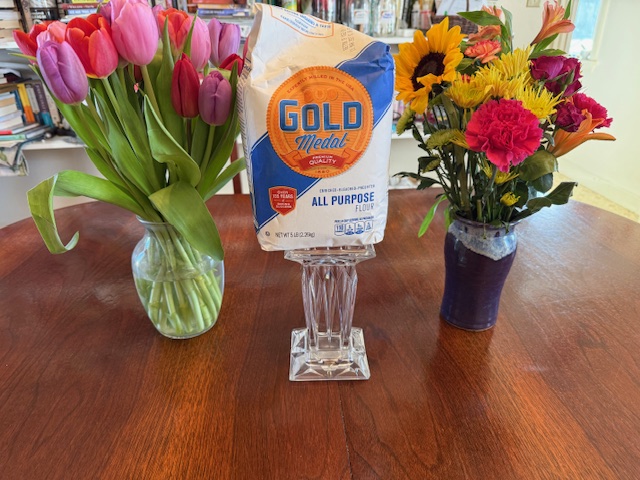
When it comes to getting quotes, go buy flowers instead of buying flour

When it comes to quotes, consider the difference between how you buy flowers and how you buy flour. Also, imagine them sitting in a nice vase…

In media writing courses, we talk about quotes being the spice that zips up the story or the sparkly diamond that draws the attention of the reader. However, not all quotes actually do this, because simply slapping quotation marks around a pedestrian set of words doesn’t get the job done.

PR practitioners tend to write press releases that have at least one block quote in them, with some releases being nothing but one giant “statement from X Person” quote. News writers tend to build the bodies of their stories with at least a few paraphrase-quote pairings that are meant to give readers varying views of a topic and a wide array of people a chance to speak. In a lot of cases, those quotes are either relatively pointless or they offer little in the way of quality.

How is it that so many people are proud, happy and thrilled to be there in EVERY PRESS RELEASE, ALL OF THE TIME, even when the writer can craft the quote for the person being quoted? How is it that reporters who get to interview sources also manage to come back with such “meh” quotes from sources who really SHOULD be so proud, happy and thrilled that they can’t shut up about their subject?

Here are the reasons why:

People are afraid to do anything different, lest they offend someone: The phrase, “It is better to remain silent at the risk of being thought a fool, than to talk and remove all doubt of it,” is usually where most people want to be when the chips are down.

To that end, it’s a lot easier to do a bland, mediocre quote than to state something important with your name attached to it. Interview subjects with experience tend to lapse into cliches to avoid really upsetting people, while the press release quotes also tend to play to the middle of boring to avoid controversy.


Writers aren’t as creative as they need to be: One of the things that differentiates PR from news is the concept of quoting sources. If there’s one area where I’ve seen people have the MOST difficulty in making the shift, it’s here.

News requires you to go out, find someone and get something out of their mouth in a word-for-word format. PR in many cases allows for practitioners to write up something on behalf of the client and then just get a “sign off” on it.

Even though you CAN do this, it doesn’t always follow that you SHOULD, primarily for the reason we’re noting here: You don’t know enough about your source, the topic or the non-data stuff to really come up with that whiz-bang quote that will make the difference here.

The same thing can be true of news writers, who don’t put enough time into their research to ask questions that probe or engage the source. If you ask a generic question, you tend to get a generic answer.


Writers aren’t pushing for quality: I can’t tell you how many times I was told to “get a quote” for a story. It was basically like this scene from “The Paper” where Michael Keaton just wants “something:”

I say this as a fellow sinner who often was on the hook for getting a quote, any quote I could from any source, just so that we could say we quoted someone. However, it seems like “get a quote” is a general resting pulse for how we do business.

With those things in mind, here are a few ideas on how to get better stuff:

Don’t shop for flour. Shop for flowers: In the middle of pierogi season at our house, Amy often sends me out for supplies, the most common of which was flour. The direction was simple: “Go to the store and get a bag of flour.” I dutifully comply by driving to the closest place I could and grabbing a five or 10 pound bag off the shelf that resembled the bag she had just emptied.

When I got sent into the field as a journalist, I often felt that was how I was supposed to get quotes. It was like “Go to the store and get a bag of flour.” OK, if that’s all I’m doing, all I care about is going there, picking something off the shelf and coming home.

That’s part of the problem with quotes: You don’t just want something off the shelf.

Instead of shopping for flour, think about shopping for flowers for someone you love. Think about what it is that makes that bouquet special, beautiful and different for them. Think about how you want the reaction to be when they see it. Think about doing more than grabbing whatever is convenient.


Research better beforehand to ask better questions: As we’ve said here repeatedly, the key to everything good we do in journalism is in the preparation. The more work we do at the front end of the process, the better things will be at the back end of the process.

One of the reasons PR quotes are so “meh” is that practitioners don’t dig into the topic or the organization to find things that make it special. When all we have to work off of is a baseline understanding of the concept, which usually comes from a buzzword-laden mission statement, we’re operating in Generic-ville.

The benefit of doing the research before crafting that quote is to make it feel genuine and informed. In adding special touches based on detailed information you found, you not only have a better chance of making your source sound good, but you also have a much better chance of drawing a reporter’s attention.

In the case of reporters and practitioners who rely on interviewing, the research ahead of time can help you shape more pointed and engaging questions that will elicit stronger responses. When you ask that, “So what can you tell me about X?” question, the source will lapse into their “greatest hits album” answer, with all the generic info and cliches. If you can ask something that shows you’ve invested time and energy in the question, you’re likely to get that source to be more engaged.


Change the source’s perspective: Most of the time, the sources we interview either play to us as media practitioners or play to a perceived audience of peers. Those quotes tend to be more jargon laden or otherwise disengaged, and they usually don’t do much for an actual audience that will eventually read their quotes.

Put the source in a different state of mind, based on your full understanding of who you see as the readership. Try asking a question like, “So how would you explain this to a worker on the assembly line?” or “What would you say to a parent in the school district about X?” or even “Could you explain this to me like you are talking to a child?”

In shifting the perspective of the source in terms of understanding the audience, you can get them to shuffle the deck a bit and deal you a better hand. I’m a particular fan of the “child” quote when I’m talking to a source who is clearly exceptionally well-versed on their subject, to the point of assuming everyone else knows as much as they do.

I also like the idea of thinking about who else might be a source in my story to shape the questions. For example, if I’m talking to a product seller, I like to ask them to shift focus to being a product consumer. If they’re a superintendent, I like to get them to shift to think like a parent, a teacher, a custodian or a kid.

In getting them to move, they tend to get out of the rut where cliches live and give me something different.

“It’s not a riot. It’s a large, prolonged disturbance.” Working through fact-checks and BS-checks (A Throwback Post)

When it comes to fact checking and BS detecting, I often tell students about a story I wrote involving the Mifflin Street Block Party about 30 years ago. The party got way out of hand late at night, with students setting bonfires in the middle of the street and even burning a car. When firefighters arrived to extinguish the blazes, the party participants repelled them with bottles, rocks, cans and anything else they could throw.

With the fire truck damaged and the firefighters outnumbered, the police eventually went in with riot gear and battled for control of the scene, as the party folks chanted, “F— THE PIGS!” at the top of their lungs.

The next day, I’m talking to the public information officer from Madison PD and I ask if, since it was the first time they donned riot gear since the Vietnam War, if they called out a 10-33, Riot In Progress.

“Don’t you dare call this a riot,” he told me.

I then explained I’d seen what had happened and the carnage that was left behind, so if it’s not a riot, what was it?

“It was a large, prolonged disturbance,” he told me before hanging up.

We are apparently entering another period of Jedi Mind Trick 101, in which people in power are telling the media, “Don’t call this a war. It’s not a war.” Therefore, I thought it might be a good time to pull this post the fact-checking exercise along with it out for another run.


Journalism 101: Facts matter, so don’t feel bad about forcing people to get them right

Screenshot

THE LEAD: In a blinding flash of the obvious, the Washington Post reported that politicians don’t like being told they’re wrong about things via a journalistic fact check. In other “water is wet” news, Donald Trump and his campaign seem particularly outraged by the temerity of journalists who actually researched topics and can prove he’s full of beans from time to time:

Trump nearly backed out of an August interview with a group of Black journalists after learning they planned to fact-check his claims. The following month, he and his allies repeatedly complained about the fact-checking that occurred during his debate with Vice President Kamala Harris, berating journalists and news executives in the middle of the televised debate.

And this month, Trump declined to sit down for an interview with CBS’s “60 Minutes” because he objected to the show’s practice of fact-checking, according to the show.

<SNIP>

The moves are the latest example of Trump’s long-held resistance to being called to account for his falsehoods, which have formed the bedrock of his political message for years. Just in recent weeks, for example, Trump has seized on fabricated tales of migrants eating pets and Venezuelan gangs overtaking cities in pushing his anti-immigration message as he seeks a second term in office.

THE BACKGROUND: The joke I always go back to is the familiar one of, “How can you tell when a politician is lying? Their lips are moving.” The idea that politicians fabricate situations is not a new one. Nixon’s “I am not a crook,” Clinton’s “I did not have sexual relations…” and Mark Sanford’s “hiking on the Appalachian trail” are some of the more infamous ones, as they intended to cover over embarrassing personal failings and limit political fall out.

Even more, politicians invent people they saw, they met and they heard, all in the service of some anecdote about salt-of-the-earth farmers getting the shaft, military leaders praising their brilliance or other similar moments of self-aggrandizing puffery. And of course there is the myth-making that surrounds some politicians, like George Washington’s cherry tree or Reagan’s trickle-down economics…

As far as this election is going, Tim Walz was fact-checked on his claims about his service, his presence in China during the Tiananmen Square protests and his family’s use of IVF services, each of which resulted in some disparities. Kamala Harris is also ringing up a few “false” ratings from Politifact on some of her claims regarding illegal drugs and her own previous political efforts.

Still, most of this is piddly stuff compared to what Trump does on a daily basis, both in terms of frequency and intensity. If Walz’s “carried weapons of war” statement is a leak in the truth boat, Trump is continually bashing the Titanic into the iceberg and flooding every compartment.

WHY DO WE CARE AS JOURNALISTS: Despite what the former president of the United States things, facts have a definition:  things that are known or proved to be true. The job of a journalist is to get the facts and report them, so that people can make informed decisions on important things in their lives. If you strip away everything else from journalism, that’s the beating heart at its core.

Telling journalists you will only talk to them if they promise not to fact check you is like telling me, “You can come to our party, but only if you promise to not be a bald, middle-aged white guy.” It’s what I am, so that’s going to be a bit hard to square that circle.

People rely on facts to have a shared understanding of reality, so that society can function. It’s why when we bring a shirt to the check out kid and that shirt is priced $19.99 plus tax, we understand it’s probably going to cost about $21 or $22, give or take your part of the country. If the kid says, “That price is fake news. You owe me $150 and can’t leave until you do,” that breaks the whole “shared understanding of reality” thing.

For years, journalists have been telling people, “You’re entitled to your own opinion, but not your own facts.” Somewhere along the way (I blame the internet), it actually became, “Pick your own facts and then be outraged when someone disagrees with you.”

EXERCISE TIME: Pick out a TikTok on any hot topic that’s going on today (politics, Diddy trial etc.) and write down whatever statements these people are declaring to be facts. Then, go fact check them against

Verified by ExactMetrics