Two Key Questions Every Story Should Answer Clearly For Your Readers

One of the most important things to remember about media writing (or good writing in general) is that you aren’t writing for yourself. You are writing for your audience.

What makes for a good understanding of your audience, how best to reach your audience, how audience characteristics change your approach to writing and many other things have been covered thoroughly here before. Rather than rehash them, let’s boil everything down to two simple questions you need to answer for your readers:

  1. What happened?
  2. Why do I care?

This might seem overly simplistic, but then again so is the noun-verb-object structure and it works pretty well for most of us. To that end, think of these questions as the “core” of what you’re trying to do for your story, much in the same way that NVO provides the core for a good sentence.

QUESTION 1: WHAT HAPPENED?

To answer this question, you actually will want to start with some noun-verb-object construction to focus on the crucial aspects of the story you want to tell:

Brewers beat Cubs
Mayor blasts city council
University passes budget

The simplicity of each of these starter sentences provides you with the “who did what to whom/what?”  content you need to best inform your readers as to the core theme of the story they need to read. Beyond that, you start filling in the additional elements of the 5W’s and 1H to help them see more of what happened (How badly did the Brewers beat the Cubs? Why is the mayor ripping the city council? What is in the university’s budget?) and then you can move them along to the next point in the piece.

When it comes to what you add to this, it’s a lot easier to point out what NOT to do than it is to tell you what you SHOULD do. A few avoid-at-all-cost elements include:

  • Soft language: Simplicity is to be rewarded, so value concrete nouns and vigorous verbs. Don’t tell me someone “is no longer alive.” Tell me the person died. Don’t tell me a person “could potentially be found to be the robber.” Tell me “Police said Smith is a robbery suspect.” Direct and clear doesn’t mean cruel. (comedian George Carlin once noted that people should not be deemed “those with severe appearance deficits.” They’re just ugly.) It means being as clear as possible. Think about it this way, do you want your doctor telling you, “Well, it appears that you might have engaged in behavior that led to some significant health issues of the sexual nature which could potentially lead to some negative outcomes if not dealt with accordingly” when you go for an office visit? Or would you prefer: “You got an STI. Take this pill and you’ll be fine. Be more careful next time.”
  • Jargon: What makes for jargon is a lot like beauty: It’s often in the eye of the beholder. This is why understanding your audience matters a great deal. Getting “a pair of Hookers” in car speak means a significant upgrade to your exhaust system. Getting “a pair of hookers” in cop speak can mean 30 days in jail to five years in prison. Think about how likely it is your audience will understand a concept before you use it. In many cases, you can find simpler and clearer words that will avoid your need to use the jargon. If you can’t, you probably want to include at least some form of explanation to your readers. If you find yourself doing this more than once or twice per story, reconsider what you’re doing.
  • Self importance: Yes, marketing and branding are important elements of everything now, including news coverage. However, the more time you spend patting yourself on the back that you wrote something by including breathless statements like, “In an exclusive interview with the Star-Times” or “told the Herald-Press,” the less time you are spending telling people what they need to know. In many cases, you aren’t as exclusive as you think you are. In other cases, telling people that you guessed right first can really appear tasteless.


QUESTION 2: WHY DO I CARE?

This is the bigger one of the two, given that it’s easy to tell people what happened in most simple media-writing exercises. Why they should care? That involves understanding the audience well, understanding the impact of the topic at hand well and finding a way to pair the two successfully.

The first thing you have to understand is that something “being important” isn’t self-evident. The second thing you have to understand is that not everyone sees things the way you do. These issues came perfectly into focus for me once when a student wanted to write a story the UWO student newspaper about how the U.S. should annex Puerto Rico. Given the audience the paper serves, the lack of a newspeg and the general “WTH” reaction most of the staff had to the topic, I asked why our readers should care about this. The student’s response: “EVERYONE should care!”

Um… That’s not how this works.

While I was an editor at the Columbia Missourian at Mizzou, a colleague used to make students finish the sentence, “This matters because…” before the student could start the lead of the story. The point she wanted to make was: If you don’t know why it matters, you can’t tell me anything useful.

One of my more interesting moments involving the “this matters because” philosophy came here at UW-Oshkosh when our fundraising arm (the UWO Foundation) found itself in some hot water. At the time, the organization was considering bankruptcy and other unpleasant actions to deal with some serious financial problems. I remember asking my reporting students what they thought about the situation and they all stared at me blankly.

A subsequent conversation went something like this:

Student: Why should I care about this?
Me: How many of you get scholarships to attend UWO?
(All hands go up.)
Me: So where do you think most of that money is located?
Student: The foundation? So…
Me: Wait for it…
(Students all furiously start Googling UWO Foundation and Scandal)

As far as they knew, nothing going on over there mattered to them, which was the exact opposite of reality. In the end, things got resolved, but at the time it was worth at least a passing look for those students.

Look at every possible way you can think of to convey specific value to your readers when you are writing a story. Why should they care that the city council is raising property taxes? Maybe that means rents will go up. Why should they care about street construction? Maybe it means parking in their area will change. Why should they care about cuts to the health inspector’s budget? Maybe it means a little less inspection and some awful conditions at their local eateries.

The point is to find ways to relate what you are doing to your readers so they can see that your work has merit. It doesn’t have to come down to the level of a “See Dick and Jane” book, but don’t assume everyone knows what matters and why. Help them understand and care. This will improve their connection to the topic as well as to your media outlet in general.
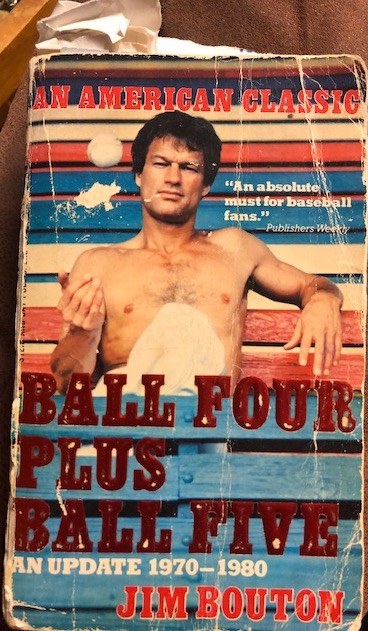

 

Jim Bouton: A truth-teller who showcased the value of voice in writing

BallFour

My first copy (of many) of “Ball Four.” The best 50 cents I ever spent.

I found myself speechless last night when I learned of the death of the man who taught me to love voice in writing.

Jim Bouton, a major-league baseball pitcher in the 1960s and 1970s, died Wednesday at the age of 80, the victim of several strokes and a condition called vascular dementia.

I felt like I just got punched in the heart, a somewhat ridiculous notion given that I’d never met the man. However, I really felt like I KNEW him, a testament to his ability to write in a way that put his voice inside my head.

Bouton was somewhat unremarkable as a pitcher, compiling a record of 62-63, earning one all-star bid and one World Series title. He was, however, a remarkable storyteller and chronicler of a single season with the Seattle Pilots, a team that itself lasted for only one year. Bouton’s book, “Ball Four,” told the stories of life inside the locker room, on the team bus and within the players’ lives in a way that had never been done to this degree before.

Others had written books that took people inside the locker room before Bouton came along and others wrote far more shocking locker room books after the publication of “Ball Four.” However, what made Bouton stand out, at least in my mind, was his voice and the way he spun his tales. The man had a way of making the reader feel like each story within the book was a shared experience from a close friend.

I came across my first copy of the book at a garage sale when I was about 20 years old. I had heard about “Ball Four” when I read a sports column a year or two earlier, so when I saw the rumpled paperback for sale, 50 cents seemed like a decent investment.

It was love at first read.

What struck me immediately was what struck Pulitzer Prize-winner David Halberstam, who wrote in a review that “Ball Four” was “a book deep in the American vein, so deep in fact that it is by no means a sports book.” The opening line lets you into Bouton’s life in an unvarnished, honest and fearful way:

“I’m 30 years old and I have these dreams…”

His dreams were those of a pitcher: To find his way back to the big leagues. To win games and become an award-winner. To beat his old team, the one that tossed him aside when he hit rock bottom. He freely admits that he doesn’t expect any of those dreams to happen, but he still wants to chase them. He wants to see if he has a little bit left in the tank.

The book doesn’t just chart the dreams of one man, but the realities of many men of that time. Ballplayers had been venerated through “milk and cookies” reporting, as Bouton noted. Their exploits on the field had been catalogued and deified while their exploits off the field had escaped notice in the press, with a wink and a nod from fawning reporters. The men engaged in all sorts of activities from popping “greenies” (amphetamines) to improve their play to “beaver shooting,” which involved spotting good-looking women in the stands during a game.

(Ballplayers cheating on their wives was a big reveal in “Ball Four.” The line that sticks out in my mind was Mike Hegan’s response to the question, “What’s the hardest thing about being a professional ballplayer?” Hegan: Explaining to your wife why she needs a shot of penicillin for your kidney infection, a clear reference to picking up an STI while on the road.)

Bouton took on issues of race, gender and fame in his book in a way that rankled the old guard of the game. He wrote about the heroes of the game, including Mickey Mantle, in such a way that he was cast out as a baseball pariah. (My edition was his 1980 update, which included his life after the original book had been published. He noted that the San Diego Padres burned copies of his book and left them for him in the visitor’s locker room. Pete Rose, who would later be banned from baseball for far worse transgressions than Bouton purportedly committed, once stood on the top step of the dugout and screamed at Bouton: “FUCK YOU, SHAKESPEARE!” Reporter Dick Young called Bouton a “social leper.”)

The irony was that the more often the baseball establishment tried to discredit and shame Bouton, the more frequently people bought his book to see what the buzz was all about. As I dug into the book, 20 years after its first pressing and 10 years after my edition had been published, I found myself transported to this incredible island of misfit toys filled with humor and strangeness. Each time I came across a passage I liked, I ripped off a small piece of my reporter’s notebook and bookmarked it. Eventually, the bookmarks so overwhelmed the book that that they essentially lost value.

“Ball Four” became one of about four books I tried to reread at least once per year, as it provided joy and new insights in each reading. At 20, the 30-year-old Bouton seemed like an elder statesman, a wizened truth-teller and inside source to me. When I read it at age 30, I saw Bouton as an every man, someone who dealt with family troubles, work hassles and a day-to-day life that was both remarkable and ordinary. When I read it at 39, I found myself focusing on the update, “Ball Five,” where he attempted a baseball comeback at age 39. The sense of longing and the sense of a need to scratch an itch, to right a wrong and to write one last chapter made sense to me, even though I’d never once thrown a knuckle ball.

The rereadings I did between now and then have actually shaped a lot of what you read here on the blog and in the textbooks I wrote for SAGE. I found myself focusing on a few elements of Bouton’s writing that gave it the vibe and feel that keeps me coming back to it time and time again. Here are three things I got out of it that I hope will inspire your writing as well:

VOICE: In writing the book, Bouton had to make notes about various situations as they happened on anything he could find. In the retrospective shows about his efforts, he displayed a trove of cocktail napkins, hotel stationary and plane tickets with pencil-scrawled bits of information. Once he was safely back in the confines of his home or his hotel room, he would use those notes to flesh out his thoughts by speaking into a portable tape recorder.

The “write it like you would say it” motif is a large part of what makes the book readable and engaging and gives it a true sense of voice. Although I don’t use the recorder trick to do so, I try to write like I would speak when I’m putting together almost anything that doesn’t involve academic research. (Academics don’t like voice. They want everything to sound like it’s being chronicled in a British accent by a guy with a bow tie and a stick up his keester.)

One of my students told me, “It’s weird but when I am reading the chapters, I hear your voice in my head.” I wasn’t sure how to take that at the time, so I told her, “I hear voices in my head, too. My doctor says there’s medicine for that, but I’m afraid I’d get lonely.” I also figured that she could hear the voice because she HAD heard my voice in class. However, I ran into a student who was using the book for his class at another university and the first thing he told me was, “You sound exactly like I thought you would.”

Once you get good at the 5W’s and 1H and you can nail down a fire brief with the best of ’em, you get a little more license to write stories that require voice and feeling. The ability to use that voice, not for your own edification, but to tell stories that connect with your readers, can be a huge benefit for everyone involved. Start now by finding that voice and seeing how well it works as you tell stories.

HONESTY: Journalists are required to tell truth to power, regardless of the cost. Many of us, myself included, fall short in that area on a fairly regular basis. We don’t want to go into the corner and fight for the puck. We don’t want to ruffle feathers of sources that were decent to us or who might find a way to make our lives hellish. We don’t want to rock the boat. So, we don’t say what we see or dig into those darker corners for fear of what it might lead to.

In his life after baseball, Bouton worked as a television sports journalist for six years, where he found that telling truth to power or focusing on things the powers-that-be don’t want you to focus on led to just as many problems in media as they did in baseball. He was shunned by other journalists and players were all warned to “watch what you say” when they saw Bouton coming.

Bouton’s honesty cost him a lot in life. He lost his job in baseball, although Bouton critics would point out his pitching in 1970 had a good deal to do with that as well. He angered people in baseball so much that he wasn’t able to attend funerals for his former teammates and he never got invited to baseball events like “Oldtimers’ Day.” (As Bouton noted, “Understand, everybody gets invited back for Oldtimers’ Days, no matter what kind of rotten person he was when he was playing. Muggers, drug addicts, rapists, child molesters all are forgiven for Oldtimers’ Day. Except a certain author.”)

What struck me, however, wasn’t Bouton’s honesty about the world at large or about the escapades of his teammates, but his personal honesty. In the second edition of “Ball Four,” he talks about getting divorced and how scary it was for him. In his third update to the book, he discusses the death of his daughter, Laurie, who was killed in a car accident in 1997. In both cases, his vulnerability is as clear and prominent as it was in the original text.

He fears being cut and says as much. He worries about his teammates who are seen as nothing but bargaining chips to be shuttled around the league for other pieces of the team’s puzzle. He worries about money, security, family and more. He lets you in as a reader and that’s what makes his stories feel the way they do.

Most of what I write doesn’t have a lot of room for voice or this kind of honesty, but I push it where I can because as I’ve told anyone who will listen, I don’t just want to be a name on a book spine. It’s why I reach out to teachers who adopt the texts and respond to students who email me with questions. (It’s also why I actively try to thank the students who are given extra credit in their classes to find typos in the books and email me with their discoveries.)

Honesty breeds humanity and it makes for much better stories and connections between the reader and the author. Not every story will call for that, but it’s worth it to try when the opportunity presents itself.

HUMOR: The greatest compliment I can pay to anyone is to say, “You really made me laugh.” Bouton really made me laugh.

In some cases, it was with simple statements: “Did you know ethyl chloride can be fun?”

In other cases, it was with just crude stories, such as the time he explained how Ray Oyler caught a curveball right in the cup while warming up a pitcher in the bullpen. (Back then, the cup was a metal insert into the jock strap. Hitting someone in the cup was called “ringing the bell.”)

In most cases, it was just the way he told me about bits of life that helped me feel like I knew him. His adopted son from Korea was learning English and was doing well, although occasionally he would mix something up like burping and then saying, “Thank you.” His take on teammate Gary Bell closing the ninth inning of a game had a similar flair: “It was a minor miracle. He’s supposed to pitch tomorrow, he ran 15 wind sprints before the game and ate three sandwiches in the fourth inning. When he came into the clubhouse in the seventh to put on his supporter, he asked no one in particular if it was too late to take a greenie.”

(Bouton also wasn’t afraid to offer self-deprecating statements. He explained that he was such a poor hitter that his teammates nicknamed him, “Cancer Bat.”)

Back then and even today, people are far too serious. I can already hear people aghast at the idea of laughing at casual drug use or mocking a child who was learning a second language. Some people are perpetually offended and look at anything as a chance to pontificate on a point of extremely limited merit. What those people fail to understand is that some things can just be funny without leading to a higher discussion of larger issues.

I love funny things, even if not everyone can agree with what makes something humorous. It’s why I try to weave odd little Easter Eggs into the books. (You might notice that the phone number I use every time I need to reference one is 867-5309. If you don’t get it, look it up.) It’s why I try to use examples that are less stringent public policy and more “a guy in a onesie was arrested with his cat named Spaghetti.” Humor helps us remember things. It helps us learn. It also helps us enjoy life a little more.

If there’s one thing “Ball Four” taught me, that was it.

And that if you want to win, pretty much have to “smoke ’em inside.”

(If you want to understand that line, go read the book. It’s worth it.)


Unblock this: Modern advertising and why we hate it

According to the media-writing book:

Advertising is about more than telling people what to buy and where to buy it. It is a communication format that mixes information and persuasion elements in an attempt to convince audience members to act. The desired action can take many forms, including purchasing a product, supporting a candidate or forming an opinion. In addition, some advertising is geared toward preventing action, such as buying some other company’s product, supporting a different candidate or changing an opinion.

Much of what makes this happen is about knowing your audience, which we discussed at length elsewhere in this blog and in these books. Demographics, geographics, psychographics and more all play a role in making sure the message gets from a valued organization to an interested and engaged receiver. Given what most of us experience on a daily basis, particularly on the web, that might seem as idealistic as taking Cinderella as your spirit animal.

If you want to know why advertising and media operations are in such ugly spots today, consider a recent experience I had in trying to read an online column. See if it matches with what you tend to experience and then ask yourself if that initial paragraph meets with reality:

One of my favorite authors, Terry Pluto, writes about Cleveland sports for the Plain-Dealer’s website and a link to one of his columns popped up in my Facebook feed. I clicked on the link and hopped over to the PD’s site, only to get a lock screen in which it noted I was using an ad blocker and asked me to disable it.

Some sites give you an option to continue without shutting off the blocker. Some try to guilt you into shutting it off. Some are like a Joe Pesci character on a meth bender, demanding you turn off the frickin’ blocker, you frickin’ mook… In this case, the PD gave me the “shut it off” option and nothing else. (Previous times, I got an option.)

As I noted earlier, I’m OK with paying for content. I’m also fine with the model that has driven media for decades through its salad days: Ads pay the bills for the content. However, consider these crucial messages that I got as a result of shutting off the blocker:

AdBlock1

Um… OK, apparently “history” is now about ’70s fashion and boobs… And thanks for trying to entice me with the “not suitable for all eyes.” It’s like the Simpsons monorail trick, but with sexual intrigue.

AdBlock3

AdBlock4

What the internet apparently thinks it knows, is that I’m broke, looking to cheat on my wife/get murdered and I have attention deficit disorder since it gave me TWO of these ads. It also presupposes that “older women” means anyone who can buy booze without the clerk breaking out a black light on her ID and that I wasn’t thinking, “Isn’t that Elizabeth Shue?” Moving on…

AdBlock6

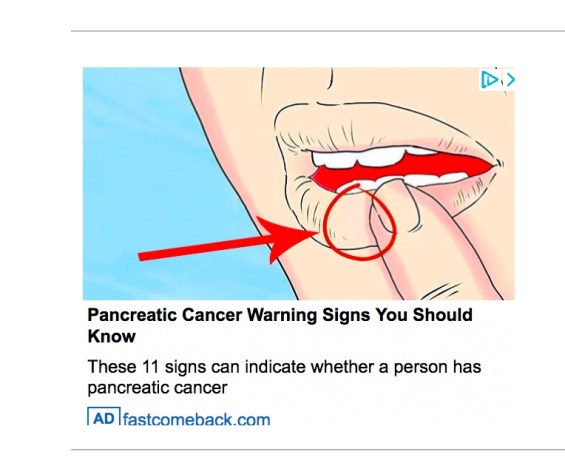
If you touch your lip, you’re dying of cancer. Got it. Thanks.

AdBlock2

I’m not really deaf. I’m just ignoring you…

And finally:

AdBlock5

(I spent three minutes trying to type a word that effectively captures that sound I make when I’m feeling like I’m throwing up in my mouth. Whatever that noise is, fill it in here…)

I’m guessing your experiences are somewhat similar to mine, with tweaks for age brackets and theoretical senses of what “kids your age” want to see: Hot chicks/dudes are waiting in your area… 10 simple ways to stop (Acne/HPV/Failing Calculus for a third time)… SHOCKING! You won’t believe what (Fill in your childhood Disney Show love interest) looks like now!…  Drivers in (fill in your area) can BEAT SPEED TRAPS…

This is what advertising has devolved into for a number of reasons:

  1. It’s cheaper: You can place millions of impressions for the cost of what it would take to get a full page ad in a major metro paper.
  2. You have wider reach: A newspaper or a broadcast signal can only reach so far. An internet ad can come from anywhere on earth (except our old newsroom, where apparently you can’t get a signal to save your life).
  3. Fewer risks/restrictions: There used to be a lot of vetting and careful checking of ads and products. Now, ad groups and sites and collectives just send out anything as long as the CC number works or the check clears.
  4. Money: Media outlets have always been accused of being cash whores when it comes to advertising. Back in the earlier days when money was free-flowing, they could rebut this by avoiding sketchy ads. In the “we’re still OK” days, they were more like Julia Roberts in “Pretty Woman.” Today? Um…  My only analogies will get me redflagged by my editor, so just think of the lowest level of willingness to do stuff for money you can and you’re about there…

The unfortunate byproduct of this approach is a race to the bottom for advertising in the same way there appears to be a race to the bottom in news and other media fields. It can be easy to go along with the crowd in this regard, but if you want to make your advertising worth something, think about what it is you’re trying to do to create a message that reaches your readers and effectively evokes something from them. A great example of this just came out today (h/t Al Tompkins) with Nike showcasing the Women’s World Cup Team victory:


And here’s my favorite one from a few years back that still gives me the chills:

Nike gets it: Tap into something. Know your audience. Showcase the emotions associated with those people.

In the soccer one, it was one of announcing their presence with authority. With the Cavs one, it was that complete sense of quiet disbelief. The audience EXPECTED the women’s team to win and so it talked about the greatness of that team. Cleveland had gotten crushed so many times before, the audience EXPECTED the Cavs to lose (especially after going down 3-1 in the series). It got the emotions just right and it didn’t layer on the schmaltz.

If advertisers want to get beyond an eyeball grab, they have to fit more into this mold and touch on what we talked about at the beginning of the post. If the media companies that take their money want people to shut off the ad blockers, they’re going to have to ask questions that go beyond, “And what’s the 3-digit verification code on the back of the card?”

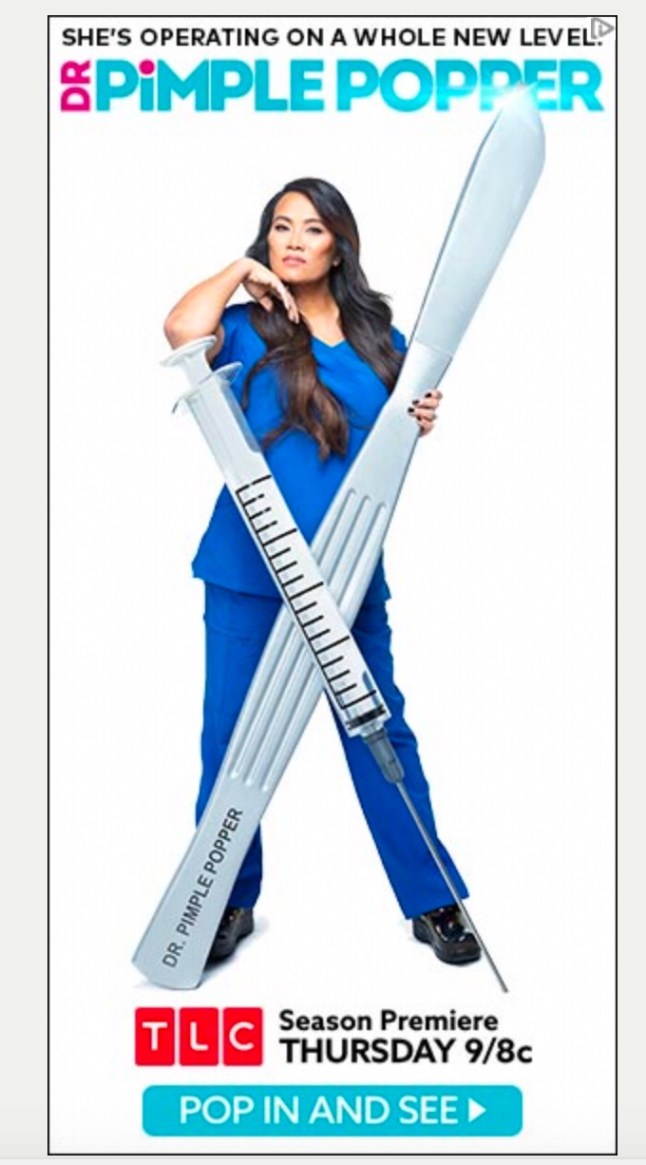
And if I ever want to eat lunch again, I’m not ever seeing another episode of Dr. Pimple Popper.

You get what you pay for: Three reasons why it’s stupid to complain about the cost of journalism

Milwaukee Journal-Sentinel columnist Jim Stingl wrote a nice local column that took a look at how people consistently run red lights the corner of 60th and Capitol. The piece ran in the wake of a car wreck that killed an off-duty Milwaukee police officer, and was the kind of thing more papers would have done back in the days when staffs were robust and smoking was allowed in the newsroom.

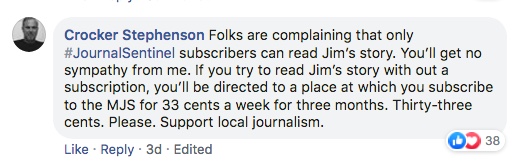
I’ve linked to the article here, but most of you won’t be able to see it because it’s only accessible to the paper’s subscribers. When venerable journalist Crocker Stephenson, who used to work for the Journal-Sentinel, posted the piece to his Facebook wall, a number of people groused about their inability to access Stingl’s work.

Stephenson was not sympathetic:

Stephenson

In response, several people broke out the traditional diatribes against such larceny:

  • Print is dead!
  • You don’t cover the right stuff!
  • Paywalls are a tool of the man!
  • It’s stupid to pay for stuff like this because the internet is free!


Following the trail of breadcrumbs that led newspapers from being important local sources of information to disemboweled corporate shells would take far too long for a post like this. It would also take way too long to debate the merits of various profitability models that could return news organizations to prominence. However, in defense of the field itself, I’ll simply give you three reasons why complaining about having to spend your hard-earned couch-cushion cash on news is just plain dumb:

WORK COSTS MONEY: As dumb as that statement sounds, it seems necessary to make it up front. When your dishwasher decides to start flooding the house on a random Tuesday night, you call a plumber and beg someone to come over and stop the hydro-destructive force in your kitchen. When that guy or gal comes over and fixes the problem, you wouldn’t think to just say, “Thank you. I’m going on Facebook right now and putting a “like” on you today! Goodbye!”

The person did work, and you’re going to pay for it.

Truth be told, journalism ALWAYS cost money, but the readers didn’t notice because they weren’t footing the bill. It’s like picking up a prescription when you have insurance: You pay your $10 or $20 that is your part of the deal and the insurance company picks up the rest of the tab. It’s when your insurance is gone that you notice, “Holy crap! That’s some expensive stuff!”

For years, advertisers accounted for most of the costs of the work. Newspapers and magazines were chock full of large advertisements for everything from clothing stores to car dealerships. The money flowed freely, as newspapers could deliver eyeballs to the advertisers and thus demonstrate value to them. The ad money covered the big costs of doing journalism while your subscription or copy price was simply a token of good will.

The one benefit the audience had to the newspaper was in its sum total of eyeballs. The higher the circulation, the more newspapers could charge for ads. The system worked until it didn’t. (How and why it didn’t could take up a dozen books, but it’s not Craigslist’s fault, despite what publishers and hedge-fund managers who own newspaper stocks will tell you.)

Now you’re being asked to pay full price for the cost of journalism and it suddenly looks exorbitant.

In addition, the reason it’s easier to short journalists is because it never seems like we are saving you from a disaster like the tow-truck driver who gets your broken car off the freeway or the tree surgeon who pulls the giant oak that fell during a storm off your house. We don’t have a special set of tools that leave you in awe or a product that you can show other people to say, “Check out what I bought!”

However, journalism is work. It costs money to do the work. You need to pay for it if you want or need it.

YOU’RE NOT PAYING FOR WHAT YOU THINK YOU’RE PAYING FOR: People often assume that becoming a journalist has been a life-long ambition for anyone who entered the field after seeing “All The President’s Men” or “The Paper.” Truth be told, I never wanted to be a journalist or a journalism professor growing up. My freshman year of college, my life-long goal of becoming a lawyer was crushed after one bad Poli Sci course, so I went hunting for another major.

I knew I could write, so I figured on a degree in English, a subject I had dominated throughout high school and even in college. When I went home for Christmas break that year, I told my father that I wasn’t going to be a lawyer and that I was looking around at my options. Dad spent his entire career in a factory, so he was always practical in his advice: “Just make sure you can get a job. Don’t do something stupid like majoring in English or something like that.”

OK, that shot that.

I found journalism shortly after that and realized that with a few tweaks and overhauls, the writing I did in English could translate to this new field. The reason I stuck with it was because there WAS a job at the end of the rainbow for this major and it was one my father could easily see. He read the Milwaukee Journal and the Milwaukee Sentinel cover to cover every day. He saw the newspaper as a tangible representation of careers in journalism.

When I got my first reporting gig, Mom bought a subscription to the State Journal and had the paper mailed to her. She would cut out and keep my articles. Again, it was that dead-tree-and-ink element that showcased my livelihood.

The problem now is that those rolled-up wads of tree pulp are landing on fewer and fewer doorsteps, thus giving people the idea that “Print is dead.” Furthermore, the users always assumed that what their money paid for was that physical publication. Thus, as those things became smaller and less frequent, and people found their information in ways that didn’t involve deforestation, they figured there was no point in paying money for journalism.

The truth is, we were actually paying for information, but we never saw it that way. It was far easier for us to understand that simple goods-for-cash exchange that took place on street corners, through subscriptions or via news stands. Because we never really saw it as a knowledge-for-cash exchange, when the “good” went away, we didn’t see why money should be involved. As newspapers revenues shrunk, we saw losses of people and pages. The people? We didn’t notice that so much from the outside, but the pages? Yeah, we saw those cutbacks in newspapers and magazines.

To complain about paying for newspaper content is to say the content itself lacks value. That can be a perfectly legitimate statement, depending on the quality of the content or the cost of the access. However, when you WANT something, it demonstrates that the “something” has some level of value to you. Paying for it showcases the way you value it.

YOU GET WHAT YOU PAY FOR: When I was a grad student, I ended up at a conference in Washington, D.C. and a bunch of us decided to go out for a meal. What was supposed to be a run for cheap Chinese food somehow landed us at a restaurant where we were the worst-dressed people in there and most of us were clad in reasonably decent garb. We didn’t know how pricey the meal was going to be until one of the people in our party reached for a piece of bread and dropped some crumbs on the linen table cloth.

Out of nowhere, a guy in a white button-down jacket appeared with a little metal device. He scraped the crumbs into a white-gloved hand and then disappeared just as quickly.

Yeah, we were in for an expensive night.

Contrast that with what I usually see when I’m heading out for a meal: A disgruntled employee behind the counter at a local fast food joint takes someone’s order, screws it up twice and then can’t make change without an iPhone app. The customer gets the wrong meal, but usually just shakes his or her head and mutters something about “kids these days,” even if the employee is 35.

The point is, you get what you pay for. That’s true even in journalism.

When you’re getting stuff for free, it’s usually of a lower quality. What you’re paying for when you buy a subscription to the Times or the Post or the Journal-Sentinel is quality work. You’re paying to have someone who went to school to learn a trade present you with quality content that has value to you. You’re paying for expertise and experience. It’s the same way with the plumber scenario above: You could call your buddy to come over and “give it a shot” when it comes to getting the dishwasher under control, but you figure it’s worth the money to get someone in there who knows how to fix the thing properly.

The nice thing is that a lot of people who commented on Stephenson’s post saw things this way as well. Long-term subscribers saw the value in the content and noted they had willingly paid for it for years. My folks still get the paper delivered every day and on more than a few occasions, my mother has told me she worries that the paper might cease to be at some point. Thus, she pays for a subscription to help support the cause.

In looking at the costs associated with the paper, we aren’t talking about a critical spending decision, either. One offer let you pay something like a buck a month for three months of digital access. My print subscription to the Oshkosh Northwestern was something like $14 a month and that came with unlimited digital access. As Stephenson’s post points out, 33 cents gets you access to the whole paper.

(Conversely, it costs $2.99 to buy three lollipop hammers in Candy Crush and rarely do those things help as much as you think they will.)

Sure, I could argue that these publications aren’t what they once were, but I also know that candy bars used to be a nickel, but grousing about that doesn’t make them any cheaper now.

Besides, as my father and I like to say about buying random stuff at yard sales, I’ve wasted far more money on far dumber things.


Can you learn to be nosy? (and four tips to help your journalism students, regardless of the answer)

I offered to help a class of high school journalism students learn anything they wanted to know about the field. The requests they made were fairly standard, so much so, that I already had lectures built on them: How to be a good leader. How to edit and coach writers. How to write tighter sentences.

The one request I had trouble with, however, came from the teacher of the class:

“Can you teach my students how to be nosy?”

Her plea came from a place of journalistic angst. To find stories, students needed to be more aware of their surroundings. They needed to become curious about what was going on, how things worked and why things were the way the were. Instead, her students had fallen into the rut of many young journalists, covering standard events, profiling the people they knew and generally telling the same stories over and over again.

If I could teach them to be nosy, she seemed to be saying, I could help them find better stories, poke their noses into deeper issues and generally serve as more dutiful watchdogs at the school.

My problem is that I always told students that I could teach them almost anything, but I couldn’t teach them to “wanna” when it came to doing the work and I couldn’t teach them to be nosy. Those intrinsic elements were theirs alone to control, I explained.

During the drive home from that class, I started really wondering if I was right or wrong about the nosy factor.

I know that, for better or worse, I have the nosiness trait in spades. It’s why I often get distracted during meetings with my various bosses and attempt to read the stuff on their desk. (Reading things upside down was a skill I garnered many years ago and one that has served me well.) It’s why I pick up broken lawnmowers, vacuum cleaners and other appliances I see on the side of the road and take them home to fix them. I have no need for the item, but I really want to know what broke and if it can be fixed.

It’s also why my first response to a lot of things is, “OK, fine. If you don’t want to tell me, I’ll just FOIA it.” I also find myself sucked into clickbait stories that tell me I’ll “never believe” what happened to Former Child Star X. (Spoiler alert: I could believe it.) Even with all of these ups and downs, I realized that “nosy” made me a really engaged reporter who saw stories in almost anything and it left me flabbergasted when other people didn’t.

I vividly remember a young woman in one of my writing classes as Missouri bitterly complaining about not knowing ANYONE who was interesting enough to be a personality profile subject. She ended up profiling a friend who went down to Florida with her for spring break. The profile was horrible, so I asked who else they met down there to see if I could show her some better ways to look at the assignment.

It turned out, they stayed with the friend’s boyfriend and his roommate, who was a “pubic stylist,” a term I wish I could forget.

This guy would do all sorts of “coifing” for people in that area. One such person was a woman who had just received a frog tattoo south of her hip and had asked for her pubic hair to be dyed green and shaped into a lily pad.

And this wasn’t even the weirdest styling this guy had done during that week of spring break.

“How the hell did you not see a story in that guy?” I asked with a level of incredulity I had never before reached.

She shrugged. “I dunno. I didn’t really think about it…”

I often tell students that we are all born with some level of wonder, which is why a 4-year-old’s favorite question is “Why?” Somewhere along the line, that sense of wonder gets lost or beaten out of us to the point that we stop asking “Why?” every six seconds. However, the curiosity within that inner child is only part of what makes for a nosy person (and thus a pretty tough reporter). If I had to define it, I would say “nosy” is made up of a mix of insatiable curiosity, a lack of patience, a thirst for knowledge and a healthy dash of weaseldom.

I asked the hivemind what they thought about the ability to teach “nosy” to journalism students and the degree to which I was right about it. Consider some of the answers:

If I look at this through behavior analytic lenses (because c’mon I can’t turn it off) I see being nosy as either automatically reinforcing to someone or not. It could be a conditioned behavior but I feel like you are either motivated/reinforced by being nosy or you aren’t.


I am not a journalism teacher, so take this with a grain of salt. I worked as a high school counselor for 16 years, as a user support rep for a data processing center in the 80s, and as a banker. I think there are some people who are just naturally curious, and want to know and understand things, and some people who just want to know enough to get them through whatever it is.


I chose not to go into reporting one day after a couple deaths at a fraternity on campus. You wanted me to simply walk over there and knock on the door and be a reporter and I couldn’t do it. I cried in your office. Someone went in my place, but I knew at that moment that being “nosy” was not in my DNA. I’ll challenge power structures and I’ll interview musicians, but I refuse to intrude on people’s personal lives. I admire those who can. It’s an important skill to have, and it’s the reason journalists are important. It can probably be taught, I’m sure my refusal was partly lack of experience, but I also believe some people are just born reporters.

Funny thing is that now that I’m a crisis worker I talk to people all night about their personal problems and ask totally invasive questions to get them to open up and calm down. So, maybe I had the skill but was using it in the wrong setting.


Some of us are curious by nature, others are not. The curious ones make the best journalists.

That said, perhaps the best perspective came from our departmental program assistant, a self-confessed fellow nosy individual. Her point was that inherent in all of us is curiosity, but the degree to which we use that for specific interests is what distinguishes us. Some people want to know things because they just want to know. Others see knowledge as an opportunity to gossip or pass along information. Still others want to know something but don’t care enough to ask about it. Curiosity is there, but perhaps the other elements don’t exist, or maybe they don’t exist in the optimum blend to create nosiness, especially the kind necessary for journalism.

With all of that in mind, here are a few observations that might help folks wondering about the nosy factor:

  • It’s all about cultivation: The discussion with our PA had me realize that nosiness is a lot like horticulture. You can buy a fully grown apple tree and transplant it into your yard to get apples. You can buy a sapling and nurture it along until it becomes a fruit-bearing tree. You can also buy a seed and grow the tree from scratch. The amount of cultivation it takes to bring that tree along starts with how developed that plant is when you get it. At the very least, however, you need a seed. You can’t grow an apple tree with an empty bucket, a handful of dirt and some wishful thinking.
  • Rebuild curiosity: Nosy requires curiosity, which many of us lose along the way. If you spend any amount of time with a 4-year-old, you understand that “Why?” seems to be the only word they know. At some point, frustrated adults push them away or it ceases to be “cool” to ask why something is the way it is. People don’t want to look dumb, so they fake it. They don’t want to look ignorant, so they ignore it. That seed is likely there, so if we can bring it back to life a bit, we can help them reengage their sense of wonder. The other elements of the recipe for nosy can get added later, but this one should be present and easy enough to tap.
  • Show them the benefits of nosy: As educators, we can reinvigorate that curiosity if we can help the students see why “Why?” still matters. This isn’t so much about pushing them to see things the way we do (assuming we’re nosy), but rather helping them to see how nosy can benefit them. One of the biggest things I think students miss in terms of being nosy is seeing how the things they could be nosy about impact them or others who matter to them. In short, they don’t capture the “this matters because” element in a personal way.
    If you told me that cutting out Diet Coke had all sorts of positive social and environmental benefits, I’d politely listen before buying another case. However, if you told me, “Here’s science that says no one who ever drank as much of this crap as you do has died by the age of 50,” I’d pay serious attention. Just like everything else in journalism, audience centricity matters in the realm of nosiness.
  • Nosy isn’t everything: As much as nosy could very well be a “nature” element, we can at the very least provide them with enough of the tools to make something good out of whatever they can nurture along. I think of it like what happened to my wife, Amy, when she was a little girl and wanted to learn how to ice skate. The instructor took one look at her and said, “You don’t know how to glide. I can’t teach you that. You’ll never be great at this.” Well, aside from being a dink who crushed the soul of an 8-year-old, this idiot essentially made my wife turn away from ice skating entirely. Could she have been the next Peggy Fleming or Dorothy Hamill? No, but that’s not the point.
    The point is that if he had nurtured what was there, she could have developed some acumen in this area and found an enjoyable pastime. The same is true here. Find things that can help the students become more functional journalists, work to pique curiosity and see what you can do to help them find areas of engagement that could lead to a good career. Even if they’re not nosy, they’ll do pretty well for themselves.

UNC-Charlotte shooting presses students at the Niner Times back to work

As we’ve noted here before, journalists are never really off the clock, given that news can happen at any point in time and it needs to be covered. Students at the Niner Times experienced this first hand when a gunman opened fire on their campus during the last week of school:

THREE HOURS BEFORE A SHOOTING WAS FIRST REPORTED on University of North Carolina-Charlotte’s campus, Alexandria Sands tweeted that she was “officially a retired college newspaper editor. Thank you for letting me tell your stories, #UNCC.” At around 5:42 p.m., as she was sitting in the last class of her college career, she saw a message in a group chat for the Niner Times’ college newspaper staff. “There’s a shooter on campus in Kennedy,” it read.

Two people died and four others were injured, including Niner Times sports writer Drew Pescaro. The Niner Times stated that Pescaro had surgery for his injuries and was recovering at an area hospital.

Police arrested former UNCC student Trystan Andrew Terrell, who has been charged with two counts of murder and four counts of attempted murder. Police are still investigating the situation and are releasing additional information as it becomes available.

In the mean time, the Forty Niner staff continues to release information on its website, and via social media.

Use simple language and reach your readers where they live

I got a giant wad of reviews for a book proposal that I put into the field a few weeks back. The idea of people reviewing work you haven’t done yet to decide if it’s worth doing gives me hives, but it does help me understand what professors want and what they think their students need.

Amid all of the helpful suggestions (and a few that made me wonder if they were reading another person’s proposal instead of mine), this rhetorical question stuck with me:

Is it possible to write in simpler language? The authors do not have to impress the other professors.  The goal should be to reach the student.

Of all the things I’ve received in reviews throughout my life, this is one chunk of text with which I wholeheartedly agree. Believe me, if I was trying to be impressive, I’d be totally screwed.

Whenever I try to write a book, I consider the students who had to plunk down their cash to buy this thing and now are forced to use it for something besides a doorstop. I will often think of one of my current or former students and then imagine I’m trying to tell that particular student whatever it is I think matters in a way I think he or she will best understand it. (I then go back and edit out the cursing, the “y’knows” and any reference to the 1980 USA Hockey Team.)

The point is: I try to know my readers before I write to them. I’m also not trying to impress anybody with my wide range of vocabulary or ability to recall a key moment from a “Full House” episode that foreshadowed Lori “Aunt Becky” Loughlin’s role in the admissions bribery scandal.

I want you to learn how to write well, communicate effectively and reach an audience. If I’m not doing that in my textbooks (or at least trying to), I’m either a hypocrite or an idiot. With that in mind, consider these key pointers when it comes to writing simply for an audience:

  • If you wouldn’t read it, don’t write it: A  major problem happens when you flip from the “reader” side of a story to the “journalist” side of the storytelling relationship: You forget what it’s like to have to read whatever it is you’re writing. The purpose of journalism is to reach your audience with quality information in a clear and coherent way. Remember, you’re writing for your readers, not for yourself. Approach your content accordingly and if you wouldn’t enjoy reading something, don’t write it that way.
  • Tell me a story and make me care: Far too often, our desire to gather quotes or or grab basic facts can overwhelm the journalist, thus putting the storytelling aspect of the job on the back burner. Instead of treating journalism like you’re fighting through a “honey-do list,” focus on the concept of telling stories in a way that makes your readers care about them.The idea of a story drives our desire to read, listen, watch and interact with content. It’s why we search for characters, threads, plots and elements in the media output we consume for entertainment. News is no different in that regard, so find ways to make your work tell people a story that is relevant, useful and interesting to them.
  • The harder the story is to understand, the slower and simpler you should tell it: I remember seeing this on a sign in our Ball State newsroom one year and I wish I could find its source. (I’m sure someone will tell me about 11 seconds after I post this, complete with a link I should have easily located…) Its point is a fantastic one: When things get harder, slow down. We do it when we’re driving through a snowstorm or working through a difficult math problem. We do it when our parents or grandparents call and ask, “How do I stop the computer from doing this one blinky thing?”However, when we write stories for our audience, we often blaze through the jargon, speed through the complexities of a proposal or rush through a series of actions that barely make sense to you. Instead of flying along like my wife on a freeway, jamming out to the “Hamilton” soundtrack, slow down and incrementally explain each important detail as if you are communicating to a child. Or a parent asking about that “blinky thing.”

Drexel’s student newspaper prints again, thanks to generous donors

It’s nice to have something happy happen for student media. A few weeks back, I posted a story about the way in which some student media outlets have closed or had funding issues, including the Drexel Triangle. The paper disappeared from the stands for a week, with funding being the primary reason.

Turns out, the paper is pressing again, thanks to a fundraising campaign and university support:

The university’s office of institutional advancement — its fund-raising arm — rushed to the rescue and purchased advertising so that the paper could publish Feb. 8. And the same office took over the newspaper’s fund-raising drive.

By late last week, nearly $15,500 of the Triangle’s $16,000 goal had been raised. More than 330 alumni, students, and staff contributed $1 to $1,000, said Lizz Miller, director of the Drexel Fund.

I know a few folks who read the blog clicked on the donation link we posted for the Triangle, so thank you for chipping in. Others have ponied up for the other student media that were listed there, and for that I’m grateful as well.

Student media matters and it’s great when people realize that and help out.


“This really brought me back to why I decided to be a journalist in the first place.” How the Northwest Missourian’s coverage of a fatal drunken driving trial served its readers well.

The Palms is a popular bar near Northwest Missouri State University that is usually jammed with students both inside and out. On weekends, the outdoor bar area has students packed shoulder to shoulder as they enjoy the atmosphere of college life.

On Jan. 7, The Palms became the site of a chaotic and deadly night when 22-year-old Alex Catterson slammed his pickup truck into the entrance of the building, killing sophomore Morgan McCoy.

“With the initial coverage of this story, we decided to cover the incident as breaking news and just tried to piece together a story that told what happened,” Darcie Dujakovich, the editor in chief for the Northwest Missourian, said. “Many college students were in the bar the night of the incident and left not knowing someone had died and that guided how we covered this story. We wanted to get the most important details out as quickly as possible: the death, her name, his name, location, how he crashed and any other injuries.

Shortly after, we did a feature piece on Morgan talking about her involvement on campus, hearing from friends and not necessarily focusing on her death but the impact her life had on the people around her, as we do with every student death we see at Northwest.”

What made this situation different was the importance of following the criminal aspects of the case, she said. Catterson had a blood-alcohol content of nearly three times the legal limit, officials said, and he would face felony charges associated with McCoy’s death.

“We had this trial on our radar for months and started planning for it pretty early out,” campus news editor Rachel Adamson said. “We knew we needed someone in the courtroom at all times to be able to accurately relay the information back to our readers. Darcie, our managing editor Joe Andrews and I all agreed we would need a story each day detailing what happened and Tweets throughout the day. ”

The newsroom often had multiple reporters at the courthouse during the day, capturing not just the major elements of the case, but also the details that brought clarity and intensity to their work.

“We knew we wanted to have coverage of this every day because it was something that shook our campus to the core, and people wanted to know what was happening,” Dujakovich said. “We felt as if we needed to provide them with that information.

The publication did daily work that provided some of the most painful details of the event, ranging from witness accounts of the crash to the recounting of Catterson’s often-tasteless interactions with police during his arrest.

“The hardest part of the trial to cover was the environment of the courtroom,” Adamson said. “There were heavy emotions coming from both sides of the gallery throughout the case. During the first couple days of the trial, graphic evidence and testimonies were shared and I remember thinking there was no way I was going to be able to sit through that for the rest of the week but I did.”

After a week-long trial, the jury found Catterson guilty of a Class B felony in causing McCoy’s death. Working on the trial still has an impact on the publication’s staff members, even after they finished their work, Dujakovich said.

“I found this coverage extremely hard to deal with and am still dealing with the effects it had on me,” she said. “Just emotionally, I have never covered something like this before. We were able to see body camera footage of CPR performed on Morgan’s lifeless body, we were able to hear the screams of her friends as they saw her being carried out on a stretcher assumed dead, we heard in gruesome detail about the puddle of blood she laid in and how her leg had been amputated. The details were and still are hard to swallow. However, being in the same room as Morgan’s family and watching those people relive her death six days in a row as I take notes about their tears for a story felt heartless – but it was not, people wanted these stories.”

The most difficult and yet rewarding decision in the coverage was to rely heavily on description and narrative, the editors both said. This provided the readers with a sense that they were watching the trial as well, and gave them a sense of how the hearing was unfolding from an emotional point of view.

“I never thought I was capable of illustrating a story and making readers feel like they were actually there,” Adamson said. “There had been countless times when I had read Time magazine and The New Yorker and thought, ‘Wow, if I could just write like that.’ But while covering this trial, I put aside trying to write like someone else and instead I just started writing and didn’t stop until all my thoughts were typed out. While writing, I kept circling back to ask myself, ‘How did it feel?’ That’s what kept me writing, that’s how we told the story – how did it feel?”

“I learned the importance of details in news writing,” Dujakovich added. “I feel like so often, especially as news reporters, we feel as if it is so cut and dry. Here are the facts, here are some words people said, and that is it. The details in these stories really made a difference. I never used detail in this way before and moving forward I do not think I will ever neglect to use detail as we did here, it made the story compelling and kept people coming back.”

Adamson said she also learned the value of telling the story as it happens so that the facts don’t get lost within the writing of the emotion.

“I walked into that courtroom day one of the trial with a lot of pre-conceived ideas of what I had thought happened,” she said. “I was quickly reminded through evidence that was presented that I needed to keep an open mind. That was the first lesson of many that covering this trial taught me.”

Dujakovich said although the coverage was difficult, she felt that she served her readers well and gave them a strong look at an important event.

“I made my decisions based on what I thought the readers would want to hear most,” Dujakovich said. “I tried to make sure they could picture the courtroom and the people in it. I wanted them to be able to see and hear what I saw and heard. I mean, the reader should always be top priority, but it is easy to write and forget about them. This really brought me back to why I decided to be a journalist in the first place.”

“You don’t have the talent to win on talent alone:” 5 quotes from Herb Brooks and how they apply to your life as an up-and-coming journalist

In an odd twist of calendar calisthenics, Feb. 22 fell on a Friday and Feb. 24 fell on a Sunday, the same as they did 39 years ago when a team of relative unknown hockey players took the ice for the United States at the Lake Placid Olympics. The average age of the team members was 21 and the team was coached by the last man cut from the only U.S. team to ever win a gold medal in hockey to that point in history.

A guide to the Olympics put out by its own committee that year picked the U.S team to finish sixth or seventh. Instead, it toppled the greatest team in the world in a “Miracle on Ice” on Friday and finished off Finland on Sunday by scoring three goals in the final 20 minutes to secure the gold.

Woven among the various stories, legends and myths surrounding that team and its journey are a few of what the team called “Brooks-isms.” These often-caustic sayings from coach Herb Brooks kept the players motivated and often shaking their heads, wondering what the hell it was their coach was trying to say.

Brooks.jpg

A much younger version of me and my friend Allison with the great Herb Brooks.

In honor of what Sports Illustrated dubbed the greatest sports moment of the 20th century, consider these five quotes from Herb Brooks and how they apply to your life as an up-and-coming journalist:


“You don’t have enough talent to win on talent alone.”

Brooks use to yell this at his players when they decided to coast against inferior opponents instead of really taking the game to them. In one infamous incident in Norway, his team loafed its way to a 3-3 tie against a really weak Norwegian squad. After the game, Brooks refused to let his team leave the ice and instead forced them to conduct skating drills until the guy running the arena shut off the lights.

Then, Brooks had them continue skating in the dark.

His point was a good one in that if you rely solely on your talent, you will often fail because talent only gets you so far in life. If you think you’re “too good” to cover a speech or a news conference, it’s at that precise moment that you will screw something up and end up in a whole lot of trouble. You need to treat each time you ply your trade like it is the most important thing you will do and make absolutely sure you give it everything you have. Failing to do that means you’re setting yourself up to fail.

“And maybe I’m a little smarter now than I was before for all the stupid things I’ve done.”

I found the other day this among the various quotes attributed to Brooks and I never realized he said something like this. However, I’ve told students something similar for years: “I’ve learned more from the things I’ve done wrong than anything I ever did right.”

I noticed that my students these days tend to fear mistakes and stress over failure to the point that they miss the point. As I have written more than a few times, you will screw up here. You are not on the side of a lunch box. That said, you have to know WHAT you did wrong, WHY it went wrong and HOW to make sure you don’t screw up that way again.

If you end up in a situation where an assignment goes to crap or you failed a test or something else goes horribly, horribly wrong, worry less about the grade and worry more about the WHY behind the grade. There are always professors out there who want to torture the heck out of students just because, but those are few and far between. If you go to the professor with the idea of, “I need to understand what went wrong so I can get better at this,” you will improve your future work and you probably will gain some serious respect.

“I’m not looking for the best players. I’m looking for the right ones.”

This is a bit of a cheat, as it was a line from the movie “Miracle,” but Brooks said similar things throughout his career in a variety of ways. He talked about looking at talent second and people first, as well as finding players by looking at who they are more and what they can do less.

Brooks understood something that is important for you to know: It’s not about your pedigree, your fancy internships, the degree from the “Lord Almighty School of Journalism and Deification” or anything else that has that shiny patina of “Look how important I am” that matters.

What matters is the way in which you will work to succeed, how hard you will push yourself to make yourself a valuable commodity, how badly you want something and to what degree you will sacrifice part of yourself for the greater good.

The “right” players are always going to beat the “best” players, as his team proved during that 1980 Olympic run.


“Risk something or forever sit with your dreams.”

People always tell you that life is short. It’s not true. Life is long, especially if you don’t decide to live it. When most of you are getting out of school, you’ll be sitting in that early-20s area of life. The average life expectancy of people in the U.S. is about 78 years, and that’s accounting for the fact that we’ve seen a decline in it over the past couple years.  This means you have more life on the “coming up next” part of your life than the “I’m done with this” part of your life.

You have time. Take a shot at something.

Risk is scary and in some cases it’s not worth it, but you need to at least consider what it is that would make you happy and try it out. Eventually, you will have more responsibilities, more things weighing you down and more reasons not to do something. Take a calculated risk on a career path. Try a job that’s going to give you a chance at something unique. Do something that you said you always wanted to do.

If you don’t, the regrets will eat you alive.


“Play your game.”

With 10 minutes to go in the semi-final game against the Soviet Union, Mike Eruzione scored to give the U.S. a 4-3 lead. Goalie Jim Craig said once that it was “like banging a bee’s nest. All we’re gonna do is piss them off.”

The Soviet team had the ability to score five goals in three minute. Ken Dryden, who added commentary for the game, said in later years that in situations like this you dared to hope that you could win and then the Soviets would just crush your hope and leave you for dead.

Brooks knew this and he knew his team might panic and this whole thing could fall apart. He just kept telling his team, “Play your game.” Cameras during the end of that game caught him repeating that phrase like it was a mantra and it apparently worked. The team kept playing the way it knew how to play and it gave the Soviets fits.

The key here for you is pretty simple: Play your game. In a lot of cases, students make the mistake of chasing someone else’s dream or trying to prove themselves to be better based on other people’s standards. That’s crap. Play your own game and stick to what you do best and what make you happy and you’ll be fine.


Final note: My favorite Brooks-ism is one that probably shouldn’t be repeated, but I will anyway. After his team knocked off the U.S.S.R., all it had to do was beat Finland to win the gold medal. Eruzione recalled that the team was excited to go out and play until Brooks walked into the locker room:

He looked at the team and said, ‘If you lose this game, you’ll take it with you to your (expletive) grave. He turned around to walk out, stopped, look back and said, ‘Your (EXPLETIVE) grave.

Something else to keep in mind, I s’pose…

Can you park in Boston after a snowstorm? How graphics, journalism and old-school Nintendo can lead to a fun time.

If you are pretty much anywhere above the Mason-Dixon Line this week, you are buried in snow. (If you are in Florida or somewhere else in which 55 degrees is considered an “arctic chill,” kindly keep your thoughts to yourself.) Between school closings, massive plows and the fairly frequent multi-vehicle crashes on the highway because SOME IDIOTS don’t know how to FRICKIN’ DRIVE… (sorry)…,  it become pretty obvious why many of us consider “snow” a true four-letter word.

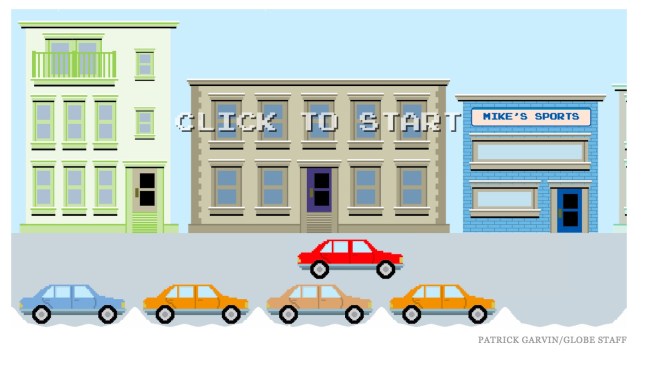
However, guest blogger, founder of the LGBTQ+ Experiment and graphics guru Pat Garvin found a way to make snow emergencies fun for readers of the Boston Globe. A few years back, Garvin built an old-school Nintendo-style game for the Globe’s website that allows users to “hustle” for a street parking spot during a snow emergency.


GarvinSnow

A screen shot of Pat’s fantastic game.

“For years, I had wanted to make some sort of game for BostonGlobe.com,” Garvin said. “I renewed my interest after some Globe colleagues and I checked out an arcade bar that had recently opened. As we played these vintage 1980s games with their unmistakable look and feel, I got the idea that I wanted to make something that recreated that feel with that same quick visual shorthand that comes from those blocky visuals. What it would be, I don’t know.”

Garvin noticed something interesting about Boston: The way in which people deal with parking in a snow emergency.

“I went to work the next day and found inspiration from a pending snowstorm,” he said. “Boston is unlike anywhere else I have lived in that many in the city use household objects to save parking spaces after a snowstorm. They can — and will — use anything: a lawn chair, a traffic cone, old tables, etc. People take the practice with a religious seriousness, and people who take parking spots that had a space saver have returned to their car to find nasty notes and in come cases, their cars vandalized. I decided to make a game allowing users to hunt for parking spots after a snowstorm, knowing they might risk the chance that if they take a spot that has been saved with a space saver, they might get their tires slashed or their window broken.”

Garvin used the names of his colleagues as inspiration for the buildings (a music critic was the namesake of a record store while a movie house was named for a movie critic.) as he used Java Script and jQuery to create the game. The purpose, he said, was to have fun and yet focus on something truly associated with Boston.

“Projects that allow me to mimic a style that I know readers and users will recognize is fun because it gives me both structure to follow and creative license to convey something in a different way,” he said. “The hidden jokes in the background are fun because they will reward the people who pay attention to detail. This is not a traditional project per se, as there are no maps, charts, or information graphics. There are few words here other than the intro and kill screens. But this project is informed by the same news judgment that would inspire a react story or a features story.”

The game borders on the ridiculously impossible, which pretty much sums up how hard it is to get a space on the streets of Boston after a snowstorm. Every time a blizzard whips up some chaos out there, Garvin’s work becomes a welcome distraction for the folks in that area.

“A lot of the stories and interviews I had seen about parking space savers was from the perspective of Bostonians who felt a right to a spot because they had shoveled the spot and felt a sense of ownership,” he said. “The reasoning and justification seemed to begin and end there. But if you have to drive through the streets and need to park, what then? What if you’re a working parent and you need to drop your child off with a relative? Or what if you are a medical professional coming to visit a diabetic patient in his home? By taking the shovelers out of the game and focusing only on the cars and the spots, I hope I got people to think about space savers from a slightly different angle.”

Think you have what it takes to get a spot? Click here to play the Globe’s snowstorm parking game.