When the marketing pitch is juuussst a bit outside (A throwback post)

In spite of what the optics suggest, my goal in life is not to write a book for every possible subject I might ever teach. In fact, I’m often on the look out for a good book for certain courses, including blogging, principles of advertising and feature writing (the one I have been using is discontinued).

So, when a company pitches an email at me about a book I’ve requested (usually through an online form or as a “standing order” in case they find something), I’m all ears. That said, here’s an email I got this morning that isn’t going to cut the muster:

Here are a couple reasons why this pitch isn’t going to work:

  1. I’m not teaching a convergent media class any time soon, nor have I taught a class in a while that might fit this bill for this book.
  2. I didn’t actually request this book, or access to it.
  3. Most importantly, if I wanted to peruse the book for any reason, I wouldn’t need a special code for this, as it’s my book.

Look! It’s got my name on the cover and everything!

I understand that publishers are in need of reaching out to sell stuff, and I’m glad that my other publisher (Focal) is doing something to try to connect people with this book. However, it does make me question their overall approach when they a) couldn’t bother to eliminate the author from the sales database and b) approach the selling like those scam texts that are “just providing you with information that you requested on this exciting opportunity!”

So, for the last Throwback Thursday before Spring Break, here’s a look back at another time where the pitch a publisher threw was juuuuuuusssssst a bit outside….


So… No, then? (or why it’s important to research your readers before you pitch to them)

I understand this blog tends to skew more toward news than some folks might appreciate, given that my entire pitch for the “Dynamics of Media Writing” is that ALL disciplines of media (news, PR, Ad, marketing etc.) can get something of value out of it. The skew is due to trying to cover both the media-writing text and the news reporting and writing text in one spot. It also also comes from the idea that a lot of things people perceive as “news” things are actually valuable for all media, including skills like interviewing, research, inverted-pyramid writing and so forth. Finally, it seems that news folks tend to make more public mistakes than do some of the other disciplines, so I get more content there. (If you want me to hit on more topics in the PR/Ad/Marketing stuff, feel free to pitch me some thoughts. I’d love to do it.)

That said, occasionally there is a specific foul up in a specific part of the field that bears some analysis. Consider that when you look at this email I got the other day. I redacted the identifiers as best I could:

Dear Professor Filak,

​Greetings from (COMPANY NAME)! ​I hope this finds you well. In the coming months, (AUTHOR NAMES) will begin to revise the twelfth edition of their introductory journalism text, (REPORTING BOOK NAME). ​This text strives to give students the knowledge and skills they need to master the nuts and bolts of news stories, as well as guidance for landing a job in an evolving journalism industry.
Right now we are seeking instructors to review the twelfth edition of (REPORTING BOOK NAME) ​a​nd provide feedback. This input is invaluable to us, ​as it ​giv​es​ us a greater sense of how to best address both instructor and student needs. ​If you are currently teaching the introductory news reporting and writing course or will be teaching the course soon, would you be interested in offering your feedback?
If you would like to review, please respond to this email and let me know if you will need a copy of the printed text. You should plan to submit your comments via TextReviews by 2/6/18. In return for your help, we would like to offer you (MONEY).
At your earliest convenience, kindly respond to this e-mail to let me know if you are available and interested in participating. ​Again, please let me know if you will need a copy of (REPORTING BOOK NAME)
I’m always happy to help people and I’m not averse to making a buck by pretending to know what I’m talking about, but this felt both awkward and ridiculous. One of the things both “Dynamics” books push a lot is the idea of making sure you know what you’re talking about before you ask a question. The books also push the idea of researching your audience members so you know how best to approach them. Either the person writing this email didn’t do that or just didn’t care.
Here’s how I know that: It’s called “Google.”
Had this person done even a basic search on me she would have learned several things:
  • I am teaching the courses they associate with this book. I teach nothing but these courses, as you can find on the UWO journalism department website. The line of “If you are currently teaching the introductory news reporting and writing course or will be teaching the course soon…” tells me I’m on a list somewhere and this is a form email at best.
  • I wrote several books, including one that is likely to be some form of competition for this book. (I’m not saying it will be as good or better or anything, but my title includes words like “news,” “reporting” and “writing,” so it’s a pretty safe bet we’re vying for the same students.) This was literally one of the top five items on the first page of my Google search. She also sent her message the same day I got this alert from Amazon:NumberOne
    (I have no idea how Amazon quantifies “#1 New Release in Journalism” but I’ll take it.)

    The point is, it wasn’t a secret, so it appeared that she didn’t look me up and was like the guy at the bar telling me, “Hey, see that babe over there? I’m totally going to score with her!” and I’m like, “Uh, dude, that’s my wife…”
    On the other hand, maybe she did look me up, found the book and asked anyway, which is like the even-worse guy at the bar who’s saying, “Hey man, your wife is pretty hot. Any chance you can give me some tips on how to score with her?”

Thinking about all of that for a moment, I did the polite thing and emailed back, explaining how I felt this would be a conflict of interest (it is), and that any advice I gave her would be likely be somewhat problematic as the author of a competing book (it is).  I also noted that I know the book she is pitching well (I do) and I know the authors well (I do), so this would also be a bit awkward for me (it really is). Here was her email back to me, which again made me think she wasn’t actually reading this:

Hi Professor Filak,

Thanks so much for letting me know. We will certainly keep you in mind for future projects!

So, again, the point of the blog isn’t to beat people up for doing things poorly but rather to offer advice on how to do things better. Here are a few basic tips:

  • Research first, then write: You don’t have to do an Ancestry.com profile on every person to whom you market or with whom you engage in outreach, but it’s not hard to Google someone. Most people put more social-media stalking effort into learning about the “new kid” at school than this person put into finding out about me. In marketing, you often have access to proprietary data as well, so you can find out if this person had any previous engagement with your organization. In my case, I used that book for more than a decade and still keep up with it, so that might have been something she could have found.
  • Personalize when possible: If you are sending out 100,000 requests for something like a survey and you are expecting a 10 percent response, you will not have the ability to personalize all of the information on everyone’s card or email. That makes sense. However, when you are microtargeting a group of people with a specific set of skills or interests and that group isn’t going to overwhelm a data center, work on personalizing your content. That line about “If you are currently teaching the introductory news reporting and writing course or will be teaching the course soon…” could have easily been tweaked to say something like, “I see you have taught writing and reporting courses at UW-Oshkosh…” and it wouldn’t have taken much. Making these minor tweaks shows that you have done your research. Engaging in some personalized communication shows your readers you care enough to see them as individuals as opposed to a wad of names on a spreadsheet.
  • Try not to screw up, but if you do, don’t ignore it: The one thing that stuck with me when I got that response email from her was that I didn’t think she figured out what she was actually asking me or why it was weird. I had that feeling that if I had written her back and said, “I’m sorry I can’t do this because I’ve just been placed in an intergalactic prison for the rest of my life for murdering a flock of Tribbles with a phaser I set to ‘kill’ instead of ‘stun,’” I would have gotten the exact same email back. The whole exchange really reminded me of this scene:
 The thing that is important to realize is that you are going into a field that has two important and scary things going for it:
  1. It’s small enough that you’re really about two degrees of separation from everyone else, so people know other people.
  2. People in the field love to talk.

If you end up screwing up because you didn’t do the first two things suggested above, don’t compound the problem.

I have no idea if I’ll ever get approached by this publisher to review anything, but I know I will always carry with me the memory of this interaction. Had it been a great interaction, that would have been good for the publisher. Unfortunately, that wasn’t the case.

An avid proponent of Pedialyte is born (A Throwback Post)

The first conversation of my morning went something like this:

Colleague: “Hey, you’re back! How are you doing?”

Me: “I’m drinking blue Pedialyte out of a rocks glass at 7:30 in the morning, so there’s that…”

The reason for my foray into the world of children’s beverages was also the reason for the blog being MIA this week: The Norovirus.

I somehow managed to contract this fun bug over the weekend and it made its presence known loudly and viciously multiple times around 1, 2 and 3 in the morning. The next three days were nothing but sleep and fear of subsequent outbursts.

I will not get graphic, but I will say that I have not been that violently ill or subsequently headache-crippled in years. If I had to put it in the Pantheon of Filak Deathspirals, it would be only below the time I got food poisoning so bad I still refuse to eat at that restaurant 20 years later and the “Free Tequila Slammer Debacle of 1992.”

My Lord and Savior, with deference to the Catholic Church, in this week of malady was Pedialyte drink and Pedialyte popsicles. This nectar of the divine gave me much needed hydration while not further angering the stomach gods. If the folks at Pedialyte ever need an endorsement, they’ve got it. (I highly recommend blue, purple and orange, although the pink popsicles aren’t bad.)

With me still on the mend and with work having overcome my desk, I thought it wise to use a Throwback Thursday to make a post and set up next week, where I will hopefully be more alert and back on solid foods.

Thus, enjoy this earlier ode to Pedialyte and its amazing marketing shift.

Sick toddlers and drunk college students unite! (Why Pedialyte’s marketing shift worked and what you can learn from the company’s approach.)

The first time I heard the word “Pedialyte,” my wife was yelling it at me.

Our daughter was less than a year old and had consumed some formula that wasn’t agreeing with her. She had started vomiting, even though she didn’t have the vomit reflex yet. Her whole head would turn red and then she’d expel some of the semi-digested crud and look up at us like, “What did you do to me?”

Amy was worried Zoe would get dehydrated and thus fall into some series of other horrifying illnesses. (We were first-time parents, so everything freaked us out. Our friends with seven kids were like, “Let her barf a bit. She’ll learn…”) Thus, I was dispatched to the closest store to get Pedialyte.

“What is this stuff?” I asked, as I struggled to understand her over the screaming child rolling about on her blanket.

“PEDIALYTE! For GOD’S SAKE. It’s (expletive) PEDIALYTE!” she screamed over the noise machine that was our child.

At first, I couldn’t find it, as I wandered around like the clueless dad I was. Still, I wasn’t leaving without “(expletive) Pedialyte,” lest I end up buried in a shallow grave in my backyard that night.

Fear of death and vomit are inspirational.

I eventually found the stuff and got home and the kid started to normalize. As she got older, Pedialyte became less important to us around the house. I would only see it in parenting magazine ads or during daytime TV shows, hawked as essentially kiddie Gatorade. The marketers had a great niche product that sold a simple idea to a key demographic: Parents who were freaked out about their vomit-plagued kids becoming brain-dead raisins.

That’s why I was amazed when I saw this article on how Pedialyte has shifted market focus to draw in a whole new generation of users: Vomit-plagued older kids, who would likely drink toxic waste if you told them it would cure a hangover.

The article notes that about three years ago, Pedialyte began targeting the “hangover market,” pitching itself as a cure for dehydration that could provide relief for those who over-imbibe. In the years before that, the “Pedialyte cure” had been passed along by word of mouth in colleges and universities across the country, so the company decided to embrace it with marketing. The company’s Twitter feed and other social media outlets focus on this premise, with images of college-aged people guzzling the beverage and tweets that respond to people asking for hangover help. It incorporated the hashtag of #notjustforbabies to brand itself as being useful for these situations.

I asked my 8 a.m. class, which usually looks like extras on “The Walking Dead,” if they ever heard of Pedialyte and at least four people woke up long enough to tell me, “Oh, yeah! That’s the hangover cure stuff!”

And it works on vomiting infants, too!

Consider the following points to help you understand why this worked for Pedialyte, when so many other shifts like this fail:

The market expansion didn’t cost the company its initial market. On far too many occasions, a company will go after a different demographic or take a different approach to grab new users in a way that undermines or degrades it original audience. When a company decides to market to a younger audience to tap the youth market, it can lose older audience members, who feel left out or abandoned.

In this case, the Pedialyte people managed to tap another demographic (hungover college-aged students/drinkers of alcoholic beverages who need hangover relief) without losing the people who initially used the product (parents of dehydrating infants and toddlers). The markets are not mutually exclusive, nor would marketing to one group make the other group uneasy. It’s not like a baby-formula manufacturer marketing its product as “the best formula for helping drug lords cut their cocaine!


The new pitch doesn’t force an identity change. Pedialyte still does what it says it does: It rehydrates people. It’s not trying to market itself now in an off-label way, like telling people they can use it to scrub rust off a car muffler or something. The identity remains the same and thus all of the characteristics and benefits of the product still apply in the marketing material. If you boil down the pitch for Pedialyte, you can simply say, “Drink this stuff because it stops you from feeling yucky when you’re dehydrated.” That’s true for infants who contracted a “tummy bug” and college students who “swear tequila never messes me up like this.”


The tone/feel for each marketing approach matches the vibe of the audience. Here is an advertisement that Pedialyte runs to target parents:

PedialyteKids

See what you have here in terms of tone and feel: Caring parent, cute kid, doctor’s recommendation, easy to use and fun flavors. It also reflects a softness with the colors, the background, the imagery and more.

Now look at the one for adults:

PedialyteHangover

A half-naked college-age guy who just woke up, clearly in pain and blinded by the light of his refrigerator. The fridge is a mess of random stuff with the only color coming from the Pedialyte bottle. The images are starker, the color scheme is darker and the fonts are more utilitarian. Even though the characteristics of the product are the same (rehydration), the benefits described are different than those outlined in those in the parenting ad (kids= easy to use, less sugar, fixes the kids after they get diarrhea; adults= stop the head pounding, fix the dry mouth, defeat the hangover).

Each piece works because it acknowledges its audience, targets the people in it and then makes a reader-appropriate pitch. The parents feel safer that they aren’t giving their kids something sugary or with too much extra non-essential stuff in it. They feel comforted that it’s the number one pediatrician-approved drink. It provides reassurances for them that they are doing a good, safe, effective thing for their children. For the hangover crowd, it’s not about doctor approval or the active ingredients that make parents feel secure in their choices. The ad essentially says, “Well, you got really messed up last night. Here’s something that will stop you from feeling like you were run over by a bus.”

The Washington Post Kills Ad Demanding Trump Fire Elon Musk

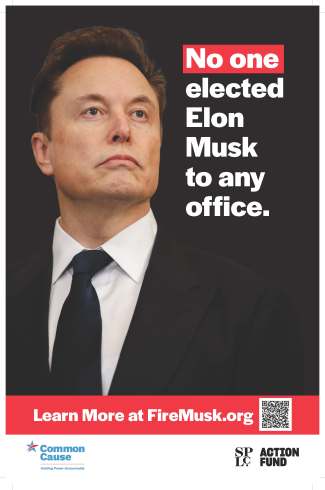
Copies of the ads the Common Cause and Southern Poverty Law Center planned to run in the Post.

THE LEAD: The Washington Post pulled an ad set to run Tuesday that called for President Donald Trump to Fire Elon Musk. Several organizations chipped in to run a wrap-around, a specialized ad approach that tends to draw a lot of attention in print publications.

Common Cause said it was told by the newspaper on Friday that the ad was being pulled. The full-page ad, known as a wraparound, would have covered the front and back pages of editions delivered to the White House, the Pentagon and Congress, and was planned in collaboration with the Southern Poverty Law Center Action Fund.

A separate, full-page ad with the same themes would have been allowed to run inside the newspaper, but the two groups chose to cancel the internal ad as well. Both ads would have cost the groups $115,000.

“We asked why they wouldn’t run the wrap when we clearly met the guidelines if they were allowing the internal ad,” said Virginia Kase Solomón, the president and chief executive of Common Cause. “They said they were not at liberty to give us a reason.”

Jeff Bezos, the owner of the Post and reason why you could drunk-order a pimple-popping ear toy online, has made several moves that indicate a general sense of deference to the Trump administration. Prior to the presidential election, Bezos ended the paper’s tradition of running an editorial endorsement of one candidate. (The unspoken but obvious reason was that the newspaper folks weren’t picking Trump.)

Bezos also was in the “tech bros row” for Trump’s inauguration, along with Mark Zuckerberg and Sam Altman. A key factor in his preferred seating was likely that Amazon had donated $1 million to Trump’s inauguration fund.

Although Bezos was not interviewed or quoted for the “ad kill story,” the Post’s PR division offered a bland response in his stead:

A Washington Post spokeswoman said in an emailed statement that the newspaper did not comment on internal decisions related to specific advertising campaigns and pointed to its publicly available general guidelines for advertising.

(If you don’t feel like downloading the Post’s ad brochure, let me just say it’s the most pedestrian thing on Earth. It also does stipulate that the Post “reserves the right to position, revise, or refuse to publish any advertisement for failure to comply with the guidelines set forth below, or for any other reason.”)


UNDERSTANDING THE LAW AND THE AD GAME: Advertising falls under the umbrella of what the government calls commercial speech, meaning it’s meant to sponsor or promote the purchase of goods and services. It hasn’t always been protected speech, and as recently as the 1940s, courts had ruled that purely commercial advertising is not protected by the First Amendment.

Court rulings since then have either eroded or eliminated that stance and have led to some basic rules in regard to how advertising can or can’t be censored. In short, if someone is trying to get you to buy something or sell something, it’s probably going to fall into the realm of advertising and the courts will engage in strict scrutiny while examining the regulation of it.

Strict scrutiny in this case basically boils down to this: the state has to prove it has a good reason to regulate the ad and that the regulation will actually accomplish the outcome the government says it will and it will do so in a reasonable, not overreaching way.


PUBLIC VERSUS PRIVATE REGULATION: The key thing to understand here is that none of that stuff applies to what the Post did. Those laws basically apply to governmental action. So, if Trump had heard about the ad and decided to force the Post NOT to run it, that’s where the legal stuff on strict scrutiny etc. would come into play. The Post is a private media entity and it has the ability to accept or deny ads for any number of reasons.

Most newspapers (and I’m assuming other media outlets I haven’t dealt with the ad end of) have basic rules about what they will or won’t accept for ads, based on what they think is important to their readers.

Obvious things that get rejected are ads for illegal products. If I wanted to run an ad in the Advance-Titan, our student newspaper at UWO, for “Dr. Vinnie’s House Of Crystal Meth and Cocaine,” I’m guessing I’d get a pretty strong rejection. Back in the day, we rejected ads for off-shored internet casinos because they had all sorts of legal problems. (That almost seems quaint now that we’ve got ESPN’s “journalists” stepping up for gambling apps and pitching parlays to their audiences.)

Other things that get rejected can be based on how the audience is likely to feel about a product or any special stipulations between the media outlet and any intervening organization. For example, a friend who used to advise the student newspaper at the University of Notre Dame once told me that the paper was forbidden from accepting alcohol ads, due to its status as the official paper of the university. I know that some publications accept ads for strip clubs, abortion services and marijuana dispensaries, regardless of the legality associated with those enterprises.

Newspapers also often have a basic “because we said so” stipulation, just like the Post did. As I was fond of saying to my staff, we could institute “Screw You Tuesday,” in which we rejected any ads that people tried to place on a Tuesday, because, well, “Screw you, that’s why.” It’s not a great way to do business, clearly, but it is legal.

DOCTOR OF PAPER HOT TAKE: First, I’d love to be in a financial position to turn down $115,000 “just because.” Have you ever seen how excited people get when they get close to that on “Wheel of Fortune?”

Second, and I can speak from experience on this, it sucks to be pinned in a corner on an ad buy like this. This group could have chosen one of a dozen major metros, but they picked the Post for a pretty good reason and it wasn’t necessarily that Trump reads it.

When I was advising the Advance-Titan, we got an offer to include a 12-page pro-life insert into our paper for about twice what we would normally charge. Like most student newspapers, we were struggling financially, so the money would have been welcome. That said, in digging into how this insert played elsewhere, we found that researchers had found legitimate concerns regarding the factual accuracy of some of the claims in the insert. Furthermore, it would put the paper in the middle of a debate we had no real interest in entering.

After the staff debated and discussed this a bit, the editor came to me and said, “How do we deal with this and not be screwed?”

“You’re screwed either way,” I told him. “If you run it, you’ll have people on the other side of the issue up in arms about it and you’ll catch the same grief as other places that ran it for the accuracy issues.”

He interrupted me. “OK, so then I won’t run it and we’re fine…”

“No,” I explained. “If you don’t run it, this organization is going to put out the Bat Signal to every media outlet that will pay attention saying that you’re pro-abortion and that you’re suppressing their speech. There will be news articles and comments and blog posts and everything else coming at you for this.”

“Like I said, you’re screwed either way. So do what you think is best, stick with it and don’t get into a war of words over it.”

He decided not to run the ad, and pretty much everything I noted above happened, but somehow worse. A press release went out, newspapers ran stories, a local talk radio guy in Milwaukee did about a half-hour on how criminal we were and all that. It eventually went away, but I think the editor doubled his smoking habit until it did.

In the Post case, Bezos clearly doesn’t need the money and he’s clearly dealing with someone who has no compunction about being vengeful when someone is perceived as disloyal, so not running this ad does make sense in that regard. The paper has that right and it can (and has) exercised it.

That said, the optics are really terrible, especially when coupled with the previous actions in regard to Trump. The Post itself will likely suffer credibility issues in general as a result of this.

When Bezos bought the Post, the prevailing thought was, “This is great, because he doesn’t need anyone’s money. He can do whatever he wants and not have to bow to the whims of the rich and powerful.”

Well, we were about half right on all of that.

DISCUSSION STARTER: If you ran the Post, what would you do with this ad? Also, what kinds of ads would you be willing to take (or reject) based on what you think about the publication, its audience and your own sense of what is fair?

Time to Dissect the Super Bowl Ads for Audience-Centricity and Interest Elements

One major tradition surrounding the Super Bowl, other than complaining that whatever it was was the worst half-time show ever, is a deep dive into the commercials. Countless ad orgs, commentators, marketing pros and other folks will spend hours upon hours making bests and worsts lists. In any given year, there will be the ads that tug on heart strings, ads that are flat out ridiculous, ads that insult at least three demographic groups and ads that leave us wondering, “OK, what the heck was that?”

Rather than go the traditional way here, let’s make some sense of the ads from the perspective of how media content is supposed to work.

  1. Define and understand your audience well enough to provide content that caters to the people in it.
  2. Use specific interest elements to pique and hold the audience members’ attention.

Here is a link to a pretty good running tally of all the ads:


Go through the ads and find the one that you like (or hate) the most and start to analyze based on the key points above:

Audience: Break down the demographics based on who tends to watch the Super Bowl, according to a reliable source you can find online. Then, see what segment of that broader chunk is most likely the target of this ad from that perspective. Then, move into the psychographic elements that you think are at the core of what the target audience members most likely ascribe to in their lives. In short, what values, feelings, connections and more is the ad you picked trying to tap into.

(As for the third element we outline in the book, it’s highly unlikely the geographic element will play a role here, but if you find something, go for it.)

Then, move into the next phase by assessing the interest elements that draw the attention of audience members:

  • Fame
  • Oddity
  • Conflict
  • Immediacy
  • Impact

As we often note, you won’t be able to catch all five of these in most cases. At least one should be present in any media content. See how many you can find and then assess if those elements are being successfully tapped.

Some of the goals of the ads will work or won’t work because the people making the ads didn’t correctly match elements like “fame” or “impact” with what the target audience knows or understands. (I bring this up, as Amy and I were watching part of the half-time show and when someone came out to sing with Kendrick Lamar, we both asked, “OK, who the heck is that?” We eventually asked our cooler, hipper sister-in-law, who was nice enough not to shame us as part of the process…)

See what you can come up with as part of this analysis, particularly if you thought any given ad really worked or really flopped.

At the very least, it’s a good excuse to watch some videos in class today.


I think I found my first tattoo, thanks to Florida Gov. Ron DeSantis: “It’s the First Amendment, stupid.”

Here is an ad at the center of Florida’s Amendment 4 situation. Like it or hate it, ads like this are protected speech.

THE LEAD: A federal judge decided that Florida officials can’t threaten TV stations for running ads they don’t like, using language that has me pondering my first tattoo:

Judge Mark Walker blasted state officials in an order issued late Thursday over a letter demanding broadcasters pull the ad, writing that its content is political speech protected by the U.S. Constitution.

“To keep it simple for the State of Florida: it’s the First Amendment, stupid,” Walker wrote in a temporary restraining order released Thursday night.


BACKGROUND: Florida Gov. Ron DeSantis and his administration had threatened broadcast stations that ran ads supporting Amendment 4, which would overturn his executive order that imposed a six-week ban on abortions.

A letter from DeSantis’ health department’s general counsel told the stations it would seek criminal charges against stations if they didn’t pull the ads in 24 hours that “spread lies” about the current ban.

John Wilson, the author of the letter, has since resigned, stating “it has become clear in recent days that I cannot join you on the road that lies before the agency.”


A BRIEF REVIEW OF THE LAW: The argument Ron DeSantis and his crew have made here is that the ads are false, so he has the right to stop them. To borrow a phrase from the judge: That’s not how this works, stupid.

In cases of false commercial advertising, the Federal Trade Commission gets involved upon complaints from the public. The truth-in-advertising laws here and the FTC’s authority relate to demonstrably false or genuinely misleading advertisements related to products, goods and services.

Therefore, when you see an ad that promises you will lose 10 pounds a day on a jelly-donut diet, without the usual small-print caveats about not eating the donuts and making sure to exercise, the FTC can threaten the organization with fines. For example, it recently settled a claim against the makers of Pyrex glass for $88,000, after the company stated many of its imported kitchen items were “made in the U.S.A.

The FTC, however, doesn’t handle political advertising and in most cases, and neither does the other group that looks into broadcast content of this nature: The Federal Communication Commission. According to its own website, the FCC neither pre-approves or reviews political advertising, nor does it “ensure the accuracy of statements that are made by candidates and issue advertisers.” In fact, the one thing it DOES do in this regard is prohibit the censorship of candidate-sponsored ads.

In short, candidates can lie if they want to. In terms of issue-oriented advertising, the First Amendment provides a wide level of protection for speech on the air waves. This article does a great job of outlining where a few guardrails do exist for the sake of cable news stations and other media outlets, in terms of stopping patently false stuff from going out on their channels.


DOCTOR OF PAPER HOT TAKE:  Given the relative randomness of jurisprudence in this country, including judges not understanding how the First Amendment and journalism tends to work, I have to say I was pleasantly surprised that a judge supported free speech in the appropriate way. Whether the ads were pro or con and whether they were true or false isn’t the point. The point is that the law exists for a reason, and when mini-despots decide to take a ham-handed whack at someone’s free speech rights, it’s nice to see those people put in their place.

That said, I’m not entirely thrilled that the law provides literally no mechanism to stop people from lying in a political campaign, nor is there really any recourse for people who are lied about to put a stop to the lying. I’m a big believer in facts, so I’d really like it if politicians told me the truth. (I’m also a big fan of having a full head of hair, but that’s not happening today either.)

Given the way AI has made it so much easier for people to manipulate everything, it’s really scary that not only can people make ads where we can’t tell the truth from fiction, but also to know that the law says the lying part is OK. The FCC is trying to get some sort of transparency law put into place that would require advertisers to disclose the use of AI in campaign ads, but it’s not here yet.

With that in mind, this puts a lot more pressure on fact-checking organizations to ferret out the truth and private sleuths to dig into potential AI fakes. It also requires more of us as citizens to do our own research when we see ads claiming that Donald Trump once killed a unicorn and that Kamala Harris hosted a Tupperware party for MS-13 members who entered the U.S. illegally.

Super Bowl Shuffled Off: The ad game for the big game is seeing big changes

THE LEAD: Even as companies continue to dump ridiculous amounts of money into Super Bowl ad spots, a recent examination of this year’s ad buys has shown a significant shift in who is doing what:

The most interesting thing we found may be who’s not advertising. Gone are the Big Four automakers – Ford, General Motors, Chrysler parent Stellantis and Toyota – which have chosen to dedicate their ad dollars to more tightly targeted marketing campaigns. Only Kia and BMW are stepping up to promote their new electric vehicles, while Volkswagen has advertising lined up to celebrate its 75th anniversary in the U.S.

Also missing this year will be GoDaddy, whose Super Bowl ads have generated buzz over the years. Its management has indicated that the company is exploring other marketing options that create more engagement for their target markets.

Instead, the majority of buys are going to food and beverage companies. The authors of this piece noted that these kinds of things tend to have a much broader appeal across an array of target markets.

In short, a wider range of people can be similarly persuaded about how good M&M’s taste or why Bud is the beer to drink, thus making a mass-market ad worthwhile for these brands.

RISKY BUSINESS: Companies take a huge risk that can amount to more than $20 million to develop, create, shoot and display a 30-second spot. Granted, the ad itself can be teased on social media, shared on YouTube and promoted through various other platforms prior to the game, so it’s no longer just a one-shot wonder.

Also, if you end up hitting a homer, it can live on forever. Just think about Apple’s 1984 ad:


Still, if you swing and miss, most of the country is watching and it can be an ugly fall from grace. This is among my all-time ad fails:

Because nothing says, “Hey, buy a car” like misogyny…

SAFETY AND VALUE IN NICHES: Like we’ve talked about before here, audience-centricity is crucial to all forms of media, and the fragmentation of audiences has led to a lot of shifts in media.

A recent demonstration that the old model of general content to a large audience is failing was the recent announcement that The Messenger would be closing after less than a year. The founders of the site planned to do something akin to a “60 Minutes” or major metro paper model, in which it was all things to all people. Clearly that’s not where media consumers are at.

This is what advertisers have known for a while and it’s being reflected in the approach to the Super Bowl ads. Rather than take one giant $20 million whack at a massive win, advertisers are diversifying among various smaller platforms, with smaller ads for smaller audiences. The idea is that with this kind of investment, they can do more with less while avoiding the big risk of a Super Bowl failure.

DOCTOR OF PAPER HOT TAKE: The Super Bowl isn’t hurting for money, so this isn’t a “Titanic is going down” kind of concern. All the ad spots were sold for the ungodly sum of $7 million well before we even knew who would be playing in the game.

That said, this is an alert that there are icebergs out there, and other ships have hit them, so it’s worth taking notice of this situation. Newspapers, which are continuing to self-immolate at the hands of hedge funds, ignored similar warnings when the internet came along. Cable and TV folks didn’t pay as much attention to streaming as they probably should have and are continuing to course correct well after the fact.

It’ll be important to watch the continuing shift moving forward, especially as things change in terms of AI and influencer culture. The one thing media folks who aren’t in advertising forgot about folks in advertising over the years is that ad folks are buying eyeballs. Their loyalty is to that principle, which means you can’t say, “Well, they’ve ALWAYS bought (time/space/impressions) so I’m sure they will again.”

MOMENT OF ZEN: My favorite Super Bowl ad of all time still remains the one for Fidelity, featuring Mr. Britney Spears (Kevin Federline) making fun of his fall from grace. To this day, when Amy or I drift into a daydream on the other, one of us will say to the other, “FEDERLINE! FRIES!” and then laugh hysterically.

Morning Blend and Blurred Lines: How a sponsored-content pitch to Black-owned businesses in Milwaukee fell flat

There is so much wrong with this pitch that I swear I heard a marketing professor’s head explode somewhere in my building…

THE LEAD: WTMJ 4 in Milwaukee apparently saw Black History Month as an opportunity to tell local Black-owned businesses they could be on TV if they agreed to hand over a fistful of C-notes:

Milwaukee’s NBC affiliate TV station stirred up some ill feelings after marketing an opportunity to local Black-owned businesses to appear on a morning program during Black History Month, but only if they were willing to pay $1,000.

WTMJ-TV sent marketing emails to several Black business owners in the area offering an opportunity to appear on “The Morning Blend,” TMJ4’s daily lifestyle program, which airs weekdays at 9 a.m.

Despite looking and acting like a local news program, “The Morning Blend” is actually a sponsored-content program and part of the larger Scripps media brand. It appears in some form or other on stations in Las Vegas, Tampa and Milwaukee, each of which Scripps owns. The sponsored-content format is not unique to Scripps, and means you basically pay to play: If you are willing to cough up some cash, you can get a five-minute spot to promote basically anything.

If you don’t believe me, here’s the back end of a segment John Oliver did on “Last Week Tonight,” in which he bought space on sponsored-content programs in three media markets to promote “The Venus Veil.”

(If you want to watch the entire segment, which outlines how this works, why it’s a huge problem and how major media lines are being blurred, you can click the link below. That said, I have to warn you that there’s a great amount of F-bombs, a weird George Clooney segment and allegations of a man engaging in sexual relations with a ham.

To be fair, he’s always been weird, but the pandemic was going on when Oliver filmed this and that really pushed ALL of us into the exponentially weirdness zone…

Watch it if you want, but I warned you.)

The station manager at WTMJ tried to explain away the controversy of honoring people by asking them to pay to be honored with the same level of specificity and success as my kid does in explaining why her room is always a disaster zone:

TMJ4’s station manager, Gregg Schraufnagel, told the Journal Sentinel that “The Morning Blend” is a lifestyle program, not part of the news division, and that it is common for content to be sponsored on the program. “That’s always been the format of the show,” he said.

“The Morning Blend” has been on the air for 18 years.

Schraufnagel declined to get into the specific details of show’s makeup, how many of its segments are sponsored, its typical practices for reaching out to possible guests, or whether the program has charged for Black History Month segments in the past. “Things are evolving all the time,” he said.

DOCTOR OF PAPER HOT TAKE: This entire situation has the comic-tragic vibe of a 1980s sit-com, in that so many things went wrong to make this as terrible as it is.

Start with sponsored content. It’s ubiquitous in the field and has been around for decades, if not longer, if you want to count things like advertorials and infomercials. Even the Milwaukee Journal-Sentinel’s own website features it. In this case, right next to the story about WTMJ’s sponsored content:

As John Oliver notes, the lines here get really blurry, particularly when it feels like news and this stuff is all of equal value. The traditional commercial breaks in news or the display advertising in newspapers and websites were much more obviously promotional when compared to this stuff. As consumers tuned out these forms of advertising, marketers looked for ways to play a game of “here comes the airplane” with consumers. The pay-to-play world of ads has essentially borrowed other storytelling formats to make this happen.

That said, to average consumers, this can feel a bit like finding out that Santa is just a guy from your dad’s work who can really rock a white beard. You get used to these trusted local figures who tell you that something is good or something is fun and you believe it. To find that the whole program would sell you a fake Nazi-era sex blanket for the right price can really shatter your world view.

The second key problem here is everything about this pitch.

  • It starts off with a weirdly stylized Black History Month logo, that I can’t find anywhere else but here. It applies the colors of the month as well, although I’d bet dollars to doughnuts that nobody who built that logo could explain what those colors actually mean.
  • I get that they’re the hosts, but the photo of Molly Fay and Tiffany Ogle just does not work with this pitch. These folks in those poses seems to say, “Check out what confident white people can do for you!”
  • The pitch for Black History Month says how important it is for Morning Blend to feature black businesses as the show wants to “promote diversity” and “foster inclusivity,” a sentiment only slightly undercut by the “but only if you have $1,000 to spare” closing paragraph.
  • The second half of the pitch is essentially the same thing they’d send to ANYBODY at ANY POINT in the year, as this is the entire proposition of sponsored content: Come here, pay us money, we’ll have a positive chat and you’ll get air time plus a video clip to promote the hell out of yourself. This isn’t tied to Black History Month alone, nor is there some sort of “Black History Month Discount” for Black-owned businesses. These businesses could do the same thing around Juneteenth Day celebrations, MLK Day or Kwanzaa if they wanted. Hell, they could do it on St. Patrick’s Day or Casimir Pulaski’s birthday if they wanted.
  • When approaching certain topics, it always pays to be much more self-aware than this. I don’t know what it’s like to be anything but me, so I have limited knowledge of how best approach topics related to race, gender and ethnicity. That’s why I usually a) reach out to people I know who have insights before I do something like this, b) try to be more specific than general when I approach topics outside my area of expertise and c) know that I have a far greater chance of failing than succeeding in a truly massive way, so I need to be really, really careful. I don’t see that here at all. In fact, I’d bet that this thing gets a one-paragraph swap out at the bottom of the first column for every target audience the marketing department pitches.

EXERCISE TIME: Find a sponsored content segment and analyze it for its approach to the topic. Look for ways in which you would approach it differently if you were a reporter and trying to present this for a true news feature story.

Tired of political ads on TV? Three reasons they’re not going away

(“I just want to warn you that when I wrote this song, I was watching TV during the 2022 midterm campaigns so…”)

Avoiding political advertising this time of year is like trying to stay dry in a hurricane: Despite your best efforts, it isn’t going to happen. Candidates, political action committees, outside organizations, issue-oriented groups and anyone else who has a bone to pick will flood your mailboxes, newspapers, inbox, digital devices, fax machines, billboards and more with a torrent of advertising geared toward shifting the vote total just a smidge more in favor of their candidate.

If you think this year is worse than most, you’re probably right. This piece from NPR outlines the way in which both major parties are pounding the heck out of us with paid speech at a cost and speed unlike any previous midterm election. It has gotten so bad that I’m practically begging my TV to show me Tom Selleck hawking a reverse mortgage or out-of-control Xentrex ads.

Anything but another frickin’ ad about the radical, unhinged, wrong-for-us, out-of-touch, elitist, self-serving, corrupt candidate that will ruin my life, destroy our country and probably get me hooked on Xentrex…

Despite a seemingly universal disdain for deluge of political ads (especially negative ones), they’re not going away for three simple reasons:

In some cases, the law says the ads must run

We might not want to see U.S. senate candidates and individuals seeking office in the U.S. House of Representatives on our TV every 16 seconds, but federal law sure does. Section 312(a)(7)  of the Federal Communications Act states that a broadcast license can be revoked if a station does not provide legally qualified candidates for federal office with access to the airwaves. The stations are required to “permit the purchase of reasonable amounts of time for use of a broadcasting  station” to reach the public.

This only covers the federal offices, which means that this only applies to people running for the positions of president, vice president, U.S. senator and U.S. representative. It also doesn’t state what accounts for a “reasonable amount” of advertising time, thereby allowing candidates to stretch the bounds of reasonability like it’s a Stretch Armstrong doll on speed…

Beyond that, Section 315 of the communications act provides what are known as equal time rules or equal time doctrine. This simply means that if a station allows one legally qualified candidate for an office access to its facilities, it must provide an equal opportunity for the other candidates for that office. So, if I’m running for Waushara County Dog Catcher and I am allowed to buy a 30-second spot on the local ABC affiliate for $500, any other legally qualified candidate for that office must be able to get the same amount of time for the same price on that station.

Now, the station can decide it doesn’t want to get involved in this nonsense, and thus make the statement that it won’t allow me, or any other candidate for that office to run ads. That’s fine. Also, the station that allowed me to run that ad doesn’t have to go looking for all the other candidates and tell them they have this opportunity. However, if one of my many fine opponents comes to ABC and wants to run a 30-second ad for $500, that station is duty-bound to do it.

Here in Wisconsin, and I’m sure we’re not alone, the broadcast outlets have been stepping forward to make the case as to why they HAVE TO run these ads. They are also explaining why they can’t censor the political ads to eliminate all the nastiness that goes into them:

Can television stations not air an ad because it is violent or has harsh language in it?

Matt Rothschild: “The Federal Communications Act of 1934 was so worried that stations were going to be censoring political candidates that they said essentially, you can’t do anything about the content except run it.”

Technically, the stations could sit out everything except for the federal races, although they often pitch the advertising for those non-federal offices as being tied to the “general public interest standards” that govern their license. Still, that’s not the main reason why broadcast stations run these things…


Political ads make serious money for the stations:

As much as the public tends to hate election season, it’s practically a lottery win for broadcasters. The law dictates that stations must charge candidates equal amounts for equal time, so they can’t charge me $500 for my Dog Catcher campaign ad and then charge my opponent $20,000 for the same type of ad. The law also dictates that political candidates must be charged the lowest rate available for advertising.

That said, they more than make up for it in total volume. Experts expect total election ad spending to hit almost $10 billion this cycle, with advertising experts foresee serious financial windfalls for broadcasters this election cycle:

Kantar Media Intelligences Inc. expects TV stations to realize some $4.2 billion in political ad revenue, though cable, digital and connected TV will also benefit from increased political outlays, according to Steve Passwaiter, Kantar’s vice president and general manager for North America.

It’s actually tough to figure out how much money actually will go into this election until everything is said and done. If you have ever bid on something through eBay, you know why: The pace can be stable and normal for the majority of the auction time, but when the last few seconds come around, everyone who is desperate to win will jump in with insane final bids and jack the total expenditure through the roof. The estimated amount spent on ads of all kinds, or even just in broadcasting ads, for this campaign season might vary widely based on who is counting, what they’re counting and when they did their projections, but they all say the same thing: People are pouring money into this like they’re trying to drown democracy with buckets full of cash.

And TV folks are bemoaning the loss of accuracy and integrity among advertisers all the way to the bank.

Still, people wouldn’t be offloading cargo ships full of Benjamins if it weren’t for the final reason the ads aren’t going away…


Political advertising works in many distinct ways:

So many people say they hate political advertising that it’s a wonder it actually exists. Then again, to be fair, so many people say that pornography is abhorrent, terrible and should never be viewed, but PornHub is in the top 10 most visited websites, with an average of almost 3 billion views a month…

In short, what we say and what we experience are usually two different things.

Researchers have found that political advertising has the ability to shape turnout, with positive ads driving higher rates of it and negative ads suppressing it. Negative advertising tends to “stick” more with potential voters, other scholars have noted, with additional researchers finding that negative framing of issues tends to motivate people.

Some analyses across multiple election cycles have found mixed overall results in terms of how much ALL ads impact voting and to what degree positive or negative ads creates specific outcomes. However, a vast swath of research shows that the more politicians beat on us with their ads, the more likely we are to do SOMETHING in relation to that race, whether we like it or not.

The one saving grace? Election Day is just two weeks away…


Maybe do a Google search before trying to sell me something? (A Throwback Thursday look at bad booksellers)

Today’s Throwback Thursday comes courtesy of an experience I had with a book rep this week. As noted earlier, I kind of got thrown into teaching Mass Com Law at the last minute, so I was working off of someone else’s book choices, class structure and so forth. About two days in, a student reached out to me with a panicked email about the e-code not working for her textbook.

I had no idea what she meant, so after about six false starts, I found out that the company who produced the book required me to set up an account with them and thus allow students to “attach” to me so they could read the book. The rep who got this done for me after a few of my own panicked emails was a nice enough guy, and he stopped by Tuesday to see how I was liking the book.

We chatted a bit about the text, the e-system and other items before the inevitable “sales question” hit for him:

Him: “So what else do you teach?”

Me: “Oh, a bunch of stuff. Writing for the media, reporting, editing, blogging…”

Him: “Hey, what book do you use for your reporting class? We’ve got a great one…”

He then went on to sing the praises of his company’s reporting book for a bit, while sitting directly across from this:

As we talked more about me needing a blogging book than a reporting book, he told me, “Oh, we don’t do stuff like that…” explaining that it doesn’t have a big enough niche to make it worthwhile.

That led to this:

Me: “Yeah, it takes a lot to make sure things are up to date for books.”

Him: “Uh huh… Books take a lot of work.”

Really?  Y’don’t say… as you are staring directly at this:

I’m not trying to pick on the guy for lack of situational awareness, but he did manage to notice at least a dozen specific bobbleheads in my collection that were RIGHT ON TOP of the things he failed to notice in those photos. Also, I’m not arrogant enough to think someone should know about me like I’m important or famous, but a simple Google search is the least you can do if you’re going somewhere to try to sell someone something.

In any case, here’s the look at the last time stuff got this socially awkward over my quest to write a textbook about everything on Earth…


So… No, then? (or why it’s important to research your readers before you pitch to them)

I understand this blog tends to skew more toward news than some folks might appreciate, given that my entire pitch for the “Dynamics of Media Writing” is that ALL disciplines of media (news, PR, Ad, marketing etc.) can get something of value out of it. The skew is due to trying to cover both the media-writing text and the news reporting and writing text in one spot. It also also comes from the idea that a lot of things people perceive as “news” things are actually valuable for all media, including skills like interviewing, research, inverted-pyramid writing and so forth. Finally, it seems that news folks tend to make more public mistakes than do some of the other disciplines, so I get more content there. (If you want me to hit on more topics in the PR/Ad/Marketing stuff, feel free to pitch me some thoughts. I’d love to do it.)

That said, occasionally there is a specific foul up in a specific part of the field that bears some analysis. Consider that when you look at this email I got the other day. I redacted the identifiers as best I could:

Dear Professor Filak,

​Greetings from (COMPANY NAME)! ​I hope this finds you well. In the coming months, (AUTHOR NAMES) will begin to revise the twelfth edition of their introductory journalism text, (REPORTING BOOK NAME). ​This text strives to give students the knowledge and skills they need to master the nuts and bolts of news stories, as well as guidance for landing a job in an evolving journalism industry.
Right now we are seeking instructors to review the twelfth edition of (REPORTING BOOK NAME) ​a​nd provide feedback. This input is invaluable to us, ​as it ​giv​es​ us a greater sense of how to best address both instructor and student needs. ​If you are currently teaching the introductory news reporting and writing course or will be teaching the course soon, would you be interested in offering your feedback?
If you would like to review, please respond to this email and let me know if you will need a copy of the printed text. You should plan to submit your comments via TextReviews by 2/6/18. In return for your help, we would like to offer you (MONEY).
At your earliest convenience, kindly respond to this e-mail to let me know if you are available and interested in participating. ​Again, please let me know if you will need a copy of (REPORTING BOOK NAME)
I’m always happy to help people and I’m not averse to making a buck by pretending to know what I’m talking about, but this felt both awkward and ridiculous. One of the things both “Dynamics” books push a lot is the idea of making sure you know what you’re talking about before you ask a question. The books also push the idea of researching your audience members so you know how best to approach them. Either the person writing this email didn’t do that or just didn’t care.
Here’s how I know that: It’s called “Google.”
Had this person done even a basic search on me she would have learned several things:
  • I am teaching the courses they associate with this book. I teach nothing but these courses, as you can find on the UWO journalism department website. The line of “If you are currently teaching the introductory news reporting and writing course or will be teaching the course soon…” tells me I’m on a list somewhere and this is a form email at best.


  • I wrote several books, including one that is likely to be some form of competition for this book. (I’m not saying it will be as good or better or anything, but my title includes words like “news,” “reporting” and “writing,” so it’s a pretty safe bet we’re vying for the same students.) This was literally one of the top five items on the first page of my Google search. She also sent her message the same day I got this alert from Amazon:
  • NumberOne
(I have no idea how Amazon quantifies “#1 New Release in Journalism” but I’ll take it.)

The point is, it wasn’t a secret, so it appeared that she didn’t look me up and was like the guy at the bar telling me, “Hey, see that babe over there? I’m totally going to score with her!” and I’m like, “Uh, dude, that’s my wife…”
On the other hand, maybe she did look me up, found the book and asked anyway, which is like the even-worse guy at the bar who’s saying, “Hey man, your wife is pretty hot. Any chance you can give me some tips on how to score with her?”

Thinking about all of that for a moment, I did the polite thing and emailed back, explaining how I felt this would be a conflict of interest (it is), and that any advice I gave her would be likely be somewhat problematic as the author of a competing book (it is).  I also noted that I know the book she is pitching well (I do) and I know the authors well (I do), so this would also be a bit awkward for me (it really is). Here was her email back to me, which again made me think she wasn’t actually reading this:

Hi Professor Filak,

Thanks so much for letting me know. We will certainly keep you in mind for future projects!

So, again, the point of the blog isn’t to beat people up for doing things poorly but rather to offer advice on how to do things better. Here are a few basic tips:

  • Research first, then write: You don’t have to do an Ancestry.com profile on every person to whom you market or with whom you engage in outreach, but it’s not hard to Google someone. Most people put more social-media stalking effort into learning about the “new kid” at school than this person put into finding out about me. In marketing, you often have access to proprietary data as well, so you can find out if this person had any previous engagement with your organization. In my case, I used that book for more than a decade and still keep up with it, so that might have been something she could have found.
  • Personalize when possible: If you are sending out 100,000 requests for something like a survey and you are expecting a 10 percent response, you will not have the ability to personalize all of the information on everyone’s card or email. That makes sense. However, when you are microtargeting a group of people with a specific set of skills or interests and that group isn’t going to overwhelm a data center, work on personalizing your content. That line about “If you are currently teaching the introductory news reporting and writing course or will be teaching the course soon…” could have easily been tweaked to say something like, “I see you have taught writing and reporting courses at UW-Oshkosh…” and it wouldn’t have taken much. Making these minor tweaks shows that you have done your research. Engaging in some personalized communication shows your readers you care enough to see them as individuals as opposed to a wad of names on a spreadsheet.
  • Try not to screw up, but if you do, don’t ignore it: The one thing that stuck with me when I got that response email from her was that I didn’t think she figured out what she was actually asking me or why it was weird. I had that feeling that if I had written her back and said, “I’m sorry I can’t do this because I’ve just been placed in an intergalactic prison for the rest of my life for murdering a flock of Tribbles with a phaser I set to ‘kill’ instead of ‘stun,’” I would have gotten the exact same email back. The whole exchange really reminded me of this scene:
 The thing that is important to realize is that you are going into a field that has two important and scary things going for it:
  1. It’s small enough that you’re really about two degrees of separation from everyone else, so people know other people.
  2. People in the field love to talk.

If you end up screwing up because you didn’t do the first two things suggested above, don’t compound the problem.

I have no idea if I’ll ever get approached by this publisher to review anything, but I know I will always carry with me the memory of this interaction. Had it been a great interaction, that would have been good for the publisher. Unfortunately, that wasn’t the case.

Aaron Rodgers, COVID-19 and the tale of three advertisers

Green Bay Packers quarterback Aaron Rodgers tested positive for COVID-19 last week, a revelation that had media folks scrambling on multiple fronts. First, the news and sports journalists were trying to figure out exactly how that happened, give Rodgers’ statement back in August that he was “immunized.” Then, the advertising media had to make some choices about what to say or do in regard to this revelation.

On the news front, a video from August regarding Rodgers and his immunization status began circulating.

In addition, Rodgers went on the Pat McAfee podcast show and, to put it as neutrally as possible, covered a wide array of topics. He stated his decision was connected to the teachings of the Rev. Martin Luther King, Jr.  He stated that he worried about what the vaccine might do to his fertility. He pulled out the “my body, my choice” argument, blaming a “woke mob” and “cancel culture” for his current predicament.

He also explained how, despite having an NFL-grade medical staff that could practically turn any player into a cyborg after entering the “blue tent,” Rodgers turned to a more trusted medical authority for his health, namely podcaster Joe Rogan:

Rodgers also said he spoke with Rogan about treating COVID-19 after testing positive for the virus earlier this week.

“I’ve been doing a lot of the stuff that he recommended, in his podcasts and on the phone to me,” Rodgers said. “I’ve been taking monoclonal antibodies, ivermectin, zinc, vitamin C, D, and HCQ [hydroxychloroquine]… And I feel pretty incredible.”

Ivermectin is an anti-parasitic drug championed by vaccine skeptics that has not been approved for use to treat COVID-19 by the Food and Drug Administration or the Centers for Disease Control and Prevention.

I can’t speak for any other part of the world, but here in Wisconsin, this has been all anyone has talked about. President Joe Biden could have reversed climate change, solved world hunger, developed a cure for every disease on earth and rescued six kittens from a hurricane this week and up here it would still be, “Joe Biden has gotten a couple things done this week, but OUR TOP STORY is: Will Aaron Rodgers be out for TWO games due to COVID?”

As fun as it would be to poke at all of this from a news perspective, its the second issue we raised earlier that will be at the core of the post: What were advertisers tied to A-Rodg doing in the wake of his COVID revelations and how much sense did it make?

One of the easiest calls was from Prevea Health, a Wisconsin-based medical company, which quickly cut ties with the QB:

Another local company, Bergstrom Automotive, continued to run advertising featuring Rodgers throughout Sunday’s NFL coverage, including the Packer game.

This is a shot of the Bergstrom ad talking about hearing “no” and how at Bergstrom, it’s great because of “no haggling” and apparently, “no worries.” The irony here is a bit thick, even for me.

On a national level, the key ads of interest came from State Farm Insurance, which has been running a campaign featuring Rodgers and his supposed-to-be-on-field-foe-this-week Patrick Mahomes. The running gag of the “Rodgers Rate” versus the “Patrick Price” has included Mahomes as a “typical sneakerhead” and Rodgers as an “aspiring singer song-writer.” Both ads ran during the games, although the mix seemed to heavily lean toward Mahomes.

As of this posting, the insurance company hasn’t made any definitive statement about its relationship with Rodgers, other than to say it wasn’t going to comment about his COVID situation.

So let’s break down what makes sense and why in regard to these choices:

The reason most places pick someone to be a spokes person for that organization is because the person represents something the brand wants to represent. If you’re doing ads for a tough, rugged brand of clothing, you probably want to pick bull riders or construction workers. If you want to do ads for something dainty and elegant, you want to go with twig-sized super models.

Prevea dumping Rodgers was as easy of a call as it was for Kansas City to dial up every blitz on earth to freak out Rodgers’ replacement, Jordan Love. This is a healthcare organization that is impressing upon everyone to get vaccinated. The fact Rodgers misled people as to his vaccination status was bad for the brand, as was his decision to take medical advice that involved a horse-deworming medication. Keeping him on board for any reason doesn’t not fit with the healthcare brand.

Conversely, I imagine I’ll still be seeing a lot of Aaron Rodgers on Bergstrom Automotive ads around here. First, his COVID status doesn’t impact the brand. An automotive sales organization doesn’t have to take a stand on this issue, so kind of letting this ride doesn’t undermine the brand.

Second, a lot of folks in this more conservative portion of the state will likely thing BETTER of him for his decision to push back against rules “trying to out and shame people.” Michael Jordan once famously noted that “Republicans buy sneakers, too,” a comment he later clarified as being in jest, but he stood by the principle in terms of not pushing in one direction or the other politically. Bergstrom is kind of over a barrel here in that regard: Keep Rodgers and tick off people who think he lied and is a medical whack job. Fire Rodgers and tick off people who aren’t all-in on vaccine mandates. Right now sitting still and quiet is probably the best move here.

State Farm is the one oddball here, in that it’s an insurance company selling products that protect the autos, homes, health and lives of its members. In one sense, the current campaign is about how cost-effective the product is, regardless of who you are. The “Rodgers Rate” and “Patrick Price” ads focus on value more than anything else, so it’s not like they have Rodgers taking COVID shots in the ads, only to have accidentally duped the audience.

That said, having something based on protection keeping someone on the payroll who got COVID after skipping out on what medical professionals call the best protection against the virus could seem incongruent at best.

Watching what happens over the next several weeks should be interesting in regard to Rodgers. As one former coach used to say, “You’re only as smart as your won-loss record,” so this could be a situation where a deep playoff run could turn this into a “misunderstanding regarding Aaron’s vaccination status.” If he ends up blowing out a knee or something, someone will find a way to make some “off to the glue factory, horse-pill boy” memes as the team “looks forward to the Jordan Love era.”


The Avocado Pig and the value of oddity in journalism

In both books, we talk about the FOCII elements of interest: Fame, Oddity, Conflict, Impact and Immediacy. As far as the elements go, we tend to pay a lot of attention to certain ones, and less to others. Conflict, fame and immediacy tend to be at the front of the list, with impact almost being a requirement, based on audience-centricity.

Oddity, is well… the odd element out.

In the past two months, however, I’ve come to appreciate and value the importance of things that are out of the ordinary, thanks in large part to what we have come to call the Avocado Pig.

To make a long story longer than it needs to be, when we moved to the farm, we found out that we didn’t have trash service and that we’d have to haul our own mess to the dump. Amy didn’t want her car to be a filth magnet and I wasn’t about to put rotting crud in the back of our Highlander, so we set about looking for a beater pickup truck to do the deed.

After months of searching in advance of the move, I found one truck that tickled my fancy: A 1975 Ford F-150 super cab. It had everything I wanted: It had a large bed, so I could move a lot of stuff if I needed to. It had a cap on it so the bed wouldn’t fill with snow. It had a “back seat” (and yes, that deserves to be in quotes, given what that actually entails) so I could fit extra stuff or extra kids in there if I got called at the last minute to do after-school pick up. And, it was an older Ford, so I knew how to fix most problems on it, based on my Mustang adventures.

The thing came out of North Dakota, a state that apparently doesn’t use salt on its roads during the winter, so it had almost no rot or rust on it. The guy selling it was doing it as a favor for a friend, so it was reasonably priced and he was happy to tune it up at his automotive business before I bought it. It also didn’t hurt that it was the least amount of money I had spent on vehicle ever.

With all of this going for it, why did it sit on this guy’s car lot for multiple months, you might ask. Well, it screams “1970s” louder than a polyester plaid leisure suit with a John Holmes porn mustache, wearing stack boots:

It’s not only painted 1970s avocado green on the outside, but on the inside panels as well. The dash, the seats and the glove box are all avocado green. The flooring is the same color, done in beautiful shag carpeting to boot. It’s got an AM only radio, making it almost impossible to find anything other than talk radio or polka for in-cab entertainment. It also has a CB radio.

(If you don’t know what that is, ask your parents. Chances are, they will spend the next 20 minutes telling you about some sort of trucker story and explaining why they used something like “Foxy LaRue” as their CB handle.)

This thing is the vehicular equivalent of the uncle who shows up at your wedding in the same ruffled tux he wore to his wedding 30 years ago and proceeds to hit on every bridesmaid in the wedding party.

I didn’t care. It started, ran and hauled stuff. I was able to fix several problems on it for about 10% of what it would cost to hire someone. Also, and it becomes clear if you’ve ever seen how I dress, I could give a crap less about being fashionable or trendy.

As is the tradition in our house, we sought a name for this vehicle, eventually settling on “The Avocado Pig.” Why?  First, it’s avocado green, so that was a given. Second, it’s a fuel pig, in that it has a 390 engine and two gas tanks that need constant refilling, due to its gas-guzzling nature.

It was the kind of vehicle only I could love, or at least that’s what I thought. Turns out, people have some sort of weird fixation with this truck.

It started about a day after I bought it and drove it to my parents’ house in Milwaukee. I was putting stuff into it while it was sitting on the street when I noticed a police cruiser pass. It pulled a U turn and sidled up next to the truck and I thought, “Oh crap…”

“Is that your truck?” one officer asked.

“Yes, sir.”

“What year?”

“1975.”

“That is the coolest thing I’ve ever seen. I told my partner we had to swing around to take another look.”

“Thank you…?”

He left and I was just happy I hadn’t violated Milwaukee’s arcane parking laws somehow.

About a week later, we moved into the farm house and I had it parked out back. A truck pulled into our driveway and someone was banging on the back door. I was elsewhere in the house, so Amy answered the door and was faced with someone who had known the previous owner. We figured this would happen, as the guy lived here for 54 years, but the reason these people stopped had nothing to do with the guy.

“They wanted to know if you were selling the truck,” Amy said with a tone that mixed exasperation and bewilderment. “What the hell is wrong with these people?”

Apparently, if they suffered from some sort of avocado fetish, they weren’t alone. Over the next two weeks, I couldn’t go to the grocery store, the dump or a hardware store without at least one person asking about the truck, including at least one offer to buy it on the spot.

On the way home from work one day, I was at a stoplight, when someone coming through the intersection on my left pulled over on the median. He got out of his vehicle and pointed at me before doing the “Wayne’s World” thing of “We’re not worthy.” He then got back in his brand new truck and drove off.

Later that week, another guy in a truck that Amy said looked like a pimped out UFO showed up while I was at work and asked if he could buy the truck.

At a certain point, this feels like either I’m making this up or that we’re in the theater of the absurd, but I can assure you I’m not good enough at fiction to pull this off as some sort of metaphor. Even more, I had the truck at work a week or two ago and came out to find this note, written on the back of a “WalPhed” box, stuck under my windshield wiper:

I completely understand why people ogle other people’s vehicles. I’ve practically gotten whiplash looking at vintage vehicles and screaming sports cars on the road. But of all the vehicles I’ve owned or driven… the Avocado Pig? Really? The Firebird, the classic Mustang, the Buick Grand National… sure. I also had a 1966 F250 camper edition for truck fans, but nobody seemed to have this level of fascination with it. I’ve been behind the wheel of a vintage Corvette, a Cadillac sedan and even an Escalade or two. Never even got half of a conversation or a cash offer.

What was it about this 45-year-old eyesore that got people into such a lather?

Amy nailed it. “When was the last time you saw something like this on the road? People love weird shit.”

And if we’re measuring weird, the Avocado Pig has it in spades.

So, after that extensive build up that was, as promised, longer than it needed to be, what does this mean to you?

If you want to draw attention to your work, you need to find things that make it unique in a truly distinctive way.

ADVERTISING: Bad advertising tries to get people to pay attention to it through hype, calling things the “fastest” or the “cleanest” or the “richest” or the “cheapest” or whatever “-est” you can manage to stick in there. The intent is to highlight oddity, but all it does is bore people.

Instead of “-est”ing me to death, look for exactly WHAT makes some something faster or better or stronger or whatever in regard to that product. The oddity of this product or good or service is likely right in front of you. Find the characteristic in the product that is special and then tie it directly to the benefit the users can get out of it.

NO: “Filak’s wet wipes are the strongest protection you can get against the coronavirus!”

YES: “Filak’s wet wipes are the only wipes on the market with Plutoxin-7, which means they kill the coronavirus as soon as it lands on any surface that was cleaned within the past 24 hours.”


PUBLIC RELATIONS: When you are planning an event or attempting to garner media coverage of something, focus on what makes this situation different from the other 912 things you’ve sent me a press release about in the past month. At a certain point, much like we do with “-est” advertising, we’re going to tune you out the minute we see your letterhead or email address.

The key thing in public relations that tends to get missed in this regard is that PR professionals know what their clients are doing and have a sense of why those actions matter. Because they tend to internalize this, it’s like reporters who become too attuned to “inside baseball” on their beats. In short, the practitioners KNOW the value, so they can’t believe that the reporters can’t see it, too.

What helps is taking that extra step and outlining the “this matters because” step for the reporters. Don’t assume they see the unique element of what you’re doing or the key value in what it is that you’re pitching. Instead, take them by the hand and show it to them by saying, “Look how neat this is!”

NO: Comedian and world traveler Bill Jones will speak at Central College on Friday as part of the school’s “Never Give Up” motivational program.

YES: “Bill Jones, the only man to ever eat an entire elephant in 24 hours, will deliver his “One Bite At A Time” comedy routine at Central College on Friday as part of the school’s motivational program.


NEWS: News folks have no problem looking for weird things. It’s why we’ve had “News of the Weird” as a syndicated column for years and why local radio shows play their “Small Town Crime Wave” stuff to the delight of morning-show listeners. That is usually where we find oddity to start and stop.

In short, if it involves a man from Florida, requires a firefighter to note “please don’t use a blowtorch to kill spiders,” or includes the phrase “priest’s three-way with dominatrices,” we’re pretty much clear it’s going to go viral. (If all three of those topics converged, I’m pretty sure we’d break the internet for good…)

However, oddity isn’t just about those items. It’s about focusing on firsts, lasts and onlies, so don’t be afraid to start asking questions like, “When was the last time X occurred?” This sense of wonder can turn an interesting story about a sports triumph into a bigger piece involving certain rarities. It can push you to look for things like what was the longest we had to wait to figure out who was president? Or when was the last time a bishop had to burn an altar that had been desecrated?  Or what was the fastest amount of time it took for someone to drive the cross-country “Cannonball Run?” (That last one is a heck of a story.)

Or even, “How many 1975 Ford F-150 Supercab trucks came in avocado green?”