You are always in the public eye, so it pays to keep that in mind (a.k.a. we used to call it the World Wide Web for a reason)

This ensemble is from the “Dress to fire people” line…

THE LEAD (Part I): Being a social media influencer can take a lot of work, but multitasking between firing people as part of the Office of Personnel Management and showcasing clothing options that collectively cost more than my first car tends to lead to problems:

On the day O.P.M. sent a memo to all federal department and agency heads asking for lists of underperforming employees to terminate, she flaunted a “work look” that included a purple skirt that her followers could also purchase, retailing at $475. She would get a commission if they used her link.

The spokeswoman, McLaurine Pinover, is not the only member of the Trump administration to have used her federal office to promote outside business interests, but former agency officials and ethics watchdogs say that the timing and content of the videos were both unlawful and especially tone-deaf.


I wonder how they tracked her down after she scribble out her… Oh… Yeah…

THE LEAD (Part II): Being a racist jerk tends to lead to a lot of backlash, particularly when you leave enough clues for people to find you.

On March 2, Stephanie Lovins, while dining at Cazuelas Mexican Cantina in Columbus, Ohio, left a message for Ricardo, a U.S. citizen serving her.

In the signature section of her receipt, Lovins wrote: “I hope Trump deports you,” followed by “Zero. You suck.” The incident occurred after Lovins grew upset over the restaurant’s “one coupon per table” policy.

A restaurant employee who found the receipt shared a photo on social media, and it quickly went viral, provoking widespread condemnation and calls for Lovins’ termination.


DIGITALLY DUMB: In both cases, the people involved tried to wiggle their way out of this situation. In Pinover’s case, she did the “Ugh… like, why are you making such a big deal about this?” thing, arguing that she didn’t make any money and trying to garner sympathy for her influencer attempts:

In a statement, Ms. Pinover said she never made any money from the fashion videos.

“While I was battling breast cancer as a new mom, I felt so unlike myself. I turned to social media shortly after as a personal outlet,” she wrote. “I never made any income and with only about 800 followers, I’m surprised the so-called ‘newspaper of record’ finds this newsworthy. My focus remains on serving the American people at O.P.M.”


In the case of Lovins, she went with what I call the “Shaggy Defense” when confronted:

Lovins initially denied any involvement, claiming on social media that her credit card had been lost or stolen and that someone else had used it.

“My credit card was lost/stolen, and someone attempted to use it. Thanks for the notifications! This has been reported through my bank,” she wrote on Facebook.

“Thank you for all the recent notifications of scammers and profile hackers! I recently discovered a lost/missing credit card and an attempted use/purchase. I appreciate your patience while I manage the situation,” she wrote in a post on LinkedIn….

However, this was discovered to be a false statement after the restaurant reviewed CCTV footage and confirmed that she was inside the restaurant, leading to her termination.


DOCTOR OF PAPER FLASHBACK: Two things came to mind in reading these stories. First, it was the idea that anything we do nowadays is private is almost quaint, but particularly so when you actively jump online.

I remember in the early ’00s when I had a student who wrote a blog post/diatribe about a conservative student on our campus. When that conservative kid saw the post, she put out the Bat Signal to conservative websites and media outlets, thus leading to this exchange between me and my student:

HER: This isn’t fair! I’m getting attacked by all these people who she shared the piece with.

ME: What do you mean it’s not fair? You published a hit piece on her, so she’s telling people to tell you what they think about it.

HER: But that wasn’t supposed to be for her! It was only for my friends! It was supposed to be private!

ME: What part of the “WORLD WIDE WEB” do you not understand?

Second, I had a similar situation where we were going to launch the reporting book and the folks at Sage wanted me to do a whole new social media profile:

ME: I’ve got a Twitter account and I’ve got a ton of followers already. Why should I delete that and do a different one?

EDITOR: Vince, do you remember what you ate for lunch yesterday?

ME: Um… No…

EDITOR: How about last week Tuesday?

ME: Not a clue…

EDITOR: Right. So you’ve been on Twitter for about 10 years at this point… How many of those tweets are things you remember well and are totally proud of?

ME: (Quietly setting fire to every digital account and device I ever owned…)

To be fair, I’m sure I wasn’t asking for money or to deport a server, but I was extremely upset about the Cubs stealing the 2016 World Series from my Cleveland squad, so I’m sure I didn’t cover myself in glory there…


BLOG FLASHBACK: We’ve had a number of these cases in which people behaving badly ended up getting shared online, leading to terrible outcomes.

There was the college student who didn’t think anyone would share her “Finsta” tirade about Black people. We also had the kid at UW-Madison, who apparently thought her “private thoughts” on forcing the ghosts of Black people to “pick cotton”   wasn’t going to go viral. Then, there was the kid who had a swastika flag and a whiteboard full of slurs getting outed at UW-Oshkosh.

I’m sure there were more, but I started getting depressed, so let’s just leave it at those and say these are not rare occurrences.


WHY YOU SHOULD CARE: Given that the sheer tonnage of time people spend online each day could stun a team of oxen in its tracks, there are a couple key takeaways for folks that bear repeating:

Nothing is “just” anything anymore: If you’re thinking you “just” sent that photo to a friend or you “just” made that less-than-savory joke to your private Facebook friends or you “just” acted like a dipstick in public once, welcome to your reality check.

Dad used to tell me stories about guys at work who would tell off-color jokes or poke fun at each other in ways that boggle my mind. I don’t know if it’s so much that these things were terrible or if now I’m just so attuned to the crap storm that could come from those jokes or putdowns that freak me out.

I like to think that it’s half of a piece of each, in that more people had thicker skin while fewer people were perpetually offended and that we have evolved to prevent some truly unsavory behavior in the work environment.

Either way, we are clearly beyond getting free passes in life with the justification of, “C’mon, it was just…”


Everything is public: I don’t like that everything I do is public these days or that someone could decide, “Hey, it’s F— with Filak Time!” and look for a McDonald’s receipt I was writing stupid crap on back in 1998 or something.  However, that’s the field I’m in and that’s the reality of our surroundings.

You can avoid a lot of this by not being online as much or not sharing as much stuff online, but for digital natives, media operatives and anyone under the age of 60 who wants to remain part of broader society, that’s a tough ask.

This is why paranoia is my best friend, why I try to count to 10 before I write anything out of anger and I always imagine the headline in the Advance-Titan of “UWO professor suspended for (Dumb thing I’m thinking about doing)” before I do anything.

It doesn’t solve everything, but it does tend to keep me more centered than I would otherwise be.


Know the rules: This more applies to the first case, as opposed to the second one, although understanding “one coupon per table” before losing your mind on a server has a tangential connection here.

When social media first emerged, a lot of people running organizations were in their 50s and 60s and they knew two things about it: 1) They didn’t know what it was or how it worked and 2) They wanted to use it somehow for the betterment of their organization.

Thus, they tended to turn to young people who had grown up a bit with this and really didn’t give them any major rules. It was like the Wild West, although I’d argue you could probably do more damage with one tweet than you could with a trusty six-shooter back in the day.

Once things started to go haywire, due to missteps by the posters or generally not paying attention well enough to the hashtags involved in other posts, the leaders at those places started putting some basic rules in place. By now, most places have a pretty solid rule book on what people can and can’t do on social media, which includes where and when they can or can’t do it.

One of the things most organizations (and the cops who tend to pull Amy over) say is, “Not knowing the rules is no excuse for not following them.” This is why it’s important, upon getting a new job, to know what it is that you can and can’t do, especially in terms of your outward-facing presence.

I know there are things I can’t put up in my office (political endorsement signs) and things that probably could get me in trouble if they upset people (Vintage Cleveland Baseball nodders come to mind). There are also things that are a little more nebulous, like, “What is the rule of the thumb on using my computer to blog like this?”

Long story short, it pays to know what the rules are before they become problematic. And it also pays not to be a racist ass-hat, even if you don’t think people will call you out for it.


When asked about his feelings on using “when asked” in a story, this professor had this to say! (A Throwback Post)

As we moved into the lectures on quotes and paraphrases, an ugly trend in student writing returned: The use of “when asked” to set up quotes.

This might be one more of my “old man yells at cloud” moments, but I’m battling back ferociously against allowing this to creep into their writing. I try to explain grammar or use humor to break this down for them, often noting, “Could you imagine if the sources just ran up to you and started filling you in on a story when they WEREN’T asked? No? So, why are you telling me they did it when they were asked?”

If you are having similar problems with the “when asked” phenomenon, below is a throwback post that looks at the reasons this approach is stupid and how to fix it.

——

Why “when asked” is the dumbest thing you can write and ways to avoid using it

(Are you the most important thing in the story? Probably not. So stop telling me you asked people stuff…)

One of the weaker writing trends that’s been popping up in a lot of writing lately has been the use of “when asked” as part of a lead-in to a quote, or in some cases, as part of a quote:

When asked if he supported the bill, the mayor said, “Not this stupid version.”

When asked about the how best to improve relations between the university and the town, the chancellor said, “We need to work together on this.”

When asked if New York Gov. Andrew Cuomo should resign amid allegations of sexual harassment, President Joe Biden had this to say.

Here’s What Alex Rodriguez Said When Asked If He Was Single Amid Jennifer Lopez Relationship Drama

This is dumb for about a dozen reasons, but here are a few that might matter to you as a journalist:

  1. It’s passive voice: “When asked” implies “by someone,” which means you’re introducing the quote from a weak grammatical position.
  2. It’s first person: “When asked by… ME! LOOK! I ASKED A QUESTION!” Are we that thirsty that we need to mention that we had the temerity to ask a guy at the fair how the corn dogs were this year?
  3. It’s a “No duh” moment: Of COURSE they said it when they were asked. Isn’t that how this normally works in life? Think about how weirded out you’d be if some random stranger just ran up to you and said, “Hey, I just wanted to tell you and all the readers of whatever story that you’ll be publishing that the corn dogs at this fair are FRICKIN’ AMAZING!” I don’t know about you, but I’d be backing away slowly or reaching for some pepper spray.

In the examples above, we have a few other problems as well:

  1. The setup incorporates lousy quoted material: In the first two versions, you get really bad quotes that don’t do a lot for the piece or for the reader. Neither of those quotes add value or quality in a complete quote kind of way. The chancellor quote is lame, while the mayor quote isn’t a full sentence. You can actually make these better through the use of either straight paraphrase or a partial quote:
    1. Mayor Jane Smith said she sees value in a voting-security bill but “not this stupid version,” which would require citizens to cite the pledge of allegiance backwards before casting a ballot.
    2. North Texarkansas State University and the city will continue to clash over parking restrictions unless the city council and the college can work together to resolve ticketing protocols, Chancellor Arlene Selridge said Tuesday.
  2. The set up tells me that you’re going to tell me something: In the latter two, you have actual examples of journalists telling us that they’re going to tell us something. In the Cuomo example, the build up to what the president had to say is the bulk of what’s going on in the sentence. It then leaves us with a “commercial cliffhanger” for that second paragraph. In the A-Rod/J-Lo one, we don’t even get the decency of a full chunk of information as to what that “drama” entails.Think about it like this: If your professor walked into the classroom and said, “I have graded your midterms.” Would that be the ONLY thing you’d want to know? Probably not. Then imagine the professor saying, “I have graded your midterms. When asked by my wife how well people did, here’s what I had to say!” Is it getting any better or are you thinking, “Can I use The Force to pull mine out of the pile or an X-power to read his mind and just get my damn grade?”

The reason that paraphrase-quote works well is because each chunk of that structure has a job: The paraphrase tells you something important that will get you deeper into the piece. The quote then provides flavor, color and “sparkle” to that topic of interest while not repeating what you already know.

“When asked” takes away the best parts of both of those elements.

At least, that’s what I’d say if I were asked…

Whether you agree or disagree with Mahmoud Khalil, you need to watch his case

THE LEAD: Mahmoud Khalil, a graduate student at Columbia University and a legal U.S. resident, was picked up in an ICE raid Saturday and faces deportation. Khalil was a leading voice in the Palestine protests on the university’s campus last spring.

Khalil was detained Saturday night as he and his wife were returning to their Columbia University-owned apartment in upper Manhattan by officials from the U.S. Department of Homeland Security.

The agents told the couple that Khalil was being detained because his student visa had been revoked.

When his wife provided documents proving he was a green card holder, the agents said that was also being revoked and took him away in handcuffs, according to a lawsuit Khalil’s attorneys filed challenging his detention.

President Donald Trump discussed the matter in a social media post in which he supported the arrest and potential deportation, calling Khalil a “terrorist sympathizer” for his stand on the Palestine situation.

Secretary of State Marco Rubio concurred, saying Khalil’s protest actions were “aligned with Hamas” and thus it was acceptable to revoke his green card (and his marriage to a U.S. citizen, I guess) and deport him.

A court held up his deportation and his lawyers will be arguing Wednesday that he’s essentially being punished for exercising free speech.


DOCTOR OF PAPER FLASHBACK: We talked about the issues related to protests last year when a number of campuses were dealing with upheaval and cracking down on students who peaceably assembled. As we noted back then, you can’t just support free speech when it’s speech you like. The same is essentially true for all of the other aspects of the First Amendment.

In other words, if you’re cool with people standing up for Side A of an issue, you have to be cool with people standing up for Side B of that issue. As long as the protests and speech don’t run afoul of what the law has already stated as being out of bounds (fighting words, child porn etc.), the Bill of Rights protects those actions.


WHY YOU SHOULD CARE: You could easily make an argument that this is one guy, speaking out on a topic in a way that a lot of people don’t like, so it shouldn’t really matter.

You could make that argument and it would be both dead wrong and dangerous.

The actions here underlie a broader set of concerns for anyone who supports free expression. Earlier in March, the president noted he would crack down on colleges and universities that allowed for “illegal protests” to persist. It wasn’t clear what made something an “illegal protest” in the eyes of this administration, but I imagine that the translation would be “anything the president doesn’t like.”

Anyone who has an opinion about anything should probably be concerned about this approach, even if you disagree with everything Khalil stands for. Without legal protections for expression, it could be just a matter of time before whatever you think is worth talking about could land you in prison under some sort of trumped up charge.


DOCTOR OF PAPER HOT TAKE: Again, I don’t like a lot of speech or protests, and I’m pretty sure I wouldn’t agree with most of what Khalil has to say. That’s not the point of sticking up for his rights.

The law has long held that the government can’t suppress speech it doesn’t like, but it seems like we’re living in some sort of parallel universe right now where the government tends to do something beyond the pale and ask questions later. The Elon Musk line about how the administration will “make mistakes” but fix them up once they realize they made a mistake is a bad idea in general, but it’s even worse when it come to the inalienable rights associated with our country’s founding.

If the courts give the administration a pass and say, “Well, it’s just this one guy and, yeah, screw Palestine anyway,” it sets a dangerous precedent for when someone else upsets this administration. The cure for speech we don’t like is not to crush that speech. It’s more speech that presents a counterbalance to the original speech.

Even if the courts let this guy go, we still have the problem of how these actions have the potential to chill speech throughout the country. It’s like a bad parent smacking a kid in the head for voicing an opinion. That kid is probably not going to pipe up again, but the rest of the kids in that family are probably also going to keep their mouths shut.

That’s not how we’re supposed to roll as the United States.

When great journalists give up on careers in news much faster than they used to

When the Wisconsin Newspaper Association announced its annual Better Newspaper Contest winners last week, I found myself in a bit of a quandary. On one hand, I located numerous former students who received honors for their work in newsrooms of all sizes across the state. On the other hand, I found myself in a crisis of confidence, wondering how many of them would make next year’s list.

At the core of this conundrum was one of the best students I’d ever taught, who racked up two fistfuls of awards, grabbing everything from first place to honorable mentions across a swath of writing and visual categories. It was an achievement she is unlikely to duplicate, as she left her full-time newspaper gig in favor of a position with a marketing firm. She noted an intent to continue freelancing, which is great for her and helpful to the paper. However, her decision to go elsewhere had me once again pondering the future of journalism.

She was one of the toughest and smartest kids I’d taught in my time at UWO. She had the ability to tell feature stories with a deft touch of narrative and dig deep into investigative pieces that required significant persistence. She also had the “nosy gene,” which tends to separate the good ones from the great ones in journalism.

She paired her passion as a student athlete with her interest in journalism to find important stories that no one else was telling. She did an amazing in-depth piece on the gender inequity present in protective gear for NCAA athletes and also used open-records requests to answer the question of why an extremely successful coach suddenly resigned for a job driving for Domino’s pizza. Upon graduation, she took a sports journalism gig out of state, before returning to her hometown to help improve her local paper.

This pairing seemed ideal, as she could speak the language of the athletes she covered while also knowing the bigger issues the city grappled with on a daily basis. She had an eye for detail, an ear for gossip and the skills to tell readers important stories in a way they could understand and appreciate them.

When she announced she’d be leaving the paper after two years, I was somewhat stunned.

What she revealed to me was exactly what I had feared: The paper was undergoing a “series of transformations,” which basically means things are getting worse, managers are demanding more for less and the publication’s corporate overlords were abdicating any sense of responsibility they had toward quality journalism. Thus, she did what we had trained her to do at UWO, taking her “transferable skills” to a place that valued them and was willing to treat her better.

The idea that news outlets in general, and newspapers in particular, are going down the drain is not a revelation to anyone who has been paying attention to the industry for the last 30 years. With corporate mergers, conglomerate consolidations and hedge-fund asset-stripping of media outlets, it’s often a miracle that these institutions still exist at all.

Researchers at the University of North Carolina found that more and more places in the United States now have either no credible local media outlets in the area, or have extremely weak local media outlets that can’t provide quality content. These scholars have deemed these places “news deserts” and “ghost newspapers,” and the numbers are scary. More than 200 counties in the country have no newspaper while an additional 1,500 counties have only one local newspaper, which is usually a weekly.

It’s also no secret that news jobs tend to have a lot of problems associated with them. The pay is terrible, the hours are worse and the public harassment is becoming almost unmanageable. Reporting gigs for entry-level and early career reporters can pay somewhere between $16 and $21 per hour, depending on the location and size of the publication, and that’s assuming a standard 40-hour work week. (If you’ve ever worked in a newsroom, feel free to laugh at that concept…)

A study by the Poynter Institute found that more than half of the journalists surveyed in 2024 had experienced a level of burnout so bad, they considered leaving the field altogether.  It also found that about three-fourths of the journalists did not have access to adequate mental health support to deal with the crushing weight of constantly being on the look out for news and the pile unpaid overtime they worked.

And don’t even get me started on the abuse and violence they have to endure…

So, the question becomes, “What makes this particular resignation worth discussing?”

The underlying concerns for me are two-fold:

First, it’s not that I haven’t had former colleagues or former students leave news to go into another field. I’m also not offended by their decision to ply their skills in public relations, advertising, marketing and promotions. This isn’t about “going to the dark side” of the field, which is a total cheap shot at people who are trying to put their talents to use.

What is concerning is the speed at which they are making these moves away from news. The students I taught during the first third of my career who went into news tended to stay there for an appreciable time period. They might bounce from reporter to editor or from one news outlet to another, but they tended to hang around until they either found a “forever job” or they found they had advanced as far as they could or wanted to in news. At that point, they either settled in or moved out, but it wasn’t until their mid-30s or even early 40s before that came to pass.

This student’s move is more indicative of what I’ve seen in the current third of my career, with many really good newsies deciding that the news business wasn’t all it was cracked up to be and leaving it behind much sooner.

One student who spent a number of years with me at the student newspaper was a dogged investigative journalist. It once took him 18 months worth of legal support from the Student Press Law Center, coupled with a court case that was one step away from the state’s Supreme Court, to break loose open records that explained why a professor was escorted out of his class at the beginning of the term and not heard from again for almost six months.

The kid ended up taking a job at a small local newspaper outside of Milwaukee and consistently bloodying the nose of the state’s largest newspaper when it came to important coverage in his zone. A little more than three years after taking that job, he left to become a marketing specialist at a private university.

Another student of mine ran the Advance-Titan newsroom for almost two years, overseeing some of our most important and award-winning coverage. She landed a job at a respectable newspaper in the state, serving as a reporter and then the entertainment editor, where she continued the trend of putting out great content. Again, about three years into the gig, she left and took a job as a marketing content specialist. She now works for another company as an inbound marketing strategist.

These are just a few of the students I’ve seen over the past decade who had news in their blood, but left the field nonetheless for greener pastures. These weren’t kids who couldn’t hack it as reporters and had to limp away to an “easier” media gig. If all things were equal, they easily could have built extensive careers in news, providing us with outstanding journalism that helped us understand the world around us. Unfortunately, all things weren’t equal and the only way for them to survive was to give up on the news industry.

This leads to the second concern: The loss of quality news workers and the content they could have created for us. Don’t get me wrong, I remain ridiculously proud of my former students and the good work they do as media professionals. I also don’t begrudge them the desire to out-earn the kid running the hostess stand at Olive Garden. What worries me is the way in which newsrooms have become the slums of the media ecosystem and how that affects what we get as citizens.

Most of what the UNC folks look at has to do with journalism operations that have either been killed off or had their resources stripped to the bone. What has happened here is that the reporters who were once able to weather the onslaught of lousy pay, long hours and difficult tasks are just calling it a day. They either feel they can’t do the work that they want to do, thus making news unappealing, or they feel there isn’t a point to banging their heads into the wall as they attempt to do quality journalism.

They’re figuring out that once college is over, it’s no longer cool to be broke, eat dinner out of a vending machine every night and grind out piece after piece after piece for a disinterested audience. They wanted a decent life in return for the six-figures worth of tuition they ponied up and discovered it’s not in a newsroom that smells of old newsprint and burnt coffee. Their decision not to suffer for their art has limited what we will learn as the audience for their work.

I know that in the small-town newspapers I get in my area, I’m not seeing a lot of deep dives on what the city council is doing or how tariffs are impacting local farmers. I can’t remember the last time I saw a story based on an open-records request or a decent discussion of a ballot initiative. The content would barely be good enough to get through a sophomore reporting class.

When I would pick up a copy of the Omro Herald at the gas station each week, I’d see about 75% of the content written by one fresh-faced kid who apparently never heard of active voice or bothered to learn where the return key was on his keyboard. The stories usually ended up being week-old meeting pieces that lacked a “so what” or “now what” and any weird crime news that happened in the area. The remainder of the paper had local ads, hyperbolic game coverage of the local high school’s sports and a column from a guy who was older than dirt who would just rant about liberals.

I’m sure that was the best that the Herald could get in terms of staff, but that’s really the point. With more and more people taking the skills we give them in media to places that pay better and treat them better, what’s left are the people who either lack the skills or talent to make news valuable to a given audience. I also know that what is happening to these smaller papers is just the canary in the coal mine for news outlets, and that medium and large media operations are likely to see similar losses sooner rather than later.

As that continues to spiral toward its natural conclusion, we’re all going to be worse off.

Welcome back to “The Midterm From Hell” (A throwback post)

The reporting kids got a look this week at the legend of the reporting midterm. The legend has grown over the years, with each generation of kids telling the next group of reporting kids about it.

The difficulty level, the unrelenting problems and the general anxiety students regale each other with continues to make this thing take on an almost mythic status. I’m sure they’ll come in expecting that they’ll have to slay a dragon with a pickleball paddle while reciting the “Gettysburg Address.”

The point of this midterm is to do a couple things:

  1. Teach them how to operate under a tight deadline, in which they can’t just sit back and wait for people to email them back.
  2. Help them learn how to improvise, adapt and overcome when problems show up and failure is not an option.
  3. Show them that they are capable of things they didn’t think they were.

In the end, most of the students tend to get it done and have a general sense of amazement that they pulled it off. As much as they don’t like it, I think it does the job.

See what you think on this Throwback Thursday.

“The Midterm From Hell”

I often get to hear students complaining about classes and professors, as that comes with the territory of being an academic adviser, a  former newsroom adviser and having an office right next to the computer lab. When they don’t think I’m listening, I’ve heard students mutter about the amount of reading I assign in Feature Writing or the way that AP style is way too big of a deal in the Writing for the Media class.

However, two grievances have been repeated about two specific things I force students to do that are both points of annoyance and points of pride for them. When they gripe about these things, they do so loudly and with an odd tone like someone in a really bad 1980s movie yelling, “I was in ‘NAM, man! You don’t even know!” It’s a mix of irritation and self-congratulations.

The first we’ve discussed here before: The Feel-It Lab.

The second is what one student referred to as “The Midterm from Hell.”

Conceptually speaking, it’s reporting in its purest form: You get an assignment you know nothing about, you research it, you find sources and you turn the story in for publication immediately. Maybe working night desk where asking “Can I get this done tomorrow?” would have gotten me mocked and then fired and then mocked again has jaded me to the difficulty of this, but I doubt it.

Below is the outline for “The Midterm from Hell” as it is presented to the students. Feel free to use it as you see fit or adapt it as you need. Consider it a “share the hate” moment from me to you.

——-

Reporting Midterm Assignment

The 24-Hour Story

As promised, this isn’t going to be your standard “memorize some facts, regurgitate them and move on” type of midterm. Reporting is a skill that you hone over time and in many cases, you don’t have a lot of time to do the honing. You will be responsible for your own fate and the fate of your colleagues in this midterm exercise.

Part I: The Pitch

As per your syllabus, you will have to email me a midterm pitch no later than Sunday at noon. If you do not turn in your pitch, you will not be able to participate in the midterm itself on Tuesday.

(UPDATE NOTE: About one student every other year fails the midterm before it even launches because of this. I guess if I had this threat hanging over my head, I’d make it a priority to beat the deadline by several days.)

What you are attempting to pitch is a story that you believe you could accomplish within a 24-hour period. The pitch itself should include the following things:

  • Your name
  • Your contact information (phone number, email address etc.)
  • An introductory paragraph of about five or six sentences that outlines what the story is about, what makes it worth doing and why it matters to a specific readership.
  • A list of at least THREE human sources, including contact information and rationale behind these people being used as sources.

You should attempt to create a quality pitch, obviously. If your pitch is too weak or fails to meet the basic elements of the assignment, your pitch will be discarded and you will not be allowed to participate in the midterm.


Part II: The Story

Everyone who turns in a pitch will be expected to be in class ready to go on Tuesday. I will print off all of the acceptable pitches and give each pitch a random number. Each participant will select a number and thus receive the associated pitch. YOU CANNOT RECEIVE YOUR OWN PITCH. I will read the pitch to the class and give you a copy of the pitch. The person responsible for the pitch can then augment the pitch with additional information or suggestions. We then open the floor for other people to suggest other sources or other places for information. Once you feel comfortable with your pitch, we move on to the next person.

When all the pitches are handed out, you will then have approximately 24 hours to complete a solid news story on that topic. It must be at least 2 pages, typed, double-spaced. It must contain no fewer than three human sources. You do not need to use any or all of the sources suggested to you in the pitch. You can augment the list or stick to it. The pitch is merely meant to guide you.

Your story must be in at noon on Wednesday.  If you are late, you fail the assignment, so remember the old line we repeat in here: Journalism is never done. It’s just due. Your completed work will be graded along the same lines as your previous stories, with one-third of the grade being assigned to each of the three main areas: Reporting, Writing and Style.

This is going to typify the quote on the front of your syllabus: You have to improvise. You have to adapt. You have to overcome. Stuff can go wrong. People might not get back to you. Sources might be out of town.  Your job is to be a reporter and figure out how to get the best possible version of the story out of the assignment based on what you have available to you at the time. Perfection is unattainable, so don’t panic about that. Make sure you’re accurate, clear, concise and balanced. Work on smoothing out your writing without obsessing about how perfect it is.

You can do this. We’ve been preparing for it all term.

Questions? Ask ‘em.

Time flies when you’re not scavenging for toilet paper: The Fifth Anniversary of COVID

It’s hard for me to wrap my head around the idea that it was just five years ago that the entire world was turned upside down. In some ways, it seems so much longer and in others, it feels like just yesterday that we were all washing our mail, rationing Clorox wipes and storming grocery stores like it was the Invasion of Normandy in search of toilet paper.

The Milwaukee Journal-Sentinel published the first “COVID at Five Years” story I’ve seen, although I’m sure there will be more if journalists can find the time and discipline not to chase every “We’re gonna buy Nova Scotia and turn it into a car wash” brain twitch coming out of the White House. In looking back, the MJS hit on some things that COVID ushered into our social conscious:

Beyond the grim health toll, the cultural impact has been substantial. We learned about PPEs and contact tracing. We mark time as “before COVID” and “after COVID.” We use phrases like “jumping on a Zoom call,” talk about “the new normal,” and ask about “curbside pickup.”

More than anything, we felt and discussed isolation. Talk to bartenders or baristas, psychologists or scientists, and it’s as if a larger-than-typical chunk of our population lost, or in the case of young people never developed, the ability to have what once were normal social interactions.

The effects of social isolation on mental health “didn’t have boundaries,” said Dr. Pam Wilson, vice president of medical affairs at Sixteenth Street Community Health Center. “They affected everyone.”

(As I wrote this, the BBC sent along its look at the outbreak, so now I’m up to two articles.)

What people remember is likely a function of where they were living, what stage in life they were at and how directly this virus impacted them personally. I tend to remember some of the dumbest things possible, even as my wife was a nurse and putting herself at risk to make sure people could receive heath care.

I remember sending an email to the guy who ran our monthly baseball card shows right about this time of the month, asking if he had planned to cancel, as things were starting to get weird up here. His initial response was, “Nah, this is all overblown. See you in a couple weeks.”

I didn’t see him again for more than two years.

I also remember watching every university around me starting to close and shift to online learning. My reporting class was getting edgy, as they had a 24-hour Midterm From Hell about to begin. One kid asked me two days before we were about to start it, “What if they shut the university down before this happens?”

“Look, folks, we’re behind people, but I tend to think that if they were going to shut us down, they would have done it by now,” I said.

After class, I opened my email to find the, “We’re going into hibernation, run for the hills” email that got us into distance learning for the year or two.

The rest was a blur of random weirdness, although I have to admit we got really lucky that Amy put us in for monthly toilet paper deliveries about a year earlier and apparently we don’t use as much as Amazon liked to send each month. Before COVID, I was grousing about having to store cases of TP. During COVID, I felt borderline opulent in using the bathroom.

I remember putting together “care packages” for my parents, who would drive up and visit from the other end of the driveway. Extra toilet paper, Clorox wipes, books of puzzles and anything else I could find. I also remember that about two months earlier, my dad and I bought a sports card collection of more than 3 million cards. (No, that’s not a typo. It filled the back of a U-Haul.)

I would pull out boxes of cards and put them with the care package so Dad could keep himself busy by sorting and pricing cards during the pandemic. Given his general twitchiness, I imagine that keeping him plied with cards might have saved his marriage, or even kept my mother from burying him in a shallow grave in the backyard.

The point of this recall is not just to mark time, but also to look for opportunities to do some good reporting now. The obvious stories are things like, “What was it like for us five years ago?”  or “What did we do then that now seems ridiculous?” (Washing the mail comes to mind…)

However, there are now ways to dig into issues like long COVID, digital isolation (why have a meeting when you can have a Zoom?), mental health impacts, changes to education (a snow day apparently is no longer a snow day thanks to distance learning) and other similar changes.

It might also be worth asking what we learned overall from this kind of thing? Whenever I used to hear people talking about majoring in “supply-chain management,” I thought it meant they needed a major and they planned to work for their dad’s company. Now? I know how important that is. Same thing with people who worked in labs and planned for the zombie apocalypse. I have a lot better understanding of why I should care about washing my hands and not licking door knobs.

The point is, now would be a good time to take a retrospective look at what happened and what we now know about life on the other side of the pandemic.

It might even help us avoid another one.

A Mississippi newspaper can criticize the city once again after a judge lifts her suppression order

The paper’s banner says, “We are patriotic blues lovers on buckle of the Cotton Belt.” The editorial says, “Don’t mess with the First Amendment.” The approach to website design says, “This site will download easily with your AOL free trial.”

THE LEAD: A judge in Mississippi, who had forced a local newspaper to remove an editorial critical of the city government from its website, reversed her decision on Wednesday, after the city dropped its lawsuit against the paper and the entire Fourth Estate lost its mind on her.

The judge, Crystal Wise Martin of Hinds County Chancery Court, lifted the order after Clarksdale city officials voted earlier this week to abandon their libel lawsuit against the local paper, The Clarksdale Press Register.

On Thursday, Wyatt Emmerich, the president of Emmerich Newspapers, which owns the The Press Register, said that he planned to republish the editorial at the center of the case.


THE BACKGROUND: The Clarksdale Press Register wrote that the city was being shifty in not notifying the publication that it planned to ask for a 2 percent “sin tax” at a Feb. 4 special meeting. The editorial also alleged the city leaders might have ulterior, personal motives for keeping the press ignorant of the event to give the proposal a smoother ride.

It turned out, the city clerk drafted the notice, but forgot to send it to the paper. The clerk apologized, but the horse was already out of the barn. The city voted at its next meeting to sue for libel, and that the editorial was likely to create problems at the legislative level for the bill.

As part of the suit, the city asked the court to force the paper to remove the editorial from its website, which the judge did, prior to her subsequent reversal.


STUPIDITY ON PARADE: First Amendment proponents (and college students cramming for their media law midterms) can easily point to why both parts of the city’s claims are stupid.

First, a city can’t sue for libel like Clarksdale was doing and get away with it. The 1964 NY Times v. Sullivan case set the standard for this issue, in that a public figure must demonstrate that the publication acted with “actual malice,” meaning it knew it was wrong and did something anyway. In this case, it was clear the paper DIDN’T have the document and that was the crux of the argument.

The only place it comes close to being problematic is in the paragraph: “Have commissioners or the mayor gotten kickback from the community?” it asked. “Until Tuesday we had not heard of any. Maybe they just want a few nights in Jackson to lobby for this idea — at public expense.” However, you can’t libel someone with a question, which is how all those talking heads on B-list “news” outlets have gotten away with their outlandish crap for years.

(I’d love to try this some time for marketing purposes: “Can we assume that using textbooks other than those written by Vince Filak means your media instructor is a psychopathic pedophile with several dead bodies in their garage?” I think I just heard one of the folks at Sage drop like a stone…)

Second, nothing says, “Let’s keep this quiet,” like starting a lawsuit against a newspaper, thus GUARANTEEING everyone on Earth is going to find out about this and want to read it. In fact, the paper reestablished the editorial on its website after the court ruling, and you can read the paper’s piece here.

The Press Register claims a weekly readership of 7,750. To put that in context, we were cranking out about 14,000 DAILY COPIES of the Ball State Daily News in Muncie, Indiana when I was advising that student newspaper back in the 2000s. Still, something tells me the Google searches for that place could draw enough energy to dim the sun after this ham-handed censorship effort and it’s not because people were excited to learn about “the birthplace of the blues” all of a sudden.


QUOTE OF THE YEAR: This one comes from Wyatt Emmerich, whose company owns the Press Register, talking about the city’s approach to this whole debacle:

“As I warned them, it blew up in their face and it created a national outcry,” he said. “It embarrassed the city, and they realized what they had done was a mistake.”


An avid proponent of Pedialyte is born (A Throwback Post)

The first conversation of my morning went something like this:

Colleague: “Hey, you’re back! How are you doing?”

Me: “I’m drinking blue Pedialyte out of a rocks glass at 7:30 in the morning, so there’s that…”

The reason for my foray into the world of children’s beverages was also the reason for the blog being MIA this week: The Norovirus.

I somehow managed to contract this fun bug over the weekend and it made its presence known loudly and viciously multiple times around 1, 2 and 3 in the morning. The next three days were nothing but sleep and fear of subsequent outbursts.

I will not get graphic, but I will say that I have not been that violently ill or subsequently headache-crippled in years. If I had to put it in the Pantheon of Filak Deathspirals, it would be only below the time I got food poisoning so bad I still refuse to eat at that restaurant 20 years later and the “Free Tequila Slammer Debacle of 1992.”

My Lord and Savior, with deference to the Catholic Church, in this week of malady was Pedialyte drink and Pedialyte popsicles. This nectar of the divine gave me much needed hydration while not further angering the stomach gods. If the folks at Pedialyte ever need an endorsement, they’ve got it. (I highly recommend blue, purple and orange, although the pink popsicles aren’t bad.)

With me still on the mend and with work having overcome my desk, I thought it wise to use a Throwback Thursday to make a post and set up next week, where I will hopefully be more alert and back on solid foods.

Thus, enjoy this earlier ode to Pedialyte and its amazing marketing shift.

Sick toddlers and drunk college students unite! (Why Pedialyte’s marketing shift worked and what you can learn from the company’s approach.)

The first time I heard the word “Pedialyte,” my wife was yelling it at me.

Our daughter was less than a year old and had consumed some formula that wasn’t agreeing with her. She had started vomiting, even though she didn’t have the vomit reflex yet. Her whole head would turn red and then she’d expel some of the semi-digested crud and look up at us like, “What did you do to me?”

Amy was worried Zoe would get dehydrated and thus fall into some series of other horrifying illnesses. (We were first-time parents, so everything freaked us out. Our friends with seven kids were like, “Let her barf a bit. She’ll learn…”) Thus, I was dispatched to the closest store to get Pedialyte.

“What is this stuff?” I asked, as I struggled to understand her over the screaming child rolling about on her blanket.

“PEDIALYTE! For GOD’S SAKE. It’s (expletive) PEDIALYTE!” she screamed over the noise machine that was our child.

At first, I couldn’t find it, as I wandered around like the clueless dad I was. Still, I wasn’t leaving without “(expletive) Pedialyte,” lest I end up buried in a shallow grave in my backyard that night.

Fear of death and vomit are inspirational.

I eventually found the stuff and got home and the kid started to normalize. As she got older, Pedialyte became less important to us around the house. I would only see it in parenting magazine ads or during daytime TV shows, hawked as essentially kiddie Gatorade. The marketers had a great niche product that sold a simple idea to a key demographic: Parents who were freaked out about their vomit-plagued kids becoming brain-dead raisins.

That’s why I was amazed when I saw this article on how Pedialyte has shifted market focus to draw in a whole new generation of users: Vomit-plagued older kids, who would likely drink toxic waste if you told them it would cure a hangover.

The article notes that about three years ago, Pedialyte began targeting the “hangover market,” pitching itself as a cure for dehydration that could provide relief for those who over-imbibe. In the years before that, the “Pedialyte cure” had been passed along by word of mouth in colleges and universities across the country, so the company decided to embrace it with marketing. The company’s Twitter feed and other social media outlets focus on this premise, with images of college-aged people guzzling the beverage and tweets that respond to people asking for hangover help. It incorporated the hashtag of #notjustforbabies to brand itself as being useful for these situations.

I asked my 8 a.m. class, which usually looks like extras on “The Walking Dead,” if they ever heard of Pedialyte and at least four people woke up long enough to tell me, “Oh, yeah! That’s the hangover cure stuff!”

And it works on vomiting infants, too!

Consider the following points to help you understand why this worked for Pedialyte, when so many other shifts like this fail:

The market expansion didn’t cost the company its initial market. On far too many occasions, a company will go after a different demographic or take a different approach to grab new users in a way that undermines or degrades it original audience. When a company decides to market to a younger audience to tap the youth market, it can lose older audience members, who feel left out or abandoned.

In this case, the Pedialyte people managed to tap another demographic (hungover college-aged students/drinkers of alcoholic beverages who need hangover relief) without losing the people who initially used the product (parents of dehydrating infants and toddlers). The markets are not mutually exclusive, nor would marketing to one group make the other group uneasy. It’s not like a baby-formula manufacturer marketing its product as “the best formula for helping drug lords cut their cocaine!


The new pitch doesn’t force an identity change. Pedialyte still does what it says it does: It rehydrates people. It’s not trying to market itself now in an off-label way, like telling people they can use it to scrub rust off a car muffler or something. The identity remains the same and thus all of the characteristics and benefits of the product still apply in the marketing material. If you boil down the pitch for Pedialyte, you can simply say, “Drink this stuff because it stops you from feeling yucky when you’re dehydrated.” That’s true for infants who contracted a “tummy bug” and college students who “swear tequila never messes me up like this.”


The tone/feel for each marketing approach matches the vibe of the audience. Here is an advertisement that Pedialyte runs to target parents:

PedialyteKids

See what you have here in terms of tone and feel: Caring parent, cute kid, doctor’s recommendation, easy to use and fun flavors. It also reflects a softness with the colors, the background, the imagery and more.

Now look at the one for adults:

PedialyteHangover

A half-naked college-age guy who just woke up, clearly in pain and blinded by the light of his refrigerator. The fridge is a mess of random stuff with the only color coming from the Pedialyte bottle. The images are starker, the color scheme is darker and the fonts are more utilitarian. Even though the characteristics of the product are the same (rehydration), the benefits described are different than those outlined in those in the parenting ad (kids= easy to use, less sugar, fixes the kids after they get diarrhea; adults= stop the head pounding, fix the dry mouth, defeat the hangover).

Each piece works because it acknowledges its audience, targets the people in it and then makes a reader-appropriate pitch. The parents feel safer that they aren’t giving their kids something sugary or with too much extra non-essential stuff in it. They feel comforted that it’s the number one pediatrician-approved drink. It provides reassurances for them that they are doing a good, safe, effective thing for their children. For the hangover crowd, it’s not about doctor approval or the active ingredients that make parents feel secure in their choices. The ad essentially says, “Well, you got really messed up last night. Here’s something that will stop you from feeling like you were run over by a bus.”

Firefighters fight fire: 3 tips for avoiding the obvious and getting value out of your lead (A Throwback Post)

During the “syllabus day” for my introductory media writing course, I tell the students something they find ridiculously funny, until they realize that it’s true:

“The first graded writing you will do for me will be one sentence long and it will take you three class periods to do it.”

The looks on their faces tend to say, “Does he think we’re mentally defective?” and “This guy has no clue as to how good I am at writing.”

Then, we start the process of drafting leads, reviewing leads, editing leads and reworking leads. Bam: One lecture period, two labs = three class periods. Even then, a lot of them tell me that they’re not really sure they got it right.

“This is a lot harder than I thought,” more than a few kids have noted after we’re done.

This week, we’re working on leads, so I thought I’d bring back a good helper post that might make things easier on your kids when they’re trying to come up with that one perfect sentence that drives home the point of the piece.

At the very least, I hope it will help them avoid telling the readers something pathologically obvious.


Firefighters fight fire: 3 tips for avoiding the obvious and getting value out of your lead

The lead of any story is the most difficult sentence to craft. It requires a lot from you as a writer: clarity, accuracy, strength, interest and focus. The standard format of the summary lead requires a 5W’s and 1H approach, and that approach can work if you view it through the prism of the interest elements outlined in the books: Fame, oddity, conflict, immediacy and impact. If you don’t, you tend to build sentences that fail to provide your readers with value.

Here’s an example of how this works:

In a class exercise, I have my students review a press release from the Boone County fire department and use the material in it to write a four-paragraph (four sentences) inverted-pyramid brief. The lead should focus on what matters most and then the next paragraph should have the second most-important stuff and the third should have the next most important stuff and so forth.

Consider these opening sentences:

Boone County Firefighters responded to a reported structure fire just before 6:00 p.m. yesterday evening.

A structure fire was reported to the Boone County Firefighters just before 6:00 pm yesterday evening in Sturgeon.

Boone County Firefighters extinguished an electrical fire at a Sturgeon home Monday evening.

In each case, the focus is on the firefighters doing something, which is great if you’re promoting the fire department, but otherwise, their work doesn’t matter. Firefighters fight fire. That’s their job. What makes this story unique or valuable is what the fire did to the home:

A fire outbreak causes a $50,000 damage to a house in Sturgeon 6 p.m. on Monday.

An electrical fire caused $50,000 worth of damage to a Sturgeon family’s home Sunday night, at 520 S. Ogden.

A fire in northern Boone County severely damaged a home and required fire units to remain on the scene for over four hours on Sunday.

In these leads, you can see the fire’s impact more clearly. The focal point of the lead sentence shifts, which means the rest of the piece will cover the bigger issue of what happened to the house.

With that in mind, here are three tips to help you keep your eye on the prize while writing your lead:

Focus on the noun-verb-object “Holy Trinity” of the sentence: We use a simple sentence diagram to help the student “fill in the blanks” when it comes to the core of the sentence. If you look at the NVO basics in the first three examples, this is what you get:

  • Firefighters respond to fire
  • (Someone) reports fire
  • Firefighters extinguish fire

That’s not what you are shooting for in a lead. In the second batch, you can see more of what should be at the core of the lead:

  • Fire causes damage
  • Fire caused damage
  • Fire damaged home

Obviously, these could be spruced up a bit, but for a first pass, they work fairly well. At the very least, the focus on what matters more than those first three did.

Determine what your audience values: I like fire briefs for beginning students because fires lack nuance. The fire causes damage and that’s about it, unlike crime coverage that could require legal nuance or governmental stories that can become muddled in process. As a writing topic, fire gives the writer a clear path to the answer of, “What would my audience want to know first?”

The “Boone County firefighters responded…” lead isn’t all that rare in my beginning writing classes because a) it’s the first thing on the press release, so students gravitate toward it and b) it’s the opening of the chronological sequence of events. Almost every story we read or write, prior to becoming journalists, fits a chronological pattern.

To help break students of the chronology habit, I ask this question: “If you went home after class today and your roommate said, ‘Hey, your mom called. There was a fire at your house,’ what would be the first thing you would want to know?”

The answers are simple:

  • Is everyone OK?
  • How bad was the fire?
  • What happened/How did it start?

I then ask the student, “OK, so now imagine your roommate starts with, ‘Well, the Boone County firefighters responded…” That’s when the light goes on: You don’t want to hear about the firefighters fighting fire. You want to know if mom (and probably your stuff) survived the blaze.

Other stories lack this straightforward approach, but the principle remains. Don’t tell your student newspaper’s audience that the Board of Trustees held a meeting to discuss tuition increases. Tell the readers if tuition went up or not and if so, by how much. Don’t tell the local sports fans that their team played a game against a division rival last night. Tell them who won and what the score was.

If you place value on giving your readers value, the lead will dramatically improve.


Build outward from the core and shed things that don’t matter: If you build a core that has value and gives your readers some of the W’s and/or the H, you should be able to add layers to that core to augment and improve it. With a “fire causes damage” start, you could add answers to a few simple questions:

  • How bad was the fire? (It destroyed half the house)
  • How much damage was there? ($50,000)
  • Was anyone hurt or killed? (One guy suffered minor injuries)
  • What started it? (An electrical malfunction)
  • Where did it start? (A storage room near a freezer)

Not everything in here will make the cut, but that’s OK. You can write a lead by adding the key layers you think matter, answering the above questions in a way that gives the readers value.

You might use the $50,000 figure or the half the house answer, but probably not both in the lead. They essentially say the same thing for the moment: This was a big honkin’ fire. You might focus on the injuries, but you might decide against that since the injuries weren’t severe. Then again, you might think people in a small town would like to know if their neighbors are OK.

It’s easy to weave in the “electrical” part without too much trouble, so that’s probably going to make the cut. You might also include a “where” and a “when,” but maybe not the exact time and the exact location. In other words, “Sunday night in Sturgeon” would be better than “at 6 p.m. at a three-bedroom home at 520 S. Ogden in the town of Sturgeon.”

Once you build the lead, go back through and start trimming out things that might not need to be there. (Spoiler alert: references to firefighters doing anything probably shouldn’t remain in the lead.) This is where you might debate the issue of injuries versus damage or a broader “where” as opposed to the specific address. Most of what you’re trying to do here is play “king of the mountain” with your content. If it’s not good enough to be in the lead, knock it down the hill into the second or third paragraph.

The Washington Post Kills Ad Demanding Trump Fire Elon Musk

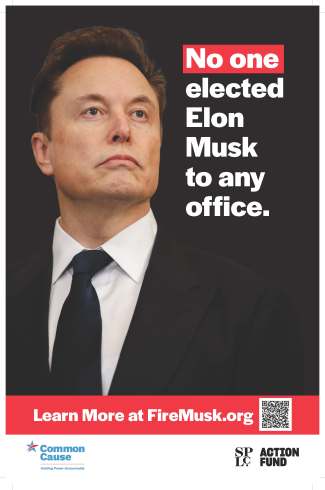
Copies of the ads the Common Cause and Southern Poverty Law Center planned to run in the Post.

THE LEAD: The Washington Post pulled an ad set to run Tuesday that called for President Donald Trump to Fire Elon Musk. Several organizations chipped in to run a wrap-around, a specialized ad approach that tends to draw a lot of attention in print publications.

Common Cause said it was told by the newspaper on Friday that the ad was being pulled. The full-page ad, known as a wraparound, would have covered the front and back pages of editions delivered to the White House, the Pentagon and Congress, and was planned in collaboration with the Southern Poverty Law Center Action Fund.

A separate, full-page ad with the same themes would have been allowed to run inside the newspaper, but the two groups chose to cancel the internal ad as well. Both ads would have cost the groups $115,000.

“We asked why they wouldn’t run the wrap when we clearly met the guidelines if they were allowing the internal ad,” said Virginia Kase Solomón, the president and chief executive of Common Cause. “They said they were not at liberty to give us a reason.”

Jeff Bezos, the owner of the Post and reason why you could drunk-order a pimple-popping ear toy online, has made several moves that indicate a general sense of deference to the Trump administration. Prior to the presidential election, Bezos ended the paper’s tradition of running an editorial endorsement of one candidate. (The unspoken but obvious reason was that the newspaper folks weren’t picking Trump.)

Bezos also was in the “tech bros row” for Trump’s inauguration, along with Mark Zuckerberg and Sam Altman. A key factor in his preferred seating was likely that Amazon had donated $1 million to Trump’s inauguration fund.

Although Bezos was not interviewed or quoted for the “ad kill story,” the Post’s PR division offered a bland response in his stead:

A Washington Post spokeswoman said in an emailed statement that the newspaper did not comment on internal decisions related to specific advertising campaigns and pointed to its publicly available general guidelines for advertising.

(If you don’t feel like downloading the Post’s ad brochure, let me just say it’s the most pedestrian thing on Earth. It also does stipulate that the Post “reserves the right to position, revise, or refuse to publish any advertisement for failure to comply with the guidelines set forth below, or for any other reason.”)


UNDERSTANDING THE LAW AND THE AD GAME: Advertising falls under the umbrella of what the government calls commercial speech, meaning it’s meant to sponsor or promote the purchase of goods and services. It hasn’t always been protected speech, and as recently as the 1940s, courts had ruled that purely commercial advertising is not protected by the First Amendment.

Court rulings since then have either eroded or eliminated that stance and have led to some basic rules in regard to how advertising can or can’t be censored. In short, if someone is trying to get you to buy something or sell something, it’s probably going to fall into the realm of advertising and the courts will engage in strict scrutiny while examining the regulation of it.

Strict scrutiny in this case basically boils down to this: the state has to prove it has a good reason to regulate the ad and that the regulation will actually accomplish the outcome the government says it will and it will do so in a reasonable, not overreaching way.


PUBLIC VERSUS PRIVATE REGULATION: The key thing to understand here is that none of that stuff applies to what the Post did. Those laws basically apply to governmental action. So, if Trump had heard about the ad and decided to force the Post NOT to run it, that’s where the legal stuff on strict scrutiny etc. would come into play. The Post is a private media entity and it has the ability to accept or deny ads for any number of reasons.

Most newspapers (and I’m assuming other media outlets I haven’t dealt with the ad end of) have basic rules about what they will or won’t accept for ads, based on what they think is important to their readers.

Obvious things that get rejected are ads for illegal products. If I wanted to run an ad in the Advance-Titan, our student newspaper at UWO, for “Dr. Vinnie’s House Of Crystal Meth and Cocaine,” I’m guessing I’d get a pretty strong rejection. Back in the day, we rejected ads for off-shored internet casinos because they had all sorts of legal problems. (That almost seems quaint now that we’ve got ESPN’s “journalists” stepping up for gambling apps and pitching parlays to their audiences.)

Other things that get rejected can be based on how the audience is likely to feel about a product or any special stipulations between the media outlet and any intervening organization. For example, a friend who used to advise the student newspaper at the University of Notre Dame once told me that the paper was forbidden from accepting alcohol ads, due to its status as the official paper of the university. I know that some publications accept ads for strip clubs, abortion services and marijuana dispensaries, regardless of the legality associated with those enterprises.

Newspapers also often have a basic “because we said so” stipulation, just like the Post did. As I was fond of saying to my staff, we could institute “Screw You Tuesday,” in which we rejected any ads that people tried to place on a Tuesday, because, well, “Screw you, that’s why.” It’s not a great way to do business, clearly, but it is legal.

DOCTOR OF PAPER HOT TAKE: First, I’d love to be in a financial position to turn down $115,000 “just because.” Have you ever seen how excited people get when they get close to that on “Wheel of Fortune?”

Second, and I can speak from experience on this, it sucks to be pinned in a corner on an ad buy like this. This group could have chosen one of a dozen major metros, but they picked the Post for a pretty good reason and it wasn’t necessarily that Trump reads it.

When I was advising the Advance-Titan, we got an offer to include a 12-page pro-life insert into our paper for about twice what we would normally charge. Like most student newspapers, we were struggling financially, so the money would have been welcome. That said, in digging into how this insert played elsewhere, we found that researchers had found legitimate concerns regarding the factual accuracy of some of the claims in the insert. Furthermore, it would put the paper in the middle of a debate we had no real interest in entering.

After the staff debated and discussed this a bit, the editor came to me and said, “How do we deal with this and not be screwed?”

“You’re screwed either way,” I told him. “If you run it, you’ll have people on the other side of the issue up in arms about it and you’ll catch the same grief as other places that ran it for the accuracy issues.”

He interrupted me. “OK, so then I won’t run it and we’re fine…”

“No,” I explained. “If you don’t run it, this organization is going to put out the Bat Signal to every media outlet that will pay attention saying that you’re pro-abortion and that you’re suppressing their speech. There will be news articles and comments and blog posts and everything else coming at you for this.”

“Like I said, you’re screwed either way. So do what you think is best, stick with it and don’t get into a war of words over it.”

He decided not to run the ad, and pretty much everything I noted above happened, but somehow worse. A press release went out, newspapers ran stories, a local talk radio guy in Milwaukee did about a half-hour on how criminal we were and all that. It eventually went away, but I think the editor doubled his smoking habit until it did.

In the Post case, Bezos clearly doesn’t need the money and he’s clearly dealing with someone who has no compunction about being vengeful when someone is perceived as disloyal, so not running this ad does make sense in that regard. The paper has that right and it can (and has) exercised it.

That said, the optics are really terrible, especially when coupled with the previous actions in regard to Trump. The Post itself will likely suffer credibility issues in general as a result of this.

When Bezos bought the Post, the prevailing thought was, “This is great, because he doesn’t need anyone’s money. He can do whatever he wants and not have to bow to the whims of the rich and powerful.”

Well, we were about half right on all of that.

DISCUSSION STARTER: If you ran the Post, what would you do with this ad? Also, what kinds of ads would you be willing to take (or reject) based on what you think about the publication, its audience and your own sense of what is fair?

Trump Is Limiting The AP’s Access To White House Events Because It Won’t Use His Preferred Noun When Discussing The Gulf of Mexico

THE LEAD: The Trump administration barred several journalists from the Associated Press from reporting opportunities in and around the White House over the past week for not calling the body of water to the south of the country the Gulf of America.

AP executive editor Julie Pace noted Thursday that AP had been shut out of multiple events, including an open news conference with Indian Prime Minister Narendra Modi, the signing of at least one executive order and the swearing in of Robert F. Kennedy, Jr. as the Health and Human Services secretary.

“This is now the third day AP reporters have been barred from covering the president — first as a member of the pool, and now from a formal press conference — an incredible disservice to the billions of people who rely on The Associated Press for nonpartisan news,” Pace said.

The dispute began Tuesday, when the AP was informed that it would be barred from attending White House events because of the organization’s decision to continue using the name Gulf of Mexico, not the Gulf of America, as Trump decreed in an executive order last month.

BRIEF RECAP OF THE SITUATION: President Donald Trump declared that the Gulf of Mexico should actually be named the Gulf of America, a declaration he codified with an executive order on Jan. 20. He doubled down on this declaration, when he deemed Feb. 9 the first “Gulf of America Day.”

Apple and Google maps have made the switch to this nomenclature, even as media outlets and foreign officials have pushed back on this move. (Apparently Bing followed suit, but nobody really noticed because… I mean… c’mon… It’s Bing.) The president of Mexico has threatened to sue Google over this change, while the AP and the White House apparently remain in a standoff over the issue.

Trump also made other name changes, such as shifting Denali back to Mount McKinley. In that case, the entirety of the mountain was within the U.S., so it didn’t require the international community to buy in. (Some folks in Alaska aren’t thrilled, to be fair, and the state’s senators are trying to get this undone.)

DEALING WITH TRUMP, AP STYLE:  The Associated Press is an international organization that operates in more than 100 countries, produces content in multiple languages and serves more than 1,300 news organizations daily, so even minor changes or small disputes can have major consequences. In addition, the AP style guide is the bible (not Bible) for journalists everywhere, so what they say, we all tend to use.

In this case, the AP tried to “split the baby” by both acknowledging Trump’s actions while also not letting 400 years of history and global tradition get scrapped with the stroke of a pen:

Screenshot

In short, “Here’s what we’ve always called it, here’s how it now impacts U.S. government stuff, here’s who can ignore it and here’s our best way forward.” Apparently, that wasn’t good enough for the Trump administration.

CAN TRUMP DO THIS (Part I) ?: The larger question of Trump’s right to rename the gulf unilaterally depends on the specific question being asked. As far as the U.S. government is concerned, yes, he can really do this and has. Reports indicate that both the Department of the Interior and the Geographic Names Information System (GNIS), the official federal database of all U.S. geographic names, are moving in this direction.

In terms of what can be enforced upon the rest of the world, no. The United Nations Convention on the Law of the Sea essentially established that countries have control of things like this only as far as 12 nautical miles from the coastline. (Mexico essentially makes this argument in its lawsuit against Google.) Also, as much as he might like it to be true, Trump does not dictate what everyone on the planet does. Therefore, his declaration has no jurisdiction beyond certain borders.

CAN TRUMP DO THIS (Part II)?: In regard to the issue of barring journalists from stuff, can Trump do it? Sure, and he’s done it before. In 2017, he banned The Guardian, CNN, the New York Times and several other media outlets from a “gaggle” briefing, based on coverage he didn’t like. In 2018, Trump folks barred CNN’s Kaitlan Collins from a Rose Garden event after she had questioned the president in a way that wasn’t taken well.

That same year, the administration revoked the media credentials of CNN’s Jim Acosta after an incident at a press briefing. (The White House reinstated the pass after CNN sued and a judge issued a temporary injunction on behalf of the network.) In 2019, he conducted a “mass purge” of journalists, restricting press access through “hard pass/soft pass” gamesmanship. Trump also just bounced a bunch of journalists out of their office space in the Pentagon, giving the space to outlets that give the administration more favorable coverage.

Generally speaking, the law dictates that the denial of a pass is within the rights of an administration, provided there is “an explicit and meaningful standard” to support its actions and “afford procedural protections.” That case did not say what it would take to revoke a pass, nor did it provide any clarity here in regard to who gets to go into the Oval Office or the Rose Garden or whatever.

DOCTOR OF PAPER HOT TAKE: There’s a lot to unpack here and it’s not entirely one-sided. As much as I hate having to discuss the First Amendment an “it depends” kind of way, at least this time, it doesn’t involve porn.

White House Press Secretary Karoline Leavitt is not entirely wrong in saying that a) covering the White House isn’t something everyone gets to do and b) the administration does have some leeway in how it controls who gets to go where when space is limited. I know I can’t just hop on a plane and demand access to the press room, let alone slide into the Oval Office for a chinwag with DJT, just because I’m writing a blog that dozens of people read.

It’s also no big secret that sources have always played favorites with media outlets. It would piss me off to no end when one of my reporters at the Columbia Missourian would call a police source about some story we had heard about and be told, “Nope… Nothing like that going on.” Then, miraculously, the Columbia Daily Tribune’s ancient cops reporter would somehow manage to break THAT EXACT STORY as an “exclusive” within two days.

I also used to hate the way that the Muncie Star-Press managed to have a great “buddy-buddy” relationship with the Ball State athletic office, so whenever something important would be going on (adding lights to the stadium, scheduling a nationally televised game), the Daily News kids would get shut out and the Star-Press would slather it all over the front page. To think the Trump administration would play more fairly with the national press than some yokel sources in the Midwest would with the local press seems to strain credulity.

Hell, it was so obvious he played favorites during his first term, John Oliver had some fun with it:

These kinds of things aren’t a blatant violation of the First Amendment, even if they feel petty and unfair.

All of that being said, I hate what Trump did here and I totally support AP’s position in regard to the coercive nature of this exclusionary maneuver. It does smack of favoritism, it does undermine their ability to spread information and it reeks of petty bull-pucky. I have a long-standing hatred for bullying, and that’s just what is happening here: “Do what we tell you to do, or else.”

This isn’t a new thing for Trump, nor will it be the only instance of it. I imagine there will be more than a few press passes getting yanked over the next few years, along with the obligatory lawsuits to get the Trump administration to back down. I also imagine that there will be additional significant efforts to cow the media throughout Trump’s reign. If there’s one thing this administration has consistently blessed with favor, it’s those who lavish unrelenting and uncritical praise upon the Dear Leader.

AP right now is in a game of “chicken” with the White House and I certainly don’t want the AP to back down. We could argue that nomenclature of this nature is petty and stupid (see the “freedom fries” debacle), but the bigger issue would be the press caving to power to curry favor. That’s the kind of loss of credibility that the AP could never get back once their reporters lost it. So, please, AP folks, for the sake of all of us out here trying to teach students how to do quality, unbiased journalism, fight like hell to get back what you have lost.

That said, the establishment doesn’t owe the AP a Snickers bar simply because they’re used to getting top-shelf treatment. I would argue that if you work for AP, you’re probably among some of the best, most-resourceful and dedicated reporters on the planet. You don’t get to the top of the heap like that be being spoon-fed and softly petted, so treat this slight like any other obstacle you would need to overcome.

I’d suggest you follow the lead from the folks getting the shaft at the Pentagon: “We’re going to work around this cheap ploy, because that’s what we do and we will not be deterred in holding the administration to account for its actions because that’s our job.”


Verified by ExactMetrics