You’ll Never Shame TMZ and 3 Other Impolite Observations on Kobe Bryant’s Death and Breaking News

KobeLAT

The death of Kobe Bryant led to a massive outpouring of media coverage, social media mourning and public grief over the past 24 hours. For my money, the place that did the best job of this was the L.A. Times, which dedicated multiple pages to the former Lakers star. It covered the accident, mourned the loss, didn’t sidestep the ugly (even a photo from his “rape allegations press conference” made the inside page) and generally did a good job on a breaking news piece. The layout and headline treatments also reminded me why when it comes to a huge story, newspapers still can do it the best, regardless of circumstances.

(If the LAT is like any other newsroom I’ve ever worked or visited, I’m betting it was a pretty sparse crew on staff when all this took place on Sunday morning. Getting this kind of “flood the zone” coverage on a weekend in today’s gutted newspaper world says a lot.)

One thing that emerged in this breaking news cycle was to what degree the gossip news site TMZ was derelict in its duty as journalists when it published the news about Bryant about an hour after the incident. Officials chastised TMZ for its “very cold” approach to this, noting that families and friends of those who died had yet to be notified personally before the news broke. TMZ, for its part, has yet to respond to that aspect of its reporting, but it continues to publish on Bryant after breaking the story.

While it seems that professionals and the public alike are having a go at TMZ for its role in this situation, here are four thoughts that, while probably impolite, are both accurate and worth considering:

You’re never going to shame TMZ: Los Angeles County Sheriff Alex Villanueva and Los Angeles County Undersheriff Tim Murakami took their shots at TMZ, noting that the publication was “extremely disrespectful” and “very cold” for reporting Bryant’s death this early. Others in the media also took to Twitter to add their condemnation of the decision to publish the information about an hour after the sheriff’s department received notification of the crash. Talking heads all over the place continue to cluck about how “this kind of publication makes us all look bad” and how TMZ “isn’t real journalism.”

Here’s an unfortunate reality: TMZ couldn’t care less.

This publication has made its bones (pardon the pun) on reporting the deaths of celebrities. It was first on the spot for the deaths of Michael Jackson, Whitney Houston and Prince. It ran the Ray Rice “punch in an elevator” video, showing the former NFL player laying out his fiancee with a single swing and then dragging her limp body down the hallway.

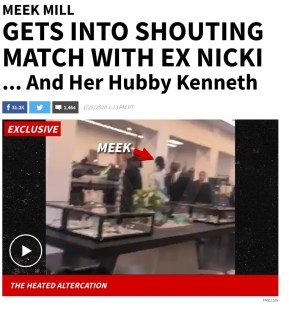
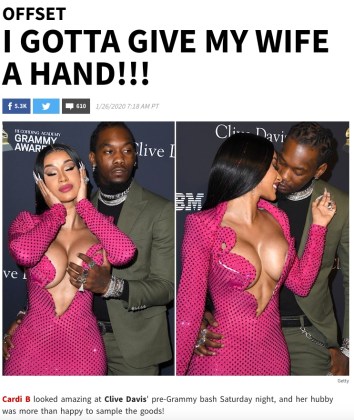
Even more, here are a couple screen shots of things they ran just before the Bryant story broke:
CardiBTMZShoutingTMZ

And those were just two of the better and yet SFW ones available. Sleaze, mayhem, celebrities and death is what they do. A bit of side shade on Twitter from an undersheriff isn’t going to bring those folks around to the world of buttoned-down journalism.

Trying to make TMZ feel guilty is like trying to humble Kanye: It might make you feel superior to try, but it’s not going to work.

Most media folk won’t admit it, but they would have done it too: It’s easy for people who DIDN’T publish this first to say what they WOULD HAVE DONE if they HAD gotten the information first. It’s hard to say for sure what they ACTUALLY would do if put in that spot.

The old-guard media folks, who had three broadcasts or two newspaper editions a day, had more of a luxury to wait than current journalists, for whom a minute might be 58 seconds too late. Even more, I’ve seen what people get like when they get an exclusive story or find themselves at the front end of a scoop-able story. There’s not a lot of sober reflection and deep thinking involved, and far too often, people let the desire to get it first beat down their sense of human decency.

I’m not saying we SHOULDN’T aspire to being more humane in what we do. It’s just that the gap between the hypothetical and the actual is often a lot wider than we would like to believe it to be, especially when the actual makes us look bad.

(If you don’t believe me, watch about six minutes of a show like “Temptation Island” where “committed” couples explain how they’d never, ever, ever, EVER break up. In three minutes,  Blake has left Ashlynn in the room to go make out with Trevor’s fiancee, JayCee, in the hot tub.)

The first story I saw was on another media site (not TMZ) that posted about 20 minutes after the TMZ news broke. Additional news outlets were also cranking out stories shortly after, each falling back on that original “as first reported on TMZ” notice.

(It’s amazing how quickly they all swept those stories away and those early notices once they could get their own sources and after everyone decided to pile on TMZ. If you look on various “mainstream” media outlets now, you’ll find no reference to how TMZ got there first, unless it’s to chastise TMZ.)

What I didn’t see, and might never see, is a timeline that tells me when the officials notified the families of the people involved alongside the information of when each media outlet published its breaking news story.

If I were a betting man, I’d wager that TMZ wasn’t the only media outlet to push out a piece before everyone’s family got the word of the crash. That’s not to say this was appropriate, but it is worth noting that a lot of the “holier-than-thou” outlets clucking about the disgraceful state of TMZ probably ran as fast as possible to grab second place in the race to report the story.

The police couldn’t care less about the media 98.9% of the time: Both Villanueva and Murakami have a point: It’s better if the safety officials can do their jobs and notify people before the media does. However, and I can say this based on personal experience, if you are a media professional waiting for police, sheriffs, state highway patrol folk or other officials acting in an official capacity to tell you everything you need to know, it’ll be like waiting on the corner for a bus that had its route cancelled last week.

If you look at the stream of stories on CNN, for example, you’ll notice that it identifies pretty much everyone on board. Even after those stories ran, the sheriff declined to confirm the identities of those people. If you check out the sheriff’s department social media even today, the IDs aren’t posted. You have people responding to the tweets and posts with more information than the sheriff is willing to divulge.

Journalists know that the police will release information in whatever time frame they feel to be appropriate and that in most cases, you’ll get more info seeking other sources. As much as the police have often said to journalists, “I know you have a job to do…” they also don’t make the journalists’ job a priority. At best, they see the media as something to deal with like paperwork and jock itch: annoying, problematic and part of the curse of being them. At worst, well… I’ve heard the phrase “the F—ing Media” so often from cops I know that I honestly wondered if we’d created a new branch of journalism. (Y’know, like the Space Force…)

This isn’t to say that journalism is more important than the work of police or firefighters or first responders or anyone else who runs toward danger to help people in trouble. It’s not. However, pretending that if the TMZ people had just waited five more minutes until the police called them and said, “We’ve notified the family, so go ahead” everything would have been fine is disingenuous and borders on laughable.

Did this actually happen? I have come to the conclusion that being a “non-denominational skeptic” places me in the awkward role of asking questions people don’t like to hear. However, in journalism, we’re taught that if your mother says she loves you, you should go check it out. Therefore, here’s the question:

Did Bryant’s family (or anyone else on the chopper’s family) get the news of the death from TMZ?

Murakami’s tweet seems to say so:

“I am saddened that I was gathering facts as a media outlet reported … Kobe had passed. I understand getting the scoop but please allow us time to make personal notifications to their loved ones. It’s very cold to hear of the loss via media. Breaks my heart.”

I can’t find any reference in a post, a note, a tweet or a story that says this actually happened. I saw press releases from various organizations, tweets from tons of people and at least two dozen stories on various “respectable” media sites, but I could not find a single statement that would corroborate this. TMZ isn’t saying anything, either, on this topic. (If I missed it, feel free to email it to me via the contact page. I’ll give you the credit for showing the world I’m a dipstick.)

You can easily respond to this with a “That’s not the %@#^%ing point, Vince!” statement, and I get that. However, consider these two equally valid concerns:

  1. If we’re not into the accuracy of facts when they fit the point we want to make, what the hell are we doing in this job? Sure, I get the idea that it would be horrible if I died and my wife got a call like this:
    “Hello, is Mrs. Filak home?”
    “This is Mrs. Filak..”
    “Yeah, not any more… This is TMZ asking for a quote about the death of your husband five minutes ago.”
    However, if we’re going to let the sheriff’s folks use “couldabeen” BS about TMZ’s actions to make a point, why not let them go all the way? Why not have them invent the tears in the eyes of the other Bryant children, as they heard the news on TMZ? Why not let them slather on the details of how Vanessa Bryant got the alert from TMZ mere seconds before her phone rang with the news from the sheriff? The point is, if something is accurate, use it. If not, don’t let people use you to perpetuate something that is not.
  2. As much as this was an easy slam for the sheriff’s folks to make, kicking a publication like TMZ, it wasn’t meant for TMZ alone. This is the media version of a brush-back pitch, in which the sheriff threw a fastball on the inside part of the plate. The goal of a pitch like this is to let the media think long and hard about digging back in the batter’s box.
    TMZ is gonna TMZ. We’ve established that. However, when the L.A. Times or the Orange County Register or the Pomona Tidbit or whatever else is out there gets a tip like this, the sheriff and his colleagues in law enforcement hope this kind of incident will get them to slow up or pull a punch. In most cases, the media outlets will react with a higher level of discretion than TMZ, I would imagine, but simply putting the thought of “we might be the bad guys” in the media’s head is enough to cause some concern. It’s like how people tend to drive slower once they see someone else getting pulled over by a cop.
    In a speeding case, it’s probably a good idea. Here? It might be a toss up.

The Junk Drawer: An update on the Daily Northwestern apology, the tao of Vin Diesel and an honest look at journalism salaries

As we noted in an earlier post, the Junk Drawer is usually full of stuff that didn’t fit anywhere else but you still need, so here are a few bits and bites of things that are helpful or at least somewhat amusing:

REASON 283,435,139 I’M NOT A DEAN: In covering the Daily Northwestern apology story earlier this week, we took some liberties in explaining the best and worst ways in which people reacted to the paper’s editorial choices. A good number of folks I knew who were Medill alumni emailed the dean of the school, Charles Whittaker, asking exactly what the heck was going on at Northwestern.

Whittaker was in a tough spot: He didn’t control the paper (as is the case with almost all colleges and universities, despite what many administrators like to think) and yet the students running the place were most likely kids in his program. The paper’s actions reflected poorly on the school, even though the school itself had nothing to do with the paper. People wanted him to say SOMETHING, although anyone who has ever worked in crisis communication knows that rarely do statements in times like this satisfy everyone. (And, in many cases, these statements end up doing the PR equivalent of trying to extinguish a fire with gasoline…)

Whittaker put out a statement that, in my view, covered the bases and nailed the key points. It also did so in a way that didn’t throw anyone under the bus and yet moved the school beyond the hand-wringing point most alumni seemed to be stuck on. In reading it, I found that his points tended to mirror some of the concerns we raised here, but he did it with an eloquence that I couldn’t pull off at the time. This paragraph covered the three unpleasant truths I outlined in the post in a much tighter and with better language:

And to the swarm of alums and journalists who are outraged about The Daily editorial and have been equally rancorous in their condemnation of our students on social media, I say, give the young people a break. I know you feel that you were made of sterner stuff and would have the fortitude and courage of your conviction to fend off the campus critics. But you are not living with them through this firestorm, facing the brutal onslaught of venom and hostility that has been directed their way on weaponized social media. Don’t make judgments about them or their mettle until you’ve walked in their shoes. What they need at this moment is our support and the encouragement to stay the course.

Again, this is why I couldn’t be a dean. Well, that and I’d have to wear a tie…


YOU LEARN A LOT ON THE WAY TO 500: In listening to all the people talk about the Daily Northwestern’s position and how they were “much tougher back in the day,” I found myself going back to this Vin Diesel clip from “Knockaround Guys:”

Rarely do the words “Vin Diesel,” “stronger journalism” and “great philosophy” converge in a single sentence, but they all seem to work here. If those previous generations of journalists were tougher, it was because they got started earlier on their 500 fights. It’s the battles, the mistakes and the ability to live through everything that happens that gives you that toughness. That’s how you develop thicker skin, as so many people kept telling the staffers at the DN to do. It’s how you learn to tough out certain things and acquiesce in other situations.

You learn a lot of things on the way to 500, but none more important than this: You will survive and you will get better at fighting.

COME FOR THE ABUSE, STAY FOR THE LOW PAY!: Why journalists do what they do is often beyond explanation. In some cases, we find a calling, like a priest or a rabbi would. In other cases, we see how our skills match up with what news organizations need and we go for it. In many more cases, we realize we stink at math, so we figure this is the best field for us.

However, even if you’re bad at math, you can tell pretty quickly that the salaries of journalists aren’t among the highest in the world. Anecdotes often filled the ears of students who were working their way through college that, hey, you’d be better off working a fry machine at Hardee’s than doing this. Still, getting people to talk about money is really rough, so no true salary database existed in this area.

Some folks in the field wanted to change that with an open access Google spreadsheet and some publicity.

Journalists doing anonymous journalism about journalism, in the shape of Google docs, is a new development in form. And examples like the SMM list definitely bring up ethical implications that should be considered. But in the long run, we would probably all be better off if the salary list sparked a healthy conversation about who is paying whom how much, and for what.

If you want to dig around, feel free to depress yourself here. Also, if you’re living in Kearney, Nebraska or Butte, Montana and you see the six-figure salaries, remember those are mostly in New York where it can cost almost a quarter-million dollars for a parking space.

Still, you can’t beat the hours…

Until next week,

Vince

(a.k.a. The Doctor of Paper)


Ethics versus Access: An interview with the Chapman Panther editor who said, “No Thanks” to covering George W. Bush’s private event on the campus

When former President George W. Bush came to Chapman University this month to speak at a private event, administrators gave the staff of the student newspaper the chance of a lifetime: You will be the only press allowed to cover the event.

The staff unanimously agreed to turn it down, prioritizing ethics over access, and explaining the paper’s position in an editorial to its readership last week. Things got even more complicated this week, when the staff found out that it had essentially been lied to about who was attempting to restrict the paper’s access and why.

MarshallMug

Courtesy of Kali Hoffman, Panther Photo Editor.

“It was a difficult decision because we worked so hard to get access,” Panther Editor in Chief Louisa Marshall said in an interview late last week. “We sat on it for a while and we came to the conclusion that even though we could be in the same room as a former president and that was a big deal, we couldn’t do this. We knew this was a rare event, but we also knew that we had talked a lot about journalistic ethics. We wrote our first editorial of the year on this, so that set what we were going to uphold.”

Bush came to campus as part of the 20th anniversary festivities that surrounded the naming of the business school. The namesake of the school, George Argyros, was a longtime friend of the Bush family. The events included a cocktail reception that preceded a private dinner and a one-on-one interview between Bush and Argyros’ wife, Julianne. The former president was also honored with a global citizen medal.

The university agreed to let the paper cover the event on three conditions:

  1. No photographer was allowed.
  2. No one was allowed to record the event.
  3. Bush’s people would have to approve everything the Panther had planned to run before it published anything.

“I was a little disappointed, obviously, but it was also not something I was willing to bend our ethics over,” Marshall said.

“Bending the rules sets a bad precedent and for us to stake our overall tone for the semester on ethics and then agree to this,” she added. “You have to be able to practice what you preach.”

Marshall said she took the news back to the staff and sought input as to what was the best way to approach this situation. On one hand, the students had the scoop most college papers would kill for: A true exclusive with a former president of the United States.

On the other hand, submitting their work for prior review and prior restraint meant that they were allowing a source to censor content, thus undermining the whole idea of telling the campus what had actually happened at the event. Even more, it would call into question the entire truthfulness of the article and maybe even the paper.

“We sat on it for a while, ruminating on what we were going to do and what we were comfortable with,” she said. “We decided not to go.”

“There is a certain level of fearlessness that comes with student journalism overall,” she added. “I think I would really stress to someone wanting to be in student media that even though we’re all young and ambitious, we have to cover our bases. The whole aspect of maintaining integrity is to maintain well-rounded reporting. It’s walking an interesting line.”

Instead of taking the deal, the paper published an editorial that explained exactly why it was they weren’t going, what the university tried to make them do to get access and how they felt this was a better way to go.

After the “fit hit the shan” and everyone seemed to pile on Chapman about censorship, the university began backtracking faster than an NFL corner back and “clarifying” more than Windex. The truth of the matter was that Bush’s people had no problem with the paper doing anything and couldn’t care less about reading the story before it went to press. Instead, it was the university that wanted to get a handle on the paper and manage the school’s image at the cost of a free press.

“The Panther found out that the prior review condition was from the university, not Bush’s office, after I got in contact with Bush’s office,” Marshall said in an email this morning. “I asked about the prior review condition and they gave me an answer that was not in line with what the university had previously told me.”

In short, the students called out a former president for an action he had nothing to do with because the university lied to them.

In an editorial published Sunday, the paper was having none of this “Oh, you kids… you just didn’t understand things with your tiny kid brains” BS:

It’ll be very easy to review this entire situation and blame it on a misunderstanding. Undoubtedly, people will claim that there was some miscommunication along the line, that words and blame got pinned on the wrong person, that Chapman meant no harm.

That’s not the case. We didn’t misunderstand anything. We didn’t misinterpret anything. We were told that it was Bush’s office, not Chapman that wanted us to break our commitment to journalistic integrity. Regardless of any sort of miscommunication, that’s what happened.

“A whole part of journalism is to investigate and to question,” she said Monday in an email. “Although the message was communicated to The Panther from Chapman that President Bush’s office was requiring prior review, we took the steps to verify it. The fact that it was the university’s want for prior review and not President Bush’s staff -and that this information was not accurately communicated to us- is disheartening, as we would like to think that the university would be behind our efforts to cover events on campus with integrity.”

Marshall said this was the first negative encounter she has had like this with Chapman’s PR department.

“In my time at The Panther, this has never happened before,” she wrote. “As much as I have believed and continue to believe that administration will work to the best of their ability and maintain a positive relationship with The Panther, this will make me verify what the school directly tells The Panther from now on.”

Marshall said last week she understands that some people would have preferred the paper just agree and cover whatever it could. However, she said the ethical standards of the paper mattered more than a single story.

“Journalistic ethics is something that I’m personally attached to and very married to,” she said. “It’s something that guided my career especially since people in the field have been pained with an un-credible brush. I think in our climate right now, journalistic integrity is something I want to uphold to any kind of extent.”

It was much easier to uphold those standards, thanks to the team of staffers at the Panther, Marshall said. The students worked together on the decision to decline the invitation, run the editorial and then cover the event like any other media outlet.

“It’s a hard line to walk at times between knowing what you’re giving up but also what you’re maintaining…” she said. “I’m so lucky to be with my team. The level of reporting and writing… none of this would be possible without them.”

Marshall graduates in May with a degree in history and a poli sci minor. She has worked at several publications as an intern and said that a lot of what she has learned both as a student journalist and in these other opportunities helped shape her ethical code.

“I would like people and student journalists to know that it’s OK to question the information that you’re provided with; that, in essence, is really why we’re journalists, to investigate and to question,” she said. “As a student, you’d like to think that you can trust what your school tells you. This has not been the case in this situation, but it’s a good lesson to learn early on.”

Throwback Thursday: A look back at the Las Vegas shooting and the troll who made it worse

It’s hard to believe this was only two years ago, but a lot has happened since then. One thing that remains constant is the way in which some people use social media for their own weird purposes. Some are harmless, or even occasionally helpful, as you might have noticed with the “Venmo for Beer” guy at the Iowa/Iowa State game last month. Still, those folks are outweighed by the trolls who use other people’s misery to find joy in their own sad little lives.

Here’s the throwback post: A look at what a troll did in the wake of the Las Vegas shooting and what you can learn from what this chucklehead did:

3 things journalism folk should learn from a troll during the Las Vegas shooting

Many people awoke Monday to the news that a gunman had killed 50 people and injured 400 more in Las Vegas. Stephen Paddock, a 64-year-old man from Mesquite, Nevada who police have named as the shooter, was killed on the 32nd floor of the Mandalay Bay Hotel after the attack.

Police said he fired repeatedly from the hotel onto a country western music festival happening across the street along the Las Vegas Strip. Witnesses said the shooting was relentless and police have no motive for the attack at this time.

For some people, it was a time to question who we are as a nation. For others, it was frantic search for loved ones and a time to mourn those they knew who died or who cling to life.

For still others, it was time to be an a-hole.

A Twitter user posting under the name “Jack Sins” posted that he was desperately seeking his father, who was missing after the attack:

JackSins

It turns out that this was a fraud. The profile photo was the same one used elsewhere to pull the same stunt during the Manchester attack. In addition, it’s an internet meme. The “lost dad?” He’s porn star Johnny Sins.

Mashable reached out to this user to find out why he would use a horrific shooting to do something like this. His answer is almost more repugnant than his actions:

Mashable reached out to the troll to ask why he’s spreading misinformation during such a critical time.

“I think you know why,” he replied. “For the retweets :)”

He also said he’d probably do it again.

The point of the post isn’t to shame this guy, as that’s got to be impossible, but rather to provide a learning moment for journalism students who are starting off in the field and might be inclined to rely on social media for information. Consider these three takeaways from this situations:

  1. If your mother says she love you, go check it out: Part of the thing that separates journalism folk from some other media users is a dedication to separating fact from fiction and providing accurate information. Early reports in the wake of a chaotic event are almost always inaccurate at some level, so journalists always have to proceed with caution. Even in this case, media reports note erroneous reports about additional shooters at other properties along the strip. Some of those are based on honest errors while others are simply rumors that spread. Your job is to go out there and figure out what is right and what isn’t before publishing it. That’s especially true of things you see from sources you don’t know, which leads to point two…
  2. Sources matter: One of the big things we push in J-school is the use of official sources acting in an official capacity for a couple reasons: a) It protects you in case of information being erroneous or potentially libelous, thanks to the issue of privilege; b) Official sources have names and titles you can verify and they also tend to be much more conservative with what they say because they know they will be held to account for it. However, in cases like this, it’s not possible to ignore the human angle and simply churn out police-report-level data. This is why interviewing people who survived, people who escaped and other similar “real people.” The biggest thing you should do is verify your sources before you publish them. The people at the scene have a somewhat easier time doing this, as many reports noted people covered in blood or hunkering near injured friends. It’s hard to fake that, even if they wanted to. However, social media users can be sending information from anywhere and can do so with impunity.
    To that end, you really need to fact check the heck out of your sources when you can’t do a face-to-face interview. Look at how long the source has been on that platform, how many followers they have, what other posts/tweets they have made and what other topics they have covered. Treat this vetting the way you would any other “anonymous tip” that comes to you from a source you don’t know. Unless you are sure, don’t repost it. It’s your reputation and the reputation of your news organization on the line.
  3. People can be a-holes: If you read the interview between this troll and Mashable, it’s a pretty safe bet your thoughts will be somewhere along the lines of, “What the hell is wrong with this guy?” Most people have gotten some level of internet hoax or email blast where a king in Naganaworkhere has a squillion dollars in gold that he wants to give you, once you send him your bank account numbers and we know that’s crap. It’s also a pretty easy thing to explain: Somebody wants to dupe rubes out of their money.
    When it comes to something like this, the question of “Why?” is less obvious. The retweets aren’t going to be all that helpful in a lot of ways. Sure, there are ways to monetize heavily trafficked social media accounts, but beyond that’s going to be a one-hit wonder at best.
    As much as many people want to believe in the best in people and help people in a time of crisis, there are some folks out there who just want to screw with you for no good reason. As an individual, that can feel like a sting when you realize you contributed to the spreading of false information on a “gotcha” prank. As a journalist, there are far larger impacts. It never feels good to question people in the time of crisis, but if you remember that not everyone has the best of intentions, you can reasonably and tactfully apply a healthy level of skepticism to claims like this.

No comment or late comment: How long should you wait for people to speak up on their own behalf?

Student media adviser and blogging guru Kenna Griffin sent this out on Twitter today and it got me thinking about our rights and responsibilities regarding fairness to sources:

Griffin1

Her blog post, which you can read in its entirety here, touches on a lot of good issues in regard to fairness, transparency, accuracy and the importance of the story. She also makes some good points about how things have changed in the digital age versus the newspaper’s “hard” deadline.

I often found that the hard deadline was a double-edged sword: I got more time to wait for someone to call me back because I didn’t have to send the story to press until 1 a.m.. That said, it also meant that if I caught a late-breaking story and only had until 1 a.m. to get it out the door, some people weren’t going to be around for comment, thus leaving me with a weaker piece.

Digital deadlines mean you can send stuff to your readers whenever you want, which is great when you have content worth sending. However, I know from personal experience, that when I’m waiting for a quote from someone and I have the ability to just hit “publish” and move on, I get really twitchy. Patience is a virtue, but not one with which I have been endowed…

Griffin lists some key thoughts about the best practices for deciding when to wait and when to pull the trigger. Here are a couple others that I’d add, especially for those of you working in a digital field:

  • Will waiting longer likely lead to a comment? In some cases, you have worked with a source and that source is usually pretty good about getting back to you, so the wait makes sense. In other cases, you are more likely to find a unicorn playing bass in a punk band than you are to get a quote back from a source from which you requested an interview. If you think time is likely to lead to success, hold on to the piece. If not, publish it as soon as it’s as good as it’s going to get.
  • Is this a case of “ostrich syndrome” on the part of the source? The legend involving ostriches is that when they become afraid, they stick their head in the sand, thus not seeing the danger, but clearly being no safer than they were before they did it. It’s not true, but it does provide us with a good jumping off point for how sources can be delusional regarding their interactions with reporters.
    A number of times, a source has tried to dodge a reporter’s call with the idea that if they can avoid saying anything about the topic, the reporter won’t be able to run the story. In those cases, I tended to tell people to run the story anyway, with an explanation that we tried to give this person a chance to say something. Just like any other form of bad behavior, you shouldn’t reward sources who try to kill stories by dodging you.
  • How permanent is your choice? This is a tough issue that tends to lend itself more toward student media outlets. When a publication comes out once per week, an unanswered claim or a one-sided story can become codified in the minds of readers before another source gets a chance to say something. Even more, if it the last paper of semester or school year, that decision not to hold a story for a comment can seem almost vindictive. However, if you run your media on a digital platform and you can update at a moment’s notice, the choice seems a lot less painful. When it came to the Oshkosh North Star situation, I felt pretty solid about publishing whatever it was I had in hand, even if I was still hoping for another quote or comment. I knew that if something popped up, I could tweak what I had. If I worked at a newspaper and it was going out this week only, on actual paper and I would never get another chance at it, I’d probably feel a lot more anxious about my choice to publish.


One last thing about the “no comment” issue: People who tell you “no comment” and then continue to talk are, in fact, commenting, so feel free to use whatever they tell you. It’s not your fault they can’t shut up. When people don’t comment, we used to joke about how to translate the way in which the “no comment” was listed in the story:

  • “Smith declined to comment:”  This essentially means you got a hold of the person, the person was decent to you and told you something along the lines of, “Look, I really can’t say anything or my boss/my manager/my spouse will kill me.” You feel bad for the source and you kind of understand.
  • “Smith refused to comment:” You reached the person who told you “Go (INSERT ACTION THAT DEFIES PHYSICS HERE) yourself and the horse you rode in on!” The person might also have been running down a flight of stairs, screaming “FAKE NEWS!” at you.
  • “Repeated attempts to reach Smith on his mobile phone, home phone, congressional email account, two fundraising dinners and his house in Yonkers were unsuccessful.” That weasel is dodging us…
  • “Smith’s whereabouts are unknown at this time and the Journal was unable to find him.” This guy might be dead.

Former Georgia State Rep. Andy Welch proposes legislation to stop journalists from being so mean to him.

As we’ve explained repeatedly here before, just because you don’t like what journalists are doing, it doesn’t mean that it’s illegal, immoral or unethical. Apparently, Andy Welch, an outgoing state representative in Georgia, didn’t get the message, given his attempt to create a Journalism Ethics Board in his state:

The measure was sponsored by Rep. Andy Welch, R-McDonough, a lawyer who has expressed frustration with what he saw as bias from a TV reporter who asked him questions about legislation recently. He said he thinks the profession could benefit by setting ethical standards for all journalists to follow. Five other Republicans signed on to sponsor the bill.

Welch, who was unopposed in his November 2018 reelection bid, submitted this bill with the approach of a kid pulling a Halloween prank that involved a flaming bag of dog poo:

 Welch announced he would be resigning from the General Assembly after the session, which ended Tuesday. However, his bill remains alive for consideration during the 2020 session.

The bill would force the chancellor of the University of Georgia System to set up the board, which I hope would be referred to as “The JEB.” It would also require “The JEB” to establish the “canons of ethics” for journalism in the state, a “voluntary accreditation” system, a grievance process and a series of sanctions for people who violated whatever it is that this group established as “canons.”

Beyond these rather annoying bad ideas comes some horribly bad ones:

If approved, the bill would also mandate that anyone interviewed by the media would be able to request and receive copies of photographs and audio and video recordings taken by reporters and photographers. Such copies would have to be provided free of cost, even though state and local governments are allowed to charge the public for copies of any documents it provides.

If a media outlet refuses to provide the copies, it would be subject to a lawsuit and a civil penalty, under the bill.

Various media organizations, including the National Press Photographers Association and the Georgia First Amendment Foundation, have already spoken out against this idea. I offered a law expert/journalism faculty member a chance to offer some thoughts on this thing happening in his state, but he declined, noting it wasn’t “worth my getting involved.”

He’s right that this is way beneath him to dignify something this dumb with a response. Fortunately, there’s very little beneath me, so I figured I’d outline a few points that might inform or amuse anyone worried about this:


We already have something like this, only better, clearer and non-Draconian. The Society for Professional Journalists Code of Ethics, which you can find here, outlines the ways in which ethical journalists are expected to behave as they ply their trade. Michael King, president of the NPPA, pointed this out as he highlighted both groups’ codes in his statement about the bill:

Ironically, the bill calls for the creation of an ethics board to be housed at the University of Georgia-Athens’ Henry W. Grady College of Journalism and Mass Communication, where NPPA is headquartered. We have confirmed that the bill was introduced without their knowledge or approval.

Robust codes of ethics — including NPPA’s and SPJ’s — have existed for decades and are widely accepted as industry standards. No agent of any government should play any role in setting ethical or accreditation standards for journalism.

What you don’t see in either code is a “crime and punishment” section, because, um… that’s not the point of an ethical code. In couching his “law” as an “ethics” issue, Welch is trying to circumvent the First Amendment, which a) prohibits most of what he’s trying to accomplish and b) was established as a Constitutional right for a reason (namely the Founding Fathers saw the importance of a free and unfettered press, even if Andy Welch doesn’t).


Something shouldn’t be illegal just because you don’t like it. We pretty much covered this concept with our look at John Oliver, Bob Murray and the infamous Mr. Nutterbutter, but for those of you who missed it, enjoy this link.

According to the Atlanta Journal-Constitution, Welch and several other legislators don’t like the way the media down there keep digging into their sketchy behavior. Welch himself was rather perturbed with questions from a TV reporter that he felt were biased. What those questions entailed, the AJC doesn’t make clear, but given his thin skin on this topic, I’m guessing they were only slightly tougher than this hard-hitting set of inquiries:

It’s unfortunate that Welch doesn’t like being questioned on things that he’s doing as a legislator, but that’s part of the gig when you take the job. (It’s like taking a job as the person who has to empty the Port-O-Johns at the county fair and then complaining about all the crap you have to deal with (literally) every day. As nice as it would be for you to mandate that people “hold it until they get home” so that your job would be easier, that’s not gonna happen.)

King notes in the NPPA statement that the organization will keep an eye on this bill for a variety of reasons including “the abrupt resignation of its author from the Georgia General Assembly.” The purpose of the media in this country is to hold our leaders to account for whatever it is we think the citizenry needs to know, which for me will include what led to this “abrupt resignation.” (Google news alert, here I come!)

We’re paid to be nosy and dig into stuff, even if it’s stuff you don’t like.


We don’t license journalists in this country, something for which Welch should be thankful. As bad of an idea as this is, and as horrible as it would be for journalism, and as unconstitutional as it is, I would LOVE to see this thing happen for JUST ONE DAY for one simple reason: Andy Welch has a blog.

(Irony alert: It’s tagline? “The Heart of Every Good Partnership is Trust”)

When people like Welch think about journalism, journalists and media-based endeavors, they tend to think of whatever TV reporter rubbed them the wrong way with a question five minutes earlier. What they don’t realize is that we are a long way from the days in which area “journalism” consisted of one or two major metro newspapers and three TV stations.

These days, anyone with a phone and access to an app can become a journalist in the most basic sense. When you yammer on Facebook about the annoying kid holding up the line at the cafeteria or you tweet about your landlord being a convicted murderer, that counts as journalism.

Welch’s hard-hitting expose on Week Seven of the Legislative session, his look at the “Hands-Free Georgia Act” (which sounds like something out of a “Chainsaw Massacre” movie) and  his post about the success of the Locust Grove High School baseball team, in which he has serious antecedent-pronoun-agreement issues also count as journalism in this new digital realm. Some of this journalism may be intriguing and some of it may be painfully dull, but it’s all given the same wide berth to operate unfettered under the banner of journalism.

I can’t say what will happen for sure with all this, but if I had to guess, I’d wager heavy on these two things occurring:

  1. This bill will die fast and quiet.
  2. Every media organization in the state that could have been subjected to “The JEB” will spend the next four weeks digging into anything Welch has ever done and trying to figure out what led to his “abrupt resignation” from the statehouse.

Three things student journalists can learn from the coverage of the Covington Catholic Kids vs. Native-American drummer situation

The video of a white, male high school student wearing a “Make America Great Again” hat, facing off against a 64-year-old Native-American man, who was drumming and singing went way beyond “viral” this weekend. In case you missed it, even though I have no idea how that would be possible, here is some background from the early stories on this situation.

From Indian Country Today’s website came one of the first looks at this:

Yesterday, following the first annual Indigenous People’s March in Washington D.C., YouTube user KC NOLAND released a video showing a large group of youths wearing “Make America Great Again” (MAGA) hats and other Trump paraphernalia taunting a Native American elder playing a ceremonial drum and singing a song.

According to reports, the youths were in attendance for the March for Life, a pro-life action occurring at the same time as the Indigenous People’s March. According to organizers of the Indigenous Peoples March present for the exchange, Phillips was aggressively surrounded by more than 30 counter-protesters.

Many, like the Washington Post, relied on an Associated Press wire report, to outline the conflict:

The Indigenous Peoples March in Washington on Friday coincided with the March for Life, which drew thousands of anti-abortion protesters, including a group from Covington Catholic High School in Park Hills.

Videos circulating online show a youth staring at and standing extremely close to Nathan Phillips, a 64-year-old Native American man singing and playing a drum.

Other students, some wearing Covington clothing and many wearing “Make America Great Again” hats and sweatshirts, surrounded them, chanting, laughing and jeering.

The New York Times followed with a narrative approach to the story, using movement and tension to lead into the main topic:

They were Catholic high school students who came to Washington on a field trip to rally at the March for Life.

He was a Native American veteran of the Vietnam War who was there to raise awareness at the Indigenous Peoples March.

They intersected on Friday in an unsettling encounter outside the Lincoln Memorial — a throng of cheering and jeering high school boys, predominantly white and wearing “Make America Great Again” gear, surrounding a Native American elder.

The episode was being investigated and the students could face punishment, up to and including expulsion, their school said in a statement on Saturday afternoon.

In video footage that was shared widely on social media, one boy, wearing the red hat that has become a signature of President Trump, stood directly in front of the elder, who stared impassively ahead while playing a ceremonial drum.

What also followed was the news media starting to reconfigure its position a day later, as you can see in this add to the top of the NYT’s original news story:

Interviews and additional video footage have offered a fuller picture of what happened in this encounter, including the context that the Native American man approached the students amid broader tensions outside the Lincoln Memorial. Read the latest article here.

The Times then followed with this story:

A fuller and more complicated picture emerged on Sunday of the videotaped encounter between a Native American man and a throng of high school boys wearing “Make America Great Again” gear outside the Lincoln Memorial in Washington.

Interviews and additional video footage suggest that an explosive convergence of race, religion and ideological beliefs — against a national backdrop of political tension — set the stage for the viral moment. Early video excerpts from the encounter obscured the larger context, inflaming outrage.

Other media outlets also did something between a backpedal and a retraction, now seeking “nuance” or “a broader understanding” for the incident.  Nick Sandmann, the student who is now infamous for his face-to-face encounter with Omaha elder Nathan Phillips, issued a lengthy statement to media outlets on Sunday, in which he states that he was not mocking or insulting Phillips. A longer video from another vantage point includes the interactions between the students and a third group, which had made hate-filled and racist comments toward the students.

As news consumers, the degree to which you believe any particular position taken by any of the groups or individuals in terms of who did what to whom is entirely up to you. That said, as student journalists, there are three learning moments you can take from the media coverage of this event:


Fast is good, accurate is better

The speed at which this whole story hit mainstream media makes the adrenaline shot in “Pulp Fiction” look measured and nuanced by comparison. The NY Times, the Washington Post and other venerable outlets seemed to run from pillar to post, looking for reaction from everyone who ever touched a keyboard or attended Catholic school.

As that happened, everyone tangentially attached to this, from the school’s administration to the mayor of a city that doesn’t actually contain that school, issued statements condemning the unholy hell out of the students as quickly as possible. People tried to identify as many of the students as possible online. Each outlet appeared to try to add something “extra” to the story, relying on tidbits of varying value.

The problem? A lot of stuff wasn’t accurate. For example, a publication quickly identified the wrong student as being involved in the face-to-face moment, only to have the Lexington Herald Leader issue a correction for the internet at large. In addition, an internet troll claiming to be Nick Sandmann’s mother made disparaging comments via the @gauchoguacamole Twitter account about Native Americans and smallpox, which led to more confusion. Twitter also suspended an account that purported to be from a California teacher, but was not, that made “deliberate attempts to manipulate the public conversation on Twitter by using misleading account information.”

Who was “legit” and who was trying to just mess with people? Nobody seemed to know, but a lot of it managed to leak into varying media outlets on the web. Even more, the Times and others tried to excuse themselves from their roles in this disaster-bacle by stating “a fuller and more complicated picture emerged.” (Saying something “emerged” is a nice way of absolving yourself of something and roughly translates to, “Hey, we didn’t find everything necessary to understand the whole story, but now that everything is a toxic waste dump out there, let’s slow up and take another shot at this.”)

Even the March for Life, the organization the students arrived to support, had to issue a statement backing off of its original condemnation, noting, “We will refrain from commenting further until the truth is understood.”

That’s a pretty good policy for people in general and journalists in particular: Don’t write something if you don’t know it to be accurate. It’s easy to figure, “Hell, the information is out there so it MUST be true enough to use for my piece,” but that’s not how journalism works. Your job is to find out what actually happened, write as much of it as you possibly can in a coherent and accurate way and, when you’re sure your work is ready to undergo the crucible of public scrutiny, publish it.

If you can do all that quickly, fine. If not, slow down and get it right first.


The duty to report is not the same as the duty to publish

One of the big debates online was if the students in the video, particularly Sandmann, should be identified. Some media outlets chose not to do this, while others seemed to treat this as sport:

Namethekids

(It’s “Allegedly Racist Pokemon!” Gotta catch ’em all!)

One particularly long Twitter thread outlines the way in which the author got information on Sandmann and then chose not to “out” him by name. The rambling (and somewhat sanctimonious) nature of this thread aside, the author does bring to bear a bigger issue: Just because you get the information, it doesn’t necessarily follow that you should publish it.

Each time you write a story, you are actively engaging with the material in a way that leads to a particular “frame.” You provide your readers with certain information and discard other information that may not see the light of day anywhere else. In many cases, these choices are easy or run very little risk.

However, in cases like these, you can find yourself battling different instincts. You want to add something to a story, but you don’t want to hurt someone. You want to shine a light on something important, but you aren’t sure about the quality of a source. You feel pressure to “get the story out” but you don’t know if you have adequately considered all the ramifications of your actions.

Those thoughts, and others like them, are all completely normal and do not make you a bad journalist. In fact, they make you a pretty good human being.

This doesn’t mean you should be a wimp when it comes to your reporting, nor does it mean you should go all Vic Mackey from “The Shield” on people. Report to the best of your ability and ask whatever questions you need to get as much information as you can. However, before you put anything before the public, review what you have and decide how important you think it is. Then, make choices about what gets published and what doesn’t. Just because you got the information doesn’t mean you should publish it. That’s what we call editorial discretion.


Objectivity is still an admirable goal

This is a truly odd time to be a journalist. The term “fake news” gets tossed around a lot. The public seems to have less trust in us than at any other point in recent history. Media outlets (and I use that term loosely) do not always abide by the same ethical and professional norms you learned in your Intro to Mass Media class. “Everyone” is an expert and yet “nobody” knows what they’re talking about. The idea of “gathering information from all sides” seems quaint to some and almost villainous to others. To say, “I’m not sure yet” or “We need to hear from everyone” will sound to some people like you’re an apologist, a coward or a hypocrite.

Don’t worry about all that. Stick to the basic tenets of journalism and you’ll be fine.

Objectivity is like perfection: You will never truly attain it. However, as Vince Lombardi once noted, it’s important to relentlessly pursue it, because you’ll get something pretty good along the way: Excellence. It can seem pointless to hold back a name if “everyone” is publishing it or to “balance” a story when the truth seems so clear.

That said, journalists are paid to be fact-finders and skeptics. The job is to be nosy, find the facts and give them to your readers and viewers. They may not like it and they may not entirely believe you because “other people” have said more or have woven in stronger bits of unsubstantiated content. However, when you turn out to be right more often than not and the other sources implode, thanks to their own hubris, people will come around.

When is a smile a smirk? When is a cheer a jeer? When is contact a confrontation? I have no idea, but what I did know was that some people extrapolated based on their own preconceptions and ended up regretting it later.

The goal here is not to pick sides and fight for only the people on it. You need to figure out what happened and report the content. In a standard news article, you should stick to the facts, gather as many of them as you can and present them to your readers in the most direct way possible. Then, THEY can decide for THEMSELVES if the kid was smirking or trying to defuse a situation or if the noises the students were making were in the furtherance of school pride or blatant racism.

You’re not Superman. You’re Clark Kent.

“Don’t Bring Shame On The Family.” 4 helpful thoughts related to the Mike Ward fabrication debacle

Every time I see a situation like the one involving former Houston Chronicle journalist Mike Ward, who was found to have fabricated sources for his stories, I always think, “What the hell is wrong with this guy (or gal)?” Thanks to my overly Catholic upbringing and the guilt that comes with it, my next immediate thought is, “Hey, there but by the grace of God, go any of us.”

However, at various points in life, family and friends have hit me with a few helpful thoughts that stuck with me that kept me out of a lot of trouble. In hopes that these things might help you in your journalism career (or life in general), here are four of those bits and bites that might be useful:


If you’re going to steal something, steal the whole store

My dad can always make sense of things in a way that usually kept me from doing a lot of stupid things. He once told me a simple adage that helped me understand cost/benefit analysis in a truly elementary way.

“If you’re going to steal something,” he said. “Don’t steal a candy bar. Steal the whole store. I mean when they come back in the morning to open up, there should be nothing left but wires sticking out of the ground.”

His point was that once you steal something (or do something else despicable), you were marked for life, so it better be worth it when you throw away everything for it. I have no idea what Mike Ward was best known for before this, but it’s pretty clear he won’t be known for much else other than this going forward.

It’s hard to find a lot of background on Mike Ward, but he’s not like some of the other “fabulists” like Jayson Blair or Stephen Glass who was a 20-something who got in over their heads. He spent more than 40 years in the field of journalism and nearly 30 years doing it in the state of Texas. He was working for one of the best newspapers in the state and a well-respected publication overall.

Was it worth throwing away his whole career and reputation to pep up the stories with random quotes that weren’t all that great to begin with? I doubt he thought about it like that, but I know I always let flights of paranoia take me to the worst possible scenario before I even think about “candy-bar-level theft” let alone taking out an entire store.


Stupid is bad, lazy is worse

I think this one came from my mother, but I’m not 100 percent sure. In any case, the underlying premise of not being lazy usually was Mom’s stock-and-trade when it came to things I was doing.

I know my general laziness was like a stone in a shoe for my mother. I can’t tell you how many times I’d be doing my homework and yell to Mom, who was in another room, “How do you spell (whatever I didn’t want to bother to look up)?” Her answer was always the same, “Look it up! You have a dictionary in there.” In short, don’t be lazy.

It could be unfair to deem Ward as lazy, but the way in which he seemed to make up random people would indicate at least some corner-cutting behavior.

It’s easy to find sources you use all the time for stories and to get used to those folks being ready to comment. The investigation into his various stories found that most of his “meat and potatoes” official sources were real people with legitimate quotes. Those folks could be interviewed with a quick phone call or a simple email.

The “real people” who hated guns or gun control, who planned to vote for a specific party, who didn’t like that the McRib wasn’t available all year and so forth require some “shoe-leather reporting.” Reporters have to go to local diners, knock on doors with “Don’t Tread On Me” flags flying outside, ask people they know for help finding people they don’t and generally chase around to get that one pancake-eating source who can give you the “salt-of-the-earth person” quote.

That part of the job is a major pain in the keester and it can be awkward as hell. Truth be told, I used to prefer asking people for comments after a shooting or a fire or something else horrible than walking up to a guy eating a funnel cake at the county fair to find out how much fun he was having at the event. Still, it’s part of the job, so I did it, despite the fact people treated me like I was from the KGB when I asked for their names.

Why Ward thought he could pull this off was a mystery, but it would seem to either be a dumb decision or general laziness. Neither of those approaches is good, so do your best to avoid both of them as a journalist.


They never did it just once

This one came from a former journalist and great friend of mine who covered the Chicagoland Catholic church molestation scandals of the early 2000s. I used to ask her how she knew for sure that the priests in her stories were serial pedophiles. The information she gathered came from the accusers, usually years or decades later, and was almost impossible to back up with documents or other “official source” content that I had gotten used to using in my own work.

Her answer was simple: She did a ton of digging, verified in every way she could and then she published the content and waited. In almost every case, if she published one or two accusations, she immediately heard from at least three or four other people who told her the same things had happened to them. It was like this scene at the end of “Spotlight.”

“They never did it just once,” Allison told me. “And they always did it the same way.”

She found that if a priest had trapped a child in the 1970s by promising baseball tickets and then luring the young man into his room, he did the same thing in the 1980s and 1990s. It was never a one-off and it was always the same.

Even though the magnitude is in no way the same, I think about this whenever a student mentions that they only cheated on an exam once or only lied about a source once or only did anything else sketchy once. It’s never just once. It’s just that they finally got caught.

When Blair was caught in New York, his student newspaper at the University of Maryland went back and found other fabrications and noted people were alerted to these problems at the time.Ward has a 40-year career in this field and he just got caught now in Houston. I would be willing to bet that this didn’t just happen once and it didn’t just occur to him now to do it. I have no idea how far back people want to go, but it wasn’t “just this once.”

If the thought ever occurs to you to cut the corner “just this once” and make up a source or hide a detail to spare a friend or fake your way through a story, don’t do it. It’s never just once.

It’s only hard the first time. After that, it becomes standard practice without a second thought.


Don’t bring shame on the family

I hear this in my head on a daily basis, courtesy of my father.

As I was preparing to go off to college, my mother was a veritable trove of advice, thoughts and wisdom that made “Oh, the Places You’ll Go!” seem underwhelming by comparison. She told me of all things I would see and the experiences I would have and everything else good that college away from home would bring.

Dad was more practical and blunt: “Go have fun, but don’t bring shame on the family. It’s my name, too.”

Tarnishing the family name was unacceptable to Dad, and to be fair, it kept me out of a lot of stupid situations. To this day, whenever I imagine doing something that might not be all that bright, I can see the headline in my mind: “UWO professor arrested on suspicion of (fill in the stupidity here).” I imagine the folks “back home” seeing my dad in the grocery store or running into him at the local farmer’s market and saying, “Hey… I read about your kid…” I STILL do this and I’m middle-aged, to put it kindly.

However, I also think about mistakes that tarnish that other “family” I referred to in the post about how journalists aren’t the enemy. In his 2016 piece on Janet Cooke, Mike Sager talks about how her fabrications led to the general mistrust of various groups of people. Some of his sources said that Cooke led others to distrust African-Americans in the newsroom. Others said it tarnished all journalism, leaving the public to regard all content with a wary eye.

I wonder what Cooke’s professors at the University of Toledo felt when they saw her quick rise and even quicker fall. I remember a few years back when a journalist in Alaska, Charlo Greene, quit her job during a live broadcast while outing herself as the owner of a marijuana-related enterprise.

A number of professors were chatting about this online when a professor I knew messaged me to say she had been a student of his. In discussing Greene’s collegiate experiences and the current situation, I could almost feel his grimace over the internet. If it were my student, I know I would have been rubbing my head and searching for aspirin while muttering, “Oh, good grief…”

Maybe it’s an old-fashioned notion that has people like me avoiding disaster by asking, “Good LORD! What would the NEIGHBORS think?” but I really believe it goes deeper than that. Each of us owes a debt of some kind to the people who helped us get here. The people who support us. Who take part in our lives. Those folks are family in the best possible sense and to create shame through poor judgment is to spread that shame upon them as well.

I might not always be thinking of myself when I do something good or bad, but you better believe I’m doing my best to not bring shame on those people.

Real Fake News: Houston Chronicle retracts eight stories after investigation into one of its reporters

It’s bad enough for journalists these days, as people who don’t like what we write simply announce that our work is “fake news.” The last thing anyone in this field needs is something to give these people ammunition.

Enter Mike Ward of the Houston Chronicle:

In September, I informed our readers of the troubling allegation that a veteran political reporter, Mike Ward, had fabricated individuals for a story published earlier this summer. I promised a thorough investigation of Ward’s work and that I would share the results with our readers. Today’s story by David Wood, whom we hired as a freelance investigative reporter, details our findings.

As a result of this investigation, the Houston Chronicle is retracting eight stories written by Ward. In each case, the story’s premise was based on sourcing we cannot confirm. We are correcting an additional 64 stories, each of which had at least one unconfirmed source but whose premise did not rest on an unconfirmed source.

Wood’s investigation revealed a disturbing pattern of “no-show” sourcing for Ward’s “person on the street” quotes.

The review included 744 stories, from early August 2018 back to January 2014, when he was hired after a long career at the Austin American-Statesman. A team of three pulled out the names of 275 individuals who were presented as ordinary Texans and made every effort to find them.

Of the 275 people quoted, 122, or 44 percent, could not be found. Those 122 people appeared in 72 stories.

When compared to a random analysis of another reporter’s use of “person on the street” quotes, the researchers found the sources easily more than 80 percent of the time.

According to Wood’s investigation, Ward refused to comment on the situation and would not respond to emails or phone calls on the matter. His Twitter account is set to private now, thus limiting access to his tweets. It does appear he stopped tweeting about two months ago, when this process was really rolling. This is the last original tweet of his I could find:

WardTweet

Once Wood presented his work to the paper, Chronicle officials believed Ward had made up his sources in multiple cases. When confronted with these findings, Ward resigned. 

Ward isn’t the first person to do this, nor will he be the last. The journalism landscape is littered with names like Jayson Blair, Janet Cooke, Jack Kelley and Stephen Glass, where high-profile journalists cut corners and made up sources before they were eventually caught. What makes this situation different is how the risk/reward weightings are completely out of whack.

Blair fabricated content that purported to break ground on the D.C. sniper case and stole content from other journalists or invented information involving high-profile military pieces. Cooke’s fabrication, an 8-year-old heroin addict named Jimmy, earned her the Pulitzer Prize, which she forfeited upon discovery of her malfeasance. Kelley was also involved in a Pulitzer-Prize hunt as he wove fictions regarding his face-to-face meeting with a suicide bomber and being part of the hunt for Osama bin Laden. Glass took journalistic fictions to new heights as he created everything from a 15-year-old hacker to a cult of people who worshiped former President George H.W. Bush.

The sources that Ward created were the kinds of people who were essentially inconsequential individuals or the types of people who might have been located with additional reporting efforts. His “regular Texans” talked about people who were impacted by Hurricane Harvey but still planned to vote for Republicans and citizens talking about the right to carry firearms. The quotes themselves were solid, but not the kind that would add so much to the story as to require their presence.

It’s unclear what would lead a person of Ward’s stature into a situation like this, however, the results are that he no longer has a job in journalism and the rest of us have the public looking at us with suspicious eyes.


Throwback Thursday: 4 Self-Serving Reasons Not To Cheat in A Journalism Course

I’m working through a series of longer posts for next week, but this popped up in my “memories” feed and it remains a valuable and valid bit of advice, so I thought I’d share it again here. If you want the link to the original for some reason, here you go.

See you all Monday with some more new content

– Vince (a.k.a. The Doctor of Paper)

4 Self-Serving Reasons Not to Cheat in a Journalism Course

At the beginning of each semester, most professors I know give some version of the “Don’t Cheat” lecture. We explain the university policies about cheating and how we can make your life so miserable that you will wish you had never been born. We outline the logical reasoning behind avoiding unethical behavior and try to guilt you into acting right. And right about now is where we start to notice that none of that really sunk in for some of our students.Somewhere between midterms and finals week is where I tend to find whatever cheating I’m likely to notice over the span of a semester.

It’s always the same: The student who couldn’t write a sentence with a subject and a verb is suddenly putting Bob Woodward to shame. The kid who spent the last two weeks in our “draft” sessions with nothing done suddenly produces a magnum opus in two days. The story I get from a student that seems shockingly familiar for some reason, mainly because his roommate turned in the same thing last semester.It’s also the same when the students are confronted.

They go through all five stages of grief in about three minutes: Denial, Anger, Bargaining, Depression and Acceptance. (Or, in at least one case, a note from a parent that told me “The family lawyer will be in touch.) It’s gotten so bad that I keep tissues hidden in my office for that exact moment when a student suddenly realizes there is no way out and tears begin flowing. (For the record, men cry as much or more than women do when the stuff hits the fan like this.)

Since journalism is always about telling people “What’s in it for me?”, consider these four self-serving reasons why you shouldn’t cheat, least of all in a journalism course

  1. You have much worse odds of getting away with it: Students have come up with so many great ways of cheating on various tests, projects, quizzes and assignments, it gives me hope for the future in terms of innovation. There are the water bottle labels with the answers printed on them. There is the “phone/texting” thing that students have developed over the years. There are “cheat sheets” and “crib notes” written in places that defy logic.
    Many journalism classes, however, are performance based and skill structured, so it’s not about memorizing things and regurgitating them, so those tricks don’t always apply. Instead, students tend to plagiarize from published material, use stuff from sources that don’t exist or otherwise “improvise” their ways around their writing assignments and tests.
    Here’s the problem with that: Journalists and journalism professors (a.k.a. former journalists) are naturally suspicious, so they have a harder time believing that you managed to track down the governor for a sit-down interview on deadline. They are trained researchers, so they know how to fact check and verify stuff through a number of platforms beyond “TurnItIn.” They usually have connections with sources in the area, so it’s not a stretch to imagine them calling up a city council rep, a high school football coach or an administrator and asking, “Hey, did you have an interview with someone in my course and say XYZ?”
    The whole purpose of being a journalist is to dig past the BS veneer that people show us and get to the heart of the truth.
    We live for this. And trust me, our ability to dig is better than your ability to hide at this point in your career.
  2. You really piss us off and trust us, you don’t want that: When journalists dig into something, we are like a dog with a Frisbee: We just don’t let go. Most of the time, when someone lies to us, we are desperate to dig even deeper to determine how bad this is and what else that person might be lying about.
    We will be bound and determined to dig into EVERY, SINGLE, OTHER thing you have EVER written for us and see if there is ANYTHING you did that fits this pattern of plagiarism. We will talk to colleagues about you to see if you were in their classes and see if they had any inclination that you might not be producing work that is on the level. We will look to see what penalties are available and how far this can all go.
    The reason is that we operate in a field where trust is earned and all you have is your reputation. If you throw that all away over a crappy assignment in a single college course, what’s going to happen when you get out in the field? Even more, if you go out there with a degree from our institution and people know you had us as professors, how will that reflect on us when you do something this pathologically stupid on the job?
    Those kinds of thoughts keep a lot of us up at night, not out of fear but out of anger. We are not about to let our field slide into the Dumpster (or further into the Dumpster) because you cheated when you felt “overwhelmed” by your six extracurricular activities and the death of your goldfish. In most cases, professors will be far more forgiving if you essentially tell them everything up front when you can’t complete an assignment. If you cheat, we have a burning desire to make sure you don’t get away with it.”
  3. Two degrees of separation: The concept of “Six Degrees of Separation” explains that we are all somehow connected to every other person on Earth through no more than six links. In the field of journalism, however, that linkage is a lot shorter.
    I have done no definitive work on this, but if I had to guess, I’d say those of us in journalism are probably operating within two or three degrees.

    Case in point happened this weekend at the college media convention I attended: I was reviewing a student newspaper from Florida when I mentioned that I had a number of former students working in the state. One of the students said that she was in frequent contact with an editor of a particular newspaper.

    I recognized the name immediately as one of my former students and did the old “humblebrag” thing about it. “Really?” the student asked, her eyes lighting up. “Could you tell her you met me and that I’m really interested in the paper?” She was a smart kid and I liked what I had read in her stories I was critiquing, so I said sure. I dashed off a simple email to my former student about this woman and moved on with life. Today, I got this message back:

    Vince, Small world!We are considering her for a spring internship. Your recommendation just put her at the top of list.Hope you are doing well.

    I honestly don’t know if my email helped or if maybe the editor was trying to make me feel good about myself, but the underlying point remains: In the most random place and set of circumstances possible in journalism, I was linked to two people in the field like that.

    This kind of connection is invaluable in our field if the word on the street about you is good. If you plagiarize and get caught, the word on the street spreads as well and, simply put, everybody in this field seems to know everybody else somehow. The “A” you got on that plagiarized assignment better be worth knowing that you will never get a job because everywhere you go, someone will know someone who knows about it.

  4. You will never really recover: My dad was fond of telling me that if I ever planned to steal something, I shouldn’t steal a candy bar from a store. Instead, I should steal the whole store, as in when the owner came back the next day, all that was left would be a basement and some wires sticking out of the ground. The reason Dad had for this was simple: If you steal something, no matter how big or small, you’re a thief. If you’re going to steal and ruin your life, you might as well do it for something that matters.

    Obviously, his point wasn’t that I should go big or go home, but rather that if I took that path of thievery, I’d never be able to recover everything I lost because of the stupid choice I made. The same is true in plagiarism, cheating and more.

    The famous cases are always the ones your professors roll out for you during the semester: Stephen Glass, the wunderkind of the New Republic, who falsified dozens of stories before being forced out in disgrace. He is now a graduate of law school who still can’t practice law because of his prior transgressions. Jayson Blair, the rising star at the New York Times, who supposedly broke stories about the D.C. sniper case, turned out to be a serial liar. He now lives in Virginia and said he knows he could never go back to journalism because of the trust he broke. Janet Cooke, who wrote a compelling tale of an 8-year-old heroin addict name Jimmy, returned the Pulitzer Prize she won after it turned out she made him up. Today, as the story linked above notes, she lives in the U.S. and works in a field not associated with writing.

    Beyond those “big names” are the day-in, day-out foul ups that cost people everything. I was on an ethics panel last week when one of my fellow panelists told a story of a student who made things up or plagiarized content. His name was so clearly bad in the field, he ended up legally changing it.

    I still have the “ethical agreement” one of our writers signed at the student paper shortly before he made up an entire softball story. We only caught him because someone on the sports desk was roommates with a guy who was dating a softball player and she mentioned it in passing. I have no idea what ever happened to that guy after we fired him, but I do pull out that agreement from time to time and show students. His name is etched in their minds as a cautionary tale.

Interestingly for me, I find that this kind of stuff happens most with my upper-level classes. Freshmen and sophomores screw up occasionally by bumping into a problem when they don’t know any better. However, it’s the seniors who are getting ready to graduate that actively cheat. Why? My theories vary.

Look, we all get it. Everyone in journalism has felt the pressure at one point in time. Deadline is approaching, we get caught short and we figure, “If I can just cut this corner this one time, I’ll survive.” The truth is, it’s not worth it. If you screw up that assignment, the worst that happens to you is that you fail that one piece or that one test. If you cheat on that assignment, everything gets so much worse.


Journalism and Video Games: How Gieson Cacho turned his two passions into a career path

/METROGieson Cacho is living the dream, according to several students in every class I teach.

The journalist at the Bay Area Newspaper Group has worked there as a copy editor, designer and video editor. He has interned at the Ft. Myers News Press and spent time at the San Jose Mercury News and the Long Beach Press Telegram. He lives in California and has access to some of the best stuff the West Coast has to offer.

And the biggest thing of all: He writes video game reviews.

(You can find some of his more recent reviews here: Spider-Man, Shadow of the Tomb Raider and Assassin’s Creed Odyssey.)

“I didn’t really get into it until I was at the Contra Costa Times in 2006,” Cacho said. “We used to run a video game column from this guy over in Las Vegas and I thought I could a write a better column. I talked to the Features editor about it and she told me to write a few prototypes and I started writing a weekly column regularly. My argument is that a lot of the tech companies and video game companies and studios such as EA, Bandai Namco, Crystal Dynamics, 2K Games are based in the Bay Area. Our paper not writing about it is like the LA Times not covering Hollywood.”

Cacho said he works the video desk at his current job, but the organization gives him time to work on his video game gig. If all goes well, he will have the game he is working on done early enough to have his review done before Wednesday, which is his deadline each week. He has to complete his work a week ahead of the game’s release, he said.

“The busy season for video games is August to December,” Cacho said. “It’s pretty much wall-to-wall events and releases. I get about three to four hours of sleep each night. This is on top of my regular video editing work. Things wind down in January or February.”

Although each game has its own positive and negative aspects, Cacho said he works through the games and the reviews with a consistent approach.

“My philosophy behind video games writing is try to convey why a video game is a good or the deeper meaning behind its creation,” he said. “That often comes to talk to developers or trying to see how the level design and narrative work together to create a compelling experience.”

Cacho said his journalism degree helped him learn how to convey that type of information to his readers.

“Journalism creates a good foundation for writing because it’s about translating that gameplay experience into something most people can understand,” he said. “Video gaming is so young that there’s still a gap between casual and hard-core gamers and part my role as a core gamer who write in a mainstream publication is that I should try to reach as broad an audience as possible. Also, learning how to write concisely helps a lot and because there’s not a lot of print space for 2,000-word essays on why so and so is great.”

Journalism school also helped him develop a strong ethical compass that allowed him to work in a field in which expensive hardware and software are often given away for free, he said.

“The one thing that going to J-school teaches you that is just as important is how to handle ethically precarious positions,” he said. “It hammers home what is right and what is wrong when you go to events and they’re handing out paid trips and pricey swag. You understand why you have to decline some offers that PR folks and publishers put out. I usually don’t solicit games unless I’m going to review them, and you never sell code or anything else.”

The one question I had to ask Cacho was the one students always ask me: “I love video games and I love writing, so how can I get a job as a video game reviewer?”

“Yeah, just because you love games, that’s not enough to make it in the business,” he said. “A lot of it is contacts and who you know. My advice is to never work for free. Be more outgoing and friendly to other writers and outlets. The cool thing is that I get to play a lot of games early the bad thing is that I spend most of my free time writing about it.”

In addition, with more and more people trying to find a way to monetize their love of games through blog or YouTube reviews, Cacho said he finds himself in the difficult position of competing with this new layer of gaming critics.

“The thing that has changed the most is the way streaming and video altered the relationship between publishers and media,” he said. “It used to be video game companies and press and now there’s a third category of ‘influencers’ who have just as much weight as critics. As a journalist, what makes you different from influencers is that you should have a higher standard than people who talk on livestreams. I guess it’s the difference between someone who’s a beat reporter, writing about a baseball team, and the talking head on ESPN shouting hot takes about said baseball team.”

So any advice for the students who still want to take a shot at this type of work?

“Don’t write for free and if you do, don’t do it for too long,” Cacho said. “People get stuck just giving away their work and never getting anywhere. I’ve seen a lot of people burn out quick and leave.”