The White House on Monday blocked POLITICO from boarding Air Force One and carrying out its print pool duties, marking the latest escalation in an ongoing battle over media outlets’ access to President Donald Trump.
“The White House has blocked today’s print pooler, Politico, from traveling on Air Force One,” Washington Post reporter Katherine Doyle wrote in a White House pool report Monday afternoon.
Doyle added that “since [the White House] was unable to find a replacement, there is no primary print pooler on this trip,” and noted that she would be making reports as “the secondary pooler” as Trump travels to Nebraska for a campaign rally ahead of the midterms.
In a post on Truth Social, Trump accused the three outlets of repeatedly publishing “FAKE NEWS” and warned that other news organizations could face similar restrictions.
“Effective immediately, I am banning Fake News CNN, MSNOW… and Politico… from the White House as a result of their constant ‘reporting’ FAKE NEWS!” Trump wrote. “Media Outlets shouldn’t be able to constantly write or report FICTION and LIES when they’re covering the President of the United States, the Trump Administration, or the United States of America.”
WHY YOU SHOULD CARE: First and foremost, the First Amendment issues here are obvious and staggering, so let’s skip past those and look at other things that might be somewhat oblique but just as important:
Your administrators are watching: Any media scholars worth their salt have seen the Albert Bandura studies with the kids and the Bobo dolls. If you haven’t, the gist of this is that Bandura had kids watch a TV program of a kid their age using a bat or stick to smack around a Bobo doll. Then, he put them in a room with a stick and a Bobo doll to see what they’d do. They grabbed the stick and started whacking the heck out of this thing. (There were a lot more studies and there is a lot more nuance to this, but you get the idea.)
When Trump pulls out his stick and starts whacking the Bobo doll that is the media, other people tend to think it’s a good idea as well. I can’t make a causal connection, but I can say I never saw this T-shirt before Trump started declaring journalists the enemy of the people:
Also, when the courts are the only recourse to reverse such things, only people who have the resources to access the courts can do so.
Administrators at high schools and colleges who aren’t all that keen on the work of their student journalists aren’t ignorant of the current climate regarding the media, so it’s not a stretch to think that the more the media can take a beating, the more willing people will be to give media folks one.
We’ve already covered a lot of those kinds of situations here on the blog, so the vibe is already out there in terms of administrators taking a stick to the student media. People tend to do as much as they can get away with, so knowing that one branch of government is trying to get away with this should be a concerning precedent.
When media become the story, the media become distracted:I’m never going to say that the First Amendment isn’t a core value of our society and our right to free expression. I will say, however, that the media folks who avail themselves of this amendment tend to become exceptionally myopic when their rights (or those of fellow media people) are violated.
I’m as guilty of this as anyone, in that when I see a student media outlet getting its rights trampled, I basically hit the Bat Signal on the blog and write about nothing but that for at least a few days. I’d argue that my focus is really student media and student-media related items, so at least I’m still in ballpark on this. However, I could be doing posts on how to make better leads, do better interviews or get a job instead of railing against the stupidity of some pea-brained administrator who thinks they are above the law.
When CNN or MSNow or whatever else gets drilled like this, it’s a lot bigger Bat Signal and so everyone is paying attention to that. Even more, the folks who are paying attention have a much wider range of things they SHOULD be paying attention to. Trump could be in the process of nuking Rhode Island because someone forgot to tell him there was a silent “h” in there, and we’d all be doing think pieces about the founders’ intentions regarding free expression.
In short, none of us wants to be the story, but when we are, it’s better to keep our eye on the ball than on our own egos.
A journalist has accused Cleveland.com — the online home of The Plain Dealer, Ohio’s largest newspaper — of publishing an article under her byline without her consent, knowledge, or approval. The article was generated by the “Cleveland.com Express Desk,” which “uses AI tools to assist in producing content” that the newspaper claims is “reviewed and edited by staff.”
The supposed writer, Kaitlin Durbin, was not thrilled about having her employer slap her byline on whatever the hell Cleveland.com’s robot overlords had decided to create:
(SIDE NOTE, PART I: This story could have used some actual reporting, as this literally reads like a press release that was copied and pasted into the paper. Also, anytime someone says they are quitting a job for “personal reasons,” I tend to believe that there’s something less benign happening that is just SCREAMING for someone to dig into it. )
Well, at least when our kids turn in their papers, they actually have their own names on them…
(SIDE NOTE PART II: The clip I desperately want to use here to express my feelings about this whole situation comes from the opening of “Another 48 Hours,” when Nick Nolte is questioned by internal affairs after he shoots a guy and accidentally blows up a race track. The people at Sage would have a full on aneurysm if I posted it, so instead, I’m linking to this clip, while also telling you that it’s number nine on the top 10 quotes. Watch at your discretion.)
IT’S “ONE TO GROW ON” TIME: As much as I doubt Chris Quinn will read this, I still think it’s worth the rest of us to dig in and learn something from this situation. Here are the best “One To Grow On” moments I can pull out of this:
You can’t let automation make you lazy: One of the biggest risks of automation is that the humans supposedly overseeing it tend to pay less attention to the details. When we had to look up every word instead of relying on spellcheck, we tended to edit more carefully and thus avoid headlines that proclaimed the opening of a “pubic library” or one like this:
Generative AI moves that risk even higher, because a) it’s capable of doing more complex stuff for us than traditional AI, b) We’re not as familiar with its risks and c) We don’t know how best to backstop it yet.
This means we need to be MORE diligent with this stuff, not less.
What is the true Cost vs. Value of AI?:In his magnum opus, singing the praises of AI, Quinn explained how reporters will benefit from all the time AI could save them, so they could do other more important things. (Apparently, in this case, it saved the reporter enough time to go on a honeymoon without actually having to file the story she supposedly wrote…)
He also opined on how the readers will benefit from better overall coverage and how the world will benefit because people are now part of an “energized electorate” that will engage like never before.
The idea of saving time, energy and resources sounds great in terms of value, but what about the cost associated with ticking off a reporter who is publicly wondering aloud if the paper thinks it owns her soul?
Some portion of your newsroom probably thinks you’re already selling them out for a sack of magic beans and the promise of fourth-quarter profits for the hedge funds that own the place. Now, I imagine they’re less likely to believe that “AI is your friend” and more likely to think “The T-800 is coming for your job and your soul…”
Also, what about the cost associated with the loss of readership confidence in ALL of your work now? Before, it might have been, “OK, don’t trust anything with that AI Buzzword byline on it, but we know Kaitlyn and she’s solid.” Now it’s “OK, did the person we thought wrote the story actually write the story, or was it even a person at all?”
Trust and credibility have always been built a grain at a time when it comes to the media’s relationship with the public, and it’s always been destroyed in an instant when someone makes a short-sighted decision to cut corners.
AI can do a lot, but it can’t change that.
You’re a journalist, not a cult leader: One of the biggest problems here was Quinn’s “nothing to see here” response when the byline situation broke:
After this story was published, Quinn told Futurism that the byline blunder was “a simple mistake, the result of a miscommunication between a couple of editors.”
“It was corrected as soon as we learned of it from the Tweet,” Quinn continued, adding that he’s “written extensively about our policies, practices and controls regarding AI content in my From the Editor columns this year” and directing us to a post containing links to his statements on Cleveland.com’s AI policies. “If you’re looking for information about us, it’s all there,” said Quinn. “I have nothing to add.”
Back when he first was telling everyone who would listen that AI was not going to be a problem, he was singing this tune:
If that’s true, where did this story come from? Clearly the reporter given the initial credit (Durbin) didn’t write it, and apparently neither did anyone else, as there’s no byline on it now. Also, way to throw those human editors under the bus, just to make sure no one was thinking about the AI’s role in this screw-up.
Guys like this remind me of the line, “Often wrong, never in doubt,” and as bad as that normally is, it’s really disturbing to see it from the editor of a major media outlet.
Journalists are supposed to play the skeptic, hedge their bets, play with caution and find balance. It keeps us out of trouble and allows us to see things as they are, not as we would like them to be. It also allows us to fess up when we’re wrong, something that (oddly enough) inspires confidence in the people we serve.
If Chris Quinn wants to talk up the positives and crap all over people who point out the negatives, that’s fine, but do it as a PR guy for an AI firm or as the prophet for some sort of futuristic tech cult.
Journalists don’t have the luxury of arrogant presumption.
An internal investigation by The Athletic found that the relationship between Dianna Russini, its former senior N.F.L. reporter, and Mike Vrabel, the head coach of the New England Patriots, was a “clear violation” of the company’s standards.
In a report released Thursday detailing findings of its monthslong investigation, The Athletic said that the relationship gave the appearance of a conflict of interest and Ms. Russini should have revealed it to the company.
Russini first vigorously defended herself against these allegations, saying everything was taken out of context and she wasn’t going to dignify this non-story with a response.
Dianna Russini’s PR team making it clear that there’s nothing to this story….
RANDOM SIDE NOTE: Can I have her job? According to a story written after the relationship became public, Russini was making bank:
Ms. Russini was not just any reporter. The Athletic paid her an annual salary of close to $800,000, according to a former manager who had knowledge of her salary negotiation. This would have made her one of the highest-paid journalists at the Times Company.
She apparently filed somewhere north of 900 stories during her three years at the publication, along with appearing on podcasts, doing videos and more, so I’m not saying she didn’t work at her job, but damn… At what my kids are telling me they’re making coming out of college, we could staff a decent-sized newsroom out here for what The Athletic was paying the self-described “straight-up MILF.”
HYPOCRISY, THY NAME IS INSIDER: First things first for the journalism kids out there: Don’t have any kind of snuggly relationships of any kind with any source if you are a reporter.
If you somehow managed to find yourself with a potentially risky situation (as I once did in getting engaged to a city council rep, even though I didn’t cover city council as my beat), disclose the relationship ASAP and then figure out if the juice is worth the squeeze depending on the rules of your gig and the level of interest you have in your significant other.
But here’s the one question nobody seems OK with asking at any of these major media outlets:
Was the Vrabel situation worse than anything else “insiders” are doing?
I get that Americans are always going to clutch their pearls when sex-like-stuff becomes public and I know that women (particularly women covering sports) are constantly treated less favorably than men.
But let’s not pretend sports “insiders” are anything more than glorified PR agents that get paid way too much and get away with way more than they should.
The reporters tsk-tsking Russini used footage of this party to show that Vrabel wasn’t present, apparently because he was out “running the offense” with Russini or something. Apparently, it was fine for Glazer to set up a day-drinking session with the people he covers, and no one has tried to put a stop to an event older than the incoming college freshman.
Even without the whole “Oh my stars! She might have touched his manly virtue!” stuff, Russini seemed a bit ethically compromised by the spoils of stardom. She apparently bragged about hanging out with the who’s who of the NFL, and even trying to use a coach to get her out of a speeding ticket.
Other sports reporters, whose livelihoods depend on scoops and staying ahead of the pack, see what the “insiders” do and how well they are treated, so they figure if that’s the game, let’s go play it.
This is why we get more and more “anonymous sources” for less and less important content. It’s why we see more grandstanding and brand building from the “big names” in the media instead of following the same rules everyone else has to. It’s why we see people pushing the edge of the envelope in what is acceptable to cover and how much of a jagwad they feel comfortable being in covering it.
Professional sports loves themselves some PR, and basically, that’s what they get when they pick out their favorite mouthpieces and spoon feed them content they want to have in the public.
So, let’s stop pretending that Glazer, Schefter and dozens of other “reporters” who start every sentence with “The general manager told me exclusively that…” haven’t sold their journalistic souls for heavy bank and easier scoops.
They might not be pulling tongue with a coach in a hot tub, but they’re no less ethically compromised than someone in a romantic relationship with a source.
A friend and journalism professor put this challenge to the hivemind recently:
“I have been teaching headline writing the same way for decades and I think headlines have changed drastically in the last 10 years and no longer are we writing headlines the same way as sentences with a noun and a verb, but we are writing things that are more like teasers, invitations and clickable phrases. Does anyone have any material on how to write headlines for digital media (not print)? I need to update what I am teaching my practicum and journalism students.”
As I’ve always said, the blog is about what you need, when you need it, so here goes our look into the world of headlines for digital media:
THINGS THAT ARE THE SAME:
A number of things that we tend to think of when we look at traditional headlines remain valuable in writing digital media headlines. In looking into a number ofmedia outlets and organizations that are working on headlines or studying them, here are some things that they are pitching for today’s writers that should look familiar to those of us old enough to remember the 1980s well:
Short and Simple/Clear and Concise: Depending on which way you want to play this, the authors of these suggestions are trying to get at the same basic thing: Make sense for your readers and don’t screw around while doing it. I’m more of a fan of “clear and concise,” in that clarity and simplicity aren’t always the same thing and in most cases it’s better to be clear than simple. Still, the idea is all about not wasting your reader’s time or space on their screens.
Accuracy above all else: If it’s not right, it doesn’t matter. That means it’s important to do your research on the topic, read the story fully, understand what the words you are using mean and double/triple/quadruple check your head for any mistakes before you push the big red button.
Concrete nouns and vigorous verbs: As much as passive voice has a space in headlines in print (Kennedy killed; Trump elected president), you get a little more room in digital heads to work in noun-verb-object format and really nail down those first two items.
Answer “Why do I care?” above all else: If people don’t know why they should care about something, they’re not going to pay attention to it. In some cases, it’s an easy sell, while in other cases, you have to rub their nose into it like you’re training a dog that keeps pooping in the house, but it needs to be there in a meaningful way.
Consider the headline that just showed up in my feed while writing this:
US House passes funding bill to avert government shutdown
It hits most of the marks pretty simply: Short/simple, (9 words, 57 spaces including blanks) accurate, (House passed the bill, it was a funding bill, without it we would likely shut down the government) concrete noun/vigorous verb, why you care (no government shut down)
Now consider these other ones:
House passes short-term funding bill to prevent a shutdown before the election
House sends government funding bill to Trump to avert shutdown ahead of Midterms
Congress passes funding bill to avoid October shutdown, pushing fight past midterms
U.S. House Passes Homeland Security Funding Bill Ending Shutdown For All Department Of Homeland Security Agencies Except ICE and CBP
The verb in three of the four alternatives is the same (passes), with three of the four focusing on the House (vs. Congress). The alternatives tend to focus on the election while the original didn’t. All are longer than the original, but each has something more than the original included in there (in the case of that last one, way, way, way too much…)
THINGS THAT ARE DIFFERENT:
The digital world gives us several challenges that are crucial to be aware of when we’re moving away from print heads.
SIZE, IN A DIFFERENT WAY, DOESN’T MATTER: We talked about the importance of keeping things short in both digital and traditional headlines. However, there’s another size issue we need to consider. In newspapers, we refer to headline copy as “the big type,” as it was traditionally larger than body copy and the idea was that the bigger the story, the bigger the headline size. Look at some of the headlines written when World War II ended and you get the idea.
The end of World War II was a big enough deal to cover everything above the fold (and at least an inch or two below it) with two letters and a hyphen.
In the digital realm, size doesn’t matter in terms of the font, because search engines and news aggregators treat all words exactly the same. They don’t stop and say, “Oh, wow! This headline is huge! I better move it up in my results list.”
PEOPLE ARE ATTUNED TO HYPE SO AVOID IT: Like most things we are inundated with, people have gotten over being enticed or impressed with “EST” claims. THE BEST BRAND! THE FASTEST WAY TO MEET WOMEN! THE CHEAPEST AIRFARE IN THE WORLD!
In fact, using this approach will actually activate defenses of readers who will now be less likely to trust you and will be more likely to push back against you. It’s like when your lazy stoner roommate comes to you and says, “Hey, I want you to know I just did everyone’s dishes, cleaned the bathroom and put in a little extra for rent this month.” If your Spidey Sense isn’t going off at that point, something is wrong with you.
FOCUS ON “U” ELEMENTS: To generally write effective headlines, experts at American Writers and Artists offer the “4 U” approach:
Be USEFUL to the reader,
Provide him with a sense of URGENCY,
Convey the idea that the main benefit is somehow UNIQUE; and
Do all of the above in an ULTRA-SPECIFIC way.
Beyond the maxims and cute little clusters of advice, however, headline writing comes down to applying the basic skills you’ve learned within your writing classes to this point. Let’s get into the nitty-gritty stuff and look at some key ways to do this:
Identify your point in six words or less: One of the best bits of advice I have been given about writing is to boil everything you are doing down into one simple, declarative statement before you begin. If you can’t do that, you don’t know what you’re doing yet, and you need to go back to the drawing board. The more sure you are of the point you want to make, the easier this is and the more clearly you can do this. When you are kind of all over the place, you don’t know what you’re trying to say in the headline. When that happens, it’s probably safe to assume you’re going to be all over the place when it comes to everything else as well.
Start with a few words that define what you’re trying to accomplish. Don’t worry if they don’t form a perfect noun-verb-object structure. Also don’t worry if you’re not using declarative statements at this point. As you will learn later, these variables take on different values in your writing here than they have in everything else you’ve written to this point.
Custard is superior to ice cream
Write a better blog post
Study more effectively for finals
Avoid 8 a.m. classes
Is 4-wheel-drive worth it?
Selena Gomez or Taylor Swift?
In each case, we’ve identified a lane we intend to drive in and we did it in less than six words. This means we focused. Some focus could be better. “What does “worth it” mean?” or how are we comparing these singers? It’s all not perfect, but it gets us off the tee and into the middle of the fairway.
Usability experts talk about the 3 and 3 rule, which states that people scan headlines in the same way they scan text: They basically catch on to the first three words you write and the last three words you write. In the middle is kind of a mess of letters that they’ll go back to if the first three and last three words grab them.
With that in mind, you want to start strong and end strong on your headlines for the digital media world. If you’re lucky and keeping things tight, the middle is tiny compared to the first three and last three words. If you go back to the example head, you’ll see a good example of how this works:
Front 3: US House passes
Back 3: Avert government shutdown
If we dodged “US” it might be a bit stronger with “House passes funding” so, that’s something else to think about.
Focus on benefits: When you are doing feature pieces, particularly those in the “how to” range, you want people to see your story as the solution to all their problems.
People will smartly employ aggressive attention filters while scanning headlines and you’ll get through that filter much more easily if you spell out your benefits rather than imply them slyly in a nuanced fashion. The big type is supposed to hit you in the head with a hammer, so make sure it does.
Ask yourself, “What possible good will come to my reader from spending time with this thing that I’m writing?” Then focus on that:
Dinner for a king on a peasant’s paycheck
Save time studying for finals
Build your savings account without depriving yourself
Avoid stupid Facebook arguments with redneck friends
Learn why Putin is your friend
In many cases, the idea of “how to” is implied in there while in other cases, it’s just about learning something you need to know. However, the goal is to really tell people, “This has value. Read me.”
Pick words other people would pick: The easiest way to be found is to put yourself out there in a way that people would look for you. Let’s say your roommate had a really rough night and threw up in the kitchen sink before going to bed. You wake up the next morning and find this disaster of Jagermeister and Taco Bell has coagulated in your sink and has somehow after about 30 seconds of trying to run the garbage disposal, it stops and you’ve got no idea what went wrong, but you still have a mess on your hands.
You can’t call the landlord and you don’t have money for a plumber, what are some words you would choose to google to get you out of this jam? (garbage disposal, sink, plug, stuck, broken, fix MORE).
The point is, you wouldn’t Google “Lousy roommate” and “food death spiral in the sink” even though those would likely be the first words out of your mouth in describing this disaster to anyone who would listen to you. Those other words are what you need to get out of this jam.
In many cases, we would call the words you would pick out keywords or SEO-driven search terms. What you need to do is figure out what words go with your topics as part of the headline. In marketing, people often refer to these kinds of terms as part of a word bank or a brand dictionary, but either way, you want to find them and use them. Basically, pick words other people are going to pick.
Follow the formula: Certain headlines match up with certain types of digital pieces, much in the same way that certain topics lend themselves to certain types of stories and blog posts. Here are some examples of what I mean:
Instructional post: “How to avoid talking politics with racist relatives at the holidays.”
Listicle post: “10 things only children of the 1980s will understand about watching movies.”
Profile post: “The Finnish Farm Boy who held the Russian Army at bay for six months.”
Analysis post: “A deeper look at why US/Iran nuclear deal will lead to Armageddon” or “Five things the Iranians didn’t ask for in the nuclear deal but should have.”
Cheat Sheet: “A helpful series of MS Word quick-keys that will speed up your typing.”
Certain words match up with certain topics: Numbers with lists, “how to” with instructions, “helpful” or “easy” or “simple” with cheat-sheets. Analyses rely on “deeper” or “smarter” or what have you. When you think of the types of posts you read, you can now see how the words match up with the types of posts.
Lenka Istvanova analyzed blogs that got the most clicks based on headlines and found a simple formula that tends to relate to most of the things we want to see in a headline:
(This act was like Masterpiece Theater compared to some of the stuff we were watching during Amy’s day of couch arrest…)
Book influencers, vloggers and other folks in the Booktube universe usually post videos this time of year for the annual The Mid Year Freakout Book Tag .
The trend began on social media in 2016, when two Booktube readers decided to look back at their New Year’s reading resolutions to see how far they’ve come and what they’ve read. The “freakout” level is based on the idea that the reader might have said, “I’m going to read 50 books this year” back in January, only to find that as of July 1, they’ve only read 12.
Beyond that, however, the tag includes a series of topics for video podcasters to discuss about what they’ve read to this point and how they feel about it:
Each year, Amy looks forward to this like I look forward to the end of the school year. This year, the weather and wildfire smoke exacerbated her asthma to the point she couldn’t leave the house for a couple days, so she spent a lot of it flipping through the various videos.
She watched every second of some videos while catching only a couple minutes of others before cutting the video short in favor of something else.
The journalism nerd in me, of course, asked her why some of these were non-starters, even as they discussed one of her favorite topics (books) and hit on some of her favorite reads of the summer. In some cases, she said, it was way the video came together, while in other cases it was the content. Still others involved some annoyances she couldn’t quite put her finger on, but she knew she had to stop watching before she had a brain aneurysm.
So, in hopes of finding some deeper truths (and keep her laminated to her chair to avoid massive wheezing), I asked if she’d take some notes on things that bothered her when she noticed them. In looking back at the answers, and discussing her broader thoughts on the topic, here are a few things that might help you in doing video (or audio) podcasts.
(ED NOTE: This started to get overly long, I decided to cut it into two parts, with the second portion coming next Thursday.)
GET TO THE POINT: This one came up repeatedly, and it says something about what audiences have come to expect.
“I came here to see your favorite books or your thoughts on (NAME OF BOOK I’VE SINCE FORGOTTEN),” she said. “It shouldn’t take 10 minutes to get me there.”
Keep in mind, my wife has an exceptional attention span, as she reads hardcover books for pleasure that are large enough to kill a small pony. She will watch a multi-season documentary and mull the content. She is the BEST CASE you can hope for from an audience member on any topic, so think about how long and drawn out something has to be to really tick her off.
Now, imagine your audience being the Short-Attention-Span Theater Generation, where watching a whole movie at one time is too mentally taxing for them. There’s no way they’re hanging in there for you to spend 19 minutes thanking your sponsors, your parents and your pets, before veering into a sidebar discussion of why all of your geckos have names that start with the letter Q.
If you have a point, get there and do it in a damned hurry before people leave.
WAY TOO PERSONAL: In a number of cases where people weren’t getting to the point, it was because they decided to be the star of the show to the detriment of the content. I’ve often argued that when it comes to media content, the journalist is like the frame around the painting, not the painting itself. We’re there to help display the things people want to see.
In other words, nobody goes to see the Mona Lisa and says, “Weird looking chick in there, but MAN did you SEE that cool frame?”
A number of the podcasts that Amy cut short involved people telling the audience all about their lives from the moment of egg fertilization until that afternoon, outlining some weird personal drama or otherwise not getting into the content people went there to see.
I was watching one of these with Amy where a podcaster spent FIVE MINUTES outlining why she changed the name of her YouTube channel from one name that didn’t make sense to me to another name that didn’t make sense to me. She was telling the audience, that the first title felt too restrictive in terms of implied content, and that she’s so much more than just a reader… We never did find out what she read or what she liked, as Amy “gonged” that one quickly.
STAND OUT (FOR GOOD REASONS): Amy zapped a couple podcasts in mid-cast, even though they’d seemingly been abiding by her first two “rules.” After about the third one, she muttered, “I heard that already…” Although she didn’t mention this on her list, it became clear to me one of the things a challenge like this can create is repetition that leads to boredom.
When a hashtag challenge becomes a big deal and EVERYONE is doing it, the question becomes, “Why would I watch your video instead of a dozen other people’s videos?” Amy listed a few reasons why she will at least give someone a chance:
They are a known commodity: She favored the people she’d been watching all along and liked, so she went to them first (or stuck with them the longest) when it came to this book challenge.
They pitched something “her style:”She skipped a couple because of the titles and went to others for that same reason. The skips were things about romance novels or other things that would make the Hallmark channel roll its eyes. She went into the ones where headlines promised a look at things she likes (I’m not even going to list them here, as I’m sure I’ll screw this up and get into trouble…). A headline that tells the viewers what they’re getting works well to attract the right viewers and allow the others to make smarter choices.
They seemed novel in some way: I call this the “two-headed chicken” rule. If you are driving down a country highway and see a sign that says, “Two-headed chicken petting zoo. Turn left in 1/2 mile,” it’s a pretty safe bet you’re turning left. When headlines, influencers or other elements of the cast promised something out of the ordinary, Amy gave the video a look.
To make the cut, obviously it’s great to be the big kahuna out there that everyone just watches because you are well known, but beyond that, you need to find a way to provide some sorts of distinctions if you want people to give you a look.
TIME LIMITS: The benefit of online content is that it can be as long or as short as you want it to be. Traditional broadcast was always hamstrung by time limits, so it meant only so many stories could make a newscast or stories had to be kept “tight” on time to allow for more content to make it to air. In these video podcasts, the influencer can do a quick one minute or go on for hours on a topic.
That’s not always a good thing, as Amy pointed out. Several casts she looked at had her pausing after two minutes, checking the time bar across the bottom and then moving on. “There’s no way I’m watching 55 minutes of this,” she said after cutting one video short. In other cases, the videos left her wanting more: “I never found out WHY they liked the book, so how will I know if I should read it?” she said more than once.
In teaching design, I often talk about “size versus value” when it comes to displaying elements. A headshot of a profile subject that runs at a quarter page provides no more value than one that runs at two inches by two inches. Thus, the size is out of proportion to the value. The inverse can also be true, in that running a photo of a daring fire rescue scene at 2 x 2 undermines the value of the photo because people can’t see what’s going on in there. Thus the size undermines the value.
The same thing applies here: If the video is too long, people will likely avoid it or stop watching after a few minutes. (If you happen to be extremely amazingly gifted, maybe you get a pass. The problem is EVERYONE out there seemed to think they were the exception to the rule of “Keep it tight.”) If it’s short, you might get the person to watch one of your videos, but not subscribe or pick up on a couple others for a look.
There doesn’t seem to be a real rule here in terms of what is or isn’t too long. Amy tended to favor 12-15 minute casts on this topic and I’ve seen research that says up to 18 minutes can work. The key thing is that you want the size to reflect the value, so 10 minutes of you thanking your cat for staying out of the video, followed by five minutes of the real content isn’t going to cut it.
(NEXT TIME: OTHER THINGS (ASIDE FROM ME) THAT ANNOYED MY WIFE…)
Arizona State University soft launched a web app earlier this month that allows anyone, for $5 per month, to create an apparently unlimited number of customized “learning modules” using artificial intelligence. The AI chatbot, called Atom, uses online instructional materials from ASU professors to create a course that’s tailored to the goals, interests and skill level of the user. After asking a handful of questions and processing for about five minutes, Atom debuts a personalized course that includes readings, quizzes and videos from a half dozen experts at ASU.
But several professors whose content Atom pulls from were surprised to learn that their materials—including video lectures, slide decks and online assignments—were being perused, clipped and repackaged for these short online course modules. The faculty wasn’t told anything about the app, ASU Atomic, they said.
(SIDE NOTE: I so DESPERATELY want to use a video clip here from “Ted 2” that smack talks Arizona State right now, given how stupid this situation is, but I think the editors at Sage might pop a brain bleed. The tamest thing said in that exchange was, “Do you say Arizona State University or just HPV-U?” Anyway… I digress…)
BACKGROUND: The university is doing everything to both say that tapping the braintrust of the faculty through this AI thing is the greatest thing on earth while also telling faculty this is just experimental and there’s no real concern here.
As with most things administrators SWEAR aren’t problems, the faculty members refuse to buy this bull-pucky:
As is the case for many AI chatbots still in their infancy, Atom gets things wrong. In the module it designed for Hanlon, it included clips from an old lecture he gave focused on the work and career of 20th-century literary theorist Cleanth Brooks. Throughout the course it called the critic “Client” Brooks.
<SNIP>
Ostling is worried that Atomic “will start being used widely, and I have content on my Canvas shelves that would be very inappropriate to show up without context in a course,” he said. “Not only do I think the students will be poorly served because they might learn things that aren’t true, but it could potentially get me in trouble.”
I’m feeling this as well, given that I often have students interview other students for classroom-only exercises that get posted to Canvas. So, for example, a student talking about their experience at the local Pub Crawl might not be all that thrilled if that info becomes part of a database of content for everyone to see.
Even more, I have to occasionally create “alternative timeline scenarios” for the students. For example, to have my students write an “announcement press release,” I make up the scenario that our current chancellor resigned a while back, the university did a search and today is announcing the hiring of the next chancellor. It’s a logical scenario that would be something students might be expected to do as PR practitioners (hiring news release) and it forces them to focus on what to include in a short space.
However, I obviously have made up the name of the person we hired as well as that person’s background and accomplishments. If AI slurps it up and treats it as gospel, that’s not going to be good for anyone involved.
This all led me to today’s throwback post about our system trying to steal faculty content for what I would assume could be a situation like this. Even if the Universities of Wisconsin folks double-pinky promise not to turn my work into AI slop, I still don’t want them co-opting my life’s work for all the reasons listed below.
I did a check on how this is going and the board of regents hasn’t passed this yet, but I’m always leery of summer months, as that’s a great time for universities to pass these “take out the trash” bills, because nobody’s looking.
The Universities of Wisconsin System is trying to steal faculty’s copyright rights to educational material. Please help fight this stupid power grab.
(The system says, “We would never look to diminish your rights or take your hard-earned work away from you.” What the system actually does is more accurately depicted in the scene above.)
THE LONGER, MORE NUANCED VERSION: Here’s a deep dive on the way the system is trying to recreate its copyright policy in a way that disenfranchises its faculty:
The UW System is proposing a new copyright policy that professors say would eliminate faculty ownership of instructional materials. The revisions are stoking alarm among professors statewide who say such a move would cheapen higher education into a mass-produced commodity.
“This policy change is nothing less than a drastic redefinition of the employment contract, one that represents a massive seizing of our intellectual property on a grand scale,” professors from nine of the 13 UW campuses wrote in a recent letter to UW System President Jay Rothman. “It would allow any UW campuses to fire any employee and nonetheless continue teaching their courses in perpetuity with no obligation to continue paying the employee for their work.”
Aside from owning faculty syllabi, lecture notes and exam materials, UW would also have ownership rights over the scholarship faculty create:
A draft of the new policy, obtained by the Milwaukee Journal Sentinel, would eliminate existing copyright language and replace it with the assertion that UW System holds ownership of both “institutional work” and “scholarly work.”
<SNIP>
“Scholarly work” includes most of what professors produce, such as lecture notes, course materials, journal articles and books. The UW System transfers copyright ownership to the author, as is customary in higher education, but notes that it “reserves” the right to use the works for purposes “consistent with its educational mission and academic norms.”
DOCTOR OF PAPER HOT TAKE: Given that I’ve got about a dozen textbooks in the field, I edit a journal that needs scholarly work to keep it running, I spent seven years crafting hundreds of blog posts and that I’ve built a ton of courses over my nearly 30 years of teaching, this was basically my calm, metered reaction:
I’ve already sent a copy of the proposal to Sage for its team of lawyers to go over, so I’m hopeful that I receive an answer along the lines of, “Calm down… Have a Diet Coke… This isn’t going to destroy what you’ve spent decades creating…”
In the meantime, let’s lay out how stupid and problematic this is:
The quality of your courses depend on the people you’re pissing off: We essentially went through this in my media-writing class today and a collection of sophomores and juniors understood it, so I’m hoping it might make sense to the Board of Regents.
I proposed the following scenario to one kid in the class: Let’s say you turned in a really good story as an assignment for this class. In fact, I thought it was so good, I took your name off of it, put my name on it and submitted it to the local paper. The paper then paid me $50 for the story.
I then asked the kid, “So, given that every time you turn in something good, I’m going to take it, put my name on it and make money from it, how likely are you to put forth your best effort in this class?”
The kid said, “There’s no way I’m going to do anything good for you anymore.”
Right. So, let’s play that out here: If every time I work REALLY hard on making good stuff for my class, the U is just going to claim it as its own, why would I bother to do anything more than the bare minimum to make my class work?
I guess you could make the argument that pride in our work and a desire to make things better for our students could inspire us to do great things, even in the face of a naked power grab by the system, but if you’re going to treat us like mercenaries, we’re going to behave that way.
This will stifle innovation, limit interest in developing new courses and create a general sense of animosity among faculty. It will also likely inspire professors to find new ways to hide stuff from the administration folks, as one person on social media suggested to me:
This stuff isn’t a product, but rather a process: Inherent to the system’s argument is the basic premise of work product: You built this stuff while you were employed by us and required to do so. Therefore, since we paid you for this, the stuff is ours.
That works in the private sector, where we’re tasked with specific outcomes and granted special provisions to create this kind of work product. For example, I know that when I worked at the Wisconsin State Journal, I wrote a lot of articles that the paper published. Implicit in my employment agreement was the premise that I was acting on behalf of the paper, writing things that the paper tasked me to write and publishing those things in a copyrighted publication. They own that stuff and I’m cool with that. I don’t think I’m ever going to want to republish a weather story I wrote in 1996, and if I did something cool I wanted to show my students, that’s acceptable use.
However, when it comes to my media-writing class, I didn’t get hired to write lecture notes and syllabi for that class. In fact, what I wrote was a tweaked version of something I’d been working on for decades. I’d drafted some of this conceptual stuff when I was working at UW-Madison, improved upon it when I was at Mizzou, reconfigured it at Ball State and then adapted it here. This isn’t like you hired me to bake a cake for your birthday. This is a tree I’ve been growing and tending for years and years.
The material might not be UW’s to steal: Even if you don’t buy the argument above, the instructors might not own the material they’re using in the first place.
Textbook publishers aren’t just sending out desk copies of a dead-tree books and telling fledgling professors, “Vaya con Dios.” They actually build a ton of back-end stuff into the educational packages they provide these days, which includes a lot of the stuff the system is trying to get its grubby little paws on.
I know for my books at Sage, we have sample syllabi, PowerPoint slides for lectures, notes for instructors, exercises and test banks crammed with questions. I might even be forgetting some of the stuff we provide.
(Shameless Plug: Sage really is amazing when it comes to this kind of stuff. If you ever need a book, check these folks out first, especially if you need some help with the shaping and molding of the entire class experience.)
These things are available to instructors because Sage built them to go along with the authors’ textbooks. The professors can use them as they are, add stuff, cut stuff or otherwise tweak what they receive. That said, it’s not theirs to sell or give away. Sage holds the copyright for this stuff and I imagine Sage and the other book publishers who pour a ton of time and resources into building these things would be more than a bit peeved if the UW System tried to claim it as its own.
The Coy and Vance Duke Theory of Education: When I was a kid, I loved “The Dukes of Hazzard” television show, which ran every Friday for about seven or eight years. The show involved two cousins, Bo and Luke Duke, getting into scrapes with the corrupt law enforcement of Hazzard County and doing amazing car chases in their 1969 Dodge Charger. Along with patriarch Uncle Jesse Duke and the lovely cousin Daisy Duke, the boys were “makin’ their way, the only way they know how,” to quote the theme song.
It was a simple show that drew a good audience and it seemed to work well. However, around the fifth season, John Schneider and Tom Wopat (who played Bo and Luke, respectively) got into a contract dispute with the studio over salaries. Rather than pay them and move on with life, the studio had the idea in its head that the car (the General Lee) was actually the star of the show, so it didn’t matter who was driving it and that they didn’t need these two pretty boys at all.
If ever there was a knock-off of a brand name, this was it. Like the original Duke Boys, one was blonde, one was brunette. They essentially wore the same wardrobe, had the same catch phrases and did the same insane driving stuff. That said, the ratings took a dump and after one season, Bo and Luke “returned from driving the NASCAR circuit” and Coy and Vance ended up fading from memory.
What the universities are doing here is essentially the same kind of thing. They figure, “Well, hell, if we have the notes, the syllabus and the PowerPoint slides, we don’t really need the professor who created them at the front of the room.” These folks assume that once we decide to leave, retire or whatever, they can just plug in an adjunct at a fraction of the cost and things will run like a Swiss watch. And that’s not just me being paranoid, as other folks see it as well:
I pretty much know my notes aren’t going to be helpful to other people as I wrote them based on a lot of my experiences in the field. Notes like (BUS FIRE STORY GOES HERE) or (EXPLAIN DRUG DEALER SHOT THING) probably won’t work for a random Coy or Vance they bring in to teach my class after they decide they don’t need me anymore.
HERE’S WHY YOU SHOULD CARE: One of the biggest reasons I’m worried about this is because it impacts what I can do with my materials. That’s also the main reason why I think you should care about it, too.
I never took this job to get rich and I certainly don’t like the idea of coming across like Daffy Duck when he found the treasure room:
However, when I know stuff is mine to do with as I please, that tends to benefit a lot of other people as well. Whenever someone shoots me an email and says, “Hey, how do you organize your class?” I’m always happy to give them a copy of my syllabus. When someone needs an assignment I’ve built, I’m glad to share it with them or on the blog.
When we went into COVID lock down, I basically dumped everything I ever did that I thought would help people into the Corona Hotline section of the blog for free. All those goodies remain there to this day, so feel free to help yourself.
If this policy passes, I might not be as free to offer that kind of generosity any more, and that would really tick me off.
I built this about 15 years ago for the cover of a student media helpers guide for a high school news conference. Other than a few language tweaks, I don’t think much has changed…
On April Fools’ Day, the paper published a series of satirical articles, including one with a subheadline that said the paper had rebranded as The Daily Woke Heel. Others read “UNC brings back DEI—for whites,” and “A new way forward for the Dean Dome: a two-stadium solution.” Another, published on the website, said “Satire: Trump orders ALE in Chapel Hill to be replaced with ICE agents.”
The jokes did not go over well with some students, and the paper’s editor in chief immediately issued an apology. She wrote that the paper heard students’ “critiques and outrage.” She added, the paper’s “insensitive decisions and oversights” were “made by a newsroom and leadership team that undoubtedly exist in positions of power and privilege on this campus.”
JOKE’S ON YOU: Every April Fools’ Day, I thank the Lord I’m no longer a student newspaper adviser. When I was one, I found myself begging, pleading, cajoling and griping in hopes of keeping the students from making a colossal error in judgement by thinking they were funny.
To be fair, it wasn’t always just the April Fools’ Edition that led to problems and UNC is not alone in the “Oh… So, THAT happened” moments of dumbassery that have advisers going gray and bald before our time and strongly reconsidering truck-driving school.
One year, we did a bracket for “Bar-ch Madness,” in which we listed off the top 16 best places to get hammered around campus. The chancellor wasn’t pleased at our idea of promoting problematic drinking, but he was even less enthusiastic about us including one of the freshman dorms as a “dark horse” candidate.
Year-end issues are also a major concern, as students are usually either burnt to a crisp or at that punch-drunk level of euphoria that comes with nearing the end of the year. In one case, the student newspaper at the University of Utah reminded us that using drop-caps in design isn’t always just an aesthetic choice:
If you noticed the “more” in the headline and wondered if the other staffers’ columns had a more dignified and direct approach… well… not quite…
I could spend days showcasing stuff like this but as the opening graphic seeks to demonstrate, but that would be hypocritical at best. It isn’t like we were so great back in “my day” and now “these damned kids” are somehow sullying the greatness that was present back when typewriters clicked in newsrooms and everyone wore their Sunday best to cover the news.
(One piece I cannot find from “my day” ran here at Oshkosh, in which the staff photoshopped the chancellor’s head onto the famous Demi Moore pregnancy photo. He was not amused, I’m told.)
Instead, here are three reasons that might help prevent the next disaster, which is already on the clock, if that graphic is right:
YOU ARE NOT THAT FUNNY: Humor is one of the greatest talents in the world, in that to make someone laugh can be among the most amazing feelings we have as humans. Someone once explained that if you can tap into something funny, you force people to have an involuntary response to it that creates true joy within them.
Taking that talent and honing it takes years, and even then, it requires a deft touch and a lot of failure. When Richard Pryor died, his family found thousands of reels of tape in his home that provided a timeline of his efforts work-shopping his act.
He’d be at one club one night, trying to see if this bit would land or if tweaking this accent would improve the audience reaction. It took him days, weeks, months and sometimes years to tweak and improve little things that led to those epic, uproarious moments on stage.
If a guy with that level of talent and skill had to work that hard for that long to make even half of his stuff work, what are the chances that a group of college students, trying this on the fly is going to pull it off on the first pass?
As much as I have laughed in newsrooms over the years for a variety of reasons, I can assure you, nobody I’ve met is good enough to pull off humor on a mass-media scale like this. Trying it publicly is going to lead to more harm than good.
HUMOR IS A PERSONAL TASTE: If you don’t believe me, listen to the following comedians:
Richard Pryor
Taylor Tomlinson
Sam Kinison
Ali Wong
Jeff Foxworthy
Nikki Glazer
At least one of them will probably make you laugh and at least one of them will likely offend the hell out of you. Some of them are throwing out bits that you can completely relate to while others are likely not landing a single joke for you. Some feel too tame while others are dropping more F-bombs and slurs than a drunk Boston sports fan after watching an ESPN Hot Take show that gives the Patriots no shot at the playoffs this year.
Newsroom humor, in particular, is a special kind of humor. It’s a mix of sarcasm, mortician’s humor, snark and insult comedy. It’s also full of inside jokes and other things that make people still laugh 20 years after they’ve graduated. I’ve seen newsrooms post weird things on the walls, engage in meme-battles and develop quote books as survival-level defense mechanisms.
(To this day, I’m still somewhat scarred by the humor fight that happened at Ball State between my features desk and my design desk. It started when someone in design left a presentation for a class open, and someone on features stuck some weird images into the design kid’s PowerPoint.
The design kid then stuck a photo of a morbidly obese female adult film actress on the side of the monitor at the features desk. The features kid then responded by essentially iron-gluing an inappropriate image to the side of the design computer, something nobody noticed until the head of the Indianapolis Star came down with my boss for a tour of the newsroom.
The guy paused while visiting the design pod and then asked no one in particular, “Hey… Is that monkey blowing itself?”)
The point is, humor is in the eye of the beholder and few people outside of newsrooms really are beholding what we behold in there. If you want to amuse yourself, turn the place into your own little den of wiener jokes, dank memes and memorable quotes. Just keep it out of the paper (and the public eye in general).
YOU NEED TO TREASURE YOUR CREDIBILITY: Student journalists take on all the risks associated with journalism at any level. They can be attacked, threatened or arrested, and many already have been subjected to these measures.
They can be sued for any one of a dozen reasons, including libel and invasion of privacy. They also suffer the same insults and mistreatment all journalists receive for merely doing their job.
The one thing that makes it suck so much more is that they are often treated as second-class citizens in the field, even by those folks who should know better. I’ve heard of numerous examples of student journalists being told by professors and even professional media operatives that they’re “just playing journalist.”
Like they broke out a “Fisher Price ‘My First Reporter'” kit and asked Nana for an interview about her chocolate-chip cookies or something.
As student journalists, you have to fight so much harder to be taken seriously. You have to defend your work more vigorously than “professional” journalists when you break stories that upset people.
You also have those same “professionals” trying to swipe your stories, bogart your sources or otherwise treat you like some sort of minor-league baseball affiliate that they can raid when the “big team” needs something.
You earn your credibility a grain of sand at a time, knowing that any mistake can wash the whole sandcastle away and force you to start over. It’s so damned important, as it truly is the coin of the realm.
Doing “humor” like the things we showcased here is like dousing your reputation with gasoline and lighting a match, just to watch it burn.
And you’re not just burning down your own house, you’re making it impossible for the next generation to live there or even build on the ashes. Sources (particularly professors) have long memories.
Don’t give them a reason to think poorly of you if you can help it.
Today’s throwback post is kind of a four-parter, in that I’m bringing back the series I did five years ago on stress and burnout. The reason is pretty simple: I’m seeing it all around me at school.
I’ve got kids with mono trying to make it to “draft day” for their papers, while also staying committed to their school sports. I’ve got students who found out that the university didn’t quite count their credits they way they did, thus forcing them to jam an extra 7-week class into their schedule to graduate on time. I’ve got kids lining up for fewer and fewer seats in classes that more and more of them need.
To paraphrase Ethan Hawke from “Reality Bites,” if I could bottle the tension around here, I could solve the energy crisis.
I’m guessing I’m not alone in seeing this, unless, of course, your spring break happens earlier than mine. Either way, neither stress nor burnout is going away any time soon, so I hope this helps.
Stress and Burnout, Part IV: Hints and tips for slowing the burn
Editor’s Note: This week, we’re doing a deep dive into the topic of stress and burnout among student journalists and journalism students. The issues addressed here are part of a larger set of research articles I’ve done with colleagues, outside work done by those colleagues (as well as other researchers) and presentations I’ve done over the years at student media conventions. If you are interested in learning more, please hit me up on the contact page.
First and foremost, I want to be clear that if you are experiencing severe burnout, either based on the scores you tallied from the Maslach Burnout Inventory or based on intuition after reading the previous posts, you should seek help. Most campuses I know of have mental health professionals who can assist you in whatever concerns you while many others have programs that seek to take care of students who feel like they’re breaking down.
That said, if you’re feeling a bit crispy around the edges or you want to knock your MBI scores down a few pegs, here are some lower-end suggestions that can assist you in mellowing out a bit, consider these options:
TAKE CARE OF YOURSELF: If there’s one good thing the pandemic has provided people, it’s the realization that illness can’t be overcome with gumption. I can’t count the number of times I’ve pushed myself past my limits while sick because, “I don’t have time to be sick.” That phrase is so ingrained in the mentality of journalism folks that we should have it translated into Latin and carved above the door of every student newsroom.
We often had students in the newsroom or the classroom looking like something out of “Dawn of the Dead,” pumping orange juice, cold meds and throat lozenges into themselves like they were stuffing a turkey. They wanted to write “just one more” story or edit “just one more” page, as they sounded like they were hacking up a lung. The idea is that being there at 50% (OK, maybe more like 25%) is better than not being there at all.
The truth of the matter is, if we just took care of ourselves a bit better, we wouldn’t get sick as often (usually). If we did get sick, we would recover to full strength better if we took the break when we needed it.
You can’t do anything when you’re sick or dead, as both tend to diminish productivity.
Early and regular coping techniques are good to keep yourself from dropping off: daily exercise, regular meals that include several parts of the food pyramid and quality sleep.
Now, let’s make something clear here. Walking briskly to the vending machine three times a day does not count for exercise and a regular meal schedule. Sleep isn’t well had passing out on the floor of the newsroom with a coat over your head. You need real versions of each of these elements.
(If you can’t sleep because you’re too worried, that’s another warning sign. You’ll want to see the student health folks for some recommendations.)
FIND YOUR HAPPY PLACE (OUTSIDE OF YOUR JOURNALISM LIFE): I was always amused when I worked in the newsroom and students decided they had finally had ENOUGH of whatever was bothering them that week.
“I need to get out of here,” they’d mutter. “I gotta leave the newsroom and get away from these people.”
Then, they’d get together with all of the same people they were grousing about and go to a bar or a party where they’d continue to discuss whatever was bothering them in the newsroom. It had the same internal logic of celebrating your first day of sobriety with a bottle of tequila.
There is nothing wrong with loving your job, your newsroom, your classes, your clubs or anything else. However, you eventually need a break from all of those “joyful” activities to just relax and actually enjoy something. You need to find something that brings you to your “happy place.”
Happiness can come from a variety of areas. One adviser I heard from told me she brought her dog into the newsroom on occasion. “You can’t be stressed out when you’re petting a dog,” she said. That’s pretty true. Little kids can also be amazing in this regard. Many years ago, I would bring my 2-year-old daughter into the newsroom. She’d dress up in princess clothes or build block towers with the editors. She’d draw with them and in the end they’d feel better.
The simple and small pleasures have been known to stave off stressful situations. After a particularly stressful day, several of us in a newsroom used to agree to meet online to play a game in which we were in “arena combat” and the goal was to blow each other up until the timer ran out. These days, I force myself to play a game of pinball or two to wind down and get away from the stress of the day.
PRIORITIZE AND SET LIMITS: This sounds easier said than done, but it’s like going on a diet or committing to an exercise regiment: Once you get into the groove, it becomes part of what you do.
Prioritizing can help you figure out which things you should focus on and in what order, thus eliminating the feeling of being overwhelmed. For some people, it’s about writing out things that HAVE TO happen in a given day on a list and taking pleasure in crossing them off. For others, it’s about learning how to determine which things need their attention and what things can be ignored, refused or delegated.
An approach I saw once used a color coding system to list off a bunch of things: Red meant it needed to be done before the end of business that day/week/hour/whatever. Yellow meant once the reds were done, a couple of these things could really use some attention. Green meant it got done when it got done and could be ignored for the foreseeable future.
Eventually when the list got pretty much crossed off, the person would make another list and re-evaluate the pieces that were left. Some of those greens needed to become yellows. A couple yellows might be red at this point. In addition, new stuff would fill in here and there in varying colors as well. It worked for that person, which was all it had to do.
Setting limits can be numerical, like, “Once the first five things on this list get done, I’m getting lunch,” or “I owe six emails today and that’s all I’m doing unless there’s a hostage situation that requires me to respond via email.” The limits could also be time-based, like deciding you’re going to turn off the computer by X time at night or you won’t work from A to B times during the day. One particularly clever way of doing this is to charge your laptop to full capacity and then leave your power cord at home. Once you run out of battery juice, you’re done for the day. Everyone else will just have to cope.
If you’re like me, (read: having grown up Catholic or in some other guilt-based system of existence) this can be really tough because you don’t want to feel like you’re letting people down or that you disappointed someone by not doing what they needed. This is how I end up writing letters of recommendation in 12 minutes after some kid I knew three semesters ago emails me with a desperate need and I don’t want them thinking I’m an uppity jerknugget.
However, I try to explain to people that for me to be the thing they want me to be (read: functional, helpful, valuable, intellectually on the ball etc.), I need to avoid burning out. In other words, “Do you want the thing done or do you want it done well?”
LEARN WHAT TO CARE ABOUT: If you write every headline in 100 point bold, screaming, you’ll never know what you should care about and your audience will tune you out. Same can be said about dealing with people.
When some professor in the history department makes some snide comment in front of a class about the newspaper or your major or a club you run, let it go. People who think they know what you do while actually having no clue about what you actually do in any of these areas are plentiful. No sense getting bent out of shape over an academic twerp. When the head of the journalism department says, “Your (club/paper/group) sucks. We’re cutting your funding and kicking you out.” That’s something to care a bit more about.
I often go back to the line about “Is this the hill you’re willing to die on?” when considering how stressed a situation should make me. I also find that people who can’t make this kind of distinction tend to think every hill is the one that EVERYONE around them MUST die on EVERY TIME. Learn to avoid these people and learn to avoid becoming one of these people.
HAVE A GOOD CREW IN YOUR CORNER: I remember watching a documentary about the “Thrilla in Manila,” the third and final fight between Joe Frazier and Muhammad Ali. By the time the 14th round ended, the fighters were completely spent and both of their respective teams knew it.
Ali looked like he was going to have to quit in the corner, something his crew refused to allow him to consider. Frazier, who later revealed that he had been fighting for most of his career only able to see out of one eye, had his good eye swollen shut by repeated poundings to the head. The legendary trainer Eddie Futch told Frazier that he know the fighter couldn’t see and it was time to throw in the towel. Frazier responded, “Don’t worry. I can visualize him.” Futch refused to listen and ended the fight.
I guess this is my way of rolling this series all the way back to the boxing analogy from the first piece. One of the most important things to have around you at all times is a good “corner-person” who knows what you need at any given point in time.
(A quality “cut-person” and a good “hype-person” are nice additions as well.)
In student media, this should be the newsroom adviser: The wizened one who has seen it all and knows when you need a motivating kick in the keester and when to throw in the towel for you. They have to see the bigger picture as you simply plow ahead, round by round. In college, a variety of other advisers can serve this role, such as an academic one or the one overseeing your group, organization or club. It could be anyone out there you know who knows how you tick.
(Side note: In my life, it’s Amy. She’s like a human divining rod when it comes to what I need, when, where and why. If you find someone like that in your life, hang on to that person with all you’ve got.)
The idea here is that sometimes we don’t know ourselves as well as we need to in order to keep ourselves out of trouble. Surrounding ourselves with people who understand us and are able to get through to us can be a saving grace when we are too stubborn or stupid for our own good.
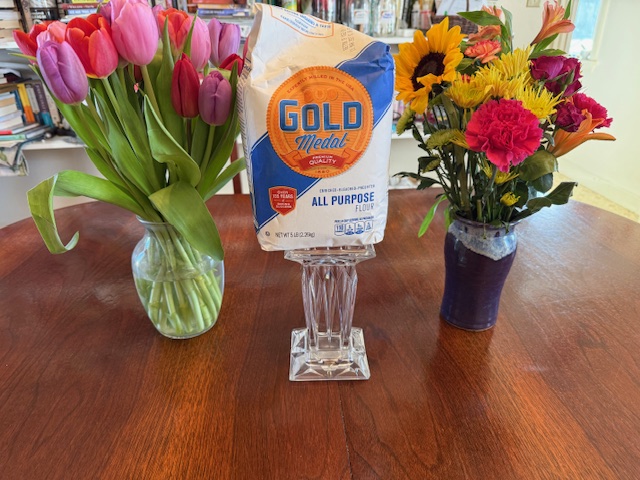
When it comes to quotes, consider the difference between how you buy flowers and how you buy flour. Also, imagine them sitting in a nice vase…
In media writing courses, we talk about quotes being the spice that zips up the story or the sparkly diamond that draws the attention of the reader. However, not all quotes actually do this, because simply slapping quotation marks around a pedestrian set of words doesn’t get the job done.
PR practitioners tend to write press releases that have at least one block quote in them, with some releases being nothing but one giant “statement from X Person” quote. News writers tend to build the bodies of their stories with at least a few paraphrase-quote pairings that are meant to give readers varying views of a topic and a wide array of people a chance to speak. In a lot of cases, those quotes are either relatively pointless or they offer little in the way of quality.
How is it that so many people are proud, happy and thrilled to be there in EVERY PRESS RELEASE, ALL OF THE TIME, even when the writer can craft the quote for the person being quoted? How is it that reporters who get to interview sources also manage to come back with such “meh” quotes from sources who really SHOULD be so proud, happy and thrilled that they can’t shut up about their subject?
Here are the reasons why:
People are afraid to do anything different, lest they offend someone:The phrase, “It is better to remain silent at the risk of being thought a fool, than to talk and remove all doubt of it,” is usually where most people want to be when the chips are down.
To that end, it’s a lot easier to do a bland, mediocre quote than to state something important with your name attached to it. Interview subjects with experience tend to lapse into cliches to avoid really upsetting people, while the press release quotes also tend to play to the middle of boring to avoid controversy.
Writers aren’t as creative as they need to be:One of the things that differentiates PR from news is the concept of quoting sources. If there’s one area where I’ve seen people have the MOST difficulty in making the shift, it’s here.
News requires you to go out, find someone and get something out of their mouth in a word-for-word format. PR in many cases allows for practitioners to write up something on behalf of the client and then just get a “sign off” on it.
Even though you CAN do this, it doesn’t always follow that you SHOULD, primarily for the reason we’re noting here: You don’t know enough about your source, the topic or the non-data stuff to really come up with that whiz-bang quote that will make the difference here.
The same thing can be true of news writers, who don’t put enough time into their research to ask questions that probe or engage the source. If you ask a generic question, you tend to get a generic answer.
Writers aren’t pushing for quality: I can’t tell you how many times I was told to “get a quote” for a story. It was basically like this scene from “The Paper” where Michael Keaton just wants “something:”
I say this as a fellow sinner who often was on the hook for getting a quote, any quote I could from any source, just so that we could say we quoted someone. However, it seems like “get a quote” is a general resting pulse for how we do business.
With those things in mind, here are a few ideas on how to get better stuff:
Don’t shop for flour. Shop for flowers:In the middle of pierogi season at our house, Amy often sends me out for supplies, the most common of which was flour. The direction was simple: “Go to the store and get a bag of flour.” I dutifully comply by driving to the closest place I could and grabbing a five or 10 pound bag off the shelf that resembled the bag she had just emptied.
When I got sent into the field as a journalist, I often felt that was how I was supposed to get quotes. It was like “Go to the store and get a bag of flour.” OK, if that’s all I’m doing, all I care about is going there, picking something off the shelf and coming home.
That’s part of the problem with quotes: You don’t just want something off the shelf.
Instead of shopping for flour, think about shopping for flowers for someone you love. Think about what it is that makes that bouquet special, beautiful and different for them. Think about how you want the reaction to be when they see it. Think about doing more than grabbing whatever is convenient.
Research better beforehand to ask better questions: As we’ve said here repeatedly, the key to everything good we do in journalism is in the preparation. The more work we do at the front end of the process, the better things will be at the back end of the process.
One of the reasons PR quotes are so “meh” is that practitioners don’t dig into the topic or the organization to find things that make it special. When all we have to work off of is a baseline understanding of the concept, which usually comes from a buzzword-laden mission statement, we’re operating in Generic-ville.
The benefit of doing the research before crafting that quote is to make it feel genuine and informed. In adding special touches based on detailed information you found, you not only have a better chance of making your source sound good, but you also have a much better chance of drawing a reporter’s attention.
In the case of reporters and practitioners who rely on interviewing, the research ahead of time can help you shape more pointed and engaging questions that will elicit stronger responses. When you ask that, “So what can you tell me about X?” question, the source will lapse into their “greatest hits album” answer, with all the generic info and cliches. If you can ask something that shows you’ve invested time and energy in the question, you’re likely to get that source to be more engaged.
Change the source’s perspective: Most of the time, the sources we interview either play to us as media practitioners or play to a perceived audience of peers. Those quotes tend to be more jargon laden or otherwise disengaged, and they usually don’t do much for an actual audience that will eventually read their quotes.
Put the source in a different state of mind, based on your full understanding of who you see as the readership. Try asking a question like, “So how would you explain this to a worker on the assembly line?” or “What would you say to a parent in the school district about X?” or even “Could you explain this to me like you are talking to a child?”
In shifting the perspective of the source in terms of understanding the audience, you can get them to shuffle the deck a bit and deal you a better hand. I’m a particular fan of the “child” quote when I’m talking to a source who is clearly exceptionally well-versed on their subject, to the point of assuming everyone else knows as much as they do.
I also like the idea of thinking about who else might be a source in my story to shape the questions. For example, if I’m talking to a product seller, I like to ask them to shift focus to being a product consumer. If they’re a superintendent, I like to get them to shift to think like a parent, a teacher, a custodian or a kid.
In getting them to move, they tend to get out of the rut where cliches live and give me something different.
In the middle of the week during the middle of the semester, it’s a bit of a drag for students and professors. With that in mind, here are a few things that might amuse you all, spark some discussions or generally make it feel like the weekend isn’t so far away:
FLORIDA’S VERSION OF “WHO WORE IT BETTER?”
You know you’re a journalist when the first question you have after reading this headline isn’t, “What the hell was wrong with this woman?” but rather “How did the manatee get into a bikini?”
In the world of misplaced modifiers, I think this one is the gold standard.
O’Donnell later apologized for his posts and took them down, but there are still copies of this floating all over the internet. It’s also not great optics, given Minnesota House of Representatives Speaker Emerita Melissa Hortman and her husband Mark Hortman were killed in July, in an attack deemed politically motivated.
This serves as one more reminder that stupidity is bad, but amplifying it on social media is worse.
GLAD WE GOT THAT NAILED DOWN: Stories based on opinions, particularly those that can’t be supported or refuted, don’t usually do much for me, but I have to admit this one grabbed me:
The former star of “Growing Pains” and long-time evangelist for Christianity has done a lot for publicizing his faith and reaching out to others to help them find Jesus. That said, I’m wondering where he got the inside scoop on the existence of hell.
I’m also going to argue that if he doesn’t believe in “eternal conscious torment,” he never had a nun for a teacher like I did. Sr. Mary Kenneth still haunts me in my dreams some times…
Speaking of living rent-free in someone’s head…
EVERY TIME A STUDENT REMEMBERS SOMETHING YOU TEACH THEM, AN ANGEL GETS ITS WINGS: I teach a lot of 8 a.m. required classes for sophomores, so I’m never exactly sure how much the students learn from me or how much they think about what I’ve taught them.
That’s why when a student not only remembers what I taught them, but also reaches out to say that they found an example of it in the wild, it just warms my grinchy little heart:
Hi professor, I saw this on Facebook and just thought it was so coincidental that we worked on a draft lead about a case just like this I thought I’d share with you. I think they wrote this terribly:
I’d have to agree with the kid, given that we don’t find out about a dead body until halfway through the piece. I’m also somewhat disturbed by the phrase “a working fire.” As opposed to what? An unemployed fire?
And finally…
SUITABLE FOR FRAMING: Some students wait until week 12 of a 14-week term to start trying to act right in class. At that point, they realize they’re totally screwed, as the math won’t allow them to pass, so they beg for extra credit.
I usually post this on my door right about the time I get that first request:
The University may record a class or access existing classroom recordings without the permission or knowledge of the instructor being recorded for the following purposes:
To gather evidence in connection with an investigation into alleged violations of University policy, when authorized in writing by the Provost and the Chief Human Resources Officer; and
For any other lawful purpose, when authorized in writing by the Provost and the Office of University Counsel, who will consult with the Chair of the Faculty.
BACKGROUND: The university had run into several issues related to recordings of professors over the years, only to figure out it really had no policy in place to deal with such things.
When called to account for this surreptitious move, the U fell back on the “well, we’re a one-party consent state” thing, which is true but a bit wobbly at best.
A FEW BASIC OBSERVATIONS: I found myself thinking about a couple aspects of the policy that either people haven’t considered very well or they just hope they won’t have to deal with in the future. Consider the following:
Rules for student recordings:I’m not sure exactly how this came into play, but the document makes it against UNC law for students to record in the classroom, except under specific circumstances:
Students may not record classes, including online classes, without express advance permission from the instructor teaching the class they wish to record. Students approved for recording as a University Compliance Office (UCO) accommodation to address a disability, pregnancy, or religious accommodation must notify instructors of their approved accommodation by sending an accommodation notification plan in advance of any recording. The approved accommodation plan must indicate the means by which the recording will be accomplished and any other details pertaining to the recording or its use.
Well, for starters, how are you going to monitor that, given students carry about 97 digital devices on them at any point in time? I guess if I’m in my computer lab at UWO with 20-some kids, maybe I might notice a kid’s phone set to record, but most likely not. In a UNC pit class, though? Not a chance in hell.
Add that to the lack of a specific “or else what” in this policy and I’m thinking this thing is going to be relatively toothless when it comes to enforcement. I’m not an expert on university policy or UNC’s policies in particular, but I don’t see a “If you do X, you will suffer Y” in this document. The document also doesn’t say, “See POLICY X for punishments” so I’m left to wonder if the kids will record anyway depending on how strict the policy and problematic the punishment.
Martyrs to the cause:Most of the kerfuffle I’ve seen in relation to classroom recordings getting out into the world is related to students trying to “expose” professorial bias. We’ve covered a few of these here, and there are dozens more cases elsewhere in which a student records a professor doing or saying something that upsets a large group of the perpetually offended. Once that match of outrage hits the kerosene of social media, the professor’s goose is cooked.
With that in mind (and the previous point in mind as well), I somehow doubt this kind of thing will stop. Even more, I imagine that a kid who “exposes” a professor via an illicit recording at UNC will now be hailed as a martyr to the cause if any punishment befalls that kid.
(“Let’s all remember the brave sacrifice of Jimmy, who recorded Professor Jones misgendering a piece of wicker in Underwater Basketweaving 385. That ‘stern talking to’ he got from the dean will haunt him always…”)
We have a world in which social media rules, “gotcha fame” is aspirational and people are way too full of themselves around the academic world. Recordings are going to happen.
To Chill or Not To Chill: I’ve studied the concept of the Willingness to Self-Censor for a number of years and found that many people have an innate sense of how willing they are to speak out or shut up when faced with controversy. Certain topics tend to spark this more in all people, but many topics spark it in specific people. In short, there are a lot of reasons why people will hold their tongues and it’s not always because they don’t have something to say.
Conversely, I’ve dealt with academics all my adult life and I found that many of them apparently have some sort of condition that makes them think everyone should hear what they have to say about everything, regardless of the circumstances.
Michael Palm, president of UNC’s chapter of the American Association of University Professors and associate professor in the UNC Department of Communication, said faculty members are aware they may be monitored by the University or even outside groups.
“My sense is that most faculty, at this point, just assume they’re being watched,” Palm said.
<SNIP>
“I think it is unquestionable that there has been a chilling effect on campus and that many more faculty now than at any other time that I’ve been a faculty member — and I’ve been at UNC for 18 years — are self-censoring out of fear for what might happen if the wrong people disapprove of the content in their classes,” Palm said.
If I’m being honest, there are days I have a “come at me, bro” vibe going on when it comes to my classroom. If you think I’ve said something stupid, childish, offensive or whatever… well… take a number, I guess. Then there are other days where, if I think about all the potential ways something like this could screw me, you couldn’t pull a needle out of my keester with a tow truck.
What I foresee here is that the students are going to lose a lot, thanks to this policy. The professors who really SHOULD be curbed a bit in regard to their histrionics and side-rambles will be the ones thinking, “Well, that’s for other people…” The folks who are more like academic prairie dogs, popping their little heads out of their holes juuuuuusssst enough to see if the coast is clear, will stay under ground for fear of getting whacked.