“It was so overwhelming.” Student journalists at the Pitt News reflect the Tree of Life shooting (Part II)

Community Reaction_AB

(Participants gather at a vigil in Pittsburgh for the Tree of Life synagogue shooting victims the Saturday of the attack. Pitt News Visual Editor Anna Bongardino photographed this event and several others that happened after the shooting. Photo courtesy of Anna Bongardino.)

The shooting at the Tree of Life synagogue last week left 11 people dead and the community in Pittsburgh shattered. National media descended upon the Pennsylvania city to tell the story of this destructive act, but some of the best coverage came from student journalists at the University of Pittsburgh and their student news operation, the Pitt News.

Several staff members were nice enough to share their thoughts, emotions and advice for the blog, so starting today, we will hear from these students who continue to cover this situation.

AnnaMugToday’s post centers on Pitt News Visual Editor Anna Bongardino (left), a senior political science major, who helped the paper cover the events in the wake of the attack, including President Trump’s visit. She outlines the impact the vigil and the national attention had on her and why this kind of coverage matters so much to the paper’s readers.


Part I can be found here. If you have questions or comments, click here.


UPDATE: Anna reached out after the post ran and wanted to add something important to her thoughts.

One important note I have is to say that my central takeaway from covering the events was not that they were overwhelming. The shooting itself was overwhelming — the coverage of it wasn’t. Covering the vigils and protests in the aftermath of a hate crime was uncharted territory for all of us. There was a learning curve involved in producing such a large amount of sensitive content on such short deadlines for the editorial board, the writers and the photographers. But this is my main message: when student journalists have the privilege to report national stories, they should embrace it and take the assignments that are challenging and unfamiliar to them. It’s not easy to report on stories of violence in your own community especially alongside national journalists. There is a balance you need to strike within yourself as a journalist and as a community member who has been affected by those events, but it’s rewarding to know you’re contributing to something so meaningful.

That’s what I would like people to take away from my experience.

The remainder of the original post is below with some minor edits. — VFF


Anna Bongardino was headed to the Pitt News office to give one of her staffers a camera when she found out about the attack at the Tree of Life synagogue.  Having worked in the area for much of her time at the University of Pittsburgh, Bongardino said she knew the area well.

“The synagogue is a 10-minute drive from campus,” she said. “It was a neighborhood I was just in that night before.”

With her editor in chief, Christian Snyder, heading to the scene of the shooting, Bongardino said she didn’t know exactly what had happened but it became readily apparent that the situation was going to be a serious news story.

“I originally thought it was a drive-by shooting or something,” Bongardino said. “I didn’t realize it was a really involved thing right away. It was just all of a sudden Christian is in the office and he was running out to the scene. Now, I was like, ‘Something is going on and it’s not good.'”

As information about the attack filtered in, Bongardino said she decided to cover the events that sprung up over the next several days, including a vigil held the night of the shooting and President Donald Trump’s arrival later the next week.

“I decided that if there were protests or anything else, I would go,” she said. “I was trying to do homework but I couldn’t focus. (The shooting) was so overwhelming. It’s not the city I thought Pittsburgh to be.”

Although she had photographed many events throughout her time in college, Bongardino said the vigil felt different to her in terms of what she felt comfortable in photographing.

“What was difficult was that it was a very fresh thing and people were very emotional,” Bongardino said. “I felt like my camera, instead of being a buffer, it made me feel like I stood out more and that I was being voyeuristic so I was trying to be respectful of these people who were experiencing very real pain.”

“In terms of having an internal discussion with myself (about which photos to use)… I think it was more just during the event,” she added. “‘Is this too emotional to publish?’ ‘Should I take this photo?’ I think that would be a great photo, but it was something I didn’t want to do. People would look at me and I would feel uncomfortable. People have looked at me before, but it felt kind of different this time. The look then said, ‘Why do you really need to take my photo?’ Now it was, ‘Do you really need to take a photo now?’ I feel like I can’t and I feel like I shouldn’t intrude so I think that’s something that as I get more comfortable with… events like this, I think I’ll be able to find a balance.”

Bongardino said it also felt different because of the massive amount of national attention this event received, drawing people to her city.

“It’s a small big city,” she said. “I’m familiar with the professional photographers around here, so I knew all these people and everywhere I went… Then, I’m speaking with someone next to me and it’s a senior White House correspondent. It was way different than dealing with the local media.”

“It’s sombering to realize all that is because of a hate crime,” she added. “That’s a really difficult thing to contend with.”

In terms of the overall experience, Bongardino said she was glad she took part in the media coverage.

“I definitely think for myself, it was kind of healing to cover the vigil and it felt really productive,” she said. “It felt like I was contributing. If you have any doubts going to an emotionally charged or difficult events, go. When you go, do the best you can and allow yourself to feel things. Don’t try to separate your humanity from journalism.

“Still, try to be journalistic and keep your journalistic integrity and don’t exhibit bias but don’t forget you’re a human too. If I could go back and do that vigil again, I would have taken more photos. Don’t be afraid to step outside of your comfort zone and… see what you can do to help the people. Do what’s scary to you. It’s a really important job to let people know what’s going on.”

“You’re dealing with people’s lives, legacies and deaths.” Student journalists at the Pitt News reflect on their coverage of the Tree of Life shooting (Part I)

TreeofLife-scene-1.jpg

Armed authorities work the scene at the Tree of Life synagogue shooting on Saturday, Oct. 27, 2018. Christian Snyder, a student at the University of Pittsburgh and the editor in chief of the Pitt News, took this photo as part of his coverage of the event. (photo courtesy of Christian Snyder)

ChristianSnyderMug.jpg

The shooting at the Tree of Life synagogue on Oct. 27 left 11 people dead and the community in Pittsburgh in shock. National media descended upon the Pennsylvania city to tell the story of this destructive act, but some of the best coverage came from student journalists at the University of Pittsburgh and their student news operation, the Pitt News.

Several staff members were nice enough to share their thoughts, emotions and advice for the blog, so starting today, we will hear from these students who continue to cover this situation.

Today’s post centers on Pitt News Editor in Chief Christian Snyder (above), a politics and philosophy major who grew up in the Pittsburgh area. Snyder was one of the first students on the scene to report on the shooting. Aside from gathering information, taking photos and writing copy, he also had to make managerial decisions regarding what would and would not be published.

Here are some of the pieces the staff has produced over the past week:

11 Dead, 6 Injured in Massacre at Tree of Life Congregation
Affidavit Reveals Details of Shooting
Obituaries: The Tree of Life Shooting Victims
Pittsburgh Rallies, Unites Against Hate
Suspect in Tree of Life Shooting Pleads Not Guilty

Other staffers will be featured throughout the week. If you have questions or comments, click here.

Christian Snyder didn’t plan to be in Pittsburgh the weekend the Tree of Life synagogue shooting occurred. The Pitt News editor in chief expected to spend time in mourning with family members when news intervened.

“I was supposed to drive to Detroit for a family funeral on Saturday, and was packing my things when I heard about the shooting,” Snyder said in an email interview. “A co-worker forwarded our editorial staff a Pittsburgh Public Safety tweet briefly describing the incident. As soon as I heard, I went to the newsroom, got a camera and a press pass, and drove to Squirrel Hill.”

When Snyder arrived, he showed up to an active crime scene that was continuing to develop.

“When we heard about the shooting, and up until about 15 minutes after I got there, authorities had not yet taken the suspect into custody, and we were hearing reports that the alleged shooter had briefly escaped the synagogue,” he said.

“I’ve covered other crime in the past,” he added. “I’ve written about student deaths and photographed a crime scene last year when a body was left on a residential street in Oakland. But this was really different. Like I mentioned, when I arrived in Squirrel Hill the suspect hadn’t yet been apprehended, so there was definitely some nervous energy in the air.”

When the dust settled at the synagogue, authorities had arrested Robert Bowers, a 46-year-old truck driver in connection with the shooting. A federal grand jury indicted him on 11 charges of murder, along with hate-crime enhancements for his attack on the Tree of Life synagogue. Media reports stated that Bowers entered the building around 10 a.m. that day, with both an AR-15 rifle and three .357 Glock handguns. He later told authorities, “I just want to kill Jews.”

The Pitt News began its coverage with social media, sending tweets out to its readers regarding the event and sharing safety information, Snyder said. After that, the publication began using multiple platforms to create and share information.

“We published a breaking news story as soon as we could, which was a short 200-word brief,” he said. “Throughout the day I sent photos and reporting to our editors working on the keeping the story up-to-date. We got another reporter to the scene in Squirrel Hill and had our digital team start building maps and making videos.”

Even in the chaos of the situation, Snyder said his team continued to make critical editorial decisions about what to publish and what to hold, placing an emphasis on accuracy over immediacy.

“We’re proud we didn’t report victim counts early, because many publications overestimated the number of victims,” he said. “In a synagogue which only had about 60 people in it, the difference between 11 (the correct number) and 15 (one of the higher early estimates I read) is stark.”

Several vigils followed the shootings as well as a visit from the president, which led to various other demonstrations. All of this is happening about 20 minutes from the Pitt News offices, which has the staff working overtime, Snyder said.

“Obviously this has been a stressful time for our staff,” he said. “We’re trying to cover this as if we weren’t students, at all hours of the day and as thoroughly as possible. We’ve been stretched thin.”

“I’d like to say, it truly has been a trying time in Pittsburgh, and I am proud of our work, he added. “It feels rote, emotionless in the aftermath — I know there will come a time soon that I stop and think about the loss of life I was just three blocks away from. But for now, my energy is focused on the stories emerging from my beautiful community.”

At the closing of the email, I asked Snyder if he had any advice for students or student journalists who might find themselves covering something like this. His response was so good, I couldn’t bring myself to chop it up. Here it is in full:

What advice would I have? Damn. I don’t know what possible advice I could give people about something like this.

First of all, hope and (if applicable to you) pray that you don’t have to cover something like this.

Second: be cautious. You would rather miss the big scoop than make a big mistake. You would also rather miss the big scoop than legitimately put yourself in danger — don’t do something stupid for one photo. Be smart, and remember that experienced journalists have years of experience in dangerous situations and know how to handle themselves. On that note of caution — you’re dealing with peoples lives, legacies and deaths. Don’t forget the grief and emotion associated with things like this.

Third: be bold. You would rather get somewhere an hour early or head on a dead-end tip than sit at home and realize there was more you could have done. Your coverage becomes part of American history, and the only way to truly make our mark as journalists is the document we produce every night. Don’t look at your byline and wish you’d done more work.

And finally: be thoughtful. Be thoughtful toward yourself, and contemplate why you’re covering the event. Did you rush to the scene of the shooting so you could have the first scoop? Are you excited, or are you nervous? Make sure you work through your own emotions in a healthy way, and give yourself time to recover. An hour-long break from the newsroom can work wonders for your ability to stay focused and in tune with the material.

Also, be thoughtful toward others — the victims, the survivors, the community and your readers. Your work means a lot to a lot of people.

No Neuralizer for Nemec: When your alma mater backs off in a suit over open records.

Last week, we noted that Alex Nemec’s alma mater sued him over a set of documents he legally obtained as part of a court ruling. The record keeper at UW-Oshkosh inadvertently sent him copies of the unredacted reports, leading the state’s Department of Justice to file a motion, asking the courts to reopen the matter. Even more, the professor who is the subject of these documents, Willis Hagen, asked the court to force Nemec to “name names” of anyone he might have shared this information with.

The degree to which the state was basically asking Nemec to forget everything he learned in those unredacted documents and never disclose anything about the content within had both First Amendment and privacy issues, as Nemec’s lawyer noted at the time.

On Friday, the state backed off:

32V3931-78 Notice of Withdrawal of Motion to Reopen F-S 10-26-18_Page_132V3931-78-Notice-of-Withdrawal-of-Motion-to-Reopen-F-S-10-26-18_Page_2.jpg

Nemec emailed me Friday to let me know his lawyer had forwarded him this. The upshot is that the state has decided against pursuing the reopening of the case and pursuing the injunction, so he can continue to report as he sees fit based on what he learned, without fear of a neuralizer:

Neuralizer12
(Next time, Alex… Next time…)

Nemec said the only issue left at hand is if Hagen wishes to pursue his request to “name names,” which would require him to file a motion on his own. If he does, Nemec said, it will come before the judge on Nov. 21.

We’ll keep you posted.

What happens when your alma mater screws up an open-records release and then sics the Department of Justice on you.

As a student journalist, Alex Nemec heard a rumor that a business professor was teaching a class when some university officials entered the room, removed the professor and dismissed the class. The next time the class met, he heard, the students had a new teacher and nobody knew what happened.

He wanted the answer to a very simple question: Did this actually happen and, if so, why?

His attempt to find out the answer has taken almost two years, during which time he has written several stories on the topic, graduated from college and endured a court battle over tangential records. He remains no closer to finding out the answer to his question and his legal tussles continue to take strange twists.

The latest twist involves the Department of Justice filing an emergency petition with the court to bar Nemec from reporting on the documents he received as part of an appeals court ruling.

The reason? The university official responsible for sending him a set of redacted documents screwed up:

The case dates to early 2017 when Nemec, then a reporter for UW-Oshkosh’s student newspaper, The Advance-Titan, filed an open records request with the university seeking Hagen’s disciplinary records and emails.

Hagen sued the university and the Board of Regents for the University of Wisconsin System to block their release. The judge ordered the records released but with some material redacted. And that decision was upheld on appeal.

When the records custodian finally released the documents in August, she inadvertently sent the unredacted copies to Nemec, according to Schimel’s notice to the court.

Schimel is asking that the court force Nemec to destroy the records and bar him from sharing or publishing any information that had been mistakenly released. In a separate filing, Hagen is asking the court to require Nemec to “identify all persons and entities to whom he disclosed the confidential information.”

Simply to boil this down, the person who sent the records messed up and sent the wrong records to Nemec in August. About 45 days later, she realized that she messed up and first attempted to get Nemec to “do the right thing” by promising not to publish anything in those records. When he declined to do so, as he had legally obtained the records, the DOJ filed the emergency motion, which won’t be heard until November.

Here are three key things that should really concern anyone interested in the First Amendment and governmental overreach:


Nemec didn’t violate the law, but he is being treated like a criminal

The most important thing to keep in mind here is this: This situation is not Nemec’s fault. I’ve had to say that so many times in regard to this situation that I feel like I’m in “Good Will Hunting.”

Nemec didn’t slip the records keeper a $20 to get the unredacted records. He didn’t break into an office and steal them. He didn’t do whatever the hell this is from “Passenger 57.” All he did was take the records that were sent legally to him by the record keeper as per the court ruling. The courts have held that the First Amendment protects the publication of information that is truthful and lawfully obtained, even when the information comes from the inadvertent release of the documents.

A recent case occurred in Florida, where the Sun-Sentinel requested educational documents pertaining to the Parkland school shooter, Nikolas Cruz. When the school released the records, the redactions didn’t “stick” so the paper could see everything on those pages. The content that the district intended to redact but didn’t showed multiple failings on the part of the school district pertaining to Cruz and directly contradicted public statements district officials made about Cruz.

The judge in the case, Elizabeth Scherer, blasted the paper for what it published and threatened to dictate what the paper could and could not publish. As we noted here at the time, the paper did not violate the law, but the courts would be violating the First Amendment if they continued down the “we’ll tell you what to publish” path.

As Nemec’s lawyer noted in her filing on this case:

Plaintiff and Defendants in this case focus their injunction motions on Intervenor’s conduct, but these requests are either moot (because they request Nemec to delete the records when they have already been deleted), are unconstitutional as a prior restraint on speech (as in the requests to enjoin Nemec from publicly disseminating the redacted information), or are themselves an unprecedented intrusion on news reporting and private lives (as in Hagen’s request that Nemec name all the people with whom he has shared the information).

There is no question that Nemec legally obtained the information, and now that he has, “[t]he choice of material to go into a newspaper . . . and treatment of public issues and public officials—whether fair or unfair—constitute the exercise of editorial control and judgment. It has yet to be demonstrated how governmental regulation of this crucial process can be exercised consistent with First Amendment guarantees of a free press as they have evolved to this time.” Miami Herald Publ’g Co. v. Tornillo, 418 U.S. 214, 258 (1971).

In other words, it’s up to Nemec to decide what he does with this information. His ethical standards and editorial discretion will guide him, not an attempt at prior restraint.


The extreme level of intended suppression borders on insanity

The state is trying to put the ketchup back in the bottle, by requiring Nemec to get rid of all the files and only rely on what he would learn in the new “cleaned” set of documents if he were to publish a story.

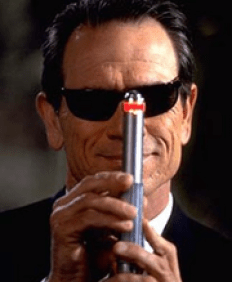
That means the state is asking him to suppress his knowledge of the things he already read in those earlier documents and not share that information, whether or not he finds it to be newsworthy, with the public. Unless the DOJ possesses a “Men In Black” memory wand, this isn’t going to really work.

MIBCLEAN

(Hold still, Alex. This isn’t going to hurt at all…)

While the state’s position borders on the absurd, what the Journal-Sentinel wrote in regard to Hagen’s filing comes across as downright frightening. His request is to force Nemec to provide the names of anyone with whom he might have shared the documents or spoken to about them.

First, stop and think about the chilling effect that would have on almost anyone who might speak to a journalist about any matter of public importance. This isn’t a case in which Nemec is being asked to disclose sources for a greater public good, but rather one in which he is asked to tell the state the names of people he might have discussed legally obtained information. His parents, his girlfriend, people with whom he works, journalists at his former student newspaper and more. (Full disclosure: I know I would be on that list, as Nemec and I have been discussing this whole case for more than 18 months.)

When I first saw Hagen’s demand, although the parallels aren’t perfect, my mind immediately went back to the HUAC trials of the 1950s and McCarthyism and it was damned scary.

Second, consider that Nemec had this information for 45 days. I can’t remember what I had for lunch yesterday, but he’s supposed to come up with a laundry list of people and organizations that might have heard about the unredacted information in the past month and a half? What if he’s wrong or forgets someone? Then what?

Also, let’s pretend that the courts would require him to do so AND Nemec had the mental fortitude to remember every, single person or group that he spoke to about this. What now? My guess would be that THOSE people would be the next to see some sort of suppression filing requiring that THEY list off everyone who THEY might have spoken to or shared information with about this. How far does this web of “don’t you dare” go?


How bad could this really BE?

Over the past 20-some years in which I have filed open-records requests and helped others file them, I have NEVER seen a situation get to this point. In most cases, these requests don’t even BECOME cases because people don’t take the issue to court, no matter WHAT is contained in those documents.

We had a situation out here in which a student in my reporting class requested documents pertaining to the firing of the university’s volleyball coach. She put in the request in March and after all the necessary notifications and time delays, she had the documents in August. You can read the article here, but as kind of a “trigger warning,” here’s a paragraph that gives you a sense of what these documents lay out:

One of Schaefer’s athletes filed a sexual harassment report against him with Dean of Students Art Munin on May 19, 2017. The report stated that Schaefer bought the student drinks, played a game called “nut ball,” texted him in a sexual manner and gifted him with a “jerk off cloth.”

The level of fighting to keep things under wraps here has me absolutely flummoxed as to what it is that Hagen and the university are trying to keep out of the public eye. I feel like Jacob in “Hot Tub Time Machine:”

The reason I’m perplexed is because the way I’m looking at it, this could be one of two things:

  • This is a case of trying to kill a fly with a sledgehammer. There’s nothing in this thing that is so horrifying that it would irreparably damage the university or Hagen if it were released to the public. It’s a situation in which people might feel better if they could control the situation, but there’s nothing there that requires a shoe box labeled “Cincinnati.” The university might want to limit the release of names of other people involved and so forth, but as noted above, that’s not their call now if precedent means anything. I know Nemec well enough to know that just because he could do something, it doesn’t follow that he will. If he didn’t have an ethical code, he would have posted the documents everywhere, in their unredacted form, already.


  • Gwyneth Paltrow’s head is in the box and nobody wants us to know. Opening the unredacted portions of these documents to public scrutiny would reveal something horrifying about the university, Hagen or some combination therein. I really don’t think this is the case for a simple reason: These documents pertain to an incident before the one that Nemec really wanted to know about. After this situation was resolved, Hagen was able to continue working at UWO. If these documents contained that “What’s in the box?” level of concern, there’s no way that would have happened. Still, according to Nemec’s story, Hagen was removed from a CLASSROOM and his classes were reassigned and it’s unclear to the public WHY, so I would have to assume SOMETHING weird is going on. How weird? We might never know

The judge will hear arguments on Nov. 21. It’s unclear to what degree there’s going to be more on this, and Nemec has declined to comment on any of this until the case is settled. Making things even more bizarre, the university is still sitting on a set of redacted records more directly pertaining to Nemec’s original request until this situation is resolved.

Although it would be interesting to find out what these documents all say, the bigger issue is what the court’s rulings will say about what journalists can say in these situations.

How “weasel voice” helped the New York Times build a 3,000-word narrative about a sexual con job in the “sugar dating” realm (and 3 reasons you should avoid the paper’s approach to this in your writing).

The basic rule of journalism that states, “Just tell me what happened and why I should care as a reader,” is often undermined when journalists rely on soft language and euphemisms. We talked about this at length in the discussion of “weasel voice” in writing and in terms of how writers get a bad rap for their linguistic gymnastics.

However, the following story was something weasel-riffic, thanks to an odd confluence of the story topic and the overwriting common to the New York Times. In the most basic terms, you could boil this story down to a simple sentence:

A woman using a borderline legal implied-sex-for-cash website got conned by a guy who claimed to be rich but wasn’t, thus leaving her stuck with a hotel bill after a three-way.

That sentence is 31 words, but the Times took a bit more time to tell this story. More than 3,000 words and one really awkward correction later, the Times’ had finished its clinic on euphemistic weasel voice. Consider some of the following descriptions and how you can practically see the writer using “air quotes” to the point of developing carpal tunnel syndrome:

  • The headline starts with the term “sugar date,” to describe the arrangement between young women and older men looking for an implied-sex-for-cash hook up.
  • A subhead refers to this concept as “Escorting 2.0,” like it’s some sort of software upgrade.
  • This chunk of text: Last winter, a friend told her about the concept of “sugar-dating”: a “sugar baby” (most often a woman or a gay man) connecting with a “sugar daddy” (a man) in a relationship that offers financial support in exchange for companionship and possibly sex. Accelerated by the anonymity of the internet, sugar-dating is a variation on “escorting,” that practice formerly advertised at the back of New York magazine and the now-defunct Village Voice newspaper. (When you need four sets of euphemism quotes and two parentheticals to get a concept across to your readers, you’re probably having a bad writing day.)
  • It refers to SeekingArrangements.com as “a website that helps people interested in monetized dating find each other.” I found it odd that the term “monetized dating” didn’t get quote marks, but it fits the bill of every other euphemism here for prostitution.
  • It uses the term “hypergamy” to refer to the concept of marrying for money.
  • It refers to the website’s founder’s other hookup site for married people who want to have sex with other people as part of an “ethical cheating” movement. This reminds me of other oxymorons like “jumbo shrimp” and “real artificial butter.”
  • This sentence officially lost me when it came to what gets the air quotes and what doesn’t: There, some 200 attendees, many silkily coifed young women, paid $50 apiece for admission to panels on topics like styling, personal branding and “financial literacy.” Why is “financial literacy” in quotes? What the heck could that possibly be euphemistic for?

By this point I “officially” ran out of “the overwhelming desire” to find the “air-quoted material” in this “story” about “sugar dating.” (I almost needed to buy a loot box full of air quotes for this post…)

This isn’t to pick on this particular writer or this particular topic, but it does raise some questions about what makes for a story, how you should tell the story and what is an acceptable amount of “weasel voice.” Consider the following points:


When you dig into a story that isn’t a story, consider Filak’s First Rule of Holes:

In reading this story, I found that there were about three or four directions this could have gone that would have been valuable to readers. It could have been a look at how the “sugar industry” works. It could have been about the dangers associated with “monetized dating.” It could have been about the legal issues surrounding these sites. It could have been about the long con this guy (and I’m sure others) are pulling on cash-strapped women who apply to the sites. I’m sure I’m missing other “deep digs” it could have hit.

Instead, it kind of talked about each of these in passing all while telling this one story about this person who was taken advantage of by one guy at one point in time. If she had been a narrative thread for any of these larger concerns, this might have been worth 3,000+ words. However, she was the whole point, which made this feel… perplexing. I found myself like “The Bobs” in this “Office Space” interview:

The duty to report is not the same as the duty to write, so when you find that a story isn’t really doing a whole heck of a lot, you might want to reconsider your approach, your sources or your sense that this is a story at all. Follow Filak’s First Rule of Holes: When you find your self in one, stop digging.


A Feature Approach Doesn’t Mean You Aren’t Doing Journalism

When I first taught feature writing, I had a full class of 15 students and at least that many on the waiting list. They came with the idea that the class fell somewhere between creative writing and a haiku seminar. By the time they figured out how I ran the class, I think I was down to eight students and nobody on the waiting listed wanted to join in the fun.

Features require observation, depth and clarity that couple with strong reporting and valuable content. The observation part was there, almost to a fault, in that I felt like I was reading one of George R.R. Martin’s descriptions of meals in the “Game of Thrones” series or Bret Easton Ellis’ “label-dropping” in the first chapter of “American Psycho.” (I had to Google some make-up and hair-do terminology as well as find out what made certain hotels worth name-dropping…)

However, the story failed to measure up in terms of meeting journalistic rigor for reporting and storytelling standards. If this guy really is conning multiple women on this site, why is he not being reported to some form of authority? If the site is doing a “caveat emptor” approach, that’s one big story. If the police don’t have a tool for stopping this, that’s another big story. (And possibly a call for some legislative discussion as there was to establish punishment for revenge porn and up-skirt photography.)

At the very least, if he’s a scummy weasel, as the author seemed to confirm, why did this guy get away without being named? That was a confusing choice.

Why is this a story now? Even features need a time peg. Is the site changing its approach? Is “Ron/Jay/Mr. Mystery” back on the prowl again? Is there a new law or a new rule that makes this relevant? This isn’t a case of “She should have come forward earlier,” as people can tell their stories at any point they so choose. That said, the writer needs to make it clear why we’re hearing it now and why it should matter to the readers now.

At least a half dozen other holes emerge in the reporting here and there, often brushed over with a weak parenthetical explanation. The writer owes the readers value and clarity. Neither seem prominent here.


Avoid Words That Obscure Reality

When you find yourself using jargon, euphemism or other code words in your writing, you aren’t helping your readers understand your story. This tends to happen when technical topics overwhelm reporters or when PR professionals use terms common to their field but that other people don’t understand.

This isn’t to say that you should blunt the language to the point of distraction, but there has to be a limit as to how much “air quoting” or euphemistic writing you should do. The chunk of weasel voice outlined above clearly demonstrates this, but here’s a paragraph with one term that still has me puzzled:

He said that he looked for women on SeekingArrangement and advertised himself on Tinder as a “sugar daddy” — his profile urged women to “swipe right if looking to be spoiled” — solely because he thought it was a good way to meet women for non-transactional hookups.

I’m uncertain as to the pairing of “non-transactional” and “hookup” in that sentence or if it means what the guy, the writer or what I thought it meant. (Another Google search led me down the path of software engineering… I think… before I found the “do’s” and “don’t’s” of being “an aspiring sugar baby” at the Thought Catalog site. It made me want to beg my wife to never leave me, for fear of what’s in the dating pool out there, and then it made me want to take a potato peeler to my eyeballs.)

Since you can’t use terms like “money for sex” or more direct terms without running afoul of the law, the author here (and others as well) refer to this as “transactional relationships.” A “non-transactional” relationship, thus would appear to be one that lacked a quid-pro-quo approach to the interaction. Or, as you would normally call it, a “relationship.”

When the author refers to this guy running his game on the site in this way, it sounds like he’s saying he puts himself out there as a rich guy because he figured he’d attract women even though he never had any intention of paying them.

If that’s the case, say that. As a reader, I would then be able to say, “Wait a minute, isn’t that fraud? I think I saw a ‘Law & Order: SVU’ episode on that topic at one point…” If that’s not what he meant, make it clearer what he was saying. It’s not a direct quote, so the euphemism is that of the writer. As it stands, I have no idea what I’m seeing.

And that’s the larger point about this article and the writing style: Euphemism and jargon kill it under the guise of a feature format and the effort to make this appear less shady than it is.

I’m not making a moral argument here. You want to hook up with people for any reason whatsoever, go for it. You want to write about those people, that’s fine, too. I’ve read news stories that would make John Waters blush and a Billy Goat puke. That’s not the issue. It’s the lack of directness that limits good writing and quality journalism.

It’s why news obituaries use the term “died” instead of “passed away,” “expired” or “spun from the mortal coil.” It’s also why we avoid phrases like “now singing with the angels” or “resting safely in the arms of Jesus.” (I’ve seen all of these at one point or another.) They obscure reality and make life difficult on the readers.

The fact of the matter is these terms like “sugar baby” and “sugar daddy” and “monetized dating” are easy enough to translate from weasel voice into more direct language. In not doing so, the author harmed the story, irritated the readers and provided little to the sum of human knowledge. If you face situations where people try to obscure reality by telling you they “depopulated an area with an explosive aerial assault” (bombed a village) or “engaged in disinformation” (lied) or “exchanged angry hand gestures” (raised their middle fingers), you need to cut through the obfuscation and give your readers a clear sense of reality.

In short, just tell me what happened and why I care in a clear, concise and coherent way.

“Here is someone who has power and money trying to bully us into taking down negative coverage:” 3 things you can learn from an award-winning journalist’s fight to keep his work public.

As a reporter for Great 98 in Mayville, Wisconsin, Alex Crowe found himself digging into allegations of corruption and special treatment in the city’s police department. His work looked into a Department of Justice investigation that revealed the department helped cover up a drug-related offense at the request of an officer. Tom Poellot, the officer accused of trying to cover for his son, denied that he was involved in any alterations to that police report, even though that information was included in a criminal complaint filed against former Mayville Police Chief Christopher MacNeill.

Crowe’s efforts garnered a lot of attention for the station’s news operation and earned him a first-place award from the Wisconsin Broadcasters Association in the category of Best Significant Community Impact in 2017.

A year or so later, everything went to hell in a speedboat.

Poellot’s lawyer contacted the station and demanded the station pull down the articles, claiming Crowe broke the law in his reporting.

“He claims we violated Wisconsin Statutes Section 938.396(1)(b)(1)  which says you cannot identify a minor involved in a crime,” Crowe wrote in an email. “I wrote that Poellot’s son had been caught at school, but never identified the kid. All word-for-word form DOJ criminal complaint against MacNeill.”

Crowe said the attorney had been extremely aggressive in his approach and Crowe’s superiors at the station were concerned enough to consider pulling the stories off line and scrubbing them from all social media. The costs associated with a protracted legal fight were also potentially prohibitive, Crowe was told.

To better understand the legal issues associated with his stories, Crowe contacted the Reporters Committee for Freedom of the Press, a non-profit group that “provides pro bono legal representation, amicus curiae support, and other legal resources to protect First Amendment freedoms and the newsgathering rights of journalists.”

“I sent an email late one night, and received a call back literally minutes later from a lawyer in D.C. who was furious with the way we were being treated,” Crowe wrote. “She put me in contact with a lawyer in Madison who works with the Wisconsin Newspaper Association as well as the Wisconsin Broadcasters Association. He was able to cite specific Wisconsin State Statutes that provide protections for the press, as well as refute the chief/lawyer’s claims that we were in violation of a different set of statutes. We told the other side that we had been in contact with multiple lawyers who helped us put together a response, and have not heard back from the lawyer representing the chief in Cudahy for weeks. Hopefully, the matter has been resolved.”

(The stories are still available on the Great 98 website here and here and you, so feel free to read them. They’re truly great bits of quality local journalism. If you want to hear what Crowe said about them for this blog when they first came out, you can click here and here.)

I asked Crowe what he learned from this experience and he had a few tips. Below are some of his thoughts (in quotes) and three things I think you can take away from this experience:


Pair intuition and research before you respond.

When I worked as a journalist, a student newspaper adviser, and even as a professor, I would hear about ridiculously absurd statements people would make about the intersection of law and the media. Stuff like:

  • “You can’t publish the name of a criminal because the person could sue us.”
  • “We don’t have to release that document (to the media) because we don’t feel you are entitled to it.”
  • “We know we released that document, but we sent you the wrong one and we’re relying on your ethical integrity as a journalist to destroy it and let us send you a new one.”
  • “You published my son’s name in the paper! I’m suing you for making him look bad.” (The “son” had been arrested after participating in a violent, public altercation. I imagine THAT might have made him look bad, but what do I know?)

My favorite one was a response to an open records request in which we were denied access to a set of evaluations that a search committee had inadvertently made public. The responding records keeper stated that the documents were available under some arcane part of Indiana law in which they weren’t public, but rather more like interoffice memos meant to be shared only among about 30,000 students, faculty and staff on the campus. Just not for publication in the student newspaper, with its circulation of about 10,000.

When it came to Crowe’s situation, it felt like bullying to me. The use of a lawyer and a specific state statute can scare the hell out of anyone who isn’t a legal expert. The phrase, “Do X or we’re going to sue you” coming from a lawyer can make you want to cower in a corner and say, “Please don’t hurt me!” Instead, find your own ringer in this game and see what he or she can do to balance the playing field.

Whenever someone threatens to sue you or withholds a document from you or does anything else like that, take a few moments and start processing what you have heard in a logical fashion. Once you do this a few times (and take a decent com law class), you can develop a pretty good BS detector. Let intuition guide you, and then do some research, call some experts and figure out how accurate this information actually is.

“I would encourage any student to read up on the laws/statutes in their state that regard to reporting and publishing of information, because we really needed to know what the law said and who it protected before crafting a response,” Crowe said.

The more you know, the better off you are.


You’re not in this alone. Use your network to find help.

When Crowe first was told he would have to take down the stories, he reached out to me and I helped direct him to the RCFP. How did I know to do this? I didn’t, so I asked a couple of the legal eagles I knew, who had seen this kind of thing before and they pointed me toward that group.

When we talk about “networking” in college classes, this is the kind of thing we’re trying to get across. People you meet and connect with can help you. If those people don’t have the answers, chances are pretty good they’ll know someone who does have the answers.

“I would HIGHLY encourage students to get informed about resources available to them, such as the Reporters Committee for Freedom of the Press,” Crowe said. “If I wasn’t able to get professional assistance from that organization, I would have been forced to pull the story and it would have been erased from online archives as well.”

For students, the Student Press Law Center is a great resource and the folks there can help with free legal advice when your attempt to do journalism runs into someone else’s desire for you to stop doing whatever it is you’re doing.

The ability to say, “Oh, you think you’re going to back me into a corner? That’s not going to happen because I have a lawyer, too” must feel so good. I know it’s probably nothing like this, but I always loved this line from Andrew Garfield in “The Social Network.”


Figure out if this is the hill you are willing to die on and if the juice is worth the squeeze. Then act accordingly.

I just managed to merge two of my favorite Filak-isms into one subhead, so it’s a good day for me. The point is that you need to figure out if it’s worth it to fight back and how far you are willing to go to defend that position. In some cases, the ask is minimal and the degree to which they are a pain in your keester is maximum, so you do it, even though you could stand your ground on an issue.

In this case, however, Crowe saw a much bigger picture and a much more important issue:

“Honestly, it was mostly about the principle of the matter,” Crowe stated. “We did absolutely nothing wrong in our reporting, yet here is someone who has power and money trying to bully us into taking down negative coverage that he doesn’t like while hiding behind his son as a means to try and get the story taken down. I didn’t like the fact that I was being asked to take my very legitimate reporting down just because the subject didn’t like what was written.

“We took our information directly from the DOJ/DCI report, along with other pillars of good reporting (including) interviews and in-person courtroom coverage…” he added. “It was important to keep the work published because, in my mind, if we have to take one story down after a bogus legal threat, that just opens the door for others to follow suit.”

The idea of opening Pandora’s Box or creating a “slippery slope” can occasionally be much ado about nothing. In this case, however, if he backed down, he might have found himself having to back off repeatedly, as his station would have established a problematic precedent: If we punch you hard enough in the nose (legally speaking), you will hide important news we don’t want people to see.

“I’ve learned that there are people who will do whatever it takes to try and get negative coverage erased from the internet,” he said. “This went way beyond someone trying to scrub their image. This is the first time I have had someone really come after me personally for something I reported on, and no matter how legit the reporting was, the lawyers kept coming.”

When you face a situation like this, you’ll be put to the test and you’ll need to determine how far you are willing to go to do what you think is right. Then, you’ll have to be willing to deal with the fall out. In either case, you’ll need to know that you can live with yourself after you make that choice and take your stand.

You might not win every time, but you’ll sleep better at night.


Courageously Perfect: The best story I ever read

Ryan Wood covers a football team whose legendary coach once famously told his players, “Gentlemen, we are going to relentlessly pursue perfection. We will not catch it, because no one is perfect, but we will capture excellence in our attempts and that will be enough.”

Long before he was the beat writer for the Green Bay Packers, Ryan knew what it was like to work for a demanding pain in the ass like Vince Lombardi. He was a sportswriter and a sports editor for me with the Daily News at Ball State University. Although you’re not allowed to pick favorites as an instructor or adviser, I can honestly say I broke that rule when it came to Ryan.

Even as he grew from the freshman who was scared to death about an open-records story about a recalcitrant basketball coach to an award-winning writer who covered an NFL team, he remained trapped in my head as a college kid. He rarely shaved in those days and made some “questionable clothing choices,” like the Mets jersey he practically had glued to his torso every time he was in the newsroom.

(I once got a phone call from an athletic director who asked me to talk to “that kid” about dressing appropriately in the press box for football games. Seems a pair of ratty cargo shorts Ryan donned for a big MAC game had a rip in the crotch, which several professional beat reporters made a note of. We managed to get him some “work attire” at a local thrift store so he could look the part without going broke.)

I always admired his writing, as I followed his work from small-town papers in the south to the Press-Gazette in Green Bay. He had a knack for finding flecks of gold within a game and shining a verbal light upon them. He managed to gain trust from people who reticently dole out confidences in paltry amounts.

From time to time over the last decade, we’d touch base about a story or an idea or even a word choice in a story. He had long outgrown a need for me, but for him it seemed that my confirmation of his choices provided him with solace. For my part, reading anything Ryan wrote felt like slipping into a favorite worn flannel shirt: It was familiar and welcome, reassuring and comfortable.

None of those things was true of this story he published yesterday, where he unveiled his family’s multi-year struggle with mental health problems. And it was by far the best thing I’ve ever read. Ryan and his wife, Kelly, provided an inside look at her  bipolar, borderline personality disorder, severe depression and severe anxiety, which nearly cost Kelly her life on multiple occasions.

In a blog post she wrote about this story, Kelly noted that she wasn’t a fan of the term “brave” in relation to the struggle to work through and discuss mental illness. If that’s the case, perhaps “courageous” would be an apt substitute here: “having the mental or moral strength to venture, persevere, and withstand danger, fear, or difficulty.” That seems to capture my sense of who they are and what they faced, something Ryan showed me with an incomparable writing prowess.

I read the piece from start to finish, top to bottom multiple times and each time, the emotions it evokes are indescribable. I can feel my throat tighten, my eyes well with tears and my lips purse as I follow along word by painstaking word.

I always tell my students that a good description in a story would let me see the scene in my mind’s eye and would place me next to the writer in the scene itself. In this piece, I can see the tubes weaving into Kelly, as she lay in her hospital bed after an overdose. I can hear the screams Ryan emits and feel the tears on his face to the point that I literally want to grab him and hold him and tell him it’ll be OK. I can sense in every raw nerve in my body the tentative rebuilding of their life after each problematic episode.

The stunning helplessness… The blind desperation… The words envelop me and sink into every pore. I can feel this story in every tightening breath and moment of ache.

This isn’t a case of a sad story creating impact, as I’ve read and written pieces about death and damage. It isn’t a case of knowing the people involved, either, as I have helped write eulogies and obituaries for some of my closest family members and friends.

It is the rare confluence of writer and story, told in a way that defies all expectations, that allows every element of people, places, things and ideas to align in a way that grabs the reader and doesn’t let go. The honesty and emotion pair with a structured narrative about a wildly unstructured series of events. I can’t think of another story I have read in 20-plus years of teaching that ever did this for me in the way Ryan and Kelly did.

I would consider it, and them, to be courageously perfect.


“I don’t think there is ever an easy way to go about covering sexual assault:” Reflections on and Advice for Reporting on Sexual Assault in Student Media (Part II)

Today, we have the second part of our Q and A with Harley Harrison, the former news editor at Ferris State University’s student newspaper, The Torch. Harrison, who graduated in 2018 with a degree in technical/professional writing and Spanish, served as the news editor at the paper and helped shepherd some extensive and in-depth looks at sexual assault issues on the campus.

For a look back at Part I, click here.

As a journalist, and as a Title IX-affiliated individual, what advice can you give to student journalists who want to get started on a piece about sexual assault, but don’t know where to start or are worried about what might happen if they do? How did you get started and how did you avoid creating problems for yourself and your sources in your work?

I love this question because I don’t think there is ever an easy way to go about covering sexual assault. But first, I think student journalists need to realize that there are many, many basis to cover.

When we talk about campus sexual assault, we often think about victim vs. campus administration vs. accused (especially after stories like Nassar). But in reality, it is more like a web of communication. You not only have administration, but you also have housing, campus police, advocacy groups, women’s shelters in the area, and hospitals. All of these organizations can impact a case or how cases are generally handled.

For example, the hospital in Big Rapids didn’t always have nurses on staff who could conduct rape kits, so survivors had to go all the way to Grand Rapids to get testing. This meant that a lot of survivors weren’t getting tested in time and, therefore, there was a lack of evidence. Another example is that the women’s shelter started collecting clothing donations so that survivors wouldn’t have to return to the dorms from the hospital in hospital gowns or scrubs (clothes are collected as evidence). These organizations all function together to support students, but when one organization isn’t helping survivors, it can lead to the mishandling of the situation.

The other aspect that student journalists have to realize is that the way a story about sexual assault is conveyed could have negative impacts on other survivors. For example, a story that accuses the Title IX Office of not believing survivors is going to discourage other survivors from seeking the Office as a resource. You really have to contemplate if it’s worth it. You have to ask yourself if the story will do more harm than good.


What suggestions would you have for student journalists who want to talk to victims of sexual assault without doing more harm than good? My great fear as a reporter would be (and probably still would be now) that I’d fumble over myself too much or that I’d ask a question that I shouldn’t be asking/a question that would really hurt the person. What advice do you have here?

I think my experience as a survivor is going to be more influential for my advice than my experience as a journalist. I naturally knew how to talk to survivors because I am a survivor. Some aspects are really simple and standard across the board for all survivors.

For example, don’t use the term “victim” when speaking to them. Always use the term “survivor” because that’s what they are. Using the term “victim” only victimizes them further and can be construed in so many ways. For legal reasons, you may have to write in the article “accuser”, depending on the story, but don’t blatantly interview a survivor only to remind them that they are a victim.

Another example of a broad standard is that reporters should not blame the survivor while asking them questions.  A common question that survivors get asked is “Were you drinking?” or “What were you wearing?” But the truth is, it doesn’t matter because what happened to them is still wrong.

Sexual assault is the only crime where the victim of the crime is also the one accused. You wouldn’t ask those questions to someone who just had their laptop stolen, so don’t ask those questions to someone who has been sexually assaulted. As a journalist, you want them to feel empowered to speak freely with you, rather than feeling ashamed of their story.

Yet, there are also a lot of aspects about interviewing survivors that are quite complex because every survivor is different. The majority of survivors experience a type of PTSD and sharing their story can be extremely traumatizing for them, but it varies for each survivor.

For example, writing is always very personal for me, so it’s a lot harder for me to write my story than to share it face-to-face. But I have met survivors who can’t fathom the idea of verbally sharing their story and they would prefer to write it. It can be really hard as a journalist to determine what is going to be triggering for a survivor so it’s important to keep all options open.

You have to be really patient and soft when asking questions. Allow the survivor to share their story at their own pace and to make decisions about how the interview will be conducted.. Ask only open ended questions and stray away from putting words in their mouth. If they need a break, give them a break. If they need a friend there to hold their hand, allow it. Most importantly, be prepared to hear details that are very difficult to hear.


What would you most want to tell people about your experiences with these pieces and what would you most want to have student journalists know if they had an interest in going after this topic on their campuses? Any words of wisdom?

My general advice, which coincides with any topic a journalist is covering, is to do your research first. There are many resources out there that have statistics about sexual assault on campus that can provide great credibility to your story. Fortunately, there is probably a consent-driven or bystander group on campus that has a lot of experience with talking to survivors that can coach a journalist more thoroughly.

Most campuses also have at least one medical professional who is trained to speak with a survivor, and they may also have tips on what kinds of questions to ask. Don’t forget the importance of including resources in the article because roughly 25 percent of the women who read the article are survivors and many of them may need help.


Anything you think I missed or anything you’d like to say beyond what I covered?

I think the most humbling idea to keep in mind is that approximately one in four women and one in ten men (even more for transgender and non-gender conforming individuals) have been sexually assaulted in the United States.

If you (the journalist) are not a survivor, keep in mind that someone you love, someone you sit next to in class, or even someone on your staff is a survivor – even if they haven’t told you. How you write the article will have a major impact on how that individual trusts you.

“We couldn’t miss the opportunity to cover a shift in campus culture:” Reflections on and Advice for Reporting on Sexual Assault in Student Media (Part I)

One of the most difficult and yet relevant coverage topics for college media outlets is sexual assault. From deep data dives to survivors’ stories, collegiate journalists must find a way to approach this topic with a sense of determination and yet maintaining a delicate nature.

The Torch, the student newspaper at Ferris State University in Michigan, developed some of the broadest coverage I have seen on this topic, and not just in the wake of #metoo or the Kavanaugh hearings. Advisers Steven Fox tipped me off to the work of his staff and the “strong voice” of his former news editor Harley Harrison.

Harrison worked at the Torch during her time at Ferris, serving as a news reporter in 2016-17 and a news editor during her final year on campus. You can find some of her favorite pieces here and here. Additional coverage, such as the look at the Title IX department itself and the process of reporting sexual assault, demonstrated the paper’s wider view of the issue itself.

During her time in school, Harrison also worked as a writing consultant at the campus writing center and as a student assistant in the Title IX office. She graduated May 2018 with a double major in technical/professional writing and Spanish and now works as a technical writer at Centria Healthcare Autism Services in Novi, Michigan.

A journalist, an advocate and a sexual assault survivor, Harrison has a distinctive perspective on the topic at hand, and she was willing to share her thoughts the subject in an email interview. Below is a Q and A with minor edits for clarity and focus:


What kind of drove you and the staff to look into this topic? Was it the national trend of statistics or was something happening on your campus at that point that got you involved in this area? What made it important to you to cover at this point and in this time?

I think that I was always naturally drawn to the topic of sexual assault because I am a survivor myself. It didn’t start to influence my work at the Torch until I started working at the Title IX Office with other survivors who inspired me to raise awareness. When I became News Editor, I started having my reporters write more and more about sexual assault. Everything I have written is mainly opinion pieces and editorials because I feared that my work at the Title IX Office would make me biased towards sexual assault coverage. I also outsourced a lot of the coverage to my reporters and my EIC, Angie Graf, to maintain unbiased coverage.

That being said, I think the Me Too movement really launched our coverage into the next gear because, for the first time, everyone around us actually wanted to talk about a topic that is usually shunned and private. We realized that we couldn’t miss the opportunity to cover a shift in campus culture.

In January, I had a survivor reach out to me because her case was mishandled by the school and she wanted to make it public. I had to outsource the story to the EIC and one of my reporters because I knew too much from the Title IX standpoint. Due to an open-records issue, it never ended up being published before my graduation, but it was the first time we actively interviewed survivors and their supporters. Finally, by the spring, the Larry Nassar case was a huge topic that we tried to cover.

It put me in a very difficult position because the Title IX Office became a critical topic and I couldn’t share any confidential details with my staff at the Torch. I also knew that it had to be covered because I knew many survivors at Ferris would see everything happening at MSU and wonder if the same thing would happen at Ferris.

Bringing awareness to sexual assault became a constant goal in every aspect of my life. It was natural for me to find it essential to be covered at the Torch.


How hard were these stories to do and which ones were more or less difficult to do? I’m asking because in some cases, the difficulty comes from administrators who don’t want the “numbers to get out” and have people think of the campus as unsafe. In other cases, it’s victims who want to come forward and make people aware, but the trauma is so difficult, they just can’t speak to journalists at all. How tough was this to do for you, the staff and the campus as a whole?


I’ve actually experienced difficulties with both administration and survivors, but I wouldn’t go as far as to say that one is more difficult than the other. The Title IX Office at Ferris has always been open to sharing numbers and the Campus Climate Survey was public for anyone to see. In fact, the Title IX Office was very transparent up until the Larry Nassar case. At this point, administrators asked that the Title IX Office only communicate with the media through a spokesperson.

It was quite the struggle for me because I knew the Title IX Office had good intentions, but they came across as if they were hiding something because of the new lack of transparency. I’ll never forget sending my reporters from the paper to speak with my superiors at the Title IX Office and have them being turned away.

As for speaking with survivors, I wouldn’t use the term “difficult.” While it is traumatic for survivors to share their stories, they usually want to if they are coming forward to the press. We weren’t seeking them out. They were coming to us. We also had a lot of survivors on staff, so I think everyone was quite sensitive to how interviews and confidentiality were to be handled. Because of my work at the Title IX Office, I never interviewed survivors for the Torch, however, I did coach my reporters to do so with sensitivity.


What was the reaction to your publication of these pieces? Was there some sort of increased awareness? Did people tell you to knock it off? Was the school more attuned to the issue after your work or did everything kind of go on as business as usual?

We had really inspiring reactions to the publication of our pieces. I even had survivors come up to me and confide in me after we published. I like to think that our work at the Torch is partially why more students reported sexual assaults that year in a higher rate than ever before and why more students were open about taking the Campus Climate Survey. For the first time, students were having open conversations about assault and they were learning about how to access the resources they needed.

Writing help and story suggestions: Looking at the ACP Pacemaker finalists for inspiration

The Associated Collegiate Press posted its list of Pacemaker finalists late last week, which includes both overall awards for news organizations as well as individual stories, images and advertisements. ACP bills the Pacemakers as the preeminent awards in college journalism and these things are damned hard to win. The sheer volume of high-quality entries means that a tweak here or an error there can allow judges to bounce a piece from consideration so they can pare down the list to just a few finalists.

For the longest time, I have told my students that awards should not serve as a measuring stick for them. Judging, timing, competition and other factors can have one entry win and another miss the cut. You can always put yourself in a better or worse position to win an award, but that’s about it.

I’ve explained that if you win an award, you should be grateful and happy, but you shouldn’t get too cocky about it. If you don’t win one, it doesn’t mean you did something wrong or that you were horrible, so don’t beat yourself up about it.

The reason I’m looking at the individual awards here and today is to showcase the types of stories you can cover and the ways in which the journalists wrote them. These kinds of pieces should provide you with some neat story ideas you can examine on your own campus, as well as some ways to weave sources, description and structure into these pieces.

For example, in this story about the opioid crisis around the San Luis Obispo area, the writer for the Mustang News starts with a narrative opening that really grabs the reader:

Grover Beach resident Ryan Thole was 6 years old when he walked in on his father injecting heroin in the bathroom. Thirteen years later, Thole shot up for the first time. By the time he was 26 years old, Thole was dependent on the drug, roaming the streets and searching for his next high.

“It was like everything that was wrong about my life, heroin seemed to fix,” Thole said.

The piece weaves personal experiences, data and information about recovery into a gripping story of a campus and city dealing with its share of a national epidemic.

A profile piece from the Indiana Daily Student, titled “The Man in Black,” uses a similar narrative walk-in to help attach the source to the situation:

INDIANAPOLIS — The undertaker would not watch the local news anymore. He hated how the broadcasters talked of nothing but death.
He hated each mention of the city’s rising homicide toll and how the anchors seemed excited about the city setting a new record in blood. He hated how a news item could reduce a victim to a cause of death: the number of bullets torn into them, the place their body fell.
Most of the victims were men, like the undertaker, and young and black, like the undertaker. Some of them were friends, people he’d grown up with. He knew they had emotions, motivations, lives too complex to fit in a news brief.
Often he looked down at a victim, laid out in a casket, wounds concealed by make-up or strategically arranged clothing, and had the same thought.
That could be me.
These narrative summations work well because they represent the underlying aspects of the story that the sources will continue to reveal: pain, discomfort and struggle. The writers found a way to capture these concepts and boil them down to an opening stanza that told the story in a tight, strong opening.
Other writers used observation to walk readers into their pieces and help the audience see the scene and the source via “word pictures.” Consider this level of description in a feature piece from El Camino College about a college student who bonded with a 95-year-old woman:

Eagerly yet reluctantly, a young, blonde-haired man steps through the gate of the Palos Verdes estate. He surveys the house in front of him and eyes the glass door that sits partially open. He doesn’t think twice and walks straight to it.

The glass door was the entrance to the estate’s kitchen. His shoes make contact with the hard, cold kitchen floor. He notices a walker propped up next to the counter. Inside the walker sits a small woman whose hair was colored a light brown, yet her skin was decorated with age. She faces the counter with a bowl of steaming oatmeal before her and her arm lifts with a spoonful for a bite.

A rush of anticipation runs over Hunter as he abruptly picks up pace and makes his way next to the woman. He extends his hand out to introduce himself. Startled, she looks up at him taking in his 6-foot frame and deep blue eyes. At this point, the warm mushy texture of oatmeal goes down the wrong way and Helene Denton begins to choke.

The 18-year-old Virginian, who had left everything he had ever known on the other side of the country to find himself standing standing next to the woman who has opened her home to him, freaks out.

“Oh my God, she’s dying,” Hunter thinks as he pats her on the back to bring her relief.

In that case, the author is having the source recall the situation. In this step-by-step narrative opening from the Daily Kansan, the author follows the source on her daily routine and helps put the readers right next to the source each step of the way.

It’s a Monday afternoon, and Anyae McCloud, a 23-year-old junior from Kansas City, Kansas, is picking up her daughter from preschool.

It can be a rush to get to the pickup lane, but today she’s early, so she sits in her silver Kia, parked on the curb near the playground fence. She sneaks some mini Oreos out of the blue plastic cup she picked up for 5-year-old, Harmoni, on the way here. They’re Harmoni’s favorite, she says.

McCloud has just come from the University of Kansas campus, where she worked a morning shift at her desk job in the The Dole Center for Human Development and attended her afternoon classes. In the car, she talks about graduation plans — she’ll have to take classes over the summer and winter breaks to graduate with a degree in behavioral science next May like she plans.

If you looked at her now, with her job, class schedule, and pink car seat in the back, you wouldn’t know how rough she had had it. Five years ago, she was a freshman with a newborn baby, living in an apartment she had begged her landlord for, fighting with her daughter’s father and struggling to hold down a job at the Dollar Tree.

Five years ago, she had just aged out of the foster care system.

“We walk down campus and we look like a normal face,” she says. “But you never know the background people have and what they’ve been through.”

Notice the descriptors: The silver Kia near the playground fence. The mini-Oreos in the blue plastic cup. The pink car seat. Each element adds a brushstroke of detail to the piece and helps you better see the person. (My only minor gripe was the use of a generic second-person approach in the fourth paragraph for no real reason. Still, this open works.)

The same thing can be said of another minor “rule break” in this opening. I’m not a huge fan of quote leads, as they often leave your readers lost and confused. It’s usually unclear who is saying the quote or what value that person has as a source. However, in this story about the SGA president at Western Kentucky, who was a target of threats and abuse, a three-word quote lead does the job perfectly:

“Go fuck yourself.”

The three words were scrawled in blue ink on the back of a Chick-fil-A receipt and placed behind the windshield wiper of Andi Dahmer’s car.

An anonymous note like this would likely give anyone pause for concern, and it did her as well. Dahmer called the WKU Police to Minton Lot, where her car was parked, Friday, Feb. 9, at 7:29 p.m., according to a police report.

This incident was not the first time the Student Government Association president and student regent said she faced harassing behavior or had profane language thrown her way.

Over the course of the fall 2017 semester and this spring, Dahmer contended that several members of SGA had cursed at her in her office, called her derogatory names and had anonymously exchanged group messages with each other wishing her physical harm. All this resulted in her feeling unsafe on campus. The note, she said, was the point where months of ongoing insults suddenly made her fear for her safety.

“They knew what dorm that I stayed in,” Dahmer said. “They knew where I parked my car and they had identified my car and so they could find me. I think that was the scariest part. That’s when I really started fearing for my life on this campus.”

The problems usually associated with quote leads (you don’t know the source of the quote, the information comes out of left field, the quote lacks context) all either don’t apply here or actually work as a strength for the piece. The hatred, the anonymity and the sense of “what the heck is this?” all emphasize the feelings Andi Dahmer at that moment.

Beyond the writing aspects of these and other pieces, the subject matter can help you consider some potential story ideas on your own campus.

For example, this story by the Daily Orange at Syracuse looked back at a crucial event in the history of the university: The death of 35 exchange students in the 1988 Pan AM Flight 103 explosion. The author not only looked back, but did so through the eyes of a woman whose face was captured in an iconic image that came to symbolize the sense of tragedy from that time.

A similar “look back” approach used a shorter time frame to examine the continued impact of a loss: The Spectrum at the University of Buffalo did an in-depth examination of how a football player’s death continues to affect the people who knew him and the school as a whole.

STORY IDEAS: What happened 20, 30, 50 or more years ago on your campus? Is there a need to look back and reflect, catch up with people or reexamine the topic in a new light?

In approaching this story from New York City, you might not want to do read it before lunch. The authors look at the conditions of public school cafeterias, relying on health department data, their own reporting and some great information layering. What they found had a lot to do with roaches, rats and other appetite-suppressing revelations.

Another food-related story from Pepperdine looks at the issue of food insecurity among students on the campus and what the school is doing to solve this problem.

STORY IDEAS: What has the health department found in your school’s eateries? What about the places you tend to frequent around campus? How is food a problem at your school or in your area, ranging from not having enough of it to how much of it people tend to throw away? Who sets the prices for your campus food and what rights do students have in terms of selecting food sources on campus? Also, are there other data sources regarding food sanitation, safety, sales and regulation that might be of interest to your readers.

These are just a few ideas from a few stories. To review the whole list of finalists and poke around in some truly great pieces, click here and enjoy.


“Quiet racism has been a big problem:” Staffers at Georgia Southern’s paper explain the “Let’s Talk About The N-Word” project

Georgia Southern University’s student newspaper, the George-Anne, took a single incident of racism on its campus that went viral and decided to do more than a single hit-and-run story. As we noted here earlier, the paper’s staff, led by Editor in Chief Matthew Enfinger, took on the larger issue of race relations on the campus in a project it launched this week called “Let’s Talk About the N-Word.”

Staffers sat at tables around the campus, asking people to provide personal insights about race, racism and the “n-word” itself. Members of the campus community had the opportunity to write their thoughts on index cards and return them anonymously.

“Following the ‘triggerish incident’ we covered over the summer, our adviser David Simpson and myself agreed that the conversation about this specific topic didn’t end with just one article,” Enfinger said in an email Thursday. “It would be an ongoing discussion that we could be a part of. I’m a big fan of Post Secret and their content inspired the idea for this project. I figured if we could serve as a platform for the Georgia Southern community it could be a conversation driver for a topic that is really important/impacts our audience.”

The George-Anne then published a special report on the results of the project, along with images of all 300-some cards that the paper received. Opinion Editor Ashley Jones also penned a larger piece that explained the reason behind the project as well as how the paper decided to approach it.

“We wanted other  students as well anyone who picked up a copy of the paper to see how the campus not only reacted to the ‘triggerish’ incident but also to get a sense of how students really felt about racism on our campus,” Jones wrote in an email Thursday. “I think quiet racism has been a big problem for Georgia Southern as an institution. Not so much with faculty and staff members but within the student body.”

Jones said that, like most complex issues, the project received an array of responses from the student body.

“There are a lot of students who are supporting our project but online we have received some negative comments,” she said. “Some students were reluctant when we first began tabling. They would just walk past me and ignore me or just say no. Then there were students who thought this was ‘not a good idea’ and would only provoke others to make racist comments anonymously. That was not the case at all, many students took this seriously and were really excited for their voices to be heard.”

The staff of the George-Anne knew people had concerns like those Jones mentioned, but Enfinger said everyone involved felt convinced the project could lead to a broader sense of openness regarding this topic.

“We were convinced that this project would be a driver of a campus wide conversation about the derogatory term and racism in general…” he said. “When walking around campus I see students reading that section of the paper. I think it’s been a pretty successful piece.”

Both Enfinger and Jones said the staff members involved in the paper’s decision to tackle this project really dedicated themselves to making the project more than a vanity exercise. The project had many risks, but in the end the rewards were more than worth it, they said.

“I learned that if you really want to make a change then you have to be consistent…” Jones said. “This is definitely not the end of the n-word project. I also learned that, as cliche as this may sound, anything is possible if you put hard work and dedication into it.”

Enfinger said he was proud of Jones and everyone else who decided to help the paper step out of its more traditional role and promote a larger discussion of an important and yet difficult topic.

“All articles need to be backed by facts and proof but in this particular story the fact is that there are vastly different thoughts and outlooks on this singular word,” he wrote. “I hope this piece will influence productive conversations among all our readers. I agree that journalist shouldn’t write from the mindset of an activist but that does not mean you should ignore topics brought on by your audience.”