

Joe Gow, the former University of Wisconsin La Crosse chancellor who was removed from his position after his bosses realized he was making porn videos in his spare time, was fired from his tenure position at the university as well on Friday.
Gow has said this is a First Amendment issue, in which he states the university is punishing him for completely legal expression that the folks at UW-L just don’t like. According to a story in the Wisconsin State Journal, the folks at the Foundation for Individual Rights and Expression (FIRE) assisted him in finding an attorney to pursue a course of action.

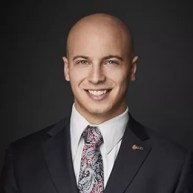
Zach Greenberg
Zach Greenberg, a First-Amendment attorney at FIRE, was nice enough to walk through the situation for the blog.
Below is a transcription of the Q and A, with minor edits to the material to tighten and clarify parts of our discussion.
How did FIRE first come of learn about this situation? Was it something where Joe Gow reached out, or was it something where FIRE reached out? How did all this kind of come to be?
ZACH GREENBERG: “We found out about the situation through our news alerts. We track free speech on campus issues nationwide, and this came across our radar because it was a high-profile case. We saw one of the news reports back in December last year that they’re going to go after both his chancellorship and his professor role. And normally we can’t help with chancellors getting fired because they’re administrators, but once we saw the professor role coming into play, that’s when the academic freedom issues arose. We got in contact with him through a blind reach out, and we got in touch that way.”
The one thing I have to explain to a lot of people about the First Amendment is that, the whole point of the First Amendment is not to protect speech everybody loves and agrees with, but to protect speech or expression that people might not be all that thrilled about. I’m wondering how often it is that you have to make a case like that to people in general, or maybe even people in regard to a case like this one?
ZACH GREENBERG: “All the time. All the time. The vast majority of our professors and students who we advocate for the speech… That speech is not benign, right? It is controversial, it is offensive, it is annoying, and some of it is hateful. That’s why they’re being punished, usually, because people don’t like what they have to say.
“So that’s one of our big talking points: The First Amendment exists to protect speech that may be controversial, offensive, annoying and even hateful. And you know, Joe Gow’s expression falls into this category. His pornography, that sexually explicit speech, really offended and really shocked many people in Wisconsin and throughout the United States. That’s why we believe the moral outrage here is what’s driving a lot of the discipline.”
In looking at this situation and the defense of Gow’s actions, is this more of an academic freedom thing? Is this a personal freedom or a private expression thing, or is there something else that I’m I’m not seeing? In other words, what’s the what’s the general gist of how it is that he is being punished for speech, and the defense he has against this punishment?
ZACH GREENBERG: “The First Amendment protects academic freedom, and academic freedom allows faculty members to speak on public issues in their private capacities. So, when they’re when they’re speaking, not as a professor, but when they’re speaking as a private citizen, they can discuss matters of public concern. That’s the First Amendment standard. Our argument is that Gow was purely speaking in his own private capacity with his with his books and his videos, because universities don’t employ professors to produce pornography.
“The core of the university’s argument was that his books and his videos caused reputational damage to the school. So, we made the argument where we said that these books and videos discuss matters of public concern. They discuss things like vegan cooking and a sex-positive lifestyle and the salience of the adult-entertainment industry, and they are very much part of the public discourse. They have hundreds of thousands of views online. His books are, of course, on Amazon, open to a public audience. So, we established that as a First Amendment point that the First Amendment protects the speech, and the university can punish the professor only if they show that speech causes actual severe disruption to the university.”
“It’s kind of a balancing test. When we establish that a professor can speak as a private citizen as a public concern, the university can say, we’re still going to punish you because of the disruptive effect of your speech. Based on the university’s disciplinary records, there’s been no disruption. There’s been more outrage, there’s been offensiveness, there’s been a lot of push back, but the disruptive effect is not there. It’s not enough to overcome his fundamental First Amendment rights. And courts have been clear that reputational damage, or just the mere offensiveness of the speech, is not enough to overcome these rights, because of how important they are. Unless the university proves how disruptive they were, unless there is really evidence of that, his personal rights protect him from punishment from the university.”
It was one of those moments where I really hated myself as a reporter, but when the thing hit the fan back in December, I was like, “OK, what is this?” I’d heard about the books. I’d heard that he brought Nina Hartley to campus and was sex-positive. So my question was, “Are these videos really porn, or are people just overreacting to his vibe?” So, I went and found some of his videos online, and it’s porn. I mean, he and his wife are engaged in sexual activity of a real nature in front of a camera.
So when you just mentioned is that his materials are a matter of public concern, is that the defense that you’re taking on his porn videos, too? In other words, are you kind of grouping the videos and the books and all of it together? Or is it two separate arguments, where it’s like, “There’s these books and these other things and then there’s these videos in and of themselves, that are, you know, again, for lack of a different word, pornography?
ZACH GREENBERG: “That’s a good question. To do our due diligence for these kind of cases, our first concern is, what is the actual speech issue? What are we defending here? And to do so, we’ve read every single page of his books. We’ve watched every minute of his videos, all his videos, which was a lot. I mean, you’re absolutely right: It is sexually explicit speech, and pornography. The courts have said that you look at the work as a whole, his whole body of work, the books, all the videos, everything. The standard is pretty low to be about public concern. It can be really anything that relates to a matter of public interest. The topic of sex, generally, has always been a matter of public interest.
“Courts been clear that pornography retains protection because people are just learning about sex, watching sex, and even if the videos are about just the hardcore pornography, they still retain protection under the First Amendment as matters of public concern. So, it doesn’t have to be necessarily political speech or discussing public issues like immigration and affirmative action. It can really be anything that the public’s interested in, as long as it’s divorced from something like a personalized grievance or a purely private matter.”
What are your thoughts about the argument that the UW folks are making in their case to fire him, because in what I’m reading, I got a lot of “he might haves” or “maybes” in the language, which often concerns me when I’m looking for the actual reason. I’m looking for that smoking gun that says, “He went to the UW-L library and filmed his porn on university time, using university cameras and clearly that violates Section ABC-123. I have not seen that, have you?
ZACH GREENBERG: “If there was any argument that Joe Gow had involved students, or did this during his work time, or did this using work resources, it would not be a free speech case. That’s a pretty cut and dry employment misconduct case, but there’s no evidence of that. It was a purely private matter he did with his own money and his off time. We pressed the university about what is their interest here? Why are they trying to punish him? Again and again and again, they got back to their reputation, that if he continues to teach, donors and lawmakers may pull funding, students may not come here, the university would be disgraced and be embarrassed and the whole thing would be kind of a big black eye for the university. That’s not enough.
“The First Amendment is clear in that these speculative ideas of disruption, it’s not enough. They have to show severe, actual disruption to university based on the professor’s speech, and that’s based on reaction to speech by third parties… If there is actual disruption, the university has not shown that, and if they can’t show it, they shouldn’t punish him for it.”
Is there anything that you think people should know about this case, or about free speech in general that either you think I missed or you just kind are super-passionate about and would say, “I really wish everybody would understand X?”
ZACH GREENBERG: “This is a Wisconsin Chancellor fired for doing pornography, but it really does have implications for free speech, and freedom for all faculty and all public employees. It’s a matter of protecting what we do off hours, that we have the right to express ourselves without the government, without your employers, snooping around and trying to punish you for your controversial expression
“Pornography may not be your cup of tea, but for instance, (this punishment could lead to) professors being punished for their political views or for their ideology or their religion or their viewpoints or their expression. The First Amendment is it’s indivisible. It protects you, it protects me and makes all of us individually equally. We should be concerned that if they can punish Joe Gow, they could punish all of us for anything that we say that might be remotely controversial.”